A 32 litre injection-molded EVA tote lands at roughly 5.80 to 11.50 dollars FOB Xiamen depending on quantity, body weight, colourway count and hardware, and the minimum order is 500 pieces per design and colour. The four levers that actually move the unit figure are resin weight, tooling amortisation, colourway count and packed carton density; freight and compliance move the landed figure. Sampling runs 6 to 10 working days and bulk 35 to 50 days from approved sample and deposit. QUANZHOU JUNYUAN BAGS quotes all of these on a single sheet so buyers can see which lever they are pulling.
What Sets the Unit Price
Resin is the largest single component of a moulded tote and the easiest to reason about, because it scales directly with weight. A 32 litre body weighs between 1.8 and 2.4 kilograms depending on wall thickness and base design, and at a compounded EVA resin price moving between roughly 1.60 and 2.40 dollars per kilogram the material content alone accounts for 3.00 to 5.80 dollars of the unit. Everything after that is conversion, and conversion is where quantity does its work: the cycle time on a body this size runs 90 to 150 seconds, so machine time per piece is the cost that falls fastest as a run gets longer.
The second driver is tooling amortisation, and it behaves in the opposite direction to everything else. A new body shape needs a mould that costs between 6,000 and 18,000 dollars depending on size, cavity count and whether side actions are required for the handles. Spread over 500 pieces that is 12 to 36 dollars per unit, which is more than the bag; spread over 20,000 pieces it is under one dollar. This is the single reason the price breaks so sharply between a first order and a repeat order, and it is why a buyer who expects to reorder should ask for the amortisation to be shown separately.
| Cost component | Share of unit price at 500 pieces | Share at 10,000 pieces | Moves with |
|---|---|---|---|
| Resin | 35 to 45 percent | 55 to 65 percent | Body weight and resin index |
| Moulding conversion | 15 to 20 percent | 18 to 24 percent | Cycle time and cavity count |
| Tooling amortisation | 20 to 35 percent | 1 to 3 percent | Order quantity, new shape or existing |
| Colour and artwork | 4 to 10 percent | 4 to 8 percent | Colourway count and print method |
| Hardware and straps | 3 to 12 percent | 3 to 10 percent | Strap width, fittings, corrosion grade |
| Packing and handling | 3 to 6 percent | 4 to 7 percent | Pieces per carton and packing method |
MOQ Tiers and Where the Price Breaks

The standard minimum on this category is 500 pieces per design and colour, and it exists for a mechanical rather than a commercial reason. A colour change on an injection machine requires purging the barrel, which consumes 8 to 15 kilograms of resin and 20 to 40 minutes of machine time; below about 400 to 500 pieces of one colour, that purge costs more per unit than the moulding does. A buyer who understands this can negotiate intelligently, because the answer to a lower minimum is usually a colour surcharge rather than a refusal.
| Order quantity | 32 litre body, existing tool | 32 litre body, new tool | 18 litre body, existing tool | Note |
|---|---|---|---|---|
| 500 pieces | 9.80 to 11.50 dollars | 18.00 to 26.00 dollars | 7.40 to 8.90 dollars | First order, tooling dominates |
| 1,000 pieces | 8.20 to 9.60 dollars | 14.00 to 18.00 dollars | 6.30 to 7.50 dollars | The first meaningful break |
| 5,000 pieces | 6.80 to 8.10 dollars | 8.50 to 10.50 dollars | 5.20 to 6.30 dollars | Tooling mostly recovered |
| 10,000 pieces | 6.20 to 7.40 dollars | 7.00 to 8.40 dollars | 4.80 to 5.70 dollars | Price approaches material floor |
| 50,000 pieces | 5.60 to 6.60 dollars | 6.00 to 7.00 dollars | 4.30 to 5.10 dollars | Volume programme pricing |
Two patterns in that table are worth naming. The gap between an existing tool and a new tool is enormous at 500 pieces and almost gone at 50,000, which means the decision to develop a shape is a volume decision and should be made with a two-year forecast in hand rather than a first-order quantity. And the small body does not cost proportionally less: an 18 litre tote uses roughly 60 percent of the resin but the same machine time, so it lands at about 75 percent of the price rather than 60 percent.
Tooling: New Shape Versus an Existing One
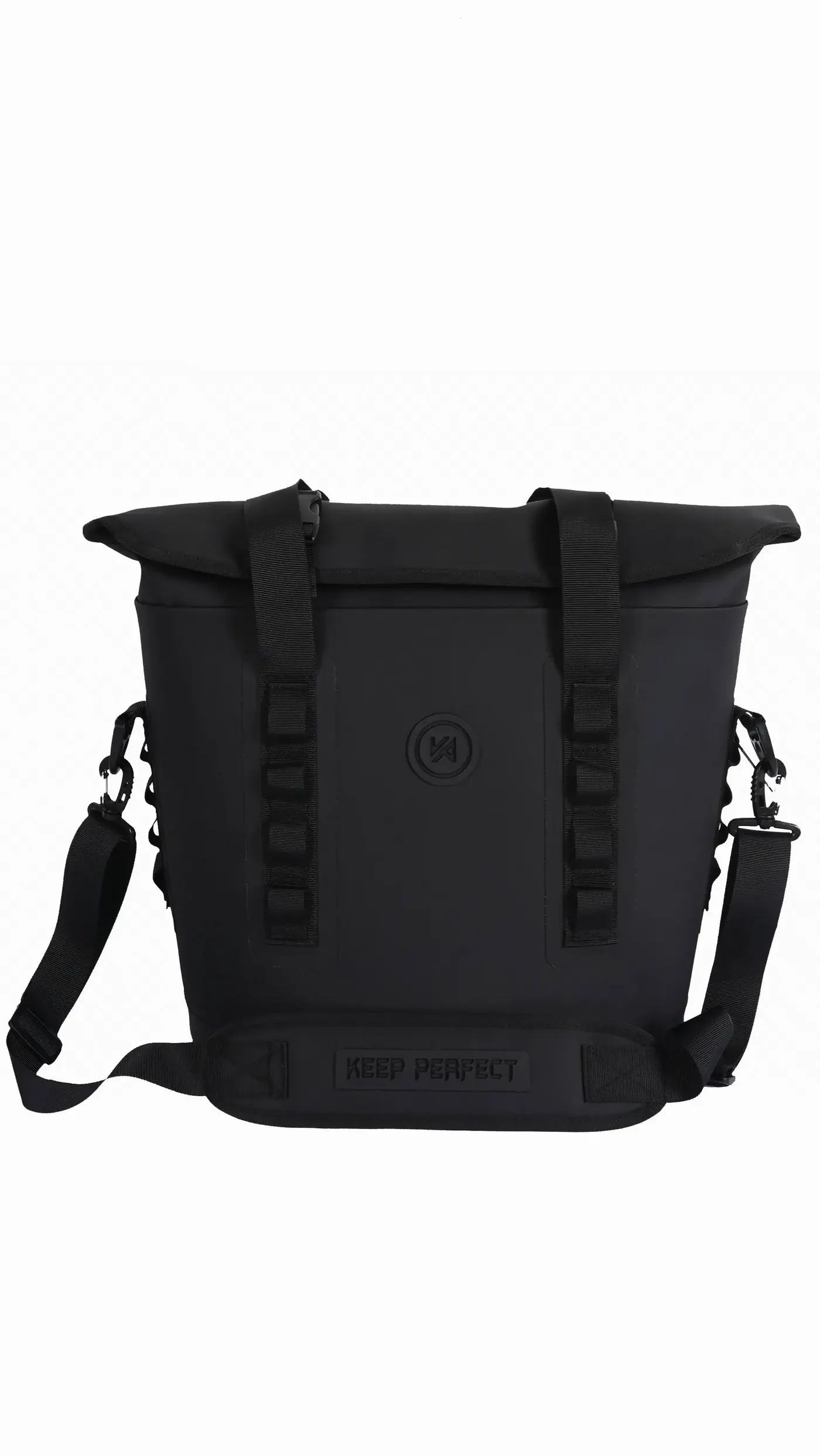
The most valuable question a buyer can ask before anything else is whether a tool already exists for the shape. Most of the standard bodies in this category, from a 24 centimetre mini through to a 54 centimetre extra large utility carry, are already tooled in several wall thicknesses and perforation layouts, and building on one of them removes the entire tooling line from the first quotation. What remains chargeable is any change: a logo insert machined into an existing cavity costs 800 to 2,500 dollars, and a different perforation layout means a new cavity plate at 3,000 to 6,000 dollars.
A new shape is justified in three situations and not otherwise. It is justified when the dimensions are genuinely outside the standard range, when the design includes a feature no existing tool produces, and when the forecast volume is high enough that a differentiated body pays for itself within two seasons. It is not justified for a colour change, a print change or a strap change, all of which are downstream operations that leave the tool alone. Buyers who ask for a new shape before checking the existing range spend between 6,000 and 18,000 dollars to achieve something a catalogue would have given them for nothing.
| Tooling item | Cost range | Lead time | Amortised over | When it is worth it |
|---|---|---|---|---|
| New body mould, single cavity | 6,000 to 12,000 dollars | 25 to 35 days | The life of the programme | Dimensions outside the standard range |
| New body mould, multi cavity | 12,000 to 18,000 dollars | 35 to 50 days | High volume programmes | Above about 30,000 pieces a year |
| Logo insert in an existing cavity | 800 to 2,500 dollars | 10 to 15 days | One season | Any branded programme |
| New perforation layout plate | 3,000 to 6,000 dollars | 15 to 20 days | The life of the programme | A specific drainage or print requirement |
| Charm or accessory tool | 1,500 to 4,000 dollars | 10 to 15 days | One to two seasons | Six or more designs at once |
Colour, Hardware and Packaging Add-Ons
Three options change the unit price without changing the body, and buyers routinely underestimate all three. Colourways are the first: a second and third colour in the same order are usually free above 1,000 pieces because the purge cost is absorbed, but below that a surcharge of 0.30 to 0.90 dollars per piece applies to cover the material and the machine time. Hardware is the second and the largest: a basic moulded handle is included in the body, while a detachable 38 to 50 millimetre strap with corrosion-resistant fittings adds 1.10 to 2.80 dollars per unit depending on the hardware grade.
| Add-on | Unit cost impact | Lead time impact | Note |
|---|---|---|---|
| Second or third colourway | 0.30 to 0.90 dollars below 1,000 pieces | 1 to 2 days | Usually free above 1,000 pieces |
| Detachable shoulder strap | 1.10 to 2.80 dollars | None if stocked, 5 days if sourced | Corrosion grade costs more near salt water |
| Printed logo, one colour | 0.25 to 0.60 dollars | 2 to 4 working days | Each extra colour adds 0.15 to 0.35 dollars |
| In-tool debossed logo | Near zero per unit | 10 to 15 days for the insert | 800 to 2,500 dollars once |
| Retail hangtag and polybag | 0.20 to 0.55 dollars | None | Required by most chain retailers |
| Drop-in divider insert | 0.90 to 2.20 dollars | 5 to 10 days | Size specific to the body |
Packing is the quiet one and it moves freight more than price. A 32 litre body nests poorly because of its flare, so a standard export carton holds 6 to 10 pieces depending on whether straps are attached; attaching straps before packing can cut pieces per carton by a third and raise the freight cost per unit by more than the strap costs to fit. The right question to ask is what the packed carton quantity is with and without hardware, and the right answer is usually to ship straps detached in a separate inner box.
Samples, Mould Fees and How They Are Credited
Sampling is charged and then usually credited, and the structure is worth understanding before agreeing to it. A sample on an existing tool costs 80 to 200 dollars per piece including the courier, and it is credited against the first bulk order in most programmes. A sample that needs a new logo insert costs 800 to 2,500 dollars for the insert plus the sample fee, and only the sample fee is credited. A sample that needs a new body mould is a programme commitment rather than a sample, and the tooling is credited against volume over an agreed period rather than against one order.
Timing matters as much as cost. Sampling runs 6 to 10 working days from confirmed specification and artwork, and that clock starts when the artwork is final rather than when it is requested. Buyers who want a shorter path should ask for a stock blank in the nearest standard colour first, approve the body, and then approve the decoration separately; that splits one ten-day approval into two four-day approvals and lets freight planning start before the colour decision is made.
Incoterms, Freight and Landed Cost
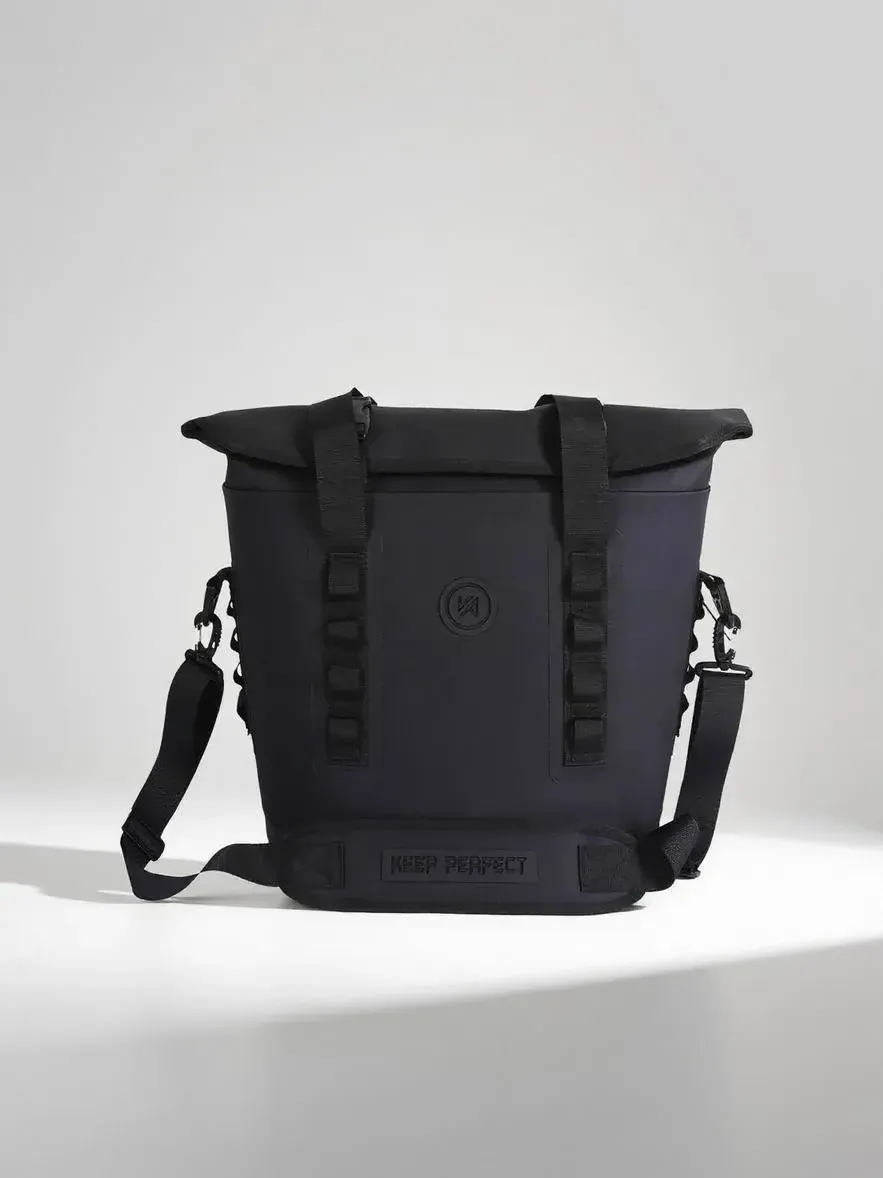
The two quotations a buyer will see are FOB Xiamen and DDP to a named destination, and the difference between them is not a margin but a set of real costs. FOB covers the goods, export clearance and loading; everything after that is the buyer's. DDP adds ocean freight, insurance, import duty, destination handling and final delivery. On this category, ocean freight from Xiamen runs 1,800 to 4,200 dollars per 40 foot high cube container depending on season and lane, and a 40 foot high cube holds roughly 900 to 1,600 totes depending on packing.
| Lane and mode | Transit time | Cost per unit, 32 litre body | Note |
|---|---|---|---|
| FOB Xiamen, buyer arranges freight | Not included | 0 dollars at the port | Buyer controls the carrier and the risk |
| Sea freight to US West Coast | 18 to 25 days | 1.60 to 3.20 dollars | Cheapest lane, seasonal surcharges apply |
| Sea freight to Northern Europe | 28 to 38 days | 2.20 to 4.10 dollars | Add canal or routing variance in peak season |
| Air freight, urgent reorder | 5 to 8 days | 9.00 to 16.00 dollars | Only viable for high value or late orders |
| DDP to door, 100 plus countries | 30 to 45 days door to door | 3.40 to 6.80 dollars | Duty and tax included, single invoice |
Duty is the line most first-time importers miss, and on this category it is not small. Moulded EVA totes generally classify as plastic articles rather than as textile bags in most customs regimes, and the applied duty rate differs materially between those two classifications, commonly by 4 to 12 percentage points. A buyer should confirm the classification with a broker before the first shipment rather than after it, because a misclassification discovered at import is charged retroactively across the shipment and not on one entry.
Payment Terms and Cash Flow
Standard terms on a first order are a 30 percent deposit with the balance against a copy of the bill of lading, moving to 30 percent deposit and 70 percent at 30 days after shipment once a trading history exists. Tooling is paid separately and in advance, because it has no resale value if the programme does not proceed. Letter of credit at sight is available and adds 150 to 400 dollars in bank charges plus roughly a week of document handling, and it is worth using above about 50,000 dollars of order value and rarely worth it below that.
The cash flow point that catches buyers out is not the deposit but the gap. Deposit leaves at order, balance leaves at shipment, and the goods arrive 18 to 38 days later and sell over a season; the money is out for four to six months before it comes back. A buyer placing a first order should plan for two seasons of stock rather than one, because a reorder triggered by a sell-out arrives after the season it was needed for.
Compliance and Testing Costs
Compliance is a real cost and it is usually quoted separately, which makes it look optional when it is not. Material screening for REACH and California Prop 65 on a single body with a strap and a print typically runs 300 to 900 dollars per material set and is valid for a year or until the formulation changes. Physical testing such as strap pull, handle load and colour fastness runs 150 to 500 dollars per test. Children's ranges need small-parts assessment as well, which adds 200 to 600 dollars.
None of those figures is large against a 5,000 piece order, and all of them are trivial against a recall. Chemical restrictions on articles placed on the European Union market are administered by the European Chemicals Agency, physical test methods are published by ASTM International, and documented quality management around inspection and release aligns with the International Organization for Standardization. Every bulk shipment in this programme is inspected at AQL 2.5 before release, and that inspection is included rather than charged.
How to Read a Quotation
A quotation on this category should be readable in one minute, and if it is not, something is missing. The checks below take that minute and catch the majority of surprises that appear at delivery rather than at order.
- Is the tooling shown separately from the unit price? It should be, so a reorder can be quoted without it.
- Is the quantity stated as pieces per design and colour, not as a programme total? A 2,000 piece order in four colourways is four 500 piece runs.
- Is the strap and hardware specification written out, or does it say included? Included usually means the cheapest option.
- Is the packed carton quantity stated? It determines freight per unit and is the most commonly omitted figure.
- Is the Incoterm named with a port or an address? FOB without a port and DDP without an address are both incomplete.
- Is the sample fee stated as creditable? If not, assume it is not.
- Is the validity of the quotation stated? Resin moves, and a price held open for ninety days is a real commitment.
The last of those is the one buyers forget. A resin index move of ten percent changes the unit price on a 32 litre body by roughly 0.35 to 0.60 dollars, so a quotation is normally held for 30 days and re-quoted after that. Asking for a longer validity is reasonable in exchange for a firm order date, and it is worth doing in a rising market.
Programme Notes
Volume programmes sit on the wholesale EVA tote page and decoration options on the custom EVA tote page. Buyers working through the approval sequence should read the EVA tote sourcing playbook, and anyone comparing body sizes should start from the injection-molded EVA tote guide. QUANZHOU JUNYUAN BAGS has run waterproof bag programmes since 2014 with a founding team in this trade since 2004, at monthly output of 200,000 units verified by SGS, under BSCI and ISO 9001, with materials screened for REACH and California Prop 65 and every bulk shipment inspected at AQL 2.5 before release.
Send the body size, wall thickness target, colourway count, strap and hardware requirement, decoration method, quantity, Incoterm and destination to service@junyuanbags.com. Ask for tooling and unit price on separate lines and for the packed carton quantity in the same reply, because those two figures determine what the programme actually costs. Sampling runs 6 to 10 working days and bulk 35 to 50 days from approved sample and deposit.
People Also Ask
What is the minimum order for EVA totes?
500 pieces per design and colour. Below that, the resin purge needed for a colour change costs more per unit than the moulding itself.
How much does an EVA tote cost per unit?
About 5.80 to 11.50 dollars FOB Xiamen for a 32 litre body, depending on quantity and on whether a tool already exists.
Why does the price drop so much on a reorder?
Tooling amortisation. A new mould costs 6,000 to 18,000 dollars and is charged across the first order, then falls to under a dollar per unit.
Does a new colour change the price?
Yes, by 0.30 to 0.90 dollars per piece below 1,000 pieces. Above that the purge cost is usually absorbed.
What does a shoulder strap add to the cost?
1.10 to 2.80 dollars per unit depending on strap width and the corrosion grade of the fittings.
Should I buy FOB or DDP?
FOB if you have a broker and a carrier; DDP if you want one invoice and delivery to door across 100 plus countries.
Frequently Asked Questions
Q1. What is the MOQ for an EVA tote?
500 pieces per design and colour. The limit is set by the barrel purge needed for each colour change, not by a commercial rule.
Q2. How much does tooling cost for a new shape?
6,000 to 18,000 dollars depending on body size and cavity count. A logo insert in an existing cavity costs 800 to 2,500 dollars.
Q3. Is the sample fee credited against the order?
Usually, yes, for samples on an existing tool. Tooling for a new insert or body is credited against volume over an agreed period instead.
Q4. How long does bulk production take?
35 to 50 days from approved sample and deposit, plus 18 to 38 days of ocean freight depending on the lane.
Q5. How many totes fit in a 40 foot high cube container?
Roughly 900 to 1,600 of a 32 litre body, depending on whether straps are fitted before packing and how tightly the bodies nest.
Q6. What payment terms are standard?
30 percent deposit with the balance against a copy of the bill of lading, moving to 30 days after shipment once a trading history exists.
Q7. Is a letter of credit worth the cost?
Above about 50,000 dollars of order value, yes. Below that the 150 to 400 dollars of bank charges and the extra week are rarely justified.
Q8. What duty applies to moulded EVA totes?
They generally classify as plastic articles rather than textile bags, which differs by 4 to 12 percentage points in most regimes. Confirm with a broker first.
Q9. Why does the price change after 30 days?
Resin moves. A ten percent index move changes a 32 litre body by roughly 0.35 to 0.60 dollars per unit.
Q10. How much does compliance testing cost?
300 to 900 dollars per material set for chemical screening, 150 to 500 dollars per physical test, and 200 to 600 dollars for small-parts assessment.
Q11. Does a smaller body cost proportionally less?
No. An 18 litre body uses about 60 percent of the resin but the same machine time, so it lands at about 75 percent of the price.
Q12. What should be on separate lines of a quotation?
Tooling and unit price, so a reorder can be quoted without the tooling, plus the packed carton quantity, which sets freight per unit.