Choose a hardshell waterproof backpack when crush and impact protection matters and the pack stays a similar size every trip; choose a softshell when low empty weight, compressibility, and harness comfort decide the day. A rigid 30 litre shell typically weighs 1.4 to 2.2 kilograms and resists 60 to 150 kilograms of static crush load, while a soft 30 litre body weighs 0.7 to 1.1 kilograms and can compress to 35 to 45 percent of its nominal volume when empty. Both can reach IPX6 to IPX7 when built correctly, but they get there differently: hard bodies use a monocoque shell with a gasketed lid, soft bodies use radio-frequency welded seams in coated textile. Programme baselines are 500 pcs per design and colour, samples in 6 to 10 working days, and bulk in 35 to 50 days.
Monocoque Shell Versus Laminated Textile
The two families differ at the level of how they hold shape. A hardshell carries load in its own wall: injection-moulded EVA, polypropylene, or ABS forms a tub or clamshell whose stiffness comes from section geometry and wall thickness, typically 1.2 to 3.0 millimetres. Nothing inside the bag needs to supply structure, so the interior can be plain, and in the best designs there is no seam at all below the lid line.
A softshell carries load in the contents and in tension from the fabric. Coated 500D or 1000D textile laminated to a thermoplastic film gains its strength from yarn, and its water barrier comes from the film plus welded seams rather than from thickness. Because the wall itself is flexible, the body adapts to whatever is packed, which is an advantage for irregular loads and a disadvantage for anything that can be crushed.
| Attribute | Hardshell body | Softshell body | Practical effect |
|---|---|---|---|
| Typical wall or fabric | 1.2 to 3.0 mm moulded section | 0.35 to 0.75 mm laminate | Rigidity versus drape |
| Empty weight at 30 L | 1.4 to 2.2 kg | 0.7 to 1.1 kg | Roughly double the carried dead weight |
| Structure source | Shell wall in bending | Fabric in tension plus contents | Hard protects an empty bag |
| Seam count below lid | 0 to 2 | 6 to 14 welded runs | Fewer joints means fewer paths |
| Compressed bulk | 95 to 100 percent of volume | 35 to 45 percent of volume | Soft travels and stores better |
Neither construction is automatically drier. Water entry is governed by joints, closures, and how the article sits in water, and a moulded tub with a poorly designed lid gasket leaks as easily as a soft body with badly set seams. The real divider is what each family protects against besides water.
Weight, Packed Bulk, and the Empty-Volume Penalty
Empty weight is the most argued number and the least understood. A hardshell at 30 litres weighing 1.9 kilograms hands the user 0.8 to 1.2 kilograms of extra mass every kilometre compared with a soft equivalent. Carried for two hours at 5 kilometres per hour that is not trivial, and for riders and paddlers whose upper body is already loaded it is decisive.
The second penalty appears in transit and storage rather than on the back. A rigid body cannot be compressed, so it occupies 95 to 100 percent of its nominal volume even when it holds nothing. Five hardshell units in a shipping carton may require 2.2 to 2.6 times the cube of five soft units, raising inbound freight per piece and consuming showroom storage. In a container programme that difference is measurable in cost per unit landed.
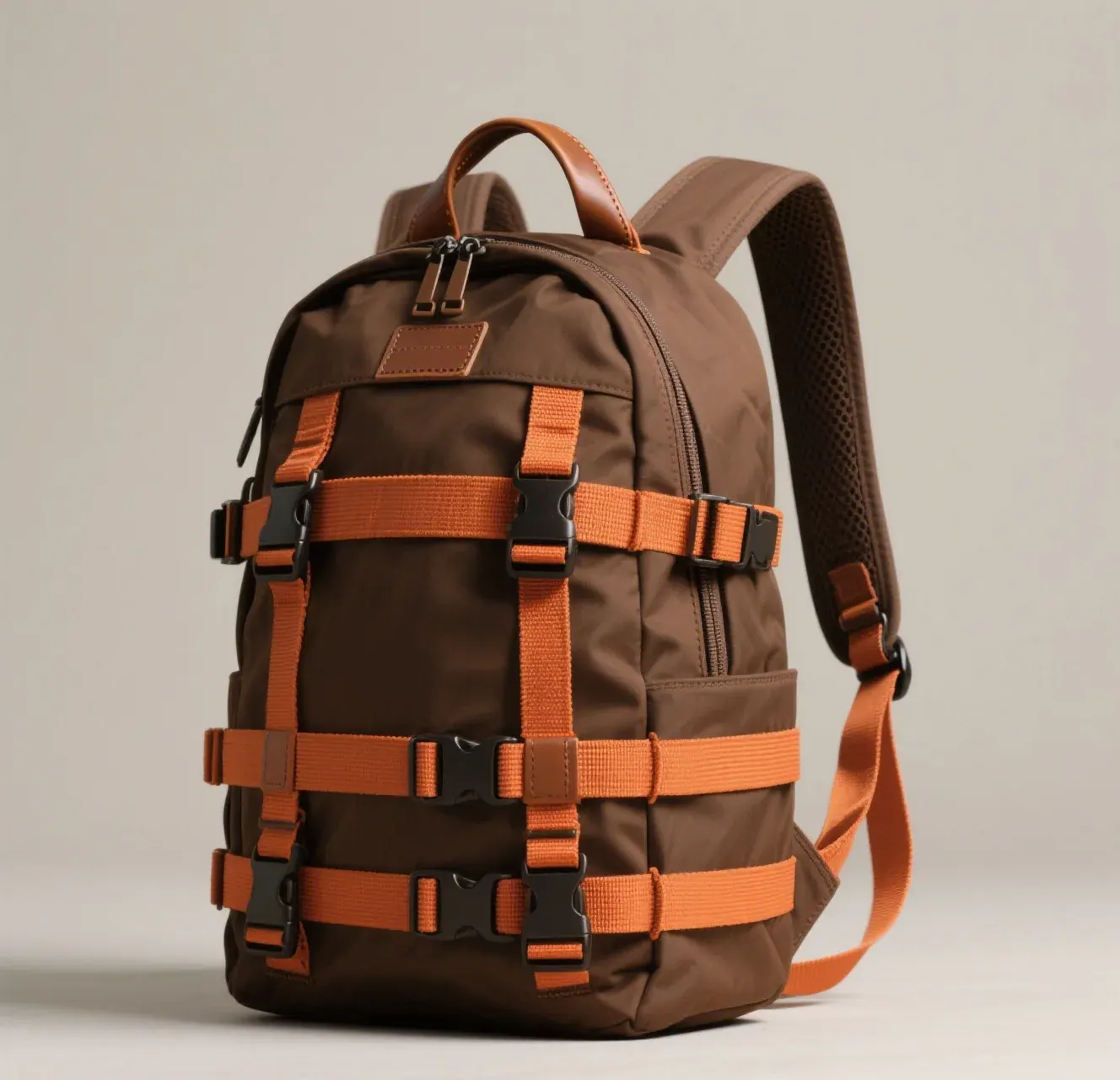
There is a third weight effect that favours the rigid body. Because the shell carries the load, it can accept higher internal mass without sagging, so heavy dense equipment such as batteries, instruments, or camera bodies can be packed close to the back without deforming the bag. A soft body holding 12 kilograms of dense gear tends to bulge outward and drop load away from the spine, which costs comfort regardless of how good the harness is.
Impact and Crush Resistance With Real Numbers
This is the hardshell's home ground. A moulded section distributes a point load across its wall, so a 1.8 millimetre EVA tub can tolerate 60 to 150 kilograms of distributed static load before permanent deformation, depending on section radius and support points. A soft body of the same volume visibly deforms under 20 to 40 kilograms applied at one location, though its coated fabric usually recovers once the load is removed because the failure mode is fabric movement rather than fracture.
Impact also differs in kind rather than degree. A drop onto a corner from 1.2 metres onto concrete usually dents or cracks a rigid corner after several events, whereas the same event scuffs a soft body and continues. Conversely, an external blow to a loaded pack transmits less energy through a shell with an internal air gap than through taut fabric. Designers exploit this by standing sensitive items on closed-cell foam 8 to 15 millimetres thick inside the tub so the shell takes the hit and the foam takes the deceleration.
| Protection question | Hardshell answer | Softshell answer | Field implication |
|---|---|---|---|
| Static distributed load | 60 to 150 kg before deformation | 20 to 40 kg local deformation, recovers | Hard wins for stacked transport |
| 1.2 m drop on corner | Shell may dent or crack | Scuff, then continue service | Soft wins for repeated drops |
| Point puncture | Requires high local force | Sharp tools can pierce laminate | Hard better for tool loads |
| Internal impact to device | 8 to 15 mm foam absorbs remainder | Foam plus fabric flex | Equal if internals are designed |
| Abrasion on rock or deck | Wall wears, remains sealed | Coating may rub through | Hard wins on rough decks |
Verification should never be a hammer demonstration. Repeatable drop, compression, and abrasion procedures exist so results can be compared between design iterations, and the libraries maintained by ASTM International contain recognised methods for textile strength, tear resistance, and flex behaviour that translate directly into a development checklist.
Waterproof Architecture and Where Each Design Leaks
A hardshell reaches its rating through geometry and compression. The tub has no seam in the base, which removes the most abuse-prone joint in any bag, and the lid seals against a gasket that typically compresses 1.5 to 3.0 millimetres under four to six latches. Getting that even is a tolerance problem: if one corner compresses 0.5 millimetres less than the others, water finds the gap, so the lid frames use ribbing and controlled latch spacing.
A softshell reaches the same target through seam engineering. Each welded joint must deliver peel strength equal to the base material, which usually means a 15 to 25 millimetre bond width, controlled dwell of 2 to 6 seconds, and clean edges free of coating contamination. The closure then becomes the variable, with roll tops and technical zips dominating, a subject covered in the TPU versus PVC material comparison and in the IPX ladder published under IEC 60529.
| Leak path | Hardshell behaviour | Softshell behaviour | Test to run |
|---|---|---|---|
| Base and lower corners | Monocoque, no joint | 3 to 6 welded corner joints | 30 minute standing water |
| Lid or mouth closure | Gasket plus 4 to 6 latches | Roll top or technical zip | IPX6 jet at 100 L per minute |
| Hardware penetrations | Latches bolted through wall | D-rings welded onto panel | Immersion to stated depth |
| Harness attachment | Riveted or moulded into wall | Stitched then taped or welded | Hanging load spray test |
| Damage after misuse | Crack propagates, hard to seal | Puncture patches reliably | Patch, then retest |
Touring riders consistently prefer a semi-rigid body because it holds its shape at speed and does not flap; details sit in the waterproof motorcycle backpack range. Submersion-grade articles with gasketed closures are discussed further in the IPX8 technology review.
Cold, Heat, and UV Behaviour
Temperature separates the materials more sharply than water does. Polypropylene becomes noticeably brittle below about 0 degrees Celsius and can crack at a latch boss after a hard knock at minus 10. ABS behaves a little better but still stiffens below minus 10 to minus 20. Moulded EVA retains useful flexibility to around minus 30, which is why it dominates cold-duty designs.
In soft bodies the same question lands on the coating rather than the substrate. Thermoplastic polyurethane laminates typically stay flexible near minus 30, while PVC compounds begin stiffening around minus 10 and may crease permanently under a hard fold at minus 20. Heat and ultraviolet light push the other way: all coatings lose plasticiser eventually, and accelerated exposure is commonly judged by colour change and coating tack after a defined dose.
| Condition | Moulded EVA | Polypropylene or ABS | TPU laminate | PVC laminate |
|---|---|---|---|---|
| Flexible to | Around minus 30 degrees Celsius | 0 to minus 20 degrees Celsius | Around minus 30 degrees Celsius | About minus 10 degrees Celsius |
| Heat softening starts | 60 to 80 degrees Celsius | 70 to 100 degrees Celsius | Not the usual limiter | Plasticiser loss above 50 degrees Celsius |
| UV behaviour | Chalks slowly, pigments help | Chalks and embrittles | Good with stabilisers | Surface tack after long exposure |
| Typical service feel | Rubbery and grippy | Slippery when wet | Smooth and quiet | Firmer, louder fold |
| Preferred duty | Cold water and winter | Fair weather rigid cases | Year-round technical packs | Value-focused dry packs |
Specify temperature as a number with a test rather than as an adjective. A simple development gate is a 4 hour soak at the target temperature followed by a 10 fold cycle and a repeat spray result; if any visible cracking appears, the material choice is wrong for the customer's climate, and no amount of marketing will survive winter returns.
Failure Modes, Service Life, and Repair
Every product fails somewhere, and the honest comparison sits in how that failure arrives. Rigid bodies fail catastrophically and locally: a crack propagates from a latch boss or a corner radius, and once it reaches a structural rib the wall can lose load capacity quickly. Field repair is limited to mechanical splinting or adhesive that seldom restores the original seal, so most programmes treat cracked shells as replacement events.
Soft bodies fail gradually and visibly. Coating delamination starts as cloudy patches, fold lines whiten after 3,000 to 8,000 cycles, and abrasion appears at the base corners. Crucially most of these are repairable: a puncture under 10 millimetres can accept a bonded patch extending 25 to 30 millimetres beyond the damage, and a worn base can sometimes be over-bonded. Skills and downtime decide the answer more than material does.
| Failure mode | Hardshell sign | Softshell sign | Repair route | Time to service |
|---|---|---|---|---|
| Impact damage | Crack at latch boss or corner | Scuff with no seal loss | Splint versus ignore | 30 to 60 minutes |
| Seal degradation | Gasket set beyond 1.5 mm recovery | Weld edge lift under peel | Replace gasket versus re-weld | 20 to 90 minutes |
| Closure wear | Latch spring fatigue | Roll fold whitening | Latch kit versus trim fold line | 15 to 45 minutes |
| Wall damage | Puncture through section | Puncture or delamination | Shell replacement versus bonded patch | 10 minutes patch, shell scrap |
| End of economic life | Structural crack | Widespread coating failure | Replace unit | Not repairable |
Plan the spares story at purchase. Latches, gaskets, and buckles should be available as parts for the expected life of the product, and for field fleets a small spares kit reduces downtime more effectively than holding one complete spare unit per five users.
Scenario Verdicts Across Seven Real Uses
Abstract comparison is less useful than naming the trip. Camera and drone work favours rigid protection because bodies, lenses, and gimbals are crush-sensitive and expensive. Daily commuting favours soft because the empty weight is carried every single dry day. Kayak touring sits in the middle and usually rewards a semi-rigid hybrid. Motorcycle touring again favours shape retention, while laptop commuting usually wants a structured sleeve inside a soft body so the device is protected without paying full shell weight.
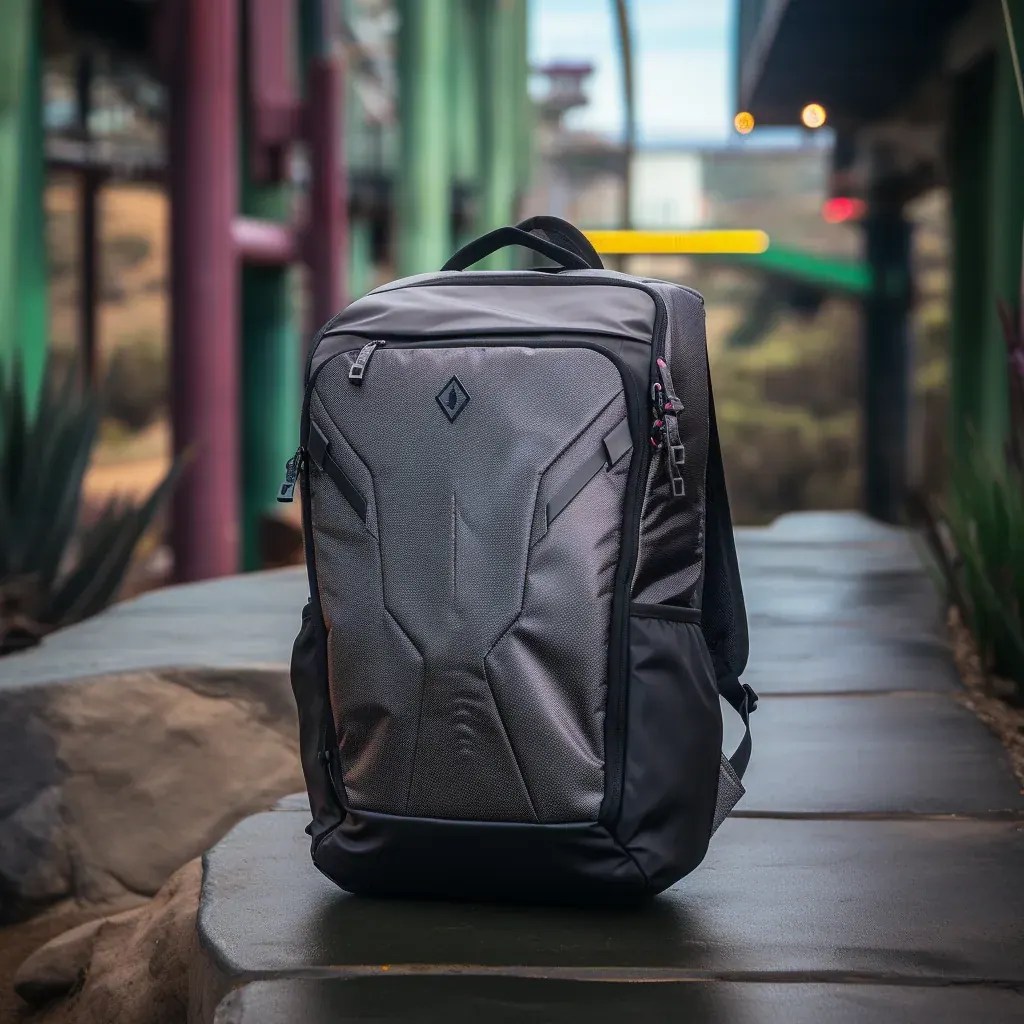
| Use case | Priority | Recommended format | Target weight | Why |
|---|---|---|---|---|
| Camera and drone field work | Impact protection | Hardshell with foam inserts | 1.8 to 2.6 kg | Crush load and drop events |
| Daily urban commute | Low empty weight | Softshell with laptop sleeve | 0.8 to 1.3 kg | Weight carried 250 days a year |
| Motorcycle touring | Shape retention at speed | Semi-rigid or rigid | 1.4 to 2.0 kg | No flapping at highway speed |
| Kayak and raft days | Submersion and buoyancy | Soft roll-top or moulded tub | 0.9 to 1.8 kg | Easy rinse and positive float |
| Construction and utilities | Abrasion and standing water | Rigid or reinforced soft base | 1.5 to 2.4 kg | Hard base survives rough ground |
| Multi-day hiking | Comfort and compressibility | Softshell with harness support | 0.7 to 1.2 kg | Grams matter over kilometres |
| Winter snow sports | Cold flexibility | EVA moulded or TPU soft | 1.2 to 2.0 kg | Materials must fold below minus 20 |
Laptop carriers deserve one extra note. Screen breakage comes from bending and point pressure, not from water, so a suspended sleeve with 8 to 12 millimetres of closed-cell padding and a 20 to 30 millimetre gap from the base usually delivers more protection than a hard outer wall. Sizing help appears in the waterproof laptop backpack selection.
Buoyancy and Behaviour Around Water
Flotation is frequently assumed and rarely specified. A sealed article floats when its average density is below water, which for a rigid body with a lid gasket and internal air is usually true at light loads. Closed-cell expansion-cast EVA contributes positive buoyancy directly, so many moulded bodies float with 2 to 5 kilograms inside. Once internal mass rises above that, average density climbs and the unit sinks, and no marketing language changes the arithmetic.
A soft body usually traps less shaped air, though a rolled and buckled dry pack with 30 percent air remaining will float briefly with a light load. Neither should be treated as a life-saving device. Personal flotation devices are regulated separately, and the approval and carriage requirements published by the United States Coast Guard describe what actually qualifies. A floating value is still worth stating in a specification because recovering a dropped bag is very different from losing it.
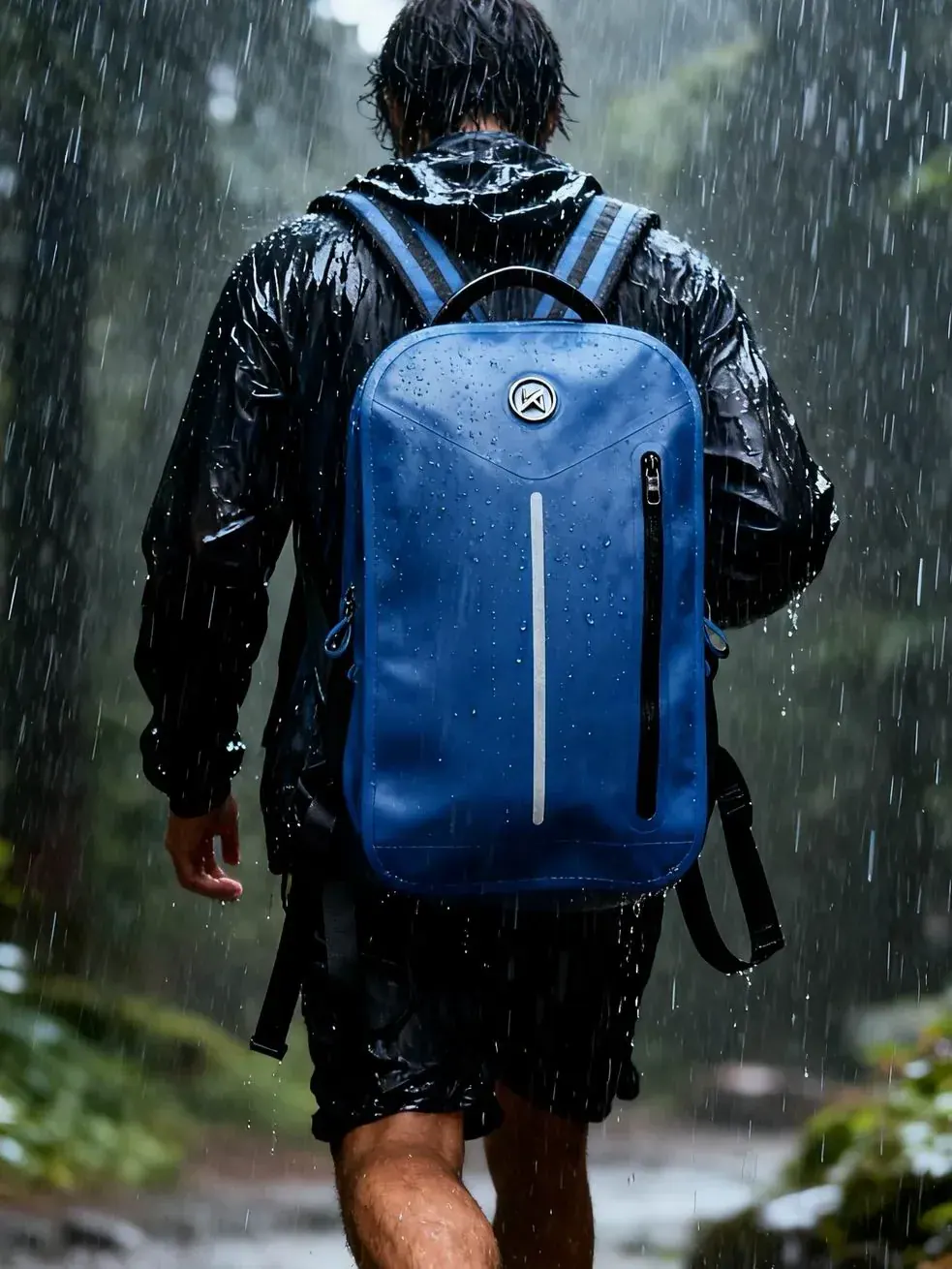
- State buoyancy as kilograms of payload supported, not as a yes or no claim.
- Test with the lid closed and latched in the orientation the pack would actually adopt in water.
- Remember that absorbed water in a soft harness adds 100 to 300 grams and reduces reserve buoyancy.
- Never substitute an article buoyancy figure for an approved personal flotation device.
Building Both Lines Into One Catalogue
Distributors rarely pick a side. A coherent waterproof range usually carries one rigid hero product that demonstrates protection and photographs well, plus two or three soft bodies covering hiking, travel, and commuting. The hero justifies a premium tier near 120 to 260 USD, while soft bodies occupy 45 to 140 USD, and the two are kept apart by clearly different value stories rather than by minor feature lists.
Development timing differs slightly. A moulded shell needs tool design, CNC or aluminium prototype validation, and a longer first-article cycle, commonly adding 20 to 40 days to the initial sample before serial sampling settles into the normal window. Budget accordingly: a first rigid project may take 60 to 90 days from drawing to approved sample, while a comparable soft project usually lands within 25 to 45 days.
QUANZHOU JUNYUAN BAGS runs both platforms with the same quality gates, starting at 500 pcs per design and colour with samples in 6 to 10 working days once tooling is settled, and bulk in 35 to 50 days. Materials can be screened for REACH and California Prop 65, goods can be inspected at AQL 2.5, and shipment can be FOB Xiamen or DDP to more than 100 countries. Structural choices, tooling routes, and verification stages are described, and briefs can be sent to service@junyuanbags.com.
The closing rule is unglamorous: buy the shell that matches the hazards you actually face. If nothing can crush your load and your budget is per gram, choose soft. If something can sit on your bag in a truck, boat, or aircraft hold, choose rigid and accept the weight. Everything else in this comparison is detail that a good specification will resolve long before the first sample arrives.
People Also Ask
Is a hardshell backpack more waterproof than a softshell?
No. Both can reach IPX6 or IPX7 when engineered correctly. A rigid body relies on a gasketed lid with no base seam, while a soft body relies on welded joints and a rated closure. The assembled article result matters, not the construction family, so always request a whole-pack test certificate.
How much heavier is a hardshell pack?
At 30 litres a rigid body commonly weighs 1.4 to 2.2 kilograms against 0.7 to 1.1 kilograms for a soft one, roughly 0.7 to 1.1 kilograms more carried every day. That mass also affects inbound freight because a rigid unit cannot compress below 95 to 100 percent of its volume.
Can a dented or cracked hardshell be repaired?
Usually not to the original seal. A bonded patch can stabilise a puncture temporarily, but cracks at latch bosses or corners propagate through ribs and typically mean replacement. A soft shell puncture under 10 millimetres accepts a bonded patch extending 25 to 30 millimetres and often returns to full duty.
Which material stays flexible in freezing weather?
Moulded EVA and thermoplastic polyurethane laminates generally remain usable near minus 30 degrees Celsius. Polypropylene stiffens below roughly 0 degrees, ABS near minus 10 to minus 20, and PVC coating around minus 10. Always specify a target temperature and run a folded sample test.
Do waterproof backpacks float when dropped in water?
A sealed rigid body with closed-cell walls often floats with 2 to 5 kilograms aboard, and a rolled dry pack with trapped air floats briefly with a light load. Above those figures average density exceeds water and the unit sinks, and no bag replaces an approved flotation device.
Why do commuters usually prefer softshell bodies?
Because empty weight is carried roughly 250 days a year and soft packs weigh 0.7 to 1.1 kilograms less. A structured internal sleeve provides adequate laptop protection, so the extra mass of a rigid shell buys little and costs comfort on every dry trip.
Frequently Asked Questions
Q1. What is the difference between a hardshell and a softshell waterproof backpack?
A hardshell carries load in a 1.2 to 3.0 millimetre moulded wall and keeps its shape with nothing inside, while a softshell uses coated 500D or 1000D textile with welded seams and takes shape from its contents. Hard bodies protect against crush, soft bodies win on weight and compressibility.
Q2. Which type is better for carrying camera gear?
Hardshell. Camera bodies, lenses, and gimbals fail from crush and point loads, and a rigid tub with 8 to 15 millimetre foam inserts resists 60 to 150 kilograms of distributed load. The cost is 0.7 to 1.1 kilograms of extra empty weight compared with a soft equivalent.
Q3. Are hardshell backpacks heavier to carry?
Yes, typically by 0.7 to 1.1 kilograms at 30 litres. Soft bodies also compress to 35 to 45 percent of nominal volume when empty, which matters in transit and storage. Rigid units ship at 95 to 100 percent of their volume and can raise inbound freight cost per piece noticeably.
Q4. Can a softshell reach IPX7?
Yes. A soft body with 15 to 25 millimetre welded seams, a three-turn roll-top closure with 75 to 100 millimetres of freeboard, and clean folding discipline can reach IPX6 to IPX7. The certificate must cover the assembled article rather than the fabric alone.
Q5. What happens to hardshell packs in cold weather?
Polypropylene becomes brittle below about 0 degrees Celsius and ABS below minus 10 to minus 20, so a single knock can crack a latch boss. Moulded EVA stays flexible near minus 30. Specify a stated target temperature and validate with a four hour soak followed by ten fold cycles.
Q6. Is a rigid gasket lid reliable over time?
It is reliable while compression remains even. Gaskets designed for 1.5 to 3.0 millimetres of squeeze under four to six latches lose effectiveness when the material sets, which usually appears after 3 to 5 years. Replacement gaskets should be available for the service life of the product.
Q7. Which backpack type lasts longer?
Softshell generally lasts longer in years because its failure modes are gradual and repairable, while hardshell failure is often sudden and terminal. A cracked rib or boss ends service immediately, whereas delamination and punctures in coated fabric can be patched in 10 to 60 minutes.
Q8. Do hardshell backpacks cause more sweating?
They can. A rigid back pad has fewer ventilation channels, and contact area sometimes rises above 60 percent of back width. Look for a suspended mesh panel with a 10 to 20 millimetre air gap, or accept that a shell will run warmer on long climbs.
Q9. How much tooling time does a rigid pack programme add?
Expect 20 to 40 additional days for tool design and first-article validation before serial sampling settles into the normal window. A first rigid project typically takes 60 to 90 days from drawing to approved sample, compared with 25 to 45 days for a soft project of similar complexity.
Q10. Are hardshell backpacks allowed as airline cabin bags?
Usually yes if external dimensions meet the carrier limit, but rigid bodies do not squeeze into a sizer. A 45 by 30 by 20 centimetre shell either fits or gate-checks, so verify against the specific airline rules before travel rather than assuming tolerance.
Q11. What are MOQ and lead times for hardshell versus softshell orders?
Both begin at 500 pcs per design and colour. Once tooling is settled, samples take 6 to 10 working days and bulk takes 35 to 50 days, with AQL 2.5 inspection available and shipping FOB Xiamen or DDP to more than 100 countries.