Pick TPU when the pack has to stay flexible below minus 15 degrees Celsius, run thin at 0.35 to 0.5 mm, meet a halogen-free or phthalate-restricted specification, or carry a retail ticket above roughly 1.35 times the entry price. Pick PVC when the brief is lowest unit cost, thick puncture-tolerant film at 0.5 to 0.7 mm, deep high-frequency embossing for branding, and a proven 1.00 cost base. In service the two differ by about 40 percent in shell weight, about 20 degrees Celsius in usable cold range and roughly two to four years of expected life. Both weld at 27.12 MHz, both reach IPX6 to IPX8 with the right closure, and both start at 500 pcs per design and colourway with samples in 6 to 10 working days and bulk in 35 to 50 days from FOB Xiamen.
The Short Answer: Which Shell Wins
There is no universal winner, because the two films optimise different things. Thermoplastic polyurethane buys flexibility, thin gauge and a clean chemistry file at a material cost roughly 2.2 to 3.0 times that of PVC per square metre, which lands on the finished pack as a cost index of about 1.35 to 1.55. Plasticised PVC buys thickness, puncture tolerance, easy embossing and the lowest cost base in the category, at the price of a narrower cold range, plasticiser migration over time and a heavier compliance conversation with European and Californian buyers.
| Attribute | TPU shell, 0.35-0.5 mm | PVC shell, 0.5-0.7 mm | Practical winner |
|---|---|---|---|
| Coated fabric weight | 480-620 g per square metre | 840-1,010 g per square metre | TPU, about 40 percent lighter |
| Tensile strength of film | 30-55 MPa | 12-25 MPa | TPU |
| Usable cold range | Flexible to about -30 C | Stiffens near -10 to -15 C | TPU |
| Martindale abrasion | 40,000-60,000 cycles | 20,000-35,000 cycles | TPU |
| RF weld cycle | 1.8-3.2 s, narrow window | 1.2-2.5 s, wide window | PVC for process tolerance |
| Unit cost index | 1.35-1.55 | 1.00 | PVC |
| Expected service life | 6-10 years | 3-6 years | TPU |
| Halogen content | Halogen-free | About 57 percent chlorine | TPU |
Read the winner column as a trade-off rather than a verdict, because the rows are not equally weighted. A beach programme that sells on price and gets used twenty days a year puts the cost row first; a winter, motorcycle or search programme puts the cold and abrasion rows first and will not accept a shell that crease-cracks at minus 15 degrees Celsius.
The shell film is not the waterproofing system on its own: the closure and the seam decide the rating. A 0.4 mm TPU body with a coated front zip is an IPX5 rain pack, while a 0.6 mm PVC body with an airtight zip is an IPX7 immersion pack. The assembly baseline shared by both is set out in our waterproof backpack specification guide.
What the Two Films Actually Are
Thermoplastic polyurethane is a block copolymer: a soft segment of polyol that provides elasticity and a hard segment built from a diisocyanate plus a chain extender that provides strength and melt behaviour. The important consequence is that the elasticity is intrinsic. No additive has to be blended in to make the film flexible, which is why a TPU shell does not get stiffer as it ages the way a plasticised film does. The soft segment chemistry then splits three ways, and the split matters more than most buyers realise: polyester-based TPU has the best abrasion and oil resistance but hydrolyses in hot humid conditions, polyether-based TPU resists hydrolysis and microbial attack and is the default for marine and tropical programmes, and polycaprolactone-based TPU sits between them at a higher material cost.
PVC in this category is always a compound, never a pure resin. A rigid homopolymer is blended with 30 to 60 phr of plasticiser, a calcium-zinc or barium-zinc heat stabiliser, and often a filler and a UV package, to reach a Shore A hardness of roughly 70 to 90 and the drape a soft pack needs. Every one of those additives is a migration risk over time, and the plasticiser in particular is what gives PVC its characteristic odour, its tendency to become tacky in a hot container, and its eventual stiffening. That is the mechanical reason a PVC shell has a shorter service life, and it is also the reason the compliance file for PVC is longer.
| Property | TPU laminate | Plasticised PVC | What it means in service |
|---|---|---|---|
| Elasticity source | Block copolymer structure | 30-60 phr plasticiser | TPU does not stiffen as it ages |
| Hardness range | Shore A 80-95 | Shore A 70-90 | Both tune to the programme |
| Chlorine content | None | About 57 percent by weight | Drives end-of-life and incineration rules |
| Typical additive package | UV and hydrolysis stabiliser | Plasticiser, stabiliser, filler | More additives means more migration risk |
| Odour on opening carton | Low | Noticeable for 2-5 days | Matters for retail unpacking |
| Recyclability | Mechanically reprocessable | Limited, halogen constraint | Ask for a written end-of-life statement |
- Specify polyether-based TPU for anything that lives on a boat or in a tropical climate; polyester-based TPU hydrolyses faster under those conditions.
- Specify the plasticiser system on PVC explicitly. DOTP, DINP and DIDP are the current mainstream replacements for the restricted ortho-phthalates.
- Ask for the Shore A hardness with a tolerance of plus or minus 5, because hardness drifts with plasticiser loading and changes how a panel drapes.
Gauge and Weight: Why TPU Runs Thinner
TPU is used at 0.35 to 0.5 mm because it does not need the thickness to survive. PVC is used at 0.5 to 0.7 mm because it does. The arithmetic is straightforward: with a film density near 1.18 to 1.22 grams per cubic centimetre for TPU against 1.35 to 1.45 for PVC, and a 420D or 840D woven base underneath, a 0.4 mm TPU laminate lands at roughly 480 to 620 grams per square metre while a 0.6 mm PVC laminate lands at 840 to 1,010 grams per square metre. On a 30 litre pack with about 1.1 square metres of shell, that is the difference between a 660 gram shell and a 1,050 gram shell before any hardware is added.
| Gauge | Material | Coated weight, g per m2 | 30 L shell weight | Typical programme |
|---|---|---|---|---|
| 0.40 mm | TPU, polyether | 540-580 | About 620 g | Hiking, commute, travel 20-35 L |
| 0.50 mm | TPU, polyester | 600-620 | About 680 g | Expedition, motorcycle, work |
| 0.50 mm | PVC | 840-880 | About 950 g | Entry dry bag, beach, promotion |
| 0.60 mm | PVC | 900-950 | About 1,050 g | General waterproof pack, fishing |
| 0.70 mm | PVC | 980-1,010 | About 1,130 g | Heavy duty, rafting, rental fleets |
Weight is not a vanity metric here. Cutting 390 grams from the shell of a 30 litre pack lets the harness, back panel and hardware be upgraded by the same amount at an unchanged ticket, which is usually a better use of budget than a thicker film. That trade is the argument for TPU above about 25 litres.
Welding, Seams and Why Gauge Changes the Process
Both films are polar, which is the only real requirement for high-frequency welding, so both can be joined at 27.12 MHz without adhesive or thread. The difference is process tolerance. PVC couples strongly with the field and welds in about 1.2 to 2.5 seconds across a wide energy window, which forgives a slightly contaminated surface or a small electrode gap error. TPU is thinner and needs 1.8 to 3.2 seconds with a tighter electrode gap and a narrower window, so the operator and the tooling have to be better controlled to hit the same peel strength.
The acceptance criterion is the same for both: a welded seam should reach at least 90 percent of the base fabric tensile strength when pulled in peel, which on these gauges means roughly 150 to 300 newtons per 50 millimetre strip. A weld below that figure will not fail in the sample room; it fails in the third month of the season, at a corner where the tooling drifted by a fraction of a millimetre. The full process, the parameter window and the inspection regime are described in our RF welded seam construction guide.
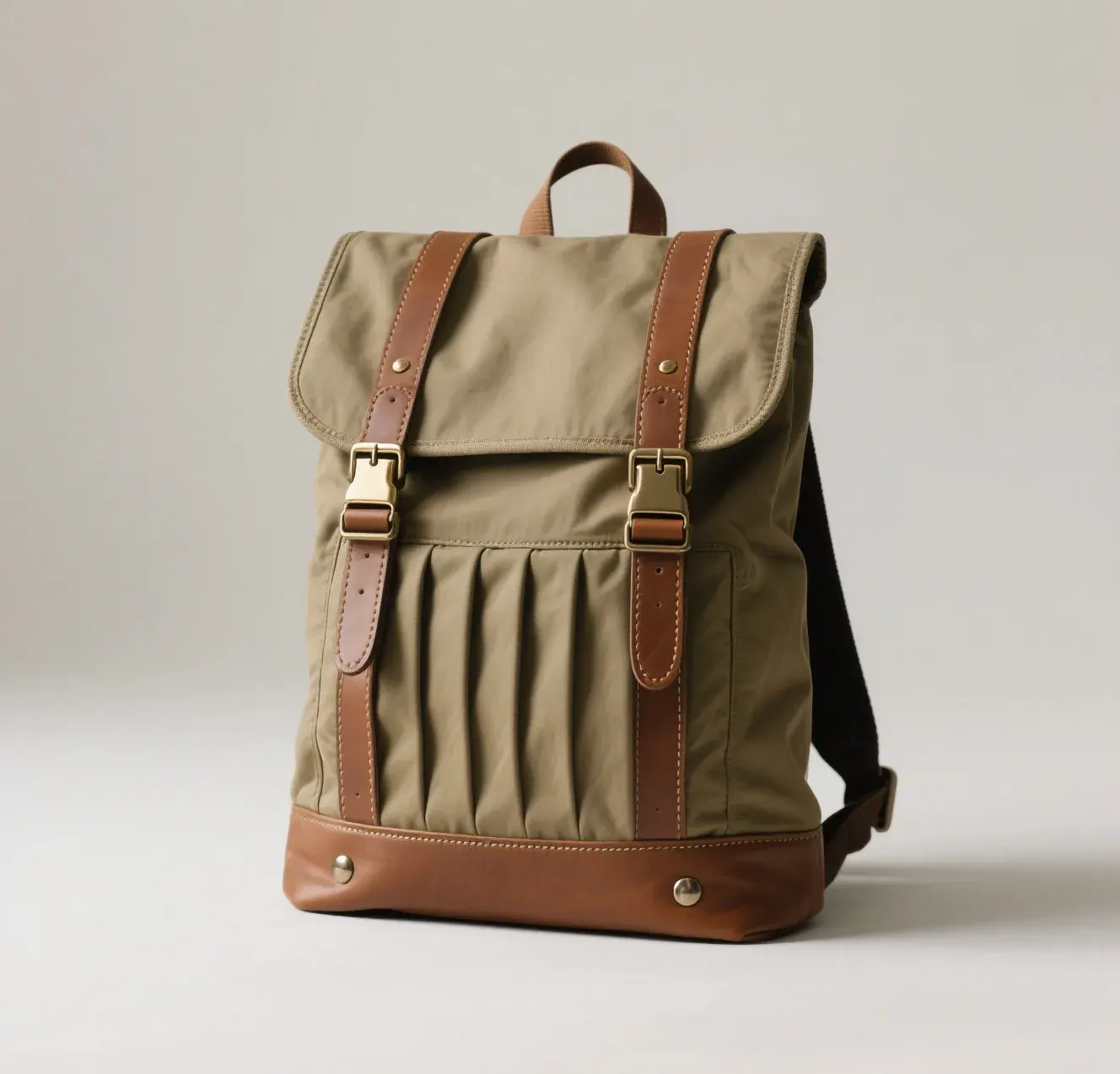
Branding is the one case where the choice is forced: PVC takes deep high-frequency embossing and standard screen print, while TPU prints cleanly with polyurethane inks and embosses to a shallower depth. Buyers with a large moulded logo should raise it before sampling, because the same artwork reads differently on the two shells.
Cold, Heat and Seasonal Handling
Cold is the clearest separator between the two films. A polyether TPU laminate stays workable to about minus 30 degrees Celsius and does not crack when folded; a general-purpose PVC compound begins to stiffen near minus 10 to minus 15 degrees Celsius and can crease-crack if it is folded while frozen. For a winter hiking, ski, ice fishing or northern motorcycle programme that is not a marginal difference but a field failure, and it is why TPU is the default above about 45 degrees latitude regardless of the cost delta.
Heat behaves differently and is the less obvious risk. A PVC shell left in a closed vehicle or a shipping container that reaches 60 to 70 degrees Celsius starts moving plasticiser toward the surface, which shows up as tackiness, print transfer and eventually a stiff, cracked panel. TPU is stable to those temperatures and only softens near 120 to 180 degrees Celsius depending on grade, but it is not immune: polyester-based grades lose strength in sustained hot and humid storage. The coated-fabric test methods used to characterise both behaviours, covering tensile, tear, adhesion and low-temperature bend, are collected by ASTM International in ASTM D751.
- Never fold or roll a PVC shell below minus 10 degrees Celsius; transport and warehouse it flat or loosely rolled above freezing.
- Ship and store both films below 50 degrees Celsius. Container interiors above 60 degrees Celsius are a documented cause of plasticiser bloom on PVC.
- For cold programmes, ask for a low-temperature bend result at the destination market temperature, not a generic minus 10 degrees Celsius figure.
Abrasion, Puncture and Service Life
Abrasion resistance tracks polymer toughness, and TPU wins it by a wide margin: 40,000 to 60,000 Martindale cycles to first yarn break against 20,000 to 35,000 for a comparable PVC laminate. That gap matters most at the base corners and along the shoulder strap contact line, which are the two places a pack actually wears out. Puncture resistance is closer than buyers expect, because PVC compensates for lower film strength with greater thickness, so a 0.7 mm PVC base panel and a 0.5 mm TPU base panel perform similarly against a point load.
| Failure mode | TPU behaviour | PVC behaviour | Prevention in the tech pack |
|---|---|---|---|
| Base corner abrasion | 40,000-60,000 cycles | 20,000-35,000 cycles | Reinforced 840D or 1000D base panel on both |
| Hydrolysis in hot humid | Polyester grades degrade; polyether resists | Not a primary mode | Name polyether TPU for tropical markets |
| Plasticiser migration | Not applicable | Stiffening from year 3 to 6 | Specify DOTP or DINP and a migration limit |
| Film-to-fabric delamination | Main long-term risk above year 6 | Secondary to stiffening | Test bond strength after ageing, not only on day one |
| Crease cracking in cold | Resists to about -30 C | Cracks near -15 C if folded | Cold bend test at destination temperature |
Service life follows from that table. A specified TPU pack lasts six to ten years and ends through delamination; a PVC pack lasts three to six years and ends through stiffening and corner cracking. For a rental fleet the shorter life is irrelevant; for a retail programme with a warranty process it is the most expensive row in the table.
Compliance: Phthalates, REACH, Prop 65 and PFAS-Free Finishes
The compliance file is where the two shells diverge most. PVC compounds historically relied on short-chain ortho-phthalates such as DEHP, DBP, BBP and DIBP, which are restricted under REACH and listed in California. Modern compounds use DOTP, DINP or DIDP instead, but the substitution has to be documented rather than assumed, and the declaration should name the plasticiser, not just say phthalate-free. TPU carries no chlorine and no plasticiser, which removes that whole section of the file, though aromatic isocyanate residues and any surface finish still need to be covered.
The durable water repellent finish applied on top of either shell is a separate question and it applies to both. Long-chain perfluoroalkyl chemistry is being withdrawn across major markets, and the regulatory position is summarised in the EPA PFAS programme pages. California listing requirements sit alongside it under Proposition 65. The practical instruction for a tech pack is to state PFAS-free DWR, name the plasticiser system, and request a screening report against REACH SVHC and Prop 65 on the finished laminate rather than on the raw film.
- Every quotation includes REACH and California Prop 65 screening on the finished laminate, and PFAS-free finishes are available on both shells.
- Ask for the declaration at laminate level; a raw-film certificate does not cover adhesive, ink or finish applied afterwards.
- Retailers with their own restricted substance list should send it with the first enquiry, because it changes film and finish selection.
How Each Shell Ages in the Field
Laboratory figures describe day one; field behaviour describes year three. On TPU the ageing is slow and cosmetic: slight yellowing on aromatic grades and polish at strap contact points. On PVC it is structural and faster: the shell stiffens, print can transfer, and base corners show a white stress line before they crack.
Saltwater shortens both lives and narrows the gap, because it attacks hardware and seam edges rather than the film. Rinse a salt-exposed pack in fresh water for two to three minutes per trip and dry it open; that adds roughly a season of life to either shell. Hardware and rinse routine are covered in our saltwater corrosion guide.
Which Shell for Which Programme
The selection that works in practice is made from three inputs: the lowest storage and use temperature the pack will see, the expected service life implied by the warranty, and the retail ticket. Programmes that score high on any of the three go to TPU; programmes that score low on all three go to PVC. Everything else is a judgement call that usually resolves on the branding requirement, since PVC embosses deeper and TPU prints cleaner.
| Programme | Recommended shell | Gauge | Realistic rating | Reason |
|---|---|---|---|---|
| Urban commute, laptop | TPU, polyether | 0.40 mm | IPX5 | Weight saved goes into padding and harness |
| Day hiking, 3 seasons | TPU | 0.40-0.50 mm | IPX5 | Abrasion and base wear dominate |
| Winter hiking, ski, snow | TPU, polyether | 0.50 mm | IPX5-IPX6 | Cold bend below minus 20 C |
| Motorcycle touring | TPU, polyester | 0.50 mm | IPX6 | Sustained jet at road speed |
| Kayak, rafting, paddle | TPU, polyether | 0.50 mm | IPX7 | Hydrolysis resistance plus immersion |
| Beach, pool, promotion | PVC | 0.50-0.60 mm | IPX4-IPX6 | Price point and embossing rule |
| Rental fleet, heavy duty | PVC | 0.70 mm | IPX6-IPX7 | Thick film takes point loads |
Two rows are worth defending because buyers push back on them. Kayak and rafting looks like a PVC case and is not, because a pack stored wet for weeks in a warm climate is exactly the condition under which a plasticised film ages fastest. Beach and promotion looks like a TPU case and is not, because the product is used a few weeks a year and the buyer needs the embossing and the price more than four extra years of life.
Care, Cleaning and Storage by Shell
Both shells clean the same way and for the same reason: aggressive chemistry attacks the film and the seam, not the dirt. Rinse in fresh water, wash with a pH-neutral soap at or below 30 degrees Celsius using a soft cloth, rinse again, and dry open and out of direct sun. Solvents, bleach and abrasive pads are excluded for both, and they are more damaging on PVC because they accelerate plasticiser extraction from the surface layer exactly where the shell is already thinnest.
Storage is where they diverge. A dry TPU pack can be rolled or folded for a season; a PVC pack should hang or sit loosely rolled, above freezing and away from heat, because a crease held under load at low temperature becomes a permanent stress line. Neither should ever be sealed shut while damp. The full routine is in our waterproof backpack cleaning guide.
Cost, MOQ and Sampling
Film cost is only part of the delta. TPU material runs 2.2 to 3.0 times PVC per square metre, but the finished pack lands at 1.35 to 1.55 because film is a minority of total cost once the harness, hardware, tooling and labour are counted. That ratio is the single most useful number to carry into a range review, because it means moving a mid-price programme from PVC to TPU is usually a margin decision rather than a price-band decision.
| Specification tier | Shell | Unit cost index | MOQ per design and colour | Sample and bulk timing |
|---|---|---|---|---|
| Entry, IPX4-IPX5 | PVC 0.50 mm | 1.00 | 500 pcs | Samples 6-8 working days, bulk 35-45 days |
| Mid, IPX5 | PVC 0.60 mm or TPU 0.35 mm | 1.10-1.35 | 500 pcs | Samples 6-10 working days, bulk 35-50 days |
| Core, IPX5-IPX6 | TPU 0.40 mm | 1.35-1.45 | 500 pcs | Samples 8-10 working days, bulk 40-50 days |
| Technical, IPX6-IPX7 | TPU 0.50 mm polyether | 1.45-1.60 | 500 pcs | Samples 8-10 working days, bulk 40-50 days |
| Immersion, IPX7-IPX8 | TPU 0.50 mm plus airtight zip | 1.60-2.10 | 500 pcs | Samples 10 working days, bulk 45-50 days |
- MOQ is 500 pcs per design and colourway; three colourways can be consolidated from 3,000 pcs.
- Samples take 6 to 10 working days and bulk runs 35 to 50 days, shipped FOB Xiamen or DDP into more than 100 countries.
- Monthly output of 200,000 units is verified by SGS; each bulk order is inspected at AQL 2.5 before release.
- A four-line brief starts a quotation: shell, gauge, rating target and quantity.
The shortest path to a decision is to sample both. Build one 0.40 mm TPU body and one 0.60 mm PVC body to the same pattern, run them through the same jet and immersion schedule, and weigh them side by side; the comparison settles in an afternoon what a specification meeting cannot settle in a month. Both shells and the seam work behind them are shown, or send shell, gauge and quantity to service@junyuanbags.com.
People Also Ask
Is TPU better than PVC for a waterproof backpack?
For most programmes above the entry price band, yes. TPU is about 40 percent lighter at equal strength, stays flexible to roughly minus 30 degrees Celsius against minus 10 to minus 15 for PVC, doubles the abrasion cycles and carries no chlorine. PVC wins on cost at 1.00 against 1.35 to 1.55.
Why is PVC cheaper than TPU?
Resin and compound cost less per square metre and the process window is wider: PVC welds in 1.2 to 2.5 seconds with broad energy tolerance, so scrap and skill requirements are lower. The gap narrows on the finished pack, where hardware and labour are shared.
How thick should a waterproof backpack shell be?
0.35 to 0.5 mm for TPU and 0.5 to 0.7 mm for PVC. Below those ranges the film punctures at the base corners; above them the pack gains weight without gaining rating, because the closure and the seam decide the rating, not the gauge.
Does a TPU backpack crack in cold weather?
A polyether TPU laminate stays workable to about minus 30 degrees Celsius and resists crease cracking. PVC stiffens near minus 10 to minus 15 degrees Celsius and can crack if folded at that temperature, so cold programmes specify TPU and ask for a bend test at the destination temperature.
Which shell lasts longer?
TPU, at six to ten years against three to six for PVC in comparable recreational use. TPU ends by slow delamination of the film-to-fabric bond; PVC ends by plasticiser loss, stiffening and corner cracking. For rental fleets and promotional runs the difference rarely matters.
Is PVC safe in a waterproof bag?
Yes when the compound uses current plasticisers such as DOTP, DINP or DIDP and is screened against REACH SVHC and California Proposition 65 on the finished laminate. The restricted ortho-phthalates are the concern, so the tech pack should name the plasticiser system.
Frequently Asked Questions
Q1. What is the real difference between a TPU and a PVC waterproof backpack?
The film. TPU is a block copolymer whose elasticity is built into the polymer, so it runs at 0.35 to 0.5 mm and weighs 480 to 620 grams per square metre. PVC is resin plus 30 to 60 phr plasticiser, so it runs at 0.5 to 0.7 mm and weighs 840 to 1,010 grams, losing plasticiser as it ages.
Q2. Which shell is lighter?
TPU, by roughly 40 percent at equal strength: 480 to 620 grams per square metre against 840 to 1,010 grams for 0.6 mm PVC. On a 30 litre pack with about 1.1 square metres of shell that is about 390 grams saved before hardware.
Q3. Can both shells be RF welded?
Yes. Both polymers are polar and weld at 27.12 MHz. PVC couples strongly and welds in 1.2 to 2.5 seconds with a wide energy window; TPU needs 1.8 to 3.2 seconds with tighter electrode control. The pass criterion is identical: seam peel at or above 90 percent of fabric tensile.
Q4. Which shell reaches a higher IPX rating?
Neither has an advantage. Rating is set by the closure and the seam, not by the film: a roll-top or airtight-zip body in either material reaches IPX7, and a coated-zip body in either material tops out near IPX5. Testing levels are defined by IEC 60529.
Q5. Is TPU worth the extra cost?
Yes above the entry price band. The finished-pack premium is 1.35 to 1.55 against a PVC base of 1.00, and it buys roughly 390 grams of saved weight on a 30 litre pack, about 20 degrees Celsius more cold range, double the abrasion cycles and two to four more years of service life.
Q6. Does PVC smell, and does the smell go away?
A new PVC shell has a noticeable compound odour that fades over two to five days once cartons are unpacked and aired. TPU is low odour by comparison. Neither indicates a defect, but tight retail unpacking windows should allow airing before shelving.
Q7. Which shell is better for winter and cold climates?
TPU, specifically a polyether grade, which stays workable to about minus 30 degrees Celsius. PVC stiffens near minus 10 to minus 15 degrees Celsius and crease-cracks if folded while frozen, so cold-climate programmes should also request a bend result at the destination temperature.
Q8. How long does each shell last?
TPU lasts six to ten years and ends through slow delamination of the film-to-fabric bond. PVC lasts three to six years and ends through plasticiser loss, stiffening and corner cracking. Saltwater and storage above 60 degrees Celsius shorten both.
Q9. Can either shell be printed or embossed?
Both, differently. PVC takes deep high-frequency embossing and standard screen print, which suits large moulded logos. TPU prints cleanly with polyurethane inks and a primer but embosses shallower, so artwork should be approved on the actual shell.
Q10. Is PVC compliant with REACH and California Proposition 65?
It can be, when the compound uses DOTP, DINP or DIDP rather than the restricted ortho-phthalates and is screened on the finished laminate. Declarations should name the plasticiser and cover adhesive, ink and finish, not only the raw film.
Q11. What is the MOQ for a TPU or PVC waterproof backpack?
500 pcs per design and colourway for both, set by minimum runs of film, webbing and hardware. Consolidating three colourways into one run from 3,000 pcs is usually cheaper than three separate 500 pc drops.
Q12. How do I decide quickly between the two?
Answer three questions: the lowest temperature the pack will see, the service life implied by the warranty, and the retail ticket. Cold below minus 15 degrees Celsius, a warranty beyond three years, or a ticket above the entry band all point to TPU. A price-led, short-life, emboss-heavy brief points to PVC.