A fishing bag that gets four short inspections a year lasts roughly three seasons longer than one cleaned hard once annually. The calendar is simple: a twenty-minute spring opening check after storage, a twelve-minute routine after every summer trip, a ninety-minute deep clean before autumn storage, and a fifteen-minute mid-winter look while the bag is out of use. Those four checks cost about four hours a year and prevent almost every failure worth naming, since nearly all tackle bag problems come from neglect rather than use. Wallet-level detail matters too: rust in terminal tackle starts within seventy-two hours of a wet tray going into a closed bag, and coating hydrolysis begins long before it becomes visible as flaking inside the liner.
Why Four Short Checks Beat One Annual Clean
Failure curves for soft tackle storage are not linear. Salt residue left on fabric keeps absorbing moisture from the air, and each week it sits there it pulls more water into the coating, which is how a bag that looked fine in October has a cracked liner in March. A twelve-minute reset removes the salt while it is still on the surface. Waiting until the end of the season means the damage has already been done and no amount of cleaning reverses it.
The second reason a calendar works is that it puts each task next to something the angler already does. The spring check happens when the licence is renewed. The summer reset happens in the driveway before loading the car. The autumn deep clean happens the weekend the boat comes out. Chores attached to existing habits actually get done; chores that wait for a free weekend generally do not.
The Four-Check Calendar at a Glance
Print this table and keep it with the fishing licence. These are the four points in the year when twenty minutes changes the outcome, and the numbers column is deliberately conservative: it is what real tasks take with materials already to hand, not best-case estimates from a tidy bench.
| Check | Trigger in the year | Core tasks | Minutes | What it prevents |
|---|---|---|---|---|
| Spring opening check | First trip after storage | Unpack, inspect seams, cycle every zip, re-proof if needed | 20 | Storage creep, stiff coatings, stuck sliders |
| Post-trip reset | Every summer session | Empty trays, rinse shell, dry open and upside down | 12 | Rust, mould, saltwick into seams |
| Autumn deep clean | Last trip of the season | Wash, de-rust trays, re-proof shell, dry 48 hours | 90 | Hydrolysis, liner delamination, odour |
| Mid-winter look | One dry week in January | Check storage humidity, loosen straps, confirm no pests | 15 | Compression set, mildew, rodent damage |
Spring: The Opening Check After Storage
Storage is harder on a bag than fishing is. Straps held under tension for four months develop compression set in the foam padding, and webbing kept fully extended loses about five percent of its elasticity. The first job in spring is to release every strap to its full length, open all compartments, and let the bag sit in a cool dry room for twenty-four hours before it is loaded, which lets the foam recover and reveals any damp that accumulated over winter.
Then run the mechanical part of the check in order. Stand the empty bag on a bench and look for four things: coating that has gone tacky or powdery, which indicates hydrolysis; stitch lines that show fraying at strap anchors; hardware with rust bloom or white corrosion powder; and any area of the liner that has begun to lift. Finding these in a warm garage is far better than finding them at a boat ramp at five in the morning.
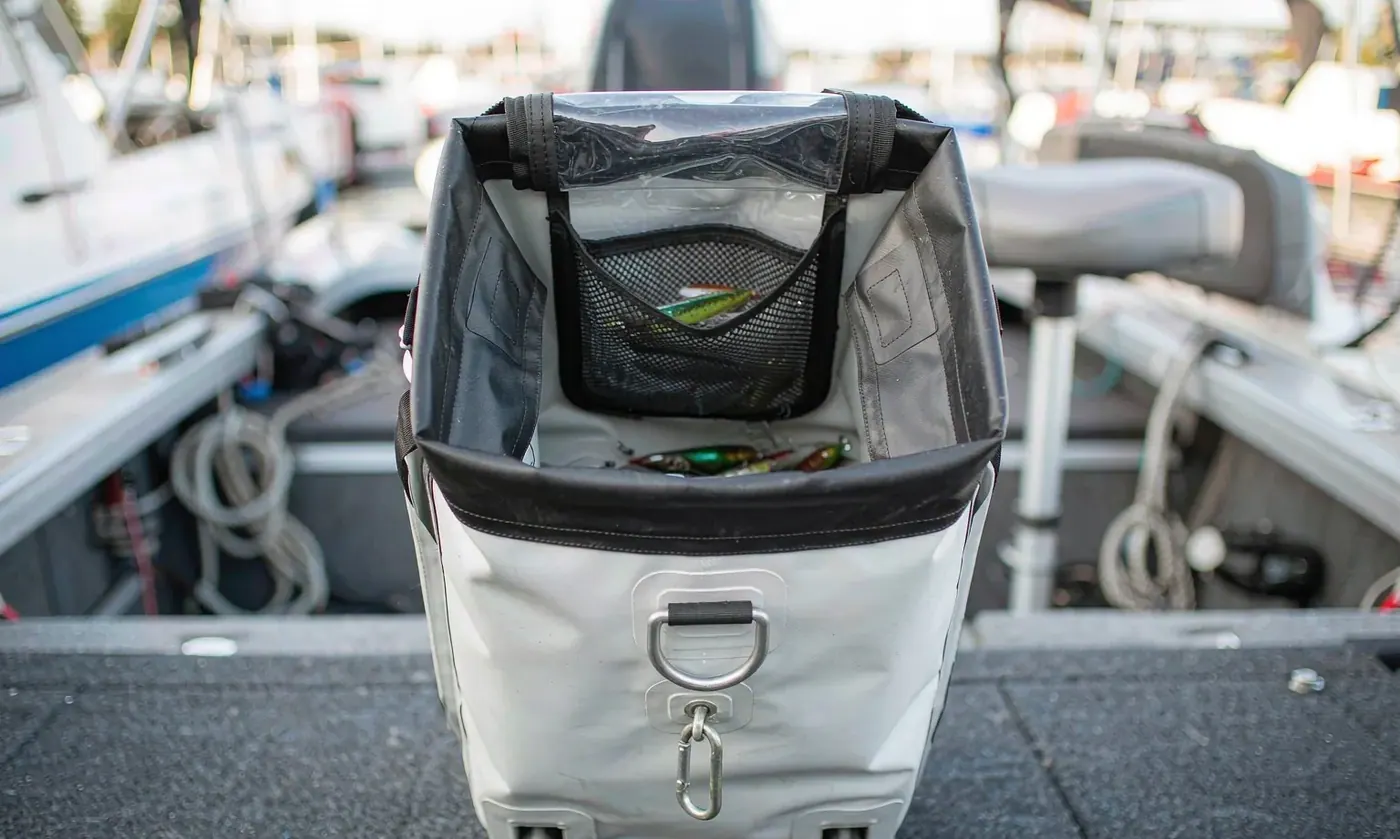
Finish the spring check with a re-proofing decision. Press water onto the shell fabric: if it beads and rolls, the original finish is intact; if it darkens and spreads, the durable water repellent layer has worn off and a spray-on reproofing treatment is worth applying. This costs about eight dollars and takes twenty minutes, and it keeps surface water from soaking into the face fabric so the bag stays lighter and dries faster all season.
Spring Tray and Terminal Tackle Reset
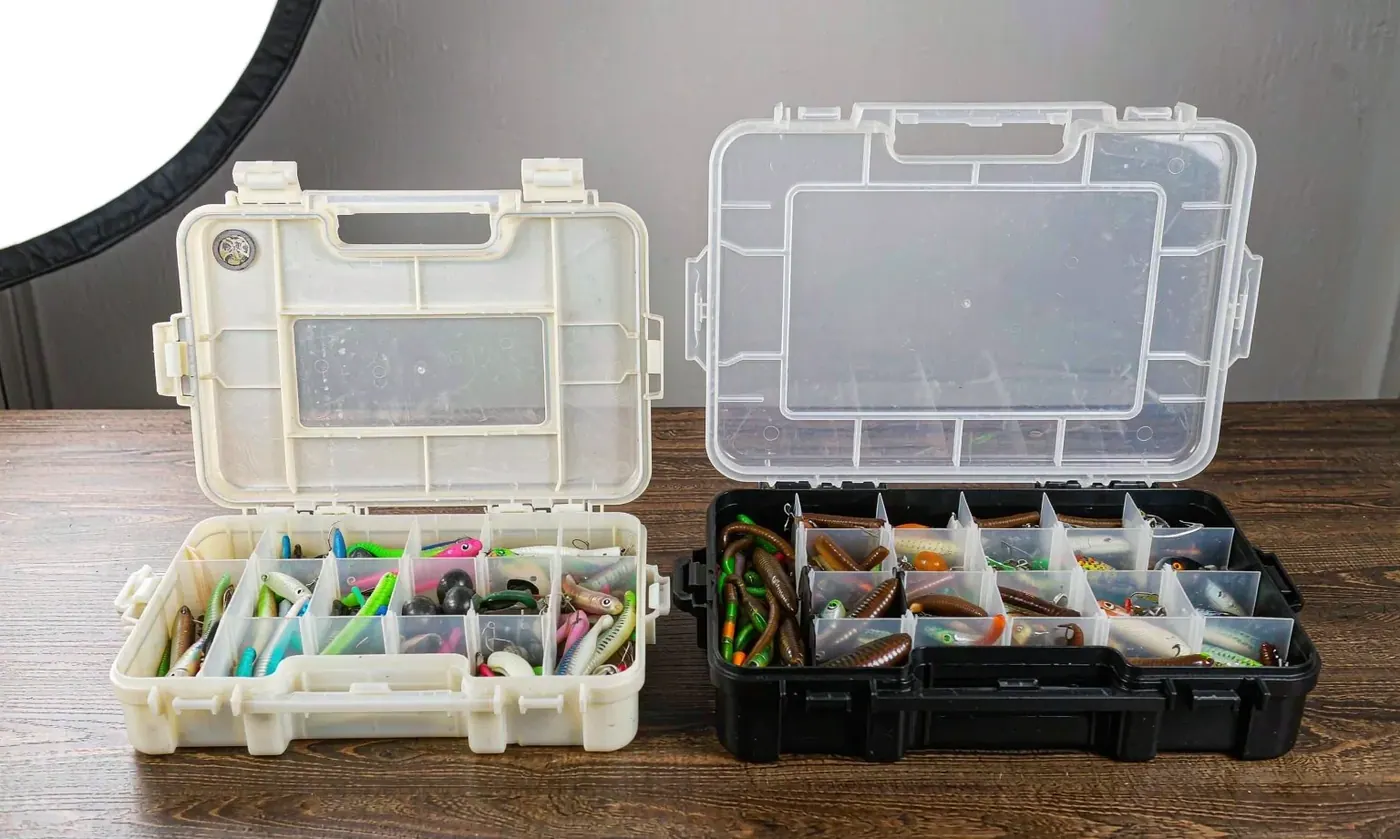
Terminal tackle is where money quietly disappears.hooks left damp in a closed tray start showing rust bloom in seventy-two hours, and once hooks rust they are unreliable at the point where it counts. The reset is straightforward: sort every tray, discard hooks with any discolouration at the bend, wipe trays dry with a cloth, and put a ten gram silica sachet in each tray at the start of the month.
Soft plastics deserve their own spring audit. Packs that have leaked plasticiser over winter leave a tacky film that transfers to everything it touches, and any tray holding them should be washed with warm water and mild detergent before it goes back in the bag. Sorting the collection by water temperature rather than by lure type also saves time later, which is discussed in more detail in the guide to stopping tackle rusting inside the bag.
Summer: Salt, Sun and Plasticiser Load
Summer is when load peaks and care typically stops. A single inshore session exposes a bag to salt spray, direct ultraviolet light at ninety thousand lux, sunscreen residue and soft plasticiser, which is four aggressive inputs in one day. Sun is the most underestimated: ultraviolet exposure accounts for a measurable share of strength loss in polyester webbing, and webbing left hanging in direct sun for two seasons can lose a fifth of its tensile strength while still looking serviceable.
The practical response is positional rather than chemical. Keep the bag out of direct sun during breaks by putting it under a gunnel or in shade, since twenty minutes in shade costs nothing and halves cumulative ultraviolet dose. Rinse with fresh water at low pressure after any salt exposure, paying attention to zip coils, buckle springs and strap adjusters, where salt crystals concentrate and later abrade moving parts.
The Twelve-Minute Reset After Every Trip
This is the single highest-value habit on the list and it takes twelve minutes. Do it in the same order every time and it becomes automatic: empty trays, shake out the cavity, rinse the shell, dry the bag open and upside down. Drying matters more than rinsing, because nearly every mould and odour case begins with a bag closed wet in a garage or a boot.
- Empty every tray and shake out debris from the bag cavity, since grit left inside abrades the coating from the inside.
- Rinse the shell with fresh water at low pressure; a pressure washer above about forty bar will drive water past a taped seam.
- Open all compartments, invert the bag over a rail or chair back, and leave it in moving air overnight.
- Wipe rather than submerge hardware, then cycle zips and buckles twice so they do not seize while stored.
- Hang the bag by its webbing loop rather than by the shoulder straps, which puts tension where gravity belongs.
- Photograph anything that looks like early failure; tracking one crack over a season tells you whether it is spreading.
Full cleaning steps beyond this quick reset, including what to do about scent spills and fish slime, are in the fishing tackle backpack cleaning walkthrough, and the drying technique that avoids both mildew and coating damage is set out in the guide to drying a wet fishing bag.
Closures: The Zip and Buckle Checks by Season
Closures are the parts that get used most and inspected least. A coated zip has a service life measured in cycles rather than years, typically around four thousand open-close cycles before water resistance degrades noticeably. At fifteen to twenty-five cycles per fishing day that is roughly two hundred days of use, which for a serious angler arrives inside two seasons. Checking monthly costs one minute and catches the failure while a slider swap is still the whole repair.
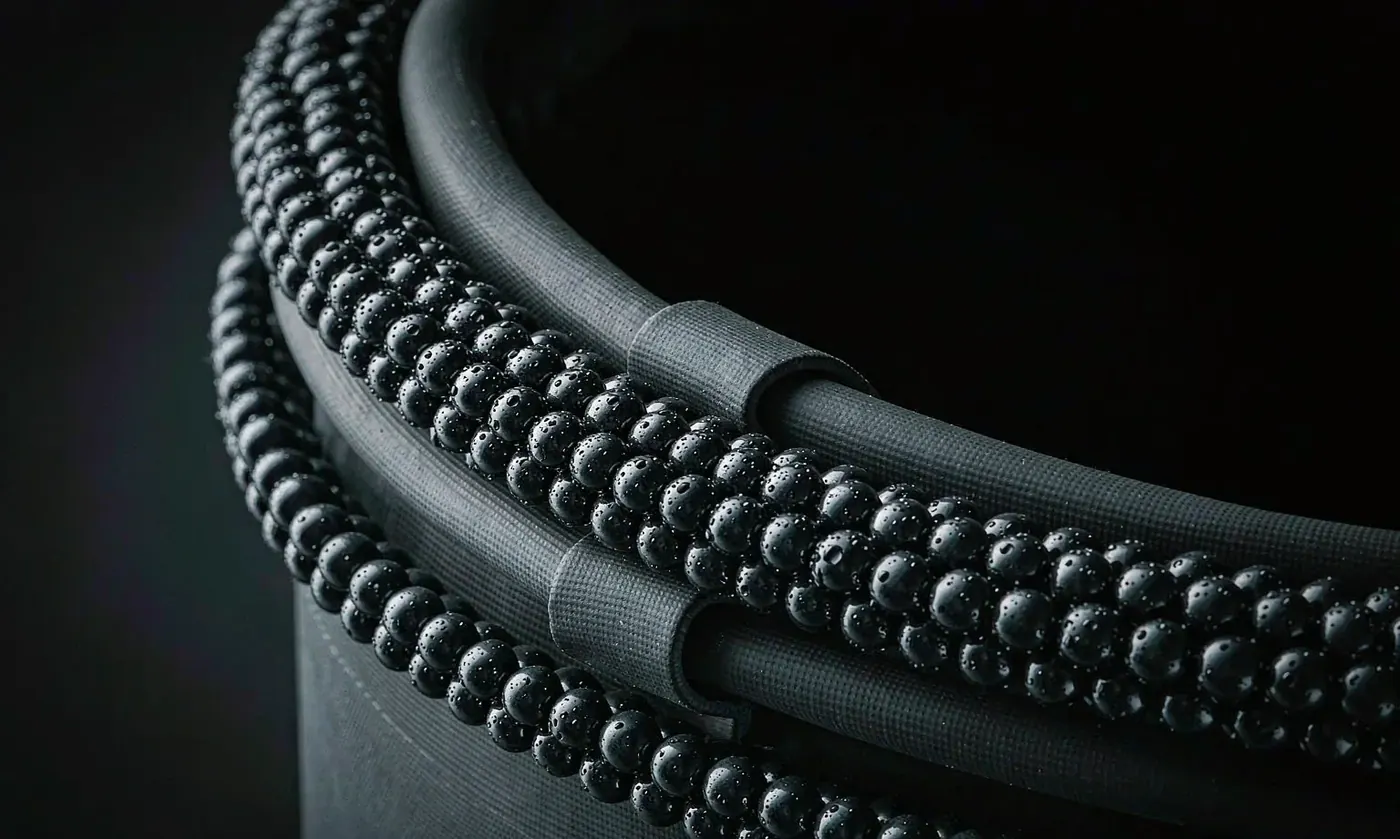
Buckles and ladder locks need attention too. Salt crystals inside a spring-loaded buckle cause intermittent slip, which is the sort of fault that only shows up under load at the worst possible moment. Flushing with warm fresh water and working the mechanism twenty times clears it in most cases, and a dry silicone lubricant applied sparingly afterwards keeps the spring moving without attracting grit. The full routine, including which lubricants to avoid, is in the waterproof zipper care guide.
Autumn: The Ninety-Minute Deep Clean Before Storage
The autumn clean is the only long session of the year, and its purpose is to put the bag into storage in a state where nothing active can still damage it. Work outdoors in shade, budget ninety minutes, and follow the order below, because washing before repairing means patches will not bond to a dirty surface.
| Step | What to do | Minutes | Common mistake |
|---|---|---|---|
| 1. Strip | Remove every tray, tool and insert; shake out grit | 10 | Cleaning with trays still inside |
| 2. Wash | Mild detergent, warm water, soft brush at low pressure | 25 | Using a machine or harsh solvent |
| 3. Rinse | Two full changes of fresh water until no suds remain | 10 | Leaving detergent residue that attracts dirt |
| 4. Repair | Patch punctures, replace sliders, re-stitch loose anchors | 20 | Repairing before cleaning so nothing bonds |
| 5. Dry | Open, inverted, moving air for 48 hours | 5 plus wait | Radiator drying above 60 degrees |
| 6. Re-proof | Spray-on repellent, then twenty minutes to flash off | 20 | Applying to a damp surface |
Drying is the step most often cut short and the one that cannot be. Forty-eight hours sounds long, but zips trap water behind their tape and base cavities hold liquid that evaporates slowly; moving air from a fan speeds this considerably, whereas heat does not and risks coating damage. Chemical choices during cleaning deserve the same care as the mechanics, and product safety guidance from the United States Environmental Protection Agency is the sensible reference before using anything stronger than mild detergent.
Off-Season Storage: Position, Humidity and Temperature
How a bag is stored decides whether it comes back usable. Store it open, dry, and with all straps loosened to full length, standing upright on its base rather than hanging, since hanging puts sustained load on strap anchors for months. Aim for relative humidity between forty and fifty-five percent, because below thirty percent the coating loses plasticiser faster and above sixty percent mould becomes likely in anything not fully dry.
Temperature matters less than stability. A garage that swings between two degrees and thirty-five degrees across the year causes more expansion and contraction cycling than a steady cool room, and that cycling is what eventually lifts adhesives at seams. CMOS-free detail aside, the practical answer is an interior cupboard if one is available, and off a concrete floor if it is not, since concrete wicks moisture upward even through a cardboard box.
Rodents are a real threat to soft goods stored in garages: mice chew webbing and nest in open compartments. A bag with every closure done up, stored inside a lidded plastic tote, removes almost all of that risk for the price of one box. Detailed storage position diagrams and humidity guidance are covered in the off-season fishing bag storage walkthrough.
Rods, nets and landing mats deserve a line in the same calendar, because they share storage space and share its problems. A net left damp in the same tote will start mildew that spreads to the bag lining, and a rod sleeve holding reservoir water will keep the local humidity above sixty percent no matter how dry the room is. Whatever goes into the storage box should go in dry, and anything that cannot be dried belongs outside it.
Wear Markers: Numbers That Say Replace Rather Than Repair
There is a point past which maintenance no longer pays. Three measurements settle it quickly and remove the guesswork that keeps people carrying a bag they cannot trust around water. Keep these thresholds in mind during the autumn clean, since that is when honest decisions are cheapest to make.
| Measurement | Threshold to watch | What it means | Action |
|---|---|---|---|
| Zip water shedding | Wets through in 30 seconds of light spray | Coating past useful life | Treat as shower resistant, use a dry pouch |
| Liner flaking area | More than 10 percent of interior surface | Hydrolysis well advanced | Replace the bag |
| Webbing thickness loss | Worn to under half original thickness | Strength below safe margin | Replace webbing or the bag |
| Base compression | Bag no longer sits square when empty | Moulded base has lost structural role | Replace the bag |
| Coating tackiness | Surface stays tacky after cleaning | Plasticiser migration is irreversible | Retire from salt use at minimum |
Saltwater Versus Freshwater: Two Different Calendars
The four-check calendar assumes average use, but saltwater programmes need roughly double the rinsing attention and freshwater programmes need more of it directed at silt and algae. Salt is chemically active: sodium chloride crystals concentrate in moving parts and keep drawing moisture, so a coastal angler should rinse after every single session without exception. Freshwater silt is inert but abrasive, and it is what wears coated surfaces from the inside when trays are put back into a bag without being shaken out first.
| Input | Saltwater programme | Freshwater programme | Where the extra effort pays |
|---|---|---|---|
| Rinsing | After every session, low pressure fresh water | After every second session | Zip coils, buckle springs, strap adjusters |
| Drying | 48 hours before closing for storage | 24 hours is usually enough | Behind zip tape and inside base cavities |
| Hardware | Stainless only, inspect monthly | Plated steel acceptable inland | Rivet heads and spring-loaded ladder locks |
| Interior care | Wipe salt film from tray lips weekly | Shake out silt and algae weekly | Tray rails and the bag cavity floor |
| Storage risk | Chronic damp corrosion | Mould from organic residue | The two failure modes look similar but need different fixes |
The distinction matters commercially as much as it does practically. A retailer serving coastal customers who follows a freshwater maintenance card will see corrosion returns, and a retailer inland will see mould returns, even though the bags themselves are identical. Matching the care card to the water type is a zero-cost way to cut both.
What the Season Costs in Time and Materials
Budgeting the maintenance year makes the habit realistic. The whole calendar runs to about four hours and under forty dollars of consumables annually, against a replacement cost of between seventy and two hundred and fifty dollars for a quality tackle backpack. Even at the pessimistic end, four hours protects something worth several hundred dollars and, more importantly, protects the contents: a soaked phone, scale or camera costs more than any bag.
| Consumable | Used for | Units per year | Cost per year |
|---|---|---|---|
| Mild pH-neutral detergent | Spring and autumn wash | 1 bottle | 8 dollars |
| Isopropyl alcohol wipes | Surface prep before repairs | Half a pack | 4 dollars |
| Dry silicone lubricant | Zips and buckles | 1 small can | 9 dollars |
| Spray-on reproofing treatment | Autumn shell treatment | 1 can every two years | 7 dollars |
| Silica sachets, 10 gram | Trays, monthly | 12 sachets | 6 dollars |
One more habit pays back immediately: label the storage box with the date the bag went in and the date of the last reproofing treatment. It takes twenty seconds and removes the annual guess about whether the shell finish is six months or two years old. Programmes that track this on a phone reminder rather than from memory consistently catch the reproofing window before the first trip of spring instead of three trips into it.
Specification Notes for Programme Buyers
Retail and distribution programmes benefit from putting this calendar in the box. A card listing the four checks costs about four cents and measurably reduces returns attributed to rust or mildew, which are usually care failures rather than build failures. Specification choices reinforce the same outcome: stainless rather than zinc-alloy hardware, UV-stable bonded thread, tray designs that drain rather than pool, and base constructions that do not hold water behind a liner.
QUANZHOU JUNYUAN BAGS has concentrated on waterproof bag work since 2014 under BSCI and ISO 9001 governance, screening incoming materials for REACH and California Prop 65 and inspecting every bulk shipment at AQL 2.5, with monthly output of 200,000 units verified by SGS. Salt exposure expectations are worth tying to published corrosion test methods from ASTM International, and cold-weather handling guidance for ice-fishing programmes to exposure advice from the United States Centers for Disease Control and Prevention. Opening quantities start at 500 pieces per design and colour, sampling takes six to ten working days, and bulk runs take thirty-five to fifty days from approved sample and deposit. Send briefs to service@junyuanbags.com.
People Also Ask
How often should a fishing bag be cleaned?
Rinse after every trip in salt or brackish water, dry open each time, and do one full deep clean before autumn storage plus one check in spring.
What is the fastest daily maintenance habit for a tackle bag?
The twelve-minute reset: empty trays, rinse the shell with fresh water, then dry the bag open and upside down in moving air overnight.
How long does a waterproof coating last on a fishing bag?
Around two seasons or four thousand zip cycles before water resistance drops noticeably, depending on ultraviolet exposure and salt contact.
Can a fishing bag be stored in a garage over winter?
Yes if humidity stays between forty and fifty-five percent and the bag is dry, closed and boxed, since rodents chew webbing and nest in open compartments.
What humidity is safe for storing soft tackle bags?
Forty to fifty-five percent relative humidity. Below thirty percent the coating loses plasticiser faster and above sixty percent mould becomes likely.
Should fishing bags be hung or stored standing?
Standing upright on the base with straps loosened. Hanging puts continuous load on strap anchors for months and causes foam compression set.
Frequently Asked Questions
Q1. What is on a seasonal fishing bag maintenance checklist?
Four checks: a twenty-minute spring opening inspection, a twelve-minute reset after each summer trip, a ninety-minute autumn deep clean, and a fifteen-minute mid-winter storage check.
Q2. How do I prepare a tackle bag for off-season storage?
Deep clean, repair any damage, dry for forty-eight hours in moving air, reproof the shell, loosen all straps, then store upright in a lidded box at forty to fifty-five percent humidity.
Q3. Why does my bag smell even after cleaning?
Either moisture trapped behind the liner or foam that has grown mould. Mould needs vinegar treatment plus airflow; a sharp chemical smell means coating hydrolysis, which cannot be cleaned away.
Q4. Can I put a fishing backpack in the washing machine?
No. Agitation destroys welded seams and tears coated fabric at the corners. Hand wash with mild detergent and rinse twice with fresh water.
Q5. How do I keep hooks from rusting between trips?
Dry trays before closing the bag, keep terminal tackle in a vented compartment, and put a ten gram silica sachet in each tray at the start of each month.
Q6. How much sunlight damages a fishing bag?
Two seasons of regular direct sun can strip roughly a fifth of webbing tensile strength. Shade during breaks halves the cumulative ultraviolet dose at zero cost.
Q7. Should all straps be loosened before storage?
Yes. Webbing held at one length for months loses about five percent of elasticity and the foam padding takes a compression set that does not fully recover.
Q8. How often should zippers be lubricated?
Every three or four trips in summer and once before storage. Use dry silicone, never oil or wax, because both collect grit and abrade the coil.
Q9. What water pressure is safe for rinsing a fishing bag?
Low garden-hose pressure only. Anything above about forty bar will force water past a taped seam that would otherwise keep its seal.
Q10. When is a fishing bag no longer worth maintaining?
When the liner has flaked across more than ten percent of its area, when the base no longer keeps the bag square, or when coating stays tacky after cleaning.
Q11. Does a waterproof bag need reproofing treatment?
Yes, roughly every two years. If water spreads into the face fabric instead of beading, the durable repellent finish has worn off and should be renewed.