A wet fishing bag dries in four to twelve hours if three things are true: it is inverted so water can leave, every compartment is open so air can reach it, and moving air rather than heat is doing the work. A bag left upright and closed takes days and will usually smell by the second day, because mould establishes within twenty-four to forty-eight hours in a damp, dark cavity. The fastest safe sequence is towel the padding, invert the bag, open everything, and run a fan across it for four to six hours, then leave it overnight in moving air. Never use a radiator, a tumble dryer or a hair dryer on high, because sustained surface temperature above 60 degrees degrades coatings and shrinks linings.
How Fast Does a Bag Actually Dry
Drying time depends on method far more than on how wet the bag was, and the spread between a good method and a bad one is roughly ten to one. The figures below are for a 35 litre bag that has been rained on for a full session, with the interior damp rather than flooded, at 18 degrees and 60 percent ambient humidity.
| Method | Time to dry | Smell risk | Damage risk |
|---|---|---|---|
| Upright, closed, in a garage | 3 days or never | High | Mould |
| Upright, open, still air | 24 to 36 hours | Moderate | Low |
| Inverted, open, still air | 12 to 18 hours | Low | Low |
| Inverted, open, fan airflow | 4 to 6 hours | Very low | None |
| Inverted, open, dehumidifier nearby | 3 to 5 hours | Very low | None |
| Radiator or tumble dryer | 2 to 4 hours | Low | High, coating damage |
The pattern in that table is the whole article in one place. Inverting roughly halves the time, opening every compartment halves it again, and moving air halves it once more. Heat is the only method that damages the bag, and it is the one people reach for first because it is fast.
The Four Variables That Control Drying
Evaporation is governed by four variables and an angler controls three of them. Airflow across the surface, the wetted surface area exposed, the humidity of the air doing the absorbing, and temperature, which is the one worth leaving alone. Understanding which is which makes the routine obvious rather than a set of rules to remember.
| Variable | Angler control | Effect | Practical move |
|---|---|---|---|
| Airflow | High | Removes saturated air from the surface | Run a fan across the open bag |
| Exposed surface area | High | More area means faster loss | Invert and open every compartment |
| Ambient humidity | Moderate | Dry air absorbs more moisture | Dehumidifier or a dry room |
| Temperature | Low, and risky | Warm air holds more water | Leave it at room temperature |
One nuance is worth stating because it surprises people: warm air holds more water, so warmth does genuinely help, but the mechanism is humidity capacity rather than heat transfer. A dehumidifier in a closed room at normal temperature achieves the same result as warmth without pushing the coating toward temperatures that cause damage, which is why it is the better tool.
The Twelve Hour Routine, Step by Step
This is the sequence to run every time a bag comes home wet. It takes about fifteen minutes of work and four to twelve hours of waiting, and it is the difference between a bag that is ready for the next session and one that smells for the rest of the season.
- Empty the bag completely, including trays, inserts and every pocket, within four hours of getting home.
- Towel the interior dry, pressing a microfibre cloth into the padding and the base seam where water collects.
- Turn the bag upside down and open every closure, pocket, compartment and flap, including the ones that seem dry.
- Pull linings out where possible, since a lining stuck to the shell dries last and is where mould starts.
- Put a fan on low across the open bag, positioned about a metre away so air moves over rather than into it.
- Place 10 gram silica sachets inside each closed cavity that cannot be opened, and leave them overnight.
- Leave it for at least twelve hours, then check the base seam and the strap padding with the back of a hand before closing it.
The fourth step is the one most people miss and it is the one that prevents the specific smell people complain about, which comes from a liner that dried on the outside and stayed wet against the shell. Pulling the lining out converts a two day job into a six hour one. Where a lining cannot be pulled out, the alternative is to hold it away from the shell with a rolled dry towel for the first two hours, which creates an air gap and achieves most of the same effect.
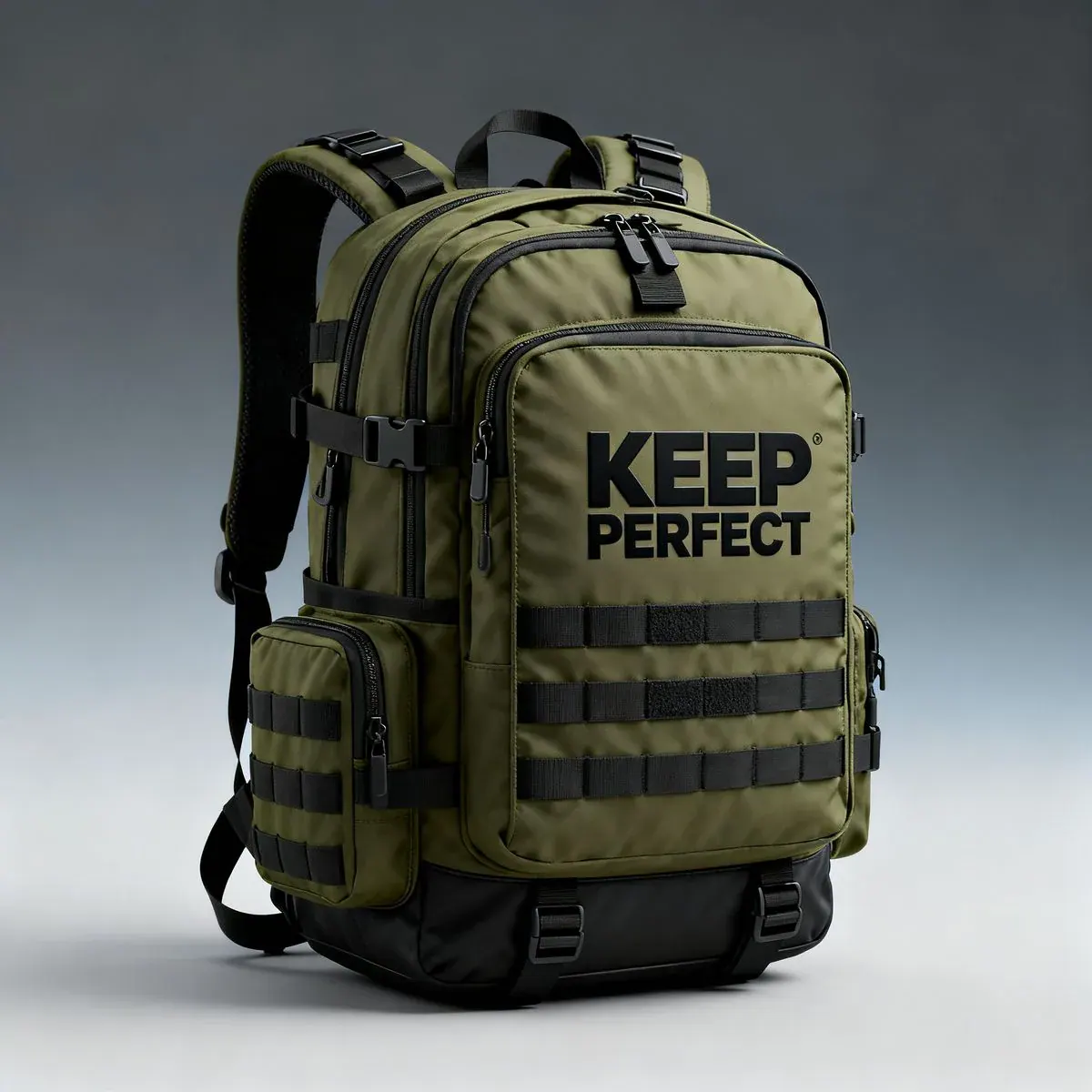
The Compartments That Dry Slowest
Not every part of a bag dries at the same rate, and knowing which parts are slow is what lets the last hour of drying be targeted rather than assumed. Padding, seam channels and closed cavities are the slow three, and each needs a specific move rather than more time.
| Part | Why it is slow | Typical extra time | What to do |
|---|---|---|---|
| Shoulder strap padding | Closed cell foam holds water at the stitch line | 6 to 12 hours | Press with a towel, then air |
| Base seam channel | Water sits in the weld channel | 4 to 8 hours | Invert fully, prop the base open |
| Lined dry pocket | Lining clings to the shell when wet | 12 to 24 hours | Pull the lining out |
| Zip chain and garage | Water sits between the teeth | 2 to 4 hours | Wipe along the chain both ways |
| Webbing and strap ends | Weave holds water by capillary action | 3 to 6 hours | Squeeze and air |
The base of a bag with a moulded base deserves a note, because it is counterintuitive. A moulded base that has taken water holds it in the channel around its perimeter rather than draining, and inverting the bag does not clear it if the base is concave. Propping the bag at an angle so one corner is lowest clears that channel in an hour, where leaving it flat can leave water there for a day.
What Speeds Drying Up and What Does Not
Four interventions work, three do nothing, and two cause damage. Sorting them out in advance saves both time and bags, because the interventions that do nothing are the ones people repeat hopefully for hours.
| Intervention | Works | Why |
|---|---|---|
| Fan across the open bag | Yes | Removes saturated air from the surface |
| Dehumidifier in the room | Yes | Lowers ambient humidity so air absorbs more |
| Towel pressure on padding | Yes | Removes bulk water mechanically |
| Silica sachets in closed cavities | Yes | Holds a closed space at low humidity |
| Newspaper stuffed inside | Partly | Absorbs, but less than a towel and leaves ink risk |
| Hanging it up outdoors | Partly | Good airflow, useless above 80 percent humidity |
| Hair dryer on cool | Marginal | Airflow helps, but a fan does it better |
| Radiator or tumble dryer | No, harmful | Degrades coatings above 60 degrees |
| Direct sun for hours | No, harmful | Ultraviolet plus heat, and uneven drying |
Outdoors drying is worth a specific caveat, because it looks like the obvious answer and often is not. On a dry, breezy day it is excellent, and a bag in a draughty porch will often beat a fan indoors. On a humid day above 80 percent relative humidity it achieves very little, and overnight outdoors it usually makes things worse, because humidity rises after dark and dew forms on the very surfaces being dried. The same applies to a bag left in an open vehicle overnight, where the interior cools faster than the outside air and condensation forms on the shell.
Why Heat Damages a Bag
Two thresholds matter and both are lower than people expect. Sustained surface temperature above 60 degrees begins to accelerate hydrolysis in some coatings and can shrink linings that are laminated rather than welded. Above 80 degrees, PVC coatings can soften enough to block or crease permanently, which is why a bag dried on a radiator often comes off it with a permanent shine and a distorted base.
A hair dryer is the grey area and the answer depends entirely on setting. On cool, it is simply a small fan and is harmless. On hot, it delivers air well above 100 degrees at the nozzle and can damage a coating in seconds of careless use, particularly at the zip and at welded edges. Where a hair dryer is the only option, use cool and hold it 30 centimetres away, and prefer a fan.
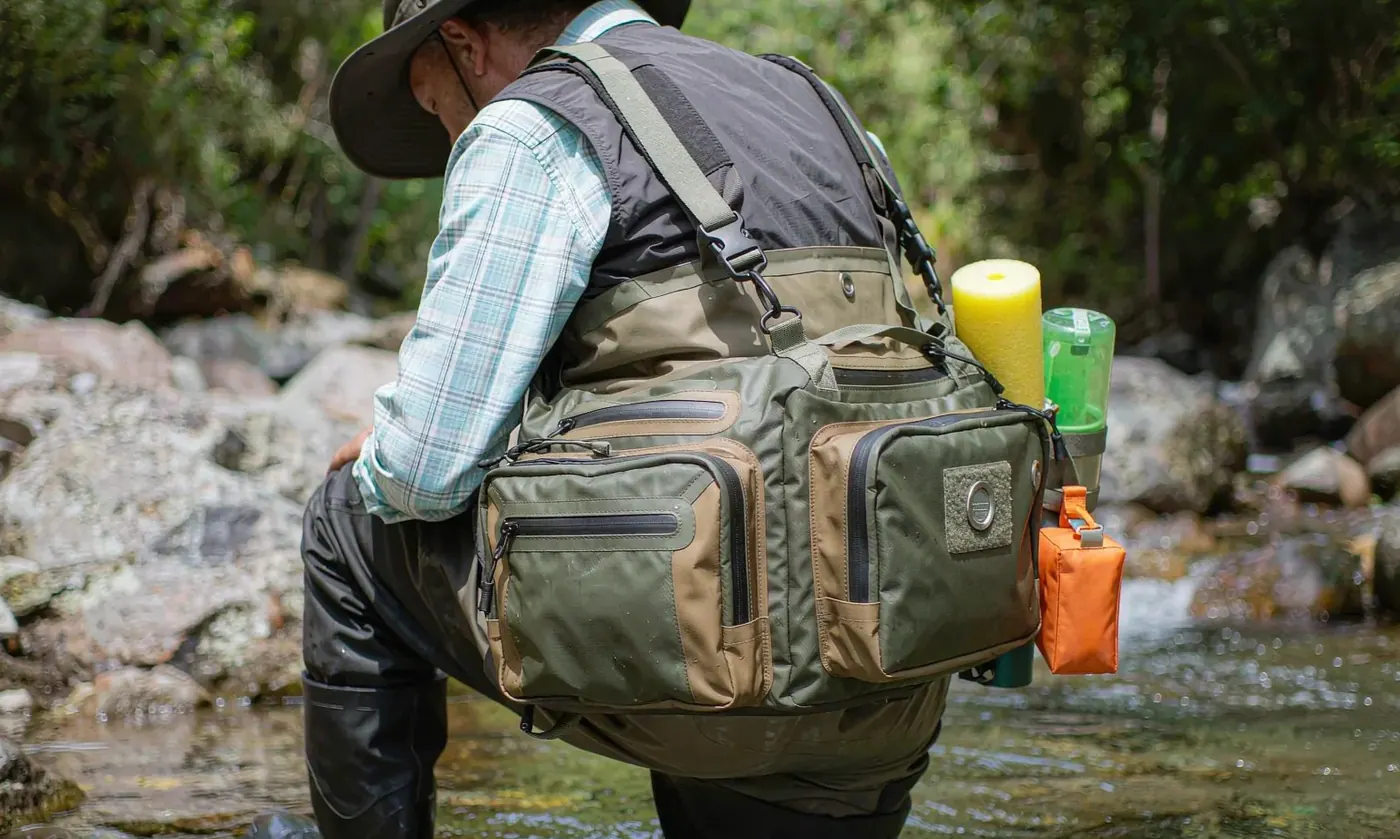
Smell and Mould: The Timelines
Two clocks run on a wet bag and both are shorter than intuition suggests. Bacterial odour becomes noticeable within about twenty-four hours in a warm damp cavity, and mould becomes visible within twenty-four to forty-eight hours depending on temperature and on what organic residue is present. A bag with bait residue or fish slime on it sits at the fast end of both ranges; a bag that only took rain sits at the slow end.
| Elapsed time | What is happening | What to do |
|---|---|---|
| 0 to 4 hours | Free water present, no biological change | Dry it now, no consequences |
| 4 to 12 hours | Bacterial growth begins | Still recoverable by full drying |
| 12 to 24 hours | Odour becomes detectable | Dry, then wash |
| 24 to 48 hours | Mould becomes visible | Treat with vinegar, dry in sun |
| Beyond 48 hours | Mould in padding and seams | Assess whether the bag is usable |
Health guidance on dampness, mould and when porous materials should be discarded is published by the United States Centers for Disease Control and Prevention, and moisture control guidance for buildings and stored goods by the United States Environmental Protection Agency. Both are worth reading before tackling a badly affected bag, and both recommend protective equipment when disturbing dry mould. Where a bag is used by several people, as on a charter boat or within a family, treat visible mould as a reason to inspect every bag stored in the same place, because the conditions that produced it rarely apply to one bag alone.
Drying a Bag That Went Fully Under
Immersion is a different case from rain and it needs two extra steps. Everything porous inside has to come out and be dried separately, including trays, inserts, any padding and absolutely any paper or cardboard, which should be discarded rather than dried. And the bag should be checked for water inside closed structures, because a hollow moulded base or a sealed compartment can hold water that no amount of airing will remove.
- Open and drain every cavity, including rod holders, tube sleeves and hollow mouldings, which trap water invisibly.
- Remove trays and dry them separately, since a wet tray inside a drying bag keeps the interior humid.
- Discard anything paper or cardboard that went under, because it will mould regardless of how it is dried.
- Check electronics pouches separately and dry any device before reconnecting it to power.
- Allow a full twenty-four hours rather than twelve, because padding that has been soaked needs longer than padding that was sprayed.
A bag that has been under should also be re-tested before it is trusted again, because immersion is exactly the failure case the rating describes and a bag can emerge with a compromised closure. The test takes ten minutes with a bath towel and a weight, and it is worth doing before the next session rather than during it. Home test method is in the waterproof testing guide.
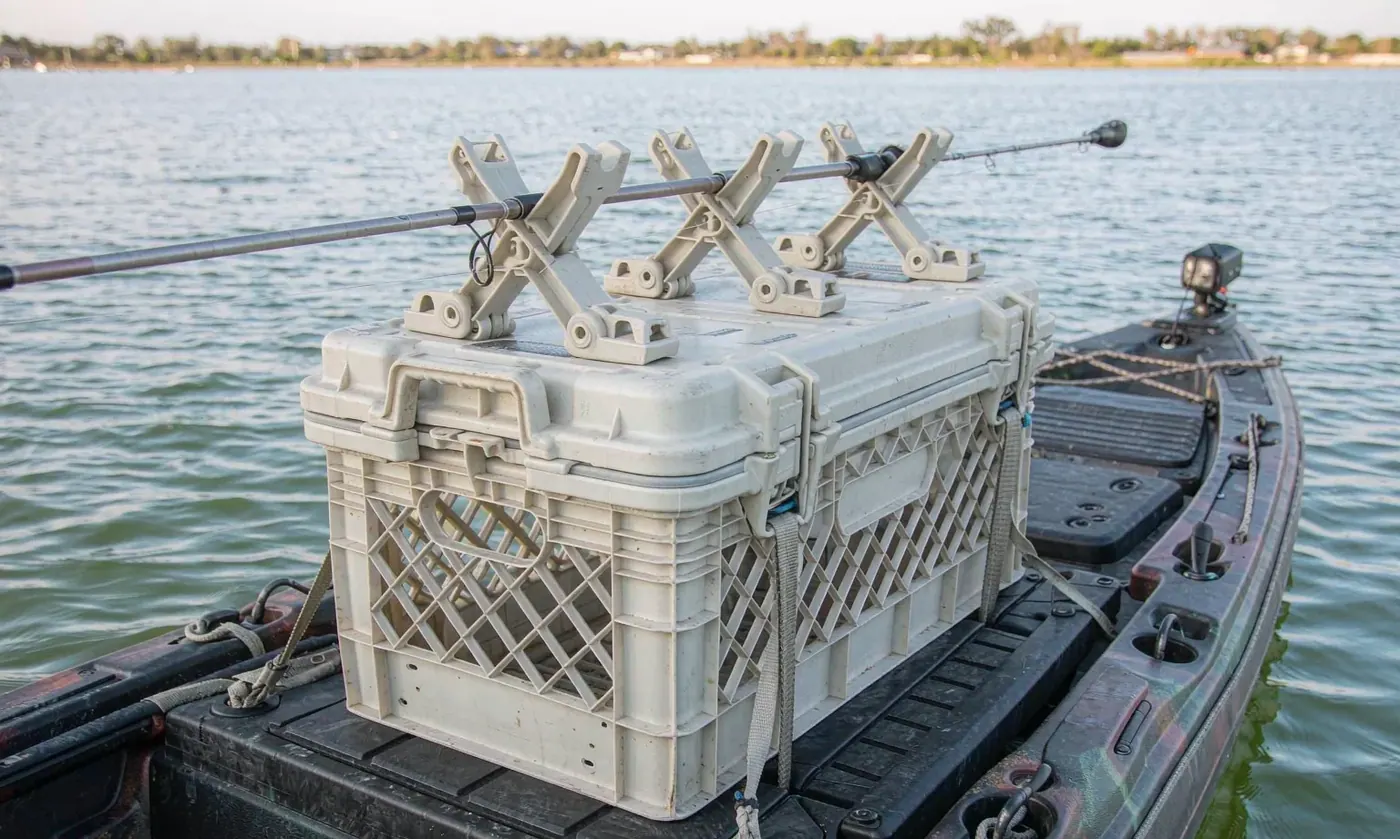
Drying Different Bag Formats
Format changes the routine more than most people expect, because a bag that dries well inverted may be impossible to invert at all. A soft backpack responds best to the standard sequence. A sling or chest pack dries fastest of all hung open on a hook with air reaching both faces, often in two to three hours. A tote with a moulded base cannot be inverted and has to be propped at an angle instead, and a crate bag with rod holders needs every tube drained individually.
| Format | Best method | Time | Watch out for |
|---|---|---|---|
| Soft backpack | Invert, open, fan | 4 to 6 hours | Strap padding |
| Sling or chest pack | Hang open on a hook | 2 to 3 hours | Back panel padding |
| Tote with moulded base | Prop at an angle, base corner lowest | 6 to 10 hours | Base perimeter channel |
| Crate bag | Invert, drain every tube | 6 to 10 hours | Rod holder tubes |
| Duffel or holdall | Open fully, support the ends | 8 to 12 hours | End panel seams |
The tote case is worth expanding on, because a moulded base that looks dry at the corners can still hold water in the channel where the moulding meets the shell. Tilting the tote so one corner is lowest and leaving it overnight clears that channel reliably, and the check afterwards is simple: lift the opposite corner and listen for movement rather than looking for wetness.
Checking It Is Actually Dry
The reliable test is tactile rather than visual, and it should be applied to the three slow parts rather than to the shell. Press the back of a hand into the shoulder strap padding, the base seam channel and the lining where it meets the shell, and if any of them feel cool rather than neutral, they are still wet. Coolness is the signal, because evaporation is still taking place and cooling the surface.
A hygrometer gives a harder number for anyone who wants one. Placed inside a closed bag for an hour, a reading above 60 percent means more drying is needed, and a reading in the thirties means the bag is ready to close. This is also the cheapest way to settle whether a storage routine is working across a season rather than on one occasion. Where a hygrometer is not available, a folded sheet of tissue pressed into the base seam for ten minutes works as a rough indicator, since it will show a damp ring where the back of a hand might not register anything.
Storage After Drying
A bag that has been dried properly can be stored closed, and one that has not should never be. Where it goes matters: an interior cupboard holding 40 to 60 percent humidity is fine, and an unheated shed that swings to 90 percent and condenses overnight is not. Storing the bag open, or with silica sachets inside, covers the difference.
The one rule worth stating on its own is that a bag should never go into storage the same evening it was used, however dry it looks. Padding and seam channels dry last and look dry first, and a bag closed at midnight is a bag whose interior humidity will rise overnight as the remaining moisture redistributes. Full storage guidance is in the off-season storage walkthrough, and cleaning before storage in the fishing backpack cleaning guide.
Specification Notes for Programme Buyers
QUANZHOU JUNYUAN BAGS has worked on waterproof bag programmes since 2014, with a founding team in this industry since 2004. Monthly output reaches 200,000 units, verified by SGS, under BSCI and ISO 9001 governance, with materials screened for REACH and California Prop 65 and every bulk order inspected at AQL 2.5. A brief for a bag intended for wet use should specify drainage geometry and whether linings are removable, because those two decide how quickly the end user can dry it and therefore how long the product lasts.
Add closure type, base construction, whether strap padding is closed cell, hardware grade, colourway and quantity. Drying instructions on a care label should be written in hours rather than as an adjective, and should name the maximum safe temperature. Five hundred pieces per design and colour is the opening order size. Sampling runs six to ten working days, bulk thirty-five to fifty days from approved sample and deposit, and shipping is FOB Xiamen or DDP to upwards of one hundred nations. Send briefs to service@junyuanbags.com.
People Also Ask
How long does a wet fishing bag take to dry?
Four to six hours inverted and open with a fan, twelve to eighteen hours in still air, and three days or never if left upright and closed.
Can I dry a fishing bag on a radiator?
No. Sustained surface temperature above 60 degrees degrades coatings, and above 80 degrees PVC can soften and crease permanently.
Why does my fishing bag smell after two days?
Bacterial growth becomes noticeable within about twenty-four hours in a warm damp cavity, and mould becomes visible within twenty-four to forty-eight hours.
What is the fastest safe way to dry a bag?
Towel the padding, invert it, open every compartment, pull the linings out, and run a fan across it for four to six hours.
How do I know when the bag is dry?
Press the back of a hand into the strap padding, base seam and lining. Coolness means evaporation is still happening, so it is still wet.
Does drying outdoors work?
On a dry breezy day, yes. Above 80 percent humidity it achieves little, and overnight outdoors usually makes it worse because dew forms on the surfaces being dried.
Frequently Asked Questions
Q1. What is the fastest way to dry a wet fishing bag without damaging it?
Towel the padding, invert the bag, open every compartment and lining, then run a fan across it for four to six hours. Never use direct heat.
Q2. Can I put a fishing bag in a tumble dryer?
No. Heat above 60 degrees degrades coatings, and the tumbling action damages welded seams and hardware.
Q3. How long before a wet bag starts to smell?
Bacterial odour becomes noticeable within about twenty-four hours in a warm damp cavity, and mould can be visible within forty-eight hours.
Q4. Why does my bag still smell after drying overnight?
Because a closed cavity, a clinging liner or strap padding was still wet. Pull linings out and check padding with the back of a hand before closing the bag.
Q5. Is a hair dryer safe for drying a bag?
On cool, yes, it is just a small fan. On hot it can damage coatings at the zip and welded edges in seconds of careless use.
Q6. Which parts of a bag dry slowest?
Shoulder strap padding, the base seam channel, and any lining stuck to the shell. All three need a specific move rather than more time.
Q7. How do I dry a bag that was fully submerged?
Remove and dry everything porous separately, discard anything paper, drain rod holders and hollow mouldings, and allow a full twenty-four hours.
Q8. Should I dry a bag outdoors?
Only on a dry, breezy day. Above 80 percent humidity it achieves little, and overnight drying usually adds dew to the surfaces being dried.
Q9. Does a dehumidifier help?
Yes, and it is the best tool available. It lowers ambient humidity so air absorbs more moisture, without pushing the coating toward damaging temperatures.
Q10. Can I store the bag the same evening it got wet?
No. Padding and seam channels dry last and look dry first, and interior humidity rises overnight as remaining moisture redistributes. If storage the same evening is unavoidable, close it with two 10 gram silica sachets inside and open it again the following morning, which contains the overnight rise at almost no cost in effort.
Q11. What is the MOQ for a bag designed with removable linings and drainage?
Five hundred pieces per design and colour, with six to ten working days for sampling and thirty-five to fifty days for bulk from approved sample and deposit.