An airtight zipper seals against pressure and a water-resistant zipper only sheds water off its face, and the difference is measurable in about three minutes on a bench. Inflate a closed body to 3 kilopascals: a water-resistant coated coil loses 10 to 25 percent of that pressure in 3 minutes, while an airtight laminated section holds within 1 percent. In money the gap is 18 to 38 USD for a 45 cm airtight section against 1.5 to 3.0 USD for a coated coil, a factor of nine to twenty, and in usability it is 30 to 70 newtons of opening force against 10 to 20. Buy the airtight version when the pack goes below the surface or carries something that cannot get wet; buy the water-resistant version when the exposure is rain and the pack is opened more than five times a day. Both carry 500 pcs per design and colourway, samples in 6 to 10 working days and bulk in 35 to 50 days.
The Verdict, and the One Condition Attached to It
For exposure to rain, the water-resistant zip is the correct specification and the airtight one is a mistake. For any exposure below the surface, the airtight zip is the only correct specification and the water-resistant one will fail in seconds. The two statements sound like a compromise and they are not, because the boundary between them is sharp: it is the moment water pressure, rather than water volume, becomes the load case. Rain is a low-pressure, high-volume event. Immersion is a low-volume, high-pressure event. A closure that handles one is not marginally worse at the other; it is a different mechanism.
| Decision factor | Airtight zip | Water-resistant zip | Winner | Margin |
|---|---|---|---|---|
| Sustained rain, 2 hours | Passes | Passes with a flap | Water-resistant | No gain from airtight |
| Pressure washer at 300 mm | Fails above 0.5 bar | Fails | Airtight | Partial only |
| Splash and spray on deck | Passes | Passes | Water-resistant | Equal, cheaper wins |
| Brief capsize, 1 m | Passes | Fails in 5-30 s | Airtight | Decisive |
| Continuous immersion, 30 min | Passes to rated depth | Fails | Airtight | Decisive |
| Opened 10 times a day | 30-70 N per pull | 10-20 N per pull | Water-resistant | Usability, not water |
| Five-year component cost | 18-38 USD plus tooling | 1.5-3.0 USD | Water-resistant | Nine to twenty times |
The row most buyers get wrong is the pressure washer one, and it is worth stating plainly because it is the most common false expectation in the category. An airtight zip rated at 0.5 bar resists a static head of 5 metres, but a domestic pressure washer produces a local jet at 80 to 120 bar at the nozzle, and at 300 millimetres standoff the local pressure at the chain still exceeds any rating a backpack closure carries. No zip in this category survives a pressure washer, and the ingress codes that describe the difference between a jet and static immersion are set out in IEC 60529.
What 'Airtight' Actually Means on a Data Sheet
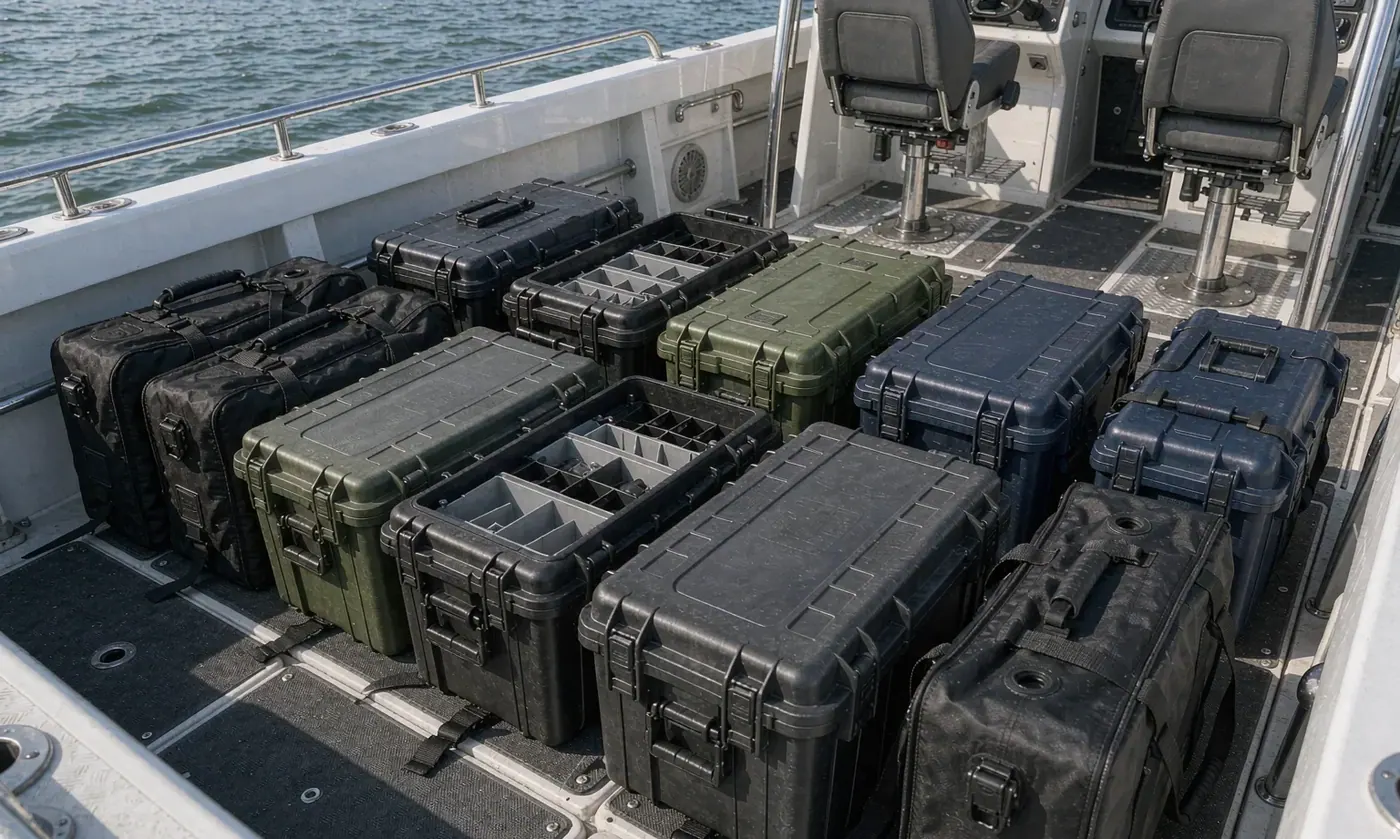
Airtight in this context is a leak-rate claim, not a marketing adjective, and it is expressed in one of three ways. Some data sheets quote a pressure differential the closure holds, typically 0.1 to 1.0 bar. Others quote a volumetric leak rate in millibars per minute across a sealed volume. And the better ones quote both, plus a cycle count over which the rating is maintained. A seller quoting only the word airtight with no number is making a claim about appearance, and the correct response is to ask for the leak rate.
| How airtightness is stated | Typical value | What it means | How to verify | Reliability of the claim |
|---|---|---|---|---|
| Pressure differential | 0.1-1.0 bar | Holds a static head to 1-10 m | Pressure decay on the finished body | Good if the body is named |
| Leak rate | Under 5 mbar per minute | Air escapes slower than a set rate | Vacuum decay over 3 minutes | Best form of claim |
| Immersion depth | 1-10 m for 30 minutes | Passes an IPX7 or IPX8 test | IEC 60529 immersion test | Good, method must be named |
| Bubble emission | No bubbles at 3 kPa | Seal is continuous along the run | Submerged bubble test | Good for goods-in checks |
| Word only, no number | None | No verifiable claim | Nothing to verify | Treat as water-resistant |
The bubble emission row is the cheapest useful check and it belongs in every goods-in procedure, because it needs no instrumentation. Inflate the closed body to about 3 kilopascals, hold it under 50 millimetres of water, and watch the run for 30 seconds. A continuous stream of bubbles marks the leak point precisely, and the same principle is used for flexible packaging under ASTM D3078, the bubble emission leak test method. One bubble every few seconds is a seal that will pass a rain test and fail an immersion one, which is exactly the ambiguity a buyer should be resolving before bulk rather than after.
It also matters that the rating belongs to the closure and not to the pack. A 1.0 bar zip welded into a body whose seams hold 0.2 bar produces a 0.2 bar pack, and that is the most expensive way to buy an airtight closure. The body has to be welded to match, the tape has to be welded rather than sewn, and the whole assembly has to be tested as one unit. The construction side of that is described in how an IPX8 submersible backpack is built.
What a Water-Resistant Zip Is Actually Rated For
A water-resistant zip makes one promise: water hitting the face of the tape will bead and run off instead of soaking into the weave and wicking to the back. That is a finish property, delivered by a polyurethane film of 0.10 to 0.18 millimetres on the tape, and it is tested by a spray or rain method rather than by a pressure method. It is a genuine and useful property, and it is what keeps a commuting pack dry through a 20 minute walk in moderate rain. It is not a seal, and no amount of coating thickness turns it into one, because the chain still has a gap.
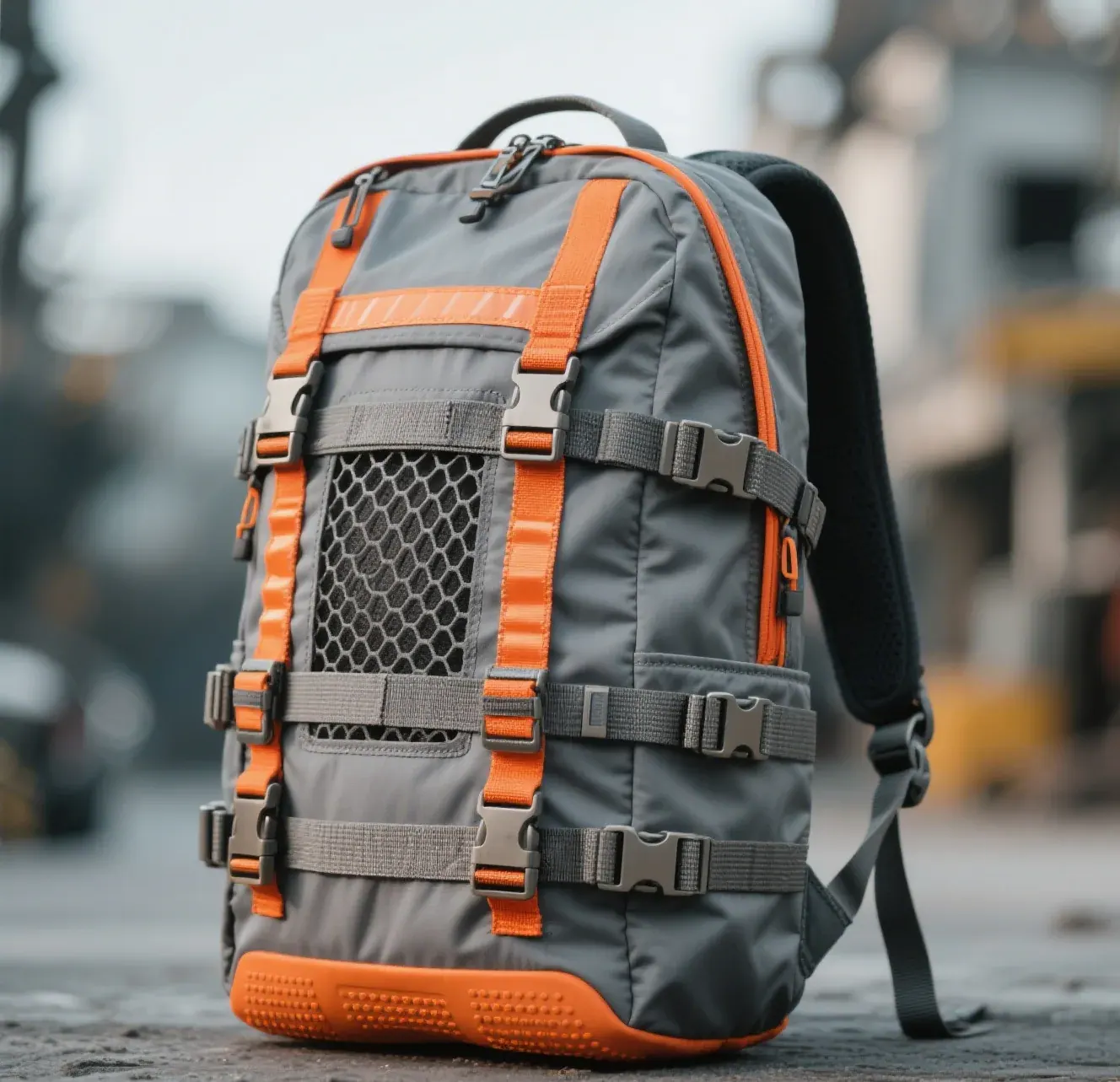
Rain performance is quantified by spray and rain test methods rather than by hydrostatic ones, and the standard reference is the rain test in the AATCC test method series, which showers a specimen at a fixed rate and weighs what passes through. A coated coil under a storm flap typically passes two hours of moderate rain with under 5 grams of ingress, and the same closure without a flap passes roughly half that, which is the entire reason a flap or a slider garage appears on every serious implementation. Adding a flap costs under 0.40 USD and is worth about one full IPX level, which makes it the highest return line in this whole comparison.
- A coating is a finish, not a seal: it stops wicking through the tape, and the chain remains an open path.
- Always pair a water-resistant zip with a flap or a garage; it is worth about one IPX level for under 0.40 USD.
- Do not add coating thickness expecting pressure resistance. Extra film improves abrasion life, not depth rating.
- If the specification mentions a depth, a duration underwater or a bar figure, the water-resistant family is already excluded.
The Four Numbers That Separate Them
Strip away the marketing and the two closures differ on exactly four measurable axes: pressure held, leak rate, opening force and rated cycles. Everything else a buyer cares about, including cost, weight and service life, is a consequence of those four. The table below puts them side by side using a 45 cm run, which is the length fitted to the main compartment of a 30 litre pack and the single most common section in the category.
| Metric, 45 cm run | Airtight, laminated | Water-resistant, coated coil | Ratio | Test note |
|---|---|---|---|---|
| Pressure held | 0.3-1.0 bar | Effectively zero | Not comparable | Static differential on the finished body |
| Leak rate at 3 kPa | Under 1 percent in 3 min | 10-25 percent in 3 min | 10 to 25 times | Inflate and hold, measure decay |
| Opening force | 30-70 N | 10-20 N | 3.0-3.5 times | Pull gauge on the slider, new |
| Rated cycles | 5,000-10,000 | 10,000-20,000 | 0.5 times | Airtight lip is a wearing surface |
| Component cost | 18-38 USD | 1.5-3.0 USD | 9 to 20 times | Per 45 cm, at 500 pcs |
| Weight of the run | 55-90 g | 18-30 g | About 3 times | Including tape and puller |
| Realistic body rating | IPX7-IPX8 | IPX4-IPX5 | Three levels | IEC 60529 on the finished pack |
The opening force row deserves more attention than it usually gets, because it is the reason airtight closures are returned by end users who never take the pack near water. Thirty to seventy newtons is a firm two-handed pull, and on a pack opened ten times a day in an office it reads as a defect. The mitigation is cheap and specific: specify a longer puller, which reduces perceived effort by 20 to 30 percent at the same force, and lubricate the track before the pack ships. Programmes that do both cut closure-related complaints by roughly half without changing the specification.
Total Cost Over Five Years
The sticker price gap is nine to twenty times, and that is the number that stops most buyers. It is also the wrong number, because the comparison should run over the service life of the pack and should include the failure cost. A water-resistant closure on a pack that is genuinely used in rain costs nothing extra and fails nothing. The same closure on a pack sold as submersible generates a return, a replacement and a review, and one return at 60 to 90 USD of landed cost erases the closure saving on thirty to forty units.
| Cost line, per 1,000 units | Airtight build | Water-resistant build | Difference | Note |
|---|---|---|---|---|
| Closure cost | 18,000-38,000 USD | 1,500-3,000 USD | 16,500-35,000 USD | Airtight is dearer by far |
| Weld tooling, amortised | 600-1,800 USD | 0-900 USD | Up to 900 USD | One electrode per profile |
| Added goods-in test time | 400-800 USD | 100-200 USD | 300-600 USD | Pressure or bubble check per unit |
| Expected field failures, 5 yr | 5-20 units | 0-5 units in rain use | Depends entirely on use | Not comparable across misuse |
| Return cost at 5 percent | 3,000-9,000 USD | 3,000-9,000 USD | Equal if misapplied | Misapplication is what costs |
| Unit cost index, finished pack | 1.20-1.45 | 1.00 | 20-45 percent | Not nine times, on the pack |
The useful figure in that table is the last row, because it reframes the decision. On the finished pack the airtight build costs 20 to 45 percent more, not nine times more, since the closure is a fraction of the total bill of materials. A programme that needs immersion and is hesitating over a 20 percent unit increase is comparing the wrong numbers. A programme that does not need immersion and is attracted by the rating is buying 20 to 45 percent of cost for a capability nobody will use, plus a usability penalty on every opening.
- Compare the finished pack cost index, not the component multiple: 20 to 45 percent is the real gap.
- Cost the return, not the closure. One immersion return at 60 to 90 USD landed erases the closure saving on 30 to 40 units.
- Specify the closure from the worst exposure the pack will meet, not from the average day.
- Add a long puller and pre-ship lubrication on any airtight run; together they cut closure complaints by roughly half.
Where Each One Wins
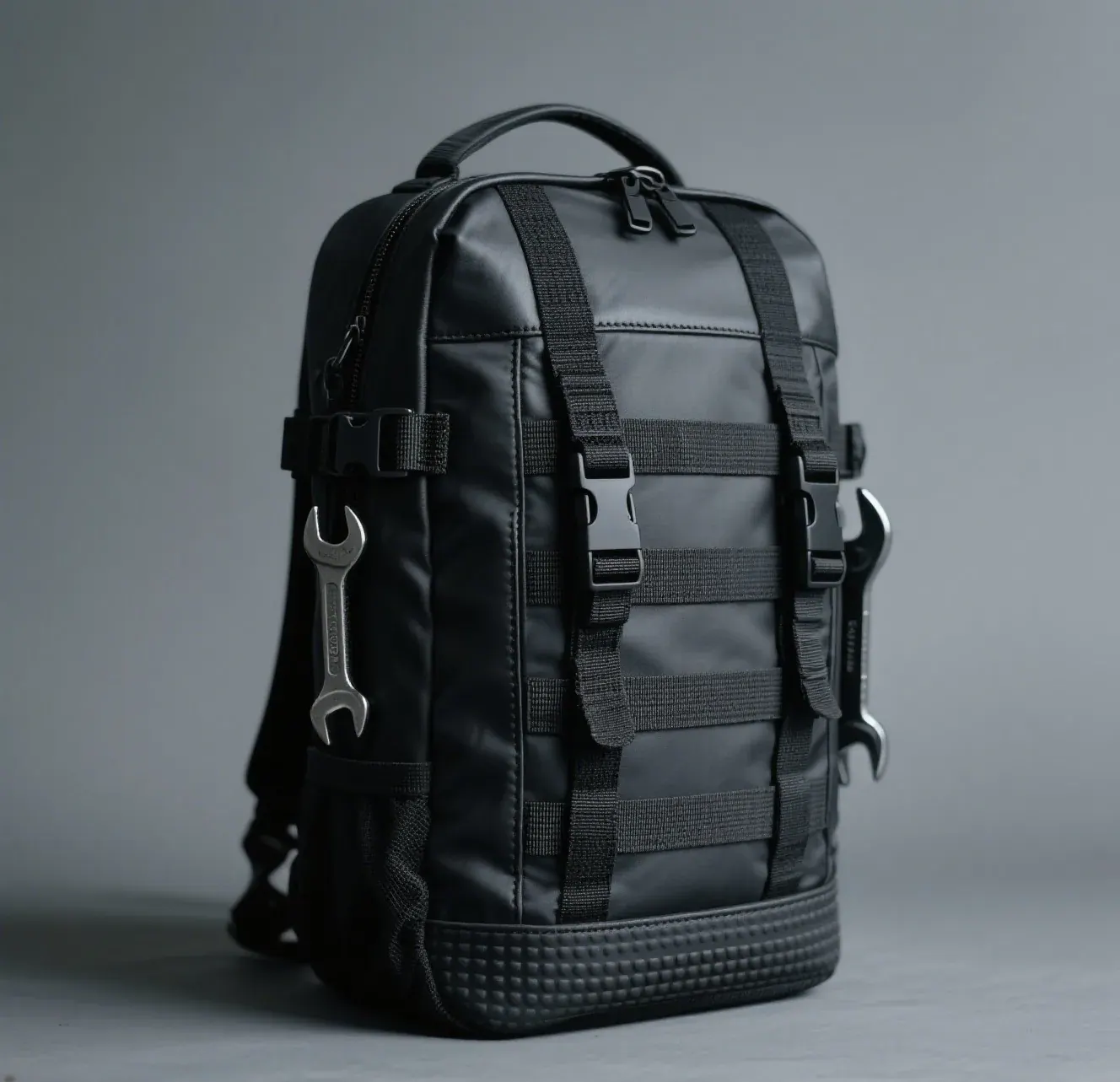
The scenarios sort cleanly once the question is phrased as pressure rather than weather. Anything where the pack is at or above the surface and the water arrives as rain, spray or splash belongs to the water-resistant family with a flap. Anything where the pack spends measurable time below the surface, or where the contents cannot tolerate any ingress at all, belongs to the airtight family. The genuinely hard cases are the ones where both exposures occur in the same trip, and there the answer is usually a hybrid: an airtight main compartment and water-resistant outer pockets.
| Scenario | Closure | Realistic rating | Why | Common mistake |
|---|---|---|---|---|
| Office commute, laptop | Water-resistant plus flap | IPX5 | Opened constantly, exposure is rain | Fitting an airtight zip users fight |
| Day hiking | Water-resistant, welded tape | IPX5-IPX6 | Long exposure, low pressure | Sewn tape capping the body at IPX4 |
| Kayak day trip | Airtight, 0.3 bar | IPX7 | Capsize is a normal event | Rating the zip but not the body |
| Surf and swim | Airtight, 0.5 bar | IPX7 | Immersion plus sand abrasion | Skipping the fresh water rinse routine |
| Dive and submersible | Airtight, 1.0 bar | IPX8 | Depth is the product claim | Buying the zip and sewing the tape |
| Rescue and professional | Airtight, 1.0 bar | IPX8 | Failure is unacceptable | Testing samples but not bulk |
| Mixed kayak and camp | Hybrid layout | IPX7 main, IPX5 pockets | Both exposures in one trip | One closure grade for both |
The dry backpack category is the clearest airtight case and worth calling out separately, because the product promise is precisely immersion rather than rain. A body sold as a dry pack is bought for the one day it goes in the water, and on that day a water-resistant closure fails in five to thirty seconds. Our waterproof dry backpack range uses a welded body with a pressure-rated section for exactly that reason, and the saltwater side of the decision, which shortens closure life more than fresh water does, is covered in saltwater corrosion and zips.
Bench Tests That Tell Them Apart
Three tests settle any dispute in under fifteen minutes and none of them needs a laboratory. The pressure decay test separates the families. The bubble test locates the fault. And the pull gauge test tells you whether an airtight closure is going to be returned for being stiff. Run all three on a pre-production sample and again on the first bulk delivery, and the closure question is settled for the life of the programme.
| Test | Setup | Pass threshold | Airtight result | Water-resistant result |
|---|---|---|---|---|
| Pressure decay | Inflate to 3 kPa, hold 3 min | Under 5 percent loss | Under 1 percent | 10-25 percent loss |
| Bubble emission | Submerge 50 mm at 3 kPa, 30 s | No continuous stream | No bubbles | Stream at the slider or top stop |
| Pull force | Gauge on the slider, new | Under 50 N for daily use | 30-70 N | 10-20 N |
| Rain shower | 30 min, 20 mm per hour | Under 5 g ingress | Passes | Passes with a flap |
| Immersion | 30 min at 1 m | Dry indicator paper | Passes to rated depth | Fails in 5-30 s |
| Cycle endurance | 2,000 cycles, then retest | Rating retained | Rating retained | Rating retained |
- Every bulk order is inspected at AQL 2.5 before release, with a pressure decay check on a stated sample rate.
- Immersion programmes add a per-unit bubble or vacuum check, which adds two to four days to the bulk schedule.
- Materials are screened against REACH and California Prop 65, and monthly output of 200,000 units is verified by SGS.
- Bodies are built under BSCI and ISO 9001 systems, with FOB Xiamen or DDP to more than 100 countries.
The practical instruction for a first order is to write the exposure into the brief before writing the closure into it. State the deepest water, the number of times a day the pack is opened, and the consequence of a wet interior, and the family follows from that without argument. Where the brief is genuinely mixed, an airtight main compartment with water-resistant outer pockets delivers the rating where it matters and the usability where it matters, at a unit cost index around 1.25. Both closure grades, welded interfaces and the pressure rigs used to verify them are shown. Enquiries go to service@junyuanbags.com.
People Also Ask
Is an airtight zipper worth it on a backpack?
Only if the pack goes below the surface or carries something that cannot tolerate any ingress. A 45 cm airtight section costs 18 to 38 USD against 1.5 to 3.0 USD for a coated coil, which is 20 to 45 percent on the finished pack, and it adds 30 to 70 newtons of opening force on every use.
Can a water-resistant zipper survive immersion?
No. It fails in 5 to 30 seconds at 1 metre, because the coating sheds water off the tape face but does not seal the chain. Inflate a closed body to 3 kilopascals and a water-resistant run loses 10 to 25 percent of that pressure in 3 minutes, against under 1 percent for an airtight one.
How can I tell if a zipper is airtight or just water-resistant?
Close it, inflate the body to about 3 kilopascals and hold for 3 minutes. Under 1 percent loss means an airtight seal, 10 to 25 percent means a coated coil. Submerging the inflated body for 30 seconds and watching for a bubble stream locates the leak precisely.
Why is my waterproof backpack zip hard to open?
Because an airtight closure adds friction: 30 to 70 newtons against 10 to 20 for a coated coil. Specify a longer puller, which cuts perceived effort by 20 to 30 percent, and lubricate the track with a dry silicone product before the pack ships.
Does an airtight zipper last as long as a normal one?
No. The elastomer lip is a wearing surface, rated at 5,000 to 10,000 cycles against 10,000 to 20,000 for a coil. At two or three openings a day that is still eight to twelve years, so grit and salt damage end the closure long before cycle count does.
What pressure rating should an airtight backpack zip have?
0.3 bar for kayaking and general water use, 0.5 bar for surf and swim, and 1.0 bar for dive or professional submersion. The rating applies to the zip as supplied, so the body has to be welded and tested to the same figure or the pack is limited by the seam.
Frequently Asked Questions
Q1. What is the difference between an airtight and a water-resistant zipper?
An airtight zipper closes the chain with an elastomer sealing lip and holds a pressure differential of 0.1 to 1.0 bar, reaching IPX7 to IPX8. A water-resistant zipper carries a polyurethane coating that makes water bead off the tape face but leaves the chain open, reaching IPX4 to IPX5.
Q2. How much more does an airtight zipper cost?
About nine to twenty times on the component, 18 to 38 USD for a 45 cm section against 1.5 to 3.0 USD for a coated coil. On the finished pack the real difference is 20 to 45 percent of unit cost, because the closure is only a fraction of the bill of materials.
Q3. Does an airtight zipper make the whole backpack waterproof?
Only if the body matches. A 1.0 bar zip welded into a body whose seams hold 0.2 bar gives a 0.2 bar pack, so the panels have to be welded rather than sewn and the tape has to be welded rather than sewn in as well.
Q4. Which zipper should a commuting backpack use?
A water-resistant coated coil under a storm flap, at IPX5. A commuter pack is opened ten or more times a day, so 30 to 70 newtons of pull force on an airtight run is a usability penalty with no benefit, since the exposure is rain rather than immersion.
Q5. Which zipper should a kayaking backpack use?
An airtight section rated at 0.3 bar, about 3 metres, which covers capsize and a swim to shore. Surf and swim programmes move to 0.5 bar because sand abrasion is added, and dive or rescue programmes take 1.0 bar at roughly 10 metres.
Q6. How do I test whether a zipper is airtight at home?
Close the run, inflate the pack to about 3 kilopascals through a valve or a rolled collar, and hold for 3 minutes. Under 1 percent loss means an airtight seal; 10 to 25 percent means a water-resistant coated coil. Submerging the inflated body for 30 seconds shows the leak point as bubbles.
Q7. Will an airtight zipper survive a pressure washer?
No. A domestic pressure washer produces 80 to 120 bar at the nozzle, and at 300 millimetres standoff the local pressure at the chain exceeds any rating a backpack closure carries. Neither family survives it, and it is not a fair test of either.
Q8. How long does an airtight zipper last?
5,000 to 10,000 rated cycles, or eight to twelve years at two to three openings a day. In practice a single grain of sand across the lip drops a 1.0 bar closure close to a splash rating, so grit and salt, not cycle count, decide the real service life.
Q9. Can I put an airtight zipper on one compartment only?
Yes, and it is often the best answer. An airtight main compartment with water-resistant outer pockets delivers the rating where the valuables are and the easy opening where the pack is accessed often, at a unit cost index around 1.25.
Q10. What is the MOQ for a backpack with an airtight zipper?
500 pcs per design and colourway, the same as a water-resistant build. The added items are one shaped electrode per weld profile at 300 to 900 USD and a per-unit pressure or bubble check, which adds two to four days to a 35 to 50 day bulk schedule.