There are three sealing families on a waterproof backpack, and the shape of the puller does not tell you which one you are buying. A coated coil zip sheds rain and reaches IPX4 to IPX5. A laminated tape zip with a sealing lip closes airtight and reaches IPX6 to IPX7. A fully sealed Aquaseal-style zip pressure-tested to 1.0 bar reaches IPX8 and holds at roughly 10 metres. The price gap between the cheapest and the dearest is 8 to 20 times: a 45 cm coated coil zip costs 1.5 to 3.0 USD, a laminated tape zip costs 7 to 14 USD, and a sealed Aquaseal-style zip costs 18 to 38 USD at the same length. The sealed option also changes the body, because it has to be welded into the panel rather than sewn. Both sit at 500 pcs per design and colourway, with samples in 6 to 10 working days and bulk in 35 to 50 days.
The Three Sealing Families, and the Test That Separates Them
Everything sold as a waterproof zipper works by one of three mechanisms. The first keeps water off the chain with a coating and lets the rest run off the shell. The second closes the chain itself against a sealing lip so air cannot pass. The third does both, and then adds a pressure rating, which is the only one of the three that has a number on it that means anything underwater. Buyers conflate them constantly, because the visible part on a finished pack is a black tape and a puller in all three cases.
| Family | How it seals | Realistic rating | 45 cm cost | Where it belongs |
|---|---|---|---|---|
| Coated coil | Polyurethane film over the coil, water sheds off the face | IPX4-IPX5 | 1.5-3.0 USD | Rain, commute, day hiking |
| Reverse coated coil | Coating on the back, teeth protected, flap still advised | IPX3-IPX4 | 1.2-2.6 USD | Light shell, inner pockets |
| Moulded tooth, deluge | Injected teeth close against each other, no coil channel | IPX5 | 3.0-6.0 USD | Marine spray, deck use |
| Laminated tape | Sealing lip closes the chain, tape welds to the panel | IPX6-IPX7 | 7-14 USD | Kayak, rafting, wet storage |
| Aquaseal-style sealed | Full elastomer seal, pressure rated at 0.3-1.0 bar | IPX7-IPX8 | 18-38 USD | Dive, submersible, rescue |
The single test that separates them is not a shower test, which all three pass, but a pressure or vacuum decay test on the finished body. Inflate the pack to 3 kilopascals and hold it for 3 minutes: a coated coil body loses 10 to 25 percent of its pressure through the chain, a laminated tape body loses 2 to 6 percent, and a sealed body holds within 1 percent. That result arrives in three minutes on a bench and predicts field behaviour better than any marketing label. The ingress levels these bodies claim afterwards are defined by IEC 60529, which is the only place the IPX numbers have a fixed meaning.
How a Coated Coil Zip Keeps Water Out
A coated coil zip is an ordinary nylon coil zip with a film of thermoplastic polyurethane laid over the outside of the tape, usually 0.10 to 0.18 millimetres thick. The coating does not seal the chain; it makes the face of the tape hydrophobic so that water beads and runs off instead of soaking into the weave and wicking through to the back. The chain underneath is still a chain, with a gap between the two tapes when the slider is not there, which is why this family tops out where it does.
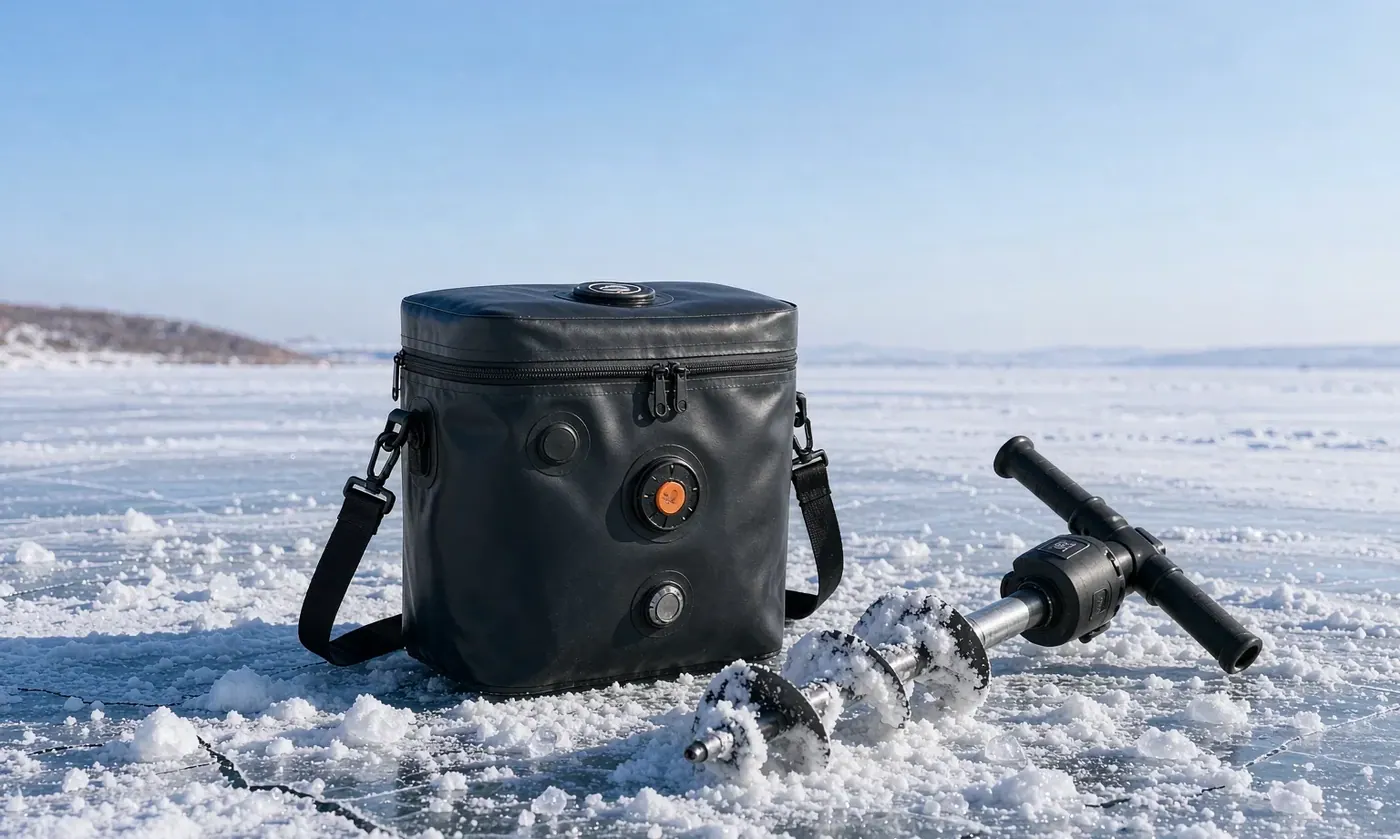
Three details decide how well one performs. Coating continuity matters more than coating thickness, because a pinhole at the stitch line wicks as effectively as no coating at all. The stitch line itself matters, since the tape is sewn to the panel and every needle hole is a path, so a coated coil pocket on a welded body still leaks at the seam unless the tape is welded instead. And the slider matters, because a coated zip without a garage or a storm flap drips straight into the chain at the top stop.
- Specify coating weight in grams per square metre, not by feel: 25 to 40 gsm of polyurethane on the tape face is the working range.
- Ask for the tape to be welded to the panel on any body rated above IPX4, because a sewn tape reintroduces 5 to 7 needle holes per centimetre.
- Require a slider garage or a storm flap on any vertical or exposed run; a coated zip without one loses roughly one IPX level in a 30 minute shower test.
- Check the top stop and the bottom stop, not the middle of the run. Nine out of ten wet pockets leak at an end, not along the chain.
The honest framing for this family is that it is a water-resistant zip used on a water-resistant pack, and it is the right choice for the majority of programmes. A commuter pack that has to survive a 20 minute walk in rain needs IPX4 and gets it for under 3 USD of zipper. Spending 30 USD on the same pack buys a rating the user will never test and adds 40 to 70 newtons of pull force to every opening, which users read as a fault rather than a feature.
Laminated Tape Zips: The First Real Seal
A laminated tape zip is the point at which closure stops being a coating and becomes a seal. The tape carries an elastomer lip along the chain side, and when the slider closes the two lips are pressed together to form a continuous elastomer-to-elastomer contact. Nothing has to bead and run away, because there is no path through the chain at all. The tape is then welded to the shell panel by radio frequency or hot air, so the closure and the body become one continuous barrier rather than two barriers joined by thread.
The consequence is a jump of roughly two IPX levels for a cost increase of three to five times. Cycle life moves the other way, because the elastomer lip is a wearing surface that a coil does not have: a coated coil runs 10,000 to 20,000 open and close cycles, while a laminated tape lip is usually rated at 5,000 to 10,000. For a pack opened two or three times a day, that is still eight to twelve years, so the cycle figure is rarely the binding constraint. Salt and grit are the binding constraint, and they are the subject of the next section.
Assembly is where programmes get into trouble. The tape has to be welded flat to the panel with no wrinkle across the lip, and the weld window is narrow because the elastomer softens before the shell does. Lines running at 27.12 megahertz hold the interface at 1.2 to 3.5 seconds per pass, and a panel that has been printed needs a compatibility coupon first, because ink acts as a release layer. Bond and coating strength on these laminates is measured by ASTM D751, the standard test methods for coated fabrics. The seam methods behind that step are compared in taped vs welded seams, and it is worth reading both before specifying a welded zip interface.
Aquaseal-Style Sealed Zips and Pressure Ratings
A sealed zip of the Aquaseal family is the only closure on this list that ships with a pressure number. The chain is fully encapsulated in elastomer, the tape is a laminate rather than a fabric, and the whole assembly is rated against a differential pressure rather than against a shower. Typical data sheets quote 0.3 bar for a light duty section, 0.5 bar for a mid section, and 1.0 bar for the heaviest, and 1.0 bar corresponds to roughly 10 metres of water column. That is the number that turns a backpack into a submersible one, and it is the reason this family costs what it does.
| Pressure rating | Equivalent depth | Realistic IPX | Typical section | Programme |
|---|---|---|---|---|
| 0.1 bar | About 1 m | IPX6 | Light laminated tape | Kayak splash, rafting |
| 0.3 bar | About 3 m | IPX7 | Mid laminated tape | Swim, surf, boat deck |
| 0.5 bar | About 5 m | IPX7-IPX8 | Heavy sealed section | Dive support, rescue |
| 1.0 bar | About 10 m | IPX8 | Aquaseal-style sealed | Full submersion, dive dry pack |
| No rating | Surface only | IPX4-IPX5 | Coated coil | Rain, commute, hiking |
Two practical cautions come with that table. A pressure rating applies to the zip as supplied, not to the pack it is welded into, and the body is usually the weaker part: a 1.0 bar zip welded into a body that fails at 0.2 bar gives you a 0.2 bar pack. And the rating applies to a static differential, not to a jet, so a sealed zip rated at 1.0 bar can still be defeated by a pressure washer held at 300 millimetres, which is why IEC 60529 keeps jet and immersion as separate tests with separate codes. Opening force is the other cost: 30 to 70 newtons against 10 to 20 for a coil, which is why a sealed run is always specified with a long puller and a lubricated track.
What Actually Fails, and When
Zip failures are boringly consistent, and almost all of them start at the slider or at an end rather than along the chain. Grit is the first cause. A single grain of sand in the lip of a sealed zip holds the seal open by a fraction of a millimetre, which is enough to drop a 1.0 bar closure to something close to a splash rating. Salt is the second: crystals left in the track after a day on the water absorb moisture overnight and jam the slider by morning. Cold is the third, and it is mostly a coating problem rather than a metal one, because the polyurethane film stiffens below about minus 10 degrees Celsius and the chain stops flexing cleanly over the slider.
| Failure | First appears | Cause | Fix | Prevention |
|---|---|---|---|---|
| Slider jam | Any time | Grit or salt crystals in the track | Fresh water rinse, 5 min | Rinse after every saltwater day |
| Lip held open | Any time | Sand grain across the seal | Brush and rinse, 3 min | Cover the run when not in use |
| Coating craze | 18-36 months | UV and flex on the tape face | Replace the zip | Specify UV-stabilised film |
| Stitch-line wicking | 6-18 months | Tape sewn rather than welded | Weld the tape on the next run | Weld from the first sample |
| Track stiffness in cold | Below -10 C | Film stiffens, chain will not flex | Warm the pack, open slowly | Silicone lube before winter |
| Elastomer lip wear | 5,000-10,000 cycles | Normal wear on a wearing surface | Replace the zip, 20-40 min | Rate cycles against real usage |
The second cause deserves a number, because salt programmes consistently underestimate it. Salt spray exposure of 96 hours under ASTM B117, the standard salt spray test method, leaves visible crystal growth in the track of an unrinsed zip and roughly doubles the opening force within five days. A 30 second fresh water rinse removes almost all of it. That is the entire maintenance routine, and it is worth more than any specification upgrade in this category.
Maintenance is short and worth writing onto the hangtag, because three of those six rows are prevented by a fresh water rinse. Rinse the run in fresh water for 30 seconds after every saltwater or sandy day, dry it open, and lubricate the track with a silicone-free zip lubricant or a plain graphite pencil every 40 to 60 hours of use. Never use a petroleum grease on an elastomer lip, because it swells the seal. Care routines for the closure and the shell are set out in more detail in how to clean a waterproof backpack.
- Rinse the run in fresh water for 30 seconds after any saltwater or sandy day, then dry it open rather than closed.
- Lubricate the track every 40 to 60 hours of use with a dry silicone or graphite product, never with a petroleum grease.
- Open a stiff zip slowly and support the tape with one hand, because forcing the slider is what bends the lip permanently.
- Store the pack with the zip closed but not clamped, so the lip rests in contact without being compressed.
Choosing a Zip by Programme
The specification exercise is short. Write down the deepest water the pack will see, the number of times a day it will be opened, and the unit cost ceiling, and the family usually chooses itself. Programmes that never go below the surface should not pay for a pressure rating. Programmes that go under at all should not accept a coating, because the failure mode is not a damp lining but a soaked one, and it happens in seconds rather than minutes.
| Programme | Closure | Realistic rating | Zip cost index | Why |
|---|---|---|---|---|
| Urban commute | Coated coil plus flap | IPX4-IPX5 | 1.0 | Rain only, opened 6-10 times a day |
| Hiking and trekking | Coated coil, welded tape | IPX5 | 1.3 | Long exposure, frequent opening |
| Laptop and electronics | Coated coil under a garage | IPX5 | 1.4 | Opening force matters more than depth |
| Kayak and rafting | Laminated tape, 0.3 bar | IPX7 | 4.0-6.0 | Capsize is normal, not exceptional |
| Surf and swim | Laminated tape, 0.3-0.5 bar | IPX7 | 5.0-8.0 | Sand plus immersion |
| Dive and submersible | Aquaseal-style, 1.0 bar | IPX8 | 10.0-14.0 | Depth rating is the product |
| Rescue and professional | Aquaseal-style, 1.0 bar | IPX8 | 12.0-16.0 | Failure is not an acceptable outcome |
The one non-obvious row is the laptop programme, which sits at a coated coil rather than a sealed zip despite carrying the most valuable contents. That is deliberate: a laptop pack is opened ten or more times a day in an office, and 30 to 70 newtons of pull force on every opening is a real usability cost, while the exposure is rain rather than immersion. The right answer there is a coated coil under a garage plus a raised sleeve with 20 millimetres of clearance, not a dive closure. Our waterproof laptop backpack range is specified exactly that way, and the closure reasoning is the same one set out in airtight vs water-resistant zippers.
Specifying, Testing and Ordering a Sealed Closure
A closure specification has five lines and every one of them is checkable: family, section and length, pressure rating where applicable, tape attachment method, and cycle rating. Ask for the data sheet by part number rather than by description, because two zips of the same length and the same black tape can differ by six IPX levels and by 20 USD. Ask for the tape attachment to be named as welded or sewn, which is the single most common silent downgrade in this category. And ask for the cycle rating in writing, since it is the figure that separates a 5,000 cycle lip from a 10,000 cycle one at identical appearance.
| Order item | Coated coil | Laminated tape | Aquaseal-style sealed |
|---|---|---|---|
| Section and length | No. 5 or No. 8, 25-60 cm | No. 8 or No. 10, 30-55 cm | Heavy section, 35-50 cm |
| Pressure rating | None | 0.1-0.5 bar | 0.5-1.0 bar |
| Tape attachment | Sewn or welded | Welded only | Welded only |
| Rated cycles | 10,000-20,000 | 5,000-10,000 | 5,000-10,000 |
| Opening force | 10-20 N | 25-45 N | 30-70 N |
| MOQ per design and colourway | 500 pcs | 500 pcs | 500 pcs |
| Sample and bulk timing | 6-10 working days, 35-50 days | Same, plus weld coupon | Same, plus pressure test |
Verification on goods-in should take about fifteen minutes per delivery and is worth the time. Run the slider along the full length twice and feel for a flat spot, which indicates a damaged lip. Close the run, inflate the body to 3 kilopascals and hold for 3 minutes with the failure threshold set at 10 percent loss. Check the weld line on both sides of the tape for a continuous band with no skip, and pull gently on the tape at each end to confirm the weld rather than just the coating is carrying the load. Bodies rated for immersion add a per-unit pressure decay check, which adds two to four days to the bulk schedule and removes the most expensive failure mode from the warranty curve.
- Every bulk order is inspected at AQL 2.5 before release, with an inflation check at 3 kilopascals on a stated sample rate.
- Materials are screened against REACH and California Prop 65, and monthly output of 200,000 units is verified by SGS.
- Bodies are built under BSCI and ISO 9001 systems, with FOB Xiamen or DDP to more than 100 countries.
- A five-line brief starts a quotation: closure family, length, pressure target, tape attachment and quantity.
The recommendation for a first waterproof programme is to specify one level above what the marketing needs and no further, because the cost curve is steep and the usability cost is real. A commuting or hiking programme should take a welded coated coil at IPX5 and spend the saving on the shell. Anything that goes underwater should take a pressure-rated section and then have the body tested to the same figure, because the zip is never the weak link once it is properly welded. Zip sections, welded interfaces and pressure test rigs are all shown. Enquiries go to service@junyuanbags.com.
People Also Ask
What is the most waterproof type of zipper?
An Aquaseal-style fully sealed zip, which is pressure-rated at up to 1.0 bar, roughly 10 metres of water column, and reaches IPX8. A laminated tape zip with a sealing lip is the next step down at 0.1 to 0.5 bar and IPX6 to IPX7, and a coated coil zip is water-resistant only at IPX4 to IPX5.
How much does a waterproof zipper cost?
At 45 cm, roughly 1.5 to 3.0 USD for a coated coil, 7 to 14 USD for a laminated tape zip, and 18 to 38 USD for a sealed Aquaseal-style section. The sealed option also requires a welded panel interface, which adds tooling of 300 to 900 USD per profile amortised from 500 pcs upward.
Can you make a backpack fully waterproof with a coated zip?
No. A coated coil zip sheds water off the tape face but does not seal the chain, so the body tops out at IPX4 to IPX5. Full waterproofing to IPX7 or IPX8 needs a zip with a sealing lip or a fully encapsulated chain, welded into the panel rather than sewn.
Why is a waterproof zipper hard to pull?
Because the elastomer lip or the encapsulation that makes it seal also adds friction. Opening force runs 25 to 45 newtons on a laminated tape zip and 30 to 70 newtons on a sealed section, against 10 to 20 newtons for an ordinary coil, which is why sealed runs are specified with long pullers and a lubricated track.
How long does a waterproof zipper last?
A coated coil runs 10,000 to 20,000 open and close cycles, while a laminated tape or sealed lip is rated at 5,000 to 10,000. At two to three openings a day that is eight to twelve years, so salt and grit damage, not cycle count, is what usually ends the closure.
Does a waterproof zip need a storm flap?
On a coated coil, yes: a flap or slider garage is worth about one IPX level in a 30 minute shower test, because the top stop is where water enters. On a sealed or laminated zip the flap is optional and mostly protects the lip from grit and UV rather than from water.
Frequently Asked Questions
Q1. What are the main types of waterproof zipper?
Three families: a coated coil zip with a polyurethane film over the tape at IPX4 to IPX5, a laminated tape zip with an elastomer sealing lip at IPX6 to IPX7, and a fully sealed Aquaseal-style zip pressure-rated at 0.3 to 1.0 bar at IPX7 to IPX8. Moulded tooth deluge zips sit between the first two at about IPX5.
Q2. What does IPX8 mean for a zipper?
It means the closure held against continuous immersion under conditions agreed with the tester, beyond the 30 minutes at 1 metre that defines IPX7. In practice a zip sold for IPX8 carries a pressure rating, typically 0.5 to 1.0 bar, which corresponds to roughly 5 to 10 metres of water column.
Q3. Is a water-resistant zipper the same as a waterproof one?
No. A water-resistant coated coil zip sheds rain off the tape face and reaches IPX4 to IPX5. A waterproof sealed zip closes the chain with an elastomer lip and carries a pressure rating. The gap is two to three IPX levels and roughly ten times the component cost.
Q4. How is a waterproof zipper attached to the backpack body?
Laminated tape and sealed sections are welded to the panel by radio frequency at 27.12 megahertz or by hot air, so the closure and the shell form one barrier. A coated coil can be sewn or welded, but a sewn tape reintroduces 5 to 7 needle holes per centimetre and caps the body at IPX4.
Q5. What pressure rating should I ask for on a kayaking pack?
0.3 bar, about 3 metres, which covers capsize and a swim to shore. Surf and swim programmes move to 0.5 bar because sand is added to immersion, and dive or professional programmes take 1.0 bar at roughly 10 metres.
Q6. Why does my waterproof zip leak at the top?
Because the top stop is where water enters. A coated coil without a slider garage or a storm flap loses roughly one IPX level in a 30 minute shower test, and nine out of ten wet pockets leak at an end rather than along the middle of the chain.
Q7. Can a waterproof zipper be repaired?
A jammed slider is fixed by a fresh water rinse and lubrication in about five minutes. A damaged elastomer lip cannot be repaired, and the zip is replaced in 20 to 40 minutes by cutting the old weld line and re-welding a new section on the same panel.
Q8. How do I test a waterproof zipper before buying in bulk?
Close the run, inflate the body to 3 kilopascals and hold for 3 minutes with the failure threshold at 10 percent loss. A coated coil body loses 10 to 25 percent, a laminated tape body loses 2 to 6 percent, and a sealed body holds within 1 percent.
Q9. Does cold weather affect a waterproof zipper?
Yes, mostly through the coating. The polyurethane film stiffens below about minus 10 degrees Celsius and the chain stops flexing cleanly over the slider, so the pack should be warmed and opened slowly, and the track lubricated before the season.
Q10. What lubricant is safe on a waterproof zipper?
A dry silicone product or a plain graphite pencil, applied every 40 to 60 hours of use. Petroleum grease swells the elastomer lip on a sealed or laminated zip and should never be used, because it permanently deforms the sealing surface.
Q11. What is the MOQ for a backpack with a sealed zipper?
500 pcs per design and colourway, the same as for a coated coil body. The practical difference is tooling: a welded zip interface needs one shaped electrode per profile at 300 to 900 USD, plus a compatibility coupon if the panel is printed.
Q12. Should a laptop backpack use a sealed zipper?
Usually not. A laptop pack is opened ten or more times a day, and 30 to 70 newtons of pull force on every opening is a real usability cost against rain-only exposure. A welded coated coil under a garage at IPX5, plus a raised sleeve with 20 millimetres of clearance, is the better specification.