Welded seams stay dry longer, because they contain no adhesive to age. A taped seam is a stitched seam with a 20 to 22 millimetre polyurethane strip heat-pressed over the needle holes at 130 to 160 degrees Celsius, and it starts around 3,000 to 8,000 millimetres of hydrostatic head and reaches IPX4 to IPX5. A welded seam fuses the films into one layer at 27.12 megahertz, has no holes and no adhesive, and holds IPX6 to IPX7. The gap appears with time: tape loses bond through hydrolysis and lifts at the corners in year two to four, while a weld holds until the film itself delaminates in year six to ten. Welded bodies cost an index of 1.15 to 1.30 against 1.00 for stitched and taped, at 500 pcs per design and colourway.
The Short Answer, and Where the Two Part Company
On day one the difference between a taped seam and a welded seam is modest, and a well-applied tape will pass a shower test as confidently as a weld. The separation happens over time. Adhesive is the only consumable in the system that degrades while the pack sits on a shelf, so a taped seam arrives at its weakest point simply through age, while a welded seam is a fused polymer interface with nothing to hydrolyse.
| Attribute | Taped seam | Welded seam | Gap after three years |
|---|---|---|---|
| Needle holes | 5-7 per centimetre, bridged | None | Welded, no path exists |
| Bonding agent | Polyurethane adhesive, melts at 130-160 C | None, the films fuse | Welded, nothing to degrade |
| Seam width | 20-22 mm tape | 8-15 mm weld | Tape is wider and stiffer |
| Hydrostatic head, new | 3,000-8,000 mm | Matches the shell, 10,000 mm plus | Welded |
| Hydrostatic head, aged | Often under 1,500 mm | Little change | Welded, by a wide margin |
| Realistic IPX level | IPX4-IPX5 | IPX6-IPX7 | Welded, two levels |
| First failure point | Tape edge and corners | Four-panel corners, if at all | Welded, later and rarer |
| Field repair | Re-press or patch, 60-90 s | Patch, 60-90 s | Equal |
| Unit cost index | 1.00 | 1.15-1.30 | Taped is cheaper |
The row that decides most programmes is the aged hydrostatic head, because it is the difference between a pack that keeps a laptop dry in year three and one that does not. Buyers rarely see that number, since certificates are issued on new samples, so the practical instruction is to ask for a peel or head result after accelerated ageing rather than only on day one. Testing vocabulary for both constructions is covered in our guide to why stitched seams leak.
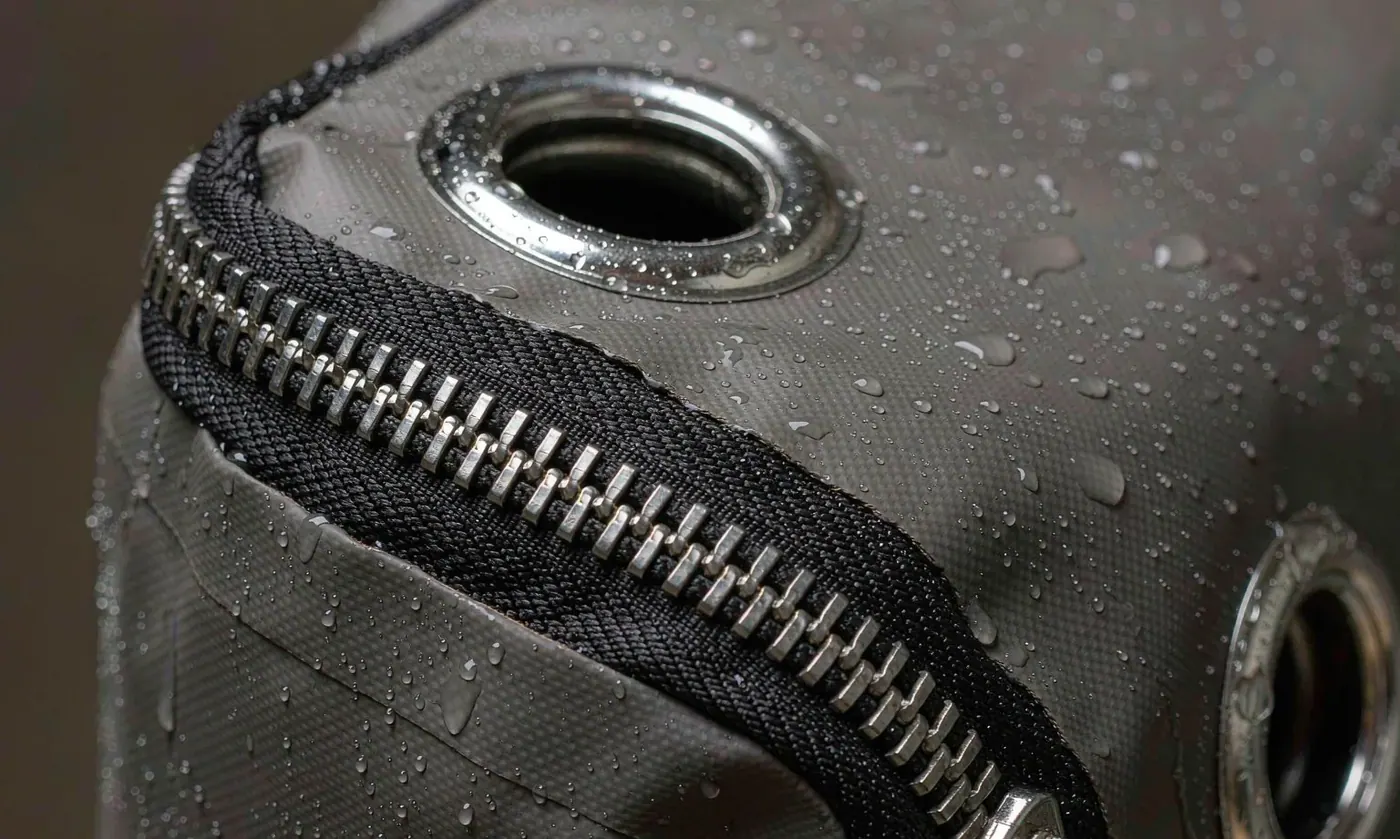
What Seam Tape Actually Does
Seam tape is a repair for a hole, not a seam in its own right. The panels are sewn first, which gives the shape and the strength, and a strip of thermoplastic polyurethane film carrying a hot-melt adhesive layer is then fed through a hot air machine that brings the adhesive to 130 to 160 degrees Celsius and presses it over the stitch line with a silicone roller. The tape bridges every needle hole, and the bond between tape and shell is what keeps water out.
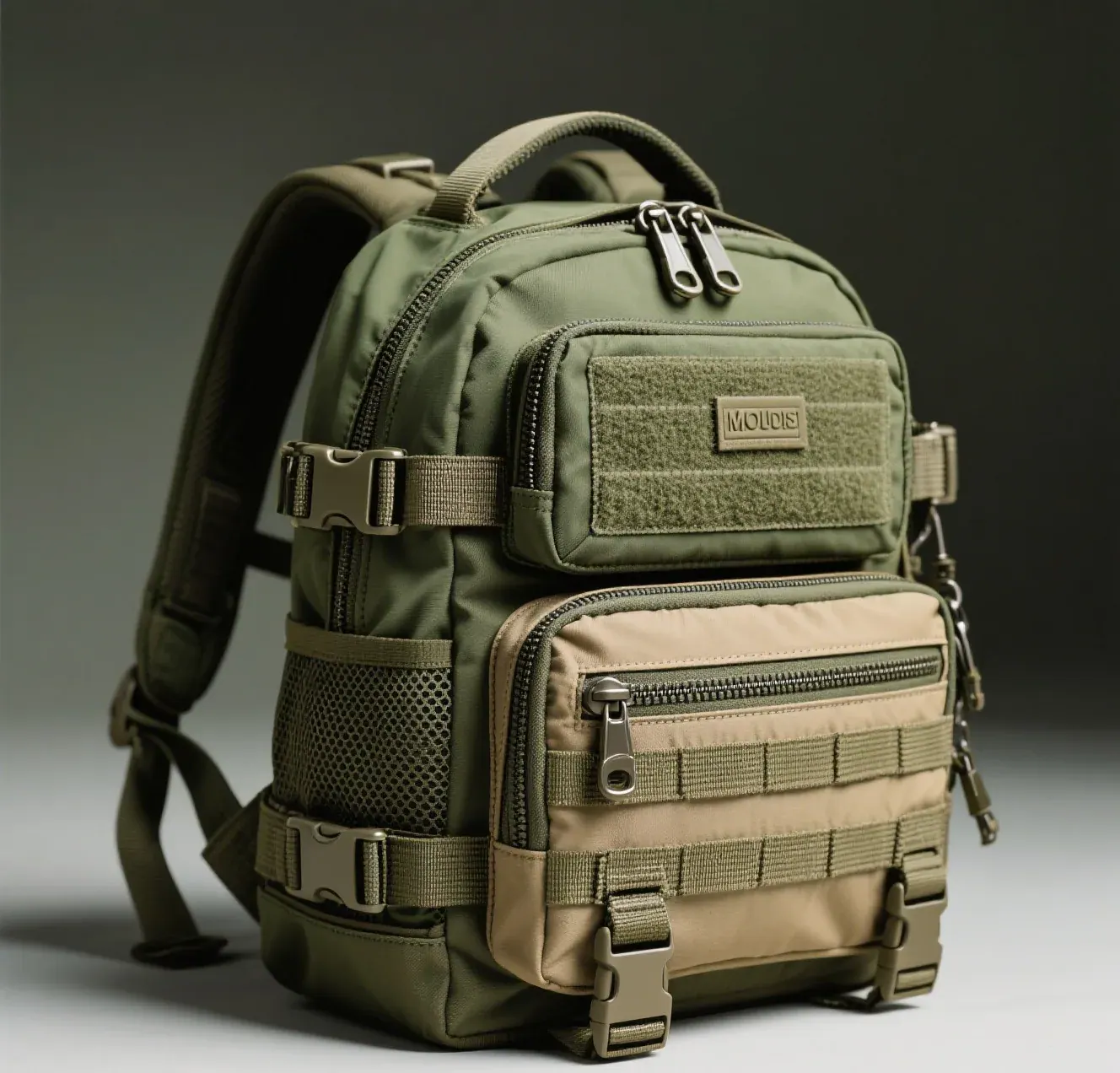
Application quality decides almost everything about how long it lasts. Three variables matter: surface temperature at the adhesive, roller pressure, and line speed, typically 3 to 8 metres per minute. Too cool and the adhesive never flows into the fabric weave, leaving a bond that looks bonded and peels at 40 percent of spec; too hot and the film thins and the adhesive squeezes out at the edges, which is where lifting starts. The most common production fault is a tape applied over a print or a finish, because ink is a release layer.
- Specify tape width against seam allowance: 20 to 22 millimetre tape needs at least 12 millimetres of flat shell either side of the stitch line.
- Ask for the bond to be tested on the finished laminate, not on a bare fabric coupon, because finishes and prints change adhesion.
- Require tape application over a clean, dry surface; a pack body taped straight after printing is the classic avoidable failure.
- Check the ends and the crossings first at goods-in. Tape lifts at its ends long before it lifts in the middle of a run.
What Welding Does Instead
Welding removes the stitch entirely. Two panels are laid between electrodes, the press closes at 2 to 4 bar, and a 27.12 megahertz field heats the polar molecules at the interface until the films fuse into one continuous layer in 1.2 to 3.5 seconds. There is no thread, no tape and no adhesive, and the finished band is 8 to 15 millimetres wide and reaches at least 90 percent of the fabric tensile strength in peel.
The consequence for ageing is direct. Hydrolysis, which is the mechanism that eventually releases seam tape, has nothing to attack in a weld, because there is no adhesive layer and no hole. What ages instead is the film itself and the bond between film and base fabric, both of which are slow. That is the entire reason the two constructions separate in year three rather than in week three, and it is why immersion-rated bodies are welded almost without exception. The process itself is described in detail in RF welded seams explained.
Why Taped Seams Age the Way They Do
Polyester-based polyurethane adhesives absorb moisture and break down by hydrolysis, a reaction that accelerates with heat and humidity. A pack used in a temperate climate and stored dry may hold its bond for five years; the same pack used in the tropics, or stored damp and sealed, can start lifting at the corners in eighteen months. The failure always starts at an end or a crossing, because that is where the bond edge is exposed on three sides instead of two.
| Failure stage | Typical timing | Visible sign | Cause | Response |
|---|---|---|---|---|
| Edge curl | 12-24 months | Tape end lifts 1-3 mm | Bond edge exposed, moisture ingress | Re-press the end under heat |
| Corner lift | 24-48 months | Tape peels at a 90 degree turn | Stress concentration on a curved bond | Patch or retire the body |
| Clouding | 18-36 months | Translucent tape turns milky | Moisture within the adhesive | Dry out; bond is compromised |
| Full delamination | 36-60 months | Tape peels along the run | Hydrolysis through the bond line | Retire or re-tape the seam |
| Stitch wicking returns | After any of the above | Damp along the seam inside | Needle holes exposed again | The seam is no longer waterproof |
Storage and use conditions move every figure in that table, and the direction is worth stating. A pack dried open and stored below 50 percent relative humidity will sit at the slow end of each range; a pack rolled shut while damp and left in a hot garage will hit the fast end. Rental fleets and school programmes, which are stored badly by definition, should treat a taped seam as a two to three year component and specify accordingly.
Hydrostatic and Rating Performance Compared
Hydrostatic head is the cleanest way to compare the two, because it expresses the seam as a number rather than an opinion. A new taped seam on a coated shell typically measures 3,000 to 8,000 millimetres; a welded seam measures whatever the shell measures, since the interface is continuous film, commonly 10,000 millimetres and above. After accelerated ageing the taped figure drops sharply and the welded figure barely moves. Hydrostatic resistance is standardised by AATCC test methods, and the ingress levels a finished body can claim are defined by IEC 60529.
| Measure | Taped seam | Welded seam | Test reference |
|---|---|---|---|
| Hydrostatic head, new | 3,000-8,000 mm | 10,000 mm and above, shell-limited | AATCC 127, ISO 811 |
| Hydrostatic head after ageing | Often under 1,500 mm | Over 8,000 mm | Retest after 168 h at 70 C, 95 percent RH |
| Peel or bond strength | 8-15 N per 25 mm tape width | 150-300 N per 50 mm weld | ASTM D751 family for coated fabrics |
| Realistic IPX level | IPX4-IPX5 | IPX6-IPX7 | IEC 60529 jet or immersion |
| Level after 1,500 flex cycles | IPX3-IPX4 | IPX6 | Flex, then retest |
| First leak location | Tape end or corner | Four-panel corner | Inflation at 3 kPa, 3 min |
Two rows in that table are the ones to quote to a buyer who is comparing quotations. The aged hydrostatic figure, because it predicts the warranty claim rate rather than the sample-room result, and the flex result, because a pack flexes thousands of times along its base seam in normal use. A taped seam that passes IPX5 on the bench and IPX3 after flexing is not a five-season product and should not be sold as one.
Where Tape Still Makes Sense
Tape is not obsolete, and there are four situations where it is the correct specification. It is the only practical way to seal a breathable or air-permeable shell, since welding fuses everything it touches and would close the pores. It reaches geometry an electrode cannot, such as a three-dimensional corner where five panels converge. It is the right choice for short-life programmes where the pack will be replaced before the bond degrades. And it allows the structure of a stitched assembly, which some harness and frame designs genuinely need.
- Breathable shells and vented panels: tape seals the stitch line without closing the fabric, which welding cannot do.
- Complex corners and harness attachment points: a welded electrode needs flat access from both faces, and a stitched joint does not.
- Short-life and promotional programmes: a two to three year bond life is irrelevant when the product is replaced annually.
- Repair and aftercare: a lifted tape end can be re-pressed in the field with a household iron on a low setting and a cloth.
The most common real-world answer is a hybrid. Main body panels are welded, because that is where immersion and long life matter, and the harness, the frame sheet attachment and any awkward three-dimensional corner are stitched and taped, because that is where an electrode cannot reach. A body built that way holds IPX6 overall at a cost index near 1.20, and it is the specification used on most mid and upper programmes in the category.
How to Tell Which Construction You Are Buying
The difference is visible in about thirty seconds on a sample, and it is worth checking before a bulk commitment. Turn the pack inside out and look along a main seam. A welded seam is a single flat band of film with no thread anywhere and no distinct strip on top of the shell. A taped seam has a visible strip with edges, usually slightly glossier than the surrounding fabric, and if you lift an end gently with a fingernail it will move independently of the shell.
- Look for thread. If you can see stitch holes on the inside of a main seam, the body relies on tape, whatever the hangtag says.
- Feel the seam edge. Tape has a discrete edge you can catch with a fingernail; a weld blends into the shell with no step.
- Inflate the body to about 3 kilopascals and hold for 3 minutes; more than 10 percent loss means a seam or a closure fault.
- Check the four-panel corners and the base, which are the two places both constructions fail first.
- Ask the seller for the seam method by name in writing. Waterproof without a method is not a specification.
Hardware is the other half of the inspection, because a perfect seam on a corroding buckle is still a failed pack. Saltwater programmes should specify stainless or coated hardware and a fresh water rinse routine; the detail is set out in our saltwater corrosion guide. Tape application methods and what to ask for are also covered in seam taping explained.
Which Construction for Which Programme
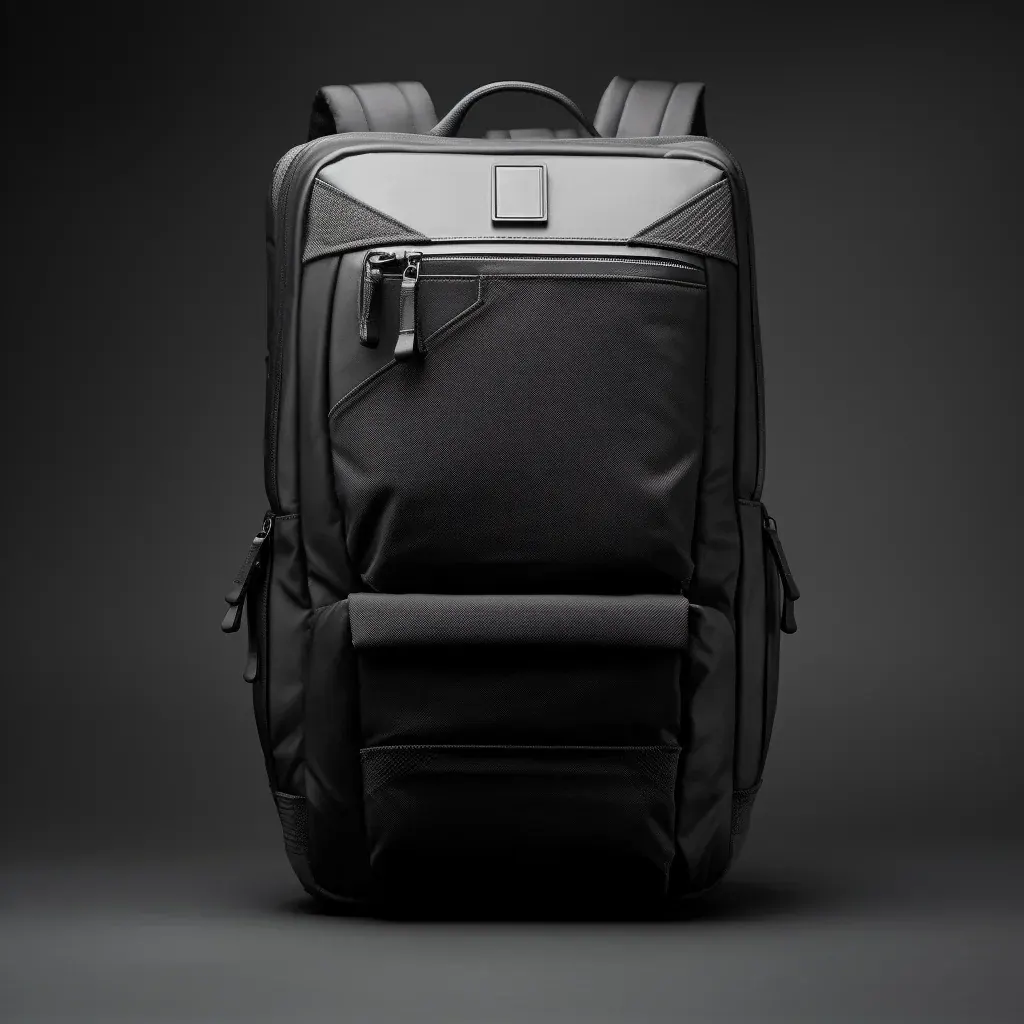
The decision is made from three inputs: the rating the programme needs, the service life the warranty implies, and whether the shell has to breathe. Programmes that need immersion or a warranty beyond three years go welded. Programmes with a breathable panel, an awkward corner geometry or an annual replacement cycle can stay with tape, or use a hybrid and weld only the body.
| Programme | Construction | Realistic level | Expected seam life | Why |
|---|---|---|---|---|
| Commute and laptop | Welded body | IPX6 | 6-10 years | Electronics cannot tolerate a year-three leak |
| Hiking and trekking | Welded body, taped harness | IPX6 | 6-10 years | Base seam flexes constantly |
| Breathable running vest | Stitched and taped | IPX4 | 2-4 years | Welding would close the venting |
| Kayak and rafting | Welded, no external openings | IPX7 | 6-10 years | Immersion rules out an adhesive bond |
| Promotional and event | Stitched and taped | IPX4 | 2-3 years | Replaced before the bond degrades |
| Heavy harness expedition | Hybrid | IPX5-IPX6 | 5-8 years | Frame attachment needs stitching |
| Rental fleet | Welded body | IPX6 | 6-10 years | Bad storage accelerates tape failure |
The clearest single rule from that table is that anything carrying electronics or anything sold with a warranty beyond three years should be welded. A laptop bay is the least forgiving cavity in the category, because a seam that lifts in month thirty wets a device worth more than the pack by a factor of twenty, and no amount of tape maintenance prevents the failure mode. The category baseline for both constructions is set out in our waterproof backpack specification guide.
Cost, Assembly Time and Ordering
Tape is cheaper to set up and dearer to run. It needs no shaped electrode, only a hot air machine and an operator, so tooling cost is near zero against 300 to 900 USD per weld profile. Against that, tape is a consumable at roughly 0.6 to 1.2 USD per metre, application runs at 3 to 8 metres per minute, and a body with 4 metres of seam carries 3 to 5 USD of tape plus the labour. Welding has no consumable and a cycle of seconds, so the two converge quickly as seam length rises.
| Item | Stitched and taped | Welded | Note |
|---|---|---|---|
| Tooling per seam profile | Near zero | 300-900 USD | Amortised from 500 pcs upward |
| Consumable per metre | 0.6-1.2 USD of tape | None | Favourable to welding on long seams |
| Application rate | 3-8 m per minute | 1.2-3.5 s per seam | Welding wins above about 3 m per body |
| Unit cost index | 1.00 | 1.15-1.30 | Welded buys two IPX levels |
| MOQ per design and colourway | 500 pcs | 500 pcs | Consolidate colours from 3,000 pcs |
| Sample and bulk timing | 6-10 working days, 35-50 days | Same, plus coupon qualification | FOB Xiamen or DDP to 100+ countries |
- Every bulk order is inspected at AQL 2.5 before release, with an inflation check at 3 kilopascals on a stated sample rate.
- Immersion programmes add a per-unit pressure or vacuum check, which adds two to four days to the bulk schedule.
- Materials are screened against REACH and California Prop 65, and monthly output of 200,000 units is verified by SGS.
- A four-line brief starts a quotation: construction, rating target, seam length and quantity.
The recommendation for a first waterproof programme is a welded body with taped or stitched attachment points only where geometry forces it, which lands at IPX6 and a cost index near 1.20. Buyers comparing a cheaper taped quotation against that should ask one question: what is the hydrostatic head after 168 hours at 70 degrees Celsius and 95 percent relative humidity. The answer usually settles the comparison faster than the price does. Both constructions and the tooling behind them are shown. Enquiries go to service@junyuanbags.com.
People Also Ask
Are taped seams as good as welded seams?
Not for longevity. A taped seam reaches IPX4 to IPX5 and holds 3,000 to 8,000 millimetres of hydrostatic head when new, but the adhesive hydrolyses and corners lift in year two to four. A welded seam holds IPX6 to IPX7 and stays above 8,000 millimetres after ageing.
How long does seam tape last on a backpack?
Two to four years in temperate use, and eighteen to thirty-six months in tropical or damp storage. Edge curl appears first at 12 to 24 months, corner lift at 24 to 48 months, and full delamination at 36 to 60 months, with the needle holes exposed again after any of them.
Can a taped seam be repaired?
Yes. A lifted tape end can be re-pressed with a household iron on a low setting through a cloth for 10 to 15 seconds, and a full run can be re-taped or patched with a peel-and-stick TPU patch in 60 to 90 seconds. A welded seam patches the same way.
Why do brands tape seams instead of welding them?
Because tape works on breathable shells, reaches corners an electrode cannot, needs no shaped tooling and suits short-life programmes. Welding fuses everything it touches, which closes vented fabric, and requires flat access from both faces of the panel.
Does a welded seam mean the backpack is fully waterproof?
It means the body panels are, but the overall rating still depends on the closure. A welded body with a roll-top collar reaches IPX6 to IPX7; the same body with a coated front zip lands at IPX5, because the opening becomes the limiting path rather than the seam.
How can I tell if a backpack has taped or welded seams?
Turn the body inside out and look for thread. A welded seam is a flat band of film with no stitch holes and no separate strip; a taped seam shows a 20 to 22 millimetre strip with an edge you can lift gently with a fingernail.
Frequently Asked Questions
Q1. What is the difference between a taped and a welded seam?
A taped seam is sewn first and then covered with a 20 to 22 millimetre polyurethane strip pressed on at 130 to 160 degrees Celsius, bridging the needle holes with adhesive. A welded seam has no stitching at all: the films are fused into one layer at 27.12 megahertz, so there is no hole and no adhesive anywhere along it.
Q2. Which seam construction is more waterproof?
Welded. A taped seam reaches IPX4 to IPX5 and holds 3,000 to 8,000 millimetres of hydrostatic head when new; a welded seam holds IPX6 to IPX7 and measures whatever the shell measures, typically above 10,000 millimetres, because the interface is continuous film.
Q3. Why do taped seams fail?
Hydrolysis. The polyurethane adhesive absorbs moisture and breaks down faster in heat and humidity, so the bond edge curls at 12 to 24 months, corners lift at 24 to 48 months and the strip delaminates at 36 to 60 months, exposing the stitch holes underneath.
Q4. How long does a welded seam last?
Six to ten years in normal recreational use, and usually longer than the film around it. There is no adhesive to hydrolyse, so the end point is slow delamination of the film-to-fabric bond rather than a seam failure.
Q5. Are taped seams cheaper?
Yes, by about 15 to 30 percent on unit cost, with a stitched and taped body at 1.00 against 1.15 to 1.30 for welded. Tape needs no shaped tooling but adds 0.6 to 1.2 USD per metre of consumable, so the gap narrows as seam length rises.
Q6. Can you weld a breathable backpack shell?
No. Welding fuses any thermoplastic it touches, which would close the pores that make the fabric breathable. Breathable shells are stitched and taped instead, which is why vented running and cycling packs sit at IPX4 rather than IPX6.
Q7. What is a hybrid seam construction?
Welded body panels with stitched and taped attachment points where an electrode cannot reach, such as a harness anchor or a five-panel corner. It is the standard solution on mid and upper programmes and holds IPX6 overall at a cost index near 1.20.
Q8. How do I test a seam before buying in bulk?
Inflate the body to 3 kilopascals and hold for 3 minutes, then run the rated IPX jet or immersion test with dry indicator paper inside. For a taped seam, also ask for peel strength after 168 hours at 70 degrees Celsius and 95 percent relative humidity.
Q9. Does seam tape work on all fabrics?
It works on most coated shells and fails on printed or finished surfaces, because ink acts as a release layer. Always test adhesion on the finished laminate rather than on a bare fabric coupon, and apply tape over a clean, dry surface.
Q10. What is the MOQ for a welded or taped waterproof backpack?
500 pcs per design and colourway for both. Tooling is the practical difference: welded bodies need one shaped electrode per seam profile at 300 to 900 USD each, while taped bodies need no tooling and therefore suit smaller or more varied runs.
Q11. Should I choose tape or welding for a laptop backpack?
Welding. A laptop bay is the least forgiving cavity in the category, because a seam that lifts in month thirty wets a device worth twenty times the pack. Specify a welded body at IPX6 and a suspended sleeve with 20 millimetres of clearance below it.