Take the roll-top collar unless the pack must be opened more than about fifteen times a day, must open one-handed, or must reach IPX7 with a flat front panel. A roll-top collar with three turns reaches IPX5 to IPX7, has no moving parts to service, costs an index of 1.00 and can be repaired with a patch in 90 seconds. An airtight sealed zip opens in 3 to 5 seconds against 5 to 8 seconds, works one-handed and reaches IPX7 to IPX8, but it costs an index of 1.45 to 1.70, needs relubrication every 800 to 1,500 cycles and leaks if grit reaches the teeth. Both closures start at 500 pcs per design and colourway, sample in 6 to 10 working days and ship in 35 to 50 days from FOB Xiamen.
The Verdict, and the One Question That Decides It
Ask how many times a day the pack is opened. Below about fifteen openings, the roll-top wins on cost, reliability and repairability, and the slower opening speed is not a real penalty. Above that, or whenever the user needs one hand free, the sealed zip wins and its cost is justified by the time it saves. The rest of this comparison is detail that matters only when the two are close.
| Attribute | Airtight sealed zip | Roll-top collar, 3 turns | Winner |
|---|---|---|---|
| Opening time | 3-5 s | 5-8 s | Sealed zip |
| Closing time | 4-6 s, align then pull | 6-9 s, roll and clip | Sealed zip |
| One-handed operation | Yes, with practice | No, needs two hands | Sealed zip |
| Realistic IPX ceiling | IPX7-IPX8 | IPX5-IPX7 | Sealed zip |
| Moving parts | Slider, profiles, end stop | Buckle and webbing only | Roll-top |
| Service interval | Lubricate every 800-1,500 cycles | None | Roll-top |
| Grit tolerance | Poor, grit on teeth leaks | Good, grit falls out of the fold | Roll-top |
| Cold behaviour at -20 C | Stiff, harder to pull | Film stiffens but still seals | Roll-top |
| Field repair | Workshop, 30-60 min | Patch, 60-90 s | Roll-top |
| Trapped air and float aid | Seals flat, little trapped air | Traps air, helps flotation | Roll-top |
| Unit cost index | 1.45-1.70 | 1.00 | Roll-top |
The one row that surprises buyers is grit tolerance. A sealed zip is a precision assembly: two moulded profiles have to meet cleanly, and a single grain of sand held between them opens a capillary path that wets the pack interior. A roll-top has no such tolerance problem, because the three folds compress fabric against fabric and any grit that lands in the fold simply falls out when the collar is opened. That difference is why fishing and beach programmes default to the collar and camera programmes default to the zip.
How an Airtight Sealed Zipper Seals
The closure is not a coated zip. A conventional water-resistant zip has a laminate over the tape that stops water passing through the fabric but not through the teeth, which is why it tops out near IPX4 to IPX5. An airtight zip replaces that arrangement with two moulded thermoplastic profiles that interlock along their full length and are pressed together by a slider with a shaping channel, so the seal is plastic against plastic rather than fabric against fabric.
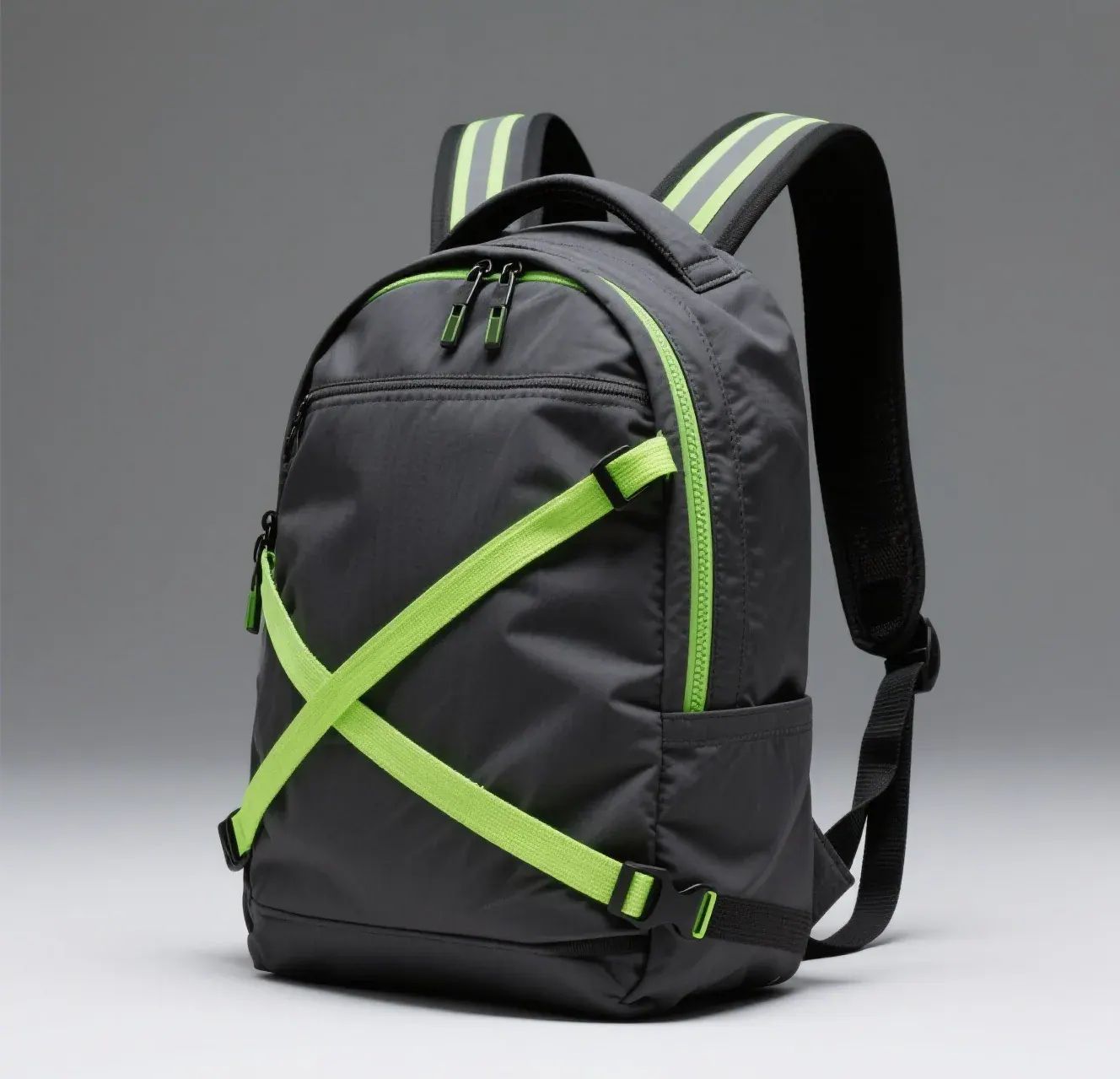
Three consequences follow from that geometry, and all three belong in the tech pack. The slider has to be pulled fully home against a hard end stop, because a closure left 5 millimetres short leaks. The profiles need a silicone lubricant film to slide and to fill micro-gaps, and that film washes off in about 800 to 1,500 cycles or a month of marine use. And the tape has to be welded into the body rather than sewn, because a needle hole through the tape defeats the whole assembly. Seam method is covered in our RF welded seam construction guide.
How a Roll-Top Collar Seals
The collar seals by geometry, not by hardware. Folding the mouth three times creates 120 to 180 millimetres of fabric pressed against itself under the tension of the clip or buckle, and water has to climb that path against gravity and compression to reach the interior. Each additional turn roughly doubles the resistance, which is why the instruction is three turns and not one: a single turn survives a shower, two turns survive heavy rain, and three turns survive a capsize.
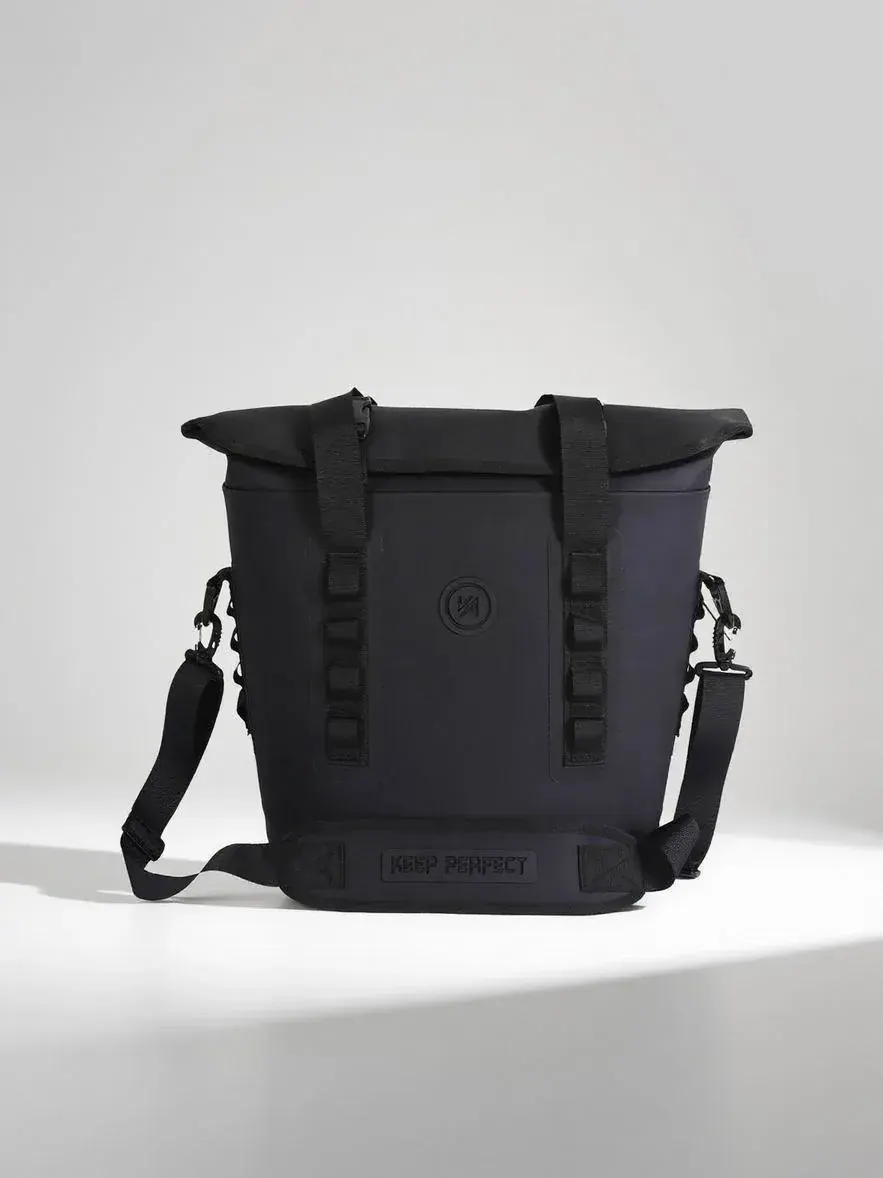
Because there is no precision interface, the collar forgives misuse. It works with gloves, it works when the pack is overfilled by 10 to 15 percent, it works when the fabric is wet, and it works after being dragged through sand. Its two failure modes are user error and film damage: rolling once instead of three times, which drops the level from IPX7 to about IPX4, and creasing the film repeatedly in the same place, which after roughly 2,000 rolls produces a permanent fold line that no longer compresses evenly. Both are visible on inspection, which is a genuine advantage over an internal zip fault.
Opening Speed, Access and One-Handed Use
Speed is the sealed zip case and it should be quantified rather than asserted. In use, the difference is 2 to 4 seconds per opening, which sounds trivial until it is multiplied by a day of access. A commuter opening a pack thirty times a day spends two to three extra minutes at the collar; a photographer working a shoreline opens the bag sixty times and spends five. Against that, the collar is faster when the pack is genuinely overfilled, because a zip that has to be forced closed over a bulging load is slow and risks damage.
| Task | Sealed zip | Roll-top collar | Which the user prefers |
|---|---|---|---|
| Reach a phone, pack on back | 3-5 s, one hand | 6-8 s, pack off | Sealed zip |
| Open fully and unpack | 4-6 s | 7-9 s | Sealed zip |
| Close an overfilled pack | 8-12 s, forcing risk | 8-10 s, compress and roll | Roll-top |
| Close wearing thick gloves | 10-15 s, alignment is hard | 9-12 s, folding is easy | Roll-top |
| Close with sand on the hands | Rinse first or it leaks | Brush off, close, works | Roll-top |
| Close one-handed on a boat | Possible | Not possible | Sealed zip |
| Close by feel in the dark | Yes, follow the track | Harder, needs both hands | Sealed zip |
Read the middle rows carefully, because they are the ones that reverse the verdict. Anyone working in cold water, wearing gloves, or handling bait and sand is better served by a collar even at fifteen or twenty openings a day, because a zip they cannot close cleanly is worse than a collar they can. The hardware families and their maintenance needs are set out in waterproof zipper types explained.
Rating Ceiling and How Each Closure Fails
Both closures can reach IPX7 in a well-built body, and both fail in ways the rating does not predict. The difference is that the zip fails through its mechanism and the collar fails through user behaviour, so the mitigation is different: lubrication and cleaning for one, education and a stiff-enough film for the other. The exposure each level represents is defined by IEC 60529.
| Build | Realistic level | First failure | Fix | Cost index |
|---|---|---|---|---|
| Roll-top, 3 turns, welded body | IPX6-IPX7 | User rolls once instead of three times | Stiffer film, printed turn marks | 1.00 |
| Roll-top with purge valve | IPX7 | Valve clogged or left open | Rinse valve, specify a protected seat | 1.10 |
| Roll-top plus coated front pocket | IPX5-IPX6 | Pocket zip under sustained jet | Drop the pocket or move it inside | 1.20 |
| Sealed zip, new, lubricated | IPX7-IPX8 | Slider stopped 5 mm short | End stop plus a visual closed mark | 1.55 |
| Sealed zip after 1,500 cycles | IPX5-IPX6 | Lubricant washed out, grit on profiles | Rinse, dry, relubricate monthly | 1.55 plus care |
| Sealed zip in salt and sand | IPX4-IPX5 | Grit between the profiles | Rinse in fresh water after each trip | 1.55 plus care |
The practical lesson is that a sealed-zip pack is a maintained product and a roll-top pack is not. If the end user will rinse and lubricate, the zip holds its rating; if they will not, its real-world level drifts down to about IPX5 within a season, which is exactly where a collar sits permanently. Buyers selling into rental fleets, schools or any programme without an owner should assume no maintenance and specify the collar.
Lifecycle, Service Intervals and Field Repair
Service life is where the two diverge most over a full ownership cycle. A roll-top collar has no wear point at all: the film creases, the buckle can break, and that is the entire failure list. A sealed zip has a slider, two profiles and a lubricant film, all of which wear, and its useful life is best measured in lubrication intervals rather than years.
- Lubricate the profiles every 800 to 1,500 cycles, or monthly in marine use, with the silicone product the closure was specified with.
- Rinse the zip in fresh water after saltwater exposure and dry it open; salt crystals between the profiles are the most common cause of a leak claim.
- Expect 3,000 to 5,000 cycles from a sealed zip before the slider or the profiles need replacement, against no defined limit for a collar.
- A collar can be patched in 60 to 90 seconds with a peel-and-stick TPU patch; a zip needs a workshop, a replacement unit and 30 to 60 minutes.
- Specify a replaceable zip where the programme supports it, so a failed closure is a service job rather than a warranty write-off.
Repair economics decide more programmes than performance does. A pack that comes back under warranty with a failed zip is usually a write-off, because the labour to replace a welded-in closure exceeds the unit cost. The same pack with a torn collar is a five-minute patch. Programmes with a stated warranty beyond two years should price that difference before choosing the closure.
Cold, Salt, Grit and UV
Environment is the tie-breaker when opening frequency is genuinely balanced. Cold stiffens both, but it hurts the zip more, because the slider has to pull two profiles into alignment and a stiff tape resists that motion; below about minus 20 degrees Celsius the pull force rises and users start leaving the slider short. Salt and grit are worse for the zip for the reason set out above. UV is roughly equal, since it attacks the film and the tape rather than the mechanism.
| Condition | Sealed zip behaviour | Roll-top behaviour | Specification response |
|---|---|---|---|
| Cold at -20 C | Stiff pull, risk of a short close | Film stiffens, still seals | Collar for winter programmes |
| Salt spray | Crystals jam the profiles | Fold sheds salt when opened | Collar, or a rinse routine |
| Sand and grit | Single grain opens a leak path | Grit falls out of the fold | Collar for beach and desert |
| Mud and bait residue | Profiles must be cleaned first | Wipe the fold and close | Collar for fishing |
| Sustained UV | Tape and profiles age together | Film yellows, fold still seals | Equal, specify a UV package |
| Hot storage at 60 C | Lubricant migrates and dries | No mechanism to dry out | Collar for hot climates |
Salt performance is worth testing rather than assuming. Salt spray exposure is standardised by ASTM International in ASTM B117, and a 96 to 240 hour exposure followed by a jet test is a fair simulation of a season on a boat. Hardware choice matters as much as closure choice in that environment, and the two are covered together in our saltwater corrosion guide.
Cost, Weight and Programme Fit
The cost delta is dominated by the closure unit itself plus the extra inspection. A sealed zip adds roughly 55 to 85 grams per metre of closure and pushes the finished pack to 1.45 to 1.70 against a roll-top baseline of 1.00, with the spread depending on closure length, whether the zip is replaceable, and whether the programme adds a per-unit pressure check. That is a real premium, and it is only worth paying where the zip changes what the user can do.
| Programme | Closure | Cost index | Why | MOQ and timing |
|---|---|---|---|---|
| Commute and laptop | Sealed zip or collar | 1.35-1.55 | Fast repeat access to a flat panel | 500 pcs, 35-50 days |
| Camera and drone | Sealed zip | 1.55-1.70 | One-handed access, IPX7 for the body | 500 pcs, 40-50 days |
| Motorcycle touring | Sealed zip or collar | 1.30-1.55 | Gloves favour the collar, speed favours the zip | 500 pcs, 40-50 days |
| Kayak and rafting | Roll-top | 1.00-1.10 | Immersion plus trapped air plus no maintenance | 500 pcs, 35-45 days |
| Saltwater and surf fishing | Roll-top | 1.00-1.15 | Grit and salt rule out a precision closure | 500 pcs, 35-45 days |
| Ski and winter | Roll-top | 1.05-1.20 | Cold pull force on a zip is the failure | 500 pcs, 35-50 days |
| Rental and institutional | Roll-top | 1.00 | No owner means no maintenance | 500 pcs, 35-45 days |
Weight runs the other way from cost, but by less than buyers expect. A sealed zip adds 55 to 85 grams per metre, and a roll-top adds 40 to 70 grams of film plus a 20 to 30 gram buckle, so on a typical 400 millimetre opening the difference is under 40 grams. It is a specification argument, not a packing argument. Motorcycle touring is the clearest case for the zip on the programme list, and the bodies built for it are described in our waterproof motorcycle backpack guide.
Decision Matrix: Which Closure to Specify
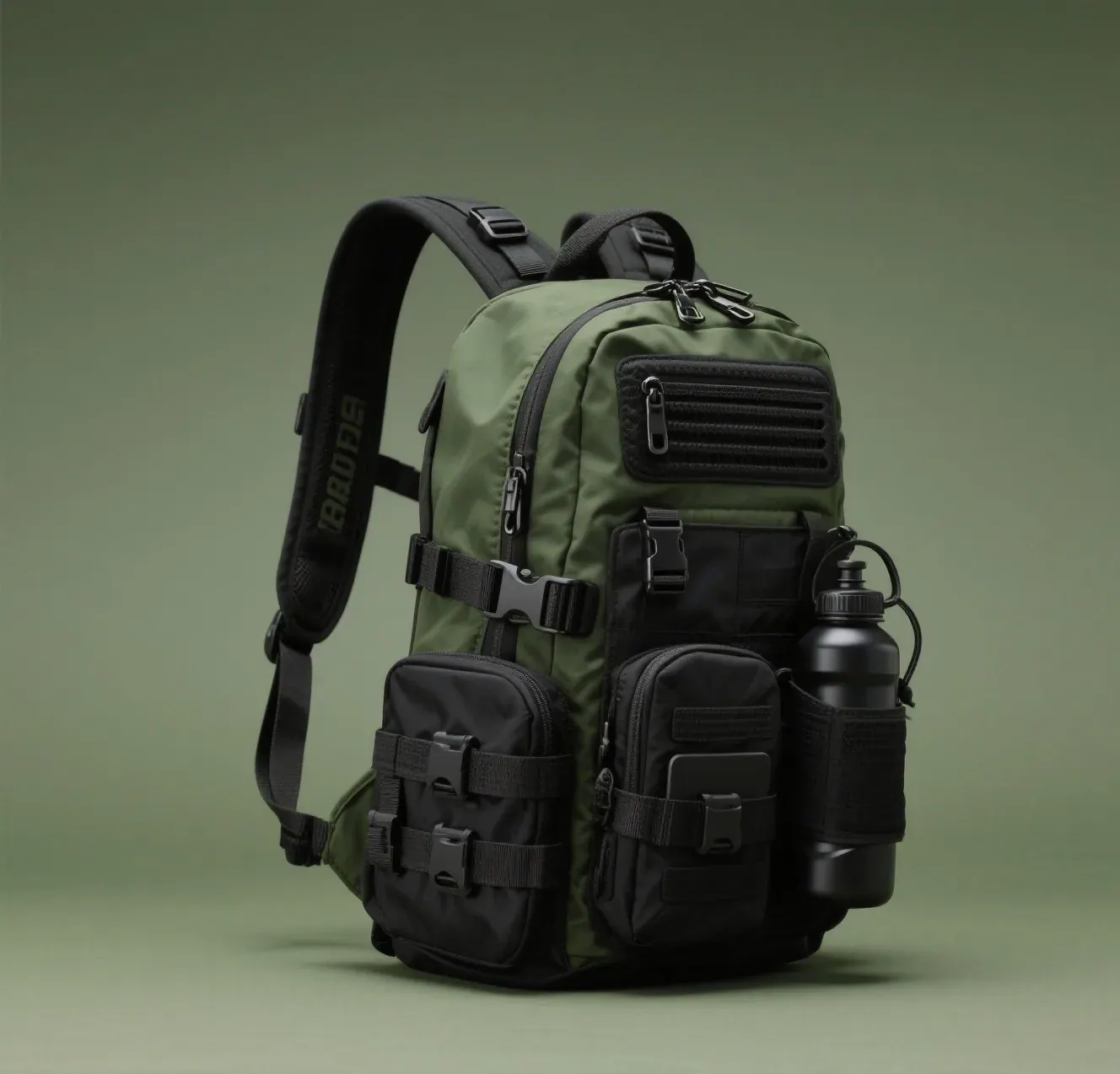
The matrix below is the short version used before a sampling round. It takes the two inputs that actually decide the question, opening frequency and environment, and returns a closure. Where the two conflict, environment wins, because a closure the user cannot operate cleanly in their conditions fails regardless of how fast it is on paper.
| Situation | Openings per day | Environment | Closure | Level |
|---|---|---|---|---|
| City commute with a laptop | 20-40 | Rain, clean | Sealed zip | IPX5-IPX6 |
| Camera work on a shoreline | 40-70 | Salt, sand, spray | Sealed zip with a rinse routine | IPX6-IPX7 |
| Motorcycle touring | 6-12 | Jet at road speed | Either, gloves favour the collar | IPX6 |
| Kayak day trip | 3-6 | Immersion | Roll-top | IPX7 |
| Surf and saltwater fishing | 15-30 | Salt, sand, bait | Roll-top | IPX6-IPX7 |
| Ski touring and winter | 8-15 | Below -15 C | Roll-top | IPX5-IPX6 |
| Multi-day trek | 10-20 | Rain, river crossings | Roll-top plus a welded liner | IPX5 plus IPX7 liner |
| Dive support boat | 5-10 | Immersion, overboard risk | Roll-top, foam panels | IPX7 |
Two rows carry a safety note. Anything that can go overboard should be specified for recovery as well as sealing: a rolled collar traps air and helps the pack float, while a sealed zip body closes flat and holds almost none. Neither is flotation equipment, and anyone on the water should wear an approved personal flotation device; the recreational baseline is published by the US Coast Guard boating safety programme. The rolled forms built for this are covered in our roll-top waterproof backpack guide.
How to Specify Either Closure
Whichever closure is chosen, three lines in the tech pack prevent most of the claims that follow. Name the closure by size and type rather than by brand, so an equivalent part can be substituted without a re-approval. State the acceptance test with the closure in the position the user will leave it, not the position a technician would choose. And state the care instruction that ships with the product, because a maintained closure that is never maintained is the single largest source of leak complaints.
- Specify closure length, tape material and whether the unit is welded in or replaceable, and require a spare slider per 50 units on marine programmes.
- Set the acceptance criterion as dry indicator paper after the rated jet or immersion test with the pack at its stated load, not empty.
- Print the turn marks on a collar and the closed-stop mark on a zip; both are cheap and both cut user error sharply.
- Require a retest after 1,500 closure cycles so the rating describes the product as it will be used rather than as it left the bench.
- MOQ is 500 pcs per design and colourway; samples take 6 to 10 working days and bulk runs 35 to 50 days, FOB Xiamen or DDP into more than 100 countries.
The fastest way to settle a genuine tie is to build both. Sample one body with a sealed zip and one with a collar, put them in front of five users from the target programme for a week, and count the complaints; the answer usually arrives in the first two days. Both closure families and the seam work behind them are shown, or send closure type, volume and target quantity to service@junyuanbags.com.
People Also Ask
Is a sealed zip better than a roll-top closure?
Only for access speed. An airtight zip opens in 3 to 5 seconds, works one-handed and reaches IPX7 to IPX8, while a roll-top collar takes 5 to 8 seconds and needs two hands. The collar wins on cost at 1.00 against 1.45 to 1.70, on grit and salt tolerance, on cold behaviour and on field repair.
How many rolls does a roll-top need?
Three. One turn survives a shower at about IPX4, two turns survive heavy rain near IPX5, and three turns compress 120 to 180 millimetres of fabric and reach IPX6 to IPX7. Under-rolling is the single most common cause of a leak claim on a roll-top pack.
How long does an airtight waterproof zip last?
Roughly 3,000 to 5,000 cycles before the slider or profiles need replacement, with lubrication required every 800 to 1,500 cycles or monthly in marine use. Without lubrication the real-world level drifts from IPX7 down to about IPX5 within one season.
Why does my waterproof zip leak?
Usually one of three causes: the slider was left 5 millimetres short of the end stop, grit or salt crystals are held between the profiles, or the lubricant film has washed out. Rinse in fresh water, dry open, relubricate, and pull the slider fully home.
Can a roll-top backpack be submerged?
Yes, if the body is welded and the collar is rolled three times. That combination reaches IPX7, meaning 30 minutes under 1 metre. A roll-top body with an external coated pocket drops to IPX5 or IPX6, because the pocket zip becomes the limiting path.
Which closure is better for saltwater fishing?
The roll-top. Salt crystals jam a sealed zip and a single grain of sand between the profiles opens a leak path, whereas the fold sheds grit when it is opened. Choose the collar at IPX6 to IPX7 and rinse the pack in fresh water after every trip.
Frequently Asked Questions
Q1. What is the difference between a TIZIP zip and a normal waterproof zip?
A standard water-resistant zip has a laminated tape that stops water passing through the fabric but not through the teeth, so it reaches IPX4 to IPX5. An airtight zip presses two moulded profiles together with a slider, sealing plastic against plastic, which lifts the ceiling to IPX7 or IPX8.
Q2. Is a sealed zip worth the extra cost?
Yes above about fifteen openings a day or where one-handed access changes what the user can do, such as camera and drone work. The premium is a cost index of 1.45 to 1.70 against 1.00, plus relubrication every 800 to 1,500 cycles. Below that frequency the collar is better value.
Q3. Which closure reaches the higher IPX rating?
The sealed zip, at IPX7 to IPX8 against IPX5 to IPX7 for a roll-top. The gap narrows in real use, because an unlubricated zip after 1,500 cycles performs near IPX5, which is where a properly rolled collar sits permanently with no maintenance at all.
Q4. Does a roll-top closure wear out?
It has no wear point, unlike a zip. The failure modes are under-rolling, which is user error, and creasing the film in the same place after roughly 2,000 rolls, which leaves a fold line that no longer compresses evenly. Both are visible on inspection.
Q5. Can a sealed zip be repaired in the field?
Not usually. Repairing a welded-in closure needs a workshop, a replacement unit and 30 to 60 minutes, and the labour often exceeds the unit cost. A roll-top can be patched in 60 to 90 seconds with a peel-and-stick TPU patch, which is why long-warranty programmes prefer it.
Q6. How often should a waterproof zip be lubricated?
Every 800 to 1,500 cycles, or monthly under marine use, with the silicone product the closure was specified with. Saltwater and pressure washing strip the film faster, so rinsing in fresh water after each trip and drying the pack open is part of the same routine.
Q7. Which closure works better with gloves?
The roll-top. Aligning a slider and pulling it home against stiff tape is hard in thick gloves, and users routinely leave the slider short. Folding a collar is a gross motor task that works at minus 20 degrees Celsius and with neoprene gloves on.
Q8. Which closure is better for kayaking?
The roll-top. It reaches IPX7 with three turns, tolerates sand and grit, needs no maintenance, and traps air that keeps the pack on the surface if it goes overboard. A sealed zip body closes flat, holds almost no air and sinks faster.
Q9. Does a sealed zip make a backpack float?
No. Flotation comes from trapped air and closed-cell foam panels, not from the closure. Specify foam panels giving 2 to 4 kilograms of positive lift for any programme with an overboard risk, and test the pack floating with a representative load.
Q10. Can one pack have both closures?
Yes, and it is often the right answer: a roll-top main body for immersion and trapped air, plus a sealed zip on an external pocket for fast access to a phone or a camera. The pocket should be rated separately, because it becomes the limiting path, typically IPX6.
Q11. What is the MOQ and lead time for either closure?
500 pcs per design and colourway for both. Samples take 6 to 10 working days, with sealed-zip bodies at the longer end because the closure is welded in and pressure-checked, and bulk runs 35 to 50 days, FOB Xiamen or DDP into more than 100 countries.
Q12. How do I stop users under-rolling a collar?
Specify a stiffer film so the fold holds its shape, print turn marks on the collar, and put a one-line instruction on the hangtag. Those three changes cost very little per unit and remove the most common leak claim on roll-top packs.