A roll top waterproof backpack seals by folding the mouth over itself, and the rating it reaches depends on how it is built and how it is closed: three full turns with a 60 to 80 mm fold reach IPX5, four turns with a compression strap reach IPX6 under IEC 60529, and a rolled body fitted with a one-way purge valve and no external zip reaches IPX7 for 30 minutes at 1 m. The eight configurations now shipping in volume cover 15 to 70 L, weigh 620 g to 1.9 kg empty, and cost from 0.88 to 1.60 times a single-buckle dry-bag mouth. Programmes start at 500 pcs per design and colourway, samples take 6 to 10 working days, and bulk production runs 35 to 50 days from FOB Xiamen.
Why the Roll Mouth Became the Default Closure
The roll mouth won the waterproof backpack market for a boring reason: it is tolerant of user error and cheap to assemble. An airtight zip has to be kept clean and lubricated to hold its rating, and a coated zip weeps once the laminate wears, but a rolled mouth fails only when somebody rolls it once instead of three times. That tolerance matters in the field, where the pack is closed in the rain by a cold user in a hurry, and it matters to buyers because the closure is the single largest driver of warranty claims.
The trade is access speed. Opening a rolled mouth takes 4 to 7 seconds against 1 to 2 seconds for a zip, and reaching anything below the top third of the pack means unrolling completely. That is why the most common hybrid in travel and commute programmes is a rolled main body with a coated front zip into the lower compartment: the pack still seals to IPX5 or IPX6 when rolled, and daily items stay reachable. The full construction baseline for every closure family is set out in our waterproof backpack specification guide.
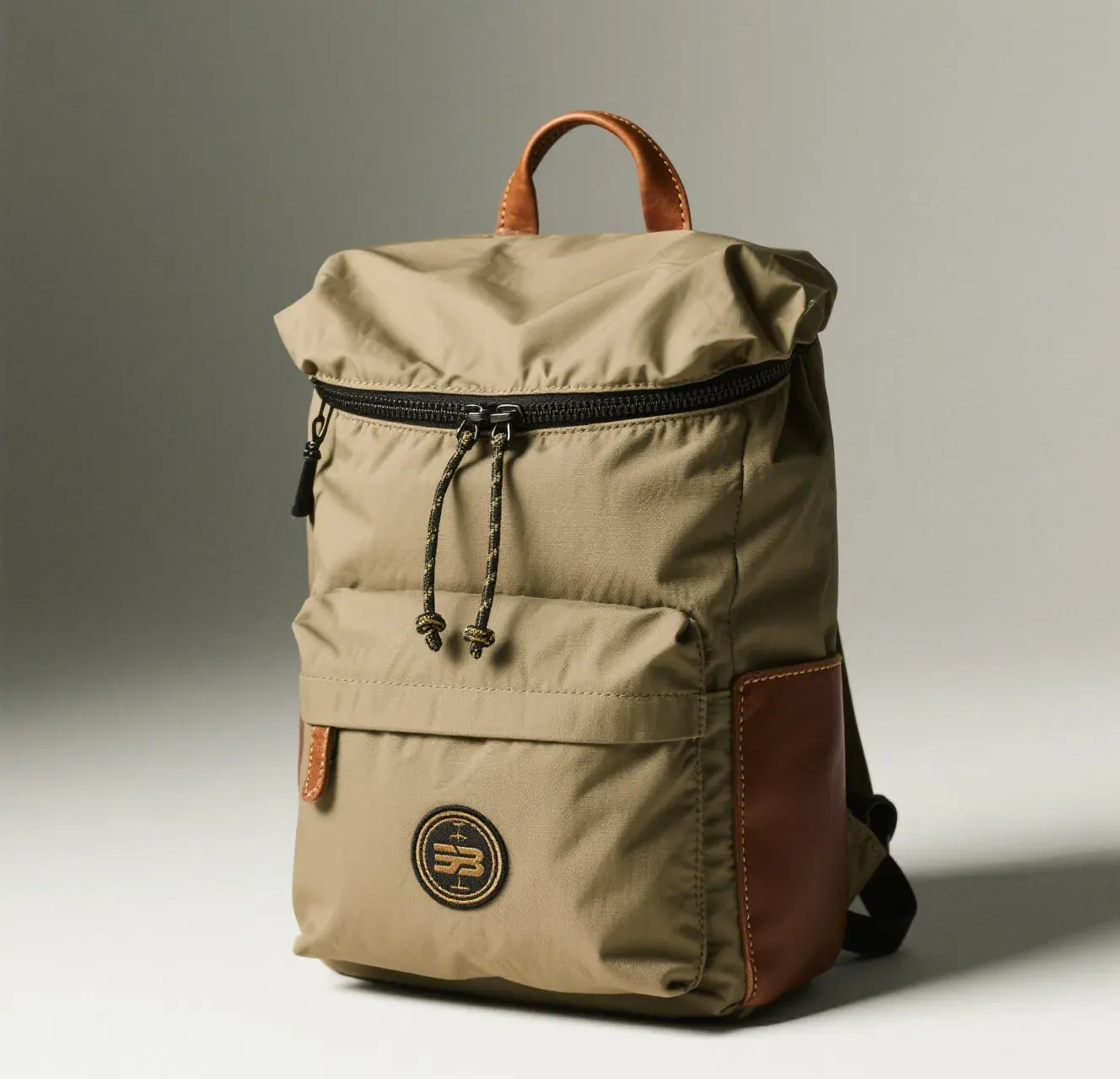
Eight Roll Top Configurations and Where Each One Fits
Roll top is a family, not a single design. The eight configurations below differ in how the fold is held, whether a secondary opening exists, and how much the hardware adds to unit cost and weight. Read the rating column as the realistic tested level with the mouth closed correctly, not the level printed on the hangtag: a body rated IPX7 will test at IPX4 if the stiffener is missing and the fold collapses.
| Configuration | Realistic rating | Volume and empty weight | Cost index | Best application |
|---|---|---|---|---|
| Single side-buckle dry mouth | IPX5-IPX6 | 20-40 L, 620-980 g | 1.00 | Hiking, kayaking, daily carry |
| Roll plus top compression strap | IPX6 | 25-45 L, 700-1,100 g | 1.08 | Travel, wet commuting |
| Roll plus coated front zip | IPX5-IPX6 | 25-45 L, 880-1,350 g | 1.30 | Travel, laptop carry |
| Roll plus magnetic fold lock | IPX4-IPX5 | 18-30 L, 640-900 g | 1.15 | Urban commute, light daypack |
| Roll plus side rail clip closure | IPX5 | 20-35 L, 680-1,000 g | 1.22 | Cycling, one-hand closure |
| Roll body with purge valve | IPX7 | 30-70 L, 1,100-1,900 g | 1.60 | Rafting, immersion, marine |
| Roll mouth under protective flap | IPX6 | 35-55 L, 1,200-1,800 g | 1.35 | Trekking, expedition |
| Mini roll daypack | IPX4-IPX5 | 15-20 L, 480-700 g | 0.88 | Trail running, city errands |
Two columns decide most buying decisions. The cost index separates the plain dry-bag mouth at 1.00 from the purge-valve submersible body at 1.60, and that 60 percent delta is almost entirely hardware and weld length rather than fabric. The weight figures matter more than buyers expect: on a 25 L pack the difference between a magnetic fold lock at 640 g and a roll-plus-zip hybrid at 1,350 g is the difference between a pack that sells as a daypack and one that reads as a travel bag on the shelf.
Programmes that need a genuine immersion rating should look only at the purge-valve row. It is the only configuration in the table with no secondary opening, because every additional zip or pocket is another candidate leak path; the valve exists so trapped air can be squeezed out before the pack goes under, which also lets the rolled body compress to roughly 60 percent of its packed height.
How Many Rolls Actually Seal: Turns, Fold Depth and Pressure
The seal is a pressure problem. Each turn of the fold adds a layer of fabric between the water and the mouth, and each layer adds a contact path the water has to travel along. Measured on a 500D TPU laminate with a 25 mm side buckle, the jump from one turn to three turns is about two full IPX levels, which is why user instruction cards are not decorative. Below the table, the practical rule is that the fold depth must exceed the mouth stiffener width by at least 20 mm or the fold will spring open.
| Turns | Fold depth | Effective rating | Failure mode observed | Typical user error |
|---|---|---|---|---|
| 1 turn | 20-30 mm | IPX3 | Water tracks between fabric layers | Rushing in heavy rain |
| 2 turns | 40-55 mm | IPX4 | Splash enters at the corners | Pack overfilled to the brim |
| 3 turns | 60-80 mm | IPX5 | None under jet test at 12.5 L/min | Correct technique |
| 4 turns | 85-110 mm | IPX6 | None under 100 L/min jet | Excess fold, wasted capacity |
| 3 turns plus top strap | 60-80 mm | IPX6 | None, strut effect holds fold flat | Strap left loose |
Overfilling is the quiet killer of the roll mouth. A pack filled to within 40 mm of the top cannot make three turns, so the user makes one and a half and the effective rating drops two levels. The specification answer is to state a fill line in the tech pack and print it inside the body at 40 to 60 mm below the stiffener: buyers who add that single line of ink report far fewer wet-gear complaints than those who rely on the user to judge.
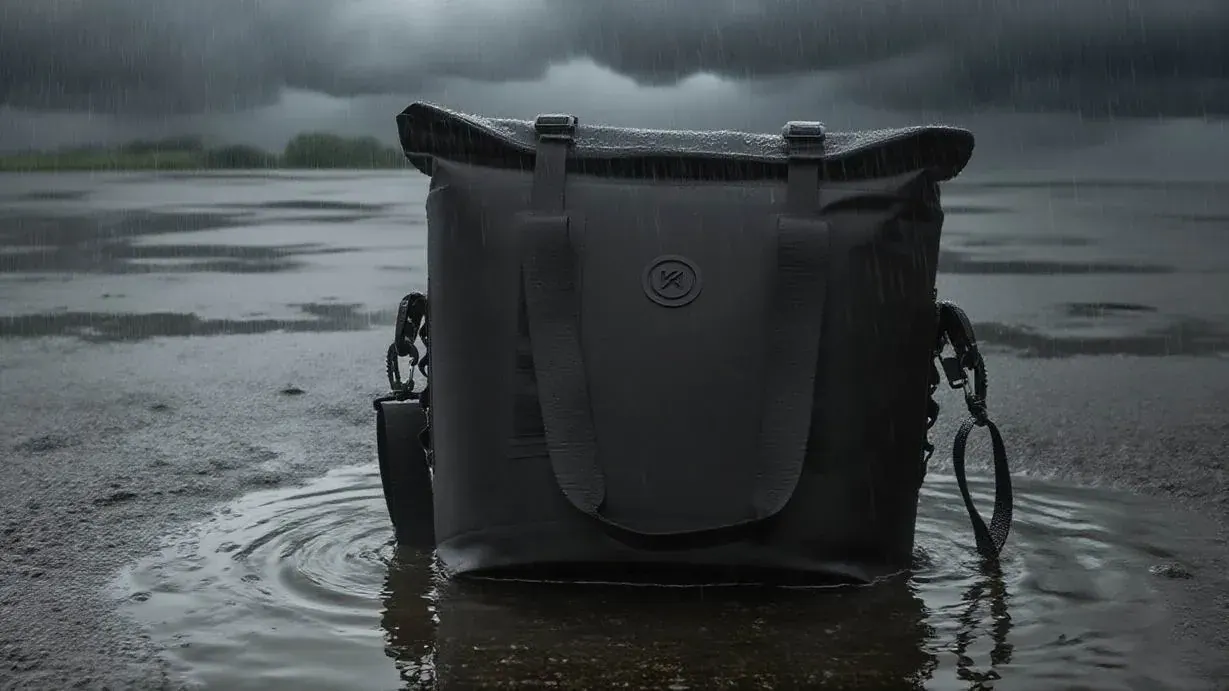
Mouth Geometry: Width, Stiffener and Hardware
Three dimensions govern whether a roll mouth is easy to close or a daily annoyance. Mouth width sets how much can be loaded and how much fabric has to be folded; the stiffener keeps the fold flat so the layers press evenly; and the hardware decides whether closure is a two-hand job or a one-hand job. Getting any of the three wrong produces a pack that tests well in the laboratory and frustrates users in the rain.
| Parameter | Small daypack 18-25 L | Mid volume 28-40 L | Large volume 45-70 L | Design note |
|---|---|---|---|---|
| Mouth width | 240-300 mm | 300-380 mm | 380-460 mm | Wider mouths need a firmer stiffener |
| Stiffener | 1.2 mm HDPE insert | 1.6 mm HDPE insert | 2.0 mm HDPE or rolled webbing | Must exceed buckle width by 10 mm |
| Fold depth | 60-70 mm | 70-80 mm | 80-100 mm | Must exceed stiffener by 20 mm |
| Side buckle | 20 mm acetal | 25 mm acetal | 25 mm acetal or cam | Cam buckles hold better under load |
| Top strap | Optional | 25 mm with ladderlock | 25 mm with cam | Strut effect adds about one IPX level |
| Hardware finish | Matte acetal | Matte acetal | Matte acetal, glove-friendly | Metal hardware adds noise and corrosion |
The stiffener deserves more attention than it usually gets. A 1.2 mm HDPE insert in a 20 L mouth keeps the fold flat under finger pressure; the same insert in a 60 L mouth lets the corners curl, and curled corners are where the jet test finds water first. Above 40 L the better answer is a rolled webbing stiffener sewn into the mouth hem, which costs about 0.6 yuan more per unit and survives being stuffed into a kayak hatch in a way a flat plastic strip does not.
- Mouth width under 240 mm makes loading a 15 in laptop awkward even when the litre figure says the pack will take it.
- Specify the stiffener in the tech pack; without it the fold collapses and the tested rating drops by two levels.
- Ask for cam buckles rather than side-squeeze above 40 L, where fold tension is high enough to creep a squeeze buckle open.
- A top compression strap does more than compress: it acts as a strut across the fold and is worth about one IPX level.
- Keep hardware matte acetal; metal sliders corrode in salt air and click against the teeth when the pack shifts.
Roll Top Against the Other Closure Families
Buyers rarely choose a closure in isolation. The short comparison below is the decision aid used before a sampling round: it puts the roll mouth against airtight zips, coated zips and flap closures on the four axes that actually change a programme, namely achievable rating, cycle life, unit cost and access speed. The detailed head-to-head with airtight hardware is covered in our comparison of TIZIP and roll top closures, and the flap alternative is treated in roll top versus flap closure backpacks.
| Closure | Achievable rating | Cycle life before service | Unit cost index | Access time |
|---|---|---|---|---|
| Roll top, dry mouth | IPX5-IPX6 | No wear mechanism | 1.00 | 4-7 s |
| Roll top with purge valve | IPX7 | Valve service at 12-24 months | 1.60 | 6-9 s |
| Coated laminated zip | IPX4-IPX5 | 500-1,500 cycles | 1.35 | 1-2 s |
| Airtight TIZIP zip | IPX7-IPX8 | 300-800 cycles with lubrication | 2.40 | 2-4 s |
| Flap with storm skirt | IPX4-IPX5 | Buckle wear from 2,000 cycles | 1.10 | 3-5 s |
| Hook-and-loop plus roll | IPX3-IPX4 | Hook shear from 1,000 cycles | 0.95 | 3-5 s |
The cycle-life column is where the roll mouth wins outright on paper, because a fold has no teeth to wear and no laminate to abrade. In practice the wear moves to the stiffener and the buckle: an HDPE insert creases after roughly 3,000 fold cycles and a 25 mm acetal buckle loses holding force after about 2,000 hard pulls, so both should be specified as replaceable parts on programmes sold with a multi-year warranty.
Volume, Dimensions and How a Roll Body Actually Packs
A roll top body is more flexible than a zip body in one useful way: the same pack accepts a 30 L load and a 42 L load, because the extra fabric lives in the collar. That is a selling point for travel retail and a specification headache for buyers who need a fixed packed size for airline sizers, so the tech pack should state both the nominal rolled volume and the collapsed height at the fill line.
| Nominal volume | Body H x W x D at fill line | Collar extension | Usable load | Trip length |
|---|---|---|---|---|
| 18 L | 42 x 26 x 16 cm | 120 mm | 4-6 kg | Half day |
| 25 L | 48 x 29 x 18 cm | 150 mm | 6-8 kg | Full day |
| 32 L | 52 x 31 x 20 cm | 170 mm | 8-10 kg | 1-2 days |
| 40 L | 56 x 34 x 24 cm | 190 mm | 10-13 kg | 2-4 days, carry-on |
| 55 L | 62 x 36 x 26 cm | 220 mm | 13-16 kg | 4-7 days |
| 70 L | 70 x 38 x 30 cm | 250 mm | 16-20 kg | Expedition, rafting |
Packing behaviour is the reason roll bodies carry awkward loads better than they carry rigid ones. Soft items such as clothing compress into the collar and let the mouth still make three turns, while camera cubes and tackle trays hold their shape and force the user to leave the mouth short. The remedy is a 15 to 20 L welded liner for rigid cargo, which keeps the sharp corners off the wall seams and lets the main body stay compressible. Step-by-step loading order is set out in how to pack a roll top waterproof backpack, and volume selection is covered in the hiking pack guide.
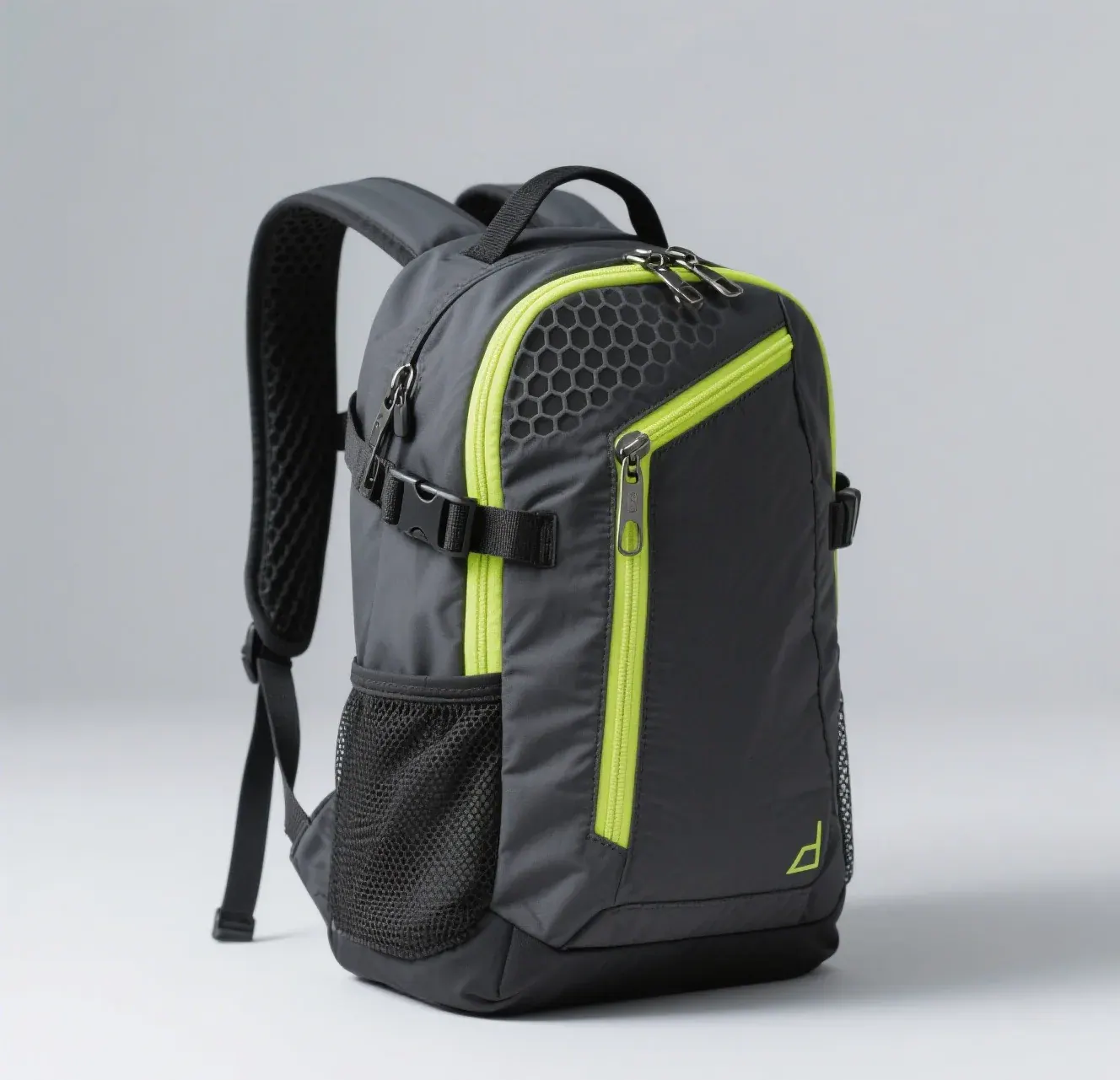
Shell, Film and Weld Parameters for a Rolled Body
The mouth gets the attention but the body does the work. A rolled body is usually RF welded at 27.12 MHz, and the three variables that decide seam quality are power, dwell and electrode width. Weld parameter drift is the most common cause of a style that passes as a hand-made sample and fails as a production run, so the tech pack should name the seam width and the peel criterion rather than leaving it to the floor.
| Shell material | Film and weld seam | Hydrostatic head | Low-temp flex | Fabric weight |
|---|---|---|---|---|
| 420D polyester | TPU 0.30 mm, 20 mm seam | 4,000-5,000 mm | -28 degrees C | 230 g/m2 |
| 500D polyester | TPU 0.35 mm, 22 mm seam | 5,000-6,000 mm | -30 degrees C | 285 g/m2 |
| 840D nylon | TPU 0.45 mm both sides, 25 mm | 8,000-10,000 mm | -35 degrees C | 410 g/m2 |
| 1000D PVC tarpaulin | Knife-coated 0.52 mm, 25 mm HF | 10,000 mm | -10 to -15 degrees C | 610 g/m2 |
| 210D recycled PET liner | PFAS-free DWR, bound seams | 1,200 mm | -20 degrees C | 120 g/m2 |
Hydrostatic head is measured on flat fabric by the ISO 811 method published through the International Organization for Standardization, and the assembled pack is rated separately under the IEC 60529 enclosure test. Both numbers belong on a specification sheet, because a 10,000 mm shell with a one-turn roll still leaks. Abrasion and colour fastness are then checked by the methods maintained by AATCC, with grade 4 at 20 hours the usual acceptance line for retail.
Failure Modes and the Field Fixes That Work
Six failures account for nearly every roll top warranty claim, and four of them are user behaviour rather than construction. Diagnosing them correctly matters because the wrong fix costs more than the original defect: re-welding a body that only needed a stiffener, or replacing hardware on a pack whose real problem is an overfilled collar.
- Damp at the corners of the fold: the stiffener is too soft for the mouth width. Move from 1.2 mm to 1.6 mm HDPE, or to a rolled webbing stiffener above 40 L.
- Weep along the side seams near the mouth: weld power drifts as the electrode warms. Re-check peel strength on production coupons every week, not per lot.
- Pack will not close: it is filled past the fill line. Print a fill line 40 to 60 mm below the stiffener and state the usable volume in the tech pack.
- Fold springs open during carry: no top compression strap. A 25 mm strap across the fold acts as a strut and is worth roughly one IPX level.
- Crease line in the collar after a season: normal HDPE fatigue after about 3,000 folds. Specify the stiffener as a replaceable part.
- Musty interior: the pack was stored rolled shut while damp. Store unrolled with the mouth open; a sealed body traps vapour as well as water.
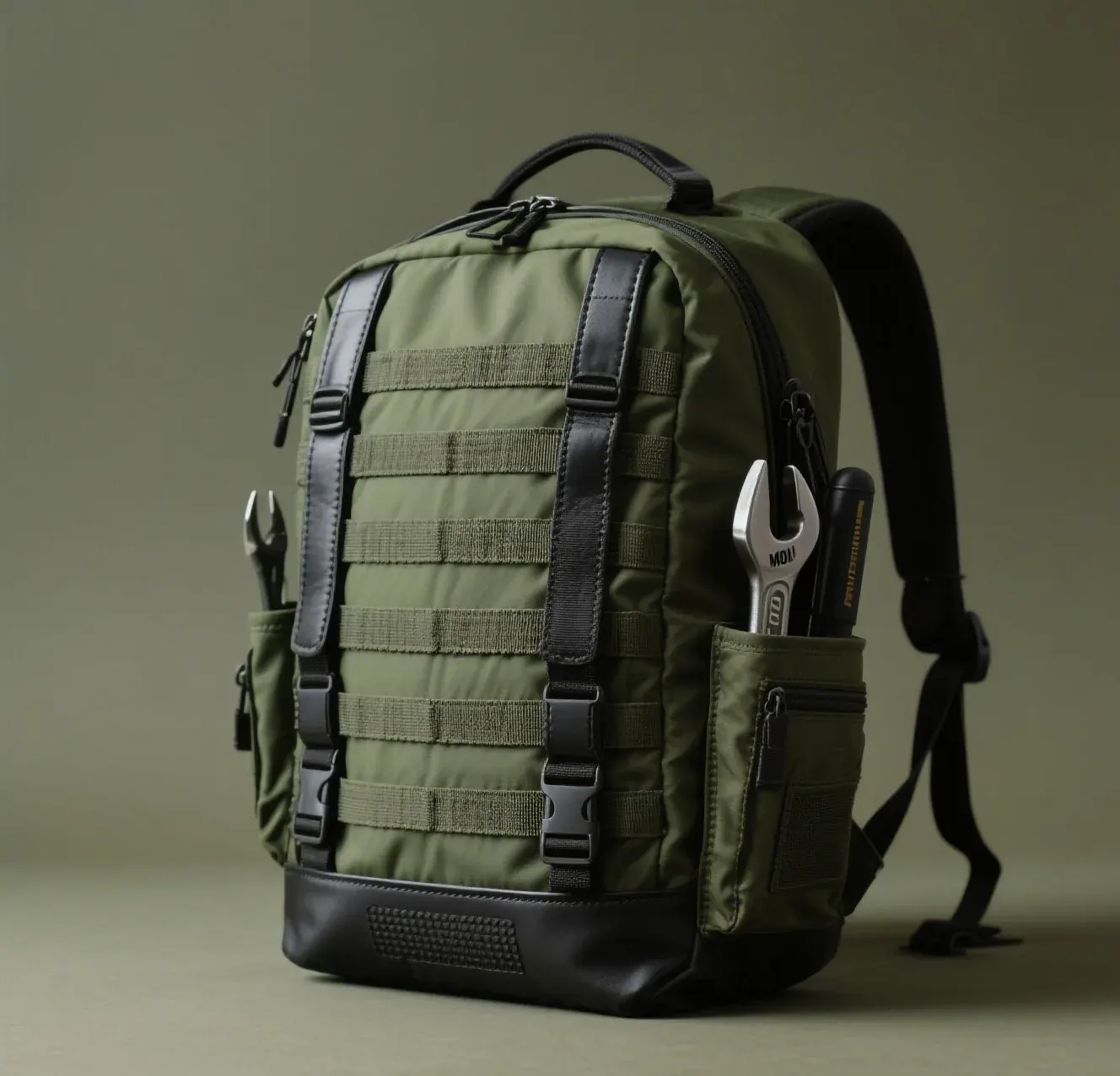
Ordering a Roll Top Programme
Roll top styles are the cheapest closure family to develop because there is no zip tooling, which shortens sampling by two to four working days against an airtight-zip programme. Cost still scales with colourway count rather than total volume, since each colour resets the material minimum for fabric, webbing and buckle resin. The bands below are the working figures used for budgeting.
| Order band | Unit price index | Sample lead time | Bulk lead time | Notes |
|---|---|---|---|---|
| 500-999 pcs | 1.00 | 6-8 working days | 35-40 days | One colourway, stock film |
| 1,000-2,999 pcs | 0.93 | 6-9 working days | 38-45 days | Up to two colourways |
| 3,000-9,999 pcs | 0.86 | 7-10 working days | 40-50 days | Pantone-matched buckles and webbing |
| 10,000+ pcs | 0.79 | 8-10 working days | 45-50 days | Dedicated film run, printed liner |
- The opening quantity is 500 pcs for each design and colourway; mixed colours can be consolidated from 3,000 pcs.
- Samples take 6 to 10 working days and bulk runs 35 to 50 days, shipped FOB Xiamen or DDP into more than 100 countries.
- Every bulk order is inspected at AQL 2.5 before release and the signed report travels with the packing list.
- REACH and California Prop 65 screening is included in every quotation; PFAS-free face finishes are available on request.
- A brief needs only four lines to start: target quantity, litre band, mouth width and whether a front zip is wanted.
Buyers who want to see how rolled bodies are assembled alongside zip and welded styles across the wider range can read the production programme. Send target quantity, litre band and preferred configuration to service@junyuanbags.com for a quotation with a price band and a sampling date.
Acceptance Testing for Rolled Bodies
A rolled body is tested differently from a zip body because the mouth is the variable. The enclosure test therefore runs twice: once with the mouth closed by a trained technician, and once after 200 open-and-close cycles by an untrained one, which is what separates a design that seals from a design that only seals when handled carefully. The schedule below takes about four working days per style.
| Check | Method | Pass criterion | Frequency |
|---|---|---|---|
| Enclosure integrity | Air decay at 3 kPa on sealed body | Under 10 percent loss over 3 min | Every colourway, first article |
| Fold repeatability | Spray at 12.5 L/min after 200 closures | No moisture on indicator paper | Per style |
| Stiffener retention | Fold 3,000 cycles, inspect crease | No crack, fold stays flat | Per tooling lot |
| Seam peel strength | Tensile pull on welded coupon | At least 90 percent of fabric strength | Per production week |
| Buckle retention | Static pull to 25 kg for 60 s | No slip above 5 mm | Per hardware lot |
| Abrasion resistance | Martindale, ISO 12947-2 | 25,000 cycles to first yarn break | Per fabric lot |
| Cold fold | Roll and unroll at -20 degrees C | No film cracking | Per shell lot |
| Chemical screening | REACH SVHC and Prop 65 list check | Non-detect on declared substances | Per material lot |
One practical note closes the loop. Keep the mouth prototype and the production sample from the same programme side by side for the life of the style; when a batch complaint arrives, comparing fold geometry against the retained piece identifies whether the stiffener, the weld or the fill line moved, which is usually a five-minute check rather than a week of correspondence.
People Also Ask
How many times should you roll a roll top backpack?
Three full turns with a 60 to 80 mm fold is the standard: it reaches IPX5 under IEC 60529. Four turns with a top compression strap reaches IPX6, while one turn tests at roughly IPX3 and will leak in anything more than drizzle.
Are roll top backpacks completely waterproof?
They are waterproof to the rating they were tested at, normally IPX5 or IPX6, and they will not survive extended submersion unless the body is welded with a purge valve and no external zip. The rating depends on the user closing the mouth correctly, which no zip closure requires.
What is the advantage of a roll top over a zip?
A fold has no teeth to wear and no laminate to abrade, so there is no cycle-life limit on the seal itself, and the closure costs about 40 percent less than an airtight zip. The trade is access: a rolled mouth takes 4 to 7 seconds to open against 1 to 2 seconds for a zip.
Why does my roll top backpack leak at the corners?
Curled corners mean the stiffener is too soft for the mouth width. Below 40 L a 1.6 mm HDPE insert is usually enough; above 40 L a rolled webbing stiffener sewn into the mouth hem holds the fold flat when the pack is stuffed into a hatch or overfilled.
Can a roll top backpack be used as a dry bag?
Yes, if the body is RF welded with no external zip, which is the configuration rated IPX7. A roll top pack with a coated front zip is a rainproof travel pack, not a dry bag, and should not be relied on if it goes overboard or is submerged.
Do roll top backpacks compress when they are not full?
Yes, more than any other closure type. With the air squeezed out through a purge valve, a welded rolled body compresses to roughly 60 percent of its packed height, which is why rolled bodies are preferred for kayak hatches and airline sizers.
Frequently Asked Questions
Q1. What IPX rating does a roll top backpack reach?
A rolled mouth closed correctly reaches IPX5 as standard and IPX6 with a top compression strap. Submersion ratings of IPX7 require a welded body with a purge valve and no secondary opening, because every extra zip or pocket adds a leak path.
Q2. How deep should the fold be on a roll top closure?
60 to 80 mm for three turns on a 28 to 40 L pack, 80 to 100 mm above 45 L, and always at least 20 mm deeper than the stiffener is wide. A shallower fold springs open under load and drops the effective rating by two levels.
Q3. What is the mouth stiffener for and can it be removed?
The stiffener keeps the fold flat so the layers press evenly; without it the corners curl and the jet test finds water first. It can be removed for washing on designs with a sleeve pocket, but packs without one should be specified with a replaceable insert.
Q4. Is a roll top backpack better than a waterproof zip pack?
For durability and cost, yes: no wear mechanism and a cost index of 1.00 against 2.40 for airtight hardware. For access speed and true submersion, the airtight zip wins. Most travel programmes settle on a rolled body with a coated front zip as the compromise.
Q5. What volume roll top backpack is right for a weekend?
32 to 40 L covers a two-day trip at 8 to 13 kg, with the collar giving 170 to 190 mm of extra height when the load is bulky. Buyers should specify the packed height at the fill line, not just the litre figure, so airlines and retail packaging both work.
Q6. Can a 15 inch laptop fit through a roll top mouth?
A 15 in device needs a mouth at least 300 mm wide, which rules out most packs under 25 L. Above 28 L the mouth is usually 300 to 380 mm and accepts a laptop in a sleeve, though a front zip compartment is far more convenient for daily access.
Q7. How long does the roll top seal last?
The fold itself has no wear limit, but the stiffener creases after roughly 3,000 fold cycles and a 25 mm acetal buckle loses holding force after about 2,000 hard pulls. Both should be treated as service parts on a multi-year warranty programme.
Q8. Why does my roll top backpack smell musty?
Because a sealed body traps vapour as well as water. If the pack is rolled shut while the interior is damp, microbial growth starts in the liner and foam within two or three days. Store it unrolled with the mouth propped open for 12 to 24 hours after every wet trip.
Q9. Can a roll top body be RF welded and still flex in winter?
Yes, with the right film. TPU-laminated 500D polyester stays flexible to about minus 30 degrees Celsius and is safe for northern programmes, whereas PVC tarpaulin stiffens below minus 10 to minus 15 degrees Celsius and should be avoided for winter retail.
Q10. What is the MOQ for a roll top backpack programme?
MOQ is 500 pcs per design and colourway, set by material minimums for film, webbing and buckle resin. Consolidating three colours into one run from 3,000 pcs is usually cheaper per piece than three separate 500 pc drops.
Q11. How long do samples and bulk take for roll top styles?
Samples take 6 to 10 working days, typically two to four days faster than an airtight-zip style because there is no zip tooling to cut. Bulk runs 35 to 50 days depending on order band, colourway count and whether Pantone-matched buckles are required.
Q12. How is a roll top backpack tested before shipment?
The enclosure test runs twice: once with the mouth closed by a trained technician, and again after 200 closures by an untrained one, sprayed at 12.5 L per minute with indicator paper inside. Seam peel, buckle retention and cold fold are checked on production coupons alongside it.
Q13. Can roll top backpacks be made with recycled fabric?
Yes. A 210D recycled PET liner with PFAS-free DWR is available and is increasingly specified for EU retail, though the structural shell still needs a TPU film barrier to reach 5,000 mm hydrostatic head. Certified recycled content adds about 8 to 12 percent to fabric cost.