For boating, specify IPX6 as the floor and IPX7 where capsize is realistic: per IEC 60529, IPX6 means surviving a 12.5 mm jet at 100 L per minute for 3 minutes, while IPX7 means 30 minutes sealed at 1 m. Deck spray on an open boat at 15-20 knots throws 8-12 L of water an hour at whatever is stowed aft, and a single green wave over the gunwale puts 20-60 L into the cockpit in one second. Practical boat specifications are 20-30 L for a sit-on-top kayak, 40-55 L for touring and paddle camping, IPX6 to IPX7 welded bodies with 4-6 lash points, and hardware in 316 stainless or acetal rather than plated steel. Programmes open at 500 pcs per design and colourway, samples take 6-10 working days, and bulk ships in 35-50 days from FOB Xiamen.
Why Open Water Tests a Pack Harder Than Any Trail
Rain on a trail arrives at perhaps 5-25 mm per hour and drains away by gravity. Water on a boat arrives sideways, in volume, and it stays: a cockpit or deck well holds what it catches until someone bails it. That difference is why packs that perform perfectly on a hiking programme wet out in the first hour of a coastal run, and it is why the specification for boating has to be written against measured exposure rather than against a fabric marketing term.
| Exposure on the water | Measured intensity | What fails first | Build that survives it |
|---|---|---|---|
| Bow spray at 15-20 knots | 8-12 L per hour on an open deck | Stitched zip tape, bound seams | Coated zip under a storm flap, IPX5 minimum |
| One green wave over the gunwale | 20-60 L in a single second | A mouth rolled only once | Roll-top with three turns and a 60-80 mm fold, IPX6 |
| Deck wash with a hose | 100 L per minute from 3 m | Needle holes along the seam line | RF-welded body, no stitch path, IPX6 |
| Capsize or a swamped cockpit | 0.5-2 m depth for 2-30 minutes | Any stitched panel or glued joint | Welded body plus an airtight zip, IPX7 |
| Gear towed or dropped overside | 1.5-3 m for 30-60 minutes | A zip with no pressure rating | TIZIP closure with purge valve, IPX8 |
| Salt crust and UV between trips | One season equals 800-1,200 h of xenon-arc equivalent | Plated hardware, unlubricated zip teeth | TPU shell, acetal or 316 hardware, UV-stable webbing |
Two failure modes account for most warranty claims on marine packs, and neither is a hole in the fabric. The first is user error at the mouth: a roll-top folded twice instead of three times loses roughly two IPX levels, so a pack built to IPX6 performs like IPX4 the first time a tired crew member closes it in a hurry. The second is capillary creep through stitching, where water enters at a needle hole 0.3-0.5 mm across and travels 40-80 mm along the thread before showing up on the inside face an hour later.
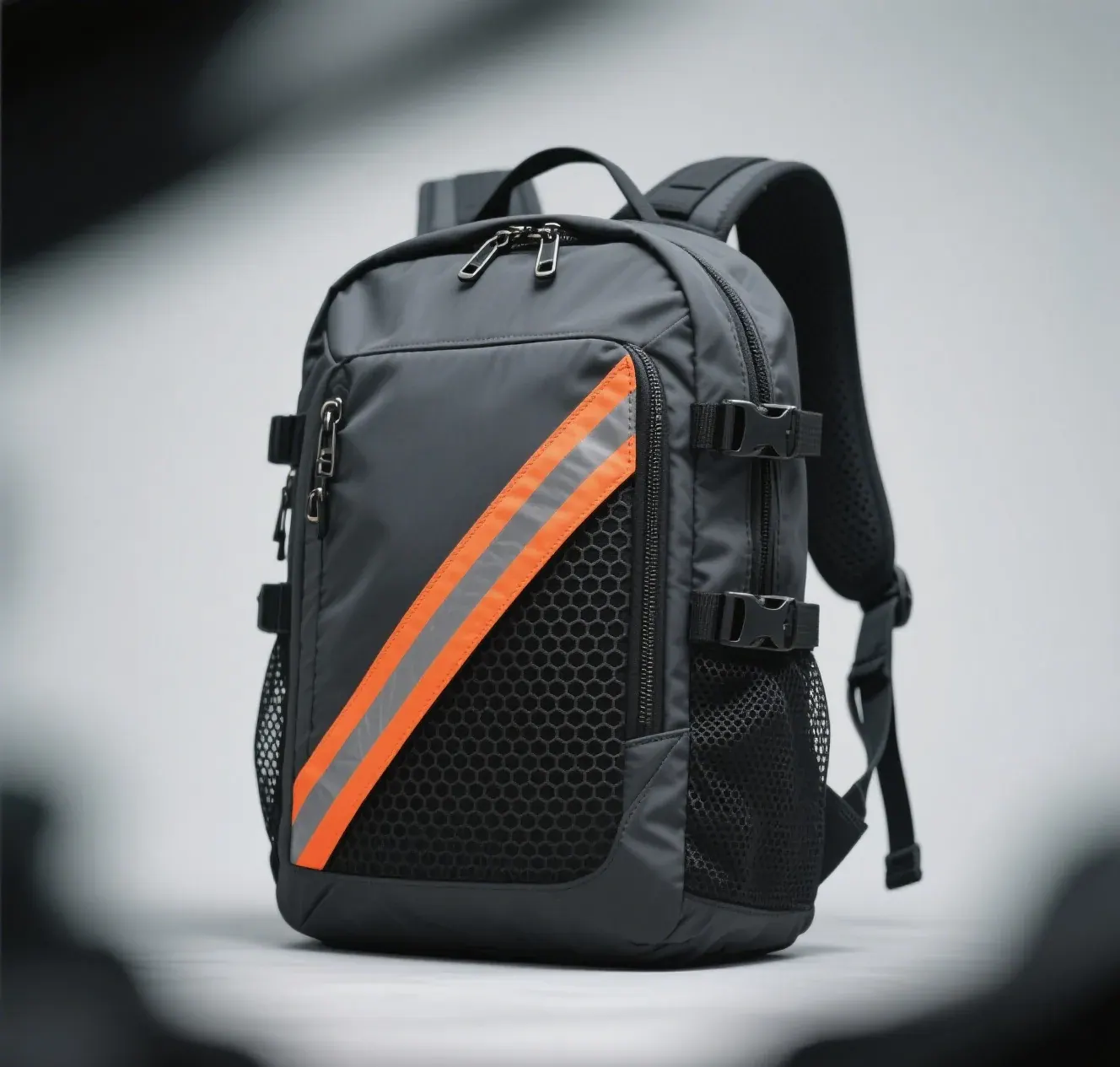
Which Rating Belongs in the Specification
The scale to write into a tech pack is the IPX code defined in the IEC 60529 ingress protection standard, because it ties a number to a measured nozzle, flow rate, duration and depth. A buyer who writes only the word waterproof receives whatever the seller considers adequate; a buyer who writes IPX6 plus a test report reference receives a pack that has been through a 12.5 mm nozzle at 100 L per minute for three minutes. The full ladder, including the conditions buyers most often confuse, is set out in our IPX rating guide for waterproof backpacks.
| Rating | IEC 60529 test condition | Where it holds on a boat | Unit cost index |
|---|---|---|---|
| IPX4 | Splashing from any direction, 10 min | Cabin berth, dry storage below decks | 1.0 |
| IPX5 | 6.3 mm nozzle, 12.5 L/min, 3 min | Cockpit of a cruising sailboat in light chop | 1.2 |
| IPX6 | 12.5 mm nozzle, 100 L/min, 3 min | Open RIB, centre console, deck wash | 1.5 |
| IPX7 | 30 min immersion at 1 m | Kayak, canoe, dinghy, any capsize risk | 1.9 |
| IPX8 | Continuous immersion beyond 1 m | Dive support, camera gear in the water column | 2.6 |
Our working recommendation for a general boating programme is IPX6, with IPX7 specified the moment the pack will be inside a kayak, canoe or dinghy rather than lashed to a larger hull. IPX8 is rarely justified for a general-purpose boat pack: it demands an airtight zip that costs roughly 2.5 times a roll-top, needs lubrication every 20-30 salt sessions, and raises the unit cost of a 40 L pack from about 26 USD to about 44 USD at a 1,000 pc order. Spend that money on a welded body and better hardware instead unless the pack genuinely goes under.
Ask for the report, not the claim. A credible submersion report names the test house, the water temperature, the immersion depth, the duration and the serial number of the sample tested, and it states whether the interior indicator paper stayed dry. Reports that name only a rating without conditions are usually internal spray-booth checks, which is a useful screen but not what a buyer can rely on when a retail customer files a claim.
Closures and Hardware That Survive Salt
Salt is a slow, mechanical failure: it crystallises inside zip teeth, lifts plating off steel hardware, and wicks along any thread that is not synthetically bonded. Component selection therefore matters more on a boat pack than shell fabric does, and it is the part of the specification most often left to default. Naming the alloy and the polymer in the tech pack costs nothing and prevents the single most common marine complaint, a seized buckle or a zip that will not open after two weekends.
| Component | Boating-grade choice | Why it survives | Service interval |
|---|---|---|---|
| Main closure | Roll-top, three turns, 60-80 mm fold | No teeth to foul, tolerant of sand and salt | Inspect the fold line every trip |
| Secondary zip | Polyurethane-coated tape, reverse coil | Weeps rather than opens, cheap to replace | Rinse and lubricate every 20-30 sessions |
| Buckles and ladderlocks | Acetal (POM) or 316 stainless | No plating to lift, no rust bloom | Fresh water rinse after each trip |
| Lash points | Four to six, bar-tacked, 25 mm webbing | Load spread across the panel, not one stitch line | Check bar-tack integrity monthly |
| Thread | Bonded polyester, Tex 45-70 | Does not wick water or rot in salt | Replace at first sign of fuzzing |
| Drain path | Two grommets at the base, 6 mm | Lets a wet pack empty without opening it | Clear grit from grommets after beach landings |
Hardware corrosion is measured, not guessed. The standard screening method is ASTM B117 salt spray exposure, and a sensible acceptance criterion for marine hardware is no red rust and no functional loss after 96 hours. Zinc-plated steel typically shows white corrosion at 24-48 hours and red rust by 96; 316 stainless and acetal show neither. Specify the test in the tech pack and the component decision takes care of itself.
Field care is equally concrete. Rinse each pack under fresh running water for two minutes after every saltwater trip, paying attention to the zip run and the buckle interiors, then dry with the mouth propped open for 12-24 hours away from direct sun. That single two-minute habit roughly doubles zip and hardware service life, moving typical replacement from the second season to the fourth. Rinsing in seawater or wiping with a dry cloth does the opposite: it leaves the salt in place and concentrates it as the pack dries.
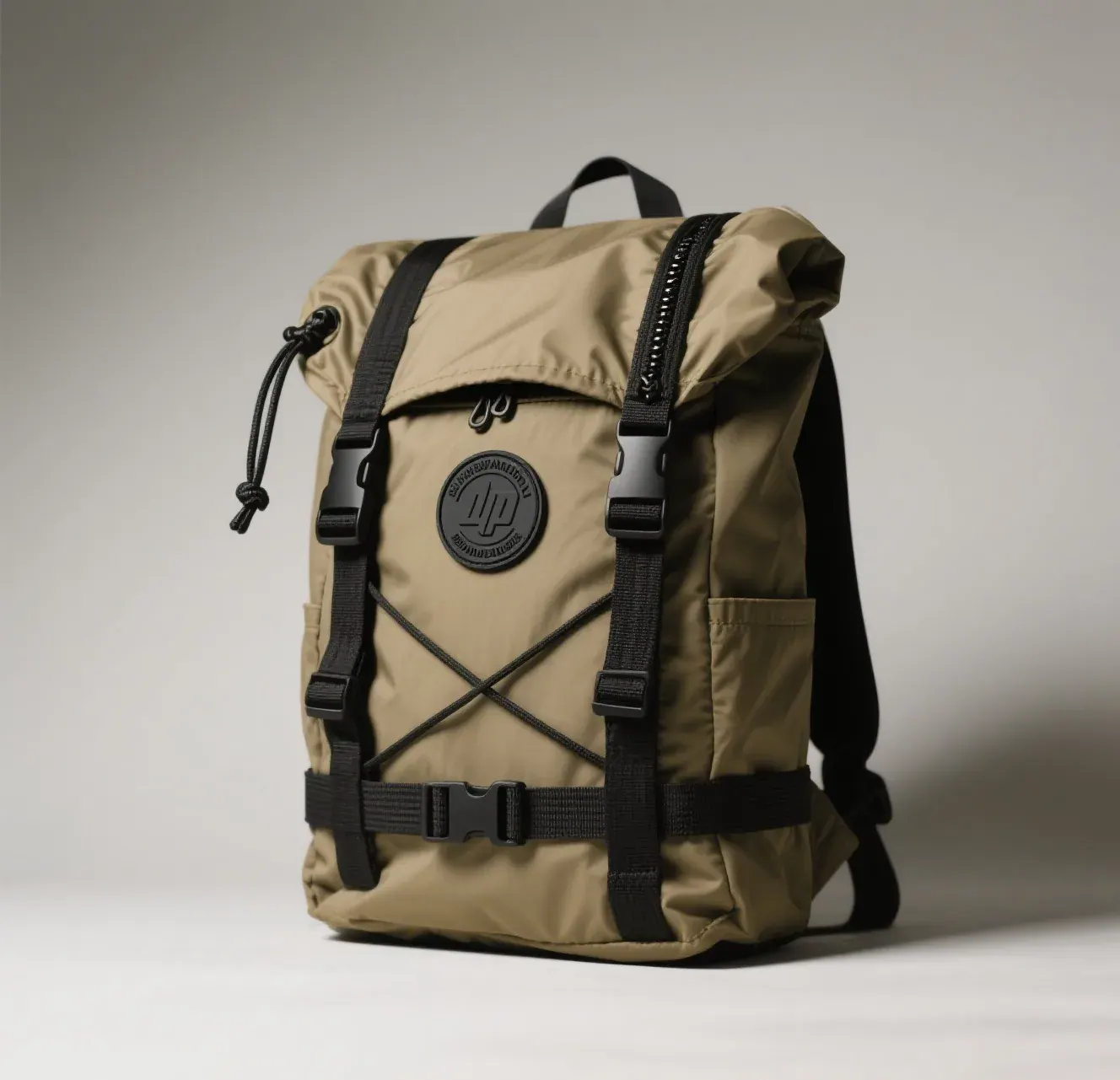
Sizing the Pack to the Hull
Volume on a boat is constrained by stowage geometry, not by how much a person can carry. A kayak hatch is typically an oval about 40 x 25 cm, and a 55 L pack standing 62 cm tall simply will not go through it no matter how soft the body is. Measure the opening before choosing the litre figure, and when in doubt choose a longer, narrower pack that fits the hull rather than a shorter, fatter one that has to ride on deck.
| Boat type | Trip length | Recommended volume | Non-negotiable features |
|---|---|---|---|
| Sit-on-top kayak | Half to full day | 20-30 L | Low profile under 50 cm tall, 4 lash points, deck rigging straps |
| Touring or sea kayak | 1-3 days | 40-55 L | Hatch-compatible profile, compression straps, grab loop |
| Canoe and paddle camping | 2-5 days | 55-70 L | Welded body, purge valve, haul loop rated to 100 kg pull |
| RIB or dinghy tender | Day | 25-35 L | Buoyancy insert, retroreflective panel, quick-release lash |
| Coastal sailboat | 1-7 days | 40-60 L | Soft body with no exposed metal, flat profile for berth stowage |
| Pontoon and deck boat | Day | 30-45 L | Wide mouth for towels and clothing, drain grommets |
| Offshore powerboat | Day to overnight | 35-50 L | IPX7 body, lash points, hi-visibility panel |
Weight matters differently afloat. A pack carried 200 m from a car to a slip is one thing; the same pack lifted one-handed from a moving dinghy onto a pier is another, which is why marine packs benefit from a haul loop at both ends and a grab handle rated to 100 kg pull. Empty weight should stay under 1.2 kg for a 30 L pack and under 1.9 kg for a 60 L pack, because every 100 g saved above the waterline makes one-handed handling on a rolling deck noticeably safer.
Buyers building a full marine range usually split it three ways: a 25 L day pack for tenders and kayaks, a 40 L all-round pack that covers most charter and rental fleets, and a 60-70 L expedition body for paddle camping and rafting. That trio covers about 85 percent of boating demand at two tooling setups instead of five, and it keeps the colour count manageable at the 500 pc minimum per design.
Lash Points, Float Planning and Deck Safety
A pack on a boat should be restrained or buoyant, and ideally both. An unlashed pack becomes a projectile in a following sea and a lost asset the moment it goes over the rail; a pack that sinks takes passport, phone and charts with it. Four to six lash points let the crew secure the pack to a cleat, a thwart or deck rigging in under 30 seconds, and a grab loop at the top lets one person retrieve it from the water without a boat hook.
| Float approach | Buoyancy added | Weight added | Trade-off |
|---|---|---|---|
| Air trapped in a sealed rolled body | Up to 30 kgf on a 30 L pack while it stays sealed | 0 g | Free, but lost the moment the mouth opens or the body floods |
| Closed-cell PE foam panel, 8 mm | 3-5 kgf, retained even when flooded | 110-160 g | Permanent, takes 1-2 L of internal volume |
| EVA foam block in the base panel | 2-4 kgf, retained even when flooded | 90-140 g | Also cushions the load against a hard hull |
| Inflatable bladder in a side sleeve | 6-9 kgf when fully inflated | 60-90 g | Needs the crew to actually inflate it |
| No float aid at all | Close to 0 kgf once the body floods | 0 g | Acceptable only with a lanyard and a lash point |
Be precise about what buoyancy does and does not do. A sealed 30 L pack that stays sealed displaces about 30 L of water, which is roughly 30 kgf of lift in fresh water and 30.8 kgf in salt water; subtract 8 kg of gear and a 1.1 kg pack and the net reserve is about 21 kgf, so the pack rides high with roughly a third of its volume below the surface. That reserve disappears the instant air escapes, because a flooded fabric shell has almost no buoyancy of its own, which is why float-critical packs add closed-cell foam that still delivers 3-5 kgf when the body is swamped. A backpack is not a life jacket and must never be specified or marketed as one. Wearable personal flotation devices are regulated separately, and the U.S. Coast Guard recreational boating safety guidance sets out carriage and wear requirements that apply regardless of what the gear bag can do.
Two small design choices pay off disproportionately on deck. First, retroreflective material placed on the top and both sides rather than only on the front, because a pack lying in a cockpit presents whatever face is up, and a night recovery from a tender is usually done by torch beam. Second, a 4-6 mm cord lanyard with a stainless clip stowed in the top pocket: it takes 40 g and 3 USD of bill of materials and turns a potential loss into a five-second recovery. Detailed attachment patterns are described in our walkthrough on how to attach a waterproof backpack to a kayak, and buoyant builds are compared in the guide to floating waterproof backpacks.
Electronics, Charts and Documents Aboard
The expensive contents of a boat pack are small and water-sensitive: a handheld VHF at 200-350 USD, a phone at 600-1,200 USD, a chart tablet at 500-900 USD, plus passport, registration and a spare battery set. Contents insurance claims from charter fleets cluster around exactly these items, and the loss is almost always the result of one wet towel sharing a compartment with a device rather than of the pack leaking.
| Item carried | Typical replacement cost | Protection required | Where to stow it |
|---|---|---|---|
| Handheld VHF radio | 200-350 USD | Sealed pouch, IPX7 device rating | Top pocket, above the waterline of the pack |
| Phone | 600-1,200 USD | Inner dry pouch plus sealed outer body | Zip pocket against the back panel |
| Chart tablet | 500-900 USD | Padded sleeve, 10-12 mm foam, raised floor | Suspended sleeve, never on the pack floor |
| Paper charts and passport | 50-150 USD plus real inconvenience | Flat document sleeve with welded edge | Back panel document sleeve |
| Spare batteries and power bank | 30-90 USD | Sealed small parts pouch | Interior clip pocket, terminals taped |
| Camera or action cam | 250-900 USD | Hard insert or padded cube | Main body, wrapped in a dry layer |
The two-layer rule is the cheapest reliability measure in marine packing: a sealed dry pouch inside a sealed pack. It costs 1.50-3.00 USD per unit on a 1,000 pc programme and it means a single closure mistake does not destroy a 900 USD tablet. Specify the inner pouch as a welded item with its own roll-top rather than a sewn accessory, because sewn pouches leak through the same capillary path the outer shell was designed to avoid.
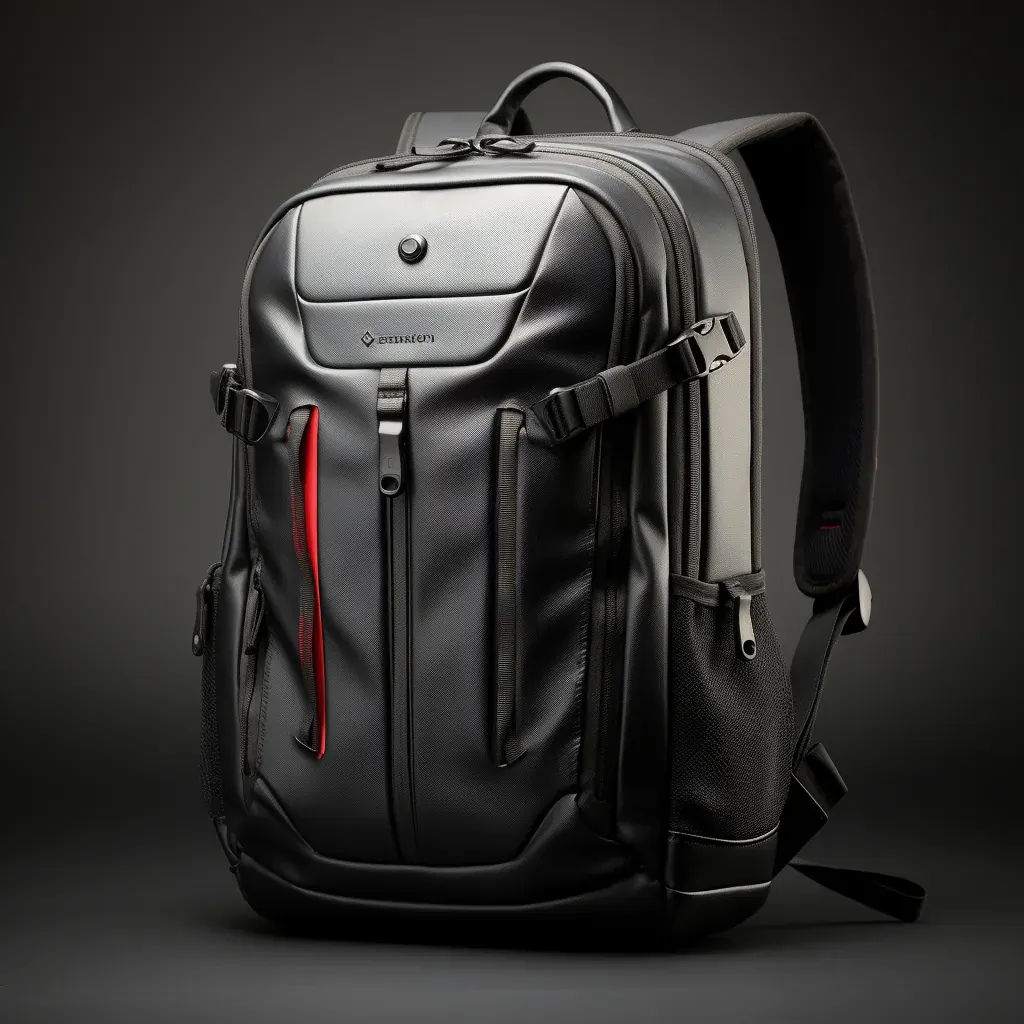
Shell Materials, Coatings and Seam Construction
Marine shells live in a narrower material window than hiking shells, because UV load and salt crystallisation punish some constructions that perform well inland. TPU-laminated polyester at 0.35-0.45 mm film is the default: it welds cleanly at 27.12 MHz, holds flexibility to about -30 degrees Celsius, and resists the hydrolysis that breaks down ester-based films after 3-5 seasons. PVC tarpaulin is cheaper and very abrasion-resistant but stiffens below -10 degrees Celsius and plasticises faster under tropical sun, which is why it is specified mainly for tender and dock use in warm markets.
| Layer or property | Boating specification | Test reference | Acceptance value |
|---|---|---|---|
| Shell fabric | 500D or 840D polyester, TPU film both sides | ISO 811 hydrostatic head | 5,000-10,000 mm, no third drop at 5,000 mm |
| Seam | RF welded at 27.12 MHz, 20-25 mm overlap | Tensile pull on coupon | At least 90 percent of base fabric strength |
| Coating thickness | 0.35-0.45 mm per face | Micrometer, five points per panel | Plus or minus 0.03 mm across the panel |
| Hardware | 316 stainless or acetal, no plated steel | ASTM B117 salt spray | No red rust or functional loss at 96 hours |
| Webbing and colour | Solution-dyed polyester, UV-stabilised | AATCC 16 colour fastness to light | Grade 4 or better at 20 hours |
| Chemical screening | PFAS-free DWR, REACH and Prop 65 screened | SVHC and Prop 65 list check | Non-detect on declared substances |
Seam method deserves a specific line in the tech pack rather than a general instruction. Radio-frequency welding fuses the thermoplastic film face to face and produces a joint that is watertight by construction, with peel strength typically 90-110 percent of the base fabric when weld time, pressure and electrode geometry are dialled in. Sewing and then taping a seam produces a joint that depends on an adhesive layer that hydrolyses in 2-4 years of wet storage, which is why taped seams are acceptable for IPX5 cockpit packs but not for any pack rated IPX7 or above. The trade-offs are laid out in our notes on RF welded seams explained and on saltwater corrosion and zip care.
Finishing chemistry is now a purchase criterion in its own right. PFAS-free durable water repellent is a tender requirement in most EU markets and in several US states, and PFAS-free durable water repellent is a tender requirement in most EU markets and in several US states, and the regulatory background is set out in the EPA PFAS programme. Every quotation from us includes material screening against REACH SVHC and California Prop 65, with the declaration attached to the sample approval pack rather than produced later on request.
Ordering a Boating Programme: Quantities, Timing and Cost
Programme economics are driven by colour count more than by total volume. Each additional colourway resets material minimums for fabric, webbing and zip tape, so consolidating a 3,000 pc order into two colours usually saves more than doubling the quantity at four colours. The working bands below are the ones we quote against for marine packs, with a unit price index normalised to the 500 pc opening band.
| Order band | Unit price index | Sample lead time | Bulk lead time | Notes |
|---|---|---|---|---|
| 500-999 pcs | 1.00 | 6-10 working days | 35-40 days | One colourway, stock fabric and webbing |
| 1,000-2,999 pcs | 0.93 | 6-10 working days | 38-45 days | Up to two colourways, printed logo available |
| 3,000-9,999 pcs | 0.86 | 7-10 working days | 40-50 days | Pantone-matched webbing, branded pullers |
| 10,000 pcs and above | 0.79 | 8-10 working days | 45-50 days | Dedicated material run, printed liner, own carton |
| Programme step | Working days | What the buyer receives | Decision point |
|---|---|---|---|
| Brief and quotation | 1-2 | Priced spec sheet with material and test list | Approve target price and quantity |
| Tech pack and material confirmation | 2-3 | Dimensioned drawing, Bill of materials, colour references | Sign off construction and fittings |
| Sample build | 6-10 | One to three production-tooled samples | Fit, volume and closure check on the water |
| Sample testing | 3-5 | Enclosure, immersion and salt spray reports | Approve or revise the specification |
| Bulk production | 35-50 | Weekly build photos, AQL 2.5 inspection report | Release against inspection result |
| Freight | 25-40 sea, 5-8 air | Packing list, bill of lading, compliance declaration | Choose FOB Xiamen or DDP |
Standard packing is one piece per polybag and 10-20 pieces per export carton depending on volume, with carton dimensions around 60 x 40 x 35 cm and gross weight held under 15 kg for manual handling. A 20 ft container takes roughly 1,400-1,600 pieces of 30 L welded packs cartoned flat at 10 per carton. Quoting FOB Xiamen keeps freight under the buyer control, while DDP is available into more than 100 countries for buyers who prefer landed cost. Production capacity for the wider bag range, including fishing and EVA lines, is documented.
- The opening quantity is 500 pcs per design and colourway; mixed colourways can be consolidated from 3,000 pcs.
- Samples are production-tooled in 6-10 working days and bulk ships in 35-50 days from FOB Xiamen.
- Nothing leaves the line until an AQL 2.5 inspection passes and the signed report is attached to the packing list.
- A one-line brief is enough to start a quotation: target quantity, litre volume, rating required and boat type, sent to service@junyuanbags.com.
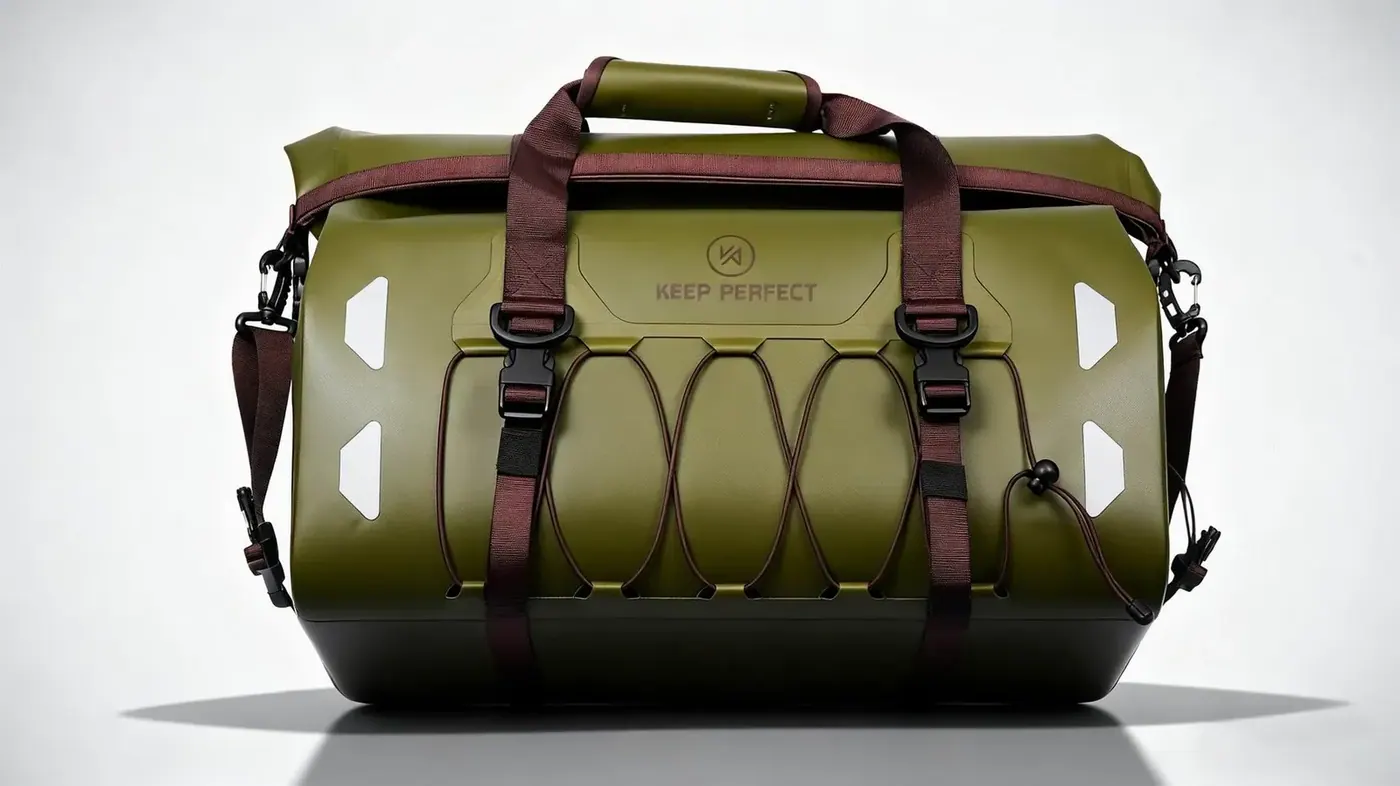
Pre-Shipment Tests That Catch Marine Failures Early
Marine returns cost more than any other category because they arrive late: a pack sold in March is claimed in August, after a season of use, and by then the root cause is disputed rather than diagnosed. The schedule below takes about four to six working days per style and a few hundred dollars, and it is the same schedule applied to bulk release with sampling levels set by AQL 2.5 so that a 500 pc order draws a statistically meaningful sample rather than a token two pieces.
| Test | Method | Pass criterion | Frequency |
|---|---|---|---|
| Enclosure integrity | Low-pressure air decay on the sealed body | Under 10 percent loss over 3 minutes | Every colourway, first article |
| Immersion | 30 minutes at 1 m with indicator paper inside | No moisture on the paper | Per style, per colourway |
| Zip cycling after salt | 500 open-close cycles, salt dip, then spray test | No moisture on indicator paper | Per zip lot |
| Seam peel strength | Tensile pull on a welded coupon | At least 90 percent of fabric strength | Per production week |
| Hardware corrosion | ASTM B117 salt spray, 96 hours | No red rust, all closures functional | Per hardware lot |
| Colour fastness to light | Xenon arc, AATCC 16, 20 hours | Grade 4 or better | Per colourway |
| Loaded drop | 1 m drop onto concrete at 10 kg load | No seam split, all closures intact | Per style, twice a year |
Two closing notes make the difference between a test regime that protects the buyer and one that merely generates paperwork. First, insist the sample tested is production-tooled, not hand-welded in development, because weld parameters are exactly the variable that drifts when a style moves to the floor. Second, keep one retained sample per colourway stored dry and dark; when a field claim arrives eight months later, having a control piece to compare against turns root-cause analysis from an argument into a five-minute inspection. Cleaning and storage routines that keep welded bodies serviceable for 5-8 seasons are covered in our guide to cleaning a waterproof backpack.
People Also Ask
How many litres does a kayak day trip actually need?
A half-day paddle on a sit-on-top needs 20-30 L: 4-6 kg of water, lunch, a light shell and a phone in a dry pouch. A full touring day pushes that to 35-45 L once a camera, spare layer and safety kit are added, and multi-day paddle camping starts at 55 L. Check the hatch opening first, since many oval kayak hatches measure about 40 x 25 cm and will not pass a tall 55 L body.
Why does a boat backpack smell musty after two weekends?
A sealed shell keeps water out and also keeps moisture in, so a wet towel or swimsuit packed for eight hours grows microbial film in the liner and foam. Rinse the interior with fresh water, prop the mouth open for 12-24 hours out of the sun, and store the closure unrolled between trips. Odour that persists after two full drying cycles usually means the foam back panel has stayed wet and needs a diluted vinegar wipe.
Is IPX8 worth specifying instead of IPX7 for a sailing programme?
Rarely. IPX7 certifies 30 minutes sealed at 1 m, which already covers a capsize and a swamped cockpit, while IPX8 adds continuous immersion beyond 1 m that a sailing pack will almost never see. Moving from IPX7 to IPX8 requires an airtight zip costing roughly 2.5 times a roll-top and needing lubrication every 20-30 salt sessions, which raises a 40 L pack from about 26 USD to about 44 USD at 1,000 pcs.
Can a saltwater backpack be machine washed?
No. Machine agitation abrades the TPU film, flexes welded seams against their intended plane, and drives detergent residue into the zip tape where it attracts grit. Hand rinse in fresh water for two minutes, use a soft brush with pH-neutral soap on stubborn salt crust, and dry with the mouth open for 12-24 hours. Machine washing is the most common cause of warranty claims that are actually maintenance failures.
What hardware metal resists salt corrosion best on a boat pack?
316 stainless steel and acetal polymer both pass 96 hours of ASTM B117 salt spray with no red rust and no functional loss, and both are safe defaults. Zinc-plated steel shows white corrosion at 24-48 hours and red rust by 96 hours, so it should be excluded from any marine specification. Anodised aluminium sits in between and is acceptable for non-load-bearing trim but not for buckles that carry strap tension.
How much buoyancy does a sealed 30 litre pack really provide?
Displacement is the whole story: a sealed 30 L pack that stays sealed displaces about 30 L of water, giving roughly 30 kgf of lift in fresh water before any load is counted. Subtract 8 kg of gear and a 1.1 kg pack and the net reserve is about 21 kgf, so the pack sits with roughly a third of its volume under the surface. The catch is that the reserve disappears once air escapes, so float-critical programmes add 3-5 kgf of closed-cell foam that still works when the body floods.
Frequently Asked Questions
Q1. What IPX rating should a waterproof backpack have for boating?
IPX6 is the sensible floor for any pack that rides an open deck, because it certifies survival of a 12.5 mm jet at 100 L per minute for three minutes, which is what a hose-down delivers. Specify IPX7 wherever capsize is realistic, meaning kayaks, canoes, dinghies and small tenders. Reserve IPX8 for gear that is deliberately taken into the water column, since it needs an airtight zip that roughly doubles closure cost.
Q2. Will a waterproof backpack float if it goes overboard?
Only while it stays sealed, or if it carries a float aid. A sealed 30 L body displaces about 30 kgf of water, which floats an 8 kg load plus the pack with roughly 21 kgf to spare, but that reserve vanishes the moment air escapes because a flooded fabric shell has almost no buoyancy of its own. Specify 3-5 kgf of closed-cell foam for permanent float and clip a 4-6 mm lanyard to the grab loop so recovery takes seconds rather than minutes.
Q3. Can a waterproof backpack survive a capsize?
A welded-body pack rated IPX7 will, which in test terms means sealed at 1 m for 30 minutes with no moisture reaching indicator paper inside. A coated-shell pack rated IPX4 or IPX5 will not: it is built for spray and rain, and immersion pressure drives water through the closure within one to three minutes. If capsize is part of the use case, immersion rating is the line item that decides the outcome.
Q4. How do I attach a waterproof backpack to a kayak?
Use four to six bar-tacked lash points and 4-6 mm cord: two forward to the deck rigging, two aft to the same, and cross them so the pack cannot rotate. Leave 30-50 mm of slack so the pack can shift with the hull rather than drumming against it, and finish with a quick-release knot that can be opened with cold hands. Never rely on a single strap, because a single point lets the pack swing and eventually tear the webbing.
Q5. Does saltwater damage waterproof backpack materials?
Salt attacks hardware and closures long before it attacks the shell. Crystallised salt jams zip teeth, lifts zinc plating within 24-96 hours of salt spray exposure, and wicks along unbonded thread. TPU shells are largely unaffected chemically, but a two-minute fresh water rinse after every trip is what keeps the rest of the pack serviceable, moving typical hardware replacement from season two to season four.
Q6. What size waterproof backpack suits a day on a pontoon boat?
Plan 30-45 L for a family day afloat: towels and swimwear take more space than their weight suggests, and a wide mouth matters more than volume because wet items go in and out repeatedly. Look for drain grommets at the base so a wet pack empties without being opened, and a soft body without exposed metal so the pack does not scuff deck furniture or rails.
Q7. Are airtight zips worth the extra cost on a boat pack?
Only for packs that go under or that carry dive and camera equipment. An airtight zip raises closure cost by roughly 2.5 times, adds 150-250 g, and needs cleaning and lubrication every 20-30 salt sessions, which rarely happens in a rental or charter fleet. For deck use a welded body with a roll-top mouth reaches IPX6-IPX7 at a fraction of the cost and fails far more gracefully in service.
Q8. How should I rinse a backpack after saltwater use?
Rinse under fresh running water for two minutes, working the zip run open and closed under the flow and flushing the buckle interiors, then dry with the mouth propped open for 12-24 hours away from direct sun. Do not use detergent more than once a season, and never machine wash: agitation abrades the film and flexes welded seams off their intended plane. Store unrolled so air circulates.
Q9. Can a waterproof backpack replace a dry bag on a boat?
It can replace one for gear you need to carry, and it should not replace one for gear you need to keep dry through immersion. A backpack adds harness, pockets and structure, which is what makes it heavier and more expensive per litre; a dry sack is 40-60 percent cheaper per litre and easier to lash. Most crews carry one structured pack plus two or three small dry sacks for electronics and documents.
Q10. What is the MOQ for a boating backpack programme?
The opening quantity is 500 pcs per design and colourway, and colourways can be consolidated from 3,000 pcs if a range needs more than two colours. The unit price index falls from 1.00 at 500-999 pcs to 0.93 at 1,000-2,999, 0.86 at 3,000-9,999 and 0.79 at 10,000 and above, so consolidating colours usually beats raising volume at a wider colour spread.
Q11. How long do sampling and bulk production take?
Samples take 6-10 working days once materials are confirmed, and they are built on production tooling rather than by hand so the weld parameters match the bulk run. Bulk production takes 35-50 days depending on quantity and material availability, with 2-3 days for the AQL 2.5 inspection before release. Sea freight from Xiamen adds 25-40 days; air freight takes 5-8 days for urgent replenishment.
Q12. Can I specify reflective panels and a grab handle for deck safety?
Yes, and both are low-cost additions: retroreflective film on the top and both sides adds under 1 USD per unit, and a haul loop bar-tacked through the body with a 100 kg pull rating adds about 0.40 USD. Place reflective material on at least three faces, because a pack lying in a cockpit presents whichever side is up, and night recovery from a tender is done by torch beam.
Q13. Does a waterproof backpack protect a laptop or tablet on a boat?
Yes if the sleeve is suspended and the body is welded. Specify a padded sleeve with 10-12 mm foam and a floor raised 25-40 mm off the base panel, so a device survives the 20-60 L that a single wave can drop into a cockpit. Add a welded inner dry pouch for phones and passports; that two-layer approach costs 1.50-3.00 USD per unit and covers the more common failure, a wet towel sharing a compartment with a device.