An IPX rating states how much water an enclosure survived under one defined laboratory test, and nothing else. IPX4 means 10 litres per minute of splashing water for 10 minutes, IPX5 means a 12.5 litre per minute jet from a 6.3 mm nozzle at 2.5 to 3 metres for 3 minutes, IPX6 means the same jet at 100 litres per minute, IPX7 means 30 minutes under 1 metre of water, and IPX8 means longer or deeper immersion agreed between buyer and maker. The scale is defined by IEC 60529, it says nothing about buoyancy, abrasion, closure life or dust, and the level a pack can reach is set by its closure rather than its fabric. Most programmes land at IPX5 or IPX6; immersion-rated bodies start at 500 pcs per design and colourway, sample in 6 to 10 working days and ship in 35 to 50 days from FOB Xiamen.
What an IPX Rating Actually Certifies
The code has two digits and the second one is the water digit. The X in IPX7 is a placeholder: it means the dust digit was not tested, not that the product is dustproof. An enclosure rated IP67 was tested against both dust and water; an enclosure rated IPX7 was tested against water only. Buyers who need dust protection for desert or construction programmes have to ask for the first digit explicitly, because a pack can be IPX7 and still fill with grit through an unsealed collar.
The rating is also a pass or fail at one point in the product life. It is measured on a new sample, closed by a trained technician, at room temperature, in static water. It does not describe the pack after 1,500 closure cycles, after a winter at minus 20 degrees Celsius, or after a season of salt and UV. Those are separate tests with separate standards, and a responsible tech pack names them alongside the IPX level rather than treating the level as a complete specification. The definitions and test apparatus for each level are published in IEC 60529.
| Level | Test method | Water quantity | Duration | What it represents |
|---|---|---|---|---|
| IPX4 | Splashing, oscillating tube or spray nozzle | 10 L per minute | 10 min | Rain from any direction, bike spray |
| IPX5 | Jet, 6.3 mm nozzle at 2.5-3 m | 12.5 L per minute | 3 min | Heavy rain and storm spray on land |
| IPX6 | Jet, 12.5 mm nozzle at 2.5-3 m | 100 L per minute | 3 min | Deck wash, power wash, motorcycle at speed |
| IPX7 | Immersion, top 150 mm below surface | Static water | 30 min | Dropped in water, capsized, hatch leak |
| IPX8 | Continuous immersion, agreed conditions | Static or pressurised | 30-60 min at 1.5-3 m | Dive support, prolonged submersion |
Two details from that table cause most of the confusion in buyer conversations. First, IPX7 and IPX8 are immersion tests, not stronger versions of the jet test; a pack can survive 30 minutes under water and still leak under a pressure washer, because immersion is a low-pressure load over a long time and a jet is a high-pressure load over a short time. Second, IPX8 conditions are agreed between the two parties rather than fixed by the standard, so an IPX8 claim without a stated depth and duration is meaningless.
IPX4 Through IPX8 as Real Exposure
Translating the numbers into weather is the useful exercise, because buyers rarely think in litres per minute. IPX4 corresponds to a solid day of rain and the splash off a wet road, which is enough for a city commute and not enough for a kayak. IPX5 corresponds to sustained heavy rain plus wind, and it is the sensible default for hiking, commuting and travel. IPX6 corresponds to being hosed down, which is what a motorcycle rider at 90 kilometres per hour or a deckhand on a working boat actually experiences.
| Rating | Survives | Wets out under | Build that reaches it | Cost index |
|---|---|---|---|---|
| IPX4 | Rain, splash, brief shower | Sustained jet, immersion | Coated zip, storm flap, taped seams | 1.00 |
| IPX5 | Storm rain, 12.5 L per minute jet | Immersion, 100 L per minute jet | Roll-top collar, welded body | 1.15 |
| IPX6 | Deck wash, highway speed rain | Any immersion beyond a splash | Roll-top plus welded seams, no external zip | 1.30 |
| IPX7 | 30 minutes under 1 m | Deeper or longer immersion | Welded no-zip body or airtight zip | 1.55 |
| IPX8 | 1.5-3 m for 30-60 minutes | Beyond the agreed condition | Airtight zip plus welded body, tested per unit | 2.10 |
The cost index column is the one buyers underestimate. Each step up is not a material upgrade but a construction upgrade: fewer openings, tighter tooling and more inspection. Moving a programme from IPX5 to IPX7 typically removes the front zip, adds an airtight closure and adds a per-unit pressure or vacuum check, which is why the index roughly doubles. Most ranges are better served by two SKUs at IPX5 and IPX7 than by pushing every SKU to IPX6.
The Six Things a Rating Does Not Cover
A rating is a narrow statement read too broadly in most marketing. It covers water ingress through the enclosure during one defined test. Everything else that makes a pack survive in the field has to be specified separately, and the six gaps below are the ones that generate warranty claims when they are assumed.
- Dust and sand. IPX says nothing about solids; request an IP5X or IP6X dust rating for desert, beach and construction programmes.
- Buoyancy. An IPX7 pack can still sink; flotation depends on trapped air and foam panels, not on sealing.
- Closure life. A coated zip can lose 30 to 40 percent of its water resistance by 1,500 cycles, and the rating is measured on a new sample.
- Abrasion and puncture. A shell can hold IPX6 and fail in a season if the base panel is under-specified at 210D.
- Temperature. Both the film and the closure change behaviour at minus 20 degrees Celsius; the water test runs at ambient.
- Who did the test. A report from an accredited laboratory and an internal bench check are not equivalent evidence.
The last point is the one that matters commercially. Laboratory competence is governed by ISO/IEC 17025, and a certificate from an accredited laboratory carries the method, the apparatus and the uncertainty. An internal report is useful for development, but for a retail buyer file or a marketplace claim it is worth asking which laboratory issued the certificate and whether the scope covers IEC 60529.
The Closure Sets the Ceiling
Fabric is almost never the limiting factor. A welded 0.4 mm TPU body is impermeable; the water comes in through the opening, and the opening is therefore the whole specification. The hierarchy is predictable: a covered coil zip with a storm flap reaches about IPX4, a laminated coated zip reaches IPX4 to IPX5 and degrades with cycles, a roll-top collar with three turns reaches IPX5 to IPX6 and improves with care, and an airtight sealed zip reaches IPX7 to IPX8 and needs lubrication and clean teeth to stay there.
| Closure type | Realistic ceiling | Open speed | Cycles before degradation | Maintenance |
|---|---|---|---|---|
| Covered coil zip plus flap | IPX4 | 1-2 s | 3,000-5,000 | None |
| Laminated coated zip | IPX4-IPX5 | 1-2 s | 1,500-2,500 | Wipe clean |
| Roll-top collar, 3 turns | IPX5-IPX6 | 4-7 s | No wear point | Keep grit off the fold |
| Roll-top plus welded body | IPX6-IPX7 | 5-8 s | No wear point | Purge valve check |
| Airtight sealed zip | IPX7-IPX8 | 3-5 s | 800-1,500 before relubrication | Rinse, dry, lubricate monthly |
Buyers should think of that table as a budget for openings. Every additional opening on a pack is a candidate leak path, and a body with a front zip, two side pockets and a lid has five of them. The cheapest way to raise a rating is usually to delete an opening rather than to upgrade the hardware, which is why the highest-rated packs in any catalogue look the simplest. The hardware itself is described in waterproof zipper types explained, and the head-to-head comparison of the two most common high-spec options is in sealed zip against roll-top closure.
Matching a Rating to the Activity
The practical question is never what is the highest rating available but what is the exposure the user will actually create. Over-specifying costs money and, on breathable or lightweight programmes, costs comfort as well. The matrix below is the shortlist that resolves most range decisions in one pass.
| Activity | Exposure | Recommended level | Why not one level higher |
|---|---|---|---|
| Urban commute | Rain, road splash, 20-40 openings a day | IPX5 | IPX6 adds cost, no extra benefit |
| Day hiking | Sustained rain, 8-15 km carry | IPX5 | Immersion is not a hiking requirement |
| Multi-day trek | Rain plus river crossings | IPX5 plus IPX7 liner | A liner is cheaper than a full IPX7 body |
| Motorcycle touring | 100 L per minute at road speed | IPX6 | IPX7 costs 20 percent more for no gain |
| Kayak and canoe | Capsize, hatch water, spray | IPX7 | IPX5 wets out on the first capsize |
| Rafting and paddle camping | Continuous immersion risk | IPX7 | IPX8 is only needed below 3 m |
| Sail and deck work | Deck wash and overboard risk | IPX7 plus flotation | Sealing alone does not keep gear recoverable |
| Dive support and survey | Sustained depth beyond 1 m | IPX8 | Stated depth and duration must be on the file |
Two rows deserve a note. Multi-day trekking is the classic over-specification: buyers ask for IPX7 on a 55 litre pack, pay for airtight hardware, and then open the pack twenty times a day, which is exactly the use a roll-top collar handles better. The correct answer is an IPX5 body with a welded 10 to 15 litre liner for the items that must stay dry. Kayak and canoe is the reverse case, where IPX5 fails on the first capsize and the rating is worth paying for. The wider form comparison is set out in our waterproof dry backpack guide, and the full selection sequence, from activity to rating to budget, is in our waterproof backpack buying guide.
Immersion, Overboard and Why IPX7 Does Not Mean It Floats
Immersion and flotation are independent properties and are regularly conflated in retail copy. A pack rated IPX7 keeps water out for 30 minutes at 1 metre; whether it comes back to the surface depends on trapped air and closed-cell foam, not on the seal. A framed 12 kilogram pack sinks within 60 to 90 seconds once air escapes through a collar or a pocket, while a rolled tube with half its volume as air displaces about 10 kilograms of water and stays up for hours.
The safety point is separate and worth stating plainly: a pack is not flotation equipment. Anyone on deck or in a boat should be wearing an approved personal flotation device, and gear that floats is a recovery aid rather than a safety device. The US Coast Guard publishes the baseline for recreational boating at uscgboating.org, and cold water shortens the self-recovery window regardless of what the gear is rated to. Programmes sold into boating should specify IPX7 plus closed-cell foam panels giving 2 to 4 kilograms of positive lift, and should be tested floating with a representative load. Purpose-built designs are covered in our floating waterproof backpack guide.
Ratings in Fishing and Watersport Programmes
Fishing programmes are the most demanding test of a rating, because they combine immersion risk with grit, bait residue and salt. A pack that holds IPX6 in a laboratory can fail on a boat within a month if the collar is folded over grit or the airtight zip is closed with sand on the teeth. The specification response is a rinse routine the end user will actually follow and a closure that tolerates imperfect use, which usually means a roll-top rather than an airtight zip.
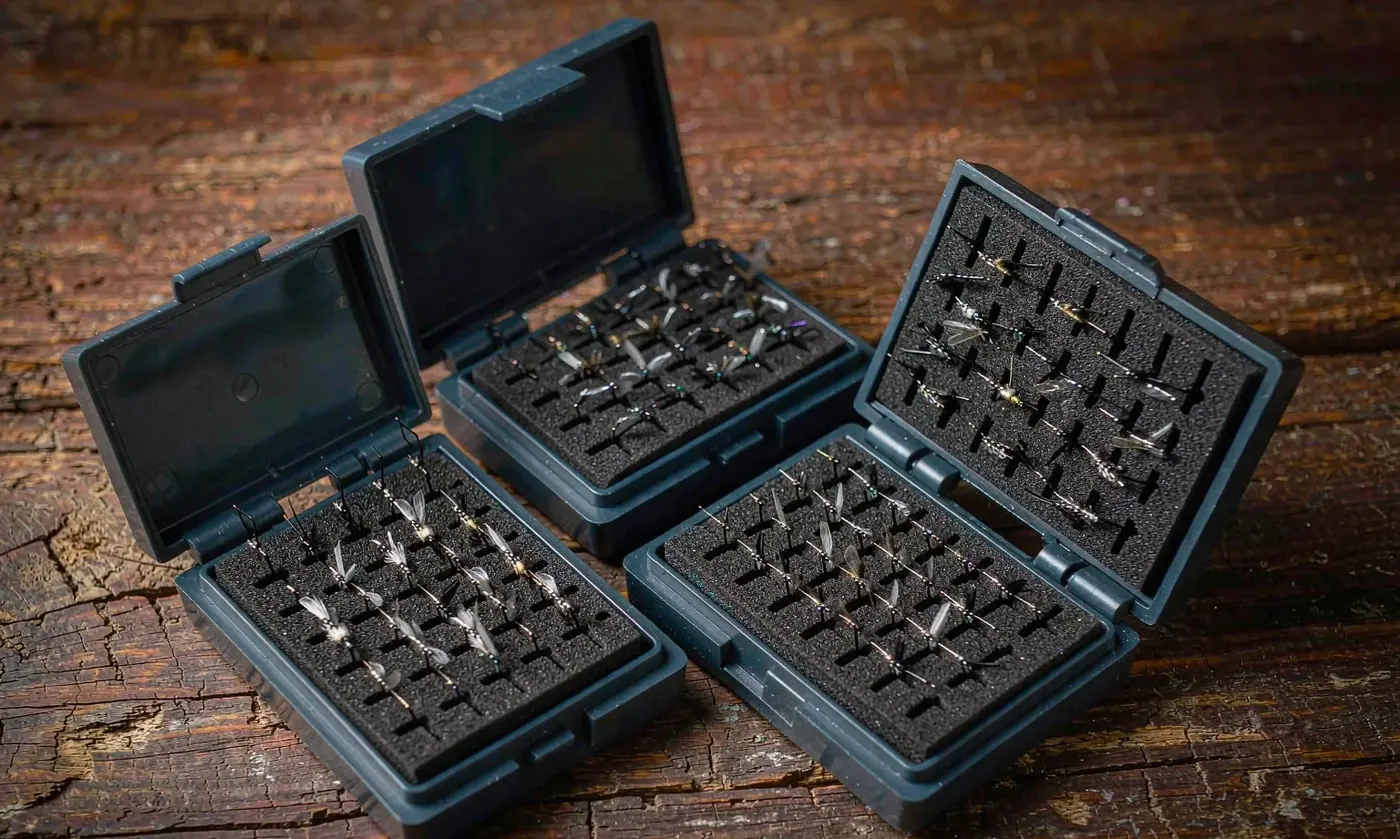
Tackle and fly storage adds a second failure mode that has nothing to do with the pack: corrosion inside the bag. Salt residue left in a tray or a box will rust hooks within 48 to 72 hours, so the internal environment matters as much as the shell rating. Buyers building a fishing range should specify both the pack level, typically IPX6 to IPX7, and the tray material, and should look at the dedicated test regime in IPX rating testing for fishing bags. The pack range itself is summarised in our waterproof fishing backpack overview.
How to Specify and Verify a Rating
A rating belongs in the tech pack as a line with three fields: the level, the standard and the acceptance criterion. Naming only the level invites the build partner to interpret it generously. Naming the method and the pass criterion, for example dry indicator paper inside the body after a 3 minute IPX6 jet with the pack loaded to 8 kilograms, makes the requirement testable by both sides and removes the argument at goods-in.
| Check | Reference method | Procedure | Pass criterion |
|---|---|---|---|
| Enclosure spray | IPX5 or IPX6 jet | 12.5 or 100 L per minute, 3 min, 2.5-3 m | Dry indicator paper inside |
| Immersion | IPX7 tank | 30 min, top 150 mm below surface | No ingress, no mass gain above 5 g |
| Deep immersion | IPX8 agreed condition | Stated depth 1.5-3 m, 30-60 min | No ingress at the stated condition |
| Hydrostatic head | ISO 811 or AATCC 127 | Rising column on a fabric coupon | At or above 5,000 mm for shell fabrics |
| Seam peel | ASTM D751 family | Peel on a welded coupon | At or above 90 percent of fabric tensile |
| Closure cycling | Internal cycle rig | 1,500 open and close cycles, then retest | Still passes the original level |
The closure cycling row is the one most tech packs omit and the one that predicts field performance. A coated zip that passes IPX5 on day one and fails after 1,500 cycles is a two-season product sold as a five-season product, and retesting after cycling is a cheap way to find out before committing to a tooling programme. A consolidated view of the levels and what they mean is in our backpack waterproof rating chart, and the underlying vocabulary is set out in waterproof against water resistant.
Field and Incoming Inspection Tests
Two tests catch almost every production fault without a laboratory. The first is inflation: close the pack, insert a nozzle or a valve, inflate to about 3 kilopascals and hold for 3 minutes; a loss above 10 percent indicates a leak at a seam or a closure. The second is a shower test with indicator paper inside, run for 10 minutes from a fixed shower head, which approximates IPX4 and finds collar and zip faults.
- Run the inflation test at goods-in on 2 percent of units, and on 100 percent of units for any IPX7 or IPX8 programme.
- Test after 200 closures as well as on a new sample, and have someone who has never used the product close it.
- Use indicator paper rather than tissue: it shows a single drop, which is exactly the failure that matters.
- Record water temperature and pack temperature. A cold pack tested in warm water can show a false pass through pressure differential.
Home testing is genuinely useful for a buyer evaluating a sample, and it is worth doing before a bulk commitment rather than after. The full step-by-step, including how to interpret a borderline result and when to escalate to a laboratory, is in how to test a waterproof backpack at home.
What Each Rating Step Costs
Rating is one of the largest single drivers of unit cost in a waterproof programme, larger than fabric choice in most cases. The reason is that higher levels remove openings and add inspection rather than add material, and both of those are labour and tooling costs that do not scale away with volume. The table below is the commercial view used before a sampling round.
| Target level | Typical build | Cost index | MOQ per colourway | Sampling and bulk |
|---|---|---|---|---|
| IPX4 | Coated zip, storm flap, taped seams | 1.00 | 500 pcs | 6-8 working days, bulk 35-45 days |
| IPX5 | Roll-top collar, welded body | 1.15 | 500 pcs | 6-10 working days, bulk 35-50 days |
| IPX6 | Roll-top, no external zip, welded | 1.30 | 500 pcs | 8-10 working days, bulk 40-50 days |
| IPX7 | Welded no-zip or airtight zip | 1.55 | 500 pcs | 10 working days, bulk 40-50 days |
| IPX8 | Airtight zip, per-unit pressure check | 2.10 | 500 pcs | 10 working days, bulk 45-50 days |
- MOQ is 500 pcs per design and colourway; consolidating three colourways from 3,000 pcs lowers the piece price.
- Samples take 6 to 10 working days and bulk runs 35 to 50 days, shipped FOB Xiamen or DDP into more than 100 countries.
- Every bulk order is inspected at AQL 2.5 before release, and IPX7 or IPX8 programmes add a unit-level pressure or vacuum check.
- Materials are screened against REACH and California Prop 65, and monthly output of 200,000 units is verified by SGS.
The recommendation that follows from the table is to concentrate a range at two levels. A volume SKU at IPX5 covers land use and most retail intent; a specialist SKU at IPX7 covers paddle, marine and fishing. Trying to cover IPX4 through IPX8 with five SKUs fragments the tooling budget and leaves every SKU under-developed. Buyers building a first range can see how each level is achieved on the line, or send activity, rating target and quantity to service@junyuanbags.com.
People Also Ask
What IPX rating should a waterproof backpack have?
IPX5 for land use such as commuting, hiking and travel, IPX6 for motorcycle and deck work, and IPX7 for kayaking, rafting and anything that can go in the water. IPX4 is a shower-proof level for light urban use. The closure, not the fabric, sets the level a pack can reach.
Is IPX7 better than IPX6?
Not strictly, because they test different things. IPX6 is a 100 litre per minute jet for 3 minutes and IPX7 is 30 minutes under 1 metre of static water. A pack can pass IPX7 and fail IPX6, since immersion is low pressure over time and a jet is high pressure over seconds.
Can a backpack be IPX8?
Yes, with an airtight sealed zip or a welded no-zip body and a per-unit pressure check. IPX8 conditions are agreed between buyer and maker rather than fixed by the standard, so the claim must state the depth and the duration, typically 1.5 to 3 metres for 30 to 60 minutes.
Does an IPX7 backpack float?
Not necessarily. Sealing and flotation are independent: a framed 12 kilogram pack sinks within 60 to 90 seconds once trapped air escapes, while a rolled tube holding half its volume as air displaces about 10 kilograms of water and stays on the surface.
What does the X in IPX7 mean?
It means the dust digit was not tested. An IPX7 pack was tested against water only and may have no protection against dust or sand; a full dust and water rating would read IP67. Buyers needing solids protection should ask for the first digit explicitly.
How is a backpack waterproof rating tested?
By the jet or immersion method in IEC 60529, with dry indicator paper inside the body. IPX5 uses 12.5 litres per minute for 3 minutes, IPX6 uses 100 litres per minute, and IPX7 immerses the pack for 30 minutes with its top 150 millimetres below the surface.
Frequently Asked Questions
Q1. What is a good IPX rating for a waterproof backpack?
IPX5 for commuting, hiking and travel, IPX6 for motorcycle and boat deck use, and IPX7 for kayaking, rafting and fishing where immersion is realistic. IPX4 is only shower-proof. Above IPX7 the cost rises steeply for uses almost no customer has.
Q2. What is the difference between IPX5 and IPX6?
Water volume and nozzle size. IPX5 delivers 12.5 litres per minute through a 6.3 mm nozzle at 2.5 to 3 metres for 3 minutes; IPX6 delivers 100 litres per minute through a 12.5 mm nozzle at the same distance and duration. Eight times the water is the difference between heavy rain and a hose.
Q3. Is IPX7 the same as waterproof?
It is the level most people mean by waterproof: 30 minutes under 1 metre of static water with no ingress. It does not cover pressure jets, so an IPX7 pack can still leak under a pressure washer, and it says nothing about buoyancy or abrasion.
Q4. What does IPX8 mean on a backpack?
Continuous immersion under conditions more severe than IPX7, agreed between buyer and maker. In practice that is usually 1.5 to 3 metres for 30 to 60 minutes. An IPX8 claim without a stated depth and duration is not a meaningful specification.
Q5. What does the X mean in an IPX rating?
The first digit, for solids, was not tested. IPX7 means water-tested only; IP67 means tested against both dust and water. Programmes for desert, beach or construction work should request the dust digit, because a water-tight collar can still let in sand.
Q6. Can a backpack with a zip reach IPX7?
Only with an airtight sealed zip, which closes against a moulded profile and needs lubrication and clean teeth. A laminated coated zip tops out at IPX4 to IPX5, and a covered coil zip behind a storm flap reaches about IPX4.
Q7. Do IPX ratings cover the zip or only the fabric?
The whole assembly as closed. The test is run on the finished product with its closure in the specified position, so the rating reflects the weakest opening rather than the fabric. That is why removing an opening is usually cheaper than upgrading hardware.
Q8. Does an IPX rating mean the backpack floats?
No. Flotation comes from trapped air and closed-cell foam, not from sealing. Specify foam lid panels giving 2 to 4 kilograms of positive lift for boating programmes and test the pack floating with a representative load.
Q9. How long does an IPX rating hold in real use?
The rating applies to a new sample tested at ambient. A coated zip can lose 30 to 40 percent of its resistance by 1,500 cycles, and salt, grit and UV shorten both closure and film life. Retest after cycling rather than relying on the day-one certificate.
Q10. Is IPX4 enough for everyday commuting?
For light rain, yes; for a real commute, no. IPX4 covers splashing at 10 litres per minute for 10 minutes, which is a shower rather than an hour of rain plus road spray. IPX5 is the sensible commuter default and costs about 15 percent more.
Q11. What rating do I need for kayaking?
IPX7. A capsize is immersion, and IPX5 wets out on the first one. Pair it with a rolled collar or an airtight zip, a purge valve to expel air, and closed-cell foam if the pack needs to stay recoverable on the surface.
Q12. What rating do I need for motorcycle touring?
IPX6. Rain at 90 kilometres per hour arrives as a 100 litre per minute jet, which is the IPX6 condition. IPX5 packs wet out within 30 to 40 minutes at speed, and IPX7 adds cost without adding benefit because immersion is not the exposure.
Q13. Are IPX ratings tested by an independent laboratory?
They can be, and for a retail file they should be. Laboratory competence is governed by ISO/IEC 17025, and an accredited report carries the method, apparatus and uncertainty. An internal bench report is useful in development but weaker evidence for a claim.
Q14. What is the MOQ for an IPX7 or IPX8 backpack?
500 pcs per design and colourway, the same as any other level. What changes is inspection: immersion-rated programmes add a per-unit pressure or vacuum check, which adds two to four days to the bulk schedule and roughly 20 percent to unit cost.
Q15. How do I put an IPX rating in a tech pack?
State the level, the standard and the acceptance criterion together, for example IPX6 to IEC 60529 with dry indicator paper after a 3 minute jet at a 8 kilogram load. Add a retest after 1,500 closure cycles so the rating describes the product as it will be used.