The IPX code printed on a fishing bag tells you one narrow thing: how much water the enclosure survived in a laboratory, under a defined nozzle, at a defined flow, for a defined time. IPX4 means splash resistance proven with ten litres per minute for five minutes, IPX6 means a 12.5 millimetre nozzle delivering one hundred litres per minute for three minutes, and IPX7 means thirty minutes of immersion at one metre. None of those three guarantees the bag will keep water out after two seasons of ultraviolet exposure, and none tests the zip separately from the shell. Buyers should read the code as a statement about the tested sample, then check closure type, seam construction and material thickness before deciding what that number is worth. Three tables below put the digits against real figures for fishing use, since the code alone cannot tell a pier angler from a kayak angler.
Reading the Code: What IPX Actually Means
An ingress protection code has two digits. The first covers solid particle ingress and runs from zero to six; when a product has not been tested for dust, it is written as an X, which is why almost every soft fishing bag is marked IPX rather than IP. The second digit covers water and runs from zero to nine. So IPX6 on a tackle backpack means no claim has been made about dust, and the enclosure resisted powerful jets. That is all it means, and knowing where it stops being informative is more useful than memorising the digits.
One source of confusion deserves clearing up first, because it costs anglers money every season. There is no separate water rating scale written for soft goods. Bags are assessed against the same water clauses used for lighting fixtures, junction boxes and outdoor electronics, using the same nozzles and the same tolerances. That is good news for the buyer: it means IPX6 on a tackle bag and IPX6 on a marine enclosure were produced by the same rig, and the comparison across categories genuinely holds. What varies between categories is not the test but the honesty of how the tested sample is described.
The standard behind the code is IEC 60529, published by the International Electrotechnical Commission, which specifies the apparatus, nozzle geometry, flow rates, distances and durations for each level. The standard exists so that two laboratories reach the same verdict on the same sample, and it is why a rating carries weight when it comes from a documented test report rather than from a product page. Full apparatus details sit with the International Electrotechnical Commission.
IPX1 to IPX9 in Numbers
Each step up the water scale is a different physical insult rather than a little more of the same thing. Drip, spray, splash, jet, powerful jet and immersion fail products for different reasons, and a bag can easily pass one and fail the next. The table sets out the test conditions in the numbers actually used in the laboratory, since these are the figures that appear in a report and the ones worth asking a development partner for.
| Code | Test described plainly | Apparatus and key figures | Duration | What fails |
|---|---|---|---|---|
| IPX1 | Vertical dripping water | Drip box, rainfall equivalent of 1 mm per minute | 10 minutes | Nothing much; a baseline |
| IPX2 | Dripping water tilted 15 degrees | Same drip rate, sample on a tilted support | 10 minutes per position | Very thin or absorbent shells |
| IPX3 | Spraying water up to 60 degrees from vertical | Oscillating tube or spray nozzle, 10 litres per minute | 5 minutes | Open flap edges, uncoated stitching |
| IPX4 | Splashing water from any direction | Same flow, shield removed, 10 litres per minute | 5 minutes | Storm flaps that channel inward |
| IPX5 | Jetting water | 6.3 millimetre nozzle, 12.5 litres per minute, 2.5 to 3 metres | 3 minutes | Standard coil zips, weak seam tape |
| IPX6 | Powerful jetting water | 12.5 millimetre nozzle, 100 litres per minute, 2.5 to 3 metres | 3 minutes | Most sewn constructions without welding |
| IPX7 | Temporary immersion | One metre of water above the highest point of the enclosure | 30 minutes | Any construction not fully sealed |
| IPX8 | Continuous immersion, agreed conditions | Deeper or longer than IPX7, stated by the maker | As declared | Everything except welded or roll-top builds |
| IPX9 | High pressure and high temperature water | 80 degrees water at 8 to 10 megapascals | 30 seconds per position | Rarely relevant to soft goods |
The Three Codes That Matter for Fishing
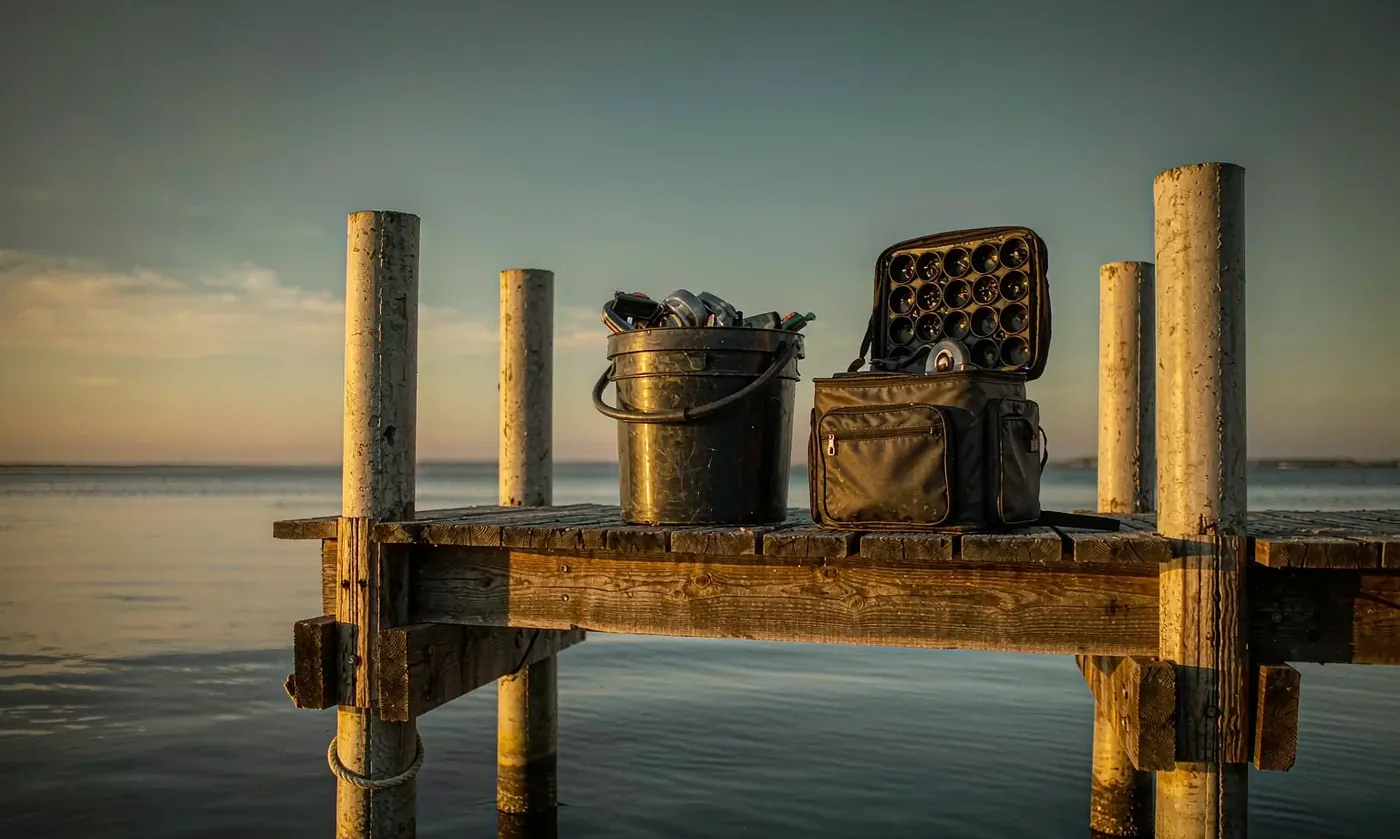
Fishing reality clusters into three bands rather than nine. IPX4 covers rain and rod spray for an angler who fishes from a bank or a pier rail and whose bag never goes in the water, and that is a perfectly honest claim for a soft tackle backpack with a coated shell and storm flaps. IPX6 covers deck wash, hose-down and sustained spray from a boat, which is the useful target for most inshore and offshore work. IPX7 and IPX8 belong to dry bags and submersible packs intended for kayak fishing or for swamping situations, and paying for them on a boat bag buys margin that will never be used.
The reason not to over-specify is that the higher codes cost real money and bring real trade-offs. Achieving IPX7 usually means either fully welded construction or a roll-top closure, and both reduce access speed for an angler changing lures every five minutes. A front-loading tackle bag that opens instantly and shrugs off a hose-down will be used far more happily than a submersible one that has to be unrolled every time a hook needs replacing.
Why the Same Rating Does Not Mean the Same Bag
Two bags can both claim IPX6 and behave completely differently after eighteen months, because the code measures a single new sample rather than an ageing curve. The rating says nothing about ultraviolet resistance, flex fatigue at a rolled closure, hydrolysis of a coating, or abrasion from being set down on concrete twice a day. If the specification sheet quotes only the IPX number and no turbine abrasion figure, no hydrostatic head value and no ultraviolet ageing cycle, the code is being used as decoration.
- Ratings are awarded on a new, unopened sample. Nothing in IPX5 or IPX6 accounts for two thousand open and close cycles at the zip.
- Test water is clean and fresh. Salt changes surface tension and leaves crystals behind that abrade moving parts after drying.
- The sample is tested static. A bag strapped to a kayak deck flexes continuously, and flex is what opens a pinhole into a leak.
- Temperature during test is ambient. A cold morning at two degrees stiffens coatings and makes a marginally sealed closure weep.
- Load is not usually part of the test. A bag pressed against a hard surface with eight kilograms inside behaves differently from an empty one.
For a fair comparison between two shortlisted designs, ask for the report rather than the claim. A useful report names the laboratory, the sample description, the code tested, the conditioning period and the date, and it should be less than two years old. The wider picture on what each level of water protection is worth in practice sits in the levels of waterproof protection guide.
| Closure type | Realistic ceiling | Cycles before decline | Failure pattern | Notes for anglers |
|---|---|---|---|---|
| Coated water-resistant zip | IPX5 to IPX6 when new | Around 4,000 cycles | Coating cracks, tape lets water past | Fastest access, needs annual lubrication |
| Standard coil zip under a storm flap | IPX3 to IPX4 | 10,000 cycles but low enclosure value | Water enters at the flap edges | Fine for rain, poor against a hose |
| Short roll-top with buckle | IPX6 to IPX7 | No moving cycle limit | Under-rolled top leaves a channel | Needs three full folds each time |
| Full roll-top welded body | IPX7 to IPX8 | Limited by seam ageing | Weld edge creases and lifts | Best for kayak and surf use |
| Welded body with TIZIP closure | IPX7 and above | Roughly 2,000 to 3,000 closures | Closure is the wear item, not the shell | Highest cost per unit of access speed |
Read across the row rather than down the column. A coated zip gives the fastest realistic route to IPX6 for a boat bag, and a full roll-top welded body is the only honest route to a sustained IPX7 claim, but the roll-top costs roughly eight seconds of access every time the bag is opened. For an angler opening the bag forty times a day, that is five minutes a session, which is the kind of trade worth deciding deliberately.
Closures and Seams Decide the Result
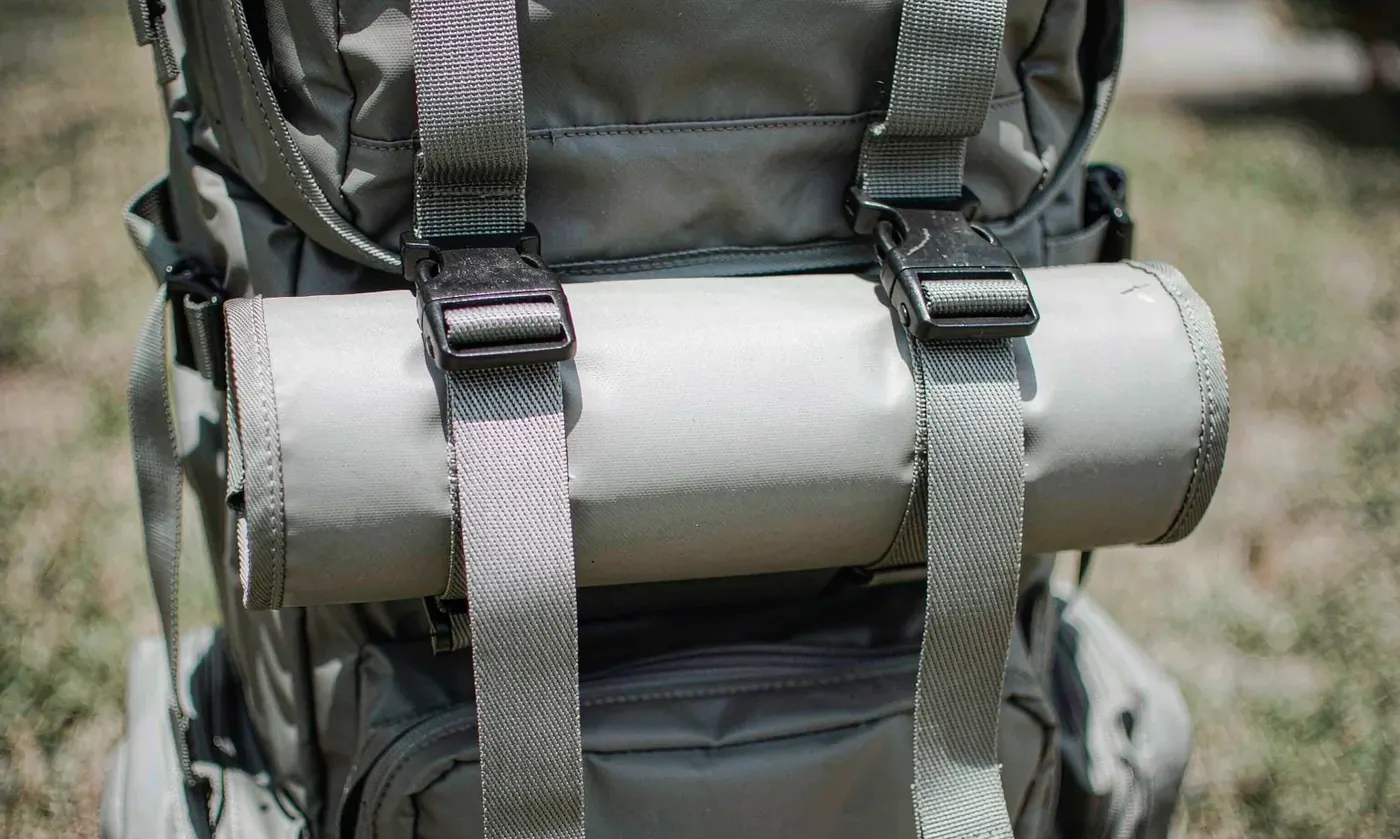
Among similarly rated bags, the closure is nearly always the deciding factor. A coated water-resistant zip can hold a jet spray well for its first two seasons, but has a finite cycle life; a roll-top has no moving parts but depends entirely on the user rolling it correctly, needing three full folds and a correctly seated buckle. Hook-and-loop storm flaps keep rain out and add nothing against a jet. Understanding which closure carries the rating tells you how much of the water protection survives careless use at the end of a long day.
Seams come next. A welded or heat-taped seam can approach eighty to ninety-five percent of parent fabric strength, whereas a sewn seam with no tape leaks through its needle holes unless the fabric is coated heavily enough to close them. This is why the cheap waterproof bag at twice the stated rating often loses to the expensive one at a lower rating: construction, not the number, determines whether water gets in at the corner of the base.
Hydrostatic Head and Spray Tests: The Other Half of the Story
Ingress codes describe an assembled product; fabric standards describe the material. Resistance to water penetration under hydrostatic pressure, published by the International Organization for Standardization as ISO 811, reports the height of a water column in millimetres that a fabric sustains before three drops appear, and coated goods aimed at serious rain typically sit between 3,000 and 10,000 millimetres depending on the coating weight. AATCC 22 covers water repellency of the face fabric by spray test and is reported as a rating of zero to one hundred, which tells you whether the shell wets out and gets heavy rather than whether water passes through.
Pairing the two makes the picture readable. A fabric at 5,000 millimetres hydrostatic head with an AATCC spray rating of ninety repels water well and stays light; the same fabric with a spray rating of fifty will wet out, gain weight and start to feel cold and damp even though nothing is actually leaking through. Practical interpretation of both numbers, and their link to seam design, appears in the explanation of why stitched seams leak.
Matching the Code to How You Actually Fish
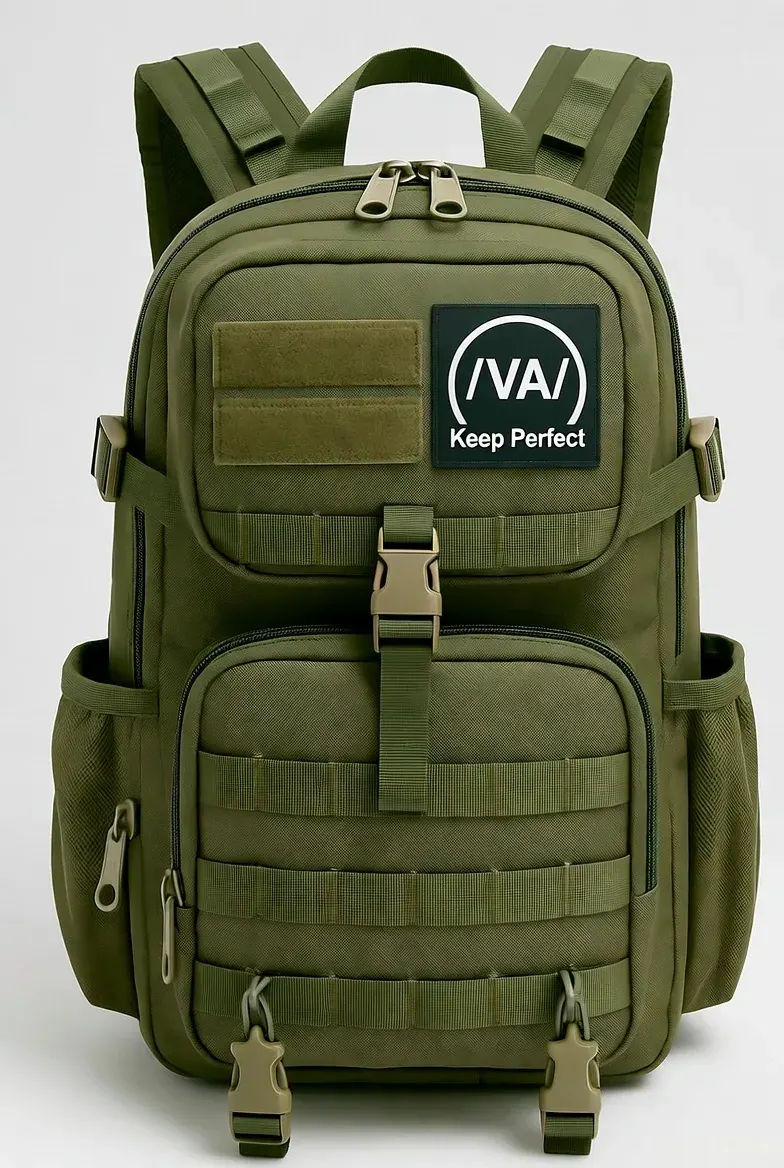
The useful question is not which rating is highest but which insult is real. Rank Pierside anglers deal with wind-driven splash and the occasional wave that lands on the rail; boat anglers deal with deck wash and a hose; kayak anglers deal with immersion risk because the bag lives inches from the water and can go over with it. Choose the code that matches the insult and spend the leftover budget on trays, hardware and comfort, which improve every trip rather than being insurance against one bad one.
| How you fish | Realistic insult | Code worth paying for | Closure to prefer |
|---|---|---|---|
| Bank and pond fishing | Rain, rod spray | IPX4 | Coated zip with storm flap |
| Pier and jetty fishing | Wind-driven splash | IPX5 | Coated zip plus drainage holes |
| Inshore boat fishing | Deck wash, hose-down | IPX6 | Coated zip or short roll-top |
| Offshore and charter | Sustained jetting spray | IPX6 or higher on critical pockets | Roll-top with welded seams |
| Kayak and float tube | Immersion if the craft flips | IPX7 | Roll-top, welded body |
| Surf and wading | Submersion to waist level | IPX7 or IPX8 | Roll-top plus internal dry pouch |
Immersion: Reading IPX7 and IPX8 Honestly
IPX7 is a controlled test: thirty minutes at one metre, with the highest point of the enclosure measured below the surface, using fresh water and a sample that has not been flexed, loaded or aged. It is a meaningful number for a kayak bag that briefly goes under, and it is not a promise that electronics in a main compartment survive a season of being dragged through a breaker line. IPX8 goes further but only under conditions declared by the product owner, so IPX8 without a stated depth and duration attached to it should be treated as an unquantified claim rather than a specification.
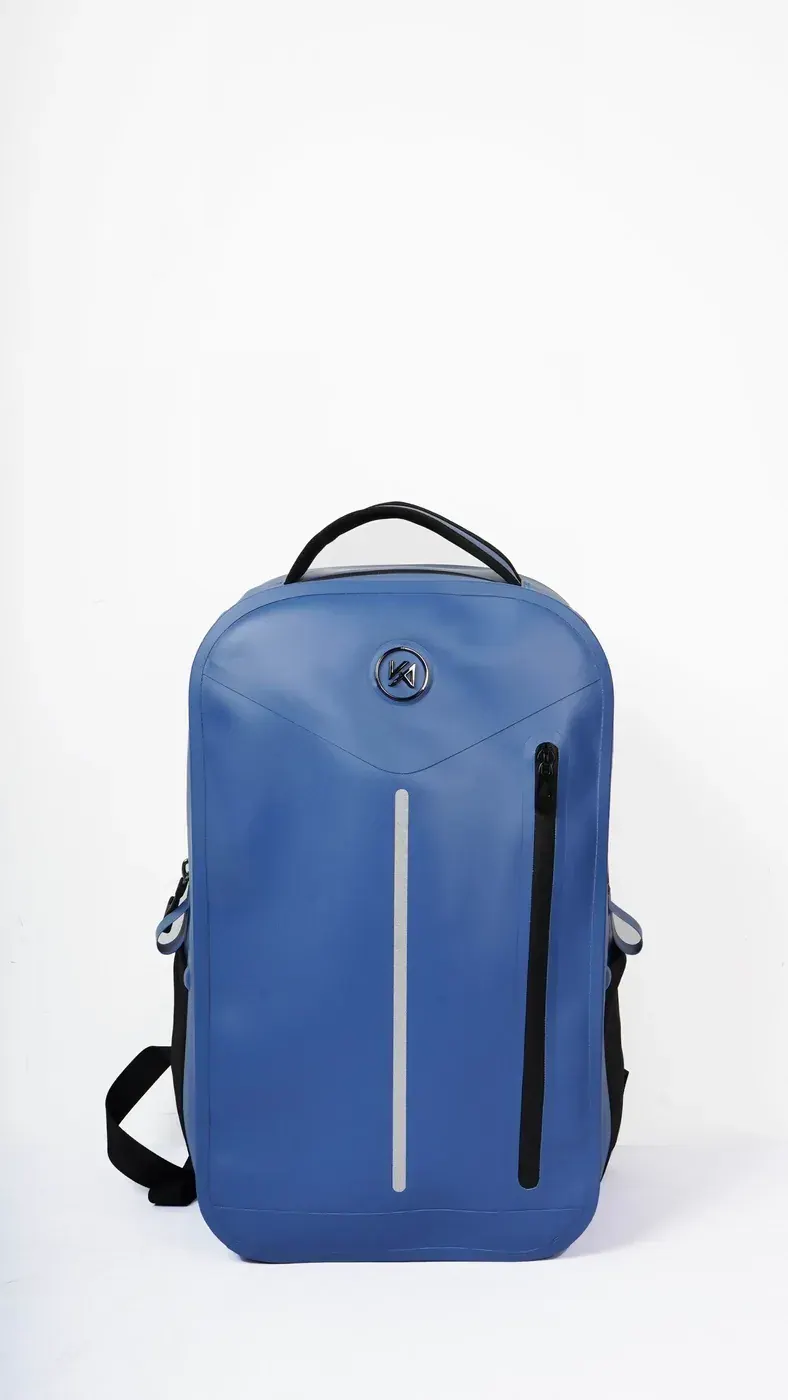
There is a practical compromise worth knowing. Many experienced kayak and surf anglers use an IPX6-rated tackle bag for access speed and put anything that must stay dry inside a small IPX7-rated pouch. The two-layer approach costs about forty dollars, keeps the fast bag fast, and removes the single-point-of-failure risk that comes from trusting one enclosure with everything.
Verifying a Claim Before You Buy
Verification takes four short checks and works whether the buyer is an angler in a shop or a brand comparing two development samples. Do them in order; the first one eliminates more questionable claims than the other three combined.
- Ask for the report rather than the logo on a hangtag. A report names the laboratory, the sample, the date and the conditions; a logo on a hangtag names nothing.
- Check whether the sample tested included the closures. Some reports cover shell fabric alone, which says nothing about the assembled bag.
- Compare sample date with the current tooling. A report older than two years generally predates at least one material change.
- Test the bag in your own way in the first week, while return windows are open.
- Write the outcome down. A thirty-second note on which pocket stayed dry is worth more next season than any marketing figure.
Home testing cannot reproduce a calibrated nozzle, but it can find gross failures quickly, and doing it early is what makes returns possible at all. The safe routines, including what to place inside the bag as an indicator, are set out in the guide to testing whether a fishing bag is waterproof. The broader distinction between a genuinely waterproof build and one that merely resists shower settings is drawn in the waterproof versus water-resistant comparison.
How We Look at Codes When Briefing a New Build
QUANZHOU JUNYUAN BAGS has worked on waterproof bag programmes since 2014 with a founding team in this trade since 2004, and every rating claim on a development sample is tied to a named test rather than to a marketing level. Programmes run under BSCI and ISO 9001 governance, materials are screened for REACH and California Prop 65, and each bulk shipment is inspected at AQL 2.5 before release, with monthly output of 200,000 units verified by SGS. The brief for a new build should state the target code, the closure type, whether the shell uses welded or heat-taped seams, and which standard the fabric is to be verified against.
Two naming conventions keep development files clean. Cite International Organization for Standardization methods for hydrostatic head and turbulence-based fabric testing, and cite the spray-repellency method from AATCC when describing how the face fabric behaves in rain. Where a specification also has to cover buoyancy or flotation claims, those belong in a separate clause with their own test method rather than inside an ingress code, since flotation is a load and displacement question and not a water ingress one. Opening orders start at 500 pieces per design and colour, sampling runs six to ten working days, and bulk takes thirty-five to fifty days from approved sample and deposit. Briefs go to service@junyuanbags.com.
People Also Ask
What IPX rating should a fishing backpack have?
IPX4 for bank and light rain use, IPX5 or IPX6 for boat and pier fishing where a hose-down is realistic, and IPX7 only for kayak or surf fishing where immersion is possible.
Does IPX6 mean a fishing bag can go underwater?
No. IPX6 is a powerful jet test using one hundred litres per minute for three minutes; immersion protection begins at IPX7, which is thirty minutes at one metre.
What is the difference between IPX7 and IPX8?
IPX7 is thirty minutes at one metre under fixed conditions. IPX8 is continuous immersion at conditions declared by the product owner, and it should state depth and duration.
Why is the first digit an X on every bag?
Because the enclosure has not been tested for solid particle ingress. Soft goods are normally only submitted to the water half of the test sequence.
Does a waterproof rating cover the zipper?
Only if the report says the assembled product was tested. Many reports cover shell fabric alone, which leaves the closure unproven.
How long does a waterproof rating stay valid?
Ratings apply to a new sample. Request a report dated within two years, since materials and tooling change more often than that.
Frequently Asked Questions
Q1. What does IPX4 mean on a fishing bag?
The enclosure survived splashing water from any direction at ten litres per minute for five minutes. It is the right level for bank, pond and light-rain use.
Q2. What does IPX6 mean on a fishing bag?
It survived a twelve point five millimetre nozzle delivering one hundred litres per minute for three minutes, which is a realistic analogue of a deck hose-down.
Q3. What does IPX7 mean on a fishing bag?
Thirty minutes of immersion at one metre of fresh water, measured above the highest point of the enclosure, on a new unaged sample.
Q4. Is IPX8 always deeper than IPX7?
Yes by definition, but the depth and duration are set by whoever declares it, so IPX8 without published figures is not a usable specification.
Q5. Can a sewn and taped seam bag reach IPX7?
Generally not for sustained immersion. Fully welded construction or a roll-top closure is normally required to pass a thirty-minute submersion test.
Q6. Does a higher IPX rating make a better fishing bag?
Not necessarily. Higher codes usually mean slower access and higher cost, and a well-built IPX6 bag outperforms a poorly built IPX7 one in daily use.
Q7. Why does my IPX6 rated bag leak at the zipper?
Because the coating on the zip tape degrades with abrasion and ultraviolet exposure. The closure is a wearing part with roughly four thousand cycles of service life.
Q8. Does salt affect the IPX test result?
Not in the laboratory, since test water is fresh. In the field, salt lowers surface tension and leaves crystals that abrade seals after drying.
Q9. What is the difference between an IP code and hydrostatic head?
An IP code describes an assembled product under IEC 60529, while hydrostatic head describes fabric resistance under a water column, reported in millimetres.
Q10. Should kayak anglers insist on IPX7?
Yes for anything carried through surf or affixed low to the hull, ideally by combining an IPX7 pouch inside a faster-accessing IPX6 bag.
Q11. Do roll-top bags lose water protection when mistreated?
Yes. Three full folds with seated buckles are required; two folds, or a roll made over a stiff item, leaves a channel that a splash test will find.
Q12. Are there bag-specific IPX standards separate from electronics?
No. Soft goods are tested against the same IEC 60529 water clauses used for enclosures, which is why the same code means the same thing across categories.
Q13. What test reports should a buyer request before placing a bulk order?
A report naming the laboratory, sample, date and conditions, covering the assembled bag including closures, dated within two years, plus separate fabric data for hydrostatic head and spray rating.