Waterproofness in fishing bags is not one property but five distinct levels of construction, and each one costs real money to move up to. Level 1 survives drizzle for about ten minutes and costs nothing extra, level 3 survives four hours of sustained rain with sealed zips at about 4.20 USD of added build cost, and level 5 survives thirty minutes submerged at one metre using fully welded seams and an airtight closure at 14-18 USD added. Those thresholds map directly onto the ingress code published by the IEC, and each level below is given the exposure it survives, the test that proves it, the cost it adds, and the fishing situations where anything higher is wasted money. MOQ is 500 pcs per design and colour, samples take 6-10 working days, and bulk runs 35-50 days.
Why Levels Beat Labels
The word waterproof is used on packaging to describe everything from a nylon shell that beads water for ninety seconds to a welded body that survives a capsize, and that single word covering both extremes is why anglers get wet. A level framework fixes it by tying a claim to a specific construction and a specific test instead of an adjective.
| Level | Construction | Ingress code | Added cost versus level 1 | FOB band |
|---|---|---|---|---|
| Level 1 | DWR finish only | Below IPX1 | Baseline | 12-22 USD |
| Level 2 | PU or TPU coated shell, stitched | IPX3 | 1.80 USD | 18-28 USD |
| Level 3 | Coated shell, taped seams, sealed zip | IPX4 | 4.20 USD | 24-38 USD |
| Level 4 | RF-welded seams, roll-top mouth | IPX6 | 8.50 USD | 32-52 USD |
| Level 5 | Fully welded body, airtight closure | IPX7 to IPX8 | 14-18 USD | 48-88 USD |
Read the cost column carefully because it explains most of what appears in the field. Moving from level 1 to level 3 roughly doubles the water performance for about 4.20 USD, whereas moving from level 3 to level 5 adds 10-14 USD to survive an event most anglers experience perhaps twice a season. Neither is the wrong choice, but they are choices about different things, and mixing them up is how ranges end up mispriced against their customers.
What Each Level Actually Survives
Level descriptions are only useful if they are stated as events an angler recognises. The table below restates each level in terms of real water rather than laboratory apparatus, because a claim of withstanding water jets means very little to someone standing in a downpour deciding what to buy.
| Level | Survives | Does not survive | Realistic worst case |
|---|---|---|---|
| Level 1 | Light drizzle for about 10 min | Any sustained rain | Damp outer within ten minutes |
| Level 2 | Steady rain for about 60 min | Heavy rain past one hour | Seam wicking at strap points |
| Level 3 | Sustained rain for about 4 h | Immersion of any depth | Zip weep after long exposure |
| Level 4 | Jet spray and 30 min at 0.5 m | Prolonged submersion below 1 m | Zip seal failure if not cleaned |
| Level 5 | 30 min at 1 m or deeper per rating | Abrasion damage to the shell | Pinhole from a sharp hook point |
Every row in that table has one honest limitation and pretending otherwise does nobody any favours. Level 5 does not mean indestructible: an airtight body will still fail if a hook point pierces the film or if the closure is zipped shut over grit. Buyers should carry that caveat onto packaging rather than leaving it for a customer to discover on the bank.
Level 1 and Level 2: Shell Fabrics and Coatings
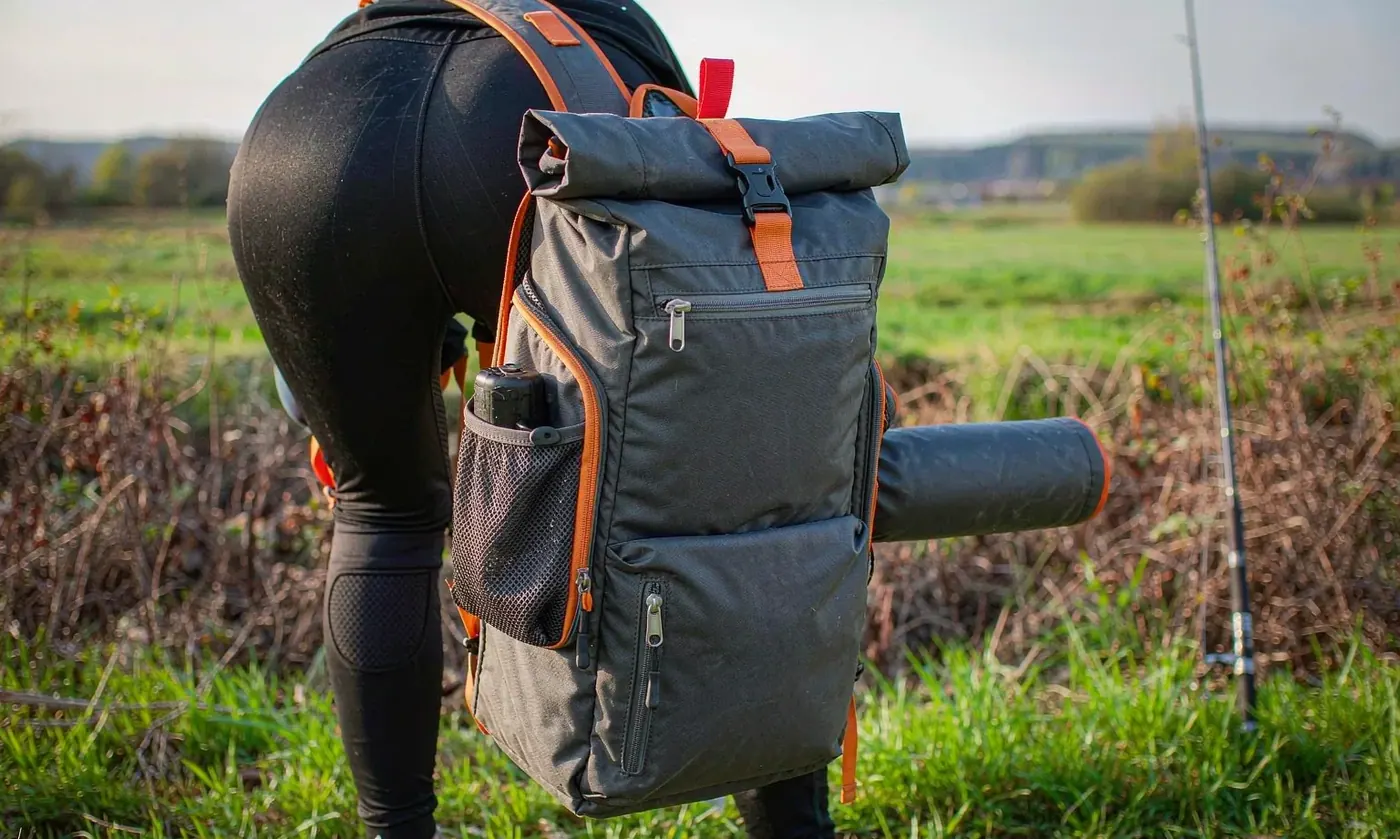
Level 1 is a durable water-repellent finish on an uncoated face fabric, costing nothing extra and lasting perhaps fifteen washes before it needs renewing. It beads the first shower and gives up predictably, and it is the honest specification for a body sold on organisation rather than weather.
Level 2 adds a coating and it is where most of the market actually sits. A PU or TPU layer applied to the reverse of a 210D-420D face gives a measurable hydrostatic head, typically 1,500-3,000 mm depending on coat weight, and that number rather than the denier should be written onto the brief. Coat weight matters more than most buyers realise: 0.12 mm gives roughly 3,000 mm, while 0.04 mm gives nearer 1,500 mm on identical base fabric.
| Coating | Typical coat weight | Hydrostatic head | Seam treatment required | Added cost |
|---|---|---|---|---|
| DWR only, level 1 | None | Below 500 mm | None | 0 USD |
| PU, light | 0.04 mm | About 1,500 mm | Tape recommended above level 2 | 0.90 USD |
| PU, standard | 0.08 mm | About 2,200 mm | Tape required | 1.30 USD |
| PU, heavy | 0.12 mm | About 3,000 mm | Tape required | 1.80 USD |
| TPU film laminate | 0.15 mm equivalent | About 5,000 mm | Weld rather than tape | 3.40 USD |
Hydrostatic head testing itself follows published textile methods, and the ISO method widely used for measuring resistance to water penetration before rupture gives a repeatable figure rather than a marketing one. Specifying the method alongside the target value prevents vendors quoting whichever loosely-related internal test produces the best number.
Level 3: Where Most Anglers Should Land
Level 3 combines a coated shell with taped seams and a water-resistant or laminated zip, covering sustained rain for about four hours at IPX4 and adding roughly 4.20 USD to the build. It is the correct spec for the large majority of anglers who fish in weather but whose bag never goes under water deliberately.
Seam sealing is the component that actually delivers this level and it is the component most often skimped. Every needle hole left by stitching is a capillary path, and a tape carries across those holes only if it is applied with the correct heat, pressure, and dwell: typically 0.4 seconds of dwell at 140-160 C with 2.5 bar of roller pressure. Under-heated tape lifts after about ten washes, at which point a level 3 bag quietly becomes a level 2 bag and nobody can see why.
Level 4: Welded Seams and the Kayak Threshold
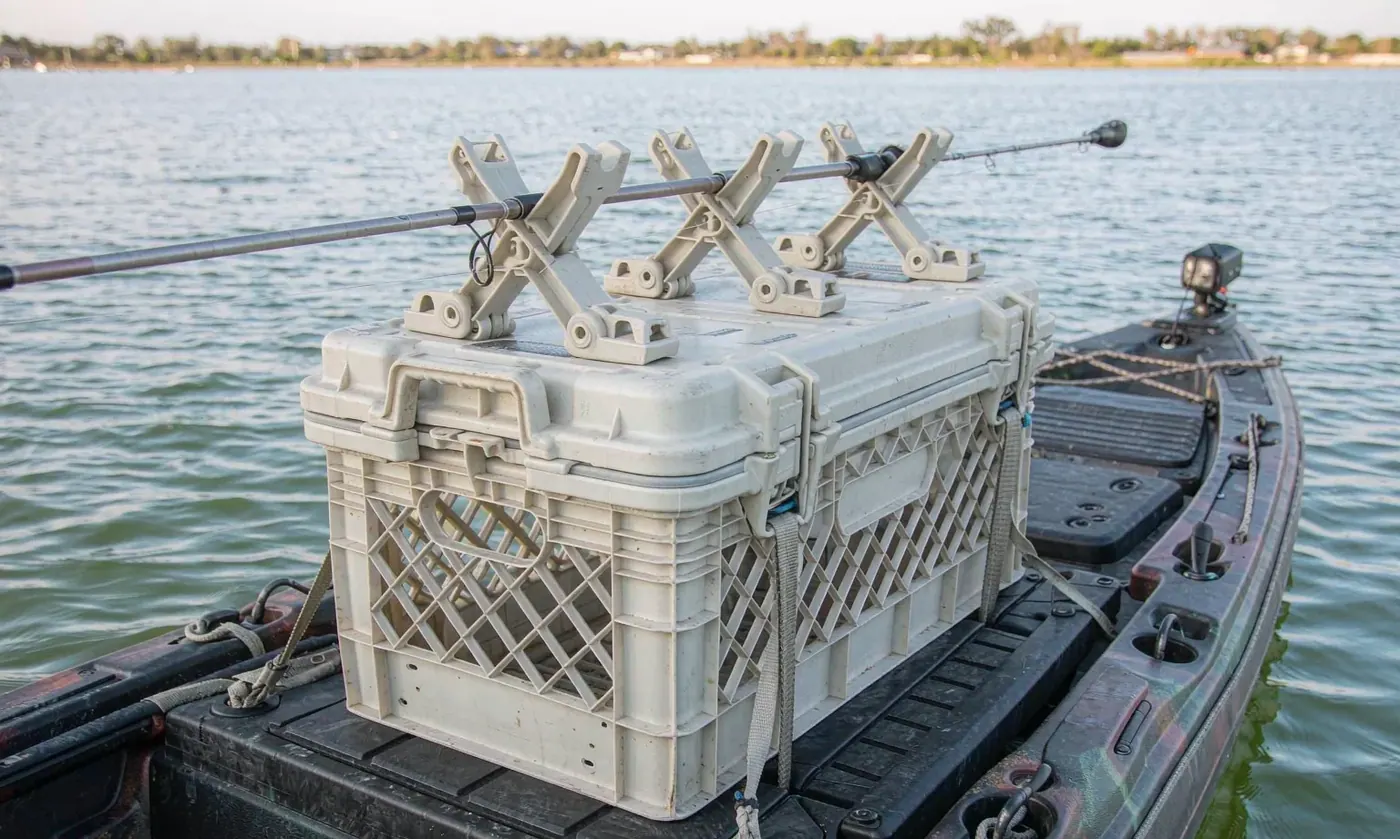
Level 4 replaces thread with RF-welded seams and a roll-top or laminated zip mouth, reaching IPX6 and surviving jet spray plus roughly thirty minutes at half a metre, at about 8.50 USD of added cost. This is the level where kayak and small-boat anglers should start rather than finish.
The reason is exposure duration rather than depth. A hull collects water and holds it against the base of a bag for several hours, so a bag that would shrug off five minutes of rain weeps steadily through its lower seams by the middle of a session. A welded body removes the thread paths entirely along those lower seams, and many builds sensibly weld only the lower 150-200 mm and stitch above, which buys most of the benefit at roughly 40 percent of the cost.
Level 5: Airtight Closures and Submersion
Level 5 is a fully welded body closed by an airtight zip or a clamped roll mouth, tested to IPX7 or IPX8 and typically surviving thirty minutes at one metre or deeper, at 14-18 USD of added cost. It is serious kit and it is largely wasted on an angler whose bag never leaves dry land.
Closure cost dominates this level. An airtight moulded zip track in the 300-600 mm lengths used on tackle bags runs roughly 9-16 USD alone before it is welded in, which is why level 5 bodies start near 48 USD rather than near 25. The maintenance story has to be told alongside the performance story, because an airtight zip that is stored dirty or closed over grit loses its seal, and the fix is a clean and a light lubricant rather than a replacement.
Matching Level to Fishing Style
The right level is set by the worst realistic event rather than the average day, because a bag fails once and then it is finished. The mapping below is what most buying decisions actually reduce to, and note that no style is well served by level 1.
| Fishing style | Worst realistic event | Level that suits it | Penalty for going one lower | Penalty for going one higher |
|---|---|---|---|---|
| Bank angler, day session | Four hours of rain | Level 3 | Damp trays after two hours | 6-10 USD nobody will value |
| Trout angler wading | Slip and go in to the waist | Level 4 | Everything in the bag is soaked | 8-14 USD rarely noticed |
| Kayak and small boat | Hours of standing bilge water | Level 4 minimum | Contents wet by mid-session | Justified for electronics |
| Surf and open water | Capsize and full submersion | Level 5 | Total loss of contents | The correct call here |
| Pier and platform | Spray in an onshore wind | Level 3 | Salt damp reaching hardware | Unnecessary expenditure |
| Ice fishing | Wet slush on the ice surface | Level 3 plus cold-flex shell | Base stiffens and cracks | Standard weld handles it |
Going one level too low is always more expensive than going one level too high, because the first produces a warranty and a lost customer while the second produces a margin reduction. Where a buyer is genuinely uncertain between two levels for a given style, the higher one is nearly always the better commercial decision, provided the packaging still describes the level honestly.
Testing Each Level
Every level above the first has a test that either proves it or does not, and asking for evidence at sample stage costs nothing while asking after shipment costs everything. Ingress protection is defined in the enclosure code published by the International Electrotechnical Commission, and each number implies both a defined method and a defined duration that a report should state explicitly.
| Level | Protocol | Duration | Pass condition | Cost to test |
|---|---|---|---|---|
| Level 1 | Spray test to the cited method | 20 s at 20 cm | Outer wets, contents dry | Under 40 USD |
| Level 2 | Oscillating spray cabinet | 5 min | Up to 3 mL inside | About 120 USD |
| Level 3 | Spray nozzle at the stated flow | 10 min | Under 5 mL inside | About 180 USD |
| Level 4 | Jet nozzle at the stated flow | 3 min per square metre | Under 10 mL inside | About 260 USD |
| Level 5 | Immersion at the rated depth | 30 min | No measurable ingress | About 340 USD |
Those test costs look avoidable against a programme of 500 units and they are trivially small against a range. Roughly 340 USD to prove a level 5 claim before production is around 0.68 USD per unit at the minimum order, and it converts a contested return into a documented specification. Seam strength and abrasion should additionally be referenced to methods maintained by ASTM International, because a welded seam that passes immersion can still peel under sustained tension.
Care Requirements Rise With Level
Maintenance is not optional above level 2, and the higher the level the more a neglected detail degrades performance. Three habits cover most of what matters and all three take under two minutes after a session.
- Rinse welded bodies and closures in fresh water after any session involving salt or silt, because grit in a roll-top fold or an airtight zip track prevents the seal closing cleanly.
- Air dry with roll-top mouths rolled open rather than closed, since film stored damp and folded bonds along the fold line over about two months of disuse.
- Renew a DWR finish roughly every fifteen washes or whenever the face stops beading, which restores level 1 behaviour and reduces the coating work that drives earlier seam failure.
- Store bodies open and empty in a dry place, because closed damp storage grows mildew in a sleeve within about four days regardless of the bag level.
- Lubricate airtight closures with the product the closure maker specifies, which is usually silicone-free, and never force a slider that meets resistance.
The single habit that protects every level is washing salt out before drying it in. Crystallised salt is hygroscopic and holds water against coatings and zip tape indefinitely, so a bag that was merely rinsed and put away can remain damp for weeks without anybody noticing until mildew appears.
Reading a Specification Sheet
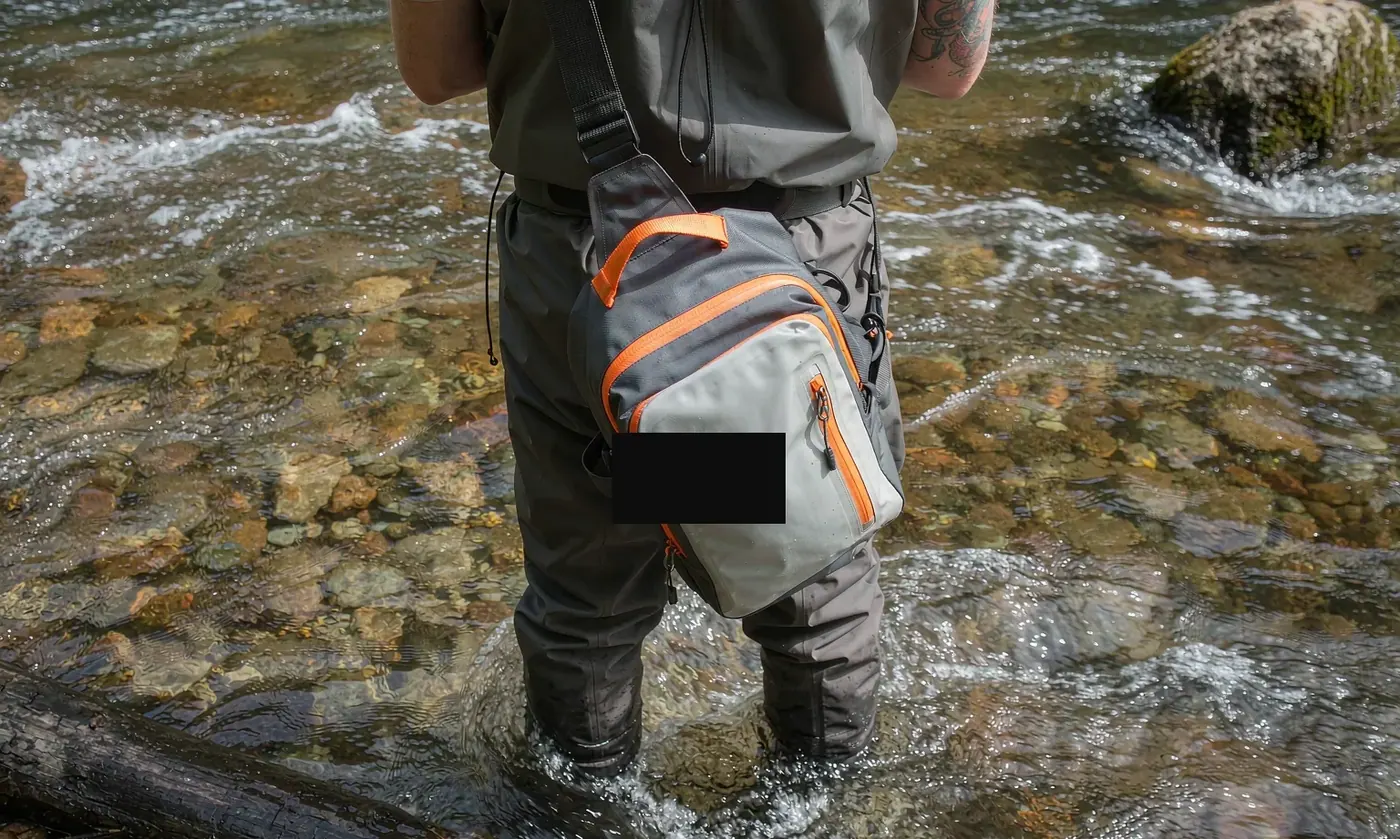
A brief should state level, test method, duration, and acceptance number, and each of those four elements removes one way of being misled. The checks below are what an experienced buyer looks for before approving a quote, and every one of them can be verified in about ten minutes.
- The level and ingress rating are stated with their test duration, not merely as a badge such as IPX6 with nothing behind it.
- The coating is named by type and thickness rather than by brand adjective, so that comparing two quotes is possible at all.
- Seam treatment is stated per seam rather than in general terms, since a body can weld its lower seams and stitch the upper ones legitimately.
- Hardware is named by material grade, with 316 stainless or acetal specified for anything touching saltwater rather than a vague stainless claim.
- Zip closure is identified as laminated coil, roll-top, or airtight track, because each places the bag at a different level.
Buyers who adopt the five-level wording internally find it removes most of the ambiguity that sales literature depends on. Asking for a level 4 body with a stated 30-minute test at half a metre is a specification; asking for a waterproof fishing bag is an invitation, and invitations are answered with whatever is sitting in stock. Buyers comparing claims in detail should also read the waterproof against water resistant framework.
Programme, Pricing, and Compliance
Programmes open at MOQ 500 pcs per design and colour, with colour splits negotiable above 2,000 units. Sampling takes 6-10 working days, and each level above the second adds time rather than simply cost: seam taping adds about 2 days, RF welding about 4 days, and an airtight closure about 5 days because each introduces a process that has to be set up and verified before the first clean sample.
| Programme item | Baseline | Note |
|---|---|---|
| MOQ | 500 pcs per design and colour | Colour split negotiable above 2,000 pcs |
| Sampling, levels 1-2 | 6-10 working days | No additional process |
| Sampling, level 3 | Add about 2 days | Seam taping setup and verification |
| Sampling, level 4 | Add about 4 days | RF welding parameter development |
| Sampling, level 5 | Add about 5 days | Airtight closure jig and leak check |
| Bulk | 35-50 days | From approved sample and deposit |
| Inspection | AQL 2.5 | Include spray or immersion protocol, seam check, closure cycle |
QUANZHOU JUNYUAN BAGS has developed waterproof bag programmes since 2014, with the founding team working in the trade since 2004. Monthly output of 200,000 units is verified by SGS, and BSCI and ISO 9001 systems structure the workflow. Materials are screened for REACH and California Prop 65, and every bulk order is inspected at AQL 2.5 before shipment.
A level-specific brief can be emailed to service@junyuanbags.com with target level, test protocol, volume, hardware grade, and quantity. FOB Xiamen or DDP service to more than 100 countries follows an approved sample and a complete test record. Buyers wanting the engineering behind each seam type should start from the construction explainer and the IPX rating test guide.
People Also Ask
What are the levels of waterproof?
Five construction levels from a water-repellent finish at level 1 to a fully welded airtight body at level 5, mapped onto ingress codes IPX1 through IPX8.
Which waterproof level do I need for fishing?
Level 3 for rain-fed day sessions, level 4 for wading or kayaking, and level 5 only for genuine submersion risk such as surf launches. Anything above level 3 is wasted on bank fishing.
Is IPX6 enough for a fishing bag?
Yes for jet spray and about thirty minutes at half a metre, which covers kayaking and wading. It is not enough for prolonged submersion below one metre, which needs IPX7 or IPX8.
What does waterproof mean on a fishing bag?
Without a level and a test duration it means very little. Honest labelling names the ingress code, the test protocol, and the duration, such as IPX6 at thirty minutes.
How much does it cost to upgrade a waterproof level?
About 1.80 USD from level 1 to 2, 4.20 USD to level 3, 8.50 USD to level 4, and 14-18 USD to level 5, measured as added build cost per unit.
Why does a seam fail before the fabric does?
Every needle hole is a capillary path, so stitching wicks long before the coating gives out. Welded seams remove the thread path entirely, which is why level 4 and above are welded rather than coated.
Frequently Asked Questions
Q1. What are the 5 levels of waterproof fishing bags?
Level 1 water-repellent finish, level 2 coated stitched shell, level 3 taped seams with a sealed zip, level 4 welded seams with a roll-top, and level 5 fully welded with an airtight closure.
Q2. Which waterproof level should I buy for bank fishing?
Level 3, which handles about four hours of sustained rain at IPX4. Level 2 leaves trays damp after two hours and level 4 adds cost most bank anglers never need.
Q3. Is IPX6 or IPX7 better for a fishing bag?
IPX7 is higher, covering thirty minutes at one metre. IPX6 covers jet spray and thirty minutes at half a metre, which is sufficient for kayaking and wading but not for capsize immersion.
Q4. Does a higher hydrostatic head mean a better bag?
Head measures coating resistance only. A 3,000 mm shell with untaped seams performs worse in sustained rain than a 2,200 mm shell with every seam taped, because stitching wicks first.
Q5. Why do taped seams fail after washing?
Usually heat or dwell was insufficient during application. Correct application needs roughly 0.4 seconds of dwell at 140-160 C with 2.5 bar of roller pressure, and under-heated tape lifts after about ten washes.
Q6. Can you weld a lower shell and stitch above?
Yes, and it is a sensible mid-cost option. Welding the lower 150-200 mm addresses the standing-water exposure that matters most at roughly 40 percent of the cost of a fully welded body.
Q7. How much does an airtight closure add to cost?
The closure alone costs 9-16 USD at the 300-600 mm lengths used on tackle bags, which is why level 5 bodies begin near 48 USD rather than near 25 USD.
Q8. Is a level 5 bag worth it for surf launching?
Yes. A capsize is full submersion rather than spray, and level 5 tested at thirty minutes and one metre is the only construction that reliably keeps contents dry through it.
Q9. How do I keep a welded bag performing?
Rinse salt and silt out of the closure every session, dry roll-top mouths rolled open rather than folded shut, and never force an airtight slider that meets resistance.
Q10. Does ice fishing need a special level?
No higher level, but the shell must stay flexible in the cold. A standard welded body handles the slush exposure, and the specification to add is cold-flex performance rather than a deeper rating.
Q11. How much does level testing cost?
From under 40 USD for a spray check to about 340 USD for a thirty-minute immersion. At 500 units that is roughly 0.68 USD per unit to convert a contested return into a documented claim.
Q12. What is the MOQ and lead time by level?
MOQ is 500 pcs per design and colour, basic samples take 6-10 working days, level 3 adds about 2 days, level 4 about 4 days, level 5 about 5 days, and bulk runs 35-50 days.