A watertight slide fastener seals by pressing two flexible lips together under slider pressure, and every consequence follows from that single mechanism. Sizes used on fishing bags are type 8 and type 10, with a chain roughly eight or ten millimetres across and a tape width of thirty-two or thirty-eight millimetres; both are commonly rated to thirty minutes at one metre when installed by welding rather than sewing. A healthy one draws twenty-five to forty-five newtons of pull force, survives about three thousand opening cycles, and adds fifteen to thirty-five dollars to the cost of a bag. It needs cleaning every third trip and a thin film of silicone afterwards, and it will never be as forgiving of neglect as a roll-top.
Anatomy of a Watertight Fastener
Externally it looks like a heavy version of an ordinary zipper. Internally nothing is shared except the principle of interlocking teeth. The elements are moulded from a polyurethane or similar elastomer and carry sealing lips along their inner faces; the tape is coated rather than woven cotton or polyester; and the slider is built to compress rather than merely to guide. Each of those parts exists to support one mechanism, which is the compression of two lips hard enough that ten kilopascals of water pressure cannot force water between them.
| Part | What it is made from | Job | Failure sign |
|---|---|---|---|
| Sealing lips | Elastomeric polyurethane | Meet face to face under pressure | Whitening, flattening, or nicks |
| Elements or chain | Moulded elastomer or coated coil | Carry the interlocking structure | Teeth that no longer align |
| Tape | Coated woven construction | Bonds to the shell of the bag | Delamination from the panel |
| Slider body | Polymer, stainless, or alloy | Compresses the lips closed | Throat spreading, track reopening |
| Pull tab | Polymer or stainless with cord | Transmits hand force | Tearing away when cold |
| End stops | Moulded or crimped | Retain the slider | Slider running off the end |
The Seal Is Made by Geometry, Not Adhesion
Two lips meet with a designed interference of a few tenths of a millimetre, sometimes described as preload, and as the slider passes it forces them together while slightly deforming both. Think of two soft tubes squeezed shut against each other rather than two surfaces stuck down. That distinction explains nearly everything: why lubrication helps, why grit ruins it, why force damages it, and why a fastener that has been left closed for months can be harder to open than one used daily.
It also explains the pressure limit. Ten kilopascals, roughly the figure at one metre of depth, is manageable with a good compression design; the local pressures of twenty or thirty kilopascals produced by kneeling on a loaded bag are not, which is why a zipper boot that passed a laboratory immersion can still weep when leaned on. Any honest claim about this class of closure should carry those conditions rather than just the headline number.
Ageing adds one further wrinkle worth knowing, because it decides what lifetime looks like rather than what failure looks like. Elastomeric lips deform permanently if a bag is stored closed under compression for months, recovering only partially afterwards, so anything put away for a season benefits from being left open. Users who store gear closed routinely report a closure that feels loose at the start of the next season and then improves after ten or twenty operations, which is simply the lips recovering a little of their shape.
Sizes Used on Fishing Bags
Two sizes cover almost the whole category. Type 8 has a chain about eight millimetres across with roughly thirty-two millimetres of tape width and suits day bags, hip packs, and accessory pockets. Type 10 carries a ten millimetre chain on thirty-eight millimetre tape and appears on larger main openings where the track length exceeds about four hundred millimetres, because the wider geometry resists the twisting that a longer run produces.
| Type | Chain width | Tape width | Typical application | Relative cost |
|---|---|---|---|---|
| Type 6 | About 6 mm | Around 26 mm | Small accessory pockets and pouches | Lowest |
| Type 8 | About 8 mm | Around 32 mm | Day bags, slings, lid pockets | Medium |
| Type 10 | About 10 mm | Around 38 mm | Main openings over 400 mm long | Highest |
| Heavy duty variants | Above 10 mm | 40 mm or more | Dry shapes and dive-adjacent builds | Highest and specialist |
Choosing between them is decided by track length and by the stiffness of the surrounding panel rather than by the litres of the bag. A long closure on a soft panel twists, and twist is what opens seals; going one size larger often solves a leak that no amount of resealing will. Conversely, fitting a type 10 where a type 8 would do adds weight and cost for stiffness nobody asked for.
Installation Decides Everything
This is the point most buyers never see and the one that decides whether the closure performs. A watertight fastener has to be bonded into the shell continuously along both tapes, which means welding or high-grade adhesive bonding, not sewing. Stitching through the tape creates hundreds of penetrations in exactly the place where continuity matters, and a bag can carry an expensive closure and still leak along the seam around it for that reason alone.
- Match chemistry first: a PVC tape welds to a PVC shell and a TPU tape to a TPU shell. Mixing the two produces a bond that looks correct and peels within weeks.
- Weld both tapes continuously, twenty seconds or less per metre of track using a shaped electrode matched to the tape width.
- Leave fifteen millimetres clear at either end for the end stop, and reinforce those corners, since end-stop corners are where a tested bag usually lets go first.
- Never stitch the tape. If a design must be sewn, tape over the stitch line afterwards with twenty millimetre polymer tape.
- Cycle the finished closure fifty times before inspection, then pressure test any bags claiming immersion performance.
End-stop corners deserve the emphasis. The geometry changes there, the welds meet at right angles, and the closure takes its highest load when opened from fully closed. Most warranty failures trace back to those two corners rather than to the middle of a track, and they are also the one place where a repair is rarely worth attempting.
Where They Beat a Roll-Top and Where They Do Not
Both approaches seal properly when built properly, and the choice is about use rather than about which is better. A fastener opens in three to five seconds against fifteen to twenty for a roll-top, lies flatter, and allows a rectangular bag shape that packs efficiently. A roll-top costs a fifth as much, tolerates complete neglect, needs no lubrication, and can be inspected visually by anyone without equipment.
| Criterion | Watertight fastener | Roll-top closure |
|---|---|---|
| Opening time | Three to five seconds | Fifteen to twenty seconds |
| Build cost addition | Fifteen to thirty-five dollars | Three to eight dollars |
| Maintenance interval | Every three trips, clean and lubricate | Occasional wipe only |
| Tolerance of neglect | Low, fails within a season of abuse | High, tolerates years of indifference |
| Shape efficiency | Rectangular, packs square | Requires fifty to eighty millimetres of spare height |
| Field repairability | Slider replacement possible with tools | Usually nothing to repair |
The rule that emerges from those rows: choose the closure by how often it is opened. Anything accessed more than about fifteen times a session justifies the cost. Anything opened twice is better served by a roll-top, and this is why the largest kayak day bags and dry shapes still use folds rather than zippers after decades of alternatives.
Hardware and Corrosion in Saltwater
The closure outlives everything around it or dies with it, depending on metallurgy. Salt solution collects in the slider throat, which is where the highest friction and the thinnest coatings meet, and plated components there show corrosion within days rather than months. Polymer slider bodies avoid the problem entirely; stainless bodies are excellent but heavier and usually found only on dive-adjacent products.
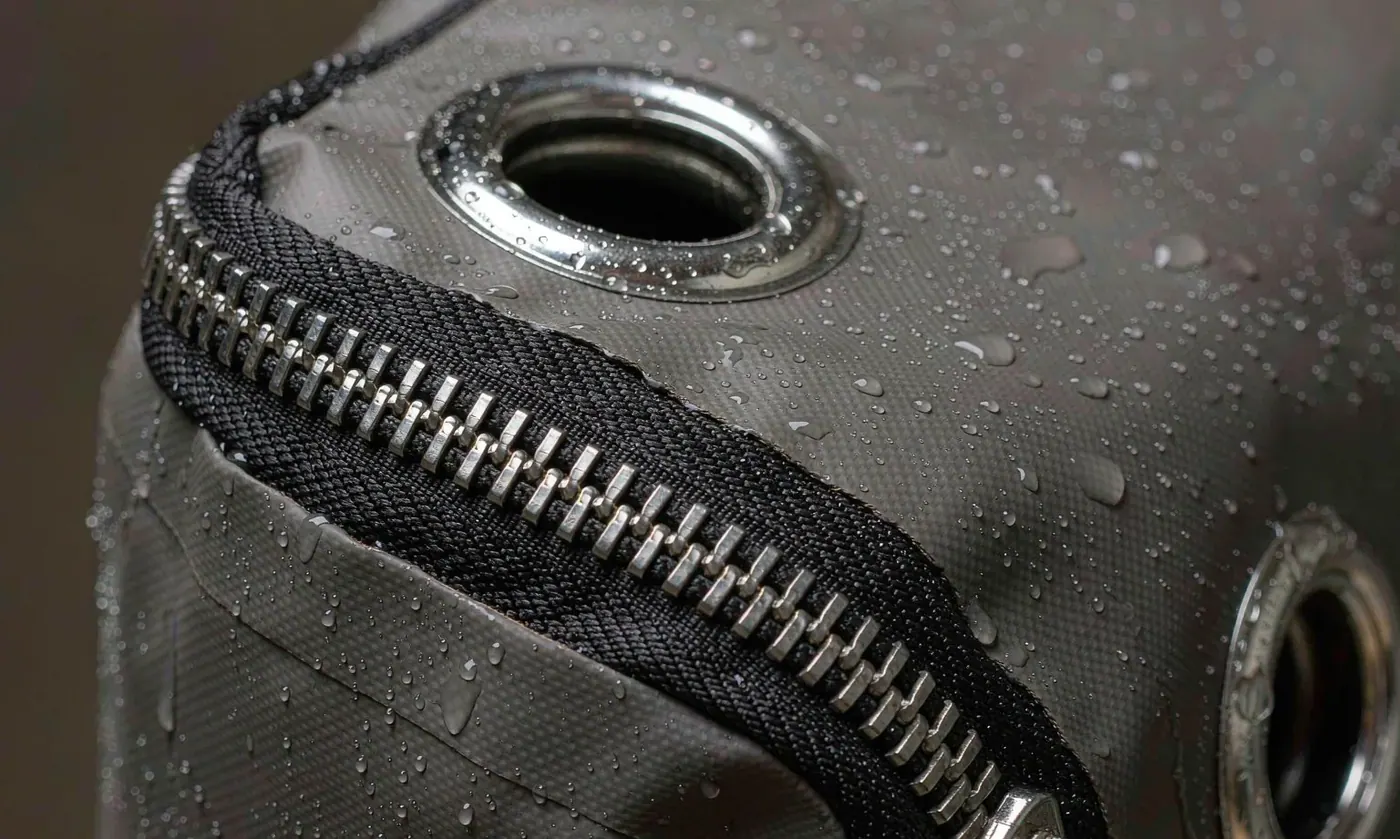
Two additional details matter here. The pull tab fitting is a wear point because it takes the whole hand force concentrated through a small hole, and anything plated there galling against the slider body is a common source of a closure that feels gritty before it fails. And any claim about resistance should be verified: exposure testing to a published standard such as ISO 9227 gives comparable figures, alongside general material specifications from ISO.
Care Intervals That Actually Preserve It
Maintenance is simple but not optional. Every third saltwater trip, or monthly in fresh water, rinse the track with clean water at about thirty degrees, brush gently along both sides, dry it fully, then lay a thin film of silicone grease amounting to roughly one gram per metre of chain and work it in with ten full travel cycles. Wiping the surplus off afterwards prevents the treated surface from collecting the grit that the routine was meant to remove.
What should never be done is treating stiffness with force. A forty newton pull applied at two hundred newtons of effort spreads the throat far faster than any number of open and close cycles, and users regularly convert a fifteen dollar service into a thirty dollar replacement in ten seconds on a cold morning. Coaching customers to stop, warm the track, and try again is the cheapest aftercare a brand can offer.
The consequences of skipping are measurable. Pull force climbs from a healthy twenty-five to forty-five newtons toward seventy and beyond, users respond by pulling harder, and the harder pull is what spreads the slider throat. Nothing fails suddenly in this category; it degrades in plain sight, which is precisely why a four-minute treatment every three trips prevents almost every replacement.
Diagnosing a Problem Track
Six faults account for the overwhelming majority of reported problems, and each has a distinguishable signature. Diagnosis takes under a minute with the bag empty: run the slider slowly and watch what happens behind it, then look along the track from both sides under good light.
| Fault | Signature | Fix |
|---|---|---|
| Dry chain | Pull force climbing above fifty newtons | Clean and lubricate |
| Grit between the lips | Grinding feel, uneven travel | Soak at thirty degrees, brush out |
| Worn slider throat | Track reopens for fifty millimetres or more behind the slider | Replace the slider |
| Damaged lip section | Visible nick or flat spot | Reshape warm, or replace if deep |
| Tape delamination | Track separating from the panel | Professional welding or retire |
| Cold stiffening | Stiff below five degrees, normal when warm | Warm before use, never force |
Notice that three of the six are prevented by one routine and two more are delayed by it, which is the entire argument for maintenance. The two beyond any routine are tape delamination and deep damage, both of which describe either a build defect or genuine age.
Where Else the Same Closure Appears
Once the pattern is recognised, it turns up well beyond fishing bags. Open-top tackle totes use them for a lid that seals against salt spray; insulated inserts use a shorter horizontal version across the top; wader pocket pulls and some dry wallets use miniature variants. The same care applies everywhere, scaled to size: shorter tracks want proportionally less lubricant and less frequent attention.
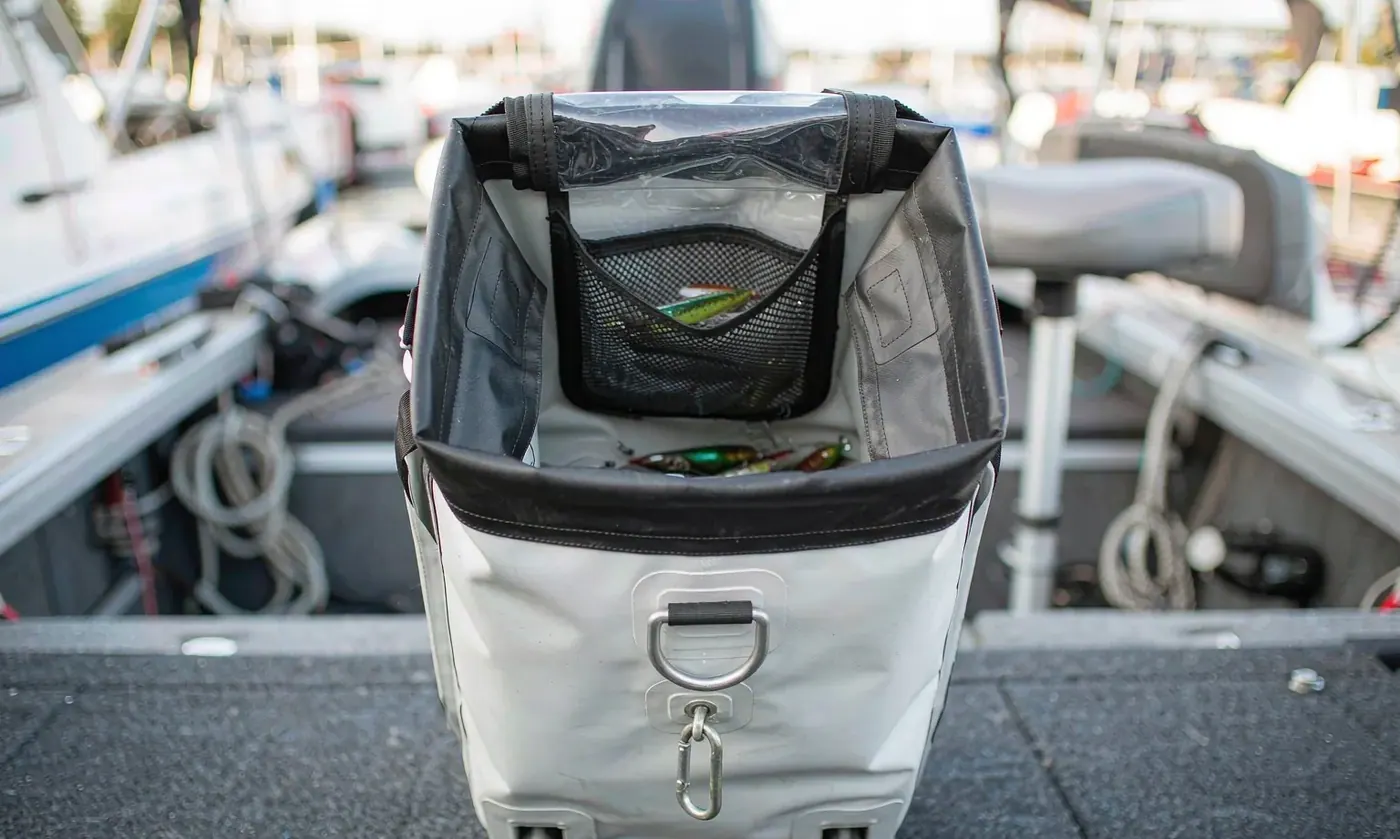
The ones worth watching are horizontal runs across the top of a frame, because they are laid under tension from whatever is packed below them and that tension is the enemy of good engagement. Anyone specifying a closure for that position should allow ten millimetres of slack in the panel rather than pulling the panels drum-tight, since a taut top opening makes engagement harder every time it closes.
Cold Weather Behaviour
Elastomeric lips stiffen as temperature falls and lose the compliance that lets them conform. Below about five degrees the difference is measurable in pull force; below minus twenty it becomes significant enough that forcing a stiff closure can permanently damage the lips. Users in genuine cold should treat this as normal rather than as a defect.
The practical response is warmth rather than force: hold the track briefly in a gloved hand, or pour water at about fifty degrees across it, wait sixty seconds, and open gently. Avoid all-purpose oils marketed as winter lubricants for this purpose, since anything petroleum based attacks the same elastomer it is meant to help.
What It Costs and When It Is Worth It
Installed cost for a type 8 or type 10 closure runs fifteen to thirty-five dollars depending on length, welding labour, and whether corners require extra reinforcement. Against a bag retailing at sixty to one hundred and twenty dollars, that is a substantial proportion, which is why the choice should be made deliberately rather than by fashion.
| Bag type | Openings per session | Verdict | Reason |
|---|---|---|---|
| Kayak day bag, opened twice | Two | Roll-top | Nothing gained from faster access |
| Shore hip pack | Twenty or more | Watertight closure | Access speed dominates every session |
| Insulated insert lid | Ten | Watertight closure | Flat profile packs better |
| Boat tackle tote | Fifteen | Either | Decide by price rather than performance |
| Immersion-rated dry shape | Two to four | Roll-top preferred | Degrades gracefully, needs no tools in the field |
For anyone maintaining rather than buying, the routine is the same one described above; step-by-step diagnostics and slider replacement are set out in the zipper repair tutorial, and the service calendar in the maintenance schedule. How this closure fits into overall bag construction is explained in the waterproof construction guide.
How It Behaves on a Full-Size Pack
Scale changes the picture. On a pack above about thirty litres the track normally runs past five hundred millimetres, which increases both the twisting load and the chance that the two halves will be closed slightly out of alignment at one end. Users feel this as a closure that is easy for the first two thirds and stiff for the last third, and it is almost always a starting alignment issue rather than a fault.
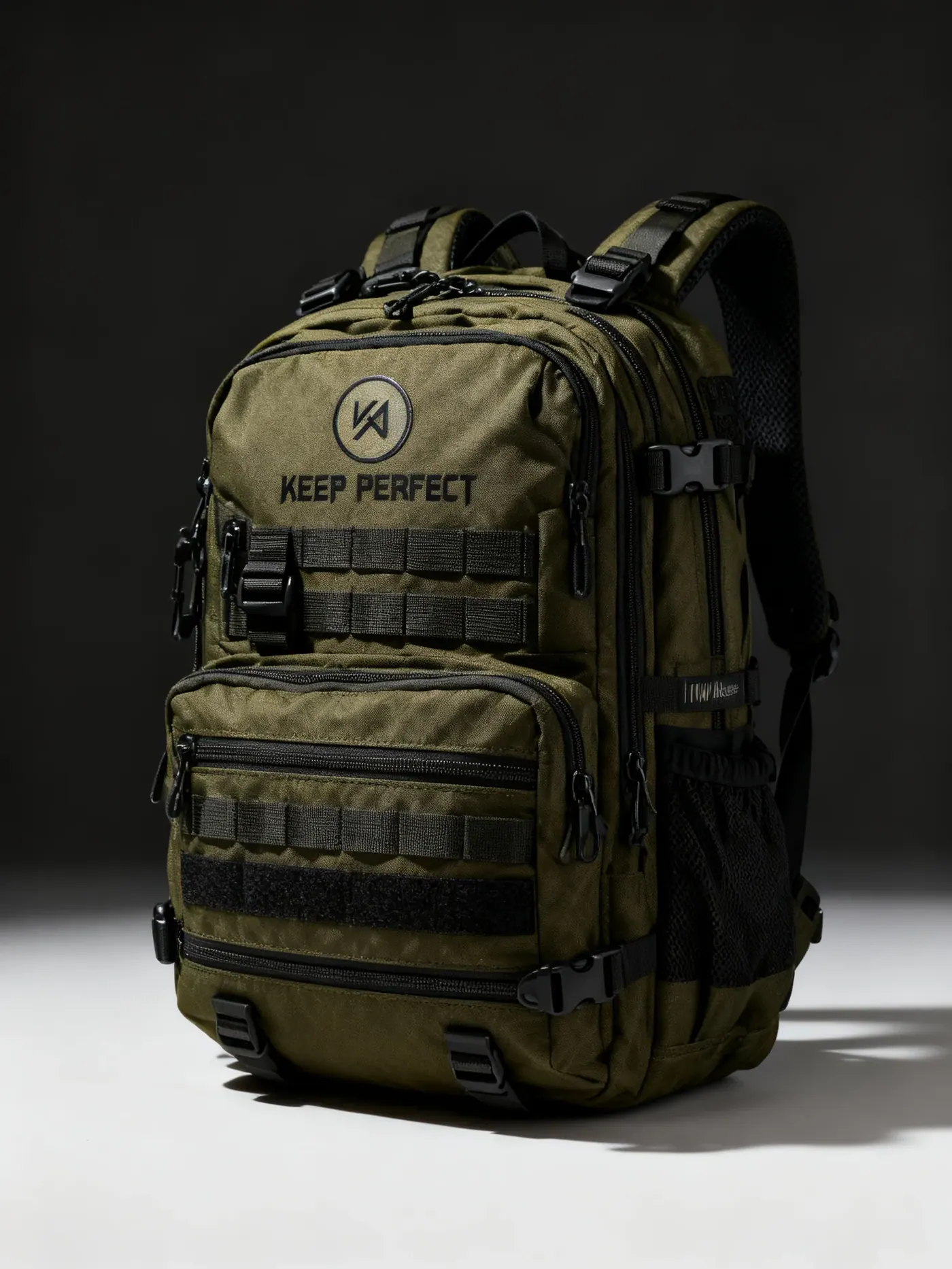
The practical technique is to start the slider with one hand supporting the lower track so both halves enter square, and to keep that support through the whole travel rather than releasing halfway. On any bag where this is awkward, ask whether a second shorter closure would serve better than one long one: two four hundred millimetre tracks cost marginally more and behave considerably better than a single eight hundred millimetre run.
| Track length | Recommended type | Expected behaviour | Note |
|---|---|---|---|
| Up to 300 mm | Type 6 or type 8 | Engages easily, low twist | Accessory pockets and lid openings |
| 300 to 500 mm | Type 8 | Good with basic alignment support | Standard day bag main openings |
| 500 to 800 mm | Type 10 | Needs support through full travel | Consider splitting into two tracks |
| Above 800 mm | Type 10 with two sliders | Workable but heavy | Usually better served by a roll-top |
Specifying One Correctly
A brief should not use the word waterproof at this component level. State the type, the length in millimetres, the tape chemistry, the installation method and whether stitching is prohibited, the required number of opening cycles with its test method, and the code the finished bag must meet. Those five lines remove every ambiguity that later becomes an expensive disagreement.
| Brief line | Example | Why required |
|---|---|---|
| Type and length | Type 10, 460 mm track | Length beyond about 400 mm needs the larger geometry |
| Tape chemistry | TPU tape for a TPU shell | Mixed chemistry peels within weeks |
| Installation | Welded both tapes, stitching prohibited | Stitching pierces the seal boundary |
| Cycle life | Three thousand cycles minimum | Decides whether it survives a season of daily use |
| Evidence | Immersion record plus cycle test result | Turns a claim into something checkable |
QUANZHOU JUNYUAN BAGS has delivered waterproof bag programmes since 2014, with a founding team whose involvement in this trade goes back to 2004. Verified by SGS at 200,000 units per month, the work is structured to BSCI and ISO 9001. Materials are checked for REACH and California Prop 65, and bulk lots are inspected at AQL 2.5 before leaving. Cycle life and strength figures should be written against methods published by ASTM International so results remain comparable.
Send closure briefs to service@junyuanbags.com with litres, track length, tape chemistry, cycle requirement, colours, and quantity. Count on 500 pieces per design and colour as the entry volume, six to ten working days for sampling, and thirty-five to fifty days of bulk time once the sample and deposit are confirmed. Freight is arranged FOB Xiamen or DDP into more than one hundred countries.
People Also Ask
What makes a zipper waterproof?
Two elastomeric sealing lips are pressed together under slider pressure with a designed interference of a few tenths of a millimetre. Nothing is glued; the seal is geometric and depends on slider condition.
What size watertight zipper do fishing bags use?
Type 8 for most day bags and pockets, and type 10 for main openings beyond about four hundred millimetres, because the wider geometry resists twisting along a long track.
How long does a waterproof zipper last?
About three thousand opening cycles with regular care, which is several seasons of daily use. Dirty or dry running shortens that substantially.
Can a waterproof zipper be sewn into a bag?
Not successfully. Stitching pierces the tape where continuity matters. Welding or adhesive bonding both tapes is required, unless the stitch line is taped over afterwards.
How much pull force is normal?
Twenty-five to forty-five newtons. Above fifty the track needs cleaning and lubrication, and anything approaching seventy indicates wear rather than dryness.
Do these zippers work in freezing conditions?
They stiffen below about five degrees and significantly below minus twenty. Warm the track with water at fifty degrees and open gently rather than forcing it.
Frequently Asked Questions
Q1. What is a TIZIP style waterproof zipper?
A slide fastener with elastomeric sealing lips on both halves that are compressed together by the slider. Common sizes on bags are type 8 and type 10, typically rated to thirty minutes at one metre when welded in.
Q2. How does a watertight zipper seal water out?
The slider presses two flexible lips together with a small designed interference, creating continuous contact. It relies on slider pressure rather than adhesion, which is why wear and grit both cause leaks.
Q3. Should a waterproof zipper be welded or sewn?
Welded, always, with both tapes bonded to the shell continuously. Sewing pierces the tape hundreds of times and defeats the expensive part it was meant to install.
Q4. What size do I need for a tackle backpack main opening?
Type 10 above about four hundred millimetres of track length and type 8 below it. The longer the run, the more twist it develops, and the wider geometry resists that.
Q5. How often does it need lubricating?
Every three saltwater trips or monthly in fresh water. Rinse at thirty degrees, dry, then lay about one gram of silicone grease per metre of chain and wipe off the surplus.
Q6. Can I use regular oil on a watertight zipper?
No. Petroleum based products attack the elastomer lips and cannot be reversed. Silicone grease is the default, and dry silicone spray works for a quick treatment.
Q7. How can I tell if the slider is worn?
Look at the chain fifty millimetres behind the slider once it has passed. If the lips spring apart there, the throat has spread and a replacement costing three to eight dollars is needed.
Q8. Do these closures work in cold weather?
Yes, but they stiffen below about five degrees. Warm the track before opening, never force a frozen one, and expect higher pull force until it reaches working temperature.
Q9. How much does one add to the cost of a bag?
Fifteen to thirty-five dollars installed, depending on length and whether the corners need extra reinforcement. That is why it belongs only where fast access is genuinely needed.
Q10. Is a watertight zipper better than a roll-top?
Not universally. Faster and flatter, yes; more forgiving of neglect, no. Choose by how often the bag is opened rather than by water performance alone.
Q11. What hardware survives saltwater best?
Polymer or stainless rather than plated components, particularly at the slider throat and the pull tab fitting, both of which collect spray and take concentrated load.
Q12. What evidence should I require from a programme?
Cycle test results to a stated method, a pull force range for the finished bag, and an immersion record for the sample tested, rather than an unqualified waterproof claim.