A fishing bag is only ever as waterproof as its weakest element, and there are exactly four that decide it: the shell film and its hydrostatic head, the method used to join panels, the closure, and whether any opening sits below the intended waterline. Everything else is marketing. A shell rated above three thousand millimetres of head is useless if the panels are stitched, since eight to ten stitches per centimetre creates thousands of one millimetre penetrations. Fully welded construction with twenty to twenty-five millimetre joints reaching sixty to one hundred and twenty newtons of peel strength, combined with either a roll-top closure or a genuinely watertight zipper, is what makes a bag survive immersion rather than merely resist rain.
Four Elements, One Weakest Link
Water enters a bag through the easiest available path and nowhere else, which means performance is decided by the worst feature rather than the best. Stitching an otherwise excellent shell, leaving one pocket seam one hundred millimetres off the ground, or fitting a standard coil zipper with a flap instead of a watertight closure all produce the same outcome: a bag that behaves like its weakest element and nothing better. Understanding those four elements separately is far more useful than reading a headline rating.
| Element | What it controls | Common weak version | Strong version |
|---|---|---|---|
| Shell film and coating | Resistance to water passing through fabric | Coated nylon with a head under 1000 mm | TPU or PVC laminate above 3000 mm |
| Join method | Whether seams leak under pressure | Sewn seams, optionally taped | RF or heat welded at 20 to 25 mm |
| Closure | The largest single opening | Standard coil zipper behind a flap | Watertight zipper or three-fold roll-top |
| Geometry | Where openings sit relative to water | Pockets sewn through below 200 mm | No penetrations below the working waterline |
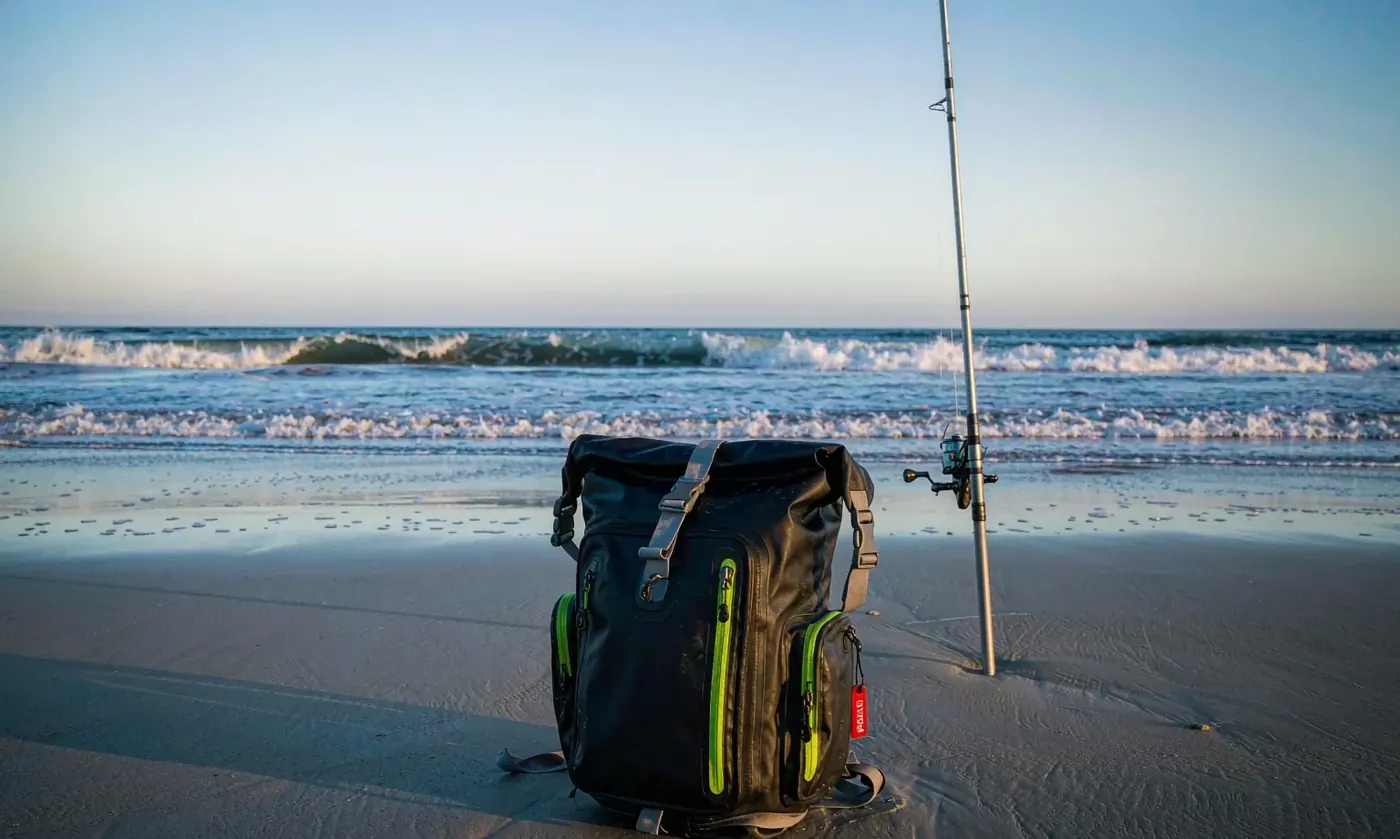
The Shell: Head, Denier, and Coating Thickness
The shell does two jobs: it carries mechanical load and it resists water penetration under pressure. Those jobs are described by different numbers and buyers confuse them constantly. Denier and fabric weight describe strength and abrasion life. Hydrostatic head describes water resistance, expressed as the height of a water column in millimetres that the fabric withstands before three drops penetrate. A hundred millimetres of head is nothing; a shower-resistant bag needs about one thousand; anything claimed submersible should cite three thousand or more.
Coating and film thickness is the third figure and the one least often quoted. A 1000-denier PVC-coated polyester typically carries a coating of 0.35 to 0.60 millimetres and weighs six hundred to nine hundred grams per square metre, while a laminated thermoplastic film on a lighter face can be 0.10 to 0.25 millimetres and achieve higher head figures at lower weight. The trade is puncture and abrasion resistance, which is why heavy bags intended for boat decks stay thick.
| Shell type | Typical head | Weight per square metre | Best for |
|---|---|---|---|
| PVC coated polyester, 1000 denier | 3000 to 10000 mm | 610 to 900 g | Boat decks, heavy coarse use |
| PVC coated polyester, 500 denier | 2000 to 5000 mm | 420 to 560 g | General tackle backpacks |
| TPU laminated nylon, 420 denier | 5000 to 20000 mm | 280 to 420 g | Kayak, submersion-rated builds |
| TPU coated nylon, 210 denier | 2000 to 4000 mm | 180 to 260 g | Light slings and day covers |
| Silicone-treated ripstop with a liner | 1000 to 1500 mm | 90 to 160 g | Outer shells relying on an inner liner |
One shells property deserves separate attention: behaviour in cold. Polyvinyl chloride stiffens noticeably below about minus ten degrees and can crack if flexed while frozen, whereas thermoplastic polyurethane stays workable below minus thirty. Anyone fishing ice or winter surf should ask which film is used rather than just its head figure, since the two films perform almost identically at room temperature and very differently in a frost.
Joining Panels: Welded, Taped, or Stitched
Every bag has seams, and how those seams are made decides more about water performance than any other single choice. Sewing punctures the film eight to ten times per centimetre along every join, each puncture roughly half a millimetre across, and no amount of coating afterwards fully closes them under pressure. Welding fuses the films into one continuous layer with no penetration at all, which is the only way to build a genuinely immersion-resistant soft bag.
| Join method | Process | Water performance | Typical use |
|---|---|---|---|
| Sewn, untaped | Needle and thread through two panels | Leaks under any sustained contact | Cheap shells and internal dividers |
| Sewn, taped inside | Twenty to twenty-five millimetre polymer tape bonded over the stitch line | Handles rain, struggles under immersion | Rain-resistant shells |
| Heat sealed | Heated bar fuses thermoplastic films at 180 to 220 degrees | Strong when parameters are controlled | TPU laminates |
| RF or high frequency welded | Twenty-seven megahertz field heats the film internally for three to five seconds | Fully continuous bond for immersion | Submersible bags and dry shapes |
| Ultrasonic welded | High frequency vibration locally melts the film | Good for small joints and hardware pads | Strap anchors and small features |
The practical test anybody can apply to a finished bag is tactile: press along a seam. A sewn seam feels like a ridge with stitch lines either side; a welded seam feels like a slightly thickened continuous band; a taped seam can only be identified from the inside, where tape appears as a strip bridging the stitch line. Sometimes all three exist on one bag, in which case the bag performs to the standard of the worst.
Inside RF Welding and Heat Sealing
Radio frequency welding works because polar molecules in polyvinyl chloride and polyurethane align twenty-something million times a second under an alternating field and generate heat internally. Both films soften, interdiffuse, and re-form as one continuous mass when cooled under pressure. Nothing is added, nothing is punctured, and provided energy, dwell, and pressure are controlled, the joint can be as strong as the film around it or stronger.
| Parameter | Typical setting | Effect if wrong |
|---|---|---|
| Frequency | 27.12 MHz industrial band | Wrong band selection causes surface burning or no melt |
| Power density | 2 to 4 kW per joint depending on area | Under-power gives a cold bond that peels |
| Dwell time | 3 to 5 seconds plus cool time | Too long carbonises the film, too short gives no fusion |
| Electrode width | 20 to 25 millimetres typical | Narrow joints creep; very wide ones waste material |
| Pressure during cool | Held until below softening point | Releasing early lets the bond separate |
| Resulting peel strength | 60 to 120 newtons per 25 millimetres | Below 40 newtons indicates a cold weld |
Verification is destructive by nature, which is why samples get pulled rather than every joint. Pulling a twenty-five millimetre strip of a production weld on a tensometer and recording peel strength in newtons is the standard check, along with visual examination of a cut section where a good bond shows a uniform fused layer rather than two films stuck together. Full process detail sits in the RF welding breakdown.
Seam Tape and What It Can and Cannot Do
Tape is the compromise used when a design must be sewn but should resist rain. A polymer strip twenty to twenty-five millimetres wide is bonded over the stitch line from the inside with heat and pressure, typically at one hundred and thirty to one hundred and sixty degrees, bridging the holes. Done well it keeps the interior dry through two hours of heavy rain; it does nothing useful under sustained immersion because the bond itself relies partly on adhesion to a coated face rather than fusion.
Tape fails predictably. It lifts at the edges first, usually at corners and at any place the stitch line changes direction, and lift beyond thirty millimetres tends to propagate quickly. Re-bonding lift under thirty millimetres with a household iron through a cloth at medium heat works often enough to be worth trying. Anything longer, or any lift where the tape has gone hard and cracked, is beyond home repair and marks the point where the bag becomes a rain bag rather than a dry bag.
Closures: Roll-Top or Watertight Zipper
Closures are where most bags stop being waterproof, and there are only two families that work. A roll-top folds the shell over itself several times and relies on compression and trapped air for the seal, giving excellent performance that degrades gracefully and can be inspected visually. A watertight zipper presses two engineered lips together with slider pressure, offering faster access and a flatter profile at considerably higher cost and with a maintenance requirement.
| Property | Roll-top closure | Watertight zipper |
|---|---|---|
| Typical limit | IPX7 to IPX8 behaviour when rolled three folds | IPX6 to IPX8 depending on class |
| Cost in the build | Four to eight dollars | Fifteen to thirty-five dollars |
| Access time | Ten to twenty seconds | Three to five seconds |
| Failure mode | Incomplete roll or trapped debris in the fold | Worn slider throat, contaminated lips |
| Maintenance | Wipe the fold clean, no lubrication | Clean and silicone grease every three to five trips |
| Lifespan indicator | Crease whitening along one fold line | Track reopening behind the slider |
Choosing between them is decided by how often the bag is opened rather than by absolute performance. Anything opened twenty or more times a session benefits hugely from a zipper and pays for it with upkeep. Anything opened twice, such as a kayak day bag, is better served by a roll-top that will still be working after a decade of indifference. Detailed zipper classes for fishing use are covered in the watertight zipper guide.
Geometry: Where Every Opening Sits
The fourth element is rarely discussed and yet explains most field failures. Water does not have to be forced through anything if there is a hole below the waterline. Pockets sewn through the shell at fifty millimetres from the base, drainage grommets located in the wrong place, strap anchors penetrating below two hundred millimetres, and moulded bases with a seam below the ground contact line all admit water by simple gravity rather than by permeation.
Designing around this means either keeping every penetration above the working waterline or accepting that anything below it will admit water and arranging drainage instead. A bag expected to stand in three hundred millimetres of water needs either no openings below that height or a raised floor, which normally means a moulded base with an internal lip sixty to ninety millimetres high rather than a fabric floor.
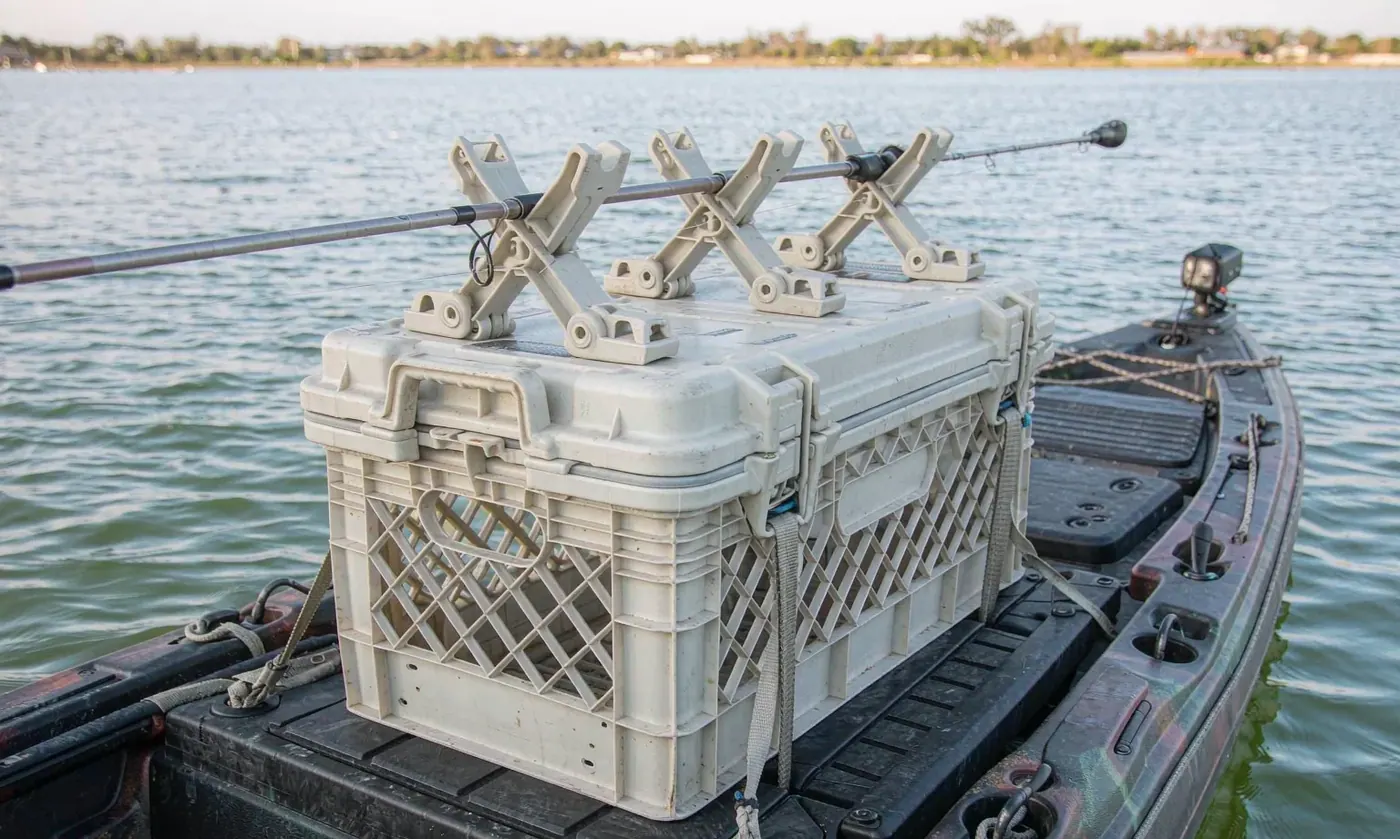
Durable Repellency: The Surface Finish
The outermost treatment is not the waterproofing and never has been. A durable water repellent finish makes water bead and roll so the shell does not wet out and lose breathability or gain weight; the barrier underneath is doing the exclusion. Confusing the two is why so many people re-spray a bag with a failed seam and find nothing changes.
Finish chemistry has been shifting away from long-chain fluorinated compounds for several years, and fluorine-free replacements now achieve spray ratings of eighty to ninety after twenty home launderings, close to older technologies. Any programme supplying European or Californian retailers should be clear on this point, since restrictions on per and polyfluoroalkyl substances are tightening in both markets; background is published by the United States Environmental Protection Agency.
Why Bags Stop Being Waterproof
Nothing about this is mysterious in hindsight, because almost every loss of performance follows one of six paths and each is visible before it becomes a leak. Knowing them turns maintenance from guesswork into inspection, and inspection is cheap.
| Failure path | Visible sign | Cause | Response |
|---|---|---|---|
| Closure wear | Track reopens behind the slider | Throat fatigue over cycles | Replace the slider, three to eight dollars |
| Weld creep | Whitening along a weld line | Under-powered joint or long load | Usually not repairable |
| Tape lift | Edge peeling inside the bag | Heat cycling and hydrolysis | Rebond below thirty millimetres |
| Film degradation | Tacky surface and sour smell | Hydrolysis of the polymer | Retire the bag |
| Abrasion loss | Thinning where the bag rests | Ground contact with grit | Accept, patch early |
| Closure contamination | Grit visible between the lips | Sand and salt left unrinsed | Clean, then lubricate |
Three Construction Tiers Compared
Rather than one spectrum, the category resolves into three tiers that differ in join method and closure, which are the two expensive choices. Prices quoted are indicative reference bands for FOB Xiamen at 500 pieces per design and colour, since they vary with film, hardware, and finishing.
| Tier | Shell and joins | Closure | Behaviour | Reference band |
|---|---|---|---|---|
| Water resistant | Coated polyester, sewn seams partly taped | Standard zipper with a storm flap | Drizzle and splash, wets out in hours of rain | 12 to 20 USD |
| Rain proof | TPU or PVC shell, sewn and fully taped | Protected coil closure plus flap | Two hours of rain at twenty millimetres per hour | 19 to 30 USD |
| Submersible | Laminated film, RF welded joints throughout | Watertight zipper or three-fold roll-top | Thirty minutes at one metre without ingress | 28 to 55 USD |
The jump from the second to the third tier is not a gradual improvement; it is a different construction method with different tooling, different operator skills, and different failure modes. Anyone buying should decide which line they need and stop there, since paying mid-tier prices and expecting immersion performance is the single commonest source of disappointment. The tier structure and its practical limits are set out in the levels of waterproofing guide.
Small Packs Follow the Same Rules
Hip packs, waist packs, and slings are subject to identical physics at shorter length scales, and two differences follow from the size. First, the proportion of seam length to volume rises sharply, so a small pack has proportionally more potential failure path for the same shell. Second, small packs sit closer to water during wading, so the useful waterline is higher relative to the bag.
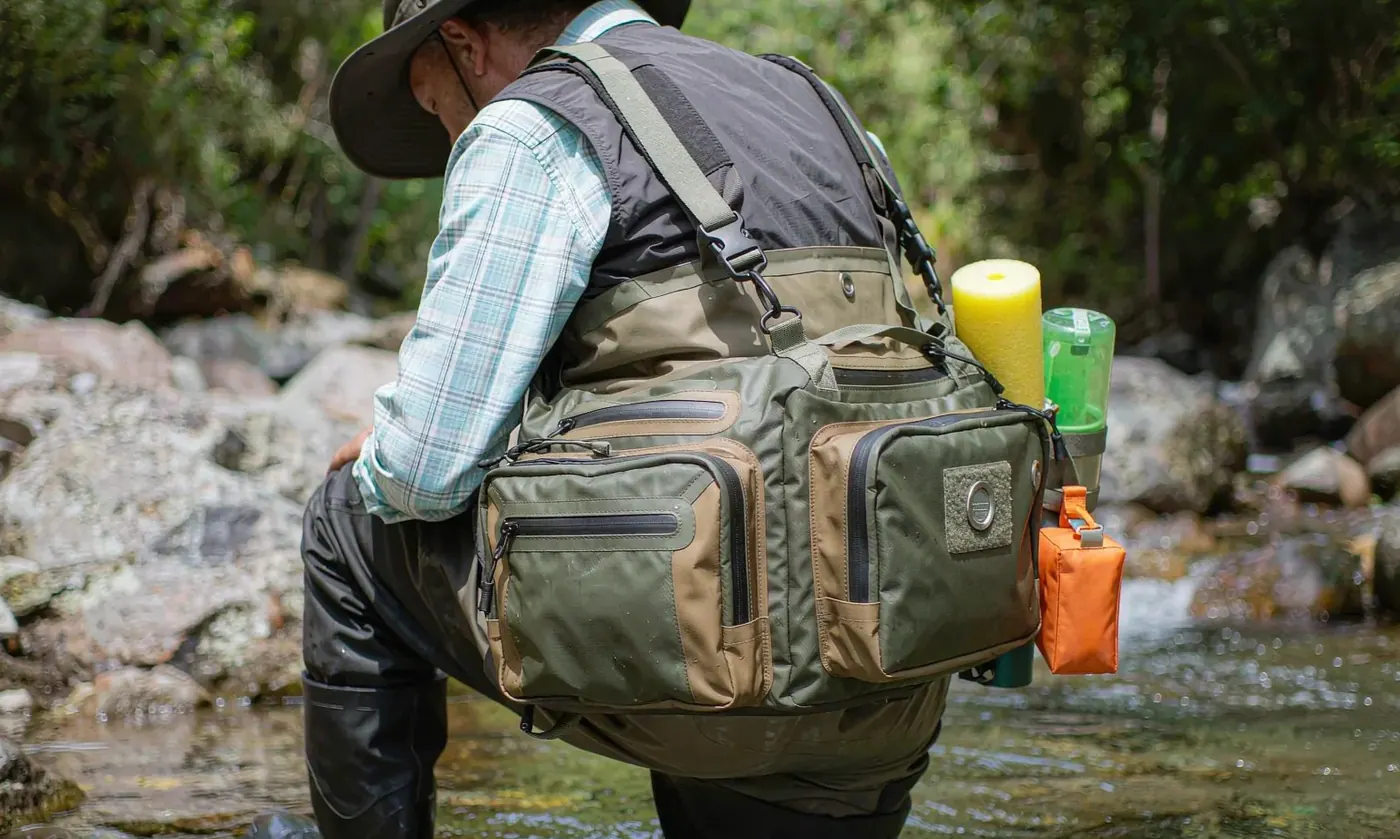
The practical consequence is that on a small pack every opening matters more. A single external mesh pocket that would be harmless on a forty litre backpack occupies a much larger fraction of a six litre waist pack and usually sits nearer the water. Buyers comparing them should look at closure class and seam method even more carefully than they do on full size bags.
Access Design: Opening Without Soaking Everything
There is a conflict between being sealed and being usable, and it plays out in every design decision about external pockets. Every external pocket either has an opening in the outer shell, which risks water entry, or shares the main closure, which means opening everything to reach one item. Chest packs and front-mounted designs solve it by putting access above the chest line, which is the highest and driest place a wading angler has.
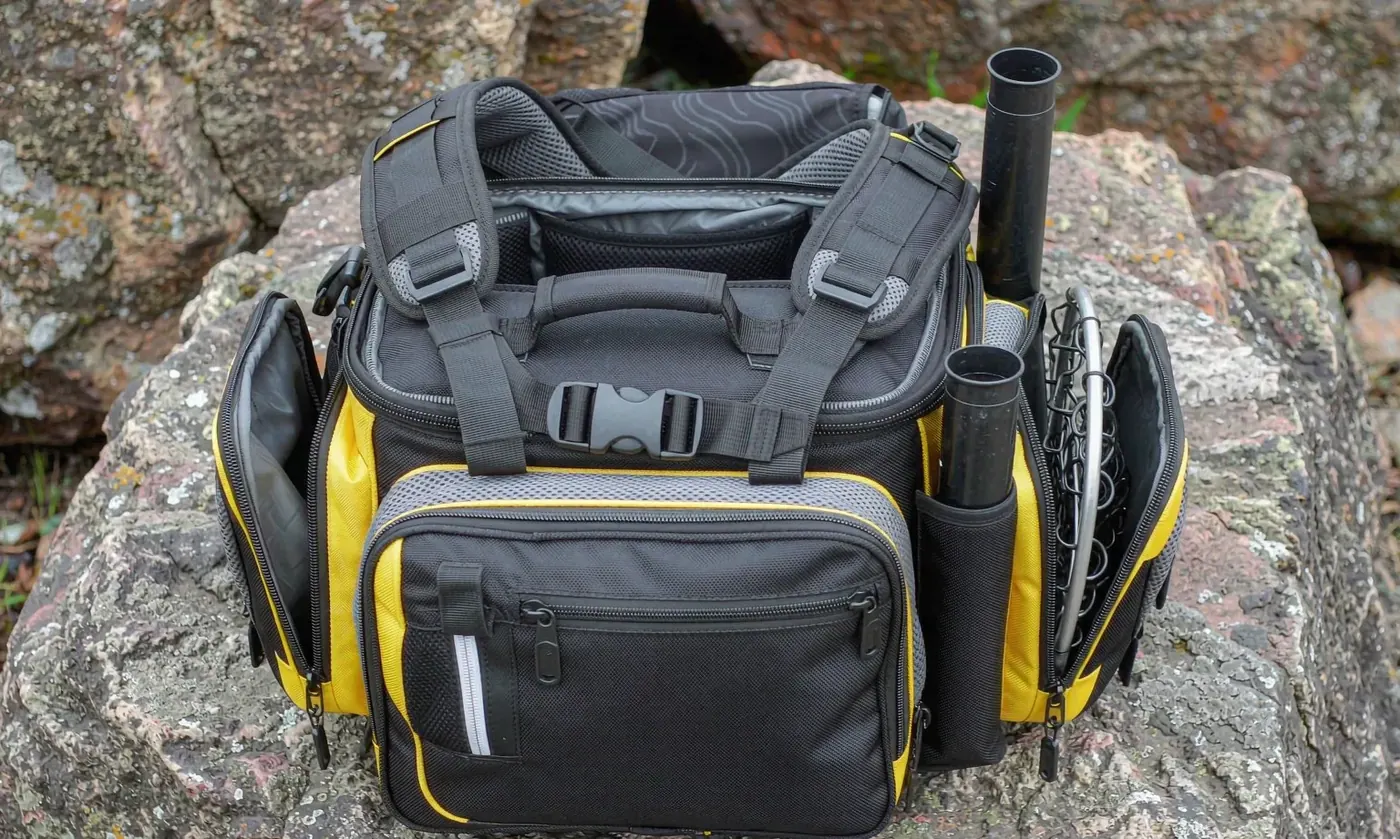
Where an external pocket is unavoidable, three features make it survive: a covered closure with a twenty-five millimetre flap, a welded rather than sewn pocket base, and one drain grommet of four to six millimetres at the lowest point so water that enters leaves immediately instead of sitting against the main chamber.
Verification Before a Bag Leaves the Bench
Construction claims mean little without inspection, and the useful checks are cheap. Sampling plans based on AQL 2.5 with weld peel strength pulled per shift, seams visually inspected on every unit, closures cycled a hundred times on one unit in ten, and a spray cabinet test at ten litres per minute on one unit per hundred catch essentially everything that leaves with a defect.
Ask additionally for the numbers rather than the verdict: peel strength in newtons, weld width in millimetres, cycle count survived, and spray duration. A recorded series showing sixty to one hundred and twenty newtons per twenty-five millimetres over twenty consecutive samples says far more than a pass or fail stamp, and it is exactly the kind of record that makes a later dispute short.
Writing a Specification That Actually Gets Built
A waterproofing brief fails when it asks for waterproof instead of asking for numbers. State the required code and whether a certificate is needed or in-house evidence is acceptable. Then state the shell type and minimum head with its test method, the join method and minimum peel strength, the closure class, the number of folds in a roll-top, and where penetrations may sit. Those five lines remove nearly every ambiguity that later becomes an argument.
| Brief line | Example wording | Why it matters |
|---|---|---|
| Required code | IPX7 behaviour, third-party certificate required | Sets evidence standard, not just intent |
| Shell | TPU laminate, minimum 5000 mm head to a stated method | Head without a method is unverifiable |
| Joins | RF welded throughout, peel above 60 newtons per 25 mm | Excludes silent substitution of taped seams |
| Closure | Watertight zipper class 10, or roll-top with three folds | Decides cost profile and maintenance |
| Geometry | No penetrations below 300 mm from the base | Directly prevents gravity entry paths |
QUANZHOU JUNYUAN BAGS has sustained waterproof bag programmes since 2014, guided by a founding team whose trading experience began in 2004. Monthly volume of 200,000 units is verified by SGS, and both BSCI and ISO 9001 systems frame the workflow. REACH and California Prop 65 compliance is confirmed on materials, and inspection to AQL 2.5 precedes shipping. Peel strength and cycle requirements should always cite published methods from ASTM International.
Send completed briefs to service@junyuanbags.com, including litres, seam method, closure class, head figure, colours, and quantity. Each design and colour carries a 500 piece minimum. Six to ten working days buys a sample and thirty-five to fifty days the bulk run following approval and deposit, offered FOB Xiamen or as DDP to upwards of one hundred countries. Ingress codes referenced in any brief are maintained by the IEC ingress protection framework.
People Also Ask
What makes a fishing bag truly waterproof?
Four things together: a shell above 3000 millimetres head, joints welded rather than sewn, a genuinely watertight closure, and no opening below the intended waterline. Missing any one limits performance to that element.
Are welded seams better than stitched and taped?
Yes for immersion. Welding fuses the films into one continuous layer with no needle holes, while tape bridges thousands of holes and relies partly on adhesion rather than fusion.
How much hydrostatic head does a fishing bag need?
About 1000 millimetres for shower resistance, 3000 or more for anything claimed submersible. Always ask which test method produced the figure.
Is a roll-top more reliable than a waterproof zipper?
It degrades more gracefully and needs no lubrication, while a zipper is faster to open. For a bag opened twenty or more times a session, a zipper wins on usability.
Why does my waterproof bag leak at the base?
Usually gravity rather than permeation: a pocket seam or strap anchor below the waterline. Look for any penetration below about 300 millimetres of height.
Do PFAS-free water repellent finishes work?
Modern fluorine-free finishes reach spray ratings of eighty to ninety after twenty home launderings, close to older chemistries, and are increasingly required by European and Californian retailers.
Frequently Asked Questions
Q1. How do waterproof fishing bags work?
By combining four elements: an impermeable shell with a high hydrostatic head, joints that are welded rather than sewn, a watertight closure, and no openings below the working waterline. Performance is set by the weakest of the four.
Q2. What is hydrostatic head in millimetres?
The height of a water column a fabric withstands before three drops penetrate. Shower resistance needs about 1000 millimetres; submersible construction should cite 3000 or more with a stated test method.
Q3. What does IPX7 mean on a fishing bag?
Thirty minutes immersed at one metre without ingress. Achieving it requires welded joints and a watertight closure, not just a coated shell.
Q4. Are RF welded seams stronger than stitched ones?
Yes, generally sixty to one hundred and twenty newtons of peel per twenty-five millimetres, with no needle holes at all. Stitched and taped seams handle rain but struggle under immersion.
Q5. What is RF welding in bag construction?
A twenty-seven megahertz field heats polar molecules inside the film for three to five seconds, fusing two layers into one. No adhesive and no penetration of the film.
Q6. Can taped seams be repaired?
Yes below about thirty millimetres of lift, rebonding with medium heat through a cloth. Longer lifts or cracked tape mean the bag should be treated as rain-resistant rather than dry.
Q7. Which is better, TPU or PVC for a fishing bag?
TPU is lighter, tolerates cold below minus thirty degrees, and achieves higher head figures. PVC is cheaper, more puncture resistant, and better on rough boat decks, but stiffens below about minus ten.
Q8. Do I still need a durable water repellent finish?
Yes, but it is not the waterproofing. It stops the shell wetting out so the barrier underneath does its job; it does not repair a failed seam or closure.
Q9. How often should I check my seams?
Every three months of regular use, plus immediately after any impact. Weld whitening, tape lift over thirty millimetres, and tacky film are the three signs worth acting on.
Q10. Why does my bag let water in through a pocket?
Because its seams are below the effective waterline. Anything below about three hundred millimetres of height admits water by gravity rather than by pressure through fabric.
Q11. What is the cost difference between water-resistant and submersible?
Roughly twelve to twenty dollars against twenty-eight to fifty-five dollars FOB at 500 pieces, reflecting welded tooling, film choice, and closure class rather than marginal improvements.
Q12. What should a waterproof brief include?
Required code and evidence standard, shell type and minimum head with its method, join method and minimum peel strength, closure class, and the permitted position of penetrations.
Q13. Do small packs need the same construction?
Yes, more urgently. Small packs have proportionally more seam length per litre and sit closer to the water while wading, so closure class and join method matter even more.
Q14. What inspection evidence should I require?
Pulled weld peel strength per shift, full seam inspection, closure cycling of one hundred operations on one unit in ten, and a ten litre per minute spray test on one unit per hundred.