A waterproof fishing backpack keeps gear dry through three elements working together: a coated or laminated shell, sealed seams, and a closure that stays seated under load. Most anglers need IPX5 to IPX6 for rain and boat spray; kayak, surf, and wading use should target IPX7 at a stated depth and duration. Welded seams matter more than fabric denier, because needle holes leak long before a 500D shell wets through. Programme baseline is MOQ 500 pcs per design and colour, samples in 6-10 working days, bulk in 35-50 days, and AQL 2.5 inspection.
The Three Elements That Actually Keep Water Out
Waterproof performance comes from a system, not a material. The shell stops liquid at the surface, the seams stop it at the joins, and the closure stops it at the opening. A failure in any one of the three makes the other two irrelevant, which is why a bag built with excellent fabric and stitched seams will still leak, and why a bag with welded seams and a weak flap will wet through at the top long before the base is challenged.
The shell itself needs enough coating or film to resist pressure, not just a light shower. A coated 500D polyester at 3,000-5,000 mm handles rain; a TPU laminate at 8,000-10,000 mm handles pressure from a loaded bag pressing against a wet deck. Where a bag is set down in the wash zone repeatedly, the shell matters less than the base construction, which is why a welded 0.5 mm patch over heavier fabric is standard practice.
| Element | What can fail | Typical symptom | Specification response |
|---|---|---|---|
| Shell | Coating thin or degraded | Wetting out, then damp interior | 5,000 mm minimum, 8,000-10,000 for pressure |
| Seams | Needle holes or lifted tape | Damp patch along a join | Welded seams or 20-25 mm tape |
| Closure | Under-rolled or gritted zip | Wet at the top corners | Three turns or a seated airtight zip |
| Attachment points | Stitched through the shell | Damp behind a pocket | Welded reinforcement island |
| Base | Abrasion and wicking | Damp floor of the chamber | 840D plus welded patch |
The how waterproof fishing bags work guide explains the physics in more depth, including why hydrostatic head numbers measured on a flat swatch do not predict the behaviour of a finished bag with corners, folds, and stiffener bars.
Match the Rating to the Wet Scenario
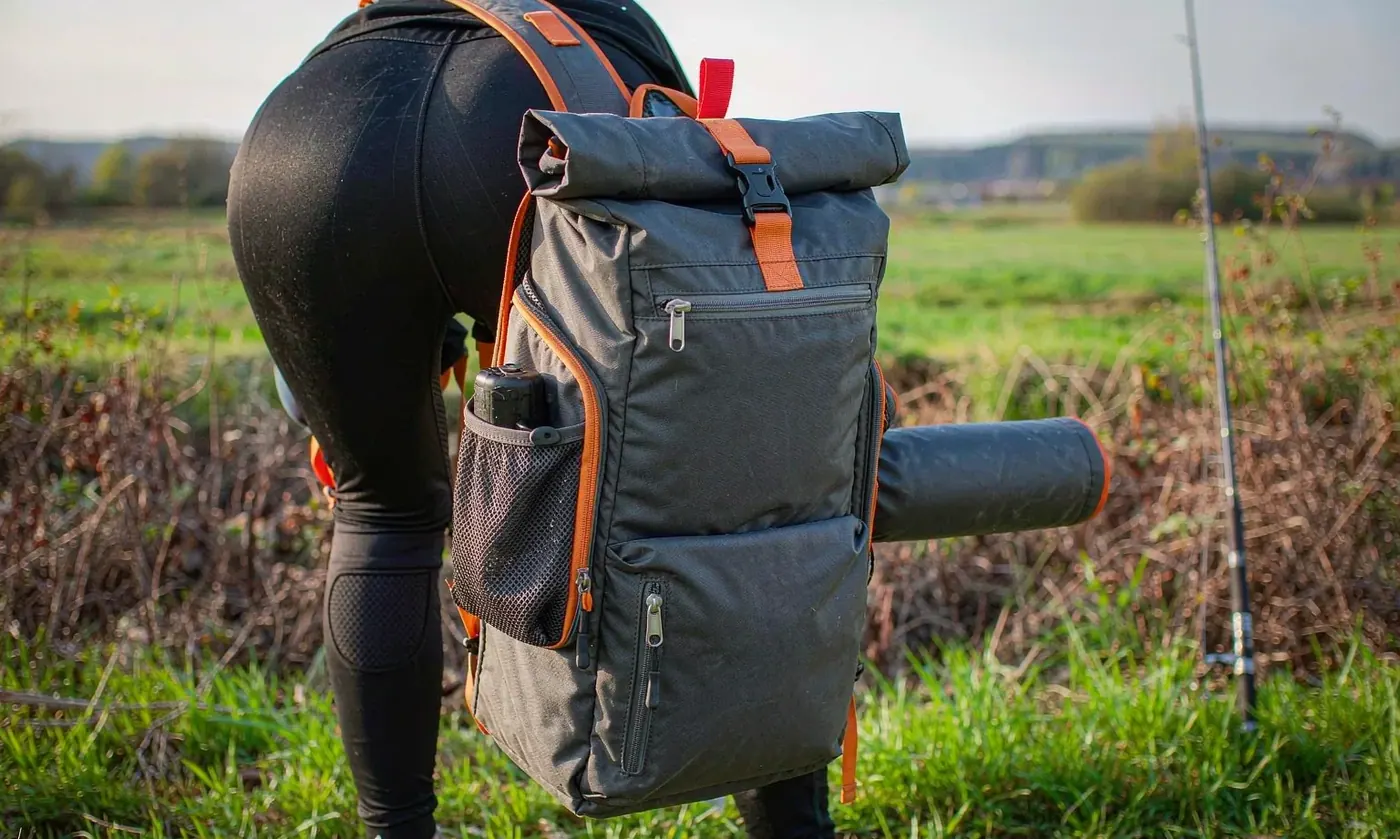
Fishing exposes a bag to four distinct wet conditions, and they are not equally demanding. Rain from above is the easiest: it lands, runs off, and never applies sustained pressure. Boat spray is harder because it arrives at speed and from the side. Wading adds a partial immersion at the base. A capsize or a surf landing is full temporary immersion, and it is the only scenario that genuinely needs an IPX7 build.
| Scenario | Water load | Recommended level | Construction |
|---|---|---|---|
| Bank fishing in rain | Rain from above, 60 min | IPX5 | Taped seams, flap or roll |
| Boat and pier | Side spray at speed | IPX6 | Welded seams, roll or sealed zip |
| Wading to mid-thigh | Partial immersion at base | IPX6 plus welded base | Welded base patch |
| Kayak, surf, raft | Temporary full immersion | IPX7 with stated depth | RF welded body, airtight closure |
Ingress codes are defined by the IEC ingress protection framework. IPX5 covers water jets, IPX6 covers powerful jets, and IPX7 covers temporary immersion at a stated depth and duration. A bag marked IPX7 with no condition attached is not a complete specification, and IPX8 always needs the agreed depth and time written beside it.
Buying above the needed level has real costs. An IPX7 build typically adds 150-350 g, stiffens the closure, and adds a 100 percent water screen at goods-in, which raises unit cost by 15-30 percent. For a bag that never leaves a boat deck, that money is better spent on a heavier base fabric and better hardware.
Closure Systems: Roll-Top, Flap, and Waterproof Zipper
Roll-top closures are the most forgiving. Three turns with 75-100 mm of clean material produce a seal that tolerates an imperfect close, which matters with cold or wet hands at the end of a session. They consume 3-4 L of nominal volume and require access from the top, which is fine for a main chamber and inconvenient for a tray compartment.
Waterproof zippers such as a TIZIP-style airtight closure give panel or front access and look tidier, but they demand discipline. Teeth must be clean, the slide must be fully seated, and lubrication must be maintained. A single grain of sand can create a capillary path, and field repair is harder than with a roll-top. Flap closures with a gasket sit between the two: easy to use, good to IPX5, and unlikely to hold an immersion claim.
| Closure | Practical level | Volume cost | Field repair | Best use |
|---|---|---|---|---|
| Roll-top, three turns | IPX6 to IPX7 | 3-4 L consumed | Easy, no parts | Main chamber, kayak use |
| Airtight zipper | IPX6 to IPX7 | Under 1 L | Needs a replacement part | Tray panel access |
| Gasket flap | IPX4 to IPX5 | 1-2 L | Easy | Bank and boat day use |
| Drawcord plus flap | IPX3 to IPX4 | Under 1 L | Easy | Light showers only |
Most well-designed fishing backpacks use two closures: a rolled or sealed main chamber and a separate sealed access panel for the tray stack. That arrangement keeps the tray compartment usable without exposing the whole bag every time a lure is changed, and it means a single worn closure does not compromise the entire pack.
Seam Construction and Reinforcement Points
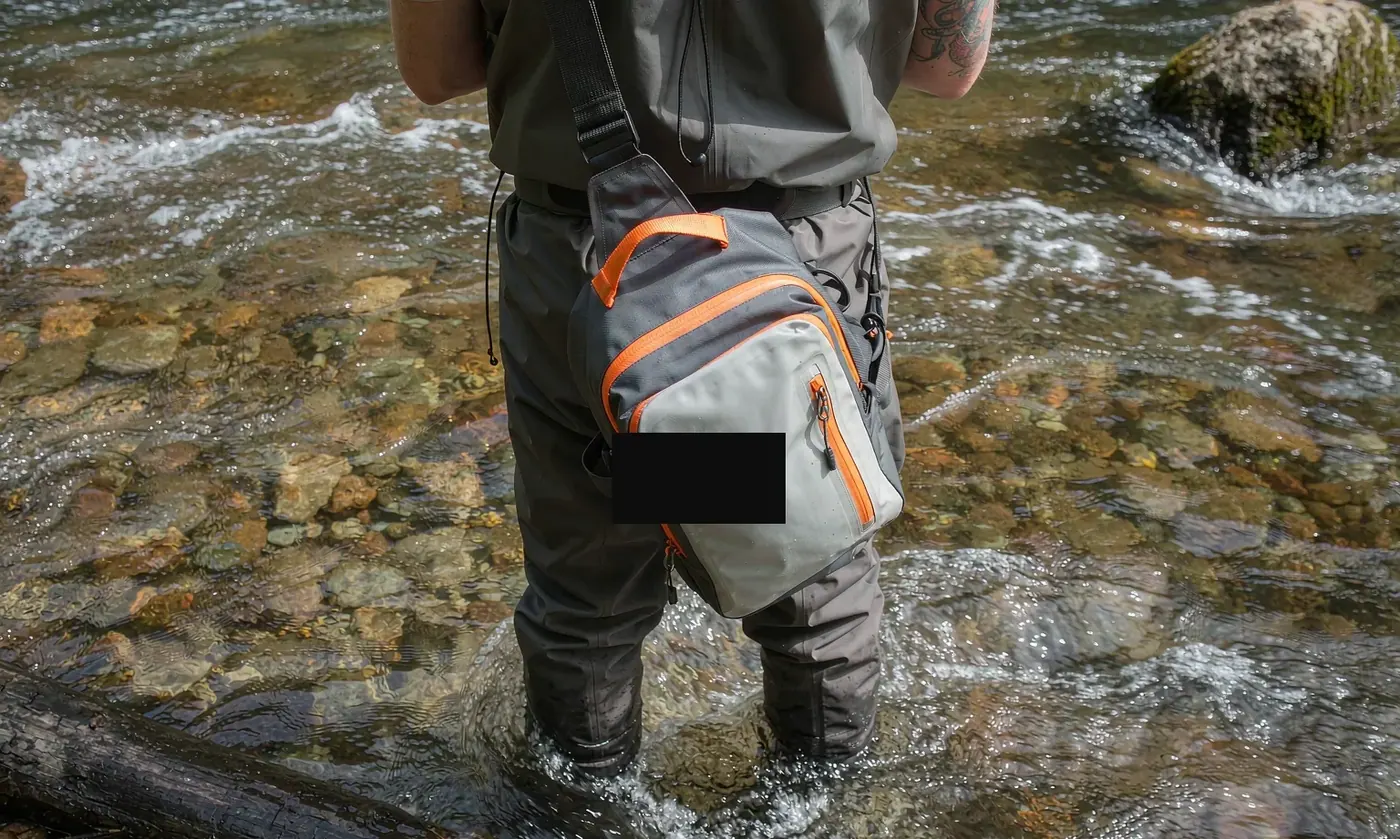
Seams are where waterproof bags succeed or fail. A welded seam fuses two thermoplastic films under heat and pressure with no needle holes, and it is the only construction that supports a credible immersion claim. A taped seam stitches the panels and then seals the stitch line with a 20-25 mm tape, which performs well to IPX5 and IPX6 but leaves the tape edge as the first place to lift after roughly 300 open and close cycles.
Reinforcement points deserve separate attention because they are the hardest places to seal. Every rod holder, plier sheath, D-ring, and drain grommet is a potential path through the shell. On a bag built above IPX5, these should be welded or bonded onto a reinforcement island rather than stitched through the chamber wall. That construction choice costs little and removes the most common cause of a mysterious damp patch.
- Specify welded seams for any bag claiming IPX6 or above.
- Require 20-25 mm tape with a 15 mm overlap beyond each end of a repair.
- Bond external attachments onto reinforcement islands, never stitch through the chamber.
- Place drain grommets only in external pockets, never in the chamber floor.
- Inspect seam junctions at the base corners, where three panels meet.
Corner geometry is the detail that separates a good build from an average one. A three-panel corner at the base concentrates stress and is the most common leak location in field returns, because two weld lines meet at an angle that is difficult to press evenly. Require a rounded corner radius of at least 25 mm and a separate inspection step for base corners in the water screen.
Testing a Waterproof Fishing Backpack
The only meaningful test is on the finished bag with trays and load fitted. An empty bag can pass and then fail once 3-5 kg of trays presses the closure out of alignment. Place dry indicator tissue at both closure corners, at every seam junction, behind external pockets, and at the base, then run 60 minutes of directed spray at roughly 20 mm per hour from above and from a side angle.
| Step | Condition | Duration | Pass criterion |
|---|---|---|---|
| Visual and seam check | Dry, good light | 5 min | No lift over 5 mm, no pinhole |
| Rain screen | 20 mm per hour, two angles | 60 min | All indicator tissue dry |
| Base check | Stand in 10 mm of water | 20 min | No wicking at chamber floor |
| Immersion screen | Stated depth and duration | As specified | No water at any indicator |
| Cycle re-screen | After 300 open and close cycles | 60 min spray | Result unchanged |
The IPX rating and fishing bag testing guide gives a protocol a buyer can hand to any workshop. Spray-test methods for the face fabric finish are published separately by AATCC, and the finish usually degrades after 20-30 wash cycles or about 300 hours of abrasion. A bag that wets out on the surface can still be completely dry inside.
Rain Cover Versus Built-In Waterproofing
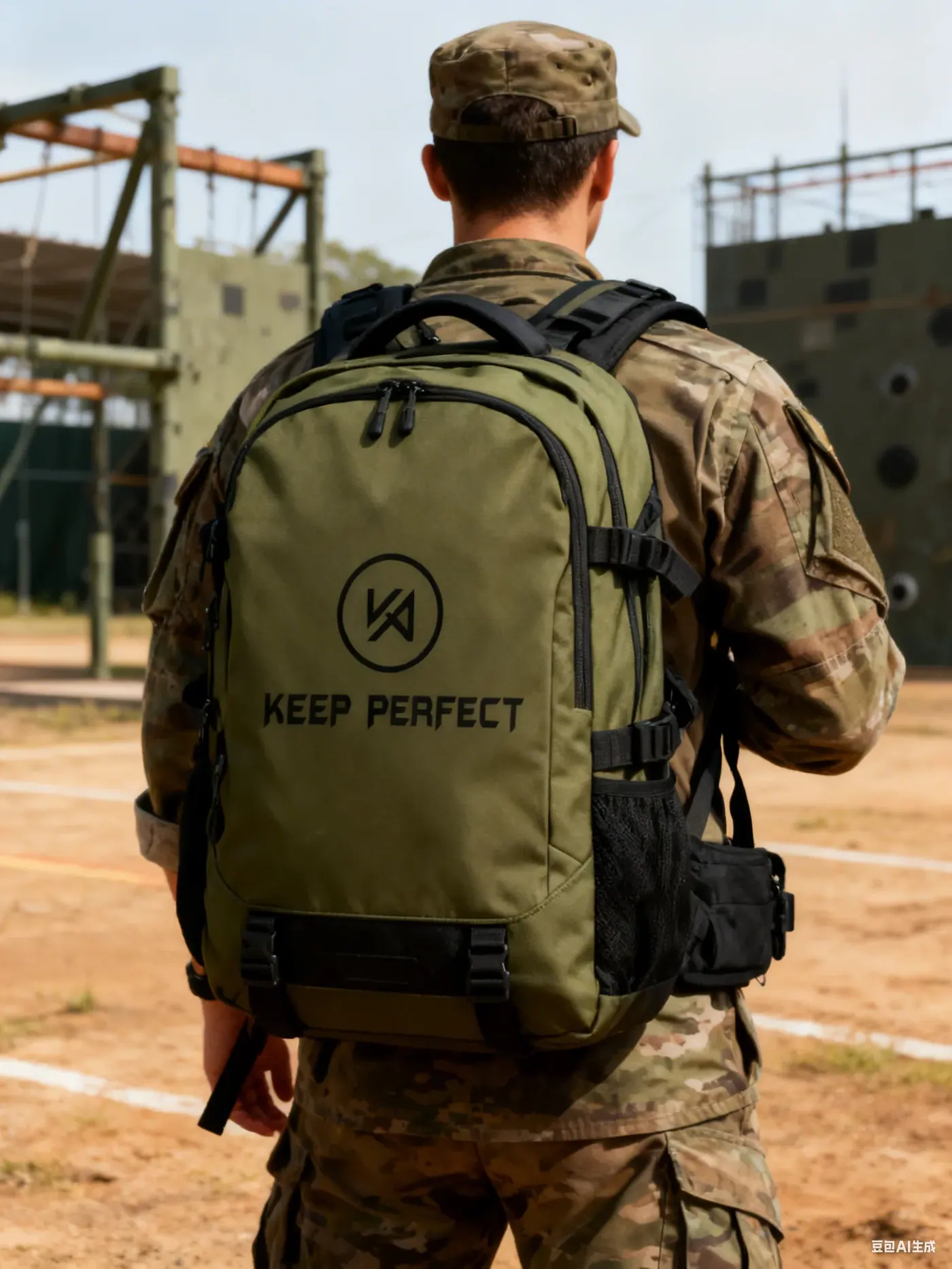
A rain cover is a deployable layer that has to be found, fitted, and dried. It works for occasional showers and fails in the moment that matters most, which is the first ten seconds of a sudden squall when both hands are busy. Built-in waterproofing removes the step entirely, and for fishing that difference is significant because the hands are frequently wet, slimed, or holding a rod.
Covers do have one genuine advantage: they protect a non-waterproof bag that the angler already owns and likes, and they can be replaced cheaply. Where a programme sells both, position the cover as a retrofit for existing bags rather than as a substitute for a welded body. A cover that flaps in wind also sheds water onto the wearer, which is a comfort complaint as much as a performance one.
| Approach | Deploy time | Performance ceiling | Best use |
|---|---|---|---|
| Built-in welded shell | Zero | IPX6 to IPX7 | Kayak, surf, wading, boat |
| Rain cover | 20-40 seconds | IPX4 equivalent | Occasional showers on an existing bag |
| Spray-on finish refresh | Not applicable | Restores beading only | Maintenance, not protection |
| Internal dry liner | 10-20 seconds | Depends on liner | Secondary layer for electronics |
An internal dry liner deserves a mention as a second layer rather than a primary one. A 6-10 L sealed pouch inside the main chamber protects electronics, licence, and phone, and it means a single closure failure does not end the session. Redundancy belongs where water would cause the most damage, not across every item in the bag. Choose a liner with a bright colour so it can be found quickly in low light or in a wet bag, and test it separately once a season, because liners age on the same schedule as the bag they sit inside.
Protecting the Items That Fail First
Not everything in a fishing bag needs the same level of protection, and treating them equally wastes money and space. A phone, a licence, a vehicle key fob, and a camera fail permanently after one immersion. Hooks, pliers, and spare line survive water easily and only need to be dried. Spend redundancy on the first group and organisation on the second.
Use a 0.5-1 L sealed pouch for phone, licence, and keys, and keep it above the tray stack where it stays dry longest and can be reached in under 20 seconds. Add a 4-6 L liner for a camera or a spare layer if the session involves a crossing, a surf landing, or a craft that can tip. Two independent layers are the practical standard: the waterproof bag is the first, the pouch or liner is the second.
| Item | Failure after water | Recommended layer | Access target |
|---|---|---|---|
| Phone and key fob | Permanent | 0.5-1 L sealed pouch | Under 20 seconds |
| Licence and documents | Permanent | Same pouch, flat sleeve | Under 30 seconds |
| Camera | Permanent | 4-6 L liner plus pouch | Camp or vehicle only |
| Spare clothing layer | Recoverable | Separate 4-6 L roll pouch | Emergency |
| Hooks, line, pliers | Recoverable | Tray storage, dry before packing | Session use |
Where a bag is used from a kayak or a boat, secure those pouches to the bag or the craft so they cannot be lost independently. A sealed pouch that floats away is not protection. Attach it at one point with short captured webbing, and keep routing away from any line that could encircle a wrist or ankle.
Drying, Cleaning, and Long-Term Care
Most waterproof bag failures blamed on the product are actually care failures. Salt crystals left in a zipper or a roll fold abrade and attract moisture at the same time, and a bag closed damp overnight will smell within two days and can grow mildew within a week in warm conditions. A five-minute routine after every session prevents the large majority of both.
- Rinse the shell, closure, and hardware with fresh water after every saltwater session.
- Clear sand and grit from zipper teeth before operating the closure.
- Empty the bag completely and dry open for 8-24 hours.
- Use mild pH-neutral soap only; never solvents, never machine washing.
- Store loose and dry at 15-25 degrees with the closure open.
Inspect monthly during the season and re-screen every three months in coastal use, every six months in freshwater use. Look for tape lift over 5 mm, hazing at fold lines, cracked hardware, and stiffness that stops a three-turn roll from seating. Early detection turns a 12-30 USD repair into a routine maintenance item instead of a replaced bag.
Weather and water conditions should always be checked before a session, and NOAA weather resources support that review in the United States. Equipment preparation is not a substitute for route judgement, local knowledge, or appropriate personal safety equipment on the water.
Programme Brief and Acceptance Criteria
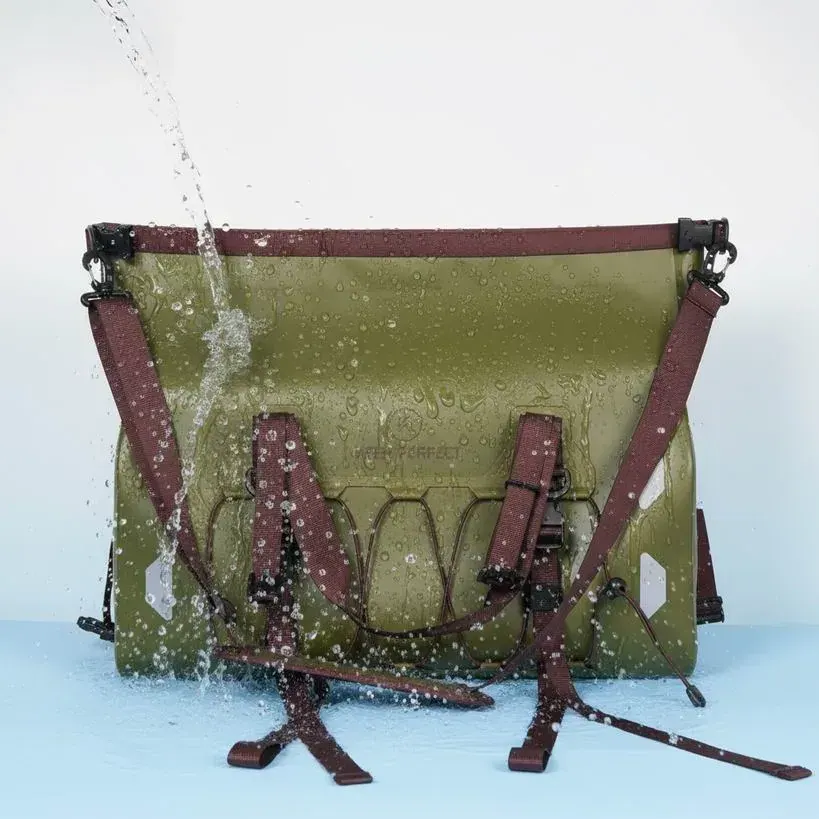
Write one document covering protection level with the test condition, shell material and hydrostatic head, seam method, closure type, base construction, hardware grade, tray standard and count, and compliance. Then set acceptance criteria for dimensions, litres, seam appearance, coating thickness, colour fastness, and hardware finish. Approve at least three samples, because one dry result does not establish consistency across a run.
| Programme item | Baseline | Note |
|---|---|---|
| MOQ | 500 pcs per design and colour | Colour split negotiable above baseline |
| Sampling | 6-10 working days | Add 3-5 days for a closure change |
| Bulk | 35-50 days | From approved sample and deposit |
| Inspection | AQL 2.5 | Include litres, tray fit, closure, water screen |
| Water screen | 60 min spray, loaded | Immersion only where IPX7 is claimed |
QUANZHOU JUNYUAN BAGS has developed waterproof bag programmes since 2014, with the founding team active in the industry since 2004. Monthly output of 200,000 units is verified by SGS, and BSCI and ISO 9001 systems structure the workflow. Materials are screened for REACH and California Prop 65, and every bulk order is inspected at AQL 2.5 before shipment.
A waterproof fishing backpack brief can be emailed to service@junyuanbags.com; include the wet scenarios the bag will meet, tray standard, hardware grade, market, and quantity. FOB Xiamen or DDP service to more than 100 countries follows an approved sample and a complete test record. The fishing tackle backpack range shows how storage layout and protection level interact across formats.
People Also Ask
How waterproof does a fishing backpack really need to be?
IPX5 covers bank fishing in rain, IPX6 covers boat and pier spray, and IPX7 at a stated depth suits kayak, surf, and wading use. Buying above the real scenario adds 150-350 g and 15-30 percent to unit cost.
Are welded seams necessary on a fishing backpack?
They are necessary for any claim at IPX6 or above. Taped seams perform well to IPX5 and IPX6 but the tape edge is typically the first place to lift after roughly 300 cycles.
Can I test whether my fishing bag is still waterproof at home?
Yes. Load it with trays, place dry tissue at closure corners, seams, pockets, and base, then run 60 minutes of directed spray. A base check in 10 mm of water for 20 minutes catches wicking.
Is a rain cover enough instead of a waterproof pack?
It works for occasional showers but takes 20-40 seconds to deploy and flaps in wind. For fishing, where hands are often wet or busy, a welded shell removes the step entirely.
Why does my waterproof bag get damp inside when it never rained?
Condensation is the usual cause, especially from a cold drink bottle or a cooler section. Dry the outside of containers and check for that before assuming a seam failure.
How often should a fishing backpack be re-screened in water?
Every three months in coastal use and every six months in freshwater use, plus immediately after any impact, repair, or session where the bag was fully immersed.
Frequently Asked Questions
Q1. What IPX rating should a fishing backpack have?
IPX5 for bank fishing in rain, IPX6 for boat and pier spray, and IPX7 with a stated depth and duration for kayak, surf, and wading use.
Q2. Are welded seams better than taped seams?
Welded seams have no needle holes and are the only construction that supports a credible immersion claim. Taped seams work to IPX5 and IPX6 but lift at the edge after roughly 300 cycles.
Q3. Does fabric denier determine how waterproof a bag is?
No. Seam construction and closure design determine the result. A 500D laminate with welded seams outperforms a 1000D shell with stitched seams in every water test.
Q4. How many turns should a roll-top closure have?
Three full turns with 75-100 mm of clean material is the standard target. Two turns may hold light rain and will usually fail a spray or immersion screen.
Q5. Can a waterproof zipper be repaired in the field?
Rarely. Grit in the teeth can be cleaned, but a damaged tooth or slide needs a replacement part. Carry a sealed liner so one closure failure does not end the session.
Q6. Do I need a rain cover on a waterproof fishing pack?
No. A cover helps an existing non-waterproof bag in occasional showers, but a welded shell removes the deployment step and performs far better in wind.
Q7. Will a waterproof fishing backpack float if it goes in the water?
A sealed bag with trapped air may float, but tray mass, load density, and valve state change the result. Treat any float behaviour as recovery convenience, never as safety equipment.
Q8. How do I test my bag for leaks at home?
Load it with trays, place dry tissue at closure corners, seams, pockets, and base, run 60 minutes of directed spray, then stand it in 10 mm of water for 20 minutes.
Q9. Why is there water at the bottom of my pack?
Condensation from a cold bottle or a cooler section is the usual cause. Dry containers before packing, and check that before concluding the base seam has failed.
Q10. How should a waterproof fishing pack be cleaned?
Fresh water rinse, mild pH-neutral soap, no solvents, no machine washing, and air dry open for 8-24 hours. Clean monthly during the season and more often in salt use.
Q11. How often should the water screen be repeated?
Every three months in coastal use and every six months in freshwater use, plus after any impact, repair, or full immersion event.
Q12. What hardware grade suits a waterproof fishing pack?
Use 304 stainless as a baseline and 316 stainless where rinsing is irregular or the bag is used from a boat. Plain steel shows rust bloom within one coastal season.
Q13. Can I machine wash a waterproof fishing backpack?
No. Machine washing and tumble drying damage coatings, welds, and stiffener bars. Hand rinse and air dry only.
Q14. What is the MOQ and lead time for a waterproof fishing pack?
MOQ is 500 pcs per design and colour, samples take 6-10 working days, and bulk runs 35-50 days from approved sample and deposit.