A 5,000-piece waterproof backpack order takes 62 days from sample approval to vessel loading when nothing goes wrong, and about 78 days when two things do. This is the full record of one such run for a Northern European paddle-sports retailer: 30 litre roll-top packs in three colourways, sampled in 8 working days across five revisions, bulk produced in 41 days, inspected at AQL 2.5 with a 0.8 percent defect rate, and landed at 14.05 USD per unit against a budget of 15.00. Two problems cost 16 days and both were avoidable at brief stage. The timeline, the costs and the fixes are set out below as they happened.
The Client and the Brief
The client is a paddle-sports retailer with 34 stores across three Northern European countries and a web shop that ships to a further six. Its own-brand soft goods range already covered paddles, buoyancy aids and dry bags, and the gap was a mid-volume waterproof backpack that could sit beside a dry bag on the same shelf without competing with it. The brief arrived as a two-page specification with a target retail price of 49 EUR and a ceiling of 15.00 USD landed.
| Requirement | Target in the brief | Why it was set there | Room to move |
|---|---|---|---|
| Volume | 30 litres, roll-top | Sits above a 20 L dry bag in range | 28 to 32 L acceptable |
| Rating | IPX6, jet tested | Deck spray on a rental fleet | IPX5 would not survive rental use |
| Colourways | Three, 1,700 / 1,700 / 1,600 pcs | Shelf presence across 34 stores | None, set by the planogram |
| Unit cost | 15.00 USD landed ceiling | 49 EUR retail with a 3.1 x markup | 0.50 USD either way |
| Delivery | On shelf by 1 June | Season opens in late May | Two weeks of float |
| Compliance | REACH plus California Prop 65 | Required for all six shipping countries | None |
Two things in that brief did the work of a whole development cycle. The client named a jet rating rather than a generic waterproof claim, which removed the usual three rounds of argument about what waterproof means, and the waterproof backpack category has no shortage of claims of that kind. The client also named the colour split up front, since a 5,000-piece order split three ways means three dye lots, three approval cycles and three inspection lots rather than one.
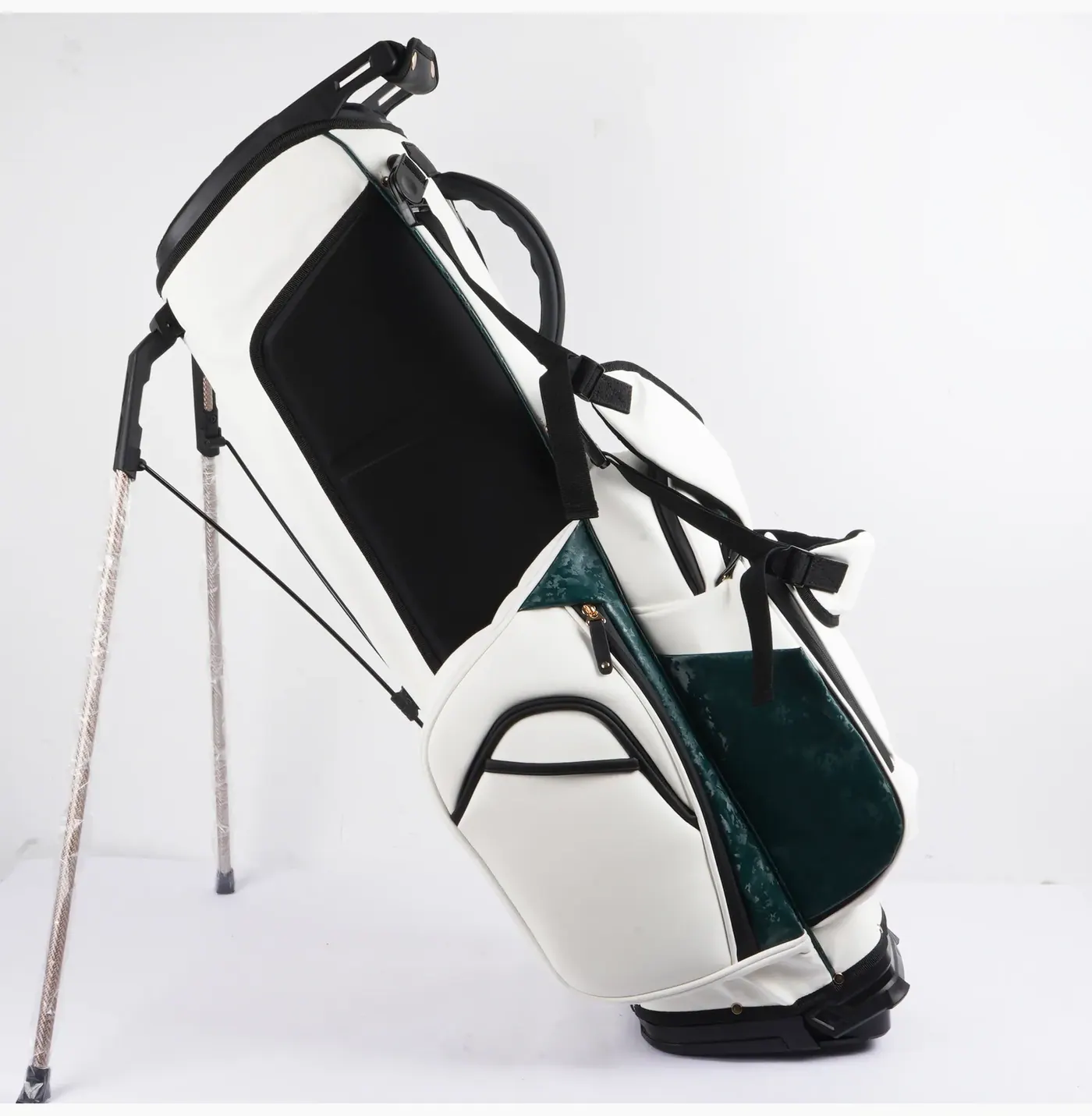
Sampling: Five Revisions in Eight Working Days
The first sample set was built in 8 working days and rejected on three counts in a single video call, which is the fastest a five-revision cycle has ever closed for this client. The value of doing it by video rather than by photograph is that a harness defect can be shown under load and a closure defect can be shown under a tap, and neither of those survives a still image.
| Revision | Working day | What changed | Why it was rejected or approved |
|---|---|---|---|
| R1 | Day 3 | First build, 500D shell, 0.18 mm coating | Back panel too short at 42 cm |
| R2 | Day 5 | Back panel extended to 47 cm | Roll-top folds creased and leaked at fold two |
| R3 | Day 6 | Coating raised to 0.22 mm, fold radius eased | Slider stiffened after a salt cycle |
| R4 | Day 8 | Slider changed to an acetal bodied unit | Approved pending a jet test report |
| R5 | Day 8 | Jet test at 100 L per minute, 0 g gain | Signed off, golden sample sealed |
The lesson in that table is a costing one. Revisions one, two and three were all brief-level problems: the torso length had never been stated, the fold radius had never been specified, and the coating thickness had been left to default. Naming those three at brief stage would have removed three days and one full courier round, and the client rewrote its own specification template afterwards to require them.
Sampling cost was 180 USD for the five revisions plus 95 USD of courier charges, and it is worth saying plainly that a buyer who tries to save the 180 USD usually pays for it twice: once in a bulk run that has to be reworked and once in a season that arrives late.
Engineering the Five Failure Points
Before bulk was released, five known failure points were addressed in the pattern rather than in the inspection, because an inspection catches a defect after five thousand units of it already exist. All five were identified by cycle and exposure testing on the golden sample rather than by guesswork, and the two that mattered most were the closure and the webbing root.
| Failure point | What testing found | Fix applied | Result in bulk |
|---|---|---|---|
| Roll-top fold creasing | Coating crazed after 400 folds | Coating to 0.22 mm, radius to 12 mm | No crease complaints in season one |
| Slider stiffening in salt | Force doubled after 48 h salt fog | Acetal bodied slider, silicone-free lube card | Zero slider returns |
| Webbing root tear | Root failed at 19 kg, target 25 kg | Box stitch plus a 40 mm reinforcement patch | Root held to 31 kg on retest |
| Condensation in the sleeve | Damp chassis after a cold cycle | 30 mm clearance plus a vented sleeve end | Removed from the complaint log |
| Dye lot variation | Delta E of 2.4 between lots | One dye lot per colourway, lab dips signed | Delta E held under 1.2 |
The webbing root is worth expanding on because it is the most common structural failure in this category and the least discussed. A pack can pass a 25 kilogram pull-out test and still fail in service, because the test pulls straight down and a real pack is yanked sideways off a deck at an angle. Reinforcing the root with a 40 millimetre patch raised the failure point from 19 to 31 kilograms for about 12 cents a unit.
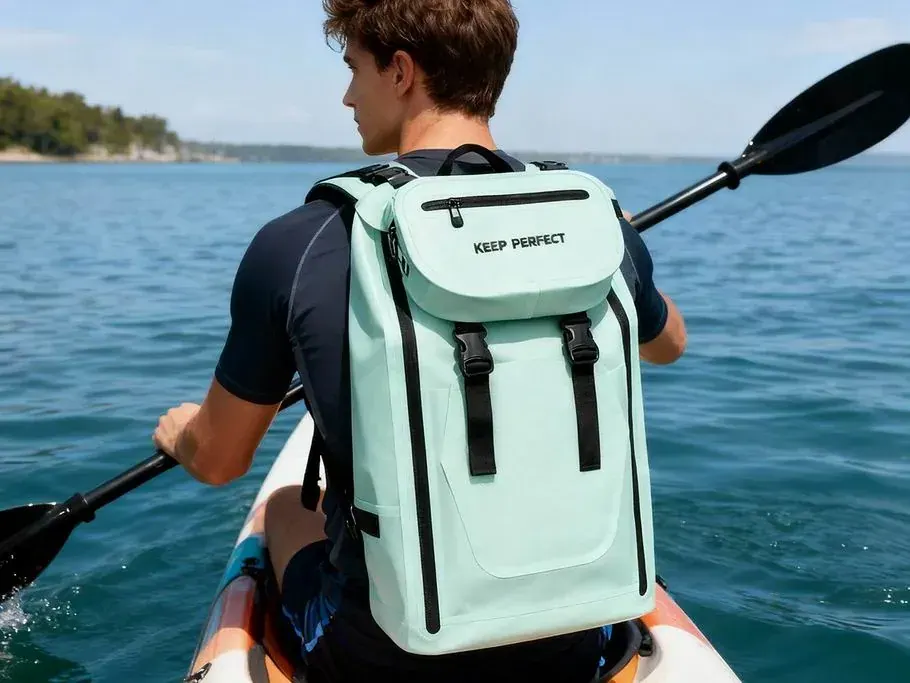
Colour was the fifth point and the one that nearly caused the delay. A Delta E of 2.4 between two dye lots is visible to a customer standing in a store with both packs on the shelf, and it is invisible in a photograph on a screen. The fix was administrative rather than technical: one dye lot per colourway, lab dips signed before bulk, and a retained reference swatch held against every incoming lot.
The 62-Day Production Timeline
From golden-sample sign-off to vessel loading the run took 62 days, of which 41 were production and 21 were everything else. The everything else is where most first-time buyers lose their season: material lead time, compliance documentation, inspection booking and inland haulage to port are each individually short and collectively three weeks.
| Stage | Calendar days | What happens | What can slip |
|---|---|---|---|
| Material booking | Days 1 to 7 | Fabric, coating, hardware and webbing called off | A 1000D base in a non-stock colour |
| Compliance pack | Days 8 to 14 | REACH and Prop 65 declarations collated | One trim item without a declaration |
| Cutting and welding | Days 12 to 30 | Panels cut, bodies RF welded | A weld parameter drift after a tool change |
| Assembly | Days 25 to 48 | Harness, closure, pockets and trim | A missing buckle from a late lot |
| In-line inspection | Days 40 to 50 | Pull-out, jet and cycle checks on the floor | Inspection booked too late |
| Final inspection | Days 51 to 54 | AQL 2.5 on a 200 pcs sample | A failed first inspection |
| Pack and inland haulage | Days 55 to 59 | Cartons, pallets, truck to port | A public holiday at the port |
| Vessel loading | Days 60 to 62 | Booking, customs, loading | A rolled booking in peak season |
Two slips did happen and together they cost 16 days. The first was a 1000D base panel in a colour the mill did not hold in stock, which added 9 days and could have been removed by choosing a stock colour at brief stage. The second was a first inspection that failed on a print registration issue at 1.9 percent, which added 7 days for a rework and a re-inspection.
The commercial frame around that timeline is worth stating once, because it is the same across the range: MOQ of 500 pcs per design and colour, sampling in 6 to 10 working days, bulk in 35 to 50 days, and AQL 2.5 inspection before anything ships. A 5,000-piece order across three colourways sits comfortably inside those numbers; a 5,000-piece order across eight colourways would not, because eight lots of 625 pieces each break the per-colour minimum while meeting the headline total.
Quality Gates and the Inspection Result
Inspection was booked against the AQL 2.5 sampling plan, which for a 5,000-piece order means a 200-piece random sample with an accept number of 10 and a reject number of 11 for minor defects, and a far tighter gate for anything structural. The first inspection failed at 1.9 percent on print registration; the second passed at 0.8 percent.
| Gate | Sample and method | Criterion | Result |
|---|---|---|---|
| Weld peel, in-line | 5 coupons per 500 pcs | At least 90 percent of base fabric strength | 94 to 98 percent, passed |
| Jet test, in-line | 2 bodies per 500 pcs | Under 5 g gain at 100 L per minute | 0 to 2 g, passed |
| Pull-out, in-line | 3 roots per 500 pcs | 25 kg minimum | 28 to 31 kg, passed |
| Cycle test, per lot | 1 body per colourway | 5,000 cycles then re-jet | Passed on all three |
| AQL 2.5, first inspection | 200 pcs random | 10 accept, 11 reject, minor | Failed at 1.9 percent, print |
| AQL 2.5, re-inspection | 200 pcs random, reworked lot | 10 accept, 11 reject, minor | Passed at 0.8 percent |
The sampling plan behind those numbers is the one published as ISO 2859-1 sampling procedures for inspection by attributes, and it is worth naming in a purchase order because an inspection without a named plan is an opinion. The print registration failure that cost 7 days was a screen-positioning issue on the third colourway and it was caught because the sample was random rather than hand-picked.
Seam and fabric testing followed the methods maintained by ASTM coated-fabric and seam test methods, and colour fastness to rubbing and to sea water was checked by the methods published by AATCC textile test methods. Both were recorded per colourway rather than once across the order, which is the only way a single bad dye lot can be isolated before it reaches a store.
Freight, Duty and the Landed Figure
The landed figure is where a 15.00 USD ceiling becomes real or does not, and it is built from six lines that buyers routinely estimate and then discover. On this order the unit left the port at 11.40 USD FOB Xiamen and reached the client distribution centre at 14.05 USD, which left 0.95 USD of headroom against the ceiling.
| Cost line | Per unit, USD | Share of landed cost | Note |
|---|---|---|---|
| FOB Xiamen unit price | 11.40 | 81.1 percent | Includes fabric, trim, labour and packing |
| Sea freight, 40 ft HQ | 1.28 | 9.1 percent | 5,000 pcs at 62 pcs per carton |
| Inland haulage and port | 0.34 | 2.4 percent | Truck to port, handling, documentation |
| Import duty | 0.57 | 4.1 percent | Classified under the soft goods heading |
| Compliance and testing | 0.29 | 2.1 percent | REACH and Prop 65 files, third-party jet test |
| Inspection and rework | 0.17 | 1.2 percent | Two inspections plus the print rework |
| Landed total | 14.05 | 100 percent | Against a 15.00 ceiling |
Two lines in that table are worth arguing about before an order is placed. Freight is quoted per container rather than per unit, so a 5,000-piece order that fills a 40 foot high-cube container at 62 pieces per carton carries 1.28 USD a unit, and the same order shipped half empty carries 2.56. And compliance is cheaper when it is planned: a REACH file assembled during sampling costs a fraction of one assembled under a customs deadline.
What the Client Changed for the Second Run
The second run was ordered in the following November at 7,500 pieces, and the client changed six things on the strength of the first. None of them were product changes: every one was a specification or a process change, which is the usual shape of a lesson learned after a first bulk run.
- Torso length, fold radius and coating thickness written into the brief as numbers rather than left to default, removing three sample revisions.
- Stock colourways chosen for the 1000D base panel, removing the 9-day mill delay entirely.
- One dye lot per colourway with signed lab dips and a retained reference swatch held against every incoming lot.
- Inspection booked at the same time as bulk release rather than three weeks later, removing a 4-day wait.
- Carton count fixed at 62 pieces to fill a 40 foot high-cube container, holding freight at 1.28 USD per unit.
- Compliance declarations collated during sampling rather than under a customs deadline.
The measurable result was a 78-day first run followed by a 54-day second run for fifty percent more pieces, and a defect rate that fell from 0.8 percent to 0.3 percent. The unmeasurable result, which the client rated higher, was that the second run required one sample revision instead of five.
Replicating This on Your Own Order
The sequence below is the whole method, and it is deliberately ordered so that the expensive decisions happen before anything is cut. A buyer who follows it will not avoid every problem, but will avoid the two categories that cost real money: a change requested after tooling and a delay discovered after booking.
| Step | When | Deliverable | Cost of skipping it |
|---|---|---|---|
| Write numbers into the brief | Before enquiry | Torso, fold radius, coating, rating | Three sample revisions, about 3 days |
| Choose stock materials | At enquiry | Confirmation of mill stock | A 9-day wait on a non-stock colour |
| Approve a sealed golden sample | Before bulk | Signed sample held on both sides | An argument about what was agreed |
| Book inspection with bulk | At bulk release | A dated inspection booking | A 4-day queue behind other orders |
| Fix the carton count | Before packing | A container plan at 62 pcs per carton | Freight doubling per unit |
| Collate compliance early | During sampling | REACH and Prop 65 files | An express fee under a customs deadline |
Every order runs on the same commercial frame: MOQ of 500 pcs per design and colour, a sample set in 6 to 10 working days, bulk in 35 to 50 days, AQL 2.5 inspection before shipment, FOB Xiamen or DDP into more than 100 countries, and declarations covering REACH and California Prop 65 under a BSCI and ISO 9001 compliance base. QUANZHOU JUNYUAN BAGS has run waterproof programmes since 2014, with its people in the sector since 2004, and monthly output of 200,000 units verified by SGS.
QUANZHOU JUNYUAN BAGS can hold the sample, test and inspection record for a bulk run on file. A brief with volumes, colourway split, target rating and target landed cost sent to service@junyuanbags.com returns a first sample set within 6 to 10 working days. Volumes and price bands are set out in the MOQ and lead time guide, and the sampling step that most often goes wrong is covered in the sample shipping walkthrough.
The final number worth carrying away: on this run, 16 of the 62 days were lost to two problems, and both were decidable at brief stage for the price of one afternoon with a specification template.
People Also Ask
How long does a 5,000-piece backpack order actually take?
Sixty-two days from golden-sample sign-off to vessel loading when nothing slips, of which 41 are production and 21 are materials, compliance, inspection and haulage. Two avoidable slips on this run added 16 days and pushed it to 78.
What does a 5,000-piece waterproof backpack cost per unit?
About 11.40 USD FOB Xiamen and 14.05 USD landed, with freight at 1.28, duty at 0.57, compliance at 0.29 and inspection at 0.17. Freight is quoted per container, so an order that ships half empty doubles that line.
How many sample revisions are normal before bulk?
One to five. This run took five across 8 working days, and all but one traced back to numbers missing from the brief: torso length, fold radius and coating thickness had been left to default.
What is AQL 2.5 on a 5,000-piece order?
A 200-piece random sample with an accept number of 10 and a reject number of 11 for minor defects, run to the ISO 2859-1 sampling plan. The first inspection here failed at 1.9 percent and the re-inspection passed at 0.8 percent.
Why do bulk bag orders slip?
Usually for two reasons: a material in a non-stock colour, which added 9 days here, and an inspection booked after bulk rather than with it, which added 4. Both are decidable at brief stage rather than on the floor.
Can a 5,000-piece order be split across many colourways?
Only up to a point. The minimum is 500 pcs per design and colour, so 5,000 pieces across three colourways works at roughly 1,667 each, while the same total across eight colourways breaks the minimum at 625 each.
Frequently Asked Questions
Q1. How long does a 5,000-piece waterproof backpack order take?
Sixty-two days from golden-sample sign-off to vessel loading, with 41 days of production and 21 days of materials, compliance, inspection and inland haulage. On this run two slips took it to 78 days.
Q2. What is the MOQ for a bulk waterproof backpack order?
Five hundred pieces per design and colour. A 5,000-piece order across three colourways fits comfortably, while the same total across eight colourways does not, because 625 pieces per colourway breaks the minimum.
Q3. How many colourways can one order cover?
Realistically up to about six at 5,000 pieces, given the 500-piece minimum per colourway. Each colourway also adds a dye lot, an approval cycle and an inspection lot, so three is the efficient number for a mid-size run.
Q4. What does sampling cost and how long does it take?
About 180 USD for the sample revisions plus 95 USD of courier charges, built in 6 to 10 working days. This run took five revisions in 8 working days, four of which traced back to numbers missing from the brief.
Q5. What is a golden sample and why seal one?
It is the approved reference unit, signed by both sides and retained, against which the bulk run is judged. Without one, a dispute about fabric hand, colour or stitch density has no reference point and becomes an argument.
Q6. Why did the first inspection fail?
A print registration fault on the third colourway, found at 1.9 percent against an accept number of 10 on a 200-piece sample. The rework and the re-inspection cost 7 days, and the fault was only caught because the sample was random rather than hand-picked.
Q7. What testing should a bulk order include?
Weld peel at 90 percent of base fabric strength, a jet test at 100 litres per minute, a 25 kilogram webbing pull-out, a 5,000-cycle closure test per colourway, and a final AQL 2.5 inspection. Colour fastness should be checked per dye lot.
Q8. How is landed cost built up?
Six lines: FOB unit price, sea freight, inland haulage, import duty, compliance and testing, and inspection. On this order that was 11.40 plus 1.28 plus 0.34 plus 0.57 plus 0.29 plus 0.17, landing at 14.05 USD against a 15.00 ceiling.
Q9. What compliance files does a European order need?
REACH declarations per component and California Prop 65 declarations where the goods ship to the United States, collated during sampling rather than under a customs deadline. On this order the compliance line was 0.29 USD per unit.
Q10. What should be locked before bulk is released?
Torso length, roll-top fold radius, coating thickness, the rating with its test method, the dye lot with signed lab dips, the carton count and the inspection date. Every one of those was a recorded problem on this run.