A fair 2026 retail price for a genuinely waterproof backpack is 120 to 190 USD for a 25 to 35 litre roll-top with welded seams, a 500D to 840D laminated shell and an IPX6 rating. Below 60 USD you are buying a water-resistant pack with a rain cover doing the work, and above 250 USD you are paying for harness engineering, hardware grade and warranty rather than for waterproofness, which plateaus around 150 USD. The same bag costs 8.90 to 22.80 USD FOB Xiamen at 500 pieces for the mainstream 20 to 35 litre range and 34 to 42 USD for submersible IPX7 builds; at 10,000 pieces those fall to 6.30 to 16.20 and 24.60 to 30.10. Four inputs explain almost the whole spread: shell fabric at 3.20 to 9.80 USD, welded lining at 1.10 to 3.40 USD, hardware at 1.60 to 7.20 USD and labour at 2.40 to 6.10 USD. This page shows where each dollar goes, which specifications justify a higher band, and how to tell whether a quote in front of you is fair.
What Fair Looks Like at Each Price Band
Retail pricing for waterproof packs clusters into five recognisable bands, and the most useful observation a buyer can take away is that waterproofness itself stops improving somewhere in the middle of them. Below 60 USD a pack is normally water-resistant rather than waterproof: a coated 300D to 420D polyester shell, sewn seams with perhaps a taped line on the base, and a detachable rain cover doing the actual work in heavy weather. Between 60 and 120 USD is the first band where radio-frequency welded seams appear on the main body and the rating reaches IPX5 or IPX6.
The 120 to 190 USD band is where value concentrates for most buyers. It buys a 500D to 840D TPU laminated shell, fully welded seams, a moulded or airmesh back panel and hardware that survives a salt spray cycle. Above 190 USD the rating rarely improves; what improves is harness engineering, hardware grade and warranty. A shopper paying 260 USD is not buying a drier pack than one paying 150 USD, and knowing where that plateau begins is the most useful idea in this guide.
| Price band | What you actually get | Seam construction | Realistic rating | Who it suits |
|---|---|---|---|---|
| Under 60 USD | Coated 300D to 420D polyester, basic harness | Sewn, partly taped | IPX3 to IPX4 | Urban commute with a rain cover |
| 60 to 120 USD | 420D to 600D shell, roll-top or coated zip | Welded main seams, sewn trim | IPX5 to IPX6 | Daily commute, travel, light trail |
| 120 to 190 USD | 500D to 840D TPU laminate, airmesh harness | Fully RF welded | IPX6 to IPX7 | Kayak, rafting, expedition travel |
| 190 to 280 USD | Same shell, forged hardware, moulded panel | Fully RF welded | IPX7 | Professional and daily saltwater use |
| 280 USD and up | Best materials plus brand, warranty and spares | Fully RF welded | IPX7 to IPX8 | Buyers who need documentation |
Two caveats apply to those bands. First, a rating quoted without a standard behind it is marketing copy, and the standard that governs ingress protection is IEC 60529; a claim of waterproof with no IPX code and no test report should be read as water-resistant and priced accordingly. Second, the same band buys very different service lives: a 130 USD pack on 840D nylon with saltwater-grade hardware outlasts a 190 USD pack on 420D polyester with unbranded hardware in coastal use by two to three seasons, because salt spray attacks plating long before it attacks fabric.
- Under 60 USD: buy it for a dry commute with a rain cover, not for immersion or surf.
- 60 to 120 USD: the sensible entry band; check that main seams are welded, not sewn and taped.
- 120 to 190 USD: the value plateau, where extra money still buys measurable waterproofness.
- 190 to 280 USD: worth it only for daily saltwater use, a 10 year life or documented testing.
- Above 280 USD: you are buying brand and warranty, not additional water protection.
The trade-off between those bands is explored in the budget versus premium comparison, which puts the same five bands against abrasion cycles, seam peel strength and hardware life rather than price alone.
Where the Money Goes Inside One Unit
A waterproof backpack is a short bill of materials compared with most soft goods, which is why its cost structure is unusually transparent. Seven elements account for essentially all of it. Labour is the most stable line at 20 to 28 percent of unit cost; shell fabric is the most volatile at 28 to 38 percent and the one most sensitive to denier, coating weight and film brand.
| Cost element | Share of unit cost | Range at 500 pcs (USD) | What raises it |
|---|---|---|---|
| Shell fabric, 500D to 840D laminate | 28 to 38 percent | 3.20 to 9.80 | Denier, coating weight, film brand |
| Lining and welded internal liner | 8 to 12 percent | 1.10 to 3.40 | TPU film versus PVC, 0.18 to 0.35 mm |
| Hardware: buckles, sliders, D-rings | 12 to 18 percent | 1.60 to 7.20 | Branded parts, saltwater-grade plating |
| Closure: zip, roll-top or airtight zip | 6 to 14 percent | 0.90 to 6.50 | Airtight zip versus a roll-top collar |
| Labour: cutting, welding, assembly | 20 to 28 percent | 2.40 to 6.10 | Welded versus sewn, panel count |
| Trim, print and packaging | 6 to 10 percent | 0.80 to 2.30 | Print colours, hangtag, printed carton |
| Testing, compliance and overhead | 4 to 8 percent | 0.60 to 1.90 | Third-party reports, social audits |
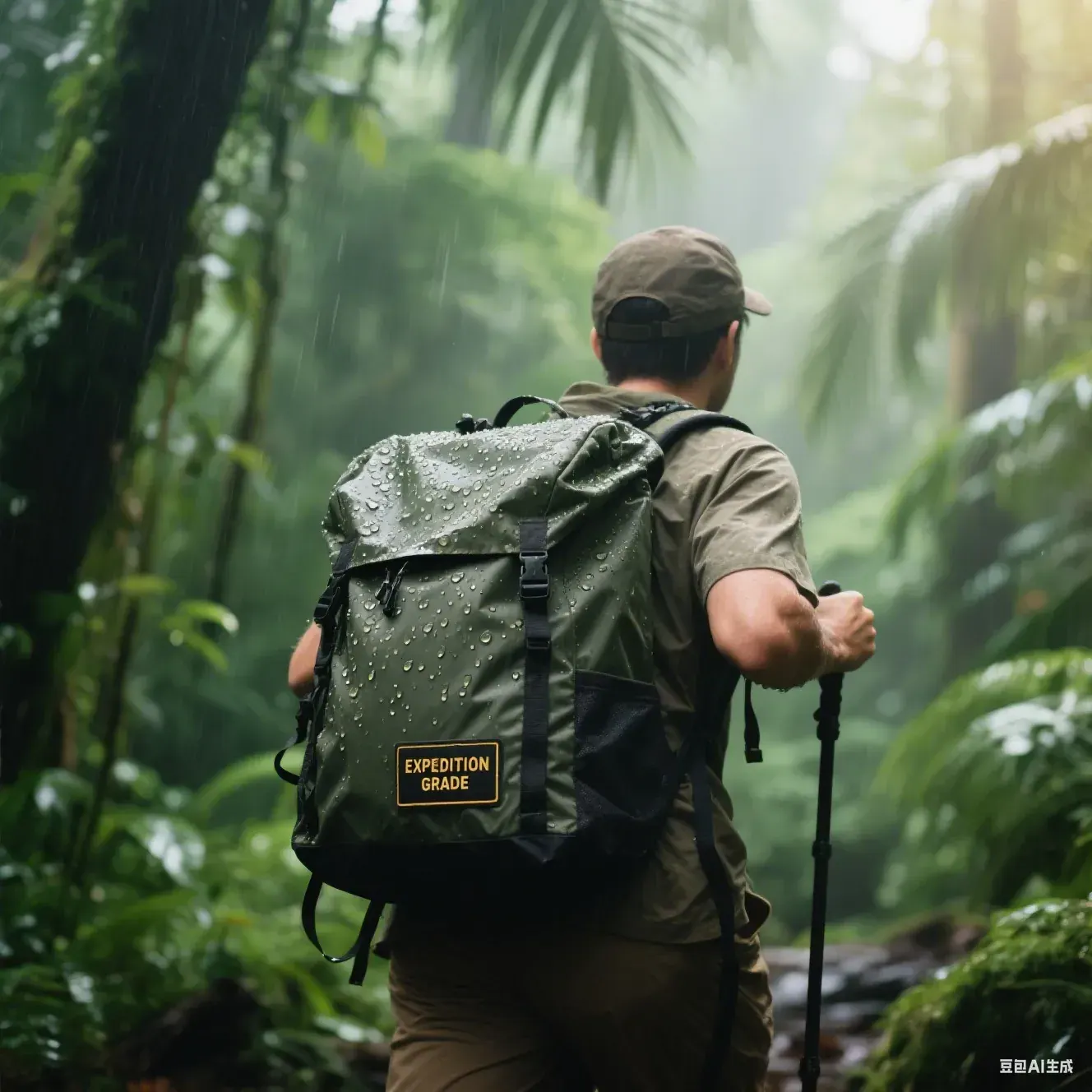
The reason this breakdown matters commercially is that it tells you which negotiations are possible and which are not. Material substitutions are real and worth 2 to 5 USD per unit: dropping from 840D to 500D, or from a branded TPU film to a house laminate, changes the price without changing the waterproof rating, because the rating is delivered by the weld and the closure rather than by the denier of the face fabric. Labour is not negotiable in the same way, since a welded body takes the same number of minutes whatever the fabric costs.
Testing and compliance is the line buyers most often try to remove and most often regret removing. At 0.60 to 1.90 USD per unit it is the smallest line on the sheet and the one that decides whether a shipment clears a European port. Screening against the restricted substance lists administered by ECHA costs 120 to 380 USD per material family.
The Five Specifications That Actually Move Price
Of the dozens of line items on a specification sheet, five reliably move the number and everything else is noise. Seam construction is the largest lever at 1.40 to 3.20 USD, because a welded body needs radio-frequency tooling, a slower cycle and a higher skill grade than a sewn one, and it is the only lever that changes the rating materially. Fabric, closure, harness and hardware follow, in that order of cost impact.
| Specification | Low-cost choice | Premium choice | Unit cost delta | Does it change waterproofness? |
|---|---|---|---|---|
| Seam construction | Sewn and taped | RF welded body | +1.40 to +3.20 USD | Yes, the largest single factor |
| Shell fabric | 420D polyester, PU coat | 840D nylon, TPU laminate | +2.10 to +5.60 USD | Partly; mainly abrasion life |
| Closure system | Roll-top with side buckles | Airtight submersible zip | +2.80 to +5.60 USD | No; changes access, not rating |
| Harness | Flat webbing, EVA pad | Moulded airmesh, load lifters | +1.20 to +4.40 USD | No |
| Hardware grade | Standard POM fittings | Saltwater-grade, branded | +0.80 to +3.60 USD | No, but changes service life |
The counter-intuitive entry in that table is the closure. An airtight zip costs 2.80 to 5.60 USD more than a roll-top collar and delivers no measurable improvement in ingress protection, because a collar rolled three turns under a compression buckle already excludes a jet of water at IPX6. What the zip buys is access: one fastener instead of three turns, which matters to a kayaker in a cockpit and not at all to a commuter.
Fabric choice is where buyers most often over-specify. An 840D laminate costs 2.10 to 5.60 USD more than 420D and adds roughly 8,000 to 15,000 Martindale abrasion cycles, a genuine benefit for a pack dragged over rock and a wasted 3 USD on one carried from a car park to an office. Match the denier to the abrasion environment, not to the price band.
Film chemistry is a separate decision that sits inside the fabric line and is often misunderstood. The trade-off between thermoplastic polyurethane and polyvinyl chloride films is set out in the TPU versus PVC comparison: a TPU laminate stays flexible to minus 30 degrees Celsius, while a PVC laminate stiffens below minus 10 and costs about 30 percent less.
FOB Unit Price by Specification
The figures below are indicative FOB Xiamen prices for stock colour, no new tooling, a single print position and standard export packing. They move with film and resin prices, and they assume one design and one colour at the stated quantity. The shape of the curve is the useful part: the steepest fall sits between 500 and 2,500 pieces at 15 to 20 percent, and the curve flattens above 10,000 because by then variable material cost dominates and there is little fixed setup left to spread.
| Specification | 500 pcs (USD) | 2,500 pcs (USD) | 10,000 pcs (USD) | Rating |
|---|---|---|---|---|
| 20 L roll-top, 420D, welded seams | 8.90 | 7.40 | 6.30 | IPX5 |
| 30 L roll-top, 500D TPU, airmesh back | 14.60 | 12.10 | 10.40 | IPX6 |
| 35 L roll-top, 840D, moulded back panel | 22.80 | 18.90 | 16.20 | IPX6 |
| 40 L submersible, airtight zip | 34.20 | 28.40 | 24.60 | IPX7 |
| 45 L expedition, 840D, full harness | 41.50 | 34.60 | 30.10 | IPX7 |
Read that table against the retail bands and the arithmetic of the category becomes clear. A 30 litre welded pack at 14.60 USD FOB lands at roughly 18 to 21 USD once freight, duty and warehousing are counted, sells to retail at 36 to 51 USD and reaches a shelf at 80 to 132 USD. Sold direct at 95 USD it is therefore not expensive; it is carrying one margin instead of two.
Quantity is not the only variable in that table. Colour choice moves it by 0.10 to 0.35 USD per unit through the dye lot surcharge, and how a 500 piece minimum can be split across colours at 200 pieces per colour is set out in the MOQ and lead time guide.
From FOB to Shelf: How Retail Price Is Built
Most disputes about whether a price is fair come from comparing figures at different points in the chain. An FOB price is a port-gate figure; a retail price has absorbed ocean freight, import duty, warehousing, two margins, returns and channel cost. Converting between them takes five steps and a factor of 5.5 to 8.5 from FOB to shelf on a mainstream pack.
| Step | Multiplier on FOB | What it covers | Example on a 14.60 USD unit |
|---|---|---|---|
| FOB Xiamen | 1.00 | Goods, inland transport, export clearance | 14.60 USD |
| Freight, insurance and duty | 1.18 to 1.35 | Ocean freight, insurance, duty at 6 to 20 percent | 17.20 to 19.70 USD |
| Landed cost to the brand | 1.25 to 1.45 | Plus inspection, warehousing, shrinkage | 18.30 to 21.20 USD |
| Trade price to retail | 2.0 to 2.4 times landed | Brand margin, marketing, warranty reserve | 36.60 to 50.90 USD |
| Retail price | 2.2 to 2.6 times trade | Retailer margin, returns, channel cost | 80 to 132 USD |
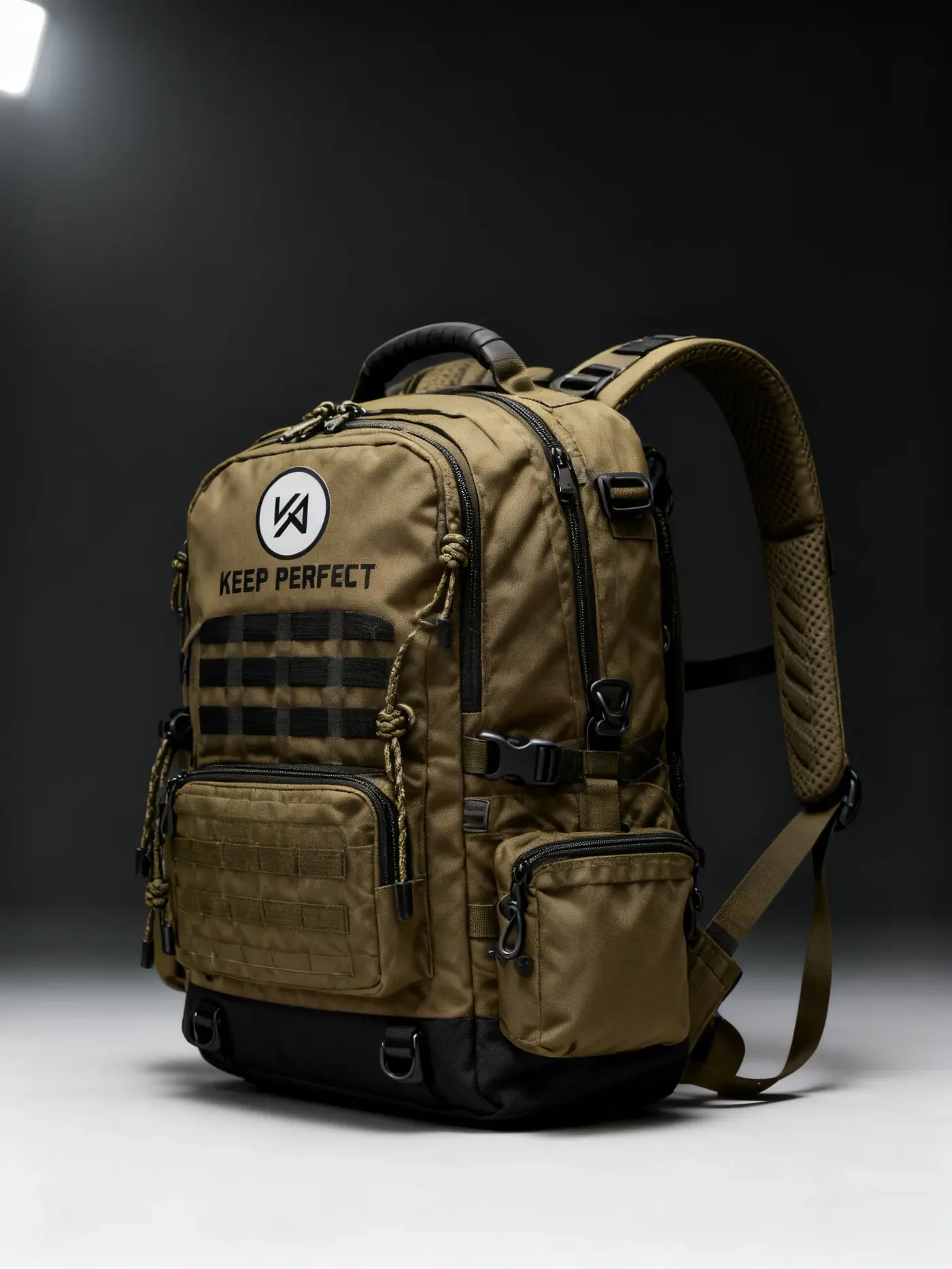
Duty is the most variable line in that chain and the one most often mis-estimated. Waterproof bags of a kind carried on the back attract different tariff treatment from luggage with an outer surface of sheeting plastics in several markets, and the difference between two headings can be 6 to 20 percent of declared value. Getting the classification right before the goods sail is worth more than any freight negotiation, because a misclassified entry is assessed on the whole shipment rather than on the disputed part of it.
The two margins are not padding. A brand margin covers sampling, marketing, warranty reserve and a season of capital; a retailer margin covers returns, which run 6 to 12 percent online for soft goods. Selling direct does not remove those costs, it absorbs them, and the honest comparison is a direct channel margin of 55 to 70 percent against a two-step chain of 78 to 87 percent.
Add-On Costs That Catch Buyers Out
Unit price is the number everyone negotiates and the one that explains least about what a programme finally costs. Six add-ons sit outside it, four one-off and two recurring, and together they add 600 to 2,500 USD to a first order plus 0.40 to 1.35 USD per unit. None appear on a quotation unless asked for, which is why they are the commonest cause of a first-season budget overrun.
| Add-on | One-off cost (USD) | Per-unit cost (USD) | When it applies |
|---|---|---|---|
| New tooling for a moulded part | 300 to 1,500 | 0 | Non-standard buckle or panel |
| Matched colour dye lot | 150 to 400 | 0.10 to 0.35 | Non-stock Pantone reference |
| Print screens or transfer plates | 30 to 90 per colour | 0.05 to 0.20 | Every branded print position |
| Third-party IPX test report | 180 to 520 | 0 | Claiming IPX6 or above |
| REACH and Prop 65 screening | 120 to 380 per material | 0 | EU and California entry |
| Barcode, hangtag, printed carton | 80 to 260 | 0.25 to 0.80 | Retail-ready packing |
Tooling gates the calendar as well as the budget, adding 10 to 20 days at 300 to 1,500 USD, so a first season should use the existing weld profile and hardware library and spend the saving on fabric. Testing is the add-on that pays for itself: an IPX6 or IPX7 claim backed by a third-party report costs 180 to 520 USD and is the difference between a listing that survives a marketplace challenge and one that does not. The terminology behind those reports is maintained by ISO, and physical test methods for coated fabrics are published by ASTM.
A Landed Cost Worked Example
Putting every line into one worked example is the clearest test of whether a number is fair. The case below is a 30 litre welded roll-top ordered at 2,500 pieces, shipped consolidated by sea to northern Europe with duty at 12 percent and sold through one trade step. It is a realistic middle-of-the-road programme rather than a best case.
| Line | Per unit (USD) | Programme total (USD) | Note |
|---|---|---|---|
| FOB Xiamen, 2,500 pcs | 12.10 | 30,250 | Stock colour, no new tooling |
| Ocean freight and insurance | 1.10 | 2,750 | Consolidated, 90 USD per cubic metre |
| Import duty at 12 percent | 1.58 | 3,950 | Assessed on FOB plus freight |
| Inspection at AQL 2.5 | 0.12 | 300 | Two man-days plus report |
| Warehousing and handling | 0.35 | 875 | Four weeks of holding |
| Landed cost | 15.25 | 38,125 | The number to compare against |
| Trade price at 2.2 times landed | 33.55 | 83,875 | Brand gross margin 55 percent |
| Retail price at 2.4 times trade | 80.50 | 201,250 | Typical shelf price for this spec |
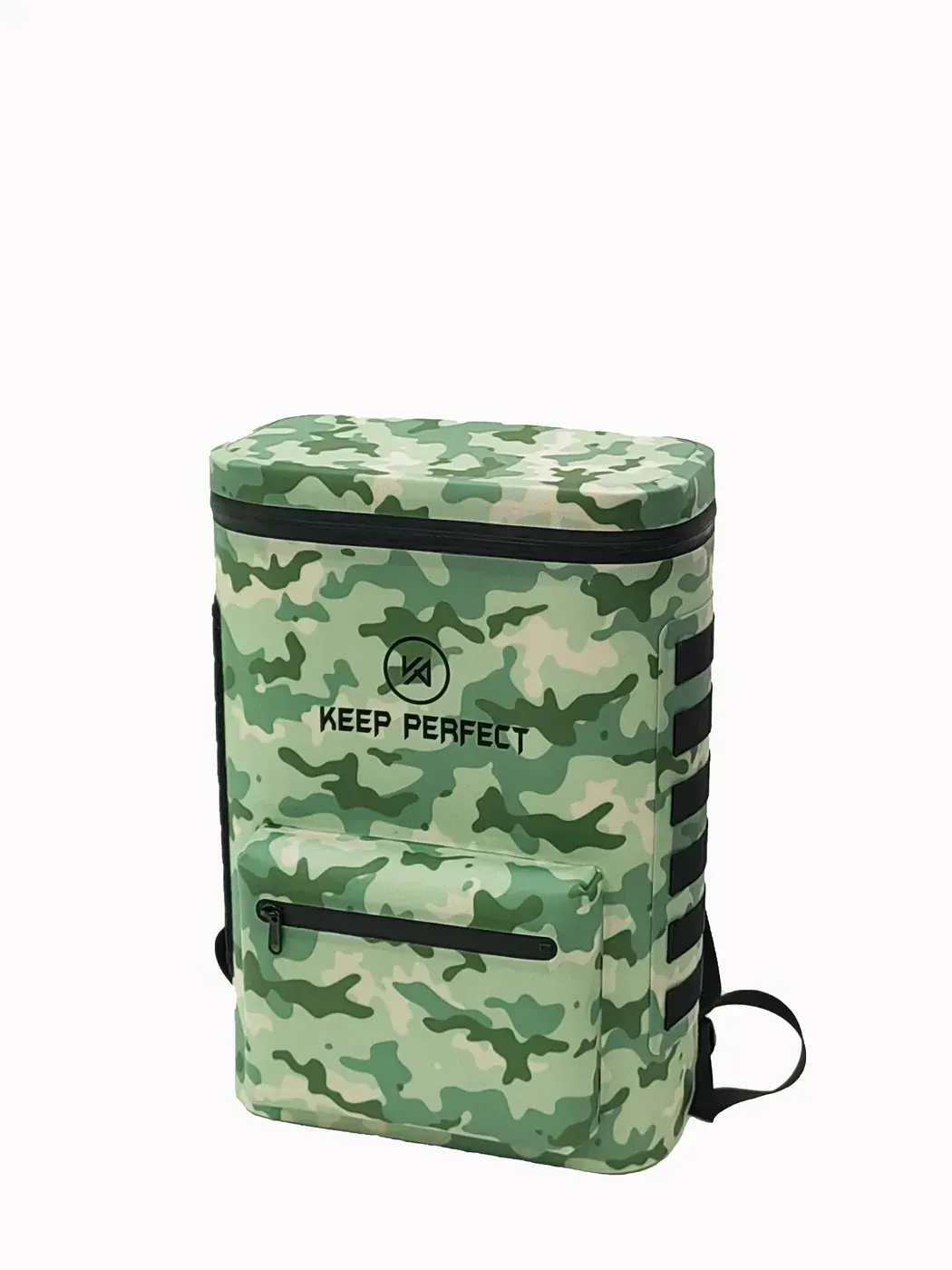
Two lines in that example are the ones a budget usually misses. Inspection at 300 USD is the reason a 2,500 piece order does not arrive with a 2 percent leak rate, since a single leaking weld in a 50 piece sample predicts a field failure rate of 1 to 3 percent, or 25 to 75 returns on this order. Warehousing at 875 USD assumes four weeks; a programme that lands early to protect a launch date carries it for eight to twelve.
The sensitivity is worth stating plainly. Freight at 90 USD per cubic metre moves landed cost by 1.10 USD per unit and duty at 12 percent by 1.58 USD, while FOB itself moves it by 2.50 USD across the whole 500 to 10,000 piece range. In other words, quantity negotiation moves landed cost by about 16 percent, and freight and duty decisions can move it by 20 percent or more.
How to Judge Whether a Quote Is Fair
A fair quote is one where the specification is complete, the assumptions are written down and the number reconciles against a bill of materials. Six checks settle the question in most cases and can be run in twenty minutes against any quotation with a specification sheet. The first three are about completeness, the last three about comparability.
- Is the seam construction named? Welded, sewn and taped, or sewn only. If it is not named, assume sewn and price accordingly.
- Is the rating tied to IEC 60529 and supported by a report? An IPX6 claim with no report is worth the price of an IPX4 pack.
- Is the fabric specified by denier and coating weight, not by marketing name? 500D with a 0.25 mm laminate is a specification; 'heavy duty nylon' is not.
- Are the incoterm and the port stated? FOB Xiamen and DDP to Rotterdam differ by 4 to 8 USD per unit on a 30 litre pack.
- Are quantity breaks shown at 500, 2,500 and 10,000? A single figure hides where the value actually sits.
- Are add-ons listed separately? A quote with tooling, testing and packaging folded in cannot be compared with one that excludes them.
If a quote fails two or more of those checks, the price is not necessarily wrong but it is unverifiable, and an unverifiable number is the expensive kind. The remedy is to send back a one-page specification with six named values — capacity, denier, coating, seam construction, closure type and rating — and ask for the price to be restated against it. Quotes that survive that exercise are comparable; quotes that resist it usually have a reason.
One further comparison is worth making before signing anything: ask for the landed figure rather than the FOB figure, because a source quoting FOB 11.90 USD with slow packing and a distant port can cost more at the door than one quoting 12.60 USD on a faster route. On a 2,500 piece order that difference is 2,000 to 4,000 USD, larger than most unit-price negotiations.
Aquagrip quotes against that structure: 500 pcs per design and colour, samples in 6 to 10 working days, bulk in 35 to 50 days, FOB Xiamen or DDP to more than 100 countries, with every bulk order inspected at AQL 2.5 before shipment and materials screened for REACH and California Prop 65. Order records and the inspection archive are held. The construction options behind each price band are set out in the waterproof backpack rankings, and the rating terminology is explained in the IPX rating guide.
People Also Ask
What is a reasonable price for a waterproof backpack?
120 to 190 USD at retail for a 25 to 35 litre welded roll-top with an IPX6 rating. Waterproofness plateaus near 150 USD, so above that you are paying for harness, hardware and warranty rather than for a drier pack.
Why are some waterproof backpacks three times the price of others?
Seam construction, film chemistry and closure type explain most of it. A welded body costs 1.40 to 3.20 USD more than a sewn and taped one, an airtight zip 2.80 to 5.60 USD more than a roll-top collar, and 840D laminate 2.10 to 5.60 USD more than 420D.
Does a higher price mean a higher IPX rating?
Only up to about 150 USD. Beyond that the rating stays at IPX6 or IPX7 and the extra money buys abrasion life, harness comfort, hardware grade and warranty support rather than additional ingress protection.
How much does it cost to have a waterproof backpack produced?
8.90 to 22.80 USD FOB Xiamen at 500 pieces for the 20 to 35 litre range, and 34 to 42 USD for submersible IPX7 builds. At 10,000 pieces those fall to 6.30 to 16.20 and 24.60 to 30.10 USD.
Is a 100 USD waterproof backpack worth it?
Yes, if the main seams are welded and the rating is IPX5 or better. That band buys a genuine waterproof body rather than a coated shell with a rain cover, and covers commuting, travel and light trail use for five to eight seasons.
What hidden costs come with a waterproof backpack order?
Tooling at 300 to 1,500 USD, matched colour dye lots at 150 to 400 USD, print screens at 30 to 90 USD per colour, third-party IPX testing at 180 to 520 USD, REACH and Prop 65 screening at 120 to 380 USD per material, and retail packaging at 80 to 260 USD.
Frequently Asked Questions
Q1. How much does a waterproof backpack cost?
At retail, 60 to 120 USD for an entry welded pack and 120 to 190 USD for a 500D to 840D laminated shell with fully welded seams and an IPX6 rating. Submersible IPX7 builds with an airtight zip run 190 to 280 USD and above.
Q2. What is the cheapest genuinely waterproof backpack?
Around 60 to 75 USD, which is the point where welded main seams first appear. Below 50 USD a pack is normally water-resistant with sewn seams and a rain cover, which is fine for a commute but will wet out in sustained rain or spray.
Q3. Why is a submersible zip backpack so much more expensive?
The airtight zip itself costs 2.80 to 5.60 USD more than a roll-top collar, and the panel it sits in must be welded rather than sewn, which adds a station and a skill grade. It buys access speed, not a higher rating.
Q4. Is an IPX7 backpack worth the extra money over IPX6?
Only if the pack will actually be immersed. IPX6 covers heavy spray and a jet of water at 100 litres per minute; IPX7 covers 30 minutes at one metre. For commuting, hiking and kayaking, IPX6 is sufficient and roughly 6 to 12 USD cheaper.
Q5. How much does welded seam construction add to the price?
1.40 to 3.20 USD per unit at 500 pieces. It is the largest single cost lever in the specification and the only one that materially improves the waterproof rating, which makes it the best value upgrade available on most packs.
Q6. Do waterproof backpacks go on sale?
Yes, in two windows: late January to February as previous-season colours clear, and late August as autumn travel begins. Discounts run 20 to 40 percent on dropped colours and rarely exceed 15 percent on current stock.
Q7. What does FOB Xiamen mean for my price?
It means the quoted figure covers goods, inland transport to the port, export clearance and loading, and excludes ocean freight, insurance, import duty and delivery. Converting FOB to a landed figure typically adds 25 to 45 percent.
Q8. How much is freight on a waterproof backpack order?
90 to 150 USD per cubic metre consolidated by sea, or 1,500 to 4,500 USD for a full container. A 30 litre pack packs at 60 to 90 units per cubic metre, so sea freight adds 1.00 to 2.50 USD per unit.
Q9. Are branded hardware and saltwater-grade zips worth it?
Yes for coastal or paddle use, where unbranded plating pits within one to two seasons and a seized slider ends the pack. They add 0.80 to 3.60 USD per unit and typically extend service life by two to three seasons in salt spray.
Q10. How much does a private label waterproof backpack cost?
Add 0.05 to 0.90 USD per unit for branding depending on method, plus 30 to 90 USD per print colour for screens and 80 to 260 USD for retail packaging. The base unit price is unchanged; branding sits on top of it.
Q11. Does a bigger backpack always cost more?
Not proportionally. Moving from 20 to 35 litres adds roughly 1.6 to 2.4 USD in fabric and 0.40 to 0.80 USD in labour, about 15 to 20 percent, while the rating, hardware and closure costs stay the same.
Q12. What price should I expect for a 30 litre welded roll-top?
14.60 USD FOB Xiamen at 500 pieces, 12.10 USD at 2,500 and 10.40 USD at 10,000. Landed into northern Europe with duty at 12 percent that becomes roughly 15.25 USD, and the typical retail shelf price is 80 to 132 USD.