The real gap between a 30 USD and a 220 USD waterproof backpack is not marketing, it is four measurable things: coating mass at 80 to 150 grams per square metre versus 320 to 450, seam peel strength at 15 to 30 newtons versus 70 to 120 newtons per 25 millimetres, hardware survival at 24 to 48 hours of salt spray versus 500 to 1,000, and an inspection regime that returns 4 to 8 percent defect rates versus 0.8 to 1.5 percent. Budget bodies make sense below roughly 20 wet days a year and low-value loads; premium bodies pay back above 60 wet days, daily commuting, or whenever failure costs more than the bag. Programme baselines start at 500 pcs per design and colour, with samples in 6 to 10 working days and bulk in 35 to 50 days.
Three Real Tiers, Not Two
Talking about cheap versus expensive hides the middle, and the middle is where most value sits. At 20 to 45 USD you buy a coated body with mostly glued or lightly taped joins and entry-level hardware. From 50 to 120 USD you buy welded or tape-bonded seams, better coated textile, and a genuine harness. Above 130 USD you buy technical closures, marine-grade metal, replaceable parts, and an article-level ingress certificate.
Each tier has a defensible buyer. The mistake is paying premium money for a premium story while receiving mid-tier engineering, or conversely buying a 25 USD pack for a job that needs article certification. What follows gives you the numbers to tell those apart in about five minutes on a shop floor or in a sample room.
| Hidden specification | Budget 20 to 45 USD | Mid 50 to 120 USD | Premium 130 to 300 USD |
|---|---|---|---|
| Coating mass | 80 to 150 g per square metre | 180 to 300 g per square metre | 320 to 450 g per square metre |
| Hydrostatic head | 1,000 to 3,000 mm | 5,000 to 10,000 mm | 10,000 to 20,000 mm |
| Seam type | Glued or tape on stitching | Hot-air welded or fully taped | Radio-frequency welded |
| Seam peel strength | 15 to 30 N per 25 mm | 40 to 70 N per 25 mm | 70 to 120 N per 25 mm |
| Main closure | Coated coil, 1.5 to 3 USD | Quality coil, 5 to 12 USD | Technical sealed zip, 18 to 35 USD |
| Hardware alloy | Zinc alloy or basic POM | Engineering polymer plus some steel | Anodised alloy or 316 stainless |
| Typical service life | 1 to 2 years | 3 to 5 years | 6 to 10 years |
Read that table as a ladder of failure delay rather than a quality ranking. Coating mass determines how long it takes for water pressure to find its way through the film; seam peel determines whether a joint survives abrasion; hardware alloy determines whether a buckle survives its third coastal season. Price buys time and tolerance, not magic.
Where the Money Actually Goes
A mid-tier 30 litre pack retailing around 95 USD might carry a landed materials cost near 26 to 34 USD. Within that, coated textile commonly accounts for 8 to 12 USD, straps and webbing 2 to 4 USD, padding and back panel 3 to 6 USD, the closure 5 to 12 USD, hardware 2 to 5 USD, and labour plus packaging most of the remainder. Nothing here is mysterious, which is precisely why comparing two bags at similar prices but very different specifications is informative.
The biggest single discretionary line is the closure. A basic coated coil may cost 1.5 to 3 USD, a better brand coil 5 to 12 USD, and a genuine technical waterproof zip 18 to 35 USD before installation. That one decision, invisible in photographs, often explains a 40 USD retail difference. The second biggest is the coating itself, since going from 150 to 400 grams per square metre can add 4 to 8 USD of material alone.
| Cost line | Budget allocation | Premium allocation | What the buyer notices |
|---|---|---|---|
| Coated textile | 6 to 9 USD | 12 to 20 USD | Hand feel and stiffness |
| Closure system | 1.5 to 3 USD | 18 to 35 USD | Smoothness under tension |
| Hardware and buckles | 1 to 2 USD | 4 to 8 USD | Nothing, until it snaps |
| Harness and padding | 2 to 4 USD | 7 to 14 USD | Comfort after 2 hours |
| Testing and inspection | 0 to 0.5 USD | 1.5 to 4 USD | Defect rate after month 3 |
| Packaging and documents | 0.4 to 1 USD | 1.5 to 3 USD | Unboxing impression |
Notice the testing line. A premium programme spends 1.5 to 4 USD per unit on inspection, material screening, and documentation; a bottom-tier body spends close to nothing. That money buys the difference between a 4 to 8 percent failure rate and something under 1.5 percent, which is why two visually similar packs can have wildly different review curves six months after launch.
Failure Patterns You Can Predict From the Spec
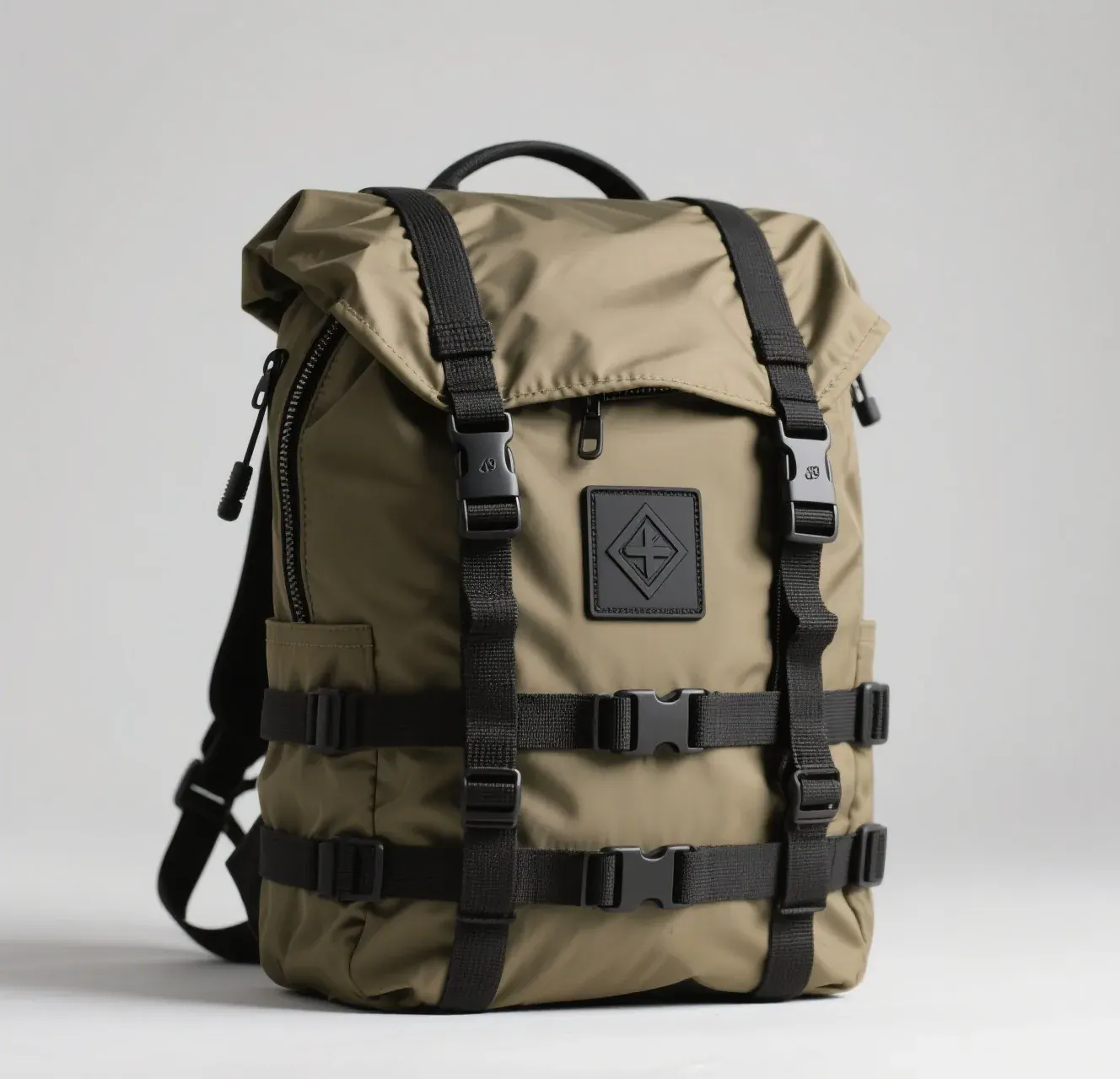
Budget failures cluster in the first 6 to 18 months and follow predictable paths: seam tape lifting at inner corners, coating cracking along fold lines after roughly 500 to 1,500 closure cycles, and buckles fracturing at the ladder-lock webbing slot. None of these are dramatic, but together they retire the product. Owners usually describe it as 'it just started leaking', when in fact one joint has been peeling for weeks.
Premium failures look different and are rarer. Technical closures fail from contamination and side loading rather than from wear, gaskets take a compression set after 3 to 5 years, and anodising can mark where it meets a metal edge. Crucially most premium failures are repairable by replacing a part, which is why the service life column stretches past six years while budget bodies are typically discarded at the first structural fault.
| Failure mode | Typical onset, budget | Typical onset, premium | Detectable before purchase? |
|---|---|---|---|
| Corner tape lift | 4 to 10 months | Rare | Yes, peel test on sample |
| Fold-line coating crack | 8 to 18 months | Beyond 40 months | Yes, 1,000 fold cycles |
| Buckle fracture | 6 to 14 months | Rare, part replaced | Yes, drop and pull |
| Slider contamination jam | Anytime | Anytime if uncleaned | No, maintenance dependent |
| Harness foam collapse | 10 to 20 months | Beyond 40 months | Yes, compression set test |
Two simple checks expose most of this before money changes hands. First, peel at an inside corner with your thumbnail: honest welding resists, and tape that lifts 3 millimetres will keep lifting. Second, fold a coated sample sharply 20 times and look for whitening, which predicts the fold-line cracking that ends budget bodies in their second year.
Testing, Inspection, and Why Premium Costs More to Validate
Verification has real cost, and its absence is the single largest source of disappointment. An article-level ingress result under IEC 60529 requires building sample bodies, conditioning them, running jets or immersion for defined periods, and documenting every result. Material screening for restricted substances adds laboratory fees. A statistical inspection plan applied at AQL 2.5 costs staff time per lot.
Quality management systems themselves are standardised, and buyers can reasonably ask which process governs the line: the family published by ISO includes the well-known ISO 9001 requirements for documented process control. Similarly, corrosion comparisons for hardware are usually run by salt fog procedures catalogued by ASTM International, where survivors are described by hours to first white rust.
| Verification item | Budget programme | Premium programme | Typical threshold |
|---|---|---|---|
| Article ingress test | Rarely performed | Every development lot | IPX6 or IPX7 as claimed |
| Seam peel sample | Occasional | Every production lot | 70 N or more per 25 mm |
| Hardware salt fog | Not tested | Development plus annual | 500 to 1,000 hours |
| Material screening | Declaration only | Laboratory report | REACH and Prop 65 lists |
| Statistical inspection | Spot check | AQL 2.5 plan | Accept and reject numbers documented |
For a professional buyer, these rows are worth more than any feature list because they can be written into a purchase agreement. A requirement for lot-level peel samples and an AQL 2.5 release gate costs little and moves the delivered quality into a different band, sometimes without changing the unit price much at all.
Cost Per Year of Service, Not Cost Per Bag
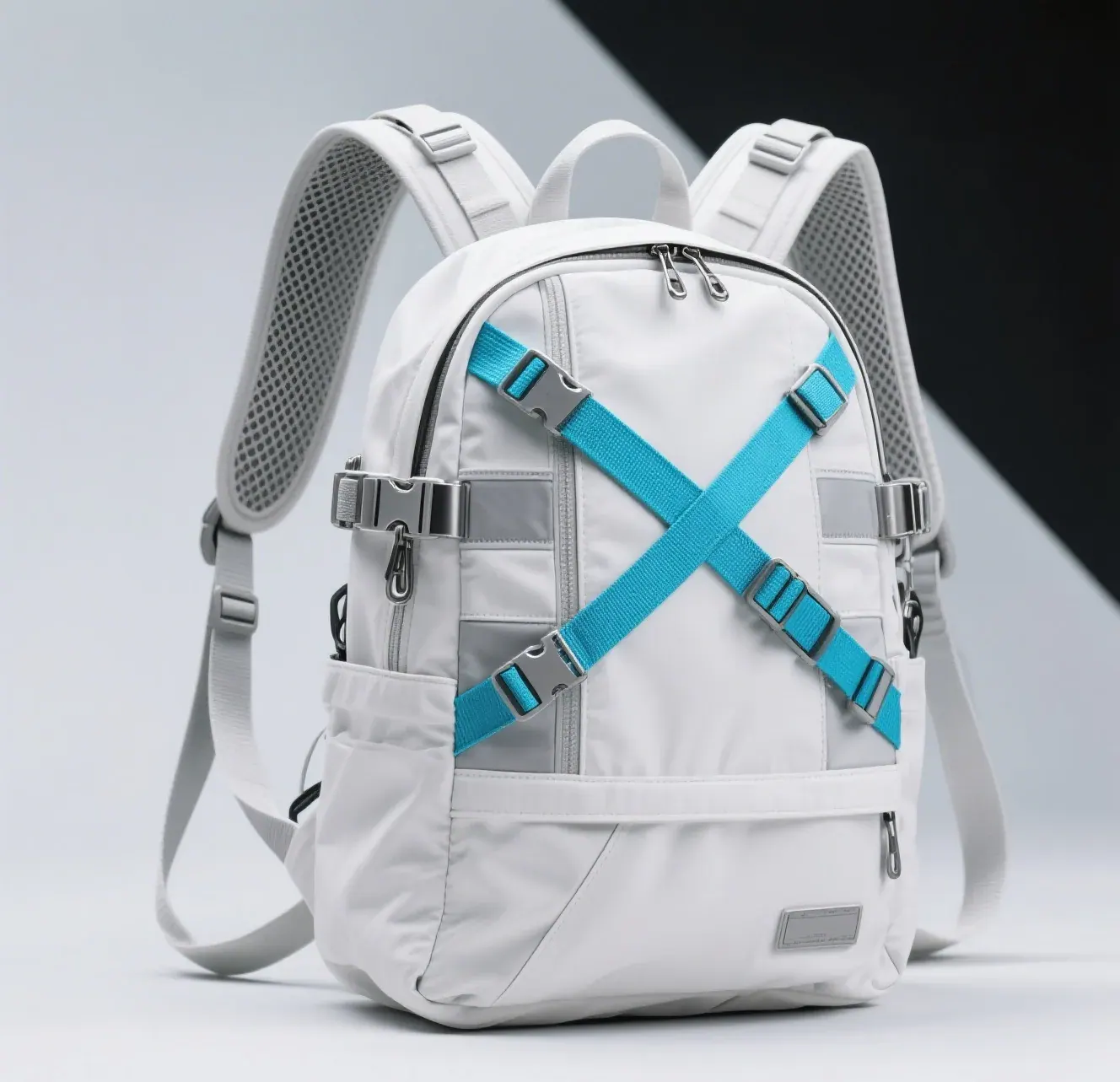
Service life reframes the whole question. A 30 USD pack replacing every 1.5 years costs about 20 USD per year. A 95 USD pack lasting 4 years costs about 24 USD per year. A 220 USD pack lasting 8 years costs roughly 27.5 USD per year. On that arithmetic alone the budget body is not obviously wasteful, which surprises people who assume premium automatically wins on economics.
The arithmetic flips once three variables enter: failure consequence, failure probability, and maintenance time. Add one damaged laptop, one missed field day, or two hours spent repacking a wet load, and the premium row becomes the cheapest option immediately. If failure is merely inconvenient and the contents are damp-tolerant clothing, the budget row stays rational and no amount of engineering changes that.
| Usage profile | Wet days per year | Contents at risk | Best economic tier | Reason |
|---|---|---|---|---|
| Occasional travel | Under 20 | Clothing | Budget 20 to 45 USD | Failure is an inconvenience |
| Weekend hiking | 20 to 45 | Mixed gear | Mid 50 to 120 USD | Balanced cost per year |
| Daily urban commute | 60 to 120 | Laptop and devices | Mid to premium | Consequence dominates |
| Paddle or marine work | Every trip | Electronics and safety gear | Premium 130 USD plus | Immersion needs certification |
| Fleet issue to field staff | 100 plus | Tools and instruments | Premium plus spares kit | Downtime costs the most |
Buyers comparing economics across a full range find more detail in the waterproof backpack price structure guide, and models across the tiers are grouped in the best waterproof backpacks round-up.
What Premium Buys That Nobody Advertises
Three premium benefits rarely appear on packaging. The first is spare parts: latches, gaskets, and buckles are stocked for years, turning a fatal fault into a 15 to 45 minute fix. The second is consistency, because tighter process control means the tenth unit behaves like the first, which matters enormously when a fleet issues hundreds of identical packs. The third is documentation, since a real certificate answers a retail compliance question in one email.
- Ask whether spares are stocked for at least 5 years and whether they can be fitted without tools.
- Ask for lot-level peel figures rather than a single laboratory result from an old sample.
- Ask how many despatched units were rejected in the last 12 months, and on what grounds.
- Ask whether the ingress certificate names the assembled article, not just the fabric.
Those four questions usually sort a genuine premium programme from a premium-priced one faster than any feature comparison. Sellers who answer them instantly are almost always describing real systems; sellers who answer with adjectives are usually not.
Where Budget Still Makes Sense
Budget bodies deserve defence. For infrequent users, school runs, festival weekends, and backup bags kept in a car boot, a 25 to 40 USD pack delivers most of the practical benefit at a quarter of the price. Its coating still sheds rain, its seam still holds ordinary loads, and replacing it occasionally is genuinely cheaper than insuring against a rare event. Sneering at that logic is poor buying advice.
The trap is mismatched duty. A budget body pressed into daily commuting with a laptop, or used on open water, will fail, and it will fail at the worst possible moment. The honest rule is to match tier to consequence: if losing contents costs less than roughly 150 USD, budget is defensible; if it costs more, move up at least one tier and stop debating.
Specification Checklist for Buyers
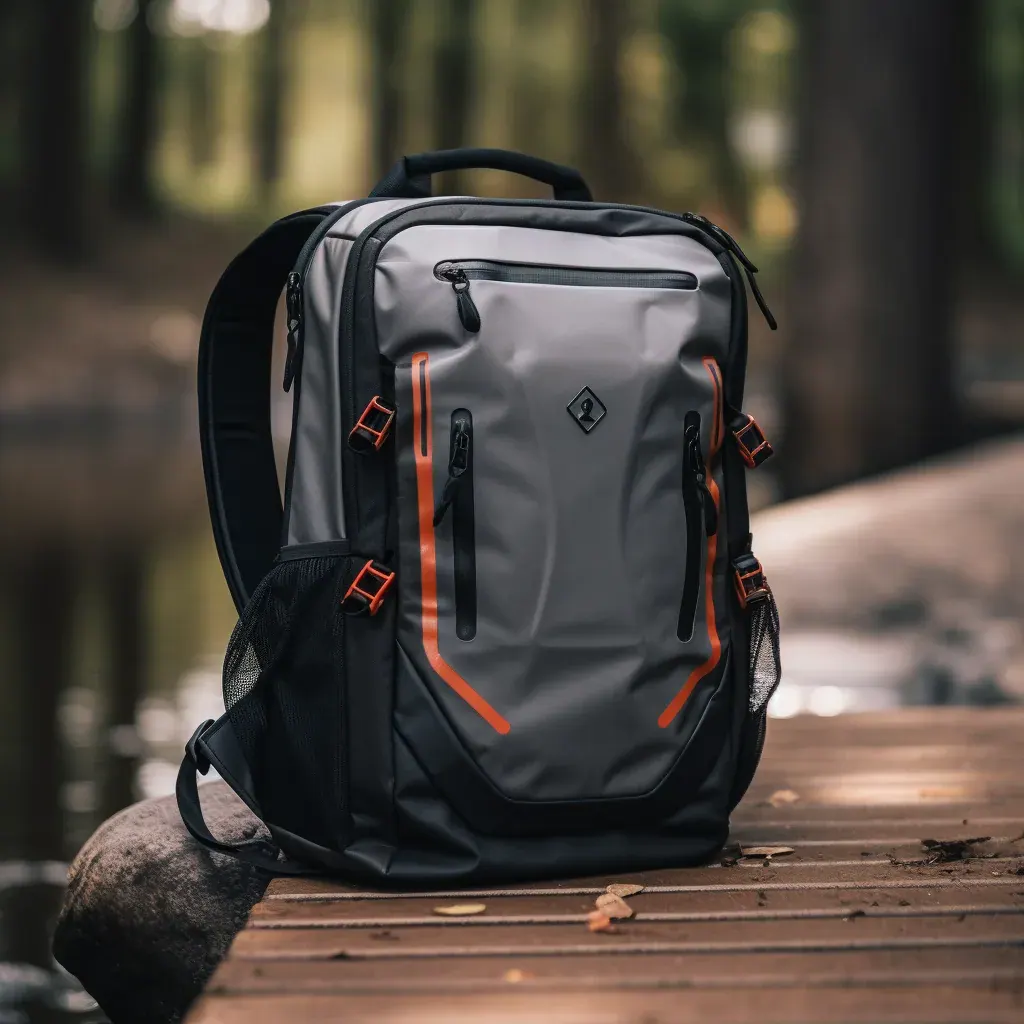
When comparing quotes, insist on six values in writing: coating mass in grams per square metre, hydrostatic head in millimetres, seam construction type plus peel strength per 25 millimetres, closure brand and model, hardware alloy plus salt fog hours, and the inspection standard applied at release. Two quotes that differ in one of those six are not the same product regardless of how similar they look.
Add two commercial values as well: the claimed service life used to compute cost per year, and the spare parts commitment in years. Together, eight numbers turn an emotional purchase into an auditable decision, and they also make future reorders predictable because you can compare like with like. Buyers building a formal selection process can follow the waterproof backpack buying guide step by step.
| Checklist item | Minimum for daily use | Minimum for marine use | How to verify |
|---|---|---|---|
| Coating mass | 180 g per square metre | 320 g per square metre | Mill certificate |
| Hydrostatic head | 5,000 mm | 10,000 mm | Laboratory report |
| Seam peel | 40 N per 25 mm | 70 N per 25 mm | Lot sample pull |
| Closure | Branded coil plus flap | Technical sealed zip | Model number check |
| Hardware | Engineering polymer | 316 stainless or anodised | Salt fog result |
| Release inspection | AQL 2.5 documented | AQL 2.5 plus certificates | Ask for records |
A final word on tier creep. Adding selected premium elements to a mid-tier base often beats buying the flagship outright: upgrading only the closure and the hardware can cost 12 to 25 USD more while capturing most of the reliability gain. Entry-level ranges worth considering are collected in the best budget waterproof packs under 50 USD.
Programme Notes for Volume Orders
Tier strategy matters more than single-product strategy. A coherent range usually needs one entry body under 45 USD to win search traffic, one core body at 60 to 110 USD where margin and review scores live, and one flagship above 130 USD that demonstrates credibility. The flagship rarely sells most units, but it justifies the tier below it and anchors the category in a buyer's mind.
QUANZHOU JUNYUAN BAGS builds across those bands, starting at 500 pcs per design and colour with samples in 6 to 10 working days and bulk in 35 to 50 days. Input chemicals may be checked against the REACH and California Prop 65 lists, release lots can be sampled at AQL 2.5, and delivery can be arranged FOB Xiamen or DDP into more than 100 countries. Cost drivers, tier construction rules, and verification steps appear. Briefs can be sent to service@junyuanbags.com.
The conclusion is deliberately unromantic. Pay for the specification you will actually use, not for the tier you would like to own. Below 20 wet days with damp-tolerant contents, a budget body is a rational purchase. Above 60 wet days, around salt water, or beside a laptop worth more than 500 USD, the premium row is cheaper before you count anything else.
People Also Ask
Is an expensive waterproof backpack worth the money?
Above roughly 60 wet days a year, yes. Premium bodies carry 320 to 450 grams per square metre of coating against 80 to 150 for budget, survive 6 to 10 years against 1 to 2, and come with lot-level peel data. Below 20 wet days with damp-tolerant contents, budget packs cost less per year of service.
What fails first on a cheap waterproof backpack?
Corner seam tape usually lifts in 4 to 10 months, fold-line coating cracks after 8 to 18 months, and buckles fracture at the ladder-lock slot in 6 to 14 months. Two checks predict all three: peel an inside corner and fold a coated sample 20 times looking for whitening.
How much does closure hardware change the price?
A basic coated coil costs 1.5 to 3 USD, a branded coil 5 to 12 USD, and a genuine technical sealed zip 18 to 35 USD before installation. That single hidden component often explains a 40 USD retail difference between two packs that look identical in photographs.
Which certifications should a premium pack carry?
An article-level ingress result under IEC 60529 rather than a fabric-only report, lot-level seam peel figures, hardware salt fog hours, and restricted substance screening. Process control such as ISO 9001 and an AQL 2.5 release gate indicate that those numbers are consistent across production lots.
Can I upgrade a budget pack to perform better?
Only lightly. You can add a dry liner for contents, replace low-grade buckles, and improve care routines, but you cannot raise 80 to 150 grams per square metre of coating or convert glued tape into a welded joint. Those are built in and not upgradable.
What middle tier should most commuters buy?
Plan for 50 to 120 USD with at least 180 grams per square metre of coating, 5,000 millimetres hydrostatic head, seams peeling above 40 newtons per 25 millimetres, and a branded closure with a protective flap. That combination delivers most real-world reliability without flagship pricing.
Frequently Asked Questions
Q1. What is the real difference between cheap and expensive waterproof backpacks?
Four measurable things: coating mass 80 to 150 grams per square metre against 320 to 450, seam peel 15 to 30 newtons against 70 to 120 per 25 millimetres, hardware surviving 24 to 48 salt fog hours against 500 to 1,000, and defect rates near 4 to 8 percent against under 1.5 percent.
Q2. How long does a budget waterproof backpack last?
Typically 1 to 2 years of genuine service. Corner tape often lifts in 4 to 10 months, fold lines crack between 8 and 18 months, and the product is usually replaced rather than repaired once the first structural fault appears.
Q3. How long does a premium waterproof backpack last?
Commonly 6 to 10 years. Longer life comes less from exotic materials than from repairability: latches, gaskets, and buckles can usually be replaced in 15 to 45 minutes, converting what would be a terminal fault into routine maintenance.
Q4. Are expensive packs actually more waterproof?
Their whole article is more likely to have been tested and certified, yes. Coating performance also rises from 1,000 to 3,000 millimetres hydrostatic head at budget level to 10,000 to 20,000 at premium level, which directly improves performance under pressure and abrasion.
Q5. What is the cheapest tier I should buy for daily commuting?
Plan for the mid tier at 50 to 120 USD. Insist on at least 180 grams per square metre of coating, 5,000 millimetres hydrostatic head, seams above 40 newtons per 25 millimetres, and a branded closure with a storm flap.
Q6. Is it worth upgrading only the zipper?
Often yes, and it is the highest-yield single upgrade. Moving from a basic coated coil to a branded coil or technical sealed closure typically adds 12 to 25 USD and captures most of the reliability difference between tiers for ordinary rain duty.
Q7. How do I check seam quality before buying?
Peel firmly at an inside corner with your thumbnail. Honest welding or proper bonding resists; tape that lifts even 3 millimetres will continue lifting. Ask additionally for lot-level peel figures rather than a one-off certificate from an old sample.
Q8. Why do premium packs include spare parts?
Because most premium failures are component-level rather than structural. Stocking latches, gaskets, and buckles for 5 years changes a fatal fault into a 15 to 45 minute repair, and it is one of the clearest markers of a serious programme.
Q9. What defect rate should I expect from a good order?
Under about 1.5 percent when lot samples are pulled for peel testing and release follows an AQL 2.5 inspection plan. Without those gates, observed rates commonly sit between 4 and 8 percent, most of it appearing months after delivery rather than at receipt.
Q10. Do I need marine-grade hardware for coastal use?
Yes within a few kilometres of salt water. Anodised alloy or 316 stainless typically survives 500 to 1,000 hours of salt fog exposure, while basic plating shows white rust in 24 to 48 hours and can seize a slider within one season.
Q11. Is cost per year a fair way to compare tiers?
It is the fair starting point and often favours budget: about 20 USD per year for a replaced budget pack against roughly 24 for a mid-tier and 27.5 for premium. Add failure consequence and maintenance time, and premium becomes cheaper for high-risk or daily duty.
Q12. What are MOQ and lead times across tiers?
All tiers begin at 500 pcs per design and colour. Samples take 6 to 10 working days, bulk takes 35 to 50 days after approval, materials may be screened for REACH and California Prop 65, and finished goods may be inspected at AQL 2.5 before shipping.