A custom EVA tote works as event merchandise when it is ordered early enough, decorated durably enough and sized for the load the attendee will actually carry. Plan 90 to 130 days before the event date, order 500 pieces per design and colour as a minimum, and choose an in-tool debossed or screen printed mark over a transfer film, because a giveaway bag is used hard and judged on the second season rather than the first day. Resorts and event programmes typically run 1,000 to 5,000 pieces across two or three colourways. QUANZHOU JUNYUAN BAGS builds these from an approved sample in 35 to 50 days.
What Makes a Tote Work as Event Merchandise
Most promotional bags are collected, carried for a day and then discarded, and the reason is almost always that they were chosen for the wrong property. A bag is kept when it does a job the recipient needs done, which for this category means it drains, it hoses clean and it stands up on wet ground. A promotional tote that does those three things stays in a boot or a hallway for years and carries the logo with it; one that is chosen for appearance alone goes in a cupboard within a week.
Three properties decide whether an event bag earns its cost. Usability comes first: the recipient has to have a reason to reach for it, and a draining, washable body that works at a beach, a pool, a gym and a sports sideline has four reasons. Durability comes second, because the marketing value is delivered in month six rather than on day one. And restrained branding comes third: a small, well-placed mark is carried far more willingly than a large one, and the bags that get used longest are usually the ones with the quietest logos.
| Property | Why it matters for merch | Specification that delivers it |
|---|---|---|
| Usability | A bag kept in the boot gets used weekly | Full perforation, 20 to 42 litres, stands empty |
| Durability | Marketing value accrues over seasons | In-tool deboss, or screen print on a treated surface |
| Restrained branding | People carry quiet logos further | A mark of 60 to 100 millimetres on the upper panel |
| Washability | It gets hosed rather than thrown away | No fabric, no lining, no seams |
| Neutral colourway | Suits more recipients | Two or three colourways rather than one loud one |
Six Event Types and What Each Needs
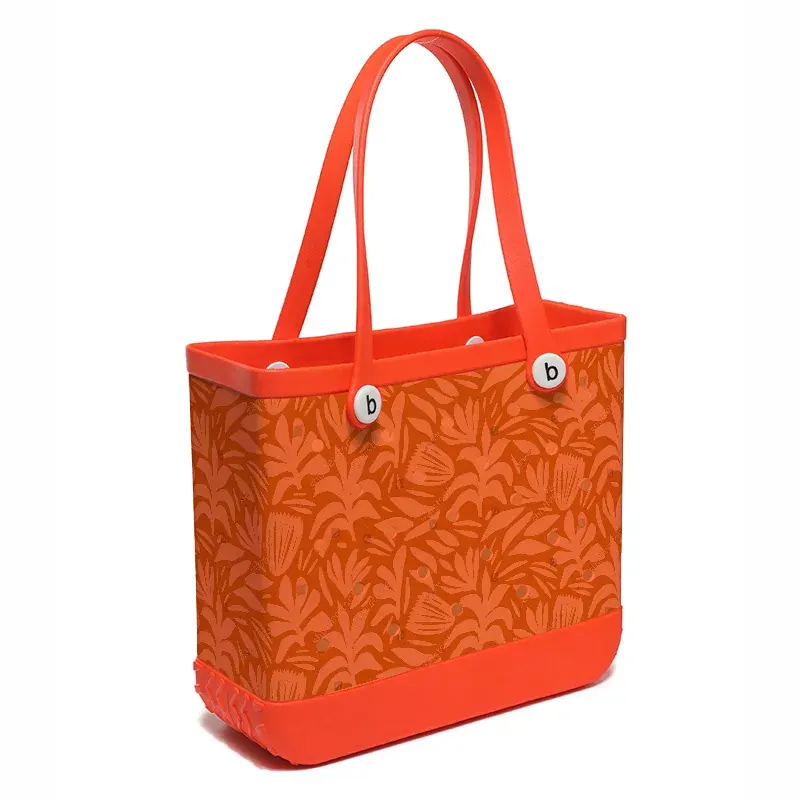
Event programmes differ more than buyers expect, and the specification that suits one is wrong for another. A festival giveaway is a volume decision where unit cost dominates; a resort welcome gift is a quality decision where the bag has to feel like a present; a corporate conference bag has to look professional rather than recreational. Setting the event type first makes every subsequent decision easier, and it is the first question worth answering before asking for a price.
| Event type | Typical quantity | Body size | Decoration | What drives the choice |
|---|---|---|---|---|
| Festival or race day giveaway | 2,000 to 10,000 pieces | 18 to 26 litres | One colour screen print | Unit cost and shelf appeal |
| Resort or hotel welcome gift | 500 to 3,000 pieces | 26 to 42 litres | Debossed or two colour print | Perceived quality and reuse |
| Corporate conference | 500 to 2,000 pieces | 20 to 28 litres | Debossed, restrained | Professional appearance |
| Sports club or team season | 300 to 1,500 pieces | 28 to 42 litres | Printed number plus charm tray | Identification on a wet sideline |
| Retail gift with purchase | 1,000 to 5,000 pieces | 18 to 26 litres | Full colour transfer or UV | Artwork fidelity |
| Product launch or influencer kit | 100 to 800 pieces | 10 to 26 litres | UV digital, variable data | Short run, no tooling |
Two patterns are worth drawing out. First, the quantity band sets the decoration method almost automatically: below about 500 pieces only UV digital and heat transfer make economic sense, while above about 5,000 pieces of the same artwork an in-tool mark becomes the cheapest and the most durable. Second, the two ends of the size range are not interchangeable: a welcome gift that will hold two towels and a bottle needs 32 litres or more, and a conference bag that will hold a laptop sleeve and a notebook is better at 22 to 26.
Quantity Planning
Ordering the right number is the decision that most affects the cost per useful impression, and it is usually made badly because it is made late. Two numbers have to be estimated: how many people will attend, and what proportion will take a bag. For a free giveaway at a festival the take rate is high, often 70 to 90 percent of attendance; for a bag offered at a conference desk it is far lower, typically 30 to 50 percent. Ordering to attendance rather than to take rate leaves a pallet of bags in a warehouse.
| Programme | Attendance | Expected take rate | Order quantity | Note |
|---|---|---|---|---|
| Festival giveaway | 8,000 | 70 to 90 percent | 6,000 to 7,000 | Round down, a sell-out is fine |
| Conference desk | 1,200 | 30 to 50 percent | 400 to 600 | Below 500, expect a surcharge |
| Resort welcome, annual | 40,000 guests | 100 percent of rooms | 3,000 to 6,000 | Order per season, not per year |
| Club season kit | 300 members | 100 percent | 300 to 400 | Add 10 percent for spares |
| Gift with purchase | 12,000 transactions | 40 to 60 percent | 5,000 to 7,000 | Run two drops, not one |
| Launch kit | 500 recipients | 100 percent | 500 to 550 | Keep 50 for press use |
Two corrections apply. A giveaway that runs out is a success rather than a failure, because scarcity is free marketing and a leftover pallet is an asset write-down, so round down rather than up. And splitting a large programme into two drops costs slightly more per unit and removes most of the risk: the first drop covers the confirmed need, the second is ordered against the actual take rate rather than the estimate.
Decoration That Survives a Giveaway
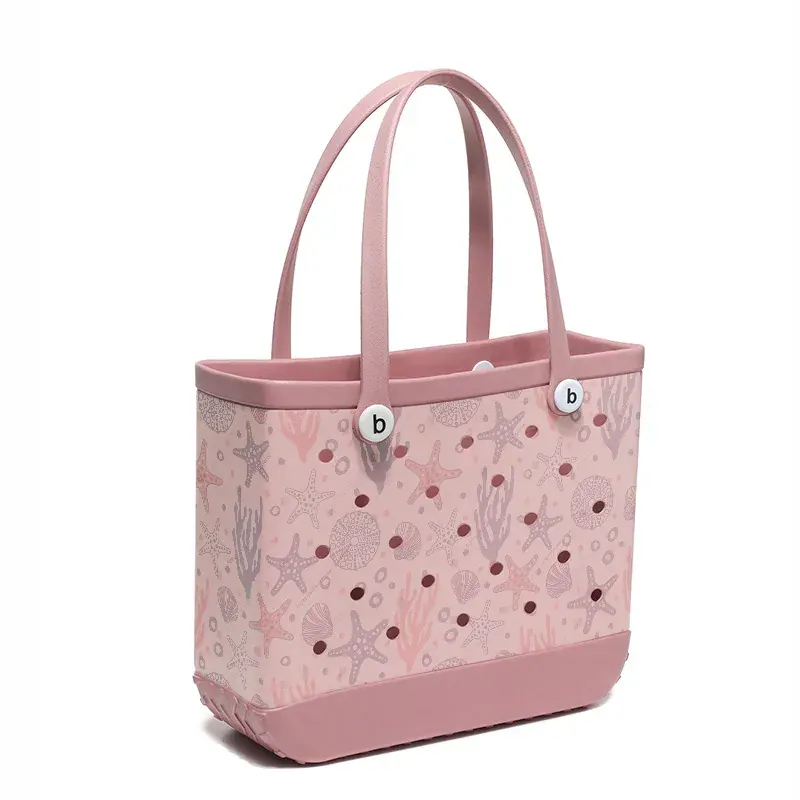
A giveaway bag is treated harder than a bought one, because the recipient has no investment in it. It gets hosed, left in a car, dragged across sand and loaded with wet kit, and a decoration that would survive a season of careful use will not survive a season of that. The two methods that do survive are an in-tool debossed mark, which has no applied layer at all, and a properly treated and cured screen print. The two that fail are a transfer film and an untreated UV print, both of which lift at the edges within a season.
| Method | Survives a giveaway | Set-up | Economic from | Verdict |
|---|---|---|---|---|
| In-tool deboss | Yes, life of the bag | 800 to 2,500 dollars | About 5,000 pieces | Best for a recurring annual event |
| Screen print, treated | Yes, two to four seasons | Low | About 500 pieces | The default choice |
| Heat transfer film | One to three seasons | Low | About 100 pieces | Acceptable for a one-off event |
| UV digital print | One to three seasons | None | 1 piece | Best for a variable-data launch kit |
| Applied woven label | One to two seasons | Low | About 500 pieces | Rarely right on a moulded body |
Placement matters as much as method, and the rule for event merchandise is the opposite of the rule for retail. A retail bag can carry a large mark because the buyer chose it; a giveaway bag should carry a small one, because the recipient did not. A mark of 60 to 100 millimetres on the upper panel, in one or two colours, is carried far more willingly than a full-width logo, and the bags that stay in service longest at resorts are consistently the ones with the quietest branding.
Timeline: Working Backwards From the Event Date
Event programmes fail on timing more often than on anything else, and the reason is that an event date cannot move. Everything else in a supply chain can slip; a festival opening or a resort season start cannot. The only safe method is to plan backwards from the date the bags have to be in a venue, and to put the largest buffer at the front where the decisions are made rather than at the back where the freight is.
| Programme | Event date | Order by | Sample approved by | Total elapsed |
|---|---|---|---|---|
| Existing tool, one colour, printed | 1 July | 1 March | 15 March | About 110 days |
| Existing tool, three colourways | 1 July | 15 February | 1 March | About 125 days |
| New logo insert, three colourways | 1 July | 1 February | 20 February | About 130 days |
| New body shape | 1 July | 1 December | 10 January | About 150 days |
| Repeat of last year's programme | 1 July | 1 April | Not needed | About 90 days |
The last row is the one worth aiming for. A programme that repeats an approved specification needs no sampling round, no artwork approval and no tooling, and it can be ordered ninety days out instead of a hundred and thirty. That is a real argument for treating an event bag as a recurring programme rather than a one-off, and for keeping the approved sample and the artwork file from one year to the next.
Freight should be booked when the order is placed rather than when the goods are finished. Bookings on the main lanes tighten from roughly June to September for a Northern Hemisphere summer season, and a booking that takes three days in February can take ten in August. Adding a fortnight of buffer to the freight leg is free; discovering in week twelve that the vessel is full is not recoverable.
Budget Tiers
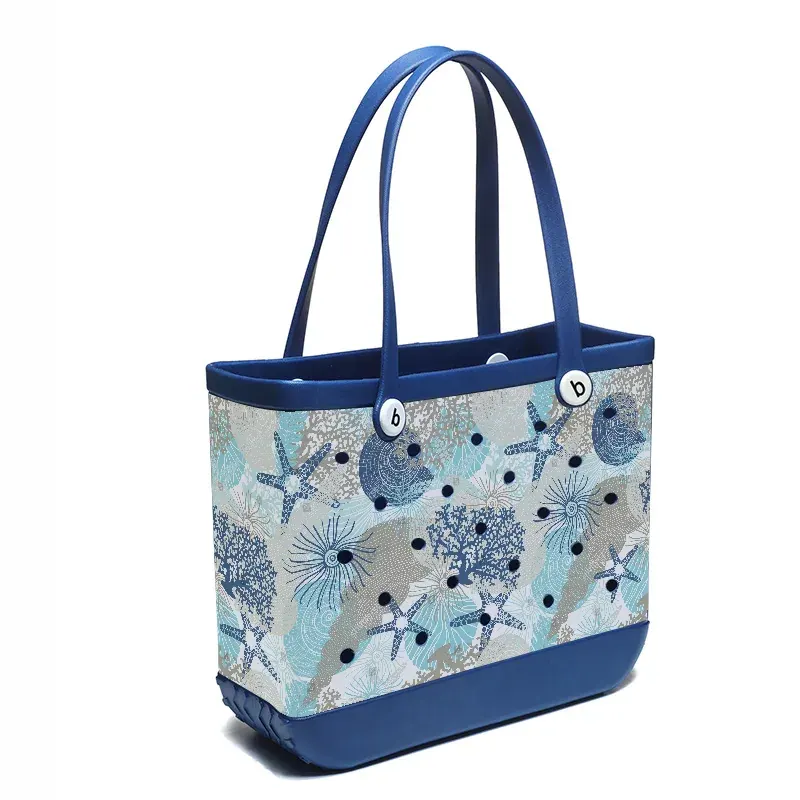
Event budgets are usually set per recipient before anyone knows what the bag costs, so the useful way to present options is as tiers. Each tier below is a complete specification rather than a price point, and the differences between them are in the body weight, the decoration and the colourway count rather than in the size.
| Tier | Body | Decoration | Colourways | Indicative landed cost |
|---|---|---|---|---|
| Volume giveaway | 18 to 26 litres, 3.0 millimetre wall | One colour screen print | One | 7.50 to 10.50 dollars |
| Standard event | 26 to 32 litres, 3.5 millimetre wall | Two colour screen print | Two | 10.00 to 14.00 dollars |
| Resort welcome | 32 to 42 litres, 4.0 millimetre wall | Debossed mark | Two or three | 13.00 to 18.00 dollars |
| Premium gift | 32 litres, 4.5 millimetre wall, strap | Deboss plus a two colour print | Two, with a hangtag | 17.00 to 24.00 dollars |
| Launch kit | 10 to 26 litres | UV digital, variable data | One | 12.00 to 20.00 dollars |
Two of those tiers are worth commenting on. The premium gift tier is the only one where a strap is worth including, because a resort welcome bag is carried some distance from a reception to a room or a pool and the strap is what makes that comfortable. And the launch kit tier is the most expensive per unit by a wide margin because it carries no tooling, which is exactly right for 100 to 800 pieces and exactly wrong for anything above that.
Packing and Getting the Bags to the Venue
Event logistics are a separate problem from production and they catch programmes out every season. Four decisions have to be made before the goods are finished, and all four are cheap to plan and expensive to improvise.
- Delivery address: a venue that is not staffed until the day before the event cannot receive a pallet three weeks early. Confirm who signs for it.
- Packing configuration: loose in a carton, individually bagged, or bagged with a hangtag, which changes both the cost and the unboxing impression.
- Strap packing: shipped detached and packed in an inner box to keep the carton density, or fitted and ready for the shelf.
- Customs and duty: a shipment into an event venue abroad needs a consignee, a classification and, in most cases, a duty payment before release.
- Split shipment: for large programmes, sending part by sea and part by air is cheaper than sending all by air and safer than sending all by sea.
- Contingency: keep 50 to 100 pieces back for press use, damage and late additions.
The customs line is the one that strands most event shipments, and it is worth stating plainly: a commercial shipment of promotional goods is dutiable in most jurisdictions even when the goods are given away, and the recipient rather than the sender is the importer of record. Arranging a DDP shipment to the venue removes the problem for an extra 3.40 to 6.80 dollars per unit, and for a one-off event that is usually money well spent.
Compliance for Promotional Articles
A promotional article carries the same obligations as a retail one, and giveaway status does not exempt it. A bag handed to a member of the public in the European Union is subject to the same chemical restrictions as a bag sold in a shop, and one handed to a child is subject to small-parts assessment in addition. Programmes that assume a giveaway is exempt discover otherwise at the point of import, which is the worst possible moment.
Chemical restrictions on articles placed on the European Union market are administered by the European Chemicals Agency, and the practical requirement is a screening report per material set covering the body, the strap webbing and the print ink. Physical and mechanical safety test methods, including the small-parts assessment and pull testing that apply to any charm or detachable part, are published by ASTM International, and documented quality management around holding those records aligns with the International Organization for Standardization. A programme that collects the reports at sampling spends 300 to 900 dollars; one that reconstructs them at import spends weeks.
Making the Bag Worth Keeping
The difference between a bag that ends up in a cupboard and one that stays in a boot is usually a decision made at specification, not at design. The list below is what separates the two, and none of it costs anything.
- Choose a neutral colourway over a loud one, because a neutral bag gets carried by more recipients for longer.
- Keep the mark small, at 60 to 100 millimetres, and put it on the upper panel rather than across the whole wall.
- Size it for a real job: 32 litres holds two towels and a bottle, which is a reason to reach for it.
- Specify full perforation so it drains and hoses clean, which is the property that keeps it in service.
- Avoid a one-off date on the artwork. An undated bag is used for years; a dated one is retired in season one.
- Add a charm or an insert if the budget allows, because an accessory makes the bag feel personal rather than promotional.
The fourth and fifth items on that list do most of the work. A bag that drains and washes is a bag that gets used, and a bag without a date on it is a bag that is still being carried two years later. Both cost nothing at specification, and both are the difference between a marketing impression that lasts a day and one that lasts three seasons.
Judging Whether It Worked
Event merchandise is usually judged on the day and almost never afterwards, which is why the same mistakes get repeated every season. Three measures are cheap to collect and they change what gets ordered next year. Count the take rate, which is the number of bags collected against attendance, and compare it with the estimate the order was built on. Ask one question at the exit or in a follow-up email about whether the bag has been used since. And keep a note of how many were left over, because that figure is the one that makes the case for splitting next year's order into two drops.
A take rate above about 80 percent means the order was too small and the programme left impressions on the table; below about 40 percent on a free giveaway means the bag did not appeal and the specification rather than the quantity needs reviewing. Both are useful, and neither is discoverable without counting. Programmes that record these three numbers for two seasons end up with a specification that fits their audience and a quantity estimate that is within ten percent, which is the whole point of running the programme more than once.
Programme Notes
Decoration options sit on the custom EVA tote page, volume pricing on the wholesale EVA tote page and the cost structure behind every tier above on the EVA tote MOQ and pricing guide. Buyers comparing decoration methods should read the custom EVA tote printing guide for the full comparison. QUANZHOU JUNYUAN BAGS has run waterproof bag programmes since 2014 with a founding team in this trade since 2004, at monthly output of 200,000 units verified by SGS, under BSCI and ISO 9001, with materials screened for REACH and California Prop 65 and every bulk shipment inspected at AQL 2.5 before release.
Send the event date, the venue country, the quantity, the body size, the colourway count and the artwork to service@junyuanbags.com, and ask for the schedule written backwards from the date the bags have to be in the venue. Sampling runs 6 to 10 working days and bulk 35 to 50 days, and a programme planned backwards from a fixed event date is the only kind that arrives on time.
People Also Ask
How far ahead should event totes be ordered?
90 to 130 days before the event date: 6 to 10 working days for sampling, 35 to 50 days for bulk and 18 to 38 days on the water.
What is the minimum order for a branded event tote?
500 pieces per design and colour, which is set by the resin purge needed for each colour change rather than by a commercial rule.
Which decoration lasts longest on a giveaway bag?
An in-tool debossed mark, because it has no applied layer to lift. A properly treated screen print lasts two to four seasons.
How many totes should I order for a festival?
About 70 to 90 percent of attendance, rounded down. A giveaway that runs out is a success and a leftover pallet is a write-down.
Do giveaway bags need compliance testing?
Yes. A promotional article carries the same obligations as a retail one, including REACH screening and small-parts assessment for children.
Should an event bag carry a date on it?
No. An undated bag is still being carried two years later, while a dated one is retired at the end of the event season.
Frequently Asked Questions
Q1. What makes a good event tote?
One that does a job: full perforation so it drains and hoses clean, a size that holds a real load, and a small mark of 60 to 100 millimetres.
Q2. What size suits a resort welcome gift?
32 to 42 litres, which holds two towels and a bottle and gives the recipient a reason to keep using it.
Q3. How long does an event programme take?
90 to 130 days for a catalogue body and up to 150 for a new shape, all measured backwards from the date the bags must be in the venue.
Q4. Is a heat transfer logo durable enough?
For a one-off event, yes, at one to three seasons. For a recurring programme, an in-tool deboss is cheaper per year and lasts the life of the bag.
Q5. Should the bag carry the event date?
No. An undated bag keeps working for years, and the marketing impression lasts with it.
Q6. What is the minimum quantity?
500 pieces per design and colour. Below that, expect a surcharge because the colour-change purge costs more per unit than the moulding.
Q7. Can I order two colourways in one programme?
Yes, and above 1,000 pieces the second and third colourway are usually free. Below that expect 0.30 to 0.90 dollars per piece.
Q8. How should the bags be shipped to a venue?
DDP to the venue address, which removes the customs and duty problem for 3.40 to 6.80 dollars per unit, and confirm who signs for the pallet.
Q9. Do promotional bags need REACH screening?
Yes. A giveaway article carries the same obligations as a retail one, and screening costs 300 to 900 dollars per material set.
Q10. Should straps be fitted before shipping?
Usually not. Fitting them cuts pieces per carton from 8 to 5 or 6 and raises freight per unit by about a third.
Q11. How many spare bags should I keep back?
50 to 100 pieces for press use, damage and late additions, which is a small cost against a programme that cannot be reordered in time.