A first EVA tote range works at four to six stock keeping units, a landed cost of 6.40 to 12.80 dollars per unit at 500 pieces per colour, and a shelf price between three and four times landed cost, which puts the entry retail band at 24 to 48 dollars. Working capital, not unit price, is what kills new brands: a 1,500 piece opening order at 9 dollars landed is 13,500 dollars of stock before freight, duty and any decoration tooling. Plan the cash cycle over 120 to 180 days, start with two sizes and three colourways, and hold the range narrow until one size proves itself.
What You Are Actually Buying Into
An EVA tote brand is a working capital business wearing the clothes of a design business. The product itself is simple: one moulded body, two handle options, a perforation pattern and a colour. The difficulty is that the minimum order is set by the moulding cycle rather than by your sales forecast, so your first decision is not which colour to launch but how much cash you can hold in stock for four to six months without panicking.
That framing matters because it changes which advice is useful. Guidance written for an apparel start-up, where a first run of 200 pieces is normal, does not transfer to a programme with a 500 piece minimum per design and colour. The realistic first order is 1,000 to 3,000 pieces across two sizes and three colourways, the realistic cash at risk is 8,000 to 30,000 dollars before freight, and the realistic sell-through window is one to two seasons depending on whether you launch into spring or into autumn.
| Question new brands ask | Realistic answer for this category | Why it differs from apparel |
|---|---|---|
| Smallest first order | 500 pieces per design and colour | Set by the moulding cycle, not by your forecast |
| Realistic opening buy | 1,000 to 3,000 pieces | Two sizes times three colourways fills it quickly |
| Cash at risk before freight | 8,000 to 30,000 dollars | Stock sits for four to six months |
| Shelf price multiple | 3.0 to 4.2 times landed cost | Below 2.8 leaves no room for returns |
| Sell-through window | One to two seasons | Highly seasonal in most markets |
| Time from brief to stock | 55 to 75 days | Sampling plus bulk plus transit |
Three Routes to Market Compared
There are three ways a new brand enters this category, and they are not equally forgiving. Selling direct to consumer gives the highest margin and the slowest cash. Selling into independent retail gives volume and a sixty to ninety day payment term. Selling on a marketplace gives reach and takes a referral fee of roughly 8 to 15 percent plus fulfilment. Most new brands pick direct because it feels cheapest and then discover that customer acquisition, not unit cost, sets their margin.
| Route | Typical gross margin | Cash cycle | Main risk | Best for |
|---|---|---|---|---|
| Direct to consumer website | 62 to 74 percent | Stock held 4 to 6 months | Acquisition cost per order | A brand with an existing audience |
| Independent boutiques and surf shops | 42 to 52 percent | 30 to 90 day terms | Slow reorders, small drops | A brand with local relationships |
| Marketplace with fulfilment | 34 to 48 percent after fees | 14 to 30 days to payout | Price competition and reviews | Testing colourways cheaply |
| Corporate and event channel | 38 to 55 percent | Deposit then balance | Long lead times, spec changes | A brand with a sales pipeline |
| Resort and amenity channel | 30 to 45 percent | Net 60 typical | Large single orders, long gaps | A brand able to hold stock |
The honest reading of that table is that the corporate and resort channels are the two that pay for a new brand, because they place one large order against a specification rather than asking you to build demand one customer at a time. They are also the two that require the most paperwork, which is why the compliance section below is longer than most new founders expect.
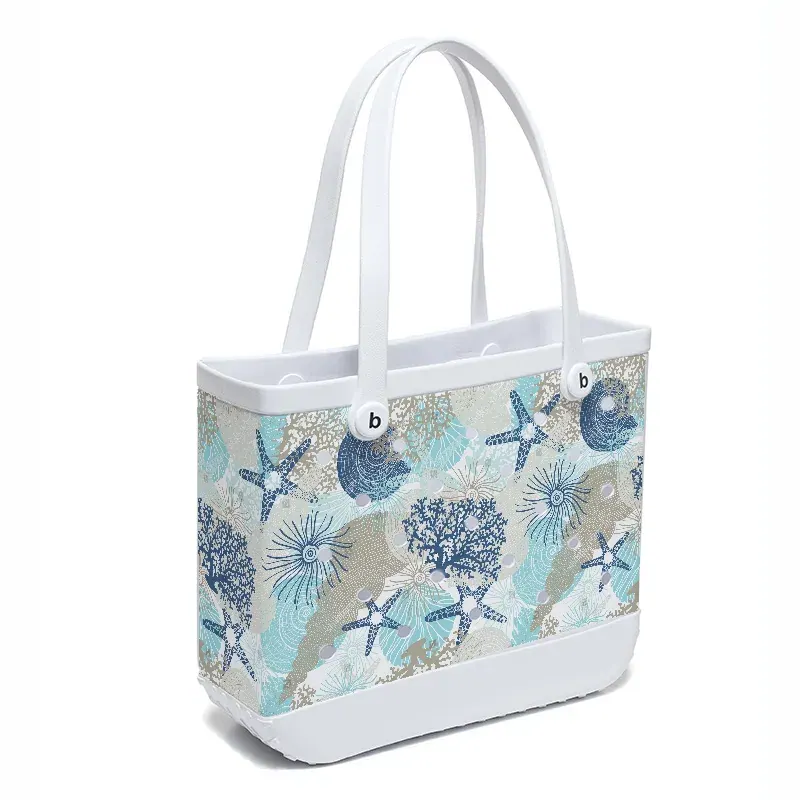
Your First Range: How Many SKUs Is Enough
The instinct is to launch wide and the data says launch narrow. A first range of four to six stock keeping units sells faster per unit than a range of twelve, because a narrow range makes the buying decision easy and keeps the opening order inside a survivable cash figure. Two sizes, three colourways is the pattern that works: an 18 litre body and a 32 litre body, each in a light, a mid and a bright colourway.
Add variety later through accessories rather than through more bodies. Charms, inserts and straps cost a fraction of a new moulded size, ship in the same carton, and lift average order value by 4 to 9 dollars without adding a new minimum order. A brand that launches six bodies and no accessories is competing on price by month three; a brand that launches two bodies and an accessory line is competing on basket size.
Unit Economics from Landed Cost to Shelf Price
Work the numbers backwards from the price a customer will pay, not forwards from the price you want to pay. In this category the retail band that converts is 24 to 48 dollars, with the centre of gravity around 32 to 38 dollars for a mid-size body. Everything below is the cost stack that has to fit inside that number.
| Cost line | At 500 pieces per colour | At 2,000 pieces per colour | Note |
|---|---|---|---|
| Unit price ex works | 7.40 to 12.80 dollars | 6.40 to 10.20 dollars | Wall thickness drives most of the spread |
| Decoration, per unit | 1.40 to 2.40 dollars | 0.90 to 1.60 dollars | Formed marks amortise a tooling charge |
| Tooling, one-off | 800 to 2,600 dollars | Same, amortised over more units | Only for a new shape or formed mark |
| Freight and duty, per unit | 1.80 to 4.10 dollars | 1.40 to 3.20 dollars | Air freight adds 2.40 to 4.10 |
| Total landed per unit | 10.60 to 19.30 dollars | 8.70 to 15.00 dollars | The number that sets your price |
| Shelf price at 3.4 times landed | 36 to 66 dollars | 30 to 51 dollars | Above 48 dollars conversion drops sharply |
The last row is the one to look at twice. At 500 pieces the landed cost of a decorated mid-size body can reach 19 dollars, which forces a shelf price near 60 dollars and pushes the product out of the band where it converts. That is the arithmetic argument for a 2,000 piece opening order on your two hero colourways and a 500 piece order on the third: it buys you a price point rather than just more stock.
Working Capital and the Cash Cycle
New brands fail on cash timing far more often than on price. The cycle runs from deposit to sell-through and it is longer than it looks: 6 to 10 working days for a sample, 7 to 14 days for your approval, 35 to 50 days for bulk, 18 to 35 days in transit, then one to two seasons to sell. A deposit of 30 percent is due at order and the balance before shipment, so the cash is out well before the stock arrives.
- Budget the full landed cost plus 12 percent for freight, duty and incidentals, not just the unit price quoted ex works.
- Assume 30 percent deposit at order, 70 percent balance before shipment, and hold that cash separately from operating spend.
- Model sell-through at 55 to 70 percent in season one rather than at 100 percent. The remainder is season two stock, not profit.
- Keep one reorder reserve of 500 to 1,000 pieces for the hero colourway, because a 45 day re-run misses the peak weeks.
- Do not spend the tooling budget on a second shape until one size has sold through 60 percent.
The reorder reserve is the least intuitive item and the one that most often decides whether a first season is profitable. Peak weeks in this category are narrow, roughly eight to ten weeks in a northern market, and a re-run ordered at the start of peak arrives after it. Holding 500 to 1,000 pieces of the hero colourway costs a few thousand dollars of cash and is the difference between selling out at full price and discounting in September.

Sampling, Tooling and What Costs Money Up Front
Three things cost money before you see a sellable unit, and knowing them prevents the most common budget blowout. A sample from an existing tool costs the unit price plus freight and takes 6 to 10 working days. A new shape needs a tool, at 800 to 2,600 dollars depending on size and cavity count. A formed mark needs artwork locked before the tool is cut, because it cannot be changed later.
The practical sequence is to sample two existing bodies in your target colourways first, sell those, and only commission a tool once you know which size actually moves. Brands that commission a shape first spend the tooling money on their least-informed decision, and a tool cut against an untested assumption is the most expensive way to learn what customers want.
Compliance Files You Will Be Asked For
Any retail buyer, marketplace category manager or corporate procurement team will ask for documentation, and the request usually arrives after you have quoted. Having the file ready is a competitive advantage rather than a chore, because most new brands in this category cannot produce it on request and lose the order to a competitor who can.
| Document | Who asks for it | Typical validity | What it covers |
|---|---|---|---|
| REACH screening report | EU retail buyers | 12 months per colourway | Restricted substances in the compound |
| California Prop 65 statement | US retail and marketplace | Per production batch | Listed substances and warning status |
| Physical test report | Corporate and resort buyers | Per design | Load, drop and handle strength |
| Colourfastness report | Any buyer with a brand standard | Per colourway | Light and rub fastness by grey scale |
| BSCI or equivalent audit reference | Chain retail buyers | 12 months | Social compliance at the production site |
| Inspection report at AQL 2.5 | Anyone ordering in bulk | Per shipment | Defect counts against an agreed limit |
Restricted substance obligations for articles placed on the European market are administered under the REACH regulation, and the reference text and candidate list are published by the European Chemicals Agency. Physical performance figures should be quoted against a named method from ASTM International rather than as an unqualified number, because a buyer comparing two quotes will trust the one with a method number attached.
Six Mistakes That End First Seasons
The same failure patterns repeat across new brands in this category, and all six are avoidable with decisions made before the first order rather than after it.
- Launching six sizes instead of two. The opening buy doubles, the hero size is buried, and the cash cycle stretches past a season.
- Pricing at 2.5 times landed cost. It looks competitive and leaves nothing for returns, marketplace fees or a discount event.
- Ordering without a reorder reserve. The re-run arrives after the eight to ten week peak and the stock lands into a discount period.
- Choosing colourways by personal taste. Light neutrals and one bright outsell mid-tones by a wide margin in most coastal markets.
- Skipping the compliance file. A buyer request that cannot be answered within 48 hours usually becomes a lost order.
- Commissioning a new tool before testing an existing body. The tooling money goes to the least-informed decision in the business.
Two of those six are pricing errors and two are timing errors, which is a fair summary of where the risk actually sits. Design risk is low in this category because the product form is well understood; the risk is almost entirely in how much stock you buy, at what multiple you price it, and whether the reorder lands inside the peak.

Pricing Architecture: Three Tiers That Work
A single price point is the most common pricing error in this category, because it leaves no room for a customer who wants to spend more and no answer for one who wants to spend less. Three tiers solve both problems at once and they cost almost nothing to implement: the same body in a standard colourway at the entry price, the same body bundled with accessories at the middle price, and a decorated or premium-finish version at the top price. The bodies are identical, which keeps the opening order simple, and the perceived range is four products rather than one.
| Tier | Contents | Landed cost | Shelf price | Share of orders |
|---|---|---|---|---|
| Entry | Body in a standard colourway | 8.70 to 12.40 dollars | 24 to 32 dollars | 30 to 40 percent |
| Middle bundle | Body plus a liner and a clipped pouch | 11.90 to 15.80 dollars | 38 to 52 dollars | 35 to 50 percent |
| Premium | Body with a formed mark or two-tone finish | 13.40 to 18.20 dollars | 48 to 68 dollars | 12 to 22 percent |
| Gift set | Body, charm set and a packaged insert | 15.60 to 21.40 dollars | 58 to 78 dollars | 5 to 12 percent |
The middle tier is where the margin lives. A body at 9 dollars landed plus a liner and a pouch at 3.40 dollars costs 12.40 dollars and sells at 44 to 52 dollars, which is a gross margin near 71 percent and an average order value roughly 14 dollars higher than the entry tier. Between 35 and 50 percent of customers choose the middle tier when it is presented as a bundle rather than as an upsell, which makes it the cheapest margin lever available to a new brand and the one most often missed.
Two rules keep the architecture honest. The entry tier must be a genuine product rather than a stripped one, because a visibly inferior entry tier drags the perceived value of the whole range down with it. And the premium tier has to be visibly different rather than just more expensive: a formed mark, a two-tone finish or a metallic pigment all read as different at a glance, while the same body at a higher price reads as a mistake and generates a review saying so.
A Ninety-Day Launch Plan
Compressed into ninety days, the sequence below is what a first season looks like when it runs well. The critical path is artwork sign-off and the bulk window, and both are outside your control once the order is placed, which is why they sit early in the plan.
| Window | Action | Output | Decision locked |
|---|---|---|---|
| Days 1 to 10 | Request samples of two existing sizes in three colourways | Six sample units in hand | Which two sizes to carry |
| Days 11 to 20 | Photograph, build listings, test price points | Listing copy and images | Shelf price for each size |
| Days 21 to 30 | Sign off artwork and colourways, place the order | Order confirmation and deposit | Colourway split and quantities |
| Days 31 to 75 | Bulk production and inspection at AQL 2.5 | Inspection report | Shipment release |
| Days 76 to 95 | Transit, duty and delivery to warehouse | Stock on hand | Channel allocation |
| Days 96 to 120 | Launch, monitor sell-through weekly | First four weeks of data | Reorder quantity for the hero colourway |
The single decision that decides whether the plan holds is the colourway split made around day 30. Order 60 percent of the opening buy across your two safest colourways and 40 percent across the third, because a wrong call on a hero colour can be sold down over two seasons while a wrong call on a secondary colour is a permanent markdown.
Programme Notes
Volume bands and packing are set out in the wholesale EVA tote programme, decoration options and artwork windows are covered in the custom EVA tote guide, and the full cost stack with quantity breaks sits in EVA tote MOQ and pricing. QUANZHOU JUNYUAN BAGS has run waterproof bag programmes since 2014 with a founding team in this trade since 2004, and supports new brands alongside established retail and resort accounts.
Monthly output runs at 200,000 units verified by SGS, operations follow BSCI and ISO 9001, materials are screened for REACH and California Prop 65, and every bulk shipment is inspected at AQL 2.5 before release. Programme minimums begin at 500 pieces per design and colour, with sampling at 6 to 10 working days and bulk at 35 to 50 days from approved sample and deposit, shipped FOB Xiamen or DDP to more than 100 countries. Send your size list, colourway split, target shelf price and launch date to service@junyuanbags.com.
People Also Ask
How much does it cost to start an EVA tote brand?
Budget 8,000 to 30,000 dollars for a 1,000 to 3,000 piece opening order, plus 800 to 2,600 dollars if you commission a new shape.
What is the minimum order for a first range?
500 pieces per design and colour, which is why two sizes in three colourways is the pattern most new brands start with.
What margin should a reseller target?
A shelf price at 3.0 to 4.2 times landed cost. Below 2.8 times there is no room for returns, fees or a discount event.
How many SKUs should a launch range have?
Four to six. Two sizes in three colourways outsells a twelve unit range because it makes the buying decision easier.
How long from first brief to stock on hand?
Around 55 to 75 days: 6 to 10 working days for samples, 35 to 50 days for bulk, and 18 to 35 days in transit.
Do I need compliance documents to sell in the EU and US?
Yes. REACH screening for the EU, a California Prop 65 statement for the US, and a physical test report for corporate buyers.
Frequently Asked Questions
Q1. What is the smallest order I can place for a first range?
500 pieces per design and colour. Two sizes in three colourways fills an opening order of roughly 1,000 to 3,000 pieces.
Q2. What does an EVA tote cost landed at 500 pieces?
Between 10.60 and 19.30 dollars per unit including decoration, freight and duty, against 8.70 to 15.00 dollars at 2,000 pieces.
Q3. What shelf price should I set?
Three to four times landed cost. In this category the band that converts is 24 to 48 dollars, with the centre around 32 to 38 dollars.
Q4. Should I launch two sizes or six?
Two. A narrow range sells faster per unit, keeps the opening buy survivable, and makes the reorder decision obvious.
Q5. How much tooling does a new shape cost?
800 to 2,600 dollars one-off, depending on size and cavity count. Sample existing bodies first and commission a tool later.
Q6. How long does sampling take?
6 to 10 working days for a sample from an existing tool, plus 7 to 14 days for your approval before bulk begins.
Q7. What is the bulk production window?
35 to 50 days from approved sample and deposit, followed by 18 to 35 days in transit depending on mode and destination.
Q8. How much working capital do I need?
The full landed cost plus 12 percent for incidentals. A 1,500 piece order at 9 dollars landed is about 13,500 dollars before freight.
Q9. Which compliance documents will buyers ask for?
A REACH screening report, a California Prop 65 statement, a physical test report, and an inspection report at AQL 2.5 for each shipment.
Q10. Is direct to consumer or retail the better route?
Direct gives 62 to 74 percent gross margin but holds stock for four to six months. Retail gives 42 to 52 percent with faster movement.
Q11. Should I hold a reorder reserve?
Yes, 500 to 1,000 pieces of the hero colourway. Peak is eight to ten weeks and a 45 day re-run arrives after it.
Q12. What is the most common first-season mistake?
Launching too many sizes and pricing too low. Both stretch the cash cycle past a season and force a markdown in September.