Rinse a saltwater fishing bag within four hours of leaving the water and most of the damage never happens. The work takes twenty minutes: a low-pressure fresh water spray top-down for two minutes per side, a fifteen-minute soak in twenty litres of clean water to dissolve the crust the spray leaves behind, three changes of water, then twenty-four to forty-eight hours of drying below sixty percent relative humidity with every pocket open and every tray out. Waterproof zippers need 0.3 to 0.5 grams of silicone lubricant per metre every three to five trips. Skip the soak and chloride residue keeps working at roughly 0.4 to 0.6 millimetres per year on unprotected steel hardware, which is fast enough to destroy a fitting inside two seasons.
Why Salt Is Harder on a Bag Than Rain Is
Seawater holds about thirty-five grams of dissolved solids per litre, and every litre that evaporates inside a pocket leaves those solids behind as a conductive film. That film is the problem rather than the water. Chloride ions break down the passive oxide layer that protects steel, they make the dried residue hygroscopic so the surface never truly dries, and they carry electrical current between dissimilar metals in a buckle. Fresh rain leaves nothing behind, which is why a bag used only in freshwater can go for months without attention while the same bag worked from a saltwater estuary fails inside a season.
The second mechanism is concentration. A wet-dry cycle that repeats every day, which is exactly what a bag sitting in a damp garage does, draws salt solution toward the last place that dries. Over ten cycles the local concentration at a seam or stitch line can reach three to five times the original figure, and at those levels even 304 stainless will pit. Sodium chloride begins pulling moisture out of the air above roughly seventy-five percent relative humidity, so in most coastal climates a bag that has never been rinsed stays perpetually damp on its own.
| Bag component | What salt does to it | Visible after | Prevention |
|---|---|---|---|
| Coated zipper coil | Crystals lift the polymer coating and the slider skips | Four to eight trips | Soak open, lube every three trips |
| Zinc-plated hardware | White rust, then red rust and seizure | Twenty-four to seventy-two hours | 316 stainless or heavy passivation |
| Hook and loop closure | Sand plus salt packs the hooks shut | One trip | Soak upside down, brush dry |
| Seam tape edge | Solution wicks under the tape and lifts it | Two to four weeks | Rinse within four hours, never wash above forty degrees |
| Webbing against hardware | Abrasion plus corrosion cuts the webbing | One season | Rinse the contact point specifically |
The Four-Hour Window
Four hours is the practical deadline because until the water has gone the residue is still a solution, and a solution can be diluted and poured away. Once it has dried into crystals the job changes from rinsing to dissolving, which takes ten times longer and rarely succeeds at the places that matter. On a hot day with wind the window closes faster: a bag lying on a deck at thirty-two degrees in moving air can be dry enough to form crystals inside ninety minutes.
If the four-hour mark has already passed, the answer is not a harder spray. It is a longer soak, because time in clean water replaces pressure as the working force. Thirty minutes of contact with two changes of water removes roughly ninety-five percent of the residue on the second try, whereas a jet nozzle at eight bar removes what is on the surface and drives the rest deeper into seam tape. Anglers who fish several days in a row usually find that a light daily rinse plus one proper soak at the end is better than a heavy rinse every evening.
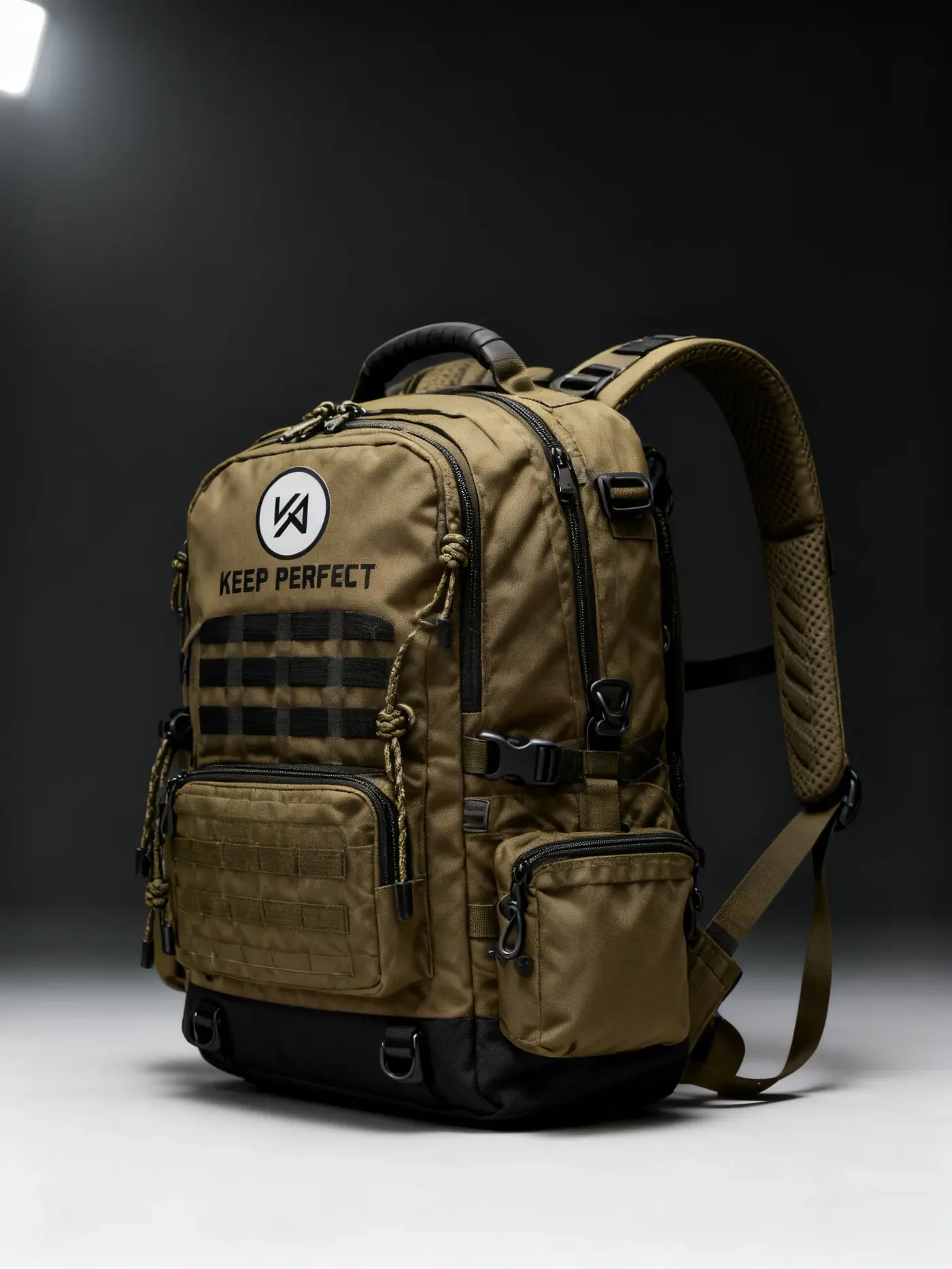
The Twenty-Minute Rinse Protocol
- Empty the bag completely. Remove every tray, every insert, and every loose item, then turn it upside down and shake out grit. Grains left inside hold enough brine to keep working for weeks.
- Spray the exterior from the top down for two minutes per side, at under two bar, holding the hose end two hundred to three hundred millimetres away. Top-down matters because it carries the salt off rather than across.
- Open every zipper to its full length and spray along the coil for thirty seconds on each side while the slider is at the far end.
- Fill a tub with twenty litres of clean fresh water at twenty to thirty degrees, add mild soap at one part in one hundred if the bag is greasy, and immerse the bag for fifteen minutes.
- Drain and repeat twice more. Check the third water with a handheld meter: anything above about two hundred parts per million of total dissolved solids means another change is needed.
- Work each slider back and forth ten times while it is still wet, which pushes grit out of the coil rather than deeper into it.
- Hang upside down with all pockets open and every tray standing separately on edge.
Sequence counts as much as technique. Emptying before wetting prevents the common failure where grit and salt are mixed into a paste and then pushed into fabric pores by the spray. Spraying before soaking prevents the second failure, where a dry bag full of crystals floats on the surface of the soak water and only its lower third actually gets wet.
Water Temperature, Pressure, and Volume
Rinse water should sit between twenty and thirty degrees. Above forty degrees two things go wrong at once: thermoplastic polyurethane begins to lose tensile strength and eventually turns tacky as its ester groups hydrolyse, and PVC coating plasticiser migrates faster, leaving the film brittle. Below ten degrees the dissolving action slows enough that fifteen minutes of soak does less work than five minutes at room temperature. Nobody needs a thermometer, but nobody should use water hot enough to be uncomfortable on a hand.
Pressure is the parameter most often got wrong. A domestic supply at four bar through a jet nozzle delivers roughly twenty times the force of an open hose end, and that force ploughs salt crystals through coating and under seam tape. Total volume matters more than force: twenty litres of quiet water does more cleaning than two litres at high pressure. Anyone who wants laboratory-grade evidence that a hardware specification resists chloride can require salt spray exposure assessed with methods published by ASTM International, typically ninety-six to two hundred and forty hours depending on the grade required.
| Parameter | Target | Too far one way | Too far the other |
|---|---|---|---|
| Water temperature | 20 to 30 degrees | Above 40 degrees softens coatings | Below 10 degrees slows dissolving |
| Delivery pressure | Under 2 bar | Above 4 bar drives salt into tape | Below 0.5 bar cannot shift crust |
| Soak volume | 20 litres per bag | Under 10 litres resaturates quickly | Above 40 litres wastes time |
| Contact time | 15 minutes per soak | Over 60 minutes is rarely needed | Under 5 minutes leaves half the salt |
| Nozzle distance | 200 to 300 mm | Under 100 mm concentrates force | Over 500 mm loses coverage |
Trays, Inserts, and the Grit Trap
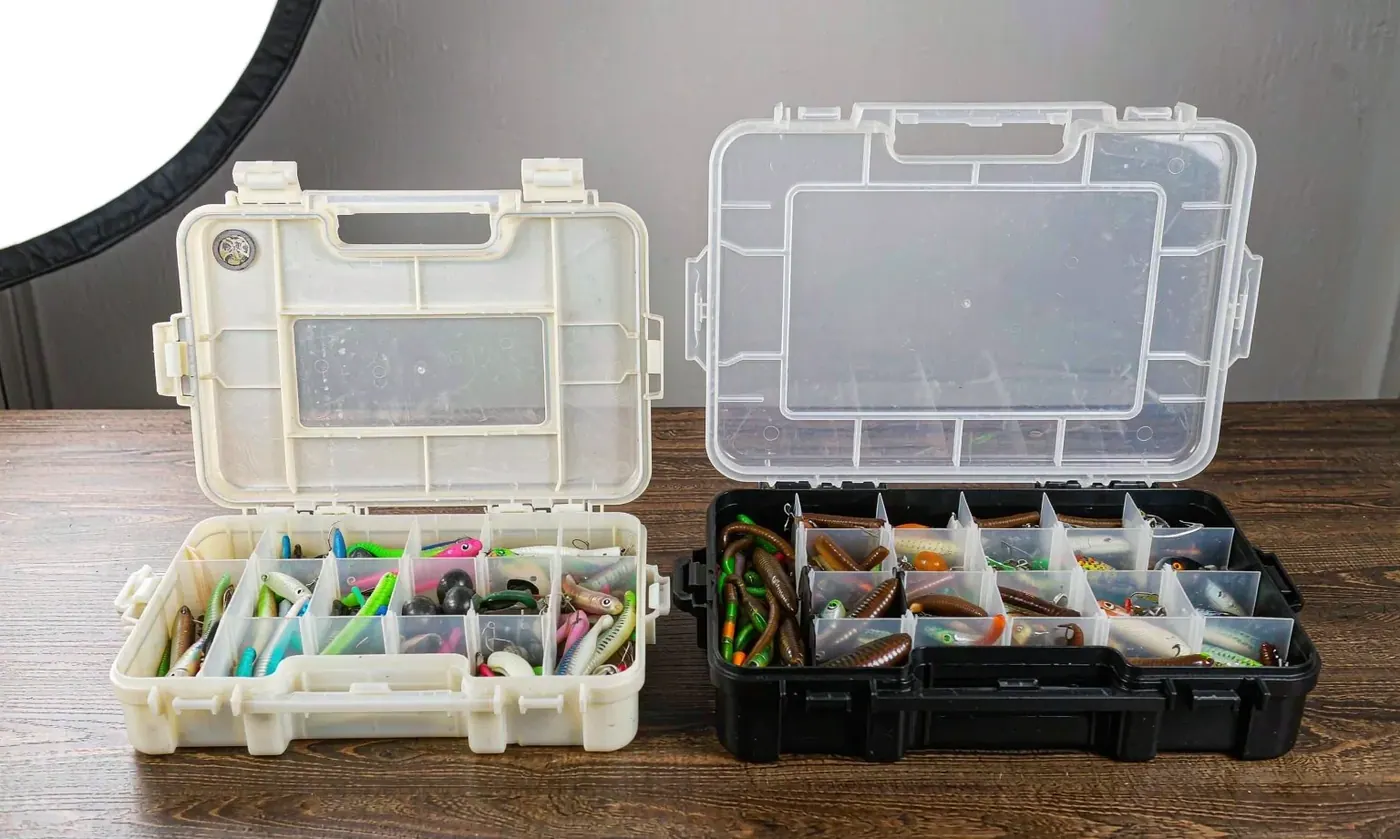
Tackle trays are the last thing most people rinse and the first thing that corrodes, because they hold lures that go into the sea and then lie flat against each other for days. A 3600 tray holding twenty lures can carry several millilitres of brine in its corner channels, and stacked wet trays stay damp at the contact faces for forty-eight hours or more. Rinsing them while stacked is pointless; the water touches the outside of the stack and nothing else.
The practical rule is one rule and it is not negotiable: trays come out, are rinsed individually, and are dried standing on edge with air on both faces. Hooks and terminal tackle deserve two minutes of fresh water in a separate container rather than in the bag, because rust bleeding from a hook into a tray compartment stains permanently and transfers to the next lure put there. Rust prevention across the whole tray set is dealt with in detail in the tackle rust prevention guide, but nothing there replaces removing them from the bag first.
Drying: Twenty-Four to Forty-Eight Hours
Drying is where a good rinse is either finished properly or undone. Hang the bag upside down so water leaves through the opening rather than pooling in the base, open every pocket and every zipper, pull padded shoulder straps out from the back panel, and put it somewhere air moves. In still air inside a closed garage the inside of a thirty litre bag can take seventy-two hours; with air movement across both faces it is twenty-four to thirty-six.
Direct sun is the other decision. Ultraviolet exposure is the single largest factor in coating life, and several hours of strong midday sun per week shortens the useful life of a PVC-coated shell noticeably across a season. Shade with airflow is better than sun without it, and the same applies to a boot heater or a radiator: heat above about forty-five degrees accelerates coating ageing more than it accelerates drying.
| Drying condition | Target | Failure mode if wrong |
|---|---|---|
| Relative humidity | Below 60 percent | Above 75 percent and dry salt pulls water back out of the air |
| Air movement | Both faces exposed | Still air triples drying time inside the chamber |
| Temperature | 18 to 25 degrees | Above 45 degrees ages the coating faster than it dries it |
| Sunlight | Shade preferred | Direct UV degrades the polymer film over a season |
| Total time | 24 to 48 hours | Packing damp guarantees mildew within days |
Zipper Care and Lubrication Intervals
A waterproof zipper is a polymer-coated coil that seals by compression, and it is the part of a fishing bag most sensitive to salt. Crystals caught between coil turns abrade the coating each time the slider passes, and once the coating is cut the zipper leaks regardless of how well the rest of the bag was built. Lubricating a dirty zipper just grinds the grit in, so the order is always rinse, dry, inspect, then lube.
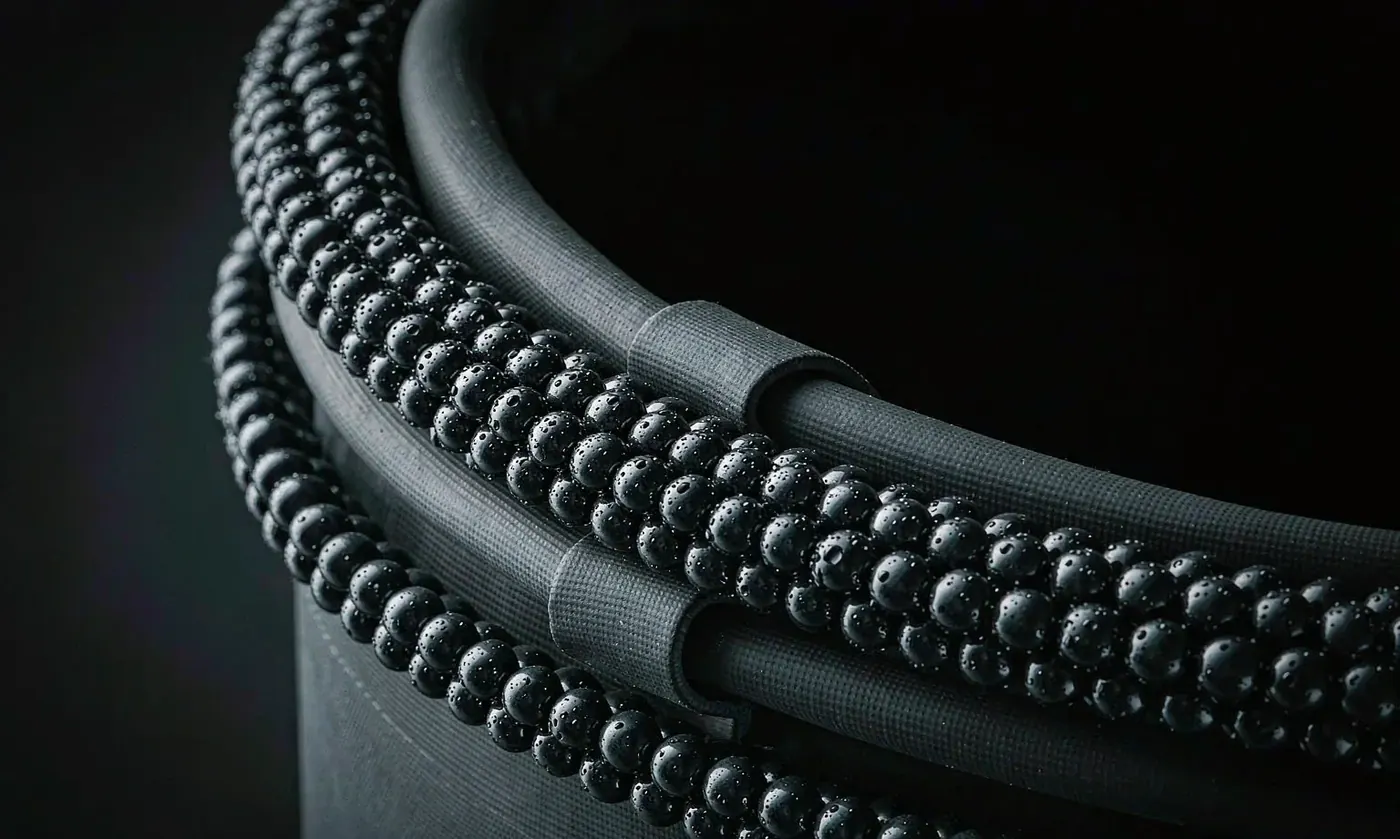
The lubricant is silicone grease rather than oil. Petroleum products swell and soften the polyurethane coating that most watertight coils rely on, and a zipper ruined that way cannot be repaired, only replaced. Roughly 0.3 to 0.5 grams per metre applied to the coil with a fingertip, then the slider worked twenty times to distribute it, then the excess wiped off with a cloth, is enough for three to five trips. Care intervals and troubleshooting of a stiff slider are set out in the waterproof zipper maintenance walkthrough, and the next step when lubrication alone fails is the zipper repair tutorial.
What Never Goes Near a Saltwater Bag
- A pressure washer above four bar. It strips coatings, forces water under seam tape, and voids more fittings than it cleans.
- Bleach or chlorine-based cleaners above one percent. They attack the polymer film and leave printed logos faded within an application or two.
- Solvents including acetone, mineral spirits, and alcohol wipes on printed panels. They dissolve ink binders and coating topcoats quickly.
- A washing machine or dishwasher. Agitation abrades coatings and heat above sixty degrees deforms moulded bases.
- Petroleum jelly or multi-purpose oil on a coated zipper. Use silicone grease only.
- A tumble dryer, a radiator, or a heater less than half a metre away. Local heat above forty-five degrees ages the film far faster than open shade dries it.
Odour, Mildew, and Stains
Odour in a fishing bag is almost never the fabric; it is the last thing that went in it. Bait residue, fish slime, and spilled drink soak into any textile layer that is not a closed-cell film, so the first fix is identification rather than perfume. If the smell survives a full soak in clean water with one part in one hundred of mild soap, it is probably in a lining rather than the shell.
For mildew a white vinegar solution at one part in four kills growth better than proprietary sprays and leaves nothing that later reacts with coating. Apply it, leave thirty minutes, then rinse twice. Baking soda paste lifts fish-slime stains without bleaching prints. Never mix vinegar with chlorine products. The critical step after any treatment is drying to completion, because a bag that smells clean but is still damp will be worse in four days than before treatment.
A Cleaning Rhythm by Trip Type
The right schedule depends entirely on how often the bag sees salt, and copying a routine from someone with a different pattern is the usual reason a schedule fails. An occasional angler needs a thorough soak after each trip and nothing between trips. A charter deckhand needs a light rinse every day and a deep soak once a week, because daily soaking is a waste of the day and weekly-only rinsing lets seven-layer residue build.
| Usage pattern | Rinse | Deep soak | Zip lubrication | Full inspection |
|---|---|---|---|---|
| Once or twice a month | After every trip | After every trip | Every second trip | Every three months |
| Weekly, saltwater | Within four hours each trip | Weekly | Every three trips | Every six weeks |
| Charter or guide duty | Light spray daily | Every fifth day | Weekly | Monthly |
| Stored aboard a boat | Spray to stop drying, then proper rinse weekly | Weekly aboard | Every three trips | Monthly |
| Commercial or survey use | Daily within two hours | Twice weekly | Weekly | Monthly with written record |
A full kit costs about twenty dollars and lasts a couple of years: a fifty millilitre tube of silicone grease at six dollars, two soft brushes at three each, four microfibre cloths at four, and a pocket conductivity meter at six. Compare that with replacing one bag at sixty to one hundred and twenty dollars, or one corroded hardware set, and the routine pays for itself the first season. Storage between seasons has its own rules and is covered in the off-season storage walkthrough.
When Cleaning Will Not Save the Bag
There is a point where cleaning stops being maintenance and becomes tidying something that is already finished. Five symptoms mark that line, and three of them are cheap to fix while two are not. Recognising which is which saves money in both directions: too many good bags get thrown away for want of a three-dollar part, and too many dead bags get scrubbed every month.
| Symptom | What it means | Action | Cost |
|---|---|---|---|
| White powder on hardware | Zinc layer depleted, base steel following | Replace the fitting | One to three dollars each |
| Zipper skips teeth | Slider worn or grit damage | Fit a new slider before replacing the zipper | Three to six dollars |
| Seam tape lifting at one edge | Adhesive losing grip | Patch if under thirty millimetres | Low if caught early |
| Coating feels tacky or smells sour | Hydrolysis of the polymer film | Retire the bag; it cannot be recovered | Replacement |
| Pink or orange slime in a pocket | Active biological growth in a lining | Treat and retire if it returns twice | Replacement |
The one symptom that should never be argued with is tackiness. Tackiness is the smell-and-touch signature of a polymer film breaking down chemically, and no cleaner reverses it. A bag in that condition is also transferring residue to whatever it touches, which is how an entire car boot or a second bag gets contaminated.
Buying In: What to Specify So Cleaning Is Easy
Cleaning effort is decided mostly at the specification stage. A bag built with 316 stainless hardware, drainage grommets at the base of every external pocket, removable tray dividers that can be rinsed separately, and a single-colour interior will take fifteen minutes to look after. The same bag with plated hardware, sealed pocket bottoms, and fabric linings will never come clean no matter how diligent the routine.
| Specification choice | Cleaning consequence | Typical added cost |
|---|---|---|
| 316 stainless over zinc-plated | No white rust, no seizure | Two to five dollars per bag |
| Drainage grommet per pocket | Water leaves instead of pooling | Under one dollar |
| Welded rather than stitched base | No capillary path for brine | Built into the process choice |
| Removable tray inserts | Every surface reachable | One to two dollars |
| Light interior colour | Visible cleanliness, easy inspection | None |
Hardware metallurgy is worth reading before writing a brief, because the whole subject decides whether a rinse routine in this article is even necessary. The interaction of alloy choice, plating, and salt exposure is set out in the corrosion-proof hardware breakdown, and the wider comparison for saltwater duty sits on the saltwater fishing bag page. Coastal seawater composition figures that underpin these chloride numbers are published by NOAA.
Sourcing, Compliance, and Aftercare
QUANZHOU JUNYUAN BAGS has run waterproof bag programmes since 2014, backed by a founding team that entered this industry in 2004. SGS-verified monthly capacity stands at 200,000 pieces, with BSCI and ISO 9001 frameworks governing every stage. All fabrics and coatings are checked against REACH and California Prop 65, and no lot ships before an AQL 2.5 inspection.
A corrosion-led brief should open with the hardware specification, because that single line decides most of the aftercare burden. State the alloy, the salt spray hours required, the grommet count, and whether linings are welded or stitched; then add litres, tray layout, colours, and quantity. Minimum runs begin at 500 pieces per design and colour, prototyping takes six to ten working days, and bulk production needs thirty-five to fifty days from approved sample and deposit. Pricing is quoted FOB Xiamen, or DDP to upwards of one hundred destinations. Send the brief to service@junyuanbags.com. Routine care between trips is summarised in the fishing backpack cleaning guide.
People Also Ask
How soon should I rinse my bag after saltwater fishing?
Within four hours. Until the water has evaporated the residue is still a solution that can be diluted and poured away; after that it is crystals that have to be dissolved instead.
Hot or cold water for rinsing fishing gear?
Twenty to thirty degrees. Above forty degrees softens PVC coating and accelerates hydrolysis in thermoplastic polyurethane, while below ten degrees dissolving slows noticeably.
Can I use a pressure washer on a fishing bag?
No. Anything above four bar strips coatings and forces salt under seam tape. Twenty litres of quiet water cleans better than two litres at eight bar.
How long does a fishing bag take to dry?
Twenty-four to forty-eight hours below sixty percent relative humidity with both faces exposed to moving air. In still air a thirty litre chamber can take seventy-two hours.
What should I use on a waterproof fishing zipper?
Silicone grease at 0.3 to 0.5 grams per metre, applied after the zipper is dry, every three to five trips. Petroleum products swell the polyurethane coating and cannot be reversed.
Is a washing machine safe for a fishing backpack?
No. Agitation abrades coatings and heat above sixty degrees deforms moulded bases. Use a twenty litre soak and hand agitation instead.
Frequently Asked Questions
Q1. How often should I rinse a saltwater fishing bag?
After every trip. A light spray within four hours plus a fifteen-minute soak is enough for weekly use, while daily users need a spray each day and a full soak about every fifth day.
Q2. What temperature should the rinse water be?
Twenty to thirty degrees. Hotter than forty damages coatings and colder than ten slows the dissolving action enough that the soak does little work.
Q3. How much water does a proper soak need?
About twenty litres for one bag, changed twice, with fifteen minutes of contact each time. Check the third water with a meter: above two hundred parts per million means another change.
Q4. Why does my fishing bag smell even after cleaning?
The odour is usually in a lining rather than the shell, from bait residue or fish slime. If it survives a soak with mild soap at one part in one hundred, treat the lining with vinegar at one part in four.
Q5. Can I use a pressure washer to clean salt off tackle bags?
No. Anything above four bar forces crystals under seam tape and strips coatings. Use an open hose end held two hundred to three hundred millimetres away.
Q6. What is the white powder on my bag hardware?
Zinc corrosion from a plated fitting whose protective layer is spent. Replace the fitting; one to three dollars each, and specify 316 stainless next time.
Q7. How do I clean tackle trays after a saltwater trip?
Remove them from the bag, rinse each one separately, and stand them on edge to dry with air on both faces. Stacked wet trays stay damp at the contact faces for over forty-eight hours.
Q8. Should the bag be dried inside or outside?
Outside in shade with moving air is best. Ultraviolet degrades the polymer film over a season, so direct sun is worse than shade even though it dries faster.
Q9. What lubricant is safe for a waterproof zipper?
Silicone grease only. Apply 0.3 to 0.5 grams per metre once the zipper is dry, work the slider twenty times, then wipe off the excess.
Q10. How do I remove mildew from a fishing bag?
White vinegar at one part in four, left thirty minutes, then two clean water rinses and complete drying. Never mix vinegar with chlorine cleaners.
Q11. When is a fishing bag beyond cleaning?
When the coating feels tacky or smells sour, which is chemical breakdown of the film. The other symptoms, including worn sliders and lifted tape under thirty millimetres, are all repairable.
Q12. What should I specify to make saltwater aftercare easy?
316 stainless hardware, a drainage grommet in every external pocket, removable tray inserts, and welded rather than stitched bases. That combination cuts routine care to about fifteen minutes.