Marine hardware on a fishing bag should be 316 stainless anywhere it meets salt spray, and 304 is acceptable only well above the waterline where it is rinsed after every trip. The difference is one alloying element: 316 carries two to three percent molybdenum against almost none in 304, which lifts the pitting resistance equivalent number from roughly 19 to about 26 and moves first visible rust from under 200 hours of salt exposure to well past 600. Upgrading every metal part on a mid-sized saltwater bag adds roughly 0.90 to 2.60 dollars to unit cost, which is less than one percent of most landed prices. Avoid zinc-plated steel outright; in an estuary it shows red rust within 24 to 72 hours of first use.
Where Salt Attacks First on a Bag
Chloride does not corrode metal uniformly, and that is why hardware failure looks sudden. A passive chromium oxide film a few nanometres thick protects stainless in air, but chloride ions migrate to weak spots in that film and dissolve it locally, producing a pit that can be 0.1 to 0.5 millimetres wide and several times deeper than it is wide. Once a pit nucleates it becomes self-sustaining: the chemistry inside it grows more acidic and more concentrated, so the pit keeps deepening even while the surrounding surface still looks bright.
Three conditions drive the process, and all three are present on a saltwater bag. Chloride concentration on drying equipment rises from about 19,000 milligrams per litre in open seawater to several times that as the water evaporates in the sun. Temperature accelerates everything, roughly doubling the corrosion rate for every 10 degrees above the mid-twenties. And drying cycles concentrate salts against shielded metal, which is why the worst damage almost always sits under a strap pad, inside a slider body, or behind a rivet washer rather than on a visible face. Open seawater conditions and typical estuary dilution figures are published by NOAA, and any specification that assumes freshwater exposure will underestimate what a coastal bag endures.
304 Versus 316: One Element Decides It
The two grades look identical, machine identically, and cost within about fifteen percent of each other per kilogram, which is why substitution is easy to miss on a sample. Their compositions differ in three ways that matter in salt: chromium slightly lower in 316, nickel clearly higher, and molybdenum present at two to three percent where 304 has effectively none. Nickel stabilises the austenitic structure and improves general resistance; molybdenum is the element that specifically resists chloride pitting, and it is the reason marine hardware is quoted in 316 rather than the cheaper grade.
| Element | 304 typical | 316 typical | Effect in salt |
|---|---|---|---|
| Chromium | 18.0 to 20.0 percent | 16.0 to 18.0 percent | Forms the passive film both rely on |
| Nickel | 8.0 to 10.5 percent | 10.0 to 14.0 percent | Stabilises austenite, improves general resistance |
| Molybdenum | Not specified, often below 0.5 percent | 2.0 to 3.0 percent | Directly resists chloride pitting and crevice attack |
| Carbon | Up to 0.08 percent | Up to 0.08 percent | Drives weld sensitisation in both grades |
| Nitrogen | Up to 0.10 percent | Up to 0.10 percent | Small boost to pitting resistance in both |
The practical consequence is not that 304 must never go near the coast, but that it has almost no margin. A 304 rivet that was handled with clean gloves, passed through a passivation bath, and is rinsed after each trip will survive years on a freshwater-focused bag used occasionally near the sea. The same rivet on a surf bag that dries crusted and is hosed only occasionally may show tea-staining within a season and structural loss within two.
PREN, and What the Number Actually Predicts
Pitting resistance equivalent number compresses composition into one comparable figure, calculated as chromium plus 3.3 times molybdenum plus 16 times nitrogen. It is not a laboratory result and it carries no units, but it ranks alloys usefully, and it lets a buyer write a checkable requirement into a specification instead of the words marine grade, which mean nothing enforceable. Most saltwater bag programmes settle on a minimum of 23 for any hardware that sees spray and soak cycles, with 30 or more specified for anything permanently below the splash line.
| Alloy | Molybdenum content | Typical PREN | Verdict for bag hardware |
|---|---|---|---|
| 304 stainless | Below 0.5 percent | 18 to 20 | Freshwater only, or rinsed coastal use |
| 316 stainless | 2.0 to 3.0 percent | 23 to 28 | Correct default for all saltwater hardware |
| 316L stainless | 2.0 to 3.0 percent | 23 to 28 | Same corrosion behaviour, better at welded joints |
| Duplex 2205 | 3.0 to 3.5 percent | 34 to 38 | Over-specification unless permanently immersed |
| Titanium grade 2 | None | Not applicable, effectively inert | Best available, and usually uneconomic here |
| Zinc-plated steel | None | Below 5 | Never acceptable; rusts in one to three days |
A quirk worth knowing: PREN says nothing about the surface condition, and surface condition dominates real behaviour. A machined 316 part with embedded free iron from tooling will rust just as readily as an untreated 304 part, because the free iron corrodes on its own. This is why passivation matters as much as alloy choice, and why a specification should require both together rather than either alone.
Hardware Positions Ranked by Risk
Not every metal part on the same bag needs the same alloy, and treating them uniformly wastes money. Ranked by measured field failure rate, the positions that see concentrated, slow-drying salt are base foot studs, zip sliders, spring-loaded hooks, and anything sitting under a padded strap. Parts that are exposed to full sun and airflow, such as upper D-rings and ladderlock buckles, dry quickly and usually survive in 304 with sensible care.
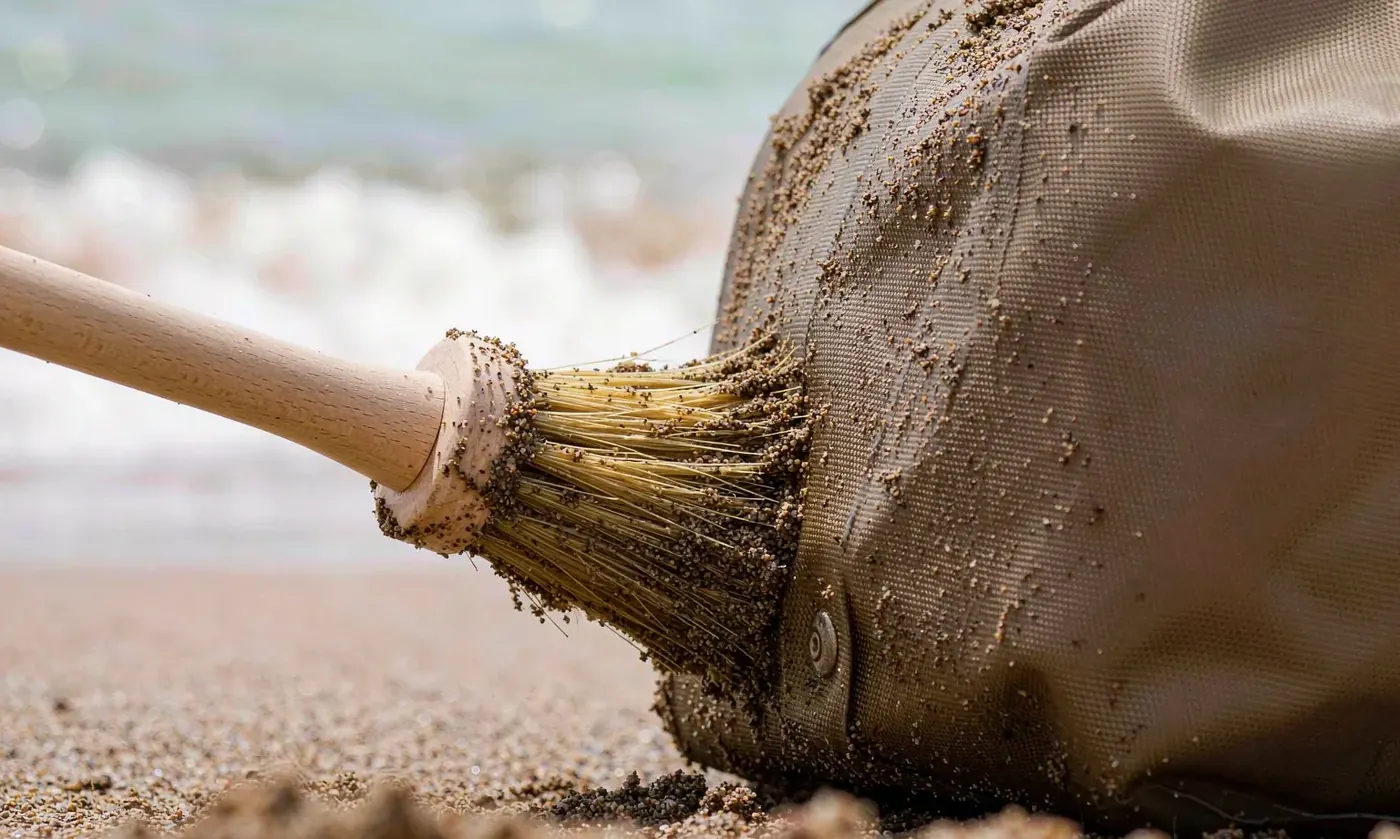
| Position | Exposure | First warning sign | Recommended material |
|---|---|---|---|
| Base feet or studs | Standing water, sand, slow drying | Brown weep lines below the stud | 316, or moulded polymer |
| Zip slider and pull | Constant handling, wet hands | Slider stiffens, then drags | 316 body with a polymer pull cord |
| Spring hook and clip | Immersion during launch and wading | Spring binds, then loses tension | 316 spring wire, electropolished |
| Rivets and washers | Shielded crevice behind the washer | Staining around the washer edge | 316 rivet with a nylon washer |
| Upper D-rings | Spray, but quick drying | Light tea-staining only | 304 acceptable with routine rinsing |
| Screwed name plate | Fully shielded from airflow | Rust streak down the shell face | Delete it, or use 316 with a gasket |
The third column is the useful part in the field. Brown weep lines under a fastener are not dirt and do not scrub off; they are corrosion product migrating out of a crevice, which means the assembly behind them is already losing section. Anything showing that sign should be replaced rather than cleaned, because cleaning removes the evidence without stopping the mechanism.
Galvanic Couples That Fail Quietly
Two dissimilar metals touching in an electrolyte form a battery, and the less noble of the pair corrodes faster than it would alone. Saltwater is an excellent electrolyte, so this matters more on the coast than anywhere else. A stainless rivet through an aluminium base plate, or a brass eyelet pressed into a stainless panel, will attack the aluminium or the brass while the stainless part appears untouched, which is exactly why the shiny component survives and the structural one fails.
| Metal pair in contact | Nobler member | Member that corrodes | Practical fix |
|---|---|---|---|
| 316 fastener into aluminium plate | 316 | Aluminium, rapidly | Isolate with a nylon sleeve and washer |
| Brass eyelet against stainless panel | Stainless | Brass, dezincifies | Use silicon bronze, or isolate both faces |
| Carbon fibre bracket against stainless | Carbon fibre | Stainless, locally pitted | Add a barrier layer; never dry-fit this pair |
| 316 against 304 in the same assembly | 316 | 304, mildly | Usually tolerable; monitor in crevices |
| Moulded polymer against stainless | Stainless | Neither | The preferred combination |
Area ratio decides how bad it gets. A large noble surface coupled to a small active one concentrates the attack into the small part, so a big stainless washer on a thin aluminium tab destroys the tab quickly, while the reverse arrangement barely registers. For that reason the isolator should always be specified for the smaller member, and nylon or acetal sleeves cost pennies in this context.
Zippers and Sliders: The Hardest Part to Specify
A saltwater bag usually fails at its closure long before it fails at its shell, because a zip combines three difficult materials in one assembly: the teeth, the slider body, and any plating or coating on the pull. Moulded plastic teeth in polyacetal are actually the most corrosion-tolerant choice, followed by polymer-coated coil; metal teeth in a tidal environment are the worst option available and should not be specified for a coastal bag at all.
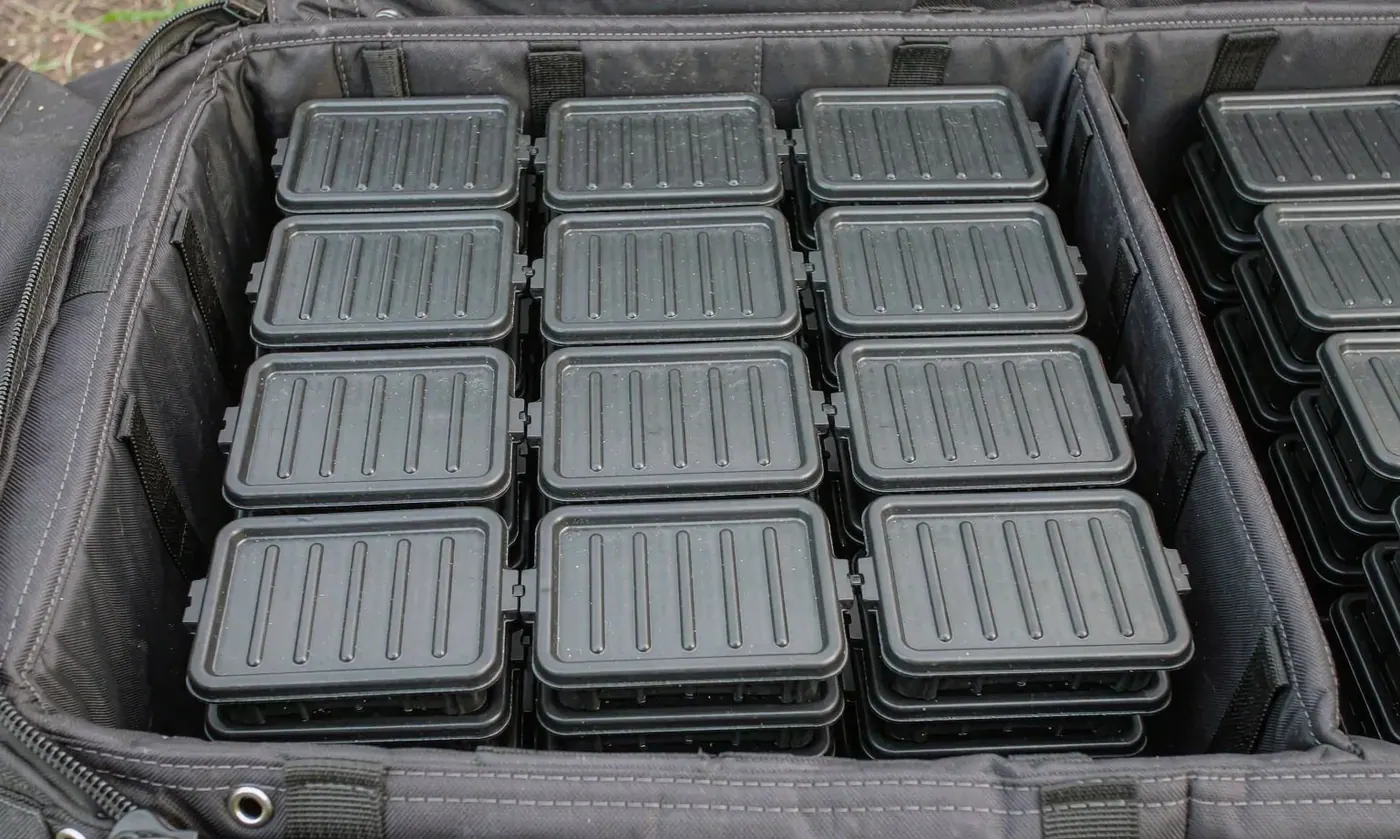
| Closure type | Behaviour in salt | Maintenance needed | Verdict |
|---|---|---|---|
| Moulded tooth closure | Teeth unaffected; only the slider is at risk | Rinse and dry, light lubrication monthly | Best for decks and surf |
| Coated coil closure | Coating intact, tolerant; degrades if scraped | Rinse, avoid folding the tape sharply | Good, watch coating wear |
| Metal tooth closure | Teeth pit, then jam inside ten to twenty sessions | Constant attention, still short-lived | Avoid near salt |
| Plated slider body | Plating breaks at the pull hole first | Replace the slider before it stains the tape | Specify solid stainless instead |
| Roll-top with buckles | Buckles are the only metal, easy to isolate | Rinse the buckle and leave it open to dry | Most tolerant overall |
Whatever the closure type, the slider is the component that actually seizes, because it is a precision casting with tight clearances and a moving contact. A pull made from woven cord rather than cast metal removes the last significant metal part from most designs, and it is a change that typically saves rather than costs money.
Alternatives Worth Considering
Stainless is not always the answer. Moulded components in glass-filled polyamide or acetal weigh a third as much, corrode not at all, and survive drops better; their limits are lower stiffness and creep under sustained load. Hard-anodised 6061 aluminium sits between the two, offering metal stiffness with a ceramic surface, provided it is isolated from stainless. Titanium is flawless in service and quoted mainly when weight matters far more than cost.
| Material | Relative corrosion behaviour | Relative weight | Best position on a bag |
|---|---|---|---|
| 316 stainless | Excellent if rinsed | Heavy, about 8.0 grams per cubic centimetre | Load-bearing fasteners and hooks |
| Glass-filled nylon | Immune | About 1.4 grams per cubic centimetre | Buckles, guides, tray runners |
| Acetal (POM) | Immune | About 1.4 grams per cubic centimetre | Low-friction slides and strap adjusters |
| 6061 hard-anodised aluminium | Good if isolated | About 2.7 grams per cubic centimetre | Stiffening plates and rod receivers |
| Titanium grade 2 | Effectively inert | About 4.5 grams per cubic centimetre | Where each gram carried counts |
The most reliable designs use fewer metals, not better metals. Every fastener removed from a specification removes a corrosion site, a potential galvanic pair, and a line item, which is why some of the longest-lived modern designs carry only two or three metal parts in total.
Test Evidence: What the Hours Mean
Salt spray testing is widely quoted and widely misused. The common continuous method exposes parts to a five percent sodium chloride fog at 35 degrees, and results are reported as hours to first rust: typically somewhere between 48 and 200 hours for untreated 304, several hundred to more than a thousand for properly passivated 316, and under 100 for zinc-plated steel. Those numbers rank alloys reasonably but they do not predict service years, because continuous fog never reproduces the wet-dry cycling that actually drives pitting.
| Test | Typical result, 304 | Typical result, 316 | What it tells you |
|---|---|---|---|
| Continuous salt fog, hours to first rust | 48 to 200 hours | 600 to 1,200 hours | Ranking only; not a service-life prediction |
| Cyclic corrosion with drying phases | Roughly double the attack rate of static | Still ahead, but the gap narrows | Far closer to real coastal behaviour |
| Immersion with shielding washer | Crevice attack within days | Crevice attack within weeks | Why crevices deserve more attention than faces |
| Free iron test on the surface | Usually positive if unpassivated | Also positive if unpassivated | Confirms passivation was actually performed |
Two requests make quoted numbers meaningful. Ask for the cyclic exposure rather than continuous fog where a programme is serious about coastal durability, and always ask which standard was followed and whether the parts were passivated before testing. Chemical passivation treatments have their own published specification from ASTM International, and cyclic corrosion methods sit under ISO; naming both in a brief removes most of the room for optimistic reporting.
Rinsing and Surface Treatment
Care beats specification here, and the gap is large enough to deserve the few minutes involved. Rinsing within about four hours of a session removes the concentrated salt film before it has time to establish a stable pit, and the benefit is disproportionate: in field reports the same 304 part lasts several times longer when the bag is hosed and dried promptly than when it is left sealed in a vehicle overnight. Soaking beats hosing, because an immersion rinse also reaches the crevices under washers that a jet never penetrates.
- Soak rather than spray: ten minutes in still fresh water dissolves the salt film inside sliders and behind washers.
- Work every slider and buckle through five cycles while wet, so trapped crystals are flushed out rather than left to dry in place.
- Dry in shade with all compartments open; direct sun dries the surface while leaving the underside of hardware damp.
- Avoid chloride-based cleaners and bleach entirely, including household stainless sprays, which introduce the exact ion being fought.
- Do not use steel wool or a carbon steel brush on stainless; embedded iron particles rust and defeat the passive film.
- Check crevices once a season with a bright light; staining that wipes away cleanly is surface deposit, staining that does not is active corrosion.
Passivation deserves one line in any serious brief because it is cheap and frequently skipped. A citric acid bath removes free iron from the surface and lets the chromium film reform uniformly, and for small parts it adds cents rather than dollars. Without it, a 316 component behaves closer to a 304 one, which nullifies most of the reason for paying for the upgrade.
What Upgrading Actually Costs
Buyers often assume a 316 specification is expensive and discover otherwise once the component list is priced. Fasteners and small pressed parts are light, so the alloy premium applies to grams rather than kilograms per unit. Across a typical fifteen-part hardware set the move from plated steel to 316 lands near the upper end of the ranges below, and is usually recovered several times over in reduced returns and longer service life.
| Change | Added unit cost | Expected service change | Comment |
|---|---|---|---|
| Plated steel to 304 | 0.20 to 0.60 dollars | From one season to three or four | Minimum worthwhile step |
| 304 to 316 across all hardware | 0.90 to 2.60 dollars | Roughly triples time to first staining | The standard marine upgrade |
| 316 plus citric passivation | 0.10 to 0.30 dollars | Removes early surface rust entirely | Cheapest quality gain available |
| Metal to polymer on non-structural parts | Saves 0.30 to 1.20 dollars | Corrosion risk eliminated | Usually also saves weight |
| Titanium on selected springs | 8 to 20 dollars | Lifetime solution | Rarely justified on a bag |
Set against those figures, a single hardware-related return typically costs more than the upgrade applied to dozens of units, which is why a marine specification tends to be self-financing even before reputational effects are counted.
Writing the Specification
A hardware clause should be short, numeric, and checkable. State the alloy by grade with the molybdenum range, require a stated minimum pitting resistance number for wetted parts, require citric passivation for all stainless, name the test and its cyclic variant, forbid bare carbon steel and plated steel anywhere in the bill of materials, and require isolators wherever stainless meets aluminium. Add the drawing numbers of every fastener so substitutions during later runs are visible.
- List every metal part with its position and whether it sits below or above the splash line.
- Assign 316 to anything wetted or shielded, and permit 304 only where it dries within the hour.
- Name the passivation treatment and require a certificate per lot rather than a general statement.
- Require a cyclic corrosion report of an agreed duration with photographs at start and finish.
- Specify nylon or acetal isolators at every stainless-to-aluminium joint, with drawing callouts.
- Agree how substitutions will be approved before the first sample is cut.
Two documents help at sample stage. A certificate listing alloy by melt analysis is quick to request and hard to falsify cheaply, and a simple magnet check tells you very little on its own because both 304 and 316 are weakly or non-magnetic in the annealed state; it is useful for detecting plain steel substitution, which is strongly magnetic, but not for separating the two stainless grades.
Sourcing and Programme Notes
QUANZHOU JUNYUAN BAGS has run waterproof bag programmes since 2014 behind a founding team whose trade experience reaches back to 2004. Capacity stands at 200,000 pieces a month, verified by SGS, under BSCI and ISO 9001 systems; incoming materials are screened against REACH and California Prop 65, and finished lots are inspected at AQL 2.5 before release. Hardware drawings carry part numbers and alloy callouts so that repeat runs match the approved sample rather than drifting toward whatever was available that week.
Bring hardware into the earliest conversation rather than the last, because grade selection interacts with tooling on moulded parts and with panel construction wherever a fastener lands. Send alloy, passivation, test method, part count, colours, and quantity with the brief. Five hundred pieces per design and colour opens production; six to ten working days turns around a sample once drawings are agreed, thirty-five to fifty days covers bulk from approval and deposit, and shipping runs FOB Xiamen or DDP to upward of one hundred destinations. Briefs go to service@junyuanbags.com. Wider context sits in the saltwater bag selection guide and across the saltwater fishing bag range, while day-to-day cleaning is set out in the rinse and dry routine.
People Also Ask
Does 316 stainless really resist saltwater better than 304?
Yes, mainly because of two to three percent molybdenum. It raises the pitting resistance number from roughly 19 to about 26 and delays visible rust far beyond what 304 achieves in the same conditions.
How much more does 316 hardware cost on a bag?
About 0.90 to 2.60 dollars per unit to upgrade every metal part, plus 0.10 to 0.30 for passivation, which is usually well under one percent of landed cost.
Can stainless still rust near the sea?
Yes. Salt dries into concentrated films that dissolve the passive layer, and any embedded free iron from tooling rusts regardless of grade. Passivation plus rinsing prevents most of it.
Which hardware position fails first on a saltwater bag?
Base feet and studs, because they stand in wet sand and dry last, followed by zip sliders and rivets shielded behind washers where crevice attack concentrates.
Should I avoid mixing metals on a marine bag?
Keep stainless away from direct contact with aluminium or brass, or isolate the joint with nylon sleeves and washers. Otherwise the less noble metal corrodes while the stainless looks untouched.
Is a plastic-toothed closure better than metal near salt?
Almost always. Moulded teeth ignore corrosion entirely and only the slider needs attention, so specify a solid stainless slider with a cord pull.
Frequently Asked Questions
Q1. What is the difference between 304 and 316 stainless for fishing bags?
316 contains two to three percent molybdenum while 304 has almost none. That single element raises the pitting resistance number from about 19 to roughly 26 and makes 316 the correct default for anything exposed to salt spray.
Q2. Is 316 stainless completely rust proof in seawater?
No. It resists pitting far better but will still stain in shielded crevices if left unrinsed. Rinse within four hours and dry in shade, and expect cosmetic tea-staining rather than structural loss.
Q3. How do I tell 304 from 316 on an existing bag?
A magnet will not separate them, since both are weakly magnetic at most. Only a melt certificate or a handheld alloy analyser gives a reliable answer, which is why certification should be requested per lot.
Q4. What is PREN and what value should I specify?
Pitting resistance equivalent number, calculated as chromium plus 3.3 times molybdenum plus 16 times nitrogen. Require roughly 23 or above for sprayed parts and 30 or above for anything permanently wetted.
Q5. Why does my hardware rust under the washers first?
A shielded crevice traps concentrated salt and dries slowly, so chloride builds up against metal that never gets rinsed. Isolate it with a nylon washer or move the joint into open airflow.
Q6. Are plated steel parts ever acceptable?
Not near salt. Zinc-plated steel typically shows red rust within 24 to 72 hours of estuary exposure, and the plating fails at edges and holes first, which are exactly the load paths.
Q7. Do I need to upgrade every fastener to 316?
No. Parts above the splash line that dry within the hour are fine in 304 with routine rinsing. Spend the premium on feet, sliders, hooks, rivets, and anything shielded from airflow.
Q8. What does passivation do and is it worth specifying?
It dissolves free iron from the surface so the chromium film reforms evenly. Without it even 316 behaves closer to 304, and it costs about 0.10 to 0.30 dollars per unit.
Q9. Should I worry about mixing metals on one bag?
Yes where stainless touches aluminium or brass. Add a nylon or acetal sleeve and washer at those joints, otherwise the softer metal takes the corrosion while the stainless appears perfect.
Q10. How many salt spray hours should I require?
Hours rank alloys but do not predict service life. Ask instead for the cyclic variant with drying phases, usually several hundred hours, plus photographs at start and finish.
Q11. Which closure survives salt best?
A roll-top with isolated buckles is the most tolerant, followed by moulded-tooth closures with a stainless slider. Metal-toothed closures jam within about ten to twenty coastal sessions.
Q12. Can I clean off existing rust from stainless hardware?
Surface deposit wipes away with a non-chloride cleaner, but genuine corrosion has removed metal. Clean it, treat the cause, and replace the part if section has been lost.
Q13. What should a hardware clause in a bag brief contain?
Grade with molybdenum range, minimum pitting resistance number, citric passivation per lot, named cyclic test with duration, no bare or plated steel, and isolators wherever stainless meets aluminium.