Choosing a saltwater fishing bag is mainly an exercise in auditing hardware, because the fabric almost never fails first. Twelve fitting locations decide service life, and each has a marine specification: 316 stainless or marine polymer for load-bearing points, monel or stainless rivets with backing plates, resin coil zips with marine sliders, and grommets set clear of every seam. Specifying all twelve adds roughly 4.80-9.60 USD to a typical 30 litre body and moves service life from about two seasons to four or five. This guide sets out the audit point by point, how to identify what a sample actually uses, and the order in which to spend money if the budget will not cover everything.
The Twelve-Point Hardware Audit
Every coastal bag can be assessed the same way, and the assessment takes about five minutes once the list is known. Twelve locations account for nearly all corrosion failures, and knowing them converts an opinion about quality into a checklist anyone can run on a sample.
| Location | Standard fitting | Marine requirement | Upgrade cost |
|---|---|---|---|
| 1. Main zip slider | Zinc alloy | Marine grade slider, resin teeth | 0.90-2.20 USD |
| 2. Shoulder strap adjusters | Steel or zinc | Marine polymer or 316 | 1.20-2.60 USD |
| 3. D-rings and load points | Zinc plated steel | 316 stainless, welded | 1.60-3.40 USD |
| 4. Rivets and backing plates | Aluminium rivets | Monel or stainless plus plate | 0.80-1.80 USD |
| 5. Buckles and ladder locks | Zinc plated | Marine polymer | 0.90-1.90 USD |
| 6. Base feet and skids | Steel pins | Moulded polymer or 316 | 0.60-1.40 USD |
| 7. Drainage grommets | Brass, sometimes plain | Polymer or 316 with mesh | 0.40-1.10 USD |
| 8. Rod holder mounts | Plated steel | 316 stainless through-bolted | 2.20-4.60 USD |
| 9. Feet of tray rails | Exposed steel | Polymer rails throughout | 0.70-1.50 USD |
| 10. Spring hooks and clips | Plated steel springs | 316 springs or polymer | 0.50-1.20 USD |
| 11. Snap hooks on leashes | Zinc alloy | 316 stainless | 0.80-1.60 USD |
| 12. Eyelets at strap anchors | Plated eyelet | 316 eyelet with reinforcement | 0.60-1.30 USD |
The total of that table reaches 4.80-9.60 USD on a typical mid-size body, which is why the upgrade is so often trimmed during costing and why the same bags fail two seasons later. Framed against the alternative, the arithmetic is not close: warranty handling on a single coastal corrosion claim commonly exceeds the entire hardware upgrade cost across twenty units. Put differently, roughly one prevented claim in twenty pays for treating the whole fleet properly.
Identifying What a Sample Actually Uses
Specifications say 316 stainless and reality sometimes differs, so being able to check the metal on a sample is a genuinely useful skill. Three quick tests separate most finishes without any laboratory involvement.
| Test | 316 stainless | 304 stainless | Zinc plated steel |
|---|---|---|---|
| Magnet attraction | None or very slight | None or very slight | Strong attraction |
| Marked grade on the part | Usually stamped 316 | Usually stamped 304 | Rarely marked at all |
| Weight versus size | Heaviest of the three | Similar to 316 | Lighter than stainless |
| Surface after 30 days coastal use | Clean or slight tea staining | Small rust spots appear | Visible red rust |
| Salt spray hours to first corrosion | 500-1,200 hours | 200-500 hours | 48-96 hours |
The magnet test deserves one caveat that catches people out: it separates stainless from plated steel, not good stainless from poor stainless. Both 304 and 316 are largely non-magnetic, so establishing the actual grade relies on documentation and on the stamped marking rather than on the magnet alone. Asking for a mill certificate against the hardware purchase order is standard practice and costs nothing, and any programme unwilling to provide one is telling the buyer something useful about how much confidence to place in the rest of its specification.
Corrosion comparison testing is standardised, and the most widely referenced method is maintained by ASTM International. Requiring a stated number of hours to first corrosion, tested against that method, converts marine quality from an adjective into an acceptance criterion that can be checked on arrival.
Rivets, Backing Plates, and Load Paths
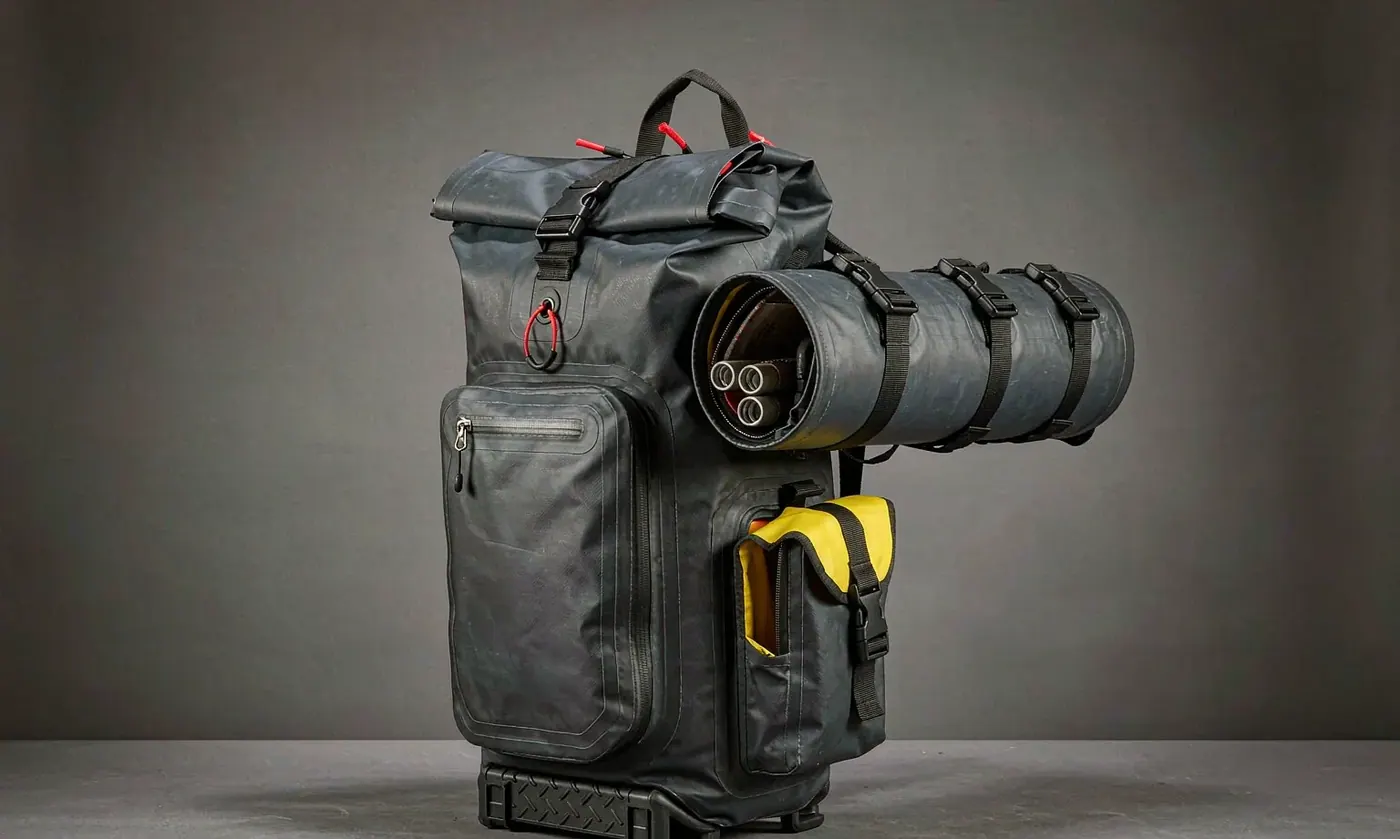
Rivets are routinely overlooked, yet they carry load and they sit exactly where spray accumulates. Getting them wrong is the most common cause of attachments parting company with the bag, usually at the worst possible moment.
- Aluminium rivets corrode within roughly 60-120 days of coastal use, and worse, they corrode from the inside where nothing can be seen.
- Monel rivets cost about three times an aluminium rivet, roughly 0.06-0.12 USD each, and outlast the fabric around them.
- Every load-bearing rivet should sit against a backing plate of at least 1.2 mm, spreading the load over perhaps 8-12 times the area.
- Through-bolting with a nyloc nut is better again for rod holder mounts, costing about 0.30-0.60 USD per position more than riveting.
- Never mix metals in one joint: a stainless rivet against an aluminium plate creates galvanic corrosion that eats the aluminium within a season.
There is a second design detail worth specifying alongside material choice. Any riveted attachment should use a minimum of three rivets spread across at least 60 mm, because a single rivet allows the fitting to rotate slightly under load, and that movement works the hole larger until the attachment tears free. Three well-spaced fixings cost perhaps 0.18 USD more than one and routinely survive five times as many load cycles.
The mixing rule is the one that produces surprising failures, because each component individually looks correct. A galvanic couple forms whenever two dissimilar metals share an electrolyte, and salt water is an excellent electrolyte. Specifying the rivet, the plate, and the fitting all from compatible material costs nothing extra and removes an entire failure class.
Polymer Hardware Is Usually the Better Answer
There remains a perception that polymer hardware is a downgrade from metal, and for coastal work the reverse is usually true. Modern engineering polymers are completely immune to chloride and considerably lighter, which is why most serious saltwater designs use them wherever load permits.
| Fitting | Polymer option | Load capacity | Advantage |
|---|---|---|---|
| Buckles and ladder locks | POM or reinforced PA | 250-600 N depending on size | Immune to corrosion, 40 percent lighter |
| Spring hooks | Polymer bodied with 316 spring | 80-180 N | No rust staining on fabric |
| Camera and tool clips | Reinforced PA | 50-120 N | Will not scratch decks or rails |
| D-rings and V-rings | Load rated polymer webbing | 300-700 N with bar-tack | Silent, unlike metal rattle |
| Grommets and eyelets | Polymer with mesh insert | Not load bearing | No staining and no seize-up |
The honest limitation is creep. Under sustained load a polymer part deforms slowly and permanently over months, so any component carrying constant tension above roughly 40 percent of its rated load should be metal rather than polymer. This is why rod mounts, towing points, and leash attachment loops stay metal while buckles, clips, and adjusters become polymer.
Ultraviolet behaviour is the other consideration that deserves a line. Unstabilised polypropylene loses around half its impact strength after a season of open deck exposure, whereas POM and reinforced polyamide retain strength far better and should be the specified families for any coastal programme. Naming the resin family rather than writing plastic in a specification costs nothing and removes a great deal of variability in delivered quality.
Zippers Decide It More Than Anything Else
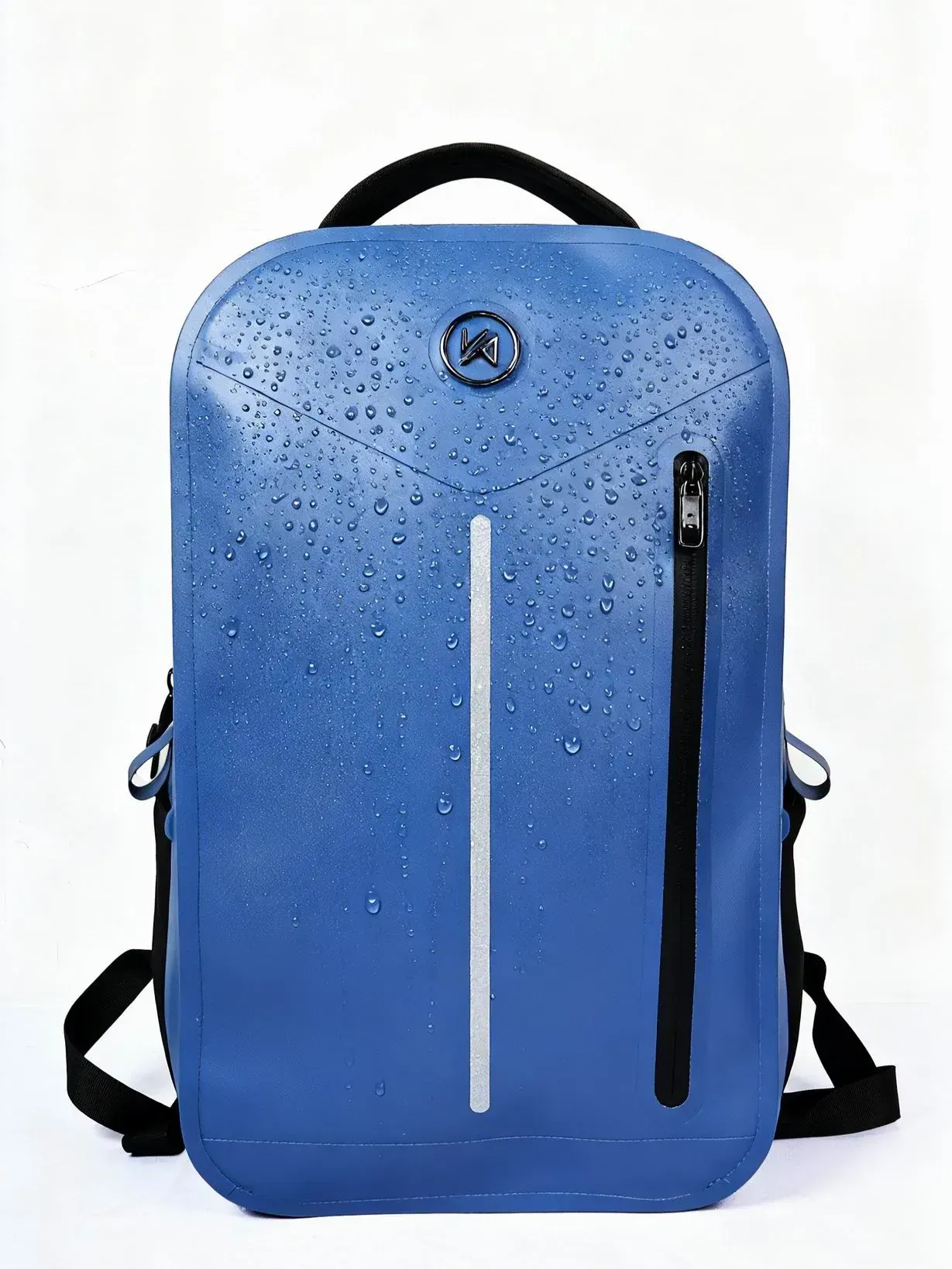
If only one thing can be upgraded, upgrade the zip. Nobody ever thinks it will be the component that fails, and it reliably is, because it combines close tolerances, sliding friction, and direct exposure to everything.
| Zip element | Coastal life without rinsing | Coastal life with rinsing | Note |
|---|---|---|---|
| Steel teeth, standard slider | 10-20 trips | 20-40 trips | Never specify this |
| Resin coil, standard slider | 40-80 trips | 150-300 trips | Slider is the weak point |
| Resin coil, marine slider | 80-150 trips | 300-600 trips | Good default choice |
| Coated waterproof zip | 60-120 trips | 250-500 trips | Needs lubrication |
| Covered zip under a storm flap | Any zip lasts 2-3 times longer | Longer again | Cheapest big win |
The last row is the cheapest improvement in this entire guide. A storm flap over the main closure costs about 1.20-2.40 USD and roughly doubles or triples useful zip life simply by keeping spray off it, regardless of which zip sits underneath. Any Coastal design lacking one has chosen appearance over function.
Spending in Priority Order
Budgets rarely cover everything, so the practical question is what to upgrade first. Ranked by benefit per dollar spent on a coastal 30 litre body, the order is consistent across nearly every programme reviewed.
| Priority | Upgrade | Cost | Benefit per dollar |
|---|---|---|---|
| 1 | Storm flap over the main closure | 1.20-2.40 USD | Multiplies zip life by two or three |
| 2 | Marine slider on every zip | 0.90-2.20 USD | Removes the most common failure |
| 3 | Drainage grommets set clear of seams | 0.60-1.30 USD | Stops standing salt inside |
| 4 | Polymer buckles and adjusters | 0.90-1.90 USD | Eliminates most surface rust |
| 5 | Monel or stainless rivets with plates | 0.80-1.80 USD | Stops attachments pulling out |
| 6 | 316 load rings and rod mounts | 1.60-4.60 USD | Highest single cost, real necessity |
Following that order, the first three priorities cost 2.70-5.90 USD and together prevent the large majority of coastal failures. The last one is genuinely expensive and legitimately deferred if a bag will never carry rod mounts, which is a reminder that the list should be applied against the actual design rather than followed blindly.
Two practical cautions round this off. First, upgrading some components but not others creates a false impression of robustness, because the weakest remaining fitting governs service life, so partial upgrades work best when applied from the top of this list downward without gaps. Second, an upgrade that is not written into the purchase file will quietly disappear at the first costing revision, so each item needs to appear by name with its cost alongside it.
Coastal exposure also varies enormously, and matching specification to water conditions avoids spending where it earns nothing. Forecasts and coastal condition data published by NOAA help characterise how aggressive a given fishery is, though the practical rule is simpler: anything on open coast or offshore receives full treatment, while sheltered estuary use can reasonably stop after priority three.
Verifying Before You Order
Three verification steps convert all of this from intention into outcome, and each is cheap relative to what it protects against. Skipping them is how good specifications become poor shipments.

- Request mill certificates for every metal component, tied to the hardware purchase order rather than supplied as a generic statement of quality.
- Require salt spray test hours against a recognised method for each finish, with 500 hours the practical minimum for anything called marine grade.
- Run the twelve-point audit on a pre-production sample with a magnet and a written record, since auditing one unit catches specification drift early.
- Specify inspection at AQL 2.5 on every bulk shipment and keep one retained sample per batch for comparison against later deliveries.
- Ask for polymer components stated by resin family, since POM, PA, and polypropylene differ substantially in creep and ultraviolet behaviour.
The retained-sample habit is particularly valuable over a multi-year programme. Comparing each delivery against the original approval catches gradual substitution of components, which is otherwise invisible until a season of returns arrives and the cause is far from obvious. For programmes above about 2,000 units a year, retaining three units per batch and opening them annually is worth doing, since the pattern of any drift shows clearly when several years sit side by side.
Alongside the ASTM methods already referenced, corrosion testing also appears in the standards series published by ISO, and asking for both results gives a cross-check on any single figure. Discrepancies between two methods usually indicate that one result was optimistic rather than that the material is genuinely borderline.
The Rinse Protocol That Doubles Everything
No amount of specification survives neglect, and conversely, good habits extend even mediocre hardware considerably. Written care instructions are the cheapest reliability measure in the whole programme and the most frequently omitted.
| When | Action | Effect |
|---|---|---|
| Within two hours of leaving the water | Rinse in running fresh water for 2-3 minutes | Removes most chloride before it dries |
| Same time, every zip | Cycle each zip six times while still wet | Clears crystals from inside the slider |
| Monthly in regular use | Lubricate each zip with a marine rated product | Extends cycles from roughly 300 to 700 |
| Every three months | Soak the base and grommets for 15 minutes | Clears crystals trapped around drainage |
| Start and end of season | Run the twelve-point audit with a written record | Finds corrosion before anything fails |
The two-hour window matters more than the thoroughness of the rinse, because once seawater dries the chloride concentration rises well above that of the sea itself. Any boat angler who cannot rinse on the return leg should at minimum spray closures and any load points, which takes ninety seconds and addresses the locations that actually fail.
Drying is the second half of the same routine and is done wrong more often than rinsing. A bag dried upright and open allows every drain path to work, while one dried rolled or stuffed in a locker holds moisture against the hardware for days. Mesh vents placed high on opposite walls help here, and any design intended for coastal work should include them.
Programme, Pricing, and Terms
Coastal specifications add cost predictably, and knowing the bands in advance avoids discovering them at quotation stage when there is no time to redesign.
| Configuration | FOB Xiamen | Service expectation |
|---|---|---|
| Freshwater specification | 22-44 USD | Three to five seasons inland |
| Coastal specification, priorities 1-3 | Add 2.70-5.90 USD | Three to four seasons coastal |
| Full marine specification | Add 4.80-9.60 USD | Four to six seasons coastal |
| Sampling | 6-10 working days | Bulk runs 35-50 days |
| MOQ | 500 pcs per design and colour | Standard entry point |
QUANZHOU JUNYUAN BAGS has developed waterproof bag programmes since 2014, with the founding team working in the trade since 2004. Monthly output of 200,000 units is verified by SGS, and BSCI and ISO 9001 systems structure the workflow. Materials are screened for REACH and California Prop 65, every bulk order is inspected at AQL 2.5 before shipment, and hardware mill certificates are available on request.
A coastal hardware specification can be emailed to service@junyuanbags.com with the fishery type, expected yearly volume, target unit cost, and required service life. FOB Xiamen or DDP service to more than 100 countries follows an approved sample. Supporting reading includes the saltwater fishing bag range, the corrosion proof hardware guide, and the saltwater versus freshwater build comparison.
People Also Ask
Does a saltwater fishing bag really need special hardware?
Yes. Zinc-plated steel reaches first corrosion in 48-96 salt spray hours, so a standard bag typically lasts around two coastal seasons against four to six with marine specified fittings.
How do I tell 316 from 304 stainless?
Check the stamped marking and request a mill certificate. Both are largely non-magnetic, so the magnet test separates stainless from plated steel but not one stainless grade from another.
Is plastic hardware better than metal near the sea?
Usually. Marine polymer buckles and adjusters are immune to chloride and about 40 percent lighter, though anything under sustained load above 40 percent of rating should stay metal.
How much does a coastal specification cost?
Between 4.80 and 9.60 USD per unit for a full marine specification on a mid-size body. The three cheapest upgrades total 2.70-5.90 USD and prevent most failures.
What fails first on a saltwater fishing bag?
The zip. A standard steel slider seizes within 10-20 trips without rinsing, which is why a marine slider plus a storm flap is the highest value upgrade available.
Can I use a freshwater bag at the coast occasionally?
It will survive a few trips if rinsed immediately each time, but expect hardware corrosion within one season. At minimum, upgrade the slider and add polymer buckles.
Frequently Asked Questions
Q1. How do I choose a saltwater fishing bag?
Audit the twelve hardware locations rather than comparing fabric. Every load-bearing fitting should be 316 stainless or marine polymer, every zip should use a marine slider under a storm flap, and every rivet should be monel or stainless with a backing plate.
Q2. What hardware is best for saltwater fishing?
Marine-grade polymer for buckles and adjusters, 316 stainless for load points and rod mounts, which reaches 500-1,200 hours before first corrosion against 48-96 for zinc-plated steel.
Q3. How can I tell if hardware is truly stainless?
Use a magnet to separate stainless from plated steel, then rely on the stamped grade marking and a mill certificate, since both 304 and 316 are largely non-magnetic and cannot be distinguished that way.
Q4. Is coated or polymer hardware good enough?
Yes for buckles, adjusters, clips, and grommets. Polymer is immune to chloride and roughly 40 percent lighter, and only suffers from creep under sustained load above about 40 percent of its rating.
Q5. What zip should a saltwater bag use?
A resin coil with a marine grade slider, covered by a storm flap. The flap alone roughly doubles or triples useful zip life by keeping direct spray off the teeth and slider.
Q6. How often should I rinse a saltwater bag?
Within two hours of leaving the water, running fresh water over the whole bag for two to three minutes and cycling each zip six times while still wet, then drying fully open.
Q7. Why does my bag hardware rust after one season?
Almost always zinc-plated or steel components, which begin corroding within 48-96 salt spray hours. Upgrading to the marine specification costs 4.80-9.60 USD and typically doubles service life.
Q8. Do I need stainless rivets?
Yes for any load-bearing attachment. Aluminium rivets corrode from the inside within 60-120 days coastal, and every rivet should sit against a backing plate of at least 1.2 mm.
Q9. Is it safe to mix stainless and aluminium fittings?
No. A galvanic couple forms in salt water and eats the aluminium within a season, even though each component looks correct on its own. Specify compatible materials throughout one joint.
Q10. How much should a coastal specification add to cost?
Roughly 4.80-9.60 USD for a full specification, though the first three priorities cost only 2.70-5.90 USD and prevent the majority of coastal failures.
Q11. Where should I spend first on a limited budget?
A storm flap over the main closure, then marine sliders, then drainage grommets. Those three total 2.70-5.90 USD and address the failures most likely to occur.
Q12. What is the MOQ and lead time?
MOQ is 500 pcs per design and colour. Samples take 6-10 working days and bulk production runs 35-50 days from approved sample and deposit, with salt spray verification available for every hardware finish.