A private label waterproof backpack programme starts at 500 pcs per design and colour, takes 6 to 10 working days to sample and 35 to 50 days to build, and adds 0.18 to 1.20 USD per unit for branding on top of a base price of 8.90 to 22.80 USD. The three routes differ in how much you are allowed to change: white label means an existing design with your logo applied, private label means an existing platform modified in fabric, colour and hardware, and full development means a new pattern and new tooling at 300 to 1,500 USD. Branding cost is set by method rather than by ambition: screen print runs 0.18 to 0.45 USD per unit, a woven label 0.08 to 0.22 USD, a silicone patch 0.35 to 0.90 USD and a moulded zip puller 0.15 to 0.40 USD plus a 300 to 900 USD tool. This page sets out the decisions in the order you have to make them, the files you must supply, the documents you should own at the end, and the four mistakes that cost first-season brands the most money.
White Label, Private Label and Full Development
The first decision is how much of the product you intend to own, because it sets both the calendar and the budget. White label is the fastest route: an existing waterproof backpack platform, stock colour, your logo applied by print or patch, and a first delivery in roughly 11 to 14 weeks. Private label keeps the platform but changes fabric, colour, hardware and trim, which adds 2 to 4 weeks for material development and a dye lot. Full development starts from a new pattern, which means new tooling, a second sample round and 6 to 10 additional weeks.
| Route | What you can change | Added cost | First delivery | Best for |
|---|---|---|---|---|
| White label | Logo, hangtag, packaging | 0.18 to 0.90 USD per unit | 11 to 14 weeks | Testing demand fast |
| Private label | Fabric, colour, hardware, trim | 0.40 to 3.60 USD per unit | 14 to 18 weeks | Building a range |
| Full development | Pattern, tooling, structure | 300 to 1,500 USD tooling | 20 to 26 weeks | A differentiated product |
Most first programmes should take the middle route and resist the third. Full development is the only route that produces something a competitor cannot buy, and it is also the only one that requires two sample rounds, a tooling budget and a longer cash cycle. A brand that has not yet sold 2,000 packs has usually not earned the right to a new pattern, because the specification decisions that matter most are learned from returns data rather than from a drawing.
Whichever route applies, the base unit price starts from the same place, and the structure behind it is set out in the waterproof backpack price guide. Branding, packaging and compliance sit on top of that figure rather than inside it, which is why they are quoted separately and why a first-season budget should carry a 12 to 18 percent allowance for them.
The Brand Asset Checklist
Nine files have to exist before a sample can be built, and the commonest cause of a slipped sample date is not sewing but a missing one of them. The list below is the order in which they are needed: the first three gate the quotation, the middle three gate the sample, and the last three gate the shipment. Assembling all nine before day one is the difference between a 6 day sample and a 10 day one.
| Asset | Format required | Needed by | What goes wrong without it |
|---|---|---|---|
| Logo artwork | Vector, AI or EPS, outlines converted | Quotation | Raster art cannot be screened or debossed |
| Pantone references | Coated or TCX code per colour | Quotation | Colour matched by eye, then rejected |
| Dimension sheet | L, W, H in cm plus litre target | Quotation | Pattern built twice, plus 2 days |
| Material specification | Denier, coating, film type | Sample build | Sample not representative |
| Print placement drawing | Position in mm from a seam | Sample build | Logo placed by guesswork |
| Packaging artwork | Hangtag, carton, polybag print | Bulk start | Cartons arrive after the goods |
| Barcode and SKU list | EAN-13 or UPC per variant | Bulk start | Retailer cannot list the item |
| Compliance declarations | Signed REACH and Prop 65 sheets | Shipment | Entry refused at the port |
| Instruction leaflet | Care text in the market language | Shipment | Retail listing rejected |
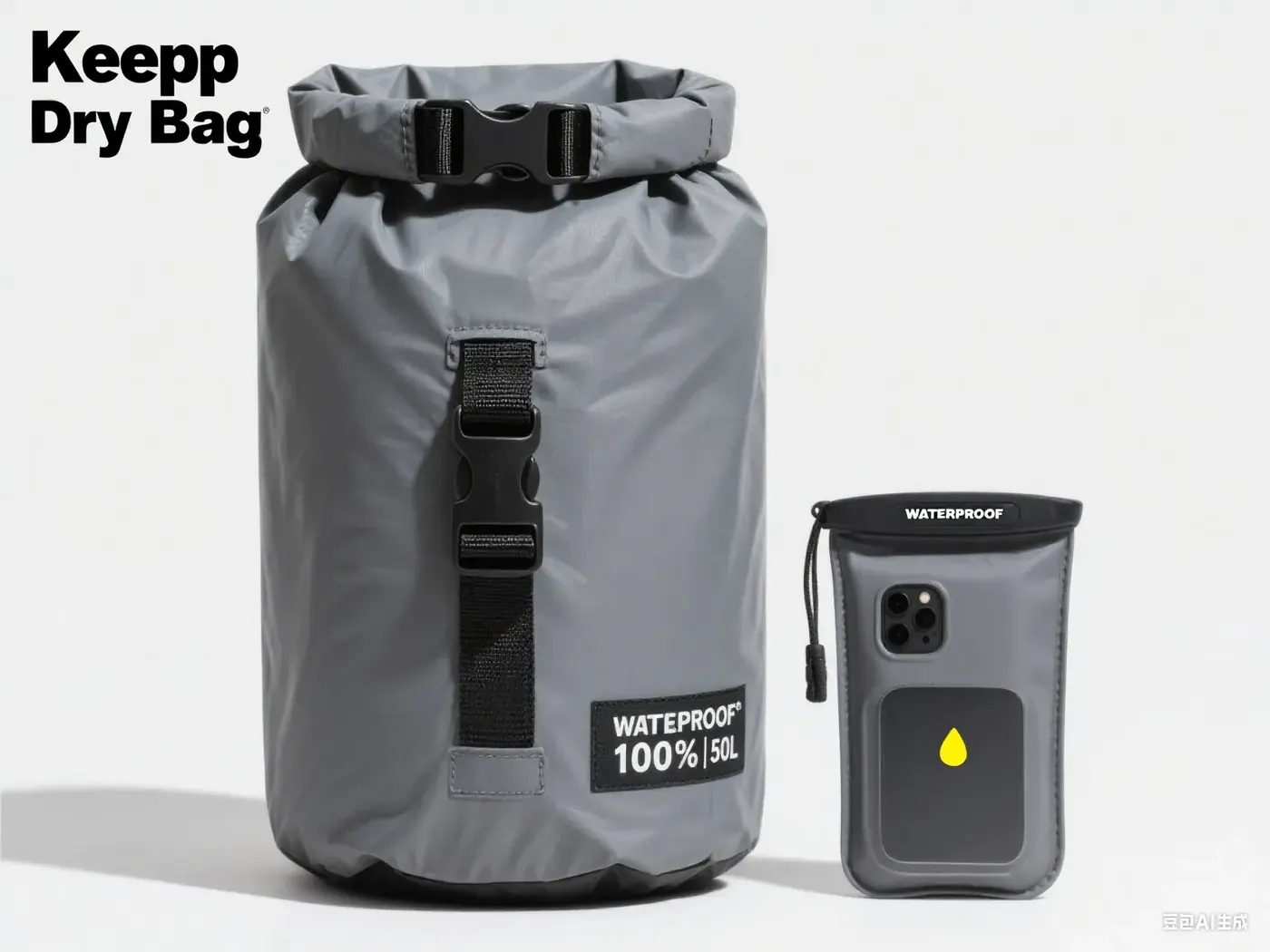
Two of those nine are routinely underestimated. Print placement is not a description but a dimension: a logo given as a position in millimetres from a named seam will be placed correctly on the first sample, and one given as centred on the front panel will not, because the front panel of a roll-top pack changes area as the collar is rolled. Barcodes are worse, because an EAN-13 allocated late can delay a retail listing by four to six weeks while the number is registered.
- Convert all logo artwork to outlines and supply it as vector; a raster file is the single most common cause of a rescheduled print.
- Give every colour as a Pantone code with the finish named, since a coated and an uncoated reference differ visibly on film.
- Specify print position in millimetres from a seam, not as a description of where it should look right.
- Allocate barcodes before bulk starts; registration takes four to six weeks and gates the retail listing, not the goods.
- Decide packaging artwork at specification, because printed cartons carry their own 500 to 1,000 piece minimum.
Branding Methods: Cost, Durability and Minimums
Six methods cover almost every logo on a waterproof shell, and they divide cleanly into those that sit on the surface and those that are built into a component. Surface methods are cheaper and faster; component methods cost more, last longer and carry a tooling charge. The right choice depends less on appearance than on where the logo sits, because a print on a flexing roll-top collar is stressed in a way a print on a flat front panel is not.
| Method | Unit cost (USD) | One-off cost | Durability | Best position |
|---|---|---|---|---|
| Screen print, one colour | 0.18 to 0.45 | 30 to 90 per colour | 30 to 50 wash cycles | Flat front panel |
| Heat transfer print | 0.25 to 0.70 | 30 to 90 per colour | 25 to 40 wash cycles | Multi-colour logos |
| Woven label, sewn on | 0.08 to 0.22 | 0 | Life of the pack | Webbing, side seam |
| Silicone or rubber patch | 0.35 to 0.90 | 120 to 400 tooling | Life of the pack | Front panel, sleeve |
| Embroidery, up to 5,000 stitches | 0.45 to 1.20 | Digitising 20 to 60 | Life of the pack | Non-welded panels |
| Moulded zip puller | 0.15 to 0.40 | 300 to 900 tooling | Life of the pack | Main closure |
Position dictates method more than budget does. A roll-top collar flexes every time the pack is opened, and print applied there cracks within one season regardless of how much it cost, which is why logos on collars should be woven or silicone rather than screened. Welded bodies also restrict where a needle can go: every stitch through a welded panel is a potential leak path, so a woven label on a submersible pack belongs on webbing or on a trim seam rather than through the body fabric.
Component branding deserves a specific note on minimums, because they are higher than the 500 piece programme minimum and are the reason a logo sometimes cannot be applied at all. Woven labels generally carry a 1,000 to 2,000 piece minimum, woven-in zip tape a 3,000 metre minimum, and a moulded puller a 500 to 1,000 piece minimum on top of its tooling charge. On a 500 piece first order, print and a sewn woven label are usually the only two methods available at programme minimum.
Artwork and Colour: What Has to Be Right
Colour is where a private label programme most often disappoints, and the reason is almost always that the reference was specified on the wrong substrate. A Pantone coated reference describes ink on paper; a waterproof shell is a laminated film over a woven base, and the same pigment reads two to three shades darker on it. The correct process is to specify the code, then approve a lab dip on the actual production fabric under a controlled light source, and only then release bulk dyeing.
| Step | Time | Cost (USD) | Acceptance rule |
|---|---|---|---|
| Pantone reference submitted | Day 0 | 0 | Coated or TCX code named per colour |
| Lab dip on production fabric | 5 to 7 days | 50 to 150 per colour | Delta E of 1.0 or less against the reference |
| Bulk dye lot | 15 to 25 days | 150 to 400 surcharge | Delta E of 2.0 or less against the approved dip |
| Colourfastness screening | 3 to 5 days | 40 to 120 per method | Grey scale 4 or better |
| Production shade band | Ongoing | 0 | Approved dip retained as the master |
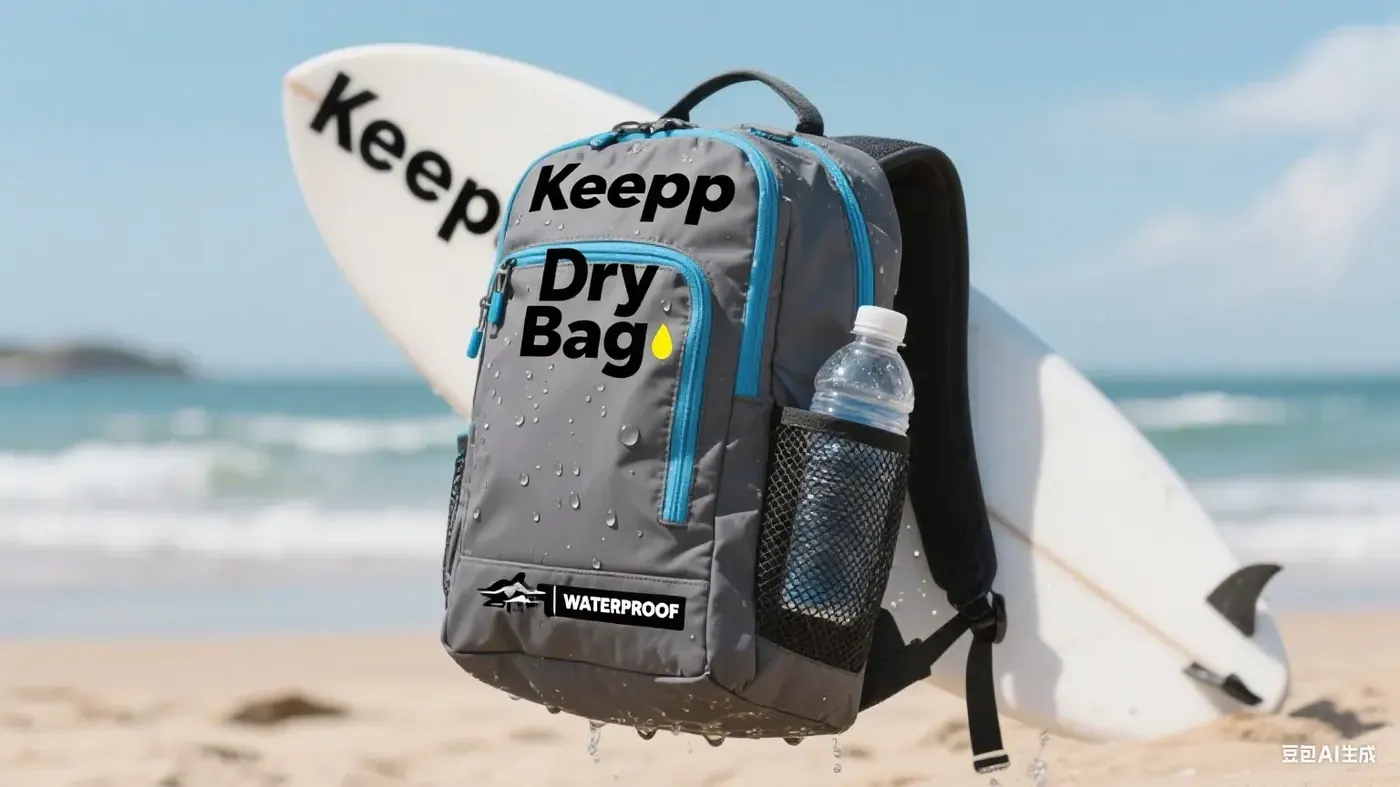
Colourfastness is the second half of the same decision and is measured, not asserted. The relevant screening depends on the market: fastness to washing, to light, to rubbing and, for anything sold near a pool, to chlorinated water. The test methods and the grey scale used to score them are published by AATCC, and a first-season brand should ask for grey scale 4 or better on every method rather than accepting a pass with no number behind it.
Two further rules prevent most shade disputes. Keep the approved lab dip as the physical master, because a digital photograph of a dip is not a reference and cannot be compared against a bulk lot under controlled light. And approve shade bands rather than single points, since a dye lot varies across its length by a small amount and a specification written as an exact value will reject fabric that is in practice perfectly saleable.
Compliance Files You Should Own
A brand selling into the EU or California carries the compliance obligation, not the party that built the goods, which means the documents have to be in the brand name and in the brand's possession. Seven files cover the usual requirements, and a buyer who cannot produce them on request will find a marketplace listing suspended or a container held. None of them is expensive relative to a programme: together they cost 400 to 1,600 USD and they are the difference between a sellable product and an unsellable one.
| Document | What it proves | Typical cost (USD) | Who needs it |
|---|---|---|---|
| REACH SVHC declaration | No substances above 0.1 percent by weight | 120 to 380 per material | EU market |
| California Prop 65 statement | Listed substances disclosed or absent | 120 to 380 per material | California |
| Third-party IPX test report | The rating claimed is measured | 180 to 520 | Any IPX6 or IPX7 claim |
| AQL 2.5 inspection report | The shipment was sampled and passed | 150 to 400 | Every bulk order |
| ISO 9001 certificate | The quality system is certified | 0, copied from the certificate | Retail buyers |
| BSCI audit report | Social compliance was audited | 0, copied from the report | EU retail chains |
| Carton and labelling spec | Marking matches the import rules | 50 to 150 | Customs entry |
The restricted substance lists behind the first two rows are maintained by ECHA in Europe and administered at state level in California, and both are updated frequently enough that a declaration older than about twelve months should be re-issued rather than reused. Material-level declarations also need to name the material, not the product: a statement covering a pack says nothing about the film, the coating or the print ink, and it is the ink that most often contains the substance in question.
Inspection deserves a word beyond the certificate, because the report is only as good as the defect classification agreed before it. Critical defects fail a lot on one occurrence, major defects are held to AQL 2.5 and minor ones to AQL 4.0, and the sampling tables behind those figures sit within the standards published by ISO. On a waterproof body, seam integrity should be classed as critical by default, since a single leaking weld in a 50 piece sample predicts a field failure rate of 1 to 3 percent.
Timeline From Brief to First Delivery
A private label programme runs 14 to 18 weeks from brief to delivered stock on the middle route, and the sequence is fixed by four dependencies that cannot be compressed: lab dips must precede bulk dyeing, artwork must precede screening, the approved sample must precede cutting, and packaging must precede packing. Two buffers should be added to whatever the schedule says, one for a second sample round and one for freight variability.
| Stage | Duration | Dependency | Buffer to add |
|---|---|---|---|
| Brief, quotation and specification | 3 to 5 days | Logo, Pantone codes, dimensions | 2 days for artwork revision |
| Lab dips and material approval | 5 to 7 days | Pantone reference submitted | 3 days for a second dip |
| Sample build | 6 to 10 working days | Specification signed off | 6 days if a second round is needed |
| Sample transit and review | 3 to 8 days | Courier booked | 2 days for customs on the sample |
| Bulk production | 35 to 50 days | Sample approved, deposit paid | 5 days near the Lunar New Year |
| Inspection, packing and export | 3 to 8 days | AQL report accepted | 2 days |
| Ocean freight and clearance | 25 to 45 days | Vessel sailed | 7 days for port congestion |
The sample stage is where the calendar is most often lost, and the practicalities of getting one across a border quickly are covered in the sample shipping guide. The single most effective habit is to return comments as one consolidated list with marked-up photographs rather than as a series of emails, because each separate round of comments restarts the build and costs another 6 to 10 working days.
Quantity and scheduling interact in one way worth planning around: a 500 piece minimum can usually be split across colours within a single design at 200 pieces per colour, which lets a first season test two shades without doubling the programme. The mechanics are set out in the MOQ and lead time guide, which also explains why a matched colour adds 15 to 25 days while a stock shade adds none.
What Branding Adds to the Unit Price
Branding cost is additive rather than multiplicative, and a first-season budget should treat it as a separate line with its own allowance. The worked case below is a 30 litre welded roll-top at 500 pieces with a one-colour screen print on the front panel, a woven label on the webbing, a printed hangtag and a printed carton. It shows how a 14.60 USD base becomes a 16.05 USD branded unit before any freight or duty is counted.
| Line | Per unit (USD) | Programme total (USD) | Note |
|---|---|---|---|
| Base unit, 30 L welded roll-top | 14.60 | 7,300 | Stock colour, no new tooling |
| One-colour screen print | 0.32 | 160 | Plus 90 USD for the screen |
| Woven label, sewn to webbing | 0.14 | 70 | 1,000 piece minimum on the label |
| Printed hangtag and barcode | 0.28 | 140 | 500 to 1,000 piece minimum |
| Printed export carton | 0.34 | 170 | 80 to 260 USD for the artwork |
| Branded unit cost | 15.68 | 7,840 | Plus 170 USD in one-off charges |
The two lines in that table that surprise buyers are the hangtag and the carton. Both carry their own minimums of 500 to 1,000 pieces and their own artwork calendar of 5 to 8 days, and both are frequently decided at packing rather than at specification, which puts them on the critical path at the worst possible moment. Deciding them in week one costs nothing and removes a fortnight of risk from week eleven.
Scaling changes the picture in the brand's favour. The one-off charges of 170 USD do not scale, so at 2,500 pieces they fall to 0.07 USD per unit and at 10,000 to 0.02 USD, while the recurring per-unit lines fall by 5 to 12 percent against volume. A brand planning two seasons is better served by committing to 2,500 once than by ordering 500 four times, because the saving on one-off charges and the price tier together come to roughly 3 USD per unit.
Four Mistakes That Cost First-Season Brands Money
The same four errors account for most of the avoidable cost in a first private label season, and all four are decisions rather than accidents. They are listed in order of how much they usually cost, and each has a cheap alternative that costs nothing but attention. None of them is about the product; all of them are about process.
- Specifying a matched colour for the first season, which adds 15 to 25 days and a 150 to 400 USD surcharge. Use a stock shade for season one and introduce a matched colour once volume justifies the dye lot.
- Ordering branded trims below their own minimums. Woven labels need 1,000 to 2,000 pieces and moulded pullers 500 to 1,000, so on a 500 piece order use print plus a sewn label and add the trims at the second order.
- Deciding packaging artwork at packing rather than at specification, which puts 5 to 8 days on the critical path and risks cartons arriving after the goods are ready to ship.
- Submitting raster logo artwork, which cannot be screened, debossed or digitised and usually costs 3 to 5 days while a vector file is produced and re-approved.
There is also a fifth item that is not a mistake but a decision many brands defer too long: trademark registration in the target market. A logo applied to 2,000 units before the mark is filed is a logo that cannot be defended, and registration in the EU or the US takes long enough that it should be started before the sample rather than after the first delivery. It costs less than one sample round and protects the entire programme.
Aquagrip runs own-brand programmes on those terms: 500 pcs per design and colour, samples in 6 to 10 working days, bulk in 35 to 50 days, FOB Xiamen or DDP to more than 100 countries, with every bulk order inspected at AQL 2.5 before shipment and materials screened for REACH and California Prop 65. Programme records and the inspection archive are held. The platforms open to branding are described in the waterproof backpack overview, and the compliance detail is expanded in the REACH and Prop 65 guide.
People Also Ask
What does private label mean for a waterproof backpack?
An existing waterproof backpack platform sold under your brand, with your logo, colour, hardware and packaging. It sits between white label, which changes only the logo, and full development, which starts from a new pattern and needs tooling at 300 to 1,500 USD.
How much does it cost to put a logo on a waterproof backpack?
0.18 to 1.20 USD per unit depending on method: screen print 0.18 to 0.45, woven label 0.08 to 0.22, silicone patch 0.35 to 0.90, embroidery 0.45 to 1.20. One-off charges add 30 to 90 USD per print colour and 120 to 900 USD for tooling.
Can I brand a welded waterproof backpack?
Yes, but position matters. Every stitch through a welded panel is a potential leak path, so woven labels belong on webbing or trim seams, while screen print, heat transfer and silicone patches can sit on the panel itself.
What artwork files do I need to supply?
Vector logo artwork with outlines converted, a Pantone reference per colour, a dimension sheet, a material specification and a print placement drawing in millimetres from a named seam. Raster artwork cannot be screened, debossed or digitised.
How long does a first private label order take?
14 to 18 weeks from brief to delivered stock on the middle route: 3 to 5 days to quote, 5 to 7 for lab dips, 6 to 10 working days to sample, 35 to 50 for bulk, and 25 to 45 for freight and clearance.
Do I own the compliance documents for my brand?
Yes, and you must. The brand carries the obligation in the EU and California, so REACH and Prop 65 declarations, the IPX test report and the AQL inspection report should all be issued in the brand name and held by the brand.
Frequently Asked Questions
Q1. What is the minimum order for a private label waterproof backpack?
500 pcs per design and colour, which can usually be split across colours within one design at 200 pieces per colour. Branded trims carry their own higher minimums: 1,000 to 2,000 pieces for woven labels and 500 to 1,000 for moulded pullers.
Q2. What is the difference between white label and private label?
White label applies your logo to an existing pack in a stock colour and delivers in 11 to 14 weeks. Private label also changes fabric, colour, hardware and trim, which adds 2 to 4 weeks and 0.40 to 3.60 USD per unit.
Q3. How much does branding add to the unit price?
0.18 to 1.20 USD per unit depending on method, plus one-off charges of 30 to 90 USD per print colour, 120 to 400 USD for a patch tool and 300 to 900 USD for a moulded zip puller. On a 500 piece order that is roughly 1.08 USD per unit all in.
Q4. Can I use my own Pantone colour?
Yes, at 50 to 150 USD per colour for a lab dip, 5 to 7 days to produce it and a 150 to 400 USD dye lot surcharge, adding 15 to 25 days. A stock shade avoids all three and is the usual recommendation for a first season.
Q5. How do I approve a colour properly?
Submit the Pantone code, approve a lab dip on the actual production fabric under controlled light at Delta E of 1.0 or less, then hold that dip as the physical master and accept bulk at Delta E of 2.0 or less against it.
Q6. Which branding method lasts longest?
Woven labels, silicone patches and moulded hardware last the life of the pack; screen print runs 30 to 50 wash cycles and heat transfer 25 to 40. Avoid any print on a roll-top collar, which flexes on every opening and cracks within a season.
Q7. Do I need my own barcode?
Yes, one EAN-13 or UPC per variant, allocated before bulk starts. Registration takes four to six weeks and gates the retail listing rather than the goods, so allocating it late delays the listing even if the packs arrive on time.
Q8. What compliance documents should be in my brand name?
REACH and California Prop 65 declarations at 120 to 380 USD per material, a third-party IPX test report at 180 to 520 USD, an AQL 2.5 inspection report at 150 to 400 USD, plus copies of the ISO 9001 and BSCI certificates.
Q9. How long does a sample take for a branded pack?
6 to 10 working days to build plus 3 to 8 days in transit, so 12 to 18 calendar days from specification sign-off. The 6 day end requires vector artwork, a stock colour and a complete specification before day one.
Q10. Can I mix colours in one private label order?
Usually yes, at 200 pieces per colour within a single design, with stock shades sometimes allowed at a lower threshold. Splitting across different designs normally resets the 500 piece minimum for each one.
Q11. What should I do before the first order?
File the trademark in the target market, convert the logo to vector with outlines, allocate barcodes, and decide packaging artwork. Those four items cost less than one sample round and each one removes a fortnight of risk from the calendar.