A waterproof backpack is seen at night by its reflective material and in daylight by its colour, and the two do the same job with different physics. Retroreflective tape returns light to its source and makes a pack visible at 130 to 150 metres on dipped headlights against 25 to 30 metres for dark fabric with no reflective at all. Fluorescent yellow-green lifts daytime detection by roughly a factor of three over black, because it converts ultraviolet into visible light and reads far brighter than any ordinary bright colour. A pack carrying 0.03 to 0.08 square metres of reflective banding is conspicuous but does not meet EN ISO 20471 on its own, which asks for 0.13 square metres of retroreflective material at Class 2. On open water the colour rule changes again: orange and yellow are detected at 300 to 500 metres in chop, while a black pack disappears inside 100 metres. This page sets out the numbers behind each of those claims and turns them into a colour and placement decision.
Why Conspicuity Is a Specification, Not a Colour Choice
Being seen is a measurable property with a distance attached to it, and treating it as a matter of taste is how buyers end up with a pack that looks bright and performs badly. Two separate mechanisms are involved. In daylight, contrast and luminance decide how far away an object is detected, and fluorescent materials win because they emit visible light from the ultraviolet they absorb. After dark, only retroreflection works, and it works by returning light along the path it arrived on, straight back to the driver's eyes rather than scattering it.
| Condition | Dark grey shell, no reflective | Fluorescent yellow-green | With retroreflective banding |
|---|---|---|---|
| Dipped headlights at night | 25 to 30 m | 50 to 60 m | 130 to 150 m |
| Full beam at night | 60 to 80 m | 100 to 120 m | 200 to 260 m |
| Overcast daylight | 90 to 120 m | 250 to 320 m | 250 to 320 m |
| Fog, visibility under 200 m | 40 to 60 m | 110 to 150 m | 140 to 180 m |
| Rain with spray | 50 to 70 m | 150 to 190 m | 160 to 210 m |
Those distances matter because they are compared against stopping distance, not against intuition. At 50 km per hour a car covers roughly 21 metres during a 1.5 second perception and reaction time and a further 14 metres under braking, so it needs about 35 metres. At 60 km per hour the same car needs about 45 metres. A pack first seen at 25 metres on dipped beam therefore gives the driver no margin at all at urban speeds, while one seen at 130 metres gives a comfortable one.
The conclusion is unglamorous but useful: colour decides the daytime margin, reflective material decides the night-time margin, and neither substitutes for the other. A fluorescent pack with no reflective banding is a good daytime pack and a poor night pack, and a black pack with a well-placed reflective band is the reverse. The only configuration that works in both is a light or fluorescent shell with reflective panels on the straps and the lower back panel.
Riders and commuters who work in traffic should read this alongside the waterproof cycling backpack guide, because a cyclist presents a smaller frontal area than a pedestrian and is usually seen later for the same level of equipment.
How Retroreflective Material Works
Retroreflection is not reflection. An ordinary mirror throws light off at the opposite angle to which it arrived, which is useless to a driver unless the geometry happens to be right. Retroreflective material uses either glass beads or microprisms to send light back along the incoming path, so a headlight beam returns to the headlight and to the eyes directly behind it. That is why the effect is so strong over such a small area, and why a 25 millimetre strip outperforms half a square metre of bright fabric at night.
| Property | Glass bead tape | Microprism tape | Reflective fabric panel |
|---|---|---|---|
| Typical coefficient | 130 to 330 cd/lx/m2 | 330 to 700 cd/lx/m2 | 20 to 80 cd/lx/m2 |
| Wet performance | Falls 20 to 40 percent | Holds above 80 percent | Falls 30 to 50 percent |
| Flex life on webbing | 8,000 to 15,000 cycles | 15,000 to 30,000 cycles | 20,000 cycles and up |
| Typical width | 25 or 50 mm | 25 or 50 mm | Full panel |
| Cost per metre | 0.35 to 0.90 USD | 1.20 to 3.40 USD | 2.80 to 6.50 USD |
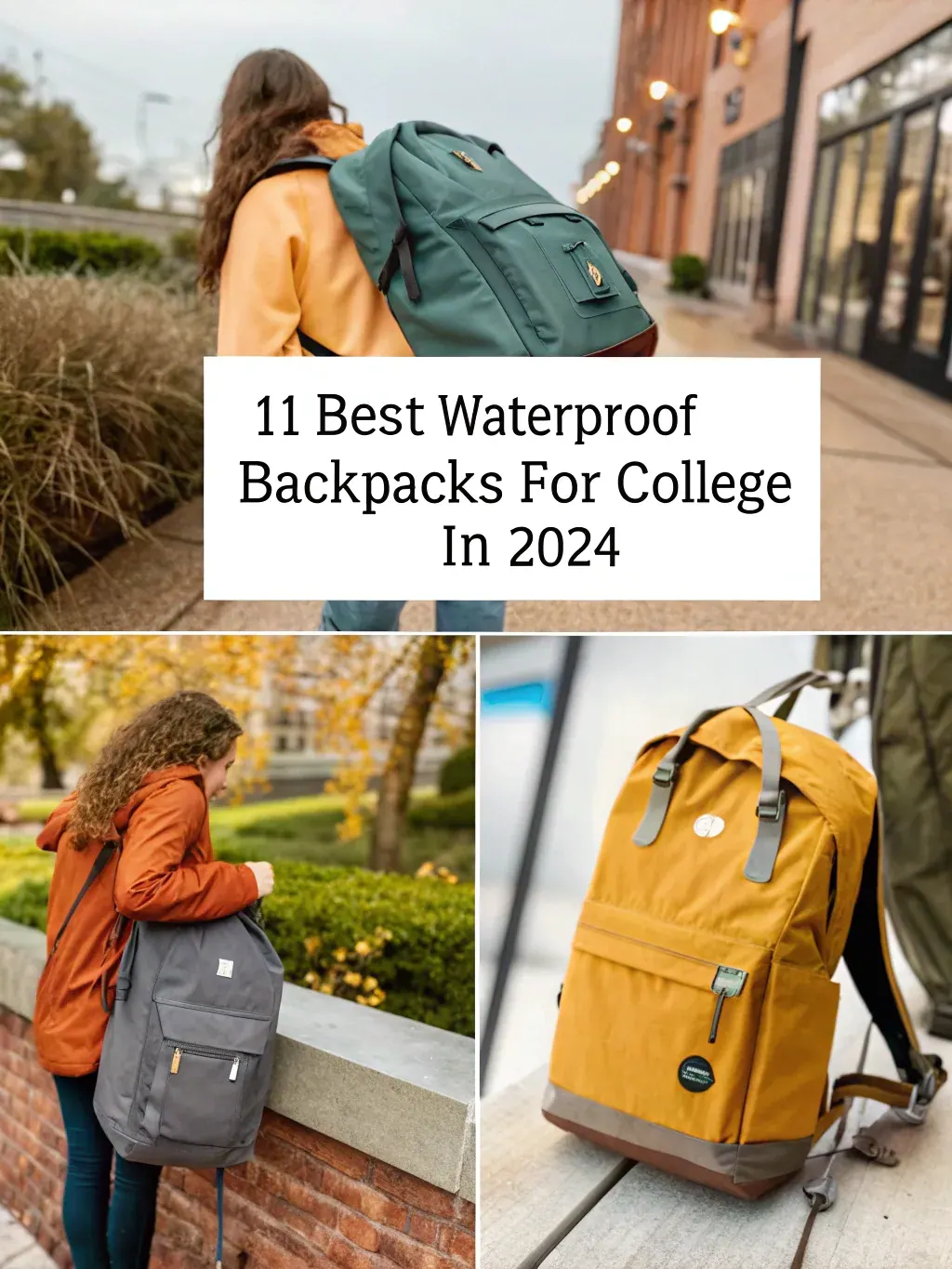
Two properties in that table deserve more attention than the headline brightness figure. Wet performance is the first, because a waterproof pack spends its working life wet: glass bead tape loses 20 to 40 percent of its coefficient when a film of water sits on the beads, while microprism tape holds above 80 percent because the prisms are sealed behind a smooth film. On a pack bought specifically to be used in rain, that difference is worth paying for.
Flex life is the second. Reflective tape bonded to webbing and shoulder straps is flexed thousands of times a season, and the failure mode is not fading but cracking and delamination at the edges. Specifying tape with a stated flex life of 15,000 cycles or more, and specifying it bonded rather than sewn through, keeps the material on the pack for the life of the shell instead of for one season.
Choosing a Colour for the Environment
The right colour is the one that contrasts with the background the pack will actually be seen against, which is why no single answer covers road, water, forest and snow. The mistake is to optimise for the brightest possible colour rather than for the largest luminance difference against a specific background. A fluorescent yellow-green pack is excellent against asphalt and poor against fresh spring foliage; a white pack is excellent against dark water and nearly invisible against snow.
| Environment | Background luminance | Best shell colour | Colour to avoid |
|---|---|---|---|
| Urban road, day and night | Dark grey asphalt | Fluorescent yellow-green | Charcoal, black |
| Forest trail, summer | Mid-green foliage | Orange or red | Olive, forest green |
| Open water, kayak or SUP | Dark blue-grey chop | Orange or yellow | Navy, black, blue |
| Alpine snow | White, very high luminance | Red or dark blue | White, pale grey |
| Desert or sandstone | Pale tan | Blue or black | Khaki, sand |
On the road, the argument for fluorescent yellow-green is not fashion but physiology: the human eye is most sensitive around 555 nanometres, which is close to the peak reflectance of that colour, and the material additionally converts ultraviolet into visible light. The measured result is roughly a threefold increase in detection distance over black in overcast daylight. Orange is a close second and is more acceptable aesthetically to many buyers, which is a legitimate consideration if it gets the pack worn.
Water is the environment where the choice is least forgiving, and it has its own rule for a simple reason: a pack in the water is viewed against chop rather than against a horizon, and small dark objects are lost in it very quickly. This is dealt with in the floating waterproof backpack guide, where the practical recommendation is a shell in orange or yellow with reflective panels above the waterline, since a floating black pack is effectively invisible beyond about 100 metres even in moderate conditions.
Reflective Placement That Actually Works
Where the reflective material sits matters as much as how much there is, and the governing principle is that it should be on moving parts and at the edges of the silhouette. A rider or walker is recognised partly by motion, so bands on the shoulder straps and on any part that swings are detected earlier than an equal area on a flat back panel. Bands at the outer edges of the silhouette also help a driver judge orientation, which a single central patch does not.
| Position | Typical area | Value | Note |
|---|---|---|---|
| Shoulder straps, both | 0.010 to 0.020 m2 | Highest | Moves with the gait, seen from the front |
| Lower back panel | 0.012 to 0.025 m2 | High | Faces following traffic directly |
| Side compression straps | 0.006 to 0.012 m2 | Medium | Defines the silhouette edge |
| Roll-top collar | 0.004 to 0.010 m2 | Medium | Visible from above, useful on water |
| Front panel logo | 0.003 to 0.008 m2 | Low | Marketing value, little conspicuity |
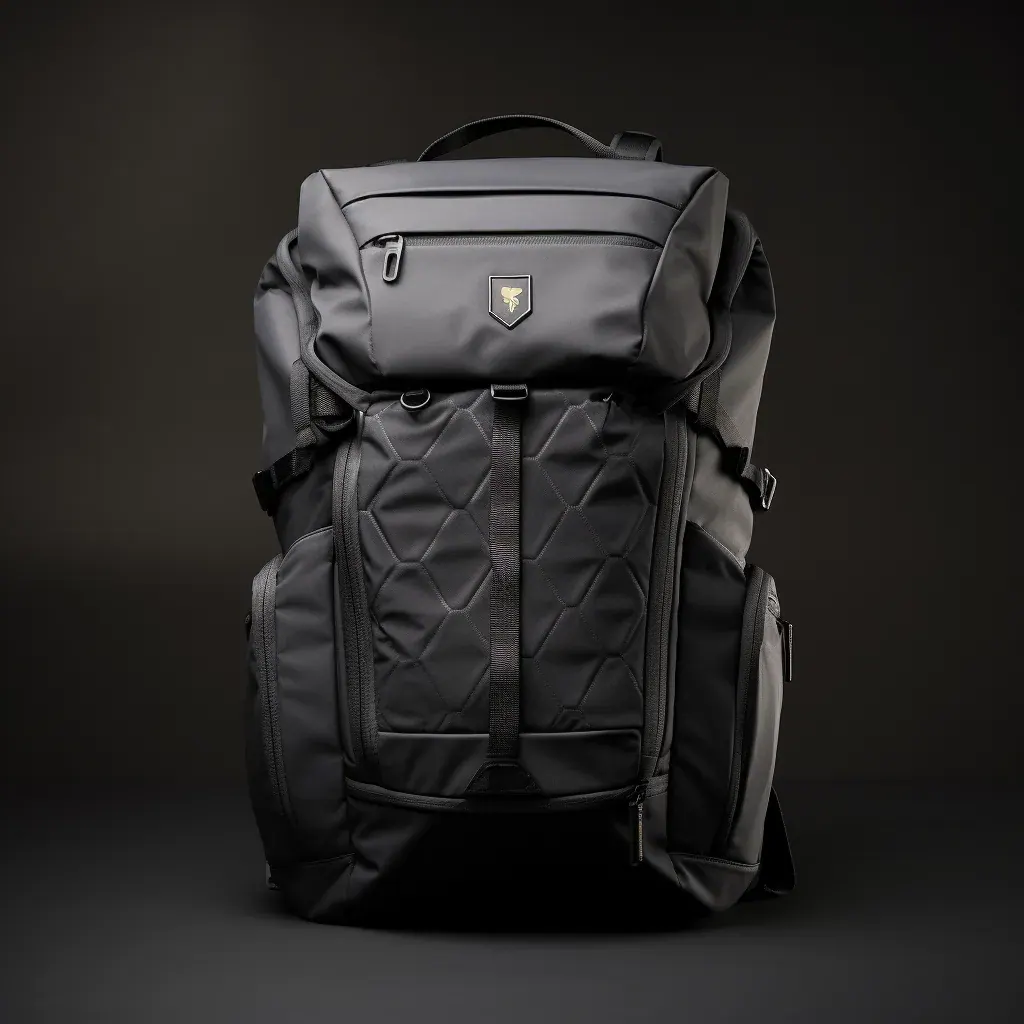
A pack built for road use should carry reflective on all four of the first positions, which together give 0.032 to 0.067 square metres. That is enough for conspicuity and not enough for certification, and the distinction is worth understanding: EN ISO 20471 Class 2 asks for 0.13 square metres of retroreflective material and 0.50 square metres of background, which a backpack alone will not reach. A pack can be genuinely conspicuous and still not be certified hi-vis clothing.
One placement error is common enough to name: reflective applied only to the front panel as part of a logo. It photographs well, it sells the pack, and it contributes almost nothing, because the front panel faces away from following traffic and does not move. If a design has to choose one position, it should be the shoulder straps; if it can afford two, add the lower back panel.
What the Standards Classes Mean
High-visibility clothing standards were written for garments worn on the torso, and they are useful for a pack buyer mainly as a way of specifying material quality rather than as a certificate to claim. The classes are defined by the area of fluorescent background and the area of retroreflective banding, with a minimum coefficient for each. Reading them stops a buyer from accepting tape of unspecified quality, which is the commonest weakness in a pack described as hi-vis.
| Class | Background material | Retroreflective material | Typical use |
|---|---|---|---|
| Class 3 | 0.80 m2 or more | 0.20 m2 or more | Motorway and high-risk work |
| Class 2 | 0.50 m2 or more | 0.13 m2 or more | Roadside work, cycling in traffic |
| Class 1 | Not required | 0.14 m2 or more | Low-risk, low-speed environments |
| Backpack, typical | 0.20 to 0.45 m2 | 0.03 to 0.08 m2 | Conspicuous, not certified |
The terminology and the minimum performance levels behind those figures are published by ISO, and the practical takeaway for a pack specification is narrower than the standard itself. Ask for the retroreflective coefficient and the wet-performance figure rather than for a class, because a pack cannot reach the areas in the standard and anyone quoting a class for a backpack is quoting something that cannot be measured on the product.
It is also worth asking what the material has been tested for beyond brightness. Retroreflective tape on a waterproof pack is exposed to salt spray, ultraviolet and repeated flexing, and a tape that is bright when new and delaminated after one season is worse than a slightly dimmer tape that lasts. A stated flex life, a stated wash or salt spray cycle count and a stated wet coefficient are the three numbers that distinguish a specification from a claim.
The Marine Case: Colour on Open Water
On water the problem changes character, because the consequence of not being seen is not a collision with a car but a failure to be found at all. Search and rescue practice treats a small object in chop as a detection problem measured in hundreds of metres, and colour is the single largest variable in it. Orange and yellow are the standard answers for exactly this reason, and they are why lifejackets and visual distress equipment are made in those colours rather than in black.
| Shell colour | Detection range in calm water | Detection range in 0.5 m chop | Comment |
|---|---|---|---|
| International orange | 500 to 900 m | 300 to 500 m | Best all-round marine colour |
| Fluorescent yellow | 450 to 800 m | 260 to 430 m | Close second, good in overcast |
| White | 400 to 700 m | 180 to 320 m | Good in calm, lost in chop and foam |
| Red | 300 to 550 m | 150 to 280 m | Reads poorly at distance in low light |
| Black or navy | 150 to 300 m | 60 to 100 m | Effectively invisible in chop |
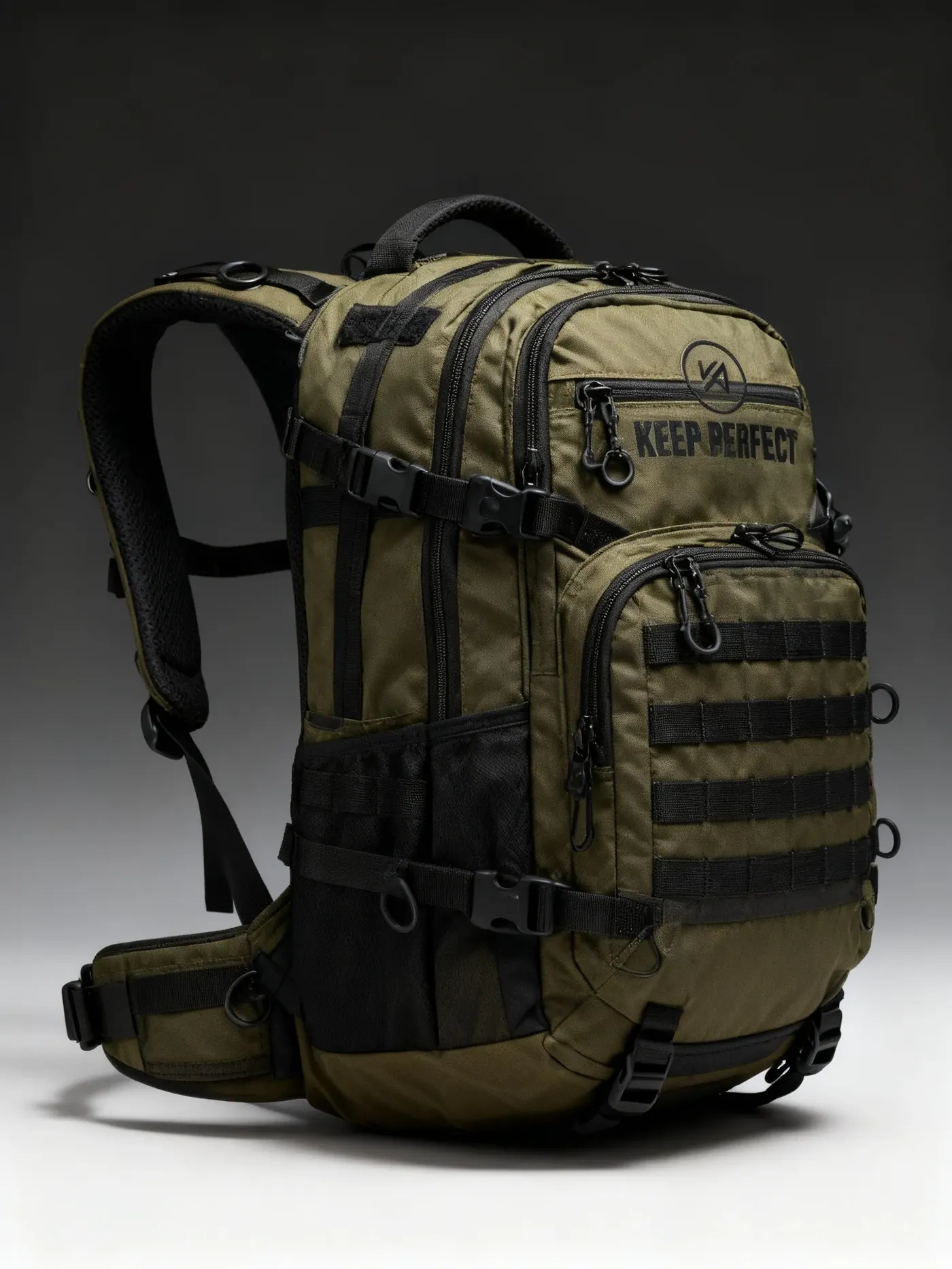
Two practices reinforce the colour choice on a pack intended for paddle use. The first is reflective above the waterline, since a pack floating in the water presents only its upper surface and that is the part a searcher sees first. The second is a light stick or a strobe clipped to a strap, which turns a passive detection problem into an active one after dark, and which the safety guidance published by the US Coast Guard treats as standard equipment rather than an extra.
Weather closure is the third factor and the one most often ignored when a trip is planned. Fog reduces visibility to under 200 metres and drizzle with spray reduces it further, and in those conditions a bright shell buys less than a short trip window does. Marine forecasts and visibility warnings are issued by NOAA, and checking them before launch is worth more than any equipment decision in this section.
Dark Shells, Heat Load and Fading
Colour has a second effect that has nothing to do with being seen. A dark shell absorbs solar radiation and runs hot, and on a pack carried in direct sun that temperature difference is large enough to matter to what is inside it. Measured on a 30 litre pack at an ambient temperature of 30 degrees Celsius, a black shell surface reaches 58 to 66 degrees while a white shell reaches 36 to 42 degrees, and the interior of the dark pack runs 12 to 18 degrees warmer than the interior of the pale one.
| Shell colour | Surface temperature at 30 C ambient | Interior temperature | Effect on contents |
|---|---|---|---|
| Black | 58 to 66 C | 42 to 48 C | Battery and electronics risk above 45 C |
| Navy or dark grey | 52 to 60 C | 38 to 44 C | Chocolate and wax items soften |
| Red or orange | 46 to 54 C | 34 to 40 C | Generally safe |
| Fluorescent yellow-green | 40 to 47 C | 31 to 36 C | Safe |
| White | 36 to 42 C | 28 to 33 C | Coolest option |
That heat load is the reason a dark pack is a poor choice for camera bodies, lithium batteries and anything with a wax or adhesive component, and it is the reason expedition operators often specify pale shells despite the dirt they show. A lithium cell stored above about 60 degrees Celsius degrades measurably faster, and a camera left in a 48 degree interior will show sensor noise and, in some cases, a temporary shutdown.
Fading runs the other way and is a weakness of the bright colours rather than the dark ones. Fluorescent pigments are less light-stable than conventional ones and lose a meaningful share of their luminance under prolonged ultraviolet exposure, typically becoming visibly duller after the equivalent of 25 to 50 wash cycles or one full season of strong sun. The mitigation is a UV-stabilised pigment and a fluorescent panel rather than a whole fluorescent shell, which keeps the bright material where it is seen and lets the rest of the pack age gracefully.
A Selection Checklist
Turning all of the above into a buying decision takes six questions, and answering them in order produces a specification rather than a preference. The first three narrow the colour, the fourth and fifth set the reflective material, and the last one settles the trade-off against dirt and fading. A pack chosen this way will be measurably safer than one chosen from a photograph.
- What is the dominant background? Asphalt favours fluorescent yellow-green, foliage favours orange, water favours orange or yellow, snow favours red or dark blue.
- Is the pack used after dark? If yes, retroreflective banding is not optional, and colour alone will not provide a margin at urban speeds.
- Is the pack used on or near water? If yes, choose orange or yellow and put reflective above the intended waterline.
- What is the stated retroreflective coefficient and its wet figure? Ask for 330 cd/lx/m2 or better and for wet performance above 80 percent.
- How much area and where? Look for 0.03 square metres or more, split across the shoulder straps and the lower back panel rather than concentrated in a logo.
- Does the pack carry heat-sensitive contents? If yes, avoid black and navy, which run 12 to 18 degrees warmer inside than a pale shell.
Motorcyclists should add a seventh question, because the riding position changes the geometry: a rider is seen largely from behind and slightly above, which makes the back panel and the tops of the shoulders the critical surfaces rather than the sides. That case is handled in the waterproof motorcycle backpack guide, which also covers the effect of a dark jacket absorbing the pack's reflective return.
Aquagrip builds packs to those specifications: 500 pcs per design and colour, samples in 6 to 10 working days, bulk in 35 to 50 days, FOB Xiamen or DDP to more than 100 countries, with every bulk order inspected at AQL 2.5 before shipment. Programme records, colour references and the inspection archive are held. Reflective and closure options are described in the waterproof backpack overview, and commuting configurations are covered in the rainy urban commute guide.
People Also Ask
How far away can a driver see a reflective backpack at night?
130 to 150 metres on dipped headlights against 25 to 30 metres for dark fabric with no reflective. At 50 km per hour a car needs about 35 metres to stop, so reflective banding is the difference between a comfortable margin and none at all.
Why do fluorescent colours work better than bright colours in daylight?
Fluorescent pigments convert ultraviolet into visible light, so they emit more light than they receive, and their peak reflectance sits near 555 nanometres where the eye is most sensitive. The measured result is about three times the detection distance of black in overcast daylight.
What is the difference between fluorescent and retroreflective material?
Fluorescent material increases daytime brightness and contrast by converting ultraviolet to visible light. Retroreflective material returns light along the path it came from, which only helps after dark. A pack needs both, because neither substitutes for the other.
Does pack colour matter in fog as well as at night?
Yes. In fog with visibility under 200 metres, dark fabric is detected at 40 to 60 metres while fluorescent yellow-green reaches 110 to 150 metres. Reflective banding adds little in dense fog because water droplets scatter the returned beam.
Where should reflective panels sit on a backpack?
On the shoulder straps first, then the lower back panel, then the side compression straps. Straps move with the gait and are seen from the front, while the back panel faces following traffic; a reflective logo on the front panel contributes almost nothing.
Do hi-vis colours lose brightness after washing?
Fluorescent pigments are less light-stable than conventional ones and typically look visibly duller after the equivalent of 25 to 50 wash cycles or one season of strong sun. A UV-stabilised pigment and a fluorescent panel rather than a full shell slows this noticeably.
Frequently Asked Questions
Q1. What colour waterproof backpack is safest for road use?
Fluorescent yellow-green, which is detected roughly three times further than black in overcast daylight and sits near the 555 nanometre peak of human visual sensitivity. Orange is a close second and is often more wearable, which matters if it gets the pack used.
Q2. How much reflective material does a backpack need?
0.03 square metres or more for genuine conspicuity, split across the shoulder straps and the lower back panel. That is well short of EN ISO 20471 Class 2, which asks for 0.13 square metres of retroreflective material and 0.50 square metres of background.
Q3. Does a hi-vis backpack meet EN ISO 20471?
No. The standard is written for torso garments and sets areas a backpack cannot reach. Use the standard to specify material quality, not to claim a class, and ask for the coefficient and the wet figure instead.
Q4. How bright should retroreflective tape be?
330 cd/lx/m2 or better for microprism tape, with wet performance above 80 percent. Glass bead tape at 130 to 330 cd/lx/m2 loses 20 to 40 percent of its coefficient when wet, which matters on a pack bought to be used in rain.
Q5. How long does reflective tape last on a pack?
Microprism tape runs 15,000 to 30,000 flex cycles and glass bead tape 8,000 to 15,000. Specify tape bonded rather than sewn through, since stitching creates edge cracks and a leak path on a welded body.
Q6. What colour is best for kayaking or open water?
International orange, detected at 300 to 500 metres in half-metre chop, or fluorescent yellow at 260 to 430 metres. A black or navy pack is effectively invisible beyond 60 to 100 metres in the same conditions.
Q7. Is a black waterproof backpack a bad idea?
Not in absolute terms, but it is a poor choice for road use at night, for paddle sports and for anything carrying batteries or camera bodies. A black shell runs 58 to 66 degrees Celsius on the surface and 12 to 18 degrees warmer inside than a pale one.
Q8. Does pack colour affect the temperature inside?
Yes, by 12 to 18 degrees Celsius. At an ambient 30 degrees a black pack interior reaches 42 to 48 degrees while a white one reaches 28 to 33, which is the difference between a safe and a marginal environment for lithium cells and cameras.
Q9. Do fluorescent colours fade faster than normal colours?
Yes. Fluorescent pigments lose a meaningful share of luminance after the equivalent of 25 to 50 wash cycles or a season of strong ultraviolet exposure. Using a fluorescent panel rather than a full fluorescent shell keeps the bright material where it counts.
Q10. Can I add reflective tape to a pack I already own?
Yes, and it is the cheapest visibility upgrade available. Use bonded microprism tape 25 to 50 millimetres wide on the shoulder straps and lower back panel, avoid stitching through a welded panel, and clean the surface with alcohol before bonding.