A waterproof cycling backpack needs a spray rating, a stable harness and reflective coverage in that order: IPX5 under IEC 60529 covers rain at commuting speed and IPX6 covers the 100 L per minute jet a wheel-spray and a hose-down produce, while immersion ratings are dead weight on a bike. Harness stability matters more than waterproofing because a pack that shifts at 25-35 km/h is a handling problem before it is a comfort one, so specify a sternum strap with 80-100 mm of adjustment, a hip belt that transfers 30-40 percent of a 6 kg load, and a body no wider than the rider shoulders. Realistic specifications are 18-24 L for a commute with a laptop, 25-30 L for bikepacking and gravel, a 1.5-2 L hydration reservoir with a routed hose, and retroreflective coverage on three faces. Programmes open at 500 pcs per design and colourway, samples take 6-10 working days, and bulk ships in 35-50 days.
What Wet Riding Actually Throws at a Pack
Rain on a cyclist arrives from below as well as above. A rear tyre on a wet road lifts roughly 0.3-0.8 litres of water per kilometre off the surface and deposits much of it on the rider lower back and the base of whatever is being carried, which is why packs that pass a shower test still soak through at the bottom panel. Add the rider own sweat, which runs 0.5-1.2 litres per hour at commuting effort, and the pack is dealing with water from three directions at once.
| Exposure while riding | Intensity | Where it lands on the pack | Specification that handles it |
|---|---|---|---|
| Rainfall at 18-25 km/h | 5-25 mm per hour, doubled by forward speed | Top and back panel | IPX4 to IPX5 shell with taped or welded seams |
| Rear wheel spray | 0.3-0.8 L per km lifted off the road | Base and lower back panel | Welded base panel, no seam at the bottom |
| Passing traffic splash | 1-4 L in a single event | Sides and base | IPX5 minimum, coated zip under a flap |
| Hose-down after a muddy ride | 100 L per minute from 3 m | Every face | IPX6 shell and seam construction |
| Rider sweat | 0.5-1.2 L per hour | Back panel and harness | 3D mesh channels, suspended back panel |
| Mud and grit spray on gravel | 200-600 g per 100 km | Zip lines and buckles | Covered zip, glove-friendly hardware |
The consequence for a specification is that the base of a cycling pack deserves more attention than the top. A shell rated IPX5 with a stitched and taped bottom seam will pass a showroom spray test and fail within the first wet commute, because the bottom seam sits in the spray line for the whole ride. Specify a welded base panel with no stitch path and put any seam on the upper side panels instead, which costs about 0.60-1.10 USD more and removes the single most common wet-ride complaint.
Which Rating a Cycling Pack Needs, and Where to Stop
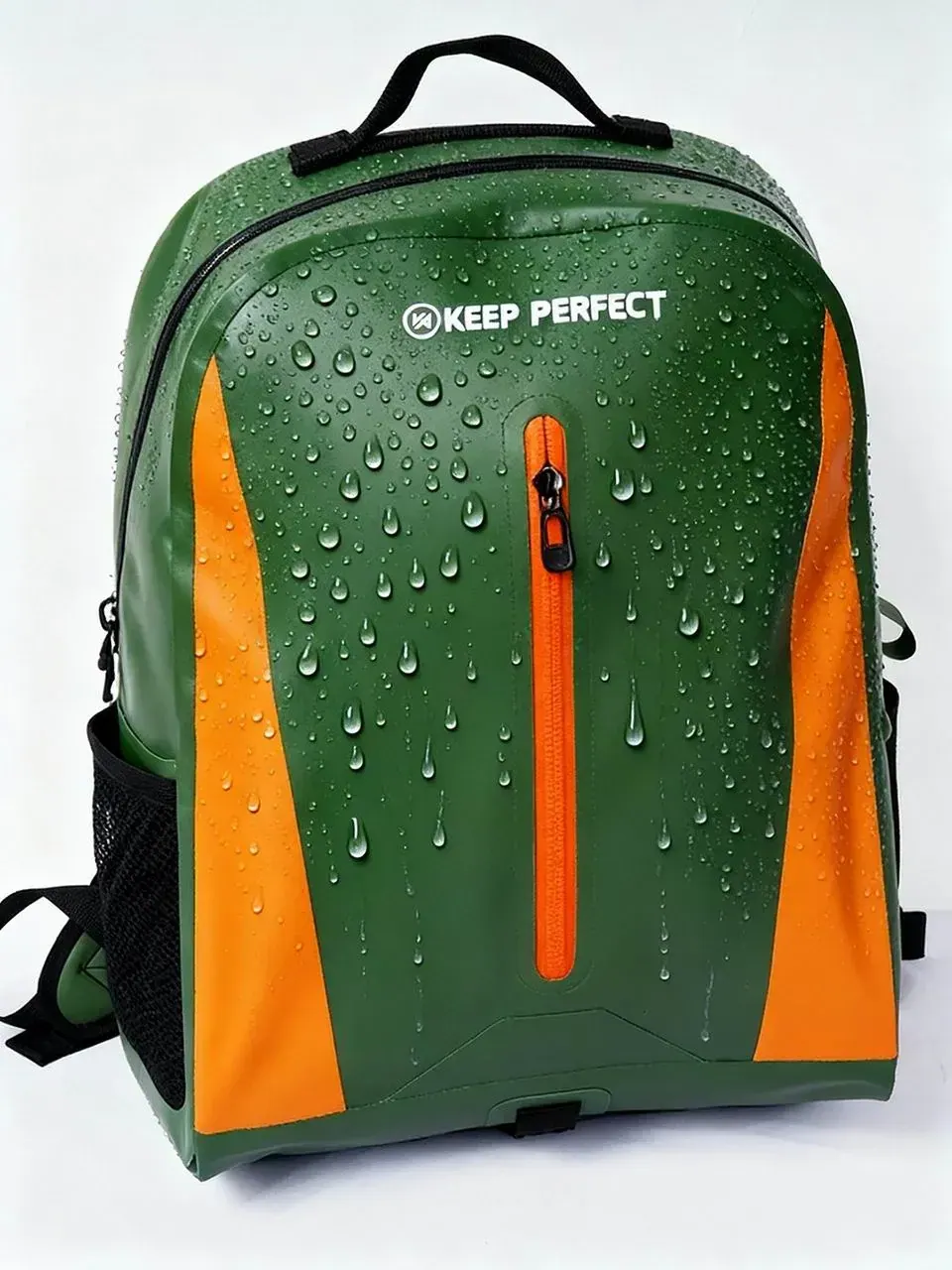
Cycling packs rarely go under, so the immersion ratings that matter for paddling are pure cost here. The scale to write into a tech pack is the IPX code from the IEC 60529 ingress protection standard: IPX5 certifies a 6.3 mm nozzle at 12.5 L per minute for three minutes, and IPX6 certifies a 12.5 mm nozzle at 100 L per minute. Forward speed is the reason to choose the higher number, since riding at 30 km/h into rain raises the effective impact energy of the droplets well above what a stationary shower test applies.
| Rating | Test condition | Riding scenario it covers | Recommendation |
|---|---|---|---|
| IPX3 | Spray at 60 degrees, 10 min | Drizzle, short urban hops | Only for fair-weather programmes |
| IPX4 | Splashing from any direction, 10 min | Light rain at 15-20 km/h | Minimum acceptable, budget lines |
| IPX5 | 6.3 mm nozzle, 12.5 L/min, 3 min | Steady rain, traffic splash, daily commute | Default specification |
| IPX6 | 12.5 mm nozzle, 100 L/min, 3 min | Storm riding, gravel, post-ride hose-down | Recommended for road and gravel ranges |
| IPX7 | 30 min sealed at 1 m | Not a cycling scenario | Skip it; the closure cost is wasted |
Closure choice follows the rating and the glove question. A roll-top mouth reaches IPX5-IPX6 with no teeth to foul and can be operated with winter gloves, which is why it dominates commuting ranges; the roll-top guide in roll top waterproof backpacks covers the fold geometry in detail. A coated reverse-coil zip under a storm flap gives faster access at the desk and also reaches IPX5-IPX6, provided the gutter over the zip is at least 20 mm deep. Airtight zips reach IPX7-IPX8 but need clean teeth and lubrication, which is a poor fit for a pack that lives in road grit.
Harness Stability: The Specification That Outweighs Waterproofing
A pack that moves on the rider back is a safety problem before it is a comfort one. At 25-35 km/h a 6 kg load that shifts 30 mm off the spine changes how the bike tracks over a rough surface, and riders instinctively correct with their shoulders, which is how neck and upper-back complaints start. Stability comes from four parameters that can be written into a tech pack and measured on a first article sample.
| Harness parameter | Commute specification | Road and gravel specification | Why it matters |
|---|---|---|---|
| Shoulder strap width | 45-55 mm, 8-10 mm foam | 55-65 mm, 10-12 mm foam | Narrow straps roll and cut in under load |
| Sternum strap | 80-100 mm of vertical adjustment | 100-120 mm, elastic section | Sets the strap angle for the rider chest depth |
| Hip belt | Webbing belt, transfers 30-40 percent at 6 kg | Padded belt, transfers 50-60 percent at 8 kg | Takes load off the shoulders and stops sway |
| Load lifters | Optional under 25 L | Present, set at about 45 degrees | Pulls the top of the pack toward the shoulders |
| Body width | Under 300 mm at the shoulders | Under 280 mm, tapered | A wide body fouls arm movement and bar reach |
| Back panel length | 420-480 mm | 460-520 mm | Too long and the pack hits the saddle when standing |
Volume and load interact tightly on a bike. Above roughly 8 kg on the back, most riders lose the ability to look over their shoulder cleanly and start to feel the load in the trapezius within 30 minutes, which is the practical ceiling for any backpack-based cycling specification. That puts a working ceiling of about 30 L for soft kit and it is the reason heavy or multi-day loads move to racks and panniers, a comparison worked through in waterproof backpack versus panniers. For bikepacking ranges that still want a pack, the answer is a narrower, taller body that keeps the load close to the spine rather than a wider one.
Hydration Inside a Sealed Body
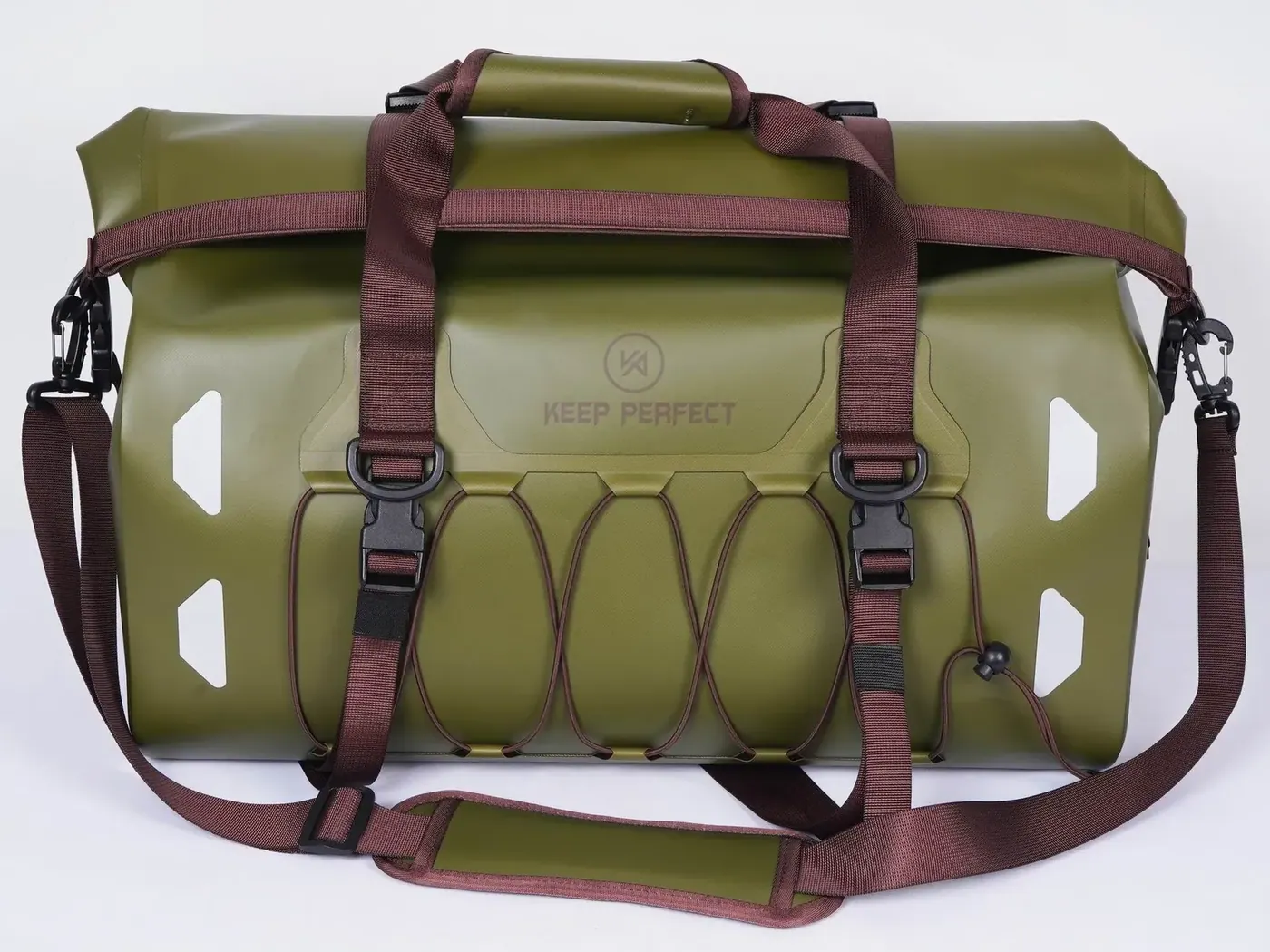
Waterproofing and hydration pull in opposite directions: a reservoir and a hose are openings in a body that is supposed to be closed, and they are the two features most likely to compromise a rating or annoy a rider. The workable answer is a dedicated sleeve inside the main body with a routed hose exit that is grommeted and covered, so the reservoir is inside the sealed volume and only the bite valve is outside it.
| Hydration option | Capacity | Weight carried | Effect on waterproofing | Best for |
|---|---|---|---|---|
| Internal reservoir with routed hose | 1.5-2 L commute, 2-3 L gravel | 1.5-3.0 kg at full | Needs a grommeted exit, IPX5 holds | Road, gravel, long commutes |
| Two bottles in external pockets | 1.0-1.5 L total | 1.0-1.5 kg at full | None, pockets are outside the body | Urban commute, racing |
| Reservoir plus one bottle | 2.0-3.0 L total | 2.0-3.5 kg at full | Grommeted exit plus drained pocket | Bikepacking and hot climates |
| No hydration, cafe stops | 0 L | 0 kg | None | Short urban hops under 10 km |
Two details decide whether a reservoir is a pleasure or a nuisance. The hose exit should be a 12-16 mm grommet with a silicone flap rather than a simple hole, because an open hole at shoulder height is both a leak path in rain and a place where the hose kinks. And the reservoir sleeve should be suspended 15-25 mm off the base panel, since a full 2 L reservoir weighs 2 kg and will otherwise sag into the bottom seam and pull at it for the whole ride. The full comparison is set out in hydration pack versus waterproof backpack.
Visibility: The Cheapest Safety Specification on the List
A wet ride is usually a dark ride, and the pack is often the largest surface a driver sees. Reflective material is the highest return on spend in this whole category: retroreflective tape on three faces costs 0.30-0.70 USD per unit and returns the rider to view at 80-150 m under headlights, while an integrated light clip turns the pack into a mount for a rear lamp that is visible at 300-500 m. Buyers should specify coverage area, not just the presence of a logo.
| Visibility feature | Detection distance | Added cost per unit | Specification note |
|---|---|---|---|
| Retroreflective tape, three faces | 80-150 m under headlights | 0.30-0.70 USD | Top, left and right; not only the front panel |
| Fluorescent yellow or orange panel | 150-300 m in daylight rain | 0.20-0.50 USD | Solution-dyed fabric outlasts printed panels |
| Rear light clip loop | 300-500 m with a lamp fitted | 0.15-0.35 USD | Webbing loop at the base, bar-tacked |
| Reflective piping on the harness | 40-80 m from the side | 0.20-0.45 USD | Visible when the rider leans forward |
| Hi-visibility rain flap | 100-200 m in daylight rain | 0.25-0.55 USD | Doubles as the zip gutter |
Placement beats quantity. Reflective material on the front panel of a pack is invisible to a driver behind the rider, which is where the risk actually is, so coverage should be specified on the base panel, both side faces and the harness. Riders in the dropped position present their back and the rear of the pack almost horizontally, so a strip at the bottom of the body does more work than a large panel higher up. Colour and visibility decisions across the range are covered in waterproof backpack colours and visibility.
Breathability Against Waterproofing: Managing the Trade-off
A fully sealed shell does not breathe, and on a bike the rider generates 0.5-1.2 litres of sweat per hour against a surface that has no airflow. The result is a wet back that most riders blame on the pack leaking. Managing this is a design job rather than a material miracle: move the load off the back with a suspended panel, create air channels with 3D mesh, and accept that some airflow has to be traded against absolute sealing.
| Design element | Effect on airflow | Effect on waterproofing | Net recommendation |
|---|---|---|---|
| Flat laminated back panel | None | Best, fully sealed | Only for short urban hops |
| 3D mesh with 6-10 mm channels | Moderate, 15-25 percent more evaporation | Panel area still sealed behind mesh | Default for commute ranges |
| Suspended tensioned mesh | High, 30-45 percent more evaporation | Requires a sealed inner wall | Best comfort, adds 120-200 g |
| Perforated EVA foam pad | Moderate | Needs a film layer behind the pad | Good compromise for hot markets |
| Air mesh shoulder straps | Moderate at the chest | Straps can carry moisture inward | Specify with a film backing |
The practical specification for a commuting range is a 3D mesh panel over a sealed inner wall, with the load suspended 10-20 mm off the rider back. That keeps the waterproof barrier continuous while giving enough airflow to stop the back from soaking in the first 30 minutes of a ride, and it adds 120-200 g against a flat panel. Riders who want maximum airflow and are willing to accept spray-entry through the mesh area are better served by a rack and panniers, and the trade-off is quantified in breathability versus waterproofing.
Packing for a Wet Ride: Layout That Works With Gloves
Cycling packs are opened on the roadside, in the rain, often with gloves on, which changes what good organisation looks like. Zipper pulls should be large enough to grab with a winter glove, pockets should be reachable without taking the pack off, and anything that must stay dry needs to be in the sealed volume rather than in an external pocket. A pack that is well organised for a desk is often badly organised for a roadside stop.
| Compartment | Internal target | Contents on a wet ride | Glove-friendly detail |
|---|---|---|---|
| Main sealed body | 18-30 L | Spare layer, lunch, laptop in a sleeve | Roll-top with 60-80 mm fold, no zip teeth |
| Hydration sleeve | 1.5-3 L reservoir | Water or electrolyte mix | Suspended 15-25 mm, grommeted hose exit |
| External bottle pockets | 70-74 mm diameter | One bottle, or a wet pump | Drained base, elastic mouth |
| Tool pocket | 200 x 120 x 60 mm | Tube, levers, multi-tool, CO2 | Wide mouth, stiffened opening |
| Quick-access lid pocket | 180 x 120 mm | Phone, cards, keys | Large pull, 25 mm webbing grab tab |
| Wet compartment | 280 x 180 mm lined | Wet gloves, overshoes | Welded liner with a 6 mm drain grommet |
Two small decisions change daily usability more than any feature list. Put the tool pocket where it can be reached with the pack on one shoulder, because nobody wants to take a pack off in the rain on a verge to find a tyre lever. And use a stiffened opening on that pocket, since a soft mouth collapses under a gloved hand and turns a 20 second tube change into a two minute one. Packing order matters too: heavy items such as a lock and tools belong low and close to the spine, which is the same load-placement rule that keeps a hiking pack stable on a descent.
Backpack or Panniers: Sizing the Decision
The honest answer for loads above about 8 kg or distances above about 40 km is that a rack and panniers beat a backpack on comfort, stability and sweat. The backpack wins on security, on stairs and on the walk at either end of the ride, and it is the only option that works on a bike with no rack mounts. Buyers building a range usually need both, and the decision points are stable enough to put in a table.
| Decision factor | Choose a waterproof backpack | Choose panniers |
|---|---|---|
| Load | Under 8 kg | 8-20 kg |
| Distance | Under 40 km per day | 40-120 km per day |
| Bike | No rack mounts, carbon frame, folding bike | Touring or commuter bike with a rack |
| Security and theft | Pack stays with the rider | Bags stay on the bike |
| Walking at either end | Frequent, offices and stations | Rare |
| Budget per litre | 2.50-6.00 USD per litre | 3.50-8.00 USD per litre plus a rack |
For brands that need both, the efficient route is one welded fabric platform shared between a 22 L pack and a 14 L pannier, using the same shell, seam setup and colourway. Development cost for the second format drops by roughly half and material minimums stay consolidated, which is worth 0.30-0.60 USD per unit at 1,000 pcs. Bikepacking ranges have a third option, a seat pack or frame bag that carries the bulk while a small 10-14 L pack carries water and layers, and that combination is set out in waterproof backpacks for bikepacking.
Testing a Cycling Pack Before Bulk Release
The protocol below runs in two to three working days per style and covers the failure modes that show up on a bike rather than in a showroom: spray at the base panel, harness stability under load, and zip performance after grit exposure. Sampling follows AQL 2.5 so a 500 pc order draws a meaningful sample, and the schedule is repeated once per production year.
| Test | Method | Pass criterion | Frequency |
|---|---|---|---|
| Base panel spray | IPX6 jet at the lower 100 mm of the body, 3 min | No moisture on indicator paper | Three per colourway |
| Full body spray | IPX5 nozzle, 12.5 L/min, 3 min | No moisture in the main body | Three per colourway |
| Loaded sway | 6 kg load, 30 min on a shaker or road test | Under 30 mm lateral movement at the shoulders | Two per style |
| Zip grit cycling | Grit exposure, 500 cycles, then spray | No moisture at the zip line | Per zip lot |
| Reflective retroreflection | Coefficient check on three faces | Meets the declared value at 30 m | Per colourway |
| Strap and buckle pull | Tensile pull on the harness to 80 kg | No tear-out at the bar-tack | Per style |
One field step is worth adding to any laboratory schedule: a 30 km road test with a 6 kg load on a wet day, ridden by two people of different torso lengths. Laboratory spray cabinets do not reproduce the combination of forward speed, wheel spray and body movement, and harness problems in particular only appear once someone is leaning forward for an hour. Material declarations for the shell, coating and reflective material should be attached to the same report, screened against REACH and California Prop 65, with PFAS-free durable water repellent confirmed for EU and several US state tenders; the background is summarised in the EPA PFAS programme pages.
Ordering a Cycling Backpack Programme
Cost on a cycling programme concentrates in the harness and the reflective package rather than in the shell, which surprises buyers who expect waterproofing to dominate. A stable harness with a padded hip belt and 55-65 mm straps costs more than the difference between an IPX5 and an IPX6 shell, and it is where riders feel the difference every time they put the pack on.
| Cost driver | Share of unit cost | Save by | Never save by |
|---|---|---|---|
| Harness and back panel | 25-35 percent | One platform across two volumes | Dropping the sternum strap adjustment |
| Shell and seam construction | 20-30 percent | 500D instead of 840D under 25 L | Stitching the base panel |
| Reflective package | 6-10 percent | Tape on three faces only | Removing reflective coverage entirely |
| Hydration sleeve and grommet | 5-9 percent | Offering it as an option | Cutting an open hole with no grommet |
| Hardware and pulls | 8-12 percent | Shared buckle platform | Small pulls that cannot be used with gloves |
| Order band | Unit price index | Sample lead time | Bulk lead time | Notes |
|---|---|---|---|---|
| 500-999 pcs | 1.00 | 6-10 working days | 35-40 days | One colourway, stock shell and webbing |
| 1,000-2,999 pcs | 0.93 | 6-10 working days | 38-45 days | Two colourways, printed logo, branded pullers |
| 3,000-9,999 pcs | 0.86 | 7-10 working days | 40-50 days | Pantone-matched webbing, reflective die-cut |
| 10,000 pcs and above | 0.79 | 8-10 working days | 45-50 days | Dedicated material run, printed liner, own carton |
Standard packing is one piece per polybag and 10-20 pieces per export carton, with cartons around 60 x 40 x 35 cm and gross weight under 15 kg. A 20 ft container takes roughly 1,500-1,800 pieces of 22 L cycling packs. FOB Xiamen keeps freight in the buyer control and DDP is available into more than 100 countries; every bulk order is inspected at AQL 2.5 before release. Process and capacity documentation for the wider bag range, including fishing and EVA lines, is published.
- The opening quantity is 500 pcs per design and colourway; colourways can be consolidated from 3,000 pcs.
- Samples are production-tooled in 6-10 working days and bulk ships in 35-50 days from FOB Xiamen.
- Ask for the base panel spray result separately from the full body result, because wheel spray is what fails in the field.
- Send target quantity, litre volume, rating and harness preference to service@junyuanbags.com for a priced specification.
Six Mistakes in Cycling Pack Specifications
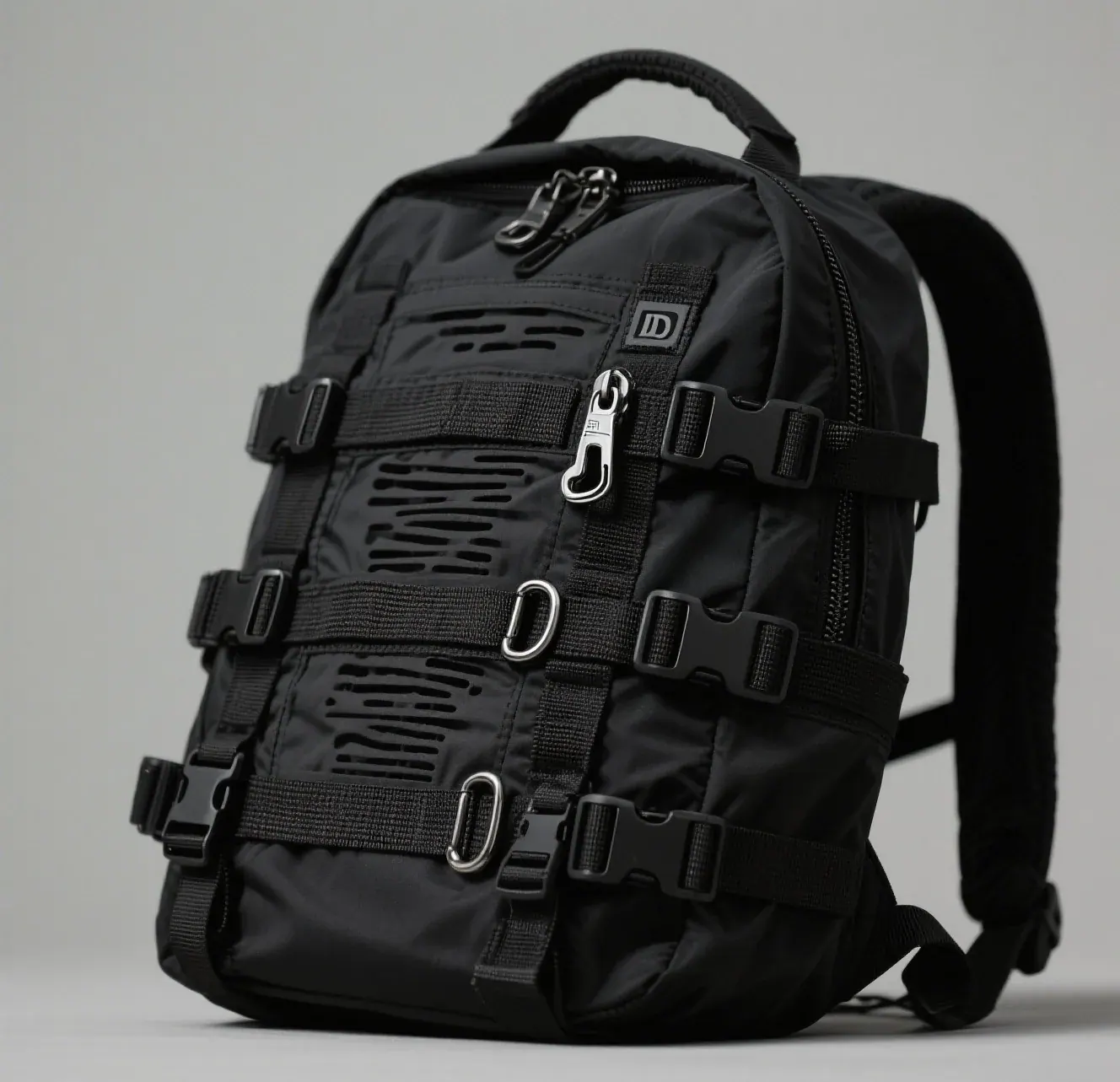
The patterns below account for most of the rework on cycling programmes and all of them surface in the field rather than on a sample bench. Fixing them at the brief stage costs nothing; fixing them after tooling typically costs a sampling round and 10-15 working days.
| Mistake | What the rider experiences | Correct specification |
|---|---|---|
| Stitched and taped base panel | Wet kit after the first 10 km in rain | Welded base panel with no stitch path |
| Reflective only on the front panel | Invisible to drivers behind the rider | Retroreflective tape on base, sides and harness |
| Small zip pulls | Cannot open the pack with winter gloves | 25 mm webbing grabs and glove-sized pulls |
| Backpack specified above 30 L | Sway and neck pain within 30 minutes | Cap at 30 L, move heavy loads to panniers |
| Open hole for the hydration hose | Leak path in rain, kinked hose | 12-16 mm grommet with a silicone flap |
| Immersion rating carried over from paddling | Money spent on closure the rider never uses | Stop at IPX5 or IPX6 for cycling |
Two closing points for buyers building a range rather than a single style. First, share the harness platform between the 18-24 L commute pack and the 25-30 L gravel pack, because harness development is the slowest part of a cycling programme and sharing it cuts sample rounds. Second, ride the first article before approving it: harness geometry is the one specification no drawing fully captures, and a 30 km wet ride tells a buyer more than any laboratory report. Related reading sits in our guides to waterproof commuter backpacks, waterproof motorcycle backpacks and waterproof backpacks for riding to work.
People Also Ask
Do I need a fully waterproof backpack for cycling or is water-resistant enough?
Water-resistant is enough only for drizzle and short hops under 10 km. A commuting pack should be IPX5, which certifies survival of a 6.3 mm nozzle at 12.5 L per minute for three minutes, and road and gravel ranges should be IPX6. The deciding factor is wheel spray: a rear tyre lifts 0.3-0.8 litres of water per kilometre onto the base of the pack, which a coated shell sheds for about 20 minutes and then wets through.
Why does my back get wet inside a waterproof cycling backpack?
Sweat, not rain, in most cases. A rider generates 0.5-1.2 litres of sweat per hour and a sealed shell has no airflow, so moisture collects against the back panel. Use a 3D mesh panel over a sealed inner wall with the load suspended 10-20 mm off the back, which raises evaporation by 15-25 percent. If the wetness is localised at the base, check the bottom seam instead.
Is a backpack or panniers better for a wet bike commute?
A backpack under 8 kg and under 40 km per day is the better choice, because it stays with the rider on stairs and at the office and works on bikes without rack mounts. Above 8 kg or 40 km, panniers win on stability, comfort and sweat. Many commuters run both: a 20 L pack for laptop and layers, panniers for the heavy lock and shopping.
How much reflective material should a cycling backpack have?
Cover three faces, not one. Retroreflective tape on the base panel and both sides returns the rider to view at 80-150 m under headlights, while a front-only panel is invisible to the traffic that is actually behind. Add a rear light clip loop, which takes a lamp visible at 300-500 m, plus reflective piping on the harness straps that stays visible when the rider leans forward.
Can I carry a hydration reservoir inside a waterproof backpack?
Yes, with a grommeted hose exit. Put the 1.5-3 L reservoir in a sleeve suspended 15-25 mm off the base panel so a full 2 kg load does not sag into the bottom seam, and route the hose through a 12-16 mm grommet with a silicone flap. An open hole at shoulder height is both a leak path in rain and a place where the hose kinks.
What size waterproof backpack suits a daily bike commute?
Plan 18-24 L for a commute with a laptop, spare layer, lunch and a lock, which lands at 5-7 kg and stays stable at 25 km/h. Above 30 L the pack starts to sway and to foul arm movement on the bars. Keep the body under 300 mm wide at the shoulders and under 8 kg loaded, which is the practical ceiling for anything carried on the back.
Frequently Asked Questions
Q1. What IPX rating should a waterproof cycling backpack have?
IPX5 for commuting and IPX6 for road and gravel. IPX5 certifies a 6.3 mm nozzle at 12.5 L per minute for three minutes, which covers steady rain and traffic splash, while IPX6 covers a 12.5 mm nozzle at 100 L per minute, which is what a post-ride hose-down delivers. Immersion ratings such as IPX7 are wasted on a bike, since the pack never goes under.
Q2. Are cycling backpacks different from hiking backpacks?
Yes, mainly in harness geometry and profile. A cycling pack is narrower at the shoulders, under 300 mm, shorter in the back at 420-520 mm so it does not hit the saddle, and it carries reflective coverage on three faces. Hiking packs are taller and wider and put reflective material at the front, which is the wrong place for a rider leaning forward in traffic.
Q3. How much weight should I carry on my back while cycling?
Keep it under 8 kg. Above that most riders lose clean shoulder checks and start to feel the load in the neck and upper back within 30 minutes, and a 6 kg load that shifts 30 mm off the spine changes how the bike tracks. Heavy loads belong on a rack, which is why commuting packs cap out around 30 L of soft kit.
Q4. Will a waterproof backpack keep a laptop dry on a bike commute?
Yes with IPX5 or better and a suspended sleeve: 10-12 mm of closed-cell foam with the floor raised 25-40 mm off the base panel, plus a welded inner pouch if the ride is long or the rain heavy. The base panel matters most on a bike, because wheel spray delivers 0.3-0.8 litres per kilometre to the bottom of the pack.
Q5. Do I need a rain cover as well as a waterproof shell?
No. A pack rated IPX5 or IPX6 with welded seams performs better than a rated shell plus a cover, because covers flap at speed, pool water at the top and hide reflective panels. Spend the money on a welded base panel and reflective coverage instead, which address how water and traffic actually reach the rider.
Q6. How should a cycling backpack fit in the riding position?
The body should sit between the shoulder blades with the top no higher than the shoulder line, the sternum strap adjustable over 80-100 mm, and a hip belt transferring 30-40 percent of a 6 kg load. In the dropped position the pack should not touch the helmet or restrict a shoulder check. Fit is the one specification that needs a road test rather than a drawing.
Q7. Can I use a hydration bladder in a roll-top waterproof pack?
Yes. Route the hose through a 12-16 mm grommet with a silicone flap placed at shoulder height, and keep the roll above the grommet so the exit stays out of the water path. A 1.5-2 L reservoir suits a commute and 2-3 L suits gravel; suspend the sleeve 15-25 mm off the base so a full reservoir does not pull on the bottom seam.
Q8. How do I stop the pack from swaying when I ride?
Set the sternum strap to hold the shoulder straps parallel, tighten the hip belt so it takes 30-40 percent of the load, and pack heavy items such as a lock and tools low and close to the spine. Load lifters set at about 45 degrees pull the top of the pack toward the shoulders. Lateral movement should stay under 30 mm at 6 kg.
Q9. What volume suits bikepacking versus a daily commute?
Plan 18-24 L for a commute and 25-30 L for bikepacking and gravel days. Above 30 L a pack starts to sway and to foul arm movement on the bars, so multi-day loads are better split between a 10-14 L pack for water and layers and seat or frame bags for the bulk. Keep the loaded weight under 8 kg in the pack.
Q10. How is a cycling pack tested before bulk production starts?
Spray the lower 100 mm of the body at IPX6 for three minutes, spray the whole body at IPX5, run a 6 kg loaded sway test for 30 minutes, cycle the zip 500 times after grit exposure, and pull the harness to 80 kg. Add a 30 km wet road test with two riders of different torso lengths, because harness problems only appear once someone leans forward for an hour.
Q11. What is the MOQ for a waterproof cycling backpack programme?
The opening quantity is 500 pcs per design and colourway, with colourways consolidated from 3,000 pcs. The unit price index falls from 1.00 at 500-999 pcs to 0.93 at 1,000-2,999, 0.86 at 3,000-9,999 and 0.79 at 10,000 and above. Sharing one harness platform across two volumes is the fastest saving on a cycling range.
Q12. How long do sampling and bulk production take?
Samples take 6-10 working days once materials are confirmed and are built on production tooling so seam and foam parameters match the bulk run. Bulk takes 35-50 days depending on quantity, with 2-3 days for the AQL 2.5 inspection before release. Sea freight from Xiamen adds 25-40 days, or 5-8 days by air for a seasonal launch.