A wet urban commute needs 22-28 L of usable volume, a suspended 15 inch laptop sleeve that clears the base by at least 40 mm, a finished-pack result at IPX5 to IPX6, and a dedicated wet zone for a folded umbrella or rain shell. City rain is rarely extreme, but it is frequent, mixed with wheel spray, traffic spray, and crowded transit. Add 80 square centimetres of retroreflective area, inward-facing openings for crowded platforms, and a base fabric of at least 840D, because the pack will be set down on wet pavements several times a day.
What a Wet City Commute Actually Asks of a Pack
A city commute is not a hike. The rain exposure is intermittent rather than sustained, the load is dense and rectangular rather than soft and compressible, and the pack will be set down on a wet pavement, a bus floor, and an office lobby in the same hour. Those three facts change the specification. Sustained-rain performance matters less than repeated short exposures, drop resistance, and a base that does not wick water from the ground upward into the chamber.
Commute length sets the comfort budget. A 15-25 minute walk to a station tolerates a simple harness, while a 35-45 minute walk with 6-8 kg needs a suspended panel with 8-12 mm standoff and a stabilising belt. Riders, walkers, and transit users carrying the same 7 kg will report very different comfort, so the specification should name the dominant mode and the typical duration rather than trying to satisfy all three equally.
| Commute pattern | Usable volume | Load | Priority feature |
|---|---|---|---|
| Walk under 20 min | 20-24 L | 4-6 kg | Fast access, low mass |
| Walk 20-40 min | 24-28 L | 6-8 kg | Suspended panel, belt |
| Transit heavy | 22-26 L | 5-7 kg | Inward openings, slim profile |
| Cycle plus walk | 24-30 L | 6-9 kg | Reflective area, stability |
| Mixed with gym or swim | 26-32 L | 7-10 kg | Wet separation compartment |
Rainfall data helps set the target honestly. Many temperate cities average 5-25 mm on a wet day with short intense bursts rather than all-day soak, which is why IPX5 to IPX6 covers the great majority of commutes. Reserving IPX7 for a city bag usually adds mass and stiffens the closure without matching any real exposure, unless the route includes a flood-prone underpass or a launch and dock leg.
Volume, Laptop Fit, and the Base Clearance Rule
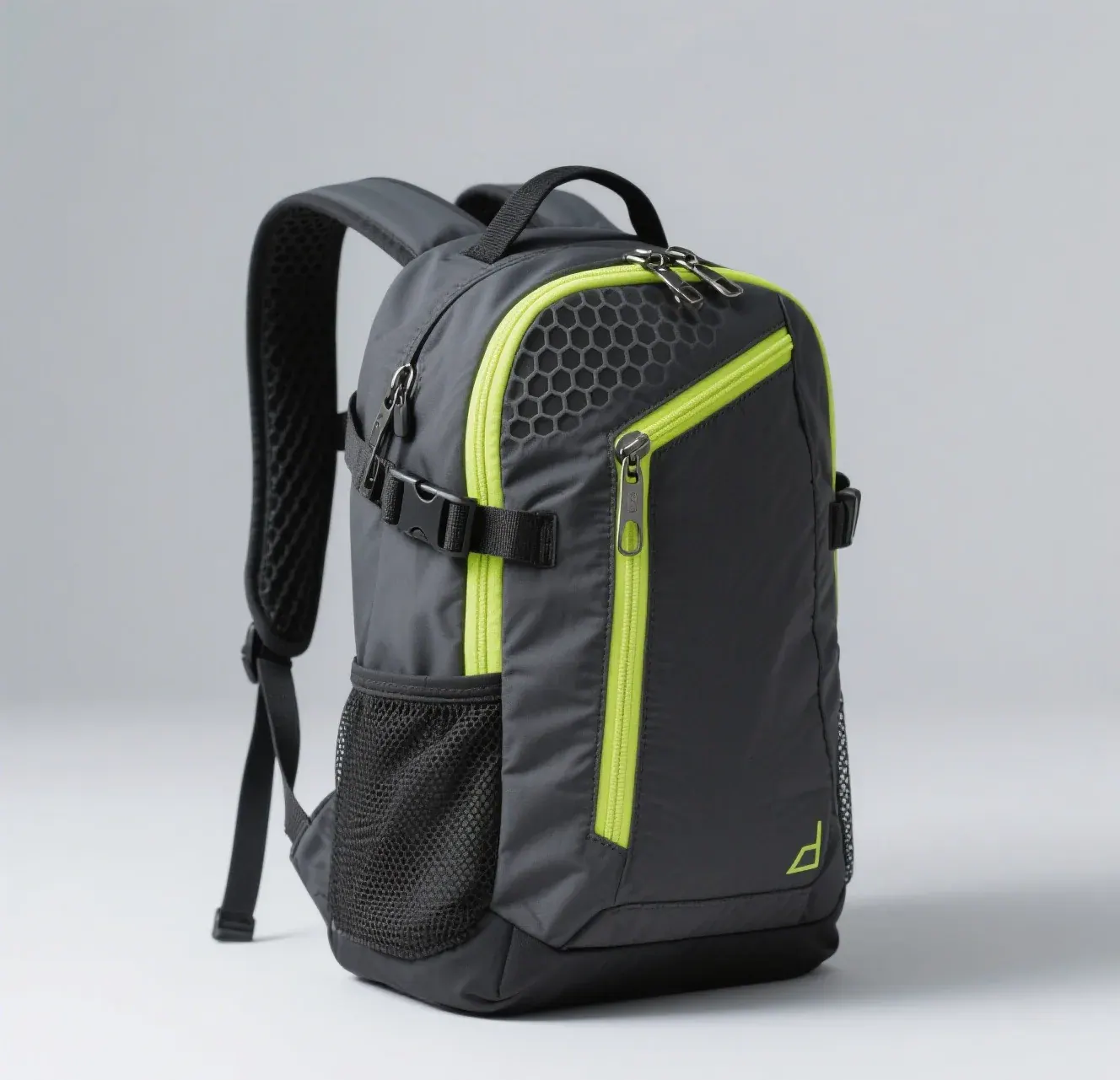
Start from the largest rigid object, which for most commuters is a laptop. A 15 inch device is typically 360 mm wide by 240 mm deep by 18 mm thick, and a 16 inch model adds 10-15 mm in each direction. The sleeve must exceed those dimensions by 10 mm in each direction, and the suspended sleeve floor must clear the pack base by at least 40 mm so a set-down in a puddle never transmits water to the device corner.
Volume then follows from the rest of the load. A 22 L body holds a laptop, a charger, a notebook, and a light layer. A 26 L body adds a lunch container and a pair of shoes. A 28-30 L body handles a gym kit or a swim kit. Do not buy the largest option by default; a half-full 32 L pack slumps, moves, and looks worse in a crowded carriage than a correctly sized 24 L one.
| Item | Typical size | Space needed | Placement |
|---|---|---|---|
| 15 inch laptop | 360 x 240 x 18 mm | Dedicated suspended sleeve | Against back panel |
| Charger and cables | 120 x 90 x 50 mm | 1-2 L zip pocket | Upper internal pocket |
| Folded umbrella | 300 mm long, wet | External wet zone | Side or base wet pocket |
| Lunch container | 180 x 120 x 100 mm | 2-3 L | Mid chamber, upright |
| Gym or swim kit | Bulky, damp | 6-10 L separated | Base wet compartment |
The waterproof laptop backpack range is organised around suspended sleeves and base clearance rather than around fashion colourways, which is the faster way to match a device size to a body. Measure the device with any sleeve or case it travels in, because a 2 mm hard case is often enough to push a snug fit into a strained one that stresses the seam at the sleeve corner.
How Waterproof Does a City Pack Need to Be
IPX5 covers water jets, IPX6 covers more powerful jets, and IPX7 covers temporary immersion at a stated depth and duration. The codes are defined by the IEC ingress protection framework, and the condition always matters more than the number. For a walking or transit commute, IPX5 is the practical floor and IPX6 is the sensible target; anything above that is insurance against a specific, named exposure.
Spray from traffic is the urban variable that surprises people. A passing vehicle at 40 km/h can throw a sheet of water onto a pack from knee height, delivering in one second what five minutes of rainfall would not. That is why the lower 150 mm of an urban pack deserves the same fabric and seam specification as the top, and why a base of at least 840D with a welded patch is worth more than a marginally higher rating on the upper shell.
- Target IPX5 minimum, IPX6 preferred, on the finished pack with load fitted.
- Specify 840D or heavier base fabric with a welded TPU patch of 0.5 mm.
- Require a spray screen at 20 mm per hour for 60 minutes from two directions.
- Check the base separately by standing the loaded pack in 10 mm of water for 20 minutes.
- Re-screen after 300 open and close cycles, because closure folds change.
Water repellency of the face fabric is a separate property from the waterproof barrier. Spray testing methods for that finish are published by AATCC, and the finish typically degrades after 20-30 wash cycles or about 300 hours of abrasion. Refresh it with heat or a spray product; a pack that wets out on the surface can still be completely dry inside. The rain commute waterproof backpack guide covers the daily-use side of this in more depth, including how to read a wet-out shell versus a genuine leak.
Managing Wet Items Inside a Dry Bag
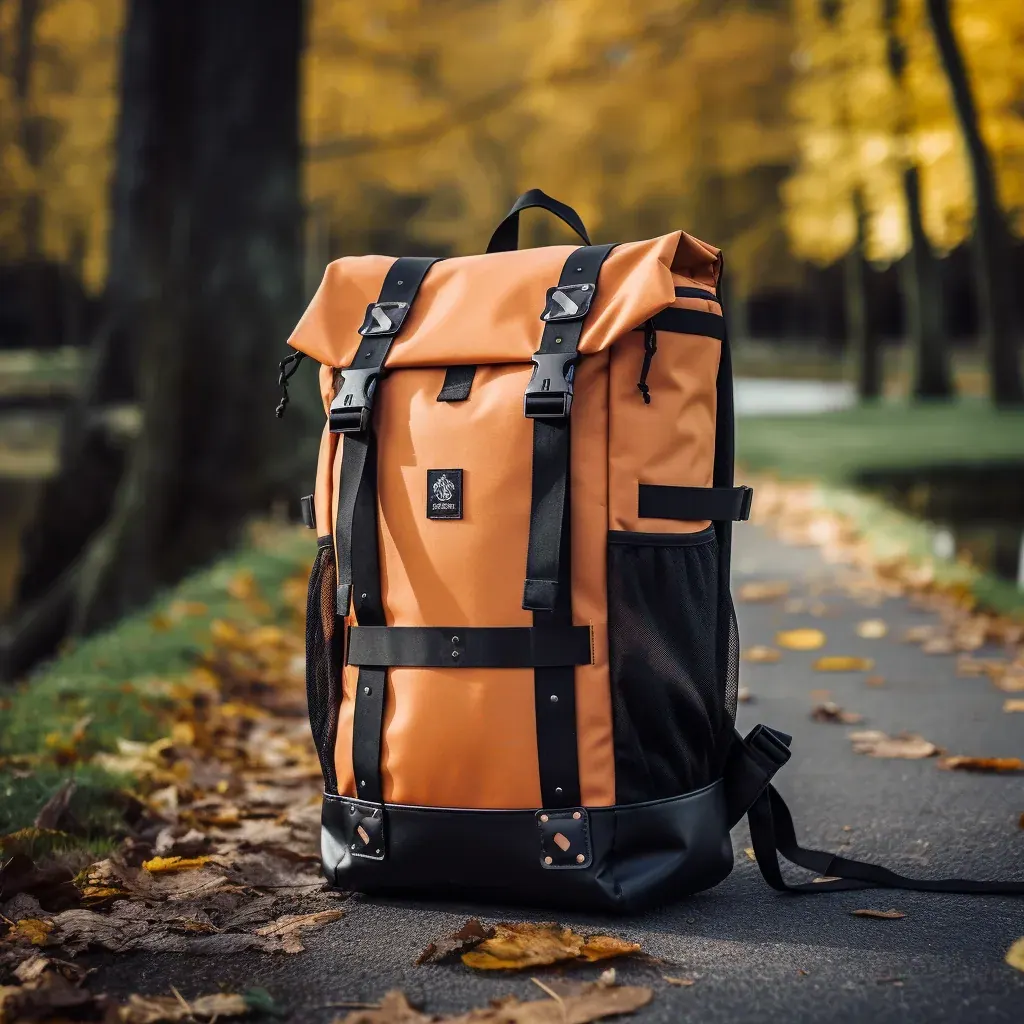
The wet umbrella is the single most common reason a dry commuter pack ends up damp inside. A folded umbrella carries 20-60 ml of water and will drip for 10-20 minutes. It belongs in an external drained pocket or in a sealed wet compartment, never in the main chamber beside a laptop. The same rule applies to a rain shell, swim kit, and a water bottle that has been in a cold bag overnight and condensed on the outside.
Wet-dry separation works best as a physical barrier at the base. A welded 6-10 L compartment with a drain path at the lowest corner keeps damp items away from the chamber and can be rinsed out at the end of the day. If a programme cannot justify a second compartment, a simple sealed pouch of 4-6 L achieves most of the benefit at a fraction of the cost, provided the pouch itself is checked in the water screen.
| Wet item | Water carried | Recommended home | Why |
|---|---|---|---|
| Folded umbrella | 20-60 ml | Drained external pocket | Drips for 10-20 minutes |
| Rain shell | 50-150 ml | Base wet compartment | Wets out a dry chamber fast |
| Swim kit | 100-300 ml | Sealed 6-10 L compartment | Long drip time |
| Cold water bottle | Condensation film | External bottle pocket | Condensation mimics a leak |
| Wet shoes | 30-80 ml | Base compartment, bagged | Grit damages chamber lining |
Condensation deserves its own warning. A cold bottle or a chilled lunch container inside a warm sealed pack produces water on the outside of the container, which then appears at the base of the chamber and looks exactly like a seam failure. Before assuming a leak, dry the outside of every container, run the water screen with no contents, and only then inspect the seams.
Visibility, Crowds, and Theft-Aware Design
Dark wet evenings are the highest-risk part of a commuting day. Require at least 80 square centimetres of retroreflective area split across the rear and both sides, and add a light-colour panel for daytime conspicuity. Reflective transfer film should survive 20 wash cycles and 500 abrasion cycles; piping alone rarely reaches the required area and is the first thing to peel after a season.
Crowded transit changes closure placement. A pack worn on the back in a packed carriage puts every opening behind the wearer, which is convenient for a pickpocket and awkward for the owner. Prefer a body that can be worn on the front or carried by a side handle, with the main openings facing inward, and use zips with linked pullers that can be tucked under a garage rather than left dangling.
Profile matters more than volume in a crowd. A pack deeper than about 200 mm catches on doors, turnstiles, and other passengers, so specify a slim, tall body for transit-heavy routes and accept the reduced depth as a deliberate trade. A slim 22 L pack that moves through a carriage cleanly is more useful than a 30 L body that has to be carried in hand at every door.
The Arrival Routine That Keeps an Office Dry
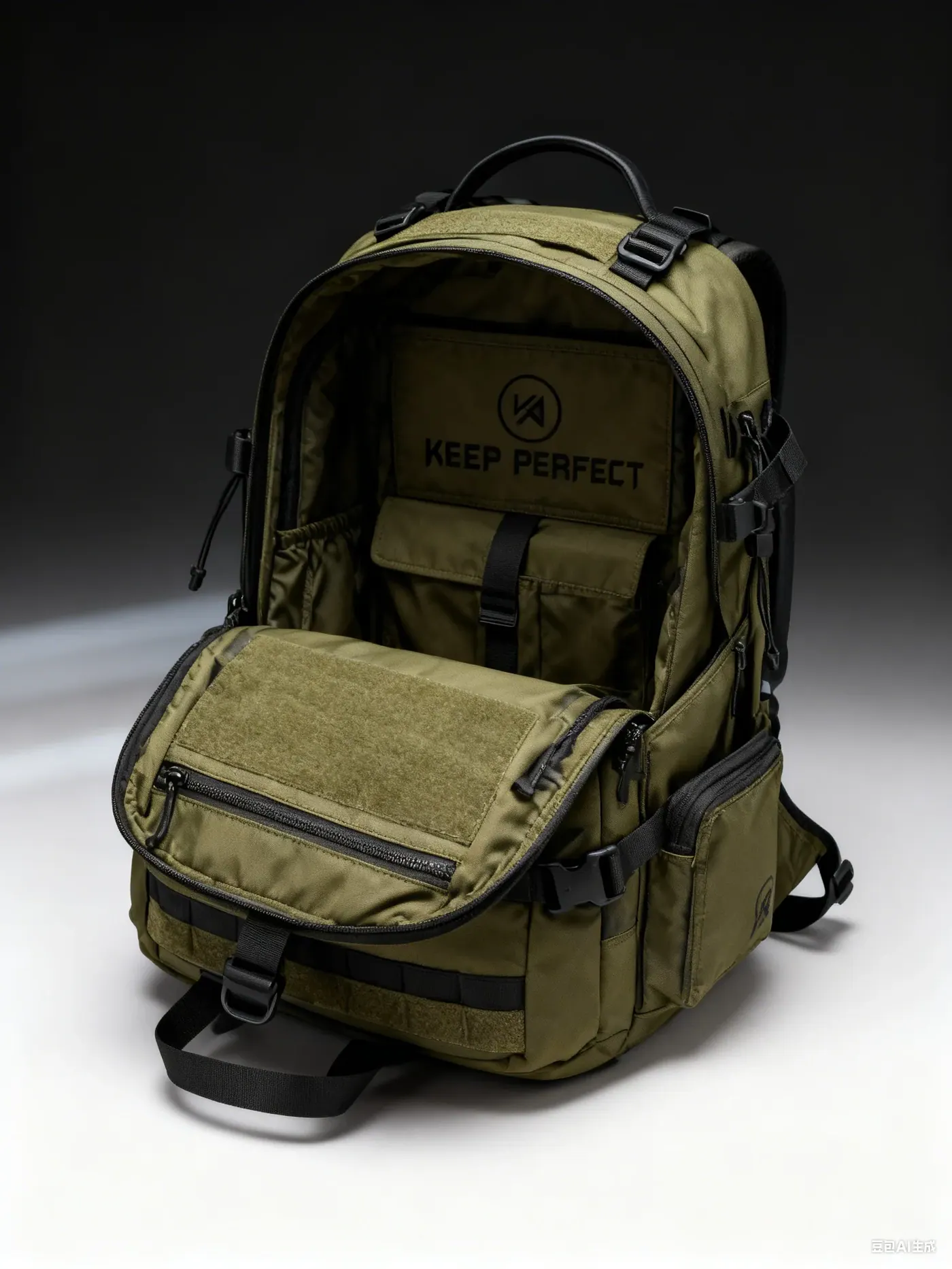
Most office complaints about wet bags happen after the commute, not during it. A pack that stayed dry for 40 minutes can still drip across a lobby floor, a chair, and a desk. Build a routine: wipe the shell at the door, stand the pack on a mat or a hook rather than on carpet, empty the wet compartment first, and open the main chamber for 20-30 minutes so residual moisture can leave.
- Wipe the shell and closure at the door before entering carpeted areas.
- Hang the pack by its top loop so the base drains and dries fastest.
- Empty the wet compartment within 30 minutes of arrival.
- Open the main chamber for 20-30 minutes before closing it for the day.
- Check the laptop sleeve corner for damp once a week during the wet season.
Where no changing space exists, pack a small microfibre towel of 300 x 400 mm in an external pocket. It weighs under 100 g, dries a shell and a laptop lid in under a minute, and removes most of the water that would otherwise end up on furniture. For programmes supplying staff bags, including that towel is one of the cheapest satisfaction improvements available, and it also gives the user a reason to wipe the closure before the pack is stored, which extends closure life.
Shared desks and hot-desking add one more requirement: a pack that can stand upright on its own base. A body with a flat, welded base footprint of at least 180 x 120 mm stays upright under a 6 kg load and keeps wet surfaces off chairs and papers. Test the loaded pack on a slight slope, because a body that only stands when empty will fall over the first time it is set down at an angle.
Season and Climate Adjustments
Wet-season commuting differs from winter commuting, and the two are often specified together by mistake. A wet season at 15-25 degrees is a spray and humidity problem; a winter at 0-8 degrees is a layer-bulk, condensation, and stiffness problem. The pack that solves the first is not automatically the pack that solves the second, and the difference shows up in closure design more than anywhere else.
| Condition | Volume shift | Material risk | Specification change |
|---|---|---|---|
| Wet season, warm | No change | Humidity, mildew | Ventilated panel, drain path |
| Winter, cold | Plus 2-4 L | Film stiffness in folds | Low-temperature fold screen |
| Coastal, salty air | No change | Hardware corrosion | 304 stainless, salt fog screen |
| Monsoon burst | No change | Torrential short bursts | IPX6, closure speed |
| Snow and slush | Plus 2-4 L | Base wicking and grit | Welded base patch, boot scraper |
Check the forecast before leaving rather than trusting the sky at the door; short convective bursts are common in many cities and are exactly the pattern that catches commuters out. NOAA weather resources support that check in the United States, and equivalent national services apply elsewhere. The waterproof commuter backpack range groups bodies by climate and mode for this reason.
Care, Service Life, and When to Replace
An urban pack works harder per litre than a hiking pack because it is opened and closed more often and set down on rougher surfaces. Expect four to six years from a welded shell with daily use, with the closure and the base as the limiting components. Rotate the roll fold position by 20-30 mm and the crease life roughly doubles, which is the single highest-value habit a commuter can adopt.
Clean monthly in the wet season: fresh water rinse, mild pH-neutral soap, no solvents, no machine washing, and air dry open for 8-24 hours. Inspect the base, the strap islands, and the closure corners at the same time. Replace the pack when the coating shows widespread hazing, when the closure no longer seats with three turns, or when a seam edge lifts by more than 5 mm over a 100 mm length.
Store loosely filled at 15-25 degrees with the closure open. Never store a damp pack in a closed locker overnight, because mildew can establish in 24-48 hours on a coated surface and the odour is effectively permanent. A 10-minute dry at the end of the day prevents the majority of odour complaints a commuter programme will ever receive.
Programme Baseline for Commuter Packs
Write the brief as one page: usable litres after closure, device size and sleeve clearance, IPX target with condition, base fabric and patch, wet compartment volume and drain, reflective area, harness standoff, and the exact spray protocol. Add acceptance criteria for seam appearance, coating thickness, colour fastness, and hardware finish. Approve at least three samples, because one dry result does not establish consistency across a run.
| Programme item | Baseline | Note |
|---|---|---|
| MOQ | 500 pcs per design and colour | Colour split negotiable above baseline |
| Sampling | 6-10 working days | Add 3-5 days for hardware change |
| Bulk | 35-50 days | From approved sample and deposit |
| Inspection | AQL 2.5 | Include litres, sleeve clearance, reflective area |
| Compliance | REACH and California Prop 65 | Screen coatings, films, hardware |
QUANZHOU JUNYUAN BAGS has supported waterproof bag programmes since 2014, with the founding team in the industry since 2004 and monthly output of 200,000 units verified by SGS. BSCI and ISO 9001 systems structure the workflow, and materials are screened for REACH and California Prop 65. Every bulk order is inspected at AQL 2.5 before shipment.
A commuter brief can be emailed to service@junyuanbags.com; include device size, commute mode and duration, climate, and any staff-issue quantity. FOB Xiamen or DDP service to more than 100 countries follows an approved sample and a complete test record.
The final rule for city packs is unglamorous but correct: build the base and the wet compartment properly, keep the laptop sleeve clear of the floor, and specify the closure for repeated daily use rather than for a laboratory record. Commuters do not need expedition ratings; they need a bag that behaves the same way on the four hundredth wet morning as it did on the first.
People Also Ask
What size backpack is best for a rainy city commute?
Twenty-two to 28 L covers most commuters. Choose from the largest rigid item first, usually a 15 or 16 inch laptop, then add 2-3 L for lunch and 6-10 L only if a gym or swim kit travels daily.
Do I need a fully submersible backpack for city rain?
Rarely. IPX5 is the practical floor and IPX6 is the sensible target for urban rain and traffic spray. Reserve IPX7 for a named exposure such as a flood-prone underpass or a boat leg.
How do I carry a wet umbrella without soaking my bag?
Use a drained external pocket or a sealed wet compartment at the base. A folded umbrella carries 20-60 ml and drips for 10-20 minutes, which is enough to dampen a laptop sleeve corner.
Why is there water inside my pack when it did not leak in the test?
Condensation is the usual cause. A cold bottle or chilled container inside a warm sealed chamber produces surface water that collects at the base and looks like a seam failure. Dry containers before packing.
How much reflective area should a commuter pack have?
At least 80 square centimetres split across the rear and both sides, with film rated for 20 wash cycles and 500 abrasion cycles. Add a light-colour panel for daytime visibility.
Should a commuter pack be worn on the front in crowds?
Yes, or carried by a side handle with openings facing inward. A pack worn on the back in a packed carriage puts every pocket behind the wearer and out of sight.
Frequently Asked Questions
Q1. What IPX rating is enough for a daily city commute?
IPX5 is the practical floor and IPX6 is the sensible target. Higher ratings add mass and closure stiffness without matching typical urban exposure unless a specific immersion risk is named.
Q2. How big should a commuter backpack be?
Twenty-two to 28 L suits most people. Start from the laptop, add 2-3 L for food, and add 6-10 L only when gym or swim kit travels every day.
Q3. Will a 16 inch laptop fit a backpack sold as 15 inch?
Usually not reliably. A 16 inch device adds 10-15 mm in each direction, so specify the sleeve to exceed the measured device by 10 mm in each direction and confirm before ordering.
Q4. How much clearance should a laptop sleeve have from the base?
At least 40 mm of suspended clearance. That keeps a device corner out of water when the loaded pack is set down in a shallow puddle or on a wet floor.
Q5. Where should a wet umbrella go?
In a drained external pocket or a sealed base compartment. Do not put it beside a laptop, because a folded umbrella carries 20-60 ml and drips for up to 20 minutes.
Q6. Do waterproof commuter backpacks make your back sweat?
More than a ventilated daypack, yes. Use a suspended panel with 8-12 mm standoff, keep the load under 7 kg, and ventilate the jacket on longer walks.
Q7. How do I stop my bag dripping on the office floor?
Wipe the shell at the door, hang it by the top loop, empty the wet compartment within 30 minutes, and carry a small microfibre towel for the laptop lid and shell.
Q8. Is a rain cover better than a waterproof shell for the city?
No. A cover has to be found and fitted in the moment the rain starts, and it flaps and drips. A welded shell with a rolled or sealed closure removes the step entirely.
Q9. How often should a commuter pack be cleaned?
Monthly during the wet season, using fresh water, mild pH-neutral soap, and air drying for 8-24 hours. Never machine wash and never store damp in a closed locker.
Q10. What is the MOQ and lead time for a commuter programme?
MOQ is 500 pcs per design and colour, samples take 6-10 working days, and bulk runs 35-50 days from approved sample and deposit.