Buy a rain cover when you already own a pack you trust and see only 5 to 20 wet days a year; buy a purpose-built waterproof backpack when you face more than 30 wet days, wind-driven rain above 40 km per hour, or any immersion risk. A cover priced at 8 to 25 USD shields roughly 60 to 75 percent of the outer shell and leaves the back panel, shoulder straps, hip belt, and lid seams outside the barrier, with straps alone absorbing 60 to 120 grams of water after one hour of steady rain. A welded-seam waterproof body rated IPX6 to IPX7 costs 55 to 140 USD and covers 100 percent of the assembled article. Across a 5 year window, one 14 USD cover replaced three times plus one damaged laptop costs more than a single 75 USD sealed pack. Programme economics begin at 500 pcs per design and colour, with development samples in 6 to 10 working days and bulk in 35 to 50 days.
What Actually Gets Covered
A rain cover is a shaped shell that slips over the outside of a loaded pack and cinches with elastic or a cord. Its job is to shed water away from fabric that would otherwise wet out and gain weight. What it does not do is seal anything. Air, grit, wind, and capillary flow still reach every surface it cannot wrap, and on a loaded pack those surfaces are structural rather than incidental.
Measure a typical 30 litre body: the front and side faces represent about 55 to 60 percent of outer area, the lid another 8 to 12 percent, and the rear remainder is occupied by the harness system. Once shoulders and hips enter the picture, the exposed area rises sharply, because foam padding and spacer mesh hold water by volume rather than by surface film. A 25 mm wide strap, 700 mm long and 12 mm thick, can hold 40 to 60 grams once saturated, and there are two of them plus a hip belt.
| Component | Shielded by cover | Soak at 1 hour steady rain | Consequence |
|---|---|---|---|
| Front and side shell | Yes, 55 to 60 percent of area | 0 g while intact | Fabric stays light |
| Lid and top seam | Partly, 8 to 12 percent of area | 15 to 40 g at the roll line | Water tracks to the mouth |
| Shoulder straps | No | 40 to 60 g each | Cold contact against clothing |
| Hip belt and lumbar pad | No | 35 to 70 g | Chafing and wet base layer |
| Back panel spacer mesh | No | 50 to 90 g | Water pressed onto the jacket |
The practical reading is simple: a cover protects the compartment and abandons the interface. If your clothing tolerates a wet back panel and your load is not electronic, that trade is acceptable. If you carry a laptop, a camera body, insulin, documents, or a radio that fails below 90 percent humidity, the uncovered 25 to 40 percent is exactly where the expensive consequence lives.
Where Covers Fail: Wind, Abrasion, and Fit
Three conditions defeat a cover repeatedly. The first is wind. Above roughly 40 km per hour, driven rain arrives at an angle and can enter from underneath the hem, particularly on the leeward side where the cover lifts. The second is abrasion: shoulder straps compress the cover against fabric for hours, and a loaded hip belt can wear through a 0.1 mm film at a contact patch in a single long season. The third is fit, because a cover sized for an empty pack tents over a partially loaded one, and a cover sized tight cannot be fitted at all.
Fit tolerance is narrower than most buyers expect. A cover should sit with 20 to 40 mm of slack across the widest panel so fabric can drape without tension, but no more, because excess loose film flaps and pumps water. A 30 litre pack that swells by 8 percent when loaded needs roughly 25 mm of additional circumference. Numbers printed on packaging frequently mark nominal volume rather than a tested dimension range, so check actual height and girth before ordering.
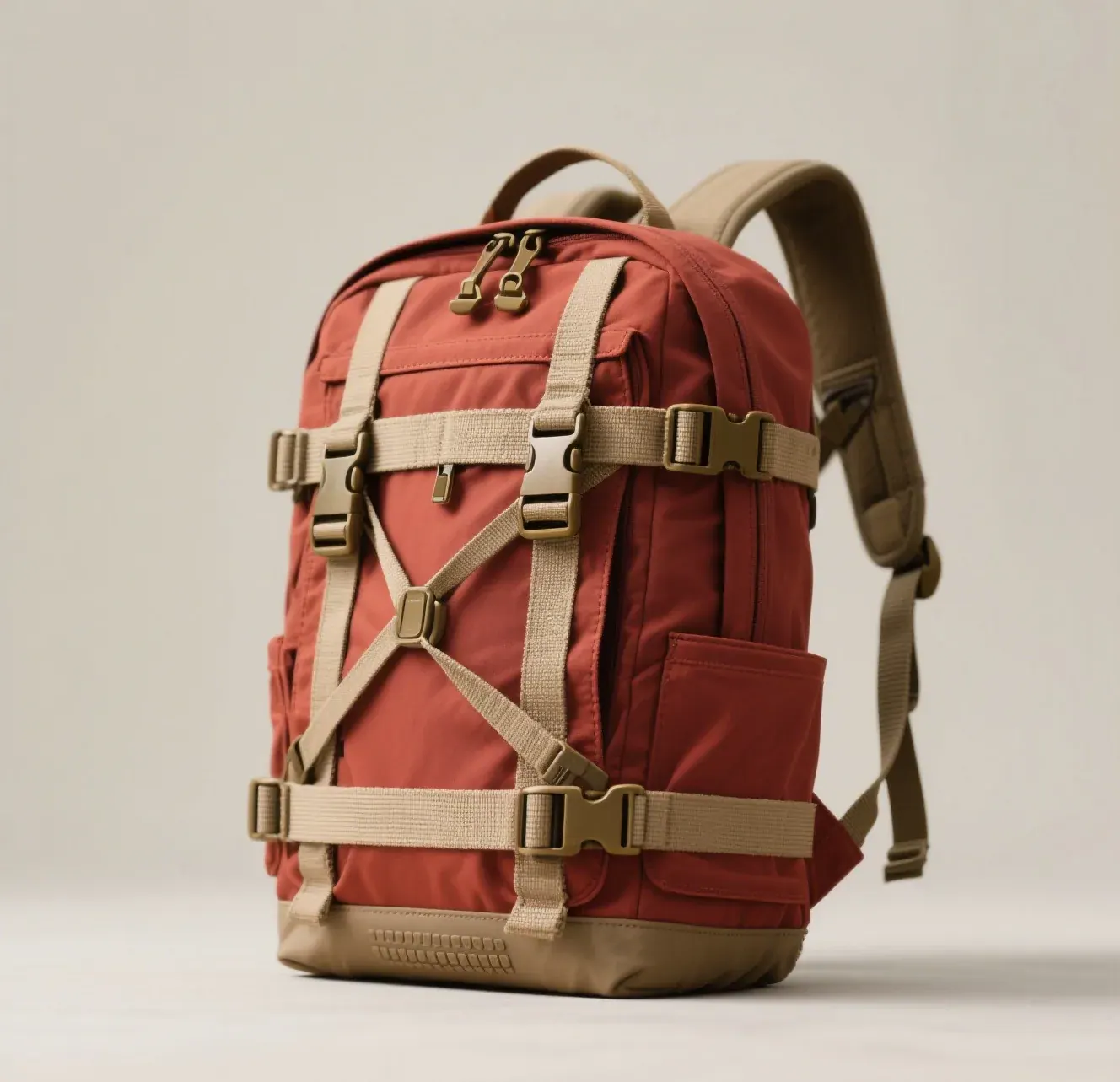
- Keep 20 to 40 mm of slack across the widest panel; more than 60 mm tents and pumps water inward.
- Replace a cover once pinholes appear near strap contact patches, typically after 60 to 120 rainy uses.
- Rinse grit from the elastic hem every 5 wet uses; embedded particles abrade the film and the pack fabric.
- Pack the cover in an outside pocket, never under the lid where retrieval means opening the wet chamber.
Cost Per Dry Year Over a Five-Year Window
Unit price misleads because the two options have different service lives. A mid-grade cover costing 14 USD lasts about 60 to 120 rainy uses before the hem relaxes or the film pinholes, which is roughly 2 years at 30 wet days. A welded-seam pack costing 75 USD is expected to serve 5 years or more because its barrier is structural. Add the secondary costs each choice creates: the cover still needs a dry liner for electronics, while the sealed pack may need a separate day cover only for appearances.
| Cost line over 5 years | Cover plus liner | Sealed waterproof pack | Comment |
|---|---|---|---|
| Entry hardware | 14 USD cover plus 18 USD liner | 75 USD pack | Two buyers start differently |
| Replacements | 2 covers plus 1 liner, 46 USD | 0 USD | Covers degrade faster |
| Packed weight carried | 340 g including liner | 0 to 40 g | Cover and liner add mass every trip |
| Electronics risk | One liner failure can destroy gear | Whole-article barrier | Consequence dominates the maths |
| Five-year total | 60 USD plus risk exposure | 75 USD | Gap closes after year 3 |
The crossover arrives sooner than the sticker gap suggests. If a single soaked device is valued at even 200 USD, one failure every five years erases the entire saving of the cheaper path. This is the argument behind the analysis in our breakdown of whether waterproof packs pay for themselves, which reaches the same conclusion through a replacement-cost route rather than a unit-price route.
There is also a time cost. Fitting a cover takes 25 to 60 seconds, and removing and drying it takes a further 3 to 6 minutes at camp. On a commute with two rain events per day, that is roughly 12 minutes daily, or 50 hours over 250 working days. Buyers rarely price their own time, but fleet managers who equip field staff do, and they generally move to sealed bodies once the arithmetic is written down.
Protection Levels: What IPX Actually Promises
Water resistance claims become comparable only under a defined test. The enclosure code published under IEC 60529 defines graded exposure: IPX4 covers splashing from any direction at roughly 10 litres per minute of spray, IPX5 a 12.5 litre per minute jet from a 6.3 mm nozzle, IPX6 a 100 litre per minute jet from a 12.5 mm nozzle, and IPX7 thirty minutes of temporary immersion to a defined depth. Each level describes the whole article in its configured state, not one fabric swatch.
That distinction decides the comparison. A rain cover has no rating of its own; it inherits whatever the pack underneath happened to achieve plus whatever the improvised cover adds, which is unmeasured. A sealed body can carry an article-level result because its seams, mouth, and hardware were engineered together. The full ladder of code meanings sits in the IPX rating guide for waterproof backpacks.
| Target condition | Cover result | Sealed pack result | Test note |
|---|---|---|---|
| Light shower, 30 minutes | Usually dry inside | Dry inside | Both acceptable |
| Steady rain, 3 hours | Straps soaked, chamber often dry | Dry inside | Cover needs good fit |
| Driven rain above 40 km per hour | Hem lift and ingress common | IPX6 result applies | Whole-article test |
| Deck spray or capsize | No meaningful protection | IPX7 potential when rated | Immersion only if rated |
| River crossing to waist | No protection | Depends on closure height | Know the waterline |
Buyers comparing languages across the trade will also meet 'water resistant' used loosely. The vocabulary difference is unpacked in our comparison of waterproof versus water resistant construction, which is worth reading before accepting any claim that lacks a test number behind it.
Weight, Bulk, and What You Carry Every Dry Day
Every gram added to protect against rain is carried on sunny days too. A cover for a 30 litre body weighs 80 to 140 grams and packs to 0.3 to 0.5 litres; a heavy-duty version can reach 220 grams and 0.8 litres. A dry liner adds 60 to 140 grams depending on closure style. Together they add 140 to 360 grams and consume 0.4 to 1.1 litres of usable space, which is 2 to 4 percent of a 30 litre pack and a meaningful slice of a 20 litre one.
A sealed body carries no removable accessories, but it may carry a construction penalty of its own. Coated fabric plus welded seams is typically 60 to 140 grams heavier than the same silhouette in uncoated material. On balance the two approaches arrive within roughly 100 grams of each other once every accessory is counted, which is why weight is rarely the deciding factor and should not be argued as one.
Where weight does matter is distribution. A cover sits outside the load centre and flaps; a liner sits inside and can concentrate padding unevenly. A sealed pack distributes its marginally heavier shell evenly, and when it gets wet its mass gain stays near zero while a covered pack gains the 60 to 120 grams held by exposed straps plus whatever the hem traps. Wet-straps also stiffen in freezing conditions, which changes how the harness sits.
Scenario Verdicts: Pick by Weather, Not by Price
Decision quality improves when the question changes from 'which costs less' to 'what will the weather do to my load'. A commuter walking 15 minutes in urban showers has different requirements from a kayaker loading through surf or a technician standing in a trench for six hours. Frequency and consequence should drive the answer, and both are measurable before purchase.
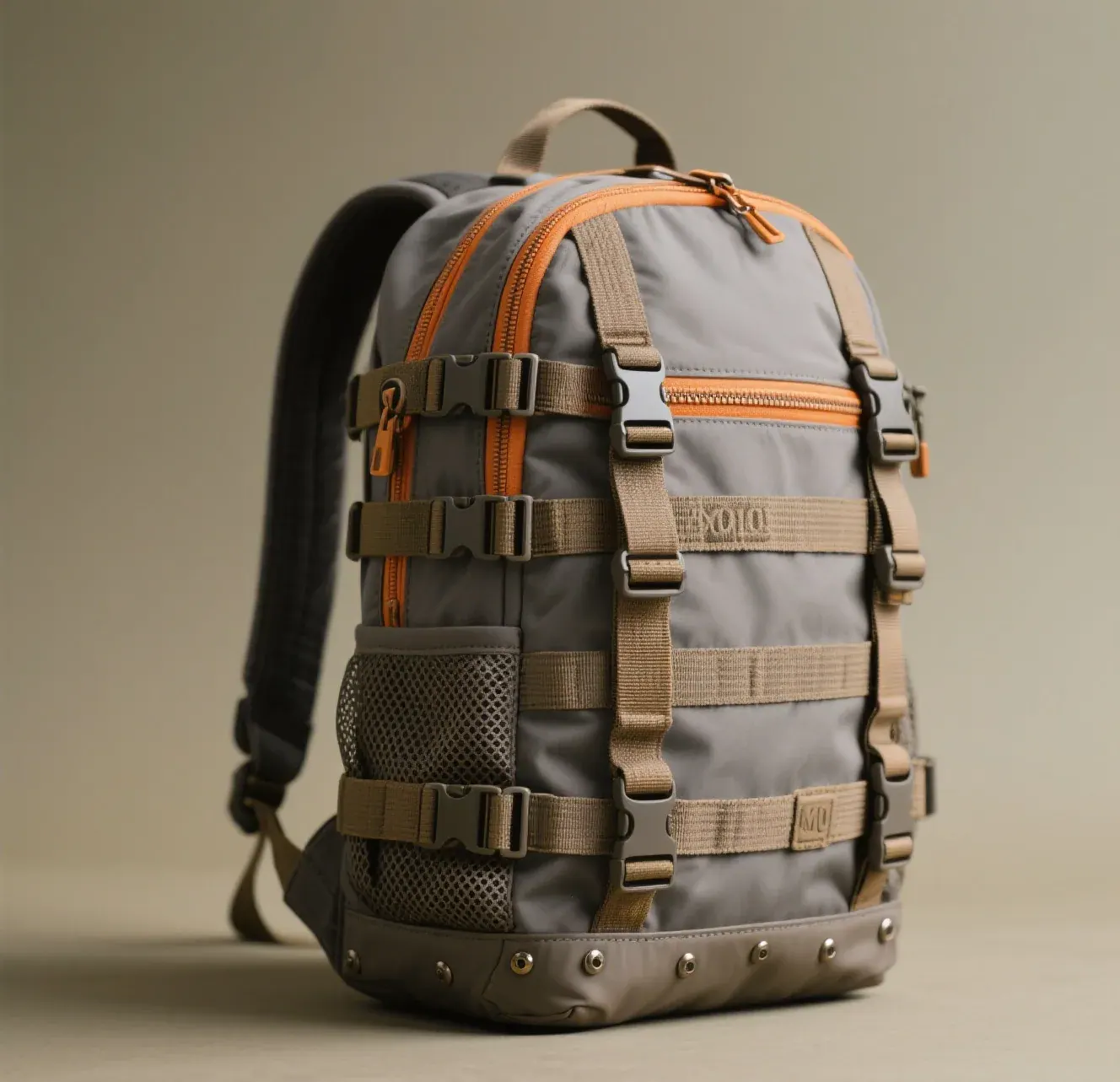
| Scenario | Wet days per year | Exposure type | Recommended choice | Reason |
|---|---|---|---|---|
| City commute 15 minutes | 40 to 90 | Showers, some wind | Sealed IPX5 to IPX6 body | No time to stop and fit |
| Weekend hiking | 20 to 50 | Steady rain 2 to 6 hours | Sealed roll-top or cover plus liner | Both viable on cost |
| Kayak or raft day | Every trip | Spray and immersion risk | Sealed IPX6 to IPX7 body | Cover gives no immersion margin |
| Construction or survey work | 100 plus | Standing water, abrasion | Sealed body with welded base | Cover abrades at contact points |
| Occasional travel | 10 to 25 | Brief transfers | Cover plus liner | Lowest entry cost is rational |
Note the middle row: hiking is genuinely undecided, because low frequency means failures are rare and recoverable. It is the one case where a careful owner can keep a trusted pack alive with an accessory, provided the electronics go into a liner and the sleeping system goes into a second liner. Walkers who want examples of both approaches can compare layouts in the waterproof hiking backpack range. Once either electronics or immersion enters permanently, the argument ends.
The Three-Layer System That Makes a Cover Work
Cover advocates are not wrong, they are only incomplete. A cover works when it is treated as one layer of a three-layer scheme rather than as a standalone barrier. Layer one is the cover shedding bulk water from the shell. Layer two is a liner protecting each vulnerable item group. Layer three is discipline: keeping item groups separate, closing mouths downward, and never laying the pack in standing water.
- Fit the cover before rain starts, not after the shell has already wet out and gained 200 to 400 grams.
- Put electronics and documents into a liner rated for the depth you actually expect, not the depth you fear.
- Keep sleeping insulation in a second independent liner so one failed fold does not end the trip.
- Route the cover's drain path downward and check that no hem pocket can collect more than 50 millilitres.
- At camp, remove the cover, dry both surfaces for 10 to 20 minutes, and store it loose rather than compressed.
Executed well this system protects a load through hours of rain and is cheaper to start. Its weakness is operator dependence. Every layer needs correct execution on every wet day, whereas a sealed body needs one decision at purchase and then behaves the same whether the user is tired, rushed, or wearing gloves.
How to Test Both Options Before You Commit
A cheap verification beats any marketing sentence. Load each candidate with 6 kilograms and weighed absorbent paper placed at five zones: base seam, mouth, lower side seam, back panel, and front pocket. Run a garden nozzle at roughly 12 litres per minute for 5 minutes from one metre, then repeat from below at 30 degrees to imitate driven rain. Weigh the paper to 0.1 gram and record any gain above 0.5 gram as a fail.
Add a second test for wind and motion. Walk 2 kilometres after exposure, because flexing opens paths that static spray does not find. Repeat the whole procedure with gloves on, since 60 percent of cover failures in the field occur during fitting rather than during use. Documenting three runs provides enough signal to compare options without laboratory equipment.
Test vocabulary matters when you later escalate to a formal report. Standard approaches for coated fabric strength, tear resistance, and water penetration are catalogued by ASTM International, while rainfall rates used to describe storm intensity are published by NOAA. Using their units keeps your field observations convertible into a specification later.
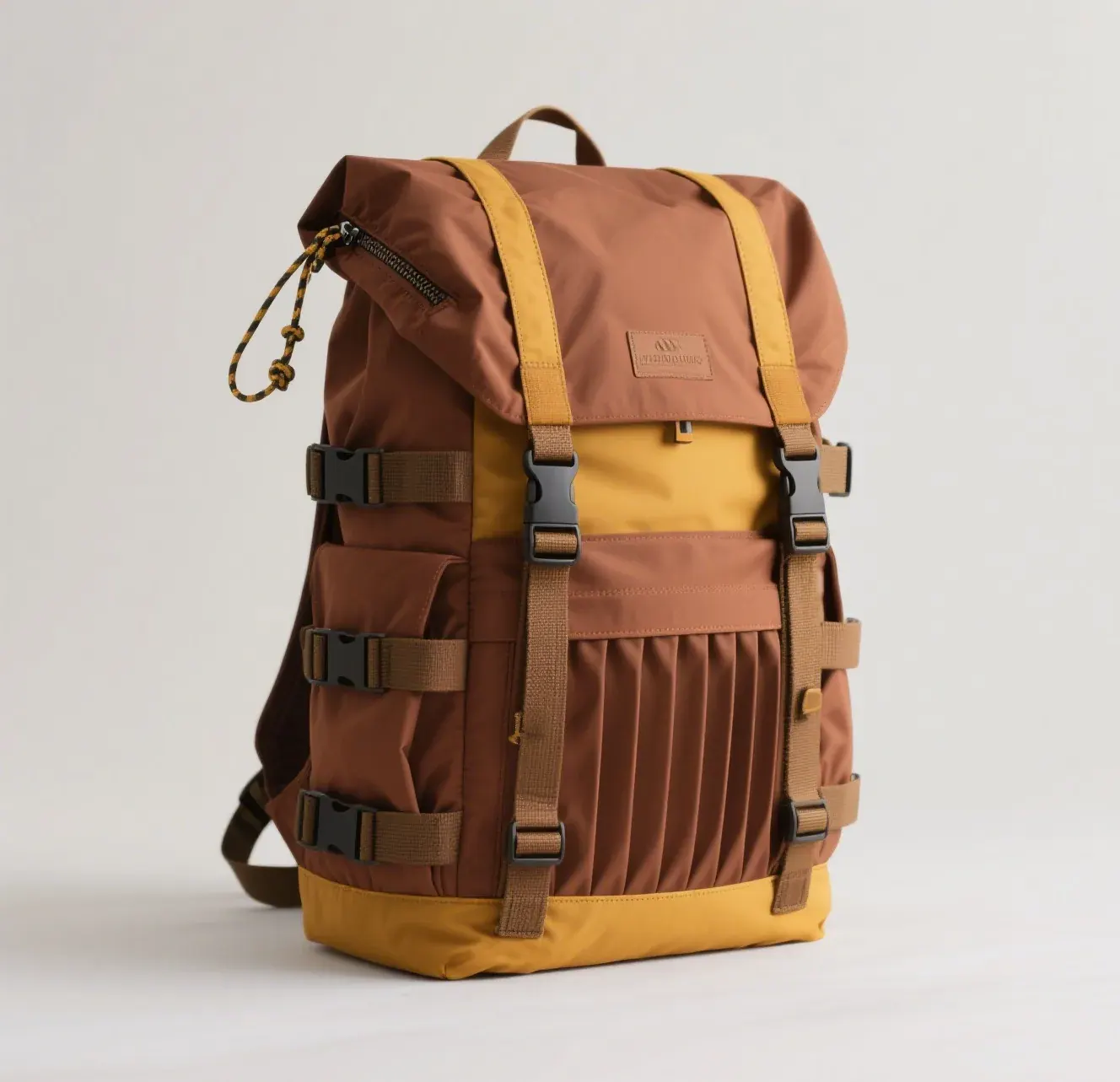
Programming Both Options Into a Product Range
Retailers and brand owners rarely choose between the two; they stock both because they serve different entry prices and different retail stories. A cover is an accessory with strong impulse economics and a small pack footprint, roughly 0.3 to 0.8 litres of shelf space per unit, which is attractive in a limited aisle. A sealed body is the higher-value core item that anchors a waterproof category and justifies the display.
When both are placed together, plan a clear boundary so they do not cannibalise each other. A practical split is a cover priced under 25 USD positioned as a starter accessory, and sealed bodies starting near 55 USD positioned as the performance answer. Bundling the two at a 10 to 15 percent combined discount lifts attachment rate while keeping the story clean. Colours should be shared across both so the rack reads as one family.
QUANZHOU JUNYUAN BAGS develops both lines from the same material library, starting at 500 pcs per design and colour with development samples in 6 to 10 working days and bulk in 35 to 50 days. Materials can be screened for REACH and California Prop 65, finished goods can be inspected at AQL 2.5, and shipping can be FOB Xiamen or DDP to more than 100 countries. Component selection, seam architecture, and whole-article verification are set out. Enquiries go to service@junyuanbags.com.
| Range decision | Cover line | Sealed body line | Typical value |
|---|---|---|---|
| Entry price point | 8 to 25 USD | 55 to 140 USD | Clear separation avoids conflict |
| Shelf footprint | 0.3 to 0.8 L packed | Full silhouette | Accessories fit small planograms |
| Replacement cycle | 2 years typical | 5 years or more | Repeat traffic differs |
| Colour story | Shared palette | Shared palette | One family on the rack |
| Development sample | 6 to 10 working days | 6 to 10 working days | Identical sampling window |
The closing verdict follows from your own calendar rather than from a test sheet. Count wet days, estimate replacement frequency, value what you carry, and price your own fitting time. Below roughly 25 wet days with low-value loads, buy the cover and a liner. Above that threshold, or the moment water can cost more than hardware, buy the sealed body and stop making a decision in the rain.
People Also Ask
Does a rain cover keep a backpack fully dry?
No. A typical cover shields 60 to 75 percent of a backpack's outer surface, leaving the shoulder straps, hip belt, and back panel exposed. Those harness parts absorb 60 to 120 grams of water in one hour of steady rain, and sheeting from the straps reaches clothing even when the main chamber stays dry.
At what wind speed does a rain cover stop working?
Problems begin near 40 kilometres per hour. Driven rain arrives at an angle and reaches under the hem, while gusts lift loose film and pump water inward. Keeping only 20 to 40 millimetres of slack across the widest panel reduces flapping without allowing the cover to tent open.
How many times can a rain cover be reused?
Most covers survive 60 to 120 rainy uses before the elastic relaxes or the film pinholes at strap contact points. At 30 wet days a year that equals roughly 2 years of service, so budget for two replacements across a five-year ownership window.
Can a cover and a liner replace a waterproof backpack?
Yes for hiking and travel with non-electronic loads, and no for daily commuting, paddling, or field work. The three-layer system depends on correct execution every wet day, while a sealed backpack removes the decision entirely and can hold an article-level IPX rating.
How heavy is a rain cover compared with the protection it adds?
A cover for a 30 litre body weighs 80 to 220 grams and packs to 0.3 to 0.8 litres, while a dry liner adds 60 to 140 grams. Combined dead weight reaches 140 to 360 grams that is carried on dry days too, roughly matching the added shell mass of a sealed pack.
What is the cheapest way to protect a laptop in heavy rain?
Put the device in a rated liner first, then fit a cover over the whole pack, then keep the pack upright so no water can collect at a low hem. This combination preserves the 200 to 800 USD device for under 40 USD, but still leaves no immersion margin.
Frequently Asked Questions
Q1. Which is cheaper over five years, a rain cover or a waterproof backpack?
A 14 USD cover plus an 18 USD liner replaced twice comes to about 60 USD over five years, while a 75 USD sealed pack costs 75 USD with no replacements. The gap narrows every year and reverses completely if one soaked device worth 200 USD fails during that period.
Q2. Do rain covers protect shoulder straps?
They do not. Straps sit outside the cover by design and absorb 40 to 60 grams each in steady rain. The result is a wet contact patch against clothing and added stiffness in freezing weather, which changes how the harness sits and can increase chafing over long days.
Q3. What IPX rating should I look for instead of buying a cover?
Look for IPX5 for showers and travel, IPX6 for sustained or wind-driven rain, and IPX7 only when immersion is plausible. The code describes the assembled article under IEC 60529, so ask for a whole-pack test result rather than a fabric or zipper component certificate.
Q4. Will a rain cover fit any backpack?
No. Fit tolerance is about 20 to 40 millimetres of slack across the widest panel, and covers are usually marked by nominal litres rather than tested dimensions. Measure height and girth when loaded, because a 30 litre pack can swell roughly 8 percent once full.
Q5. How do I stop a rain cover from flapping?
Choose a size with only 20 to 40 millimetres of slack, tighten the elastic hem so it closes under the body rather than hanging free, and avoid over-tensioning across corners. Anything beyond 60 millimetres of slack tents, catches wind, and pumps water toward the seam lines.
Q6. Is a dry liner better than a rain cover?
They solve different problems. A liner protects contents from water already inside the bag and adds 60 to 140 grams, while a cover prevents most water from reaching the shell in the first place. Use both together for hiking loads and switch to a sealed body for daily use.
Q7. Can I use a cover on a boating trip?
Only for light spray in calm conditions. Covers provide no immersion protection, and water entering under the hem during a capsize reaches the whole load immediately. Boating and rafting call for a body with a verified IPX6 to IPX7 result and a closure the user can operate while seated.
Q8. How often should a rain cover be cleaned?
Rinse the elastic hem every 5 wet uses and wash the whole cover monthly during a rainy season. Embedded grit abrades both the cover film and the pack fabric, and a dirty hem that no longer grips is the single most common cause of cover loss.
Q9. Does covering a pack make condensation worse?
It can. A non-breathable film traps humidity generated by damp clothing, and 3 hours in steady rain may leave internal moisture of 2 to 6 grams from condensation alone. Dry wet items separately where possible and open the pack fully at camp for 10 to 20 minutes.
Q10. What size cover do I need for a 40 litre backpack?
Measure height and girth loaded rather than trusting a nominal litre mark; a 40 litre body commonly needs a cover 650 to 750 millimetres high with 1,100 to 1,300 millimetres of girth. Allow 20 to 40 millimetres of slack so the film drapes without tension.
Q11. What are the MOQ and lead times for covers and sealed packs?
Both programmes start at 500 pcs per design and colour. Development samples take 6 to 10 working days, bulk takes 35 to 50 days after approval, materials can be screened for REACH and California Prop 65, and finished goods can be inspected at AQL 2.5 before shipping.