A waist pack is the better choice for anything you must reach in the first 30 seconds of a capsize; a waterproof backpack is the better choice for everything else. A 2 to 5 litre waist pack weighing 250 to 600 grams keeps a phone, a VHF radio, keys, and a snack on the body at all times and can be clipped to a lifejacket in 3 seconds. A 15 to 30 litre floating backpack rated IPX7 carries 5 to 9 kilograms of dry layers, food, and water, but it must be tethered to the boat and can trap the wearer if it is worn loosely in the water. Programme entry is 500 pcs per design and colour, samples in 6 to 10 working days, bulk in 35 to 50 days.
The First Thirty Seconds Decide the Format
On the water, the useful question is not how much a bag holds but what happens when the boat goes over. Capsize statistics for small craft consistently show that most incidents happen within 20 metres of shore or of the boat, and that the critical window is the first 30 to 60 seconds while the paddler is still in cold water and possibly tangled. Anything needed in that window must already be on the body.
That single requirement separates the two formats. A waist pack rides on the body regardless of what happens to the boat, and a well-designed one can be opened with one hand in 3 to 5 seconds while floating. A backpack is usually stowed in a hatch, strapped to a deck, or worn loosely, and in all three cases it can separate from the paddler within seconds of a capsize.
Safety regulation reinforces the logic. The United States Coast Guard requires a wearable lifejacket for every person on board a recreational vessel and specifies carriage rules for distress signals and sound devices. Those items are not optional cargo, and the practical conclusion is that the emergency layer belongs on the body, which is waist-pack territory, while the comfort layer belongs in a tethered dry backpack.
| Item | Stow it on the body | Stow it in the pack | Reason |
|---|---|---|---|
| VHF radio or phone | Yes | No | Needed in the first 30 seconds |
| Whistle and signalling mirror | Yes | No | Required audible and visual signals |
| Keys and boat ignition | Yes | No | Separation means being stranded |
| Dry layer and warm hat | No | Yes | Only needed after recovery |
| Food and 1 to 2 litres of water | No | Yes | Weight, and needed after |
| First aid kit | No | Yes | Tethered pack is close enough |
| Spare paddle or leash | No | Yes, clipped to the deck | Too bulky for the body |
Buoyancy: What Floats and What Does Not
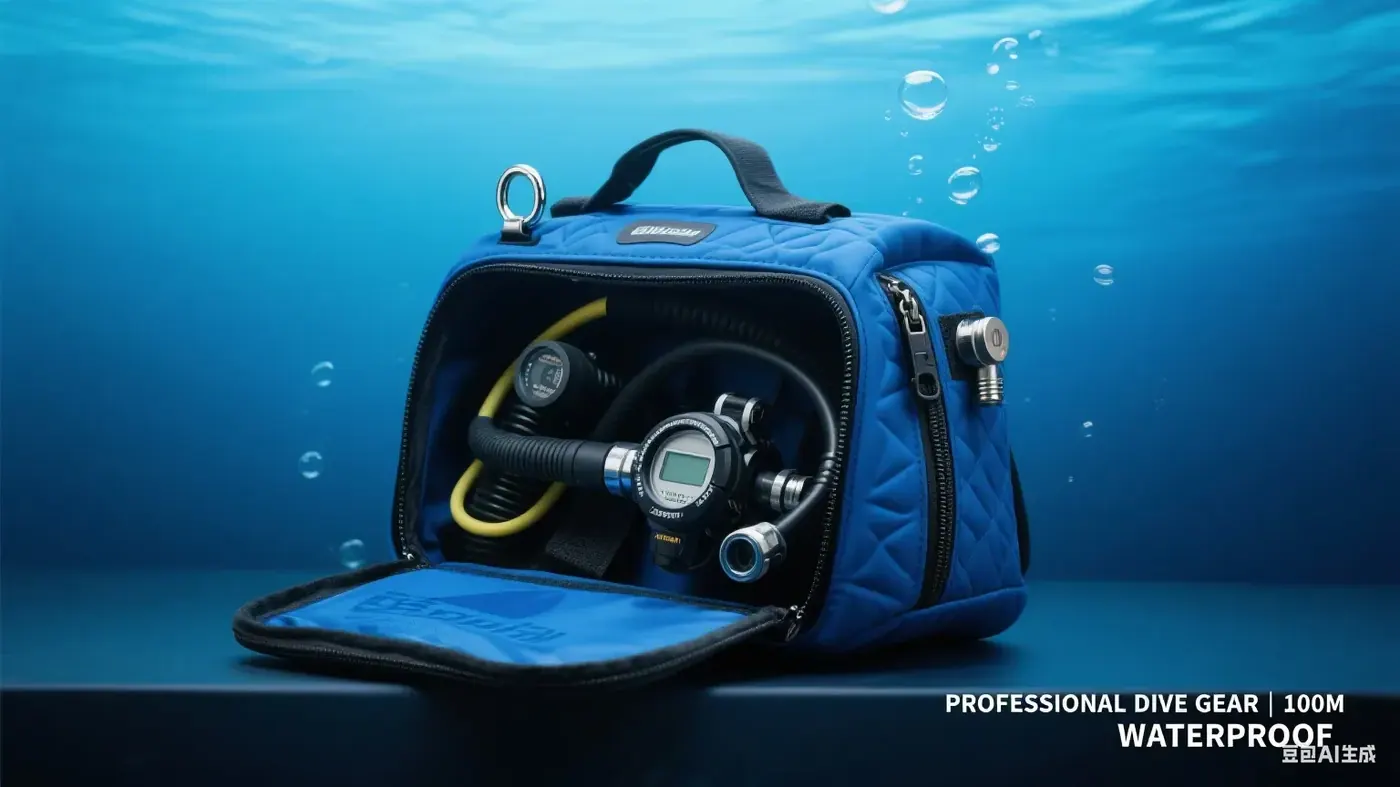
A sealed pack floats because of trapped air, not because of foam. A 20 litre pack with 60 percent air space displaces roughly 12 litres and generates about 12 kilograms of buoyant force, which is more than enough to support its own 1 to 2 kilograms plus a few kilograms of gear. The moment the pack is filled to 95 percent, air space drops to about 1 litre and buoyancy drops with it, which is why overloaded packs sink.
Foam-lined bodies behave differently and more predictably. Closed-cell foam of 10 to 20 millimetres laminated into the back panel and base adds 80 to 200 grams and provides 3 to 8 kilograms of positive buoyancy regardless of how full the pack is. For a bag sold into paddle sport, that is the specification to ask for, because it removes a variable the user cannot be relied upon to manage.
A waist pack has the opposite problem and the opposite opportunity. Its 2 to 5 litres of volume traps too little air to matter, so an unaided waist pack will sink with a phone inside. Adding a 6 to 10 millimetre foam panel of 0.5 to 1.5 litres is enough to keep it at the surface, and because it is strapped to the body, the pad does not need to support any weight at all.
| Configuration | Air space | Buoyant force | Outcome |
|---|---|---|---|
| 20 L pack, 60 percent full | 8 to 12 L | 8 to 12 kg | Floats, easy to recover |
| 20 L pack, 95 percent full | 1 to 2 L | 1 to 2 kg | Marginal, may sink with heavy kit |
| 20 L pack with 15 mm foam panel | Any fill level | 3 to 8 kg always | Floats regardless of packing |
| 3 L waist pack without foam | 0.3 to 0.8 L | Under 1 kg | Sinks if it separates |
| 3 L waist pack with 8 mm foam | 0.5 to 1.5 L foam | 0.5 to 1.5 kg | Floats while worn |
Load Stability on a Board, Kayak or Skiff
Stand-up paddleboarding punishes high loads. A rider standing on a board 760 to 860 millimetres wide has a base of support of roughly 0.2 square metres, and every kilogram carried above the hips raises the centre of mass by 200 to 350 millimetres. In practice a rider carrying 6 kilograms on the back loses noticeable stability in chop, while the same 6 kilograms distributed in a deck-mounted backpack or a waist pack barely registers.
Kayaks behave differently because the paddler is seated and the boat provides the stability. Here the argument turns on reach. A waist pack rotated to the front gives access to a phone, a snack, or a fishing lure without breaking the paddle rhythm, while a backpack stowed behind the seat requires a stop of 20 to 40 seconds and a twist that is genuinely difficult in a sit-in cockpit with a low coaming.
Small open boats and skiffs sit in between. Crew move around, lines and anchors are underfoot, and a backpack worn while launching through 300 to 500 millimetres of water will get soaked unless it is rated and closed properly. This is the use case that most justifies a high-rated backpack: it will be in the water, briefly and repeatedly, and it needs to come out dry every time.
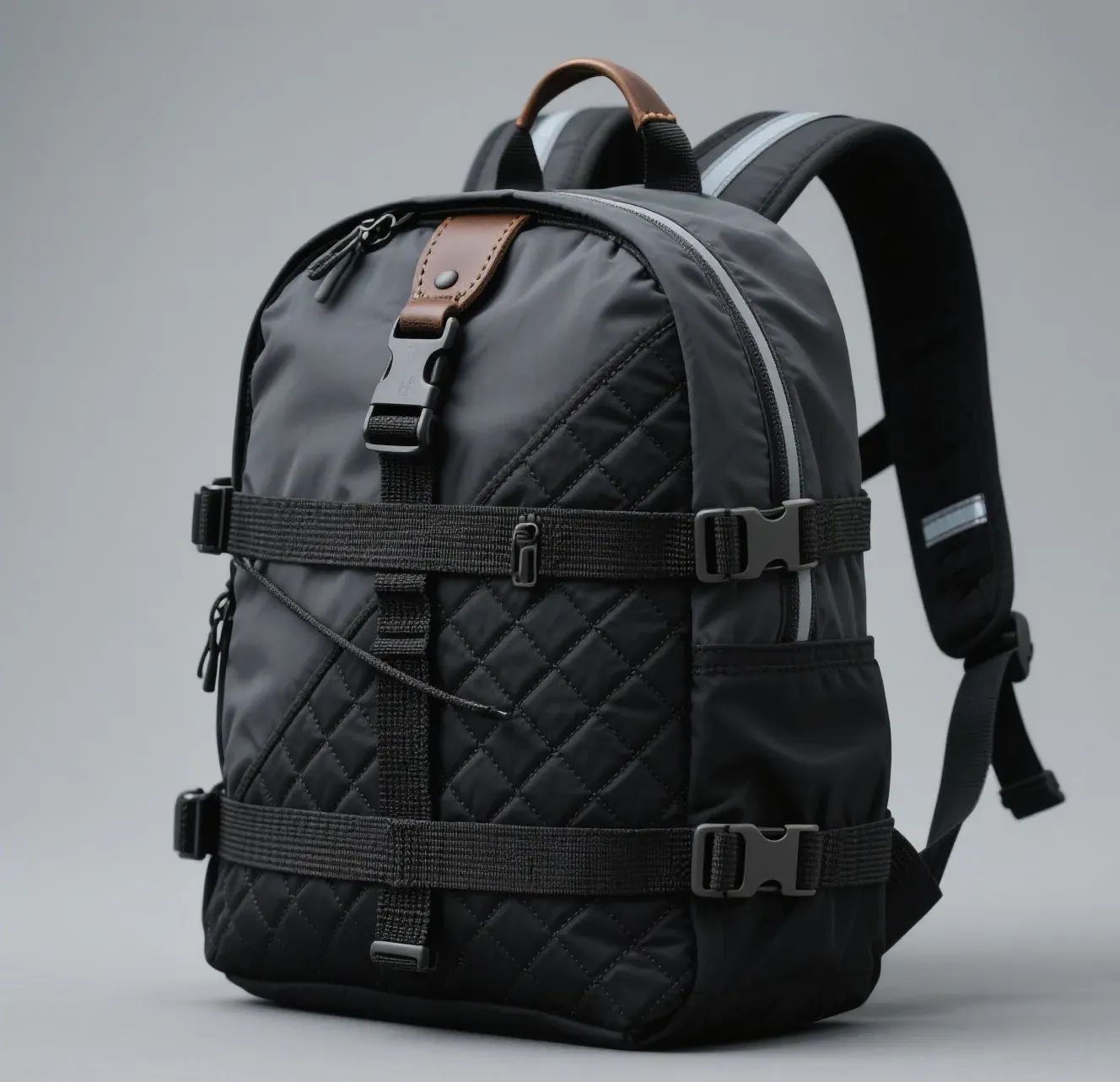
- Tether any backpack to the boat with a 1.5 to 2 metre line rated above 100 kilograms.
- Keep the total on-body load under 1.5 kilograms so it never affects balance or swimming ability.
- Stow backpacks in the cockpit or against a bulkhead, never loose on an open deck.
- Distribute weight evenly inside the pack so a floating bag does not roll and spill its air.
- Rinse every closure in fresh water after a salt session; salt crystals cut buckle grip by 30 to 50 percent.
Immersion Ratings and What They Mean in Cold Water
Immersion is the defining test on the water, and the code is precise. Under IEC 60529, IPX7 means 30 minutes at 1 metre with no ingress, and IPX8 means continuous immersion under conditions agreed between buyer and seller, usually deeper or longer. Neither rating means the bag floats, and neither rating means it will survive being dragged behind a boat at 10 knots.
Water temperature should drive the specification as much as the rating does. Immersion in water below 15 degrees Celsius produces cold shock within the first minute and meaningful loss of dexterity in 5 to 10 minutes, and published guidance on cold water immersion from NOAA is the reference most safety trainers use. The design consequence is blunt: closures must be operable with numb hands, which argues for large buckles over small zippers and for a waist pack that opens with one deliberate motion.
| Water condition | Exposure | Recommended rating | Preferred format |
|---|---|---|---|
| Calm lake paddling | Splash and light spray | IPX5 | Waist pack plus dry pack |
| Coastal kayak with chop | Repeated spray and deck wash | IPX6 | Waist pack plus IPX6 backpack |
| Whitewater or surf launch | Full immersion, pressure | IPX7 | IPX7 backpack, tethered |
| Dinghy sailing, capsize likely | Immersion plus dragging | IPX7 with foam panel | Floating backpack, clipped |
| Winter paddling below 10 degrees Celsius | Immersion plus cold shock | IPX7, glove operable | Waist pack for emergency items |
What Fits Where: Volume and Weight Planning
Volume planning on the water is unforgiving because everything that gets wet becomes a liability. A dry layer weighs 300 to 600 grams, a warm hat 60 to 120 grams, a 1 litre water bottle 1.1 kilograms when full, a packed lunch 400 to 700 grams, and a compact first aid kit 300 to 500 grams. Those five items total 2.2 to 3 kilograms, which is a 12 to 18 litre backpack packed sensibly and far beyond any waist pack.
The waist pack list is deliberately short: phone in a sealed pouch, VHF or a small radio, keys on a float, whistle, a high-energy bar, and lip balm. That list weighs 400 to 900 grams and fits in 2 to 4 litres. Anything beyond it belongs in the tethered pack, because every extra item on the waist eventually ends up pressing on the hip bones during a long paddle.
One habit separates prepared paddlers from the rest: pack for the swim, not for the day. That means the emergency layer goes on the body before launching, the comfort layer goes into the tethered pack, and nothing is left loose on deck. It also means the pack is closed and clipped before the boat leaves the beach rather than halfway across a channel, when one hand is needed for the paddle and the other for a rail.
Trim matters too. A waist pack loaded unevenly pulls to one side and creates a small but constant rotational torque on the body, which paddlers compensate for unconsciously and pay for later as lower back ache. Specifying two internal sleeves and a centred heavy-item pocket keeps the load within about 50 millimetres of the spine, which is enough to remove the problem.
| Kit item | Weight | Waist pack 2 to 4 L | Backpack 12 to 30 L | Priority |
|---|---|---|---|---|
| Phone in sealed pouch | 180 to 240 g | Yes | Backup | Emergency |
| VHF radio or small radio | 250 to 400 g | Yes | No | Emergency |
| Keys on a float | 60 to 120 g | Yes | No | Emergency |
| Whistle and mirror | 30 to 60 g | Yes | No | Emergency |
| Dry layer and hat | 360 to 720 g | No | Yes | Comfort |
| Water, 1 to 2 litres | 1.1 to 2.2 kg | No | Yes | Comfort |
| First aid kit | 300 to 500 g | No | Yes | Safety |
Materials, Hardware and Corrosion
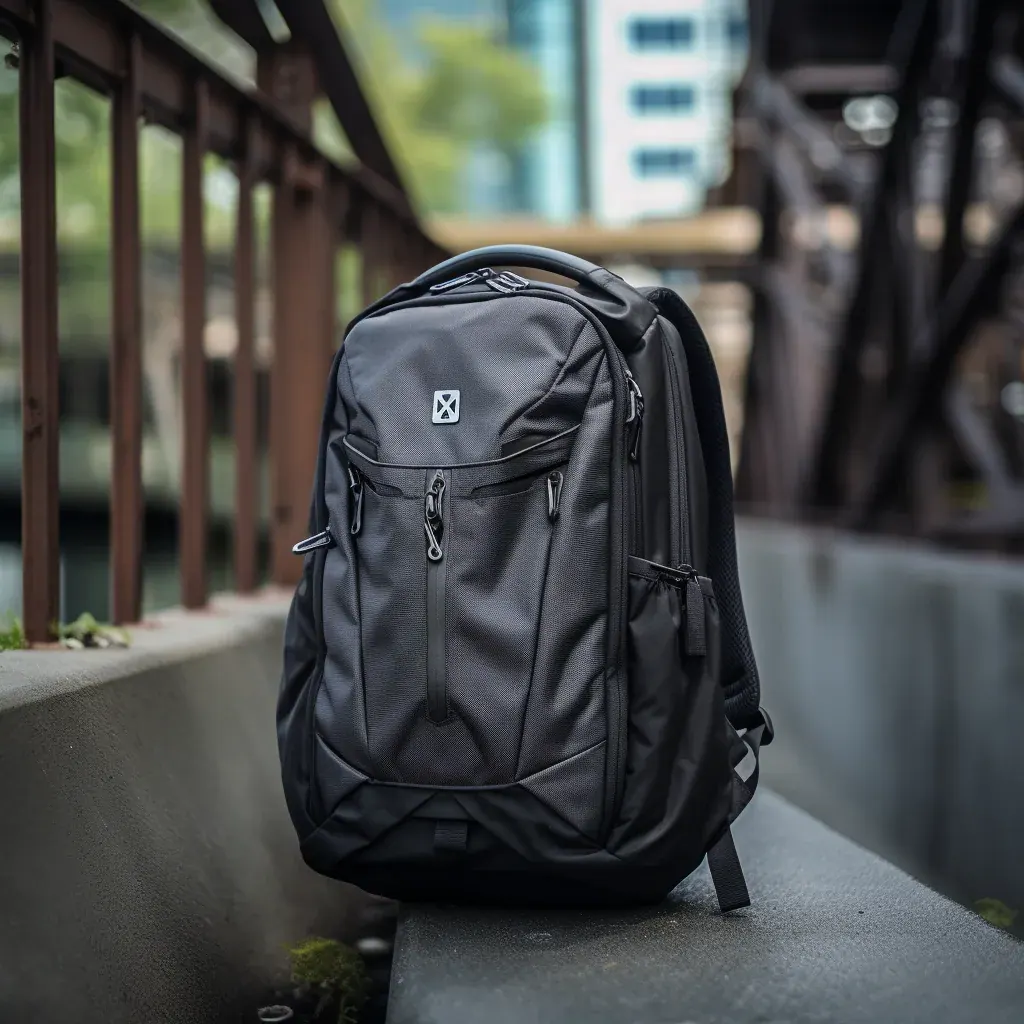
Salt water destroys hardware faster than it destroys fabric. A coil zipper or a spring buckle exposed to salt spray and then left unwashed begins to stiffen within 48 to 72 hours, and grip or slider force can rise 30 to 50 percent within a fortnight. Specifying 304 or 316 stainless springs, acetal buckle bodies, and a documented salt fog exposure of 48 to 96 hours costs a little and eliminates the most common warranty claim in paddle sport.
Fabric selection follows the use case. A 500D to 800D shell with a 0.4 to 0.6 millimetre TPU coating handles deck abrasion and repeated immersion; a lighter 210D to 400D shell suits a waist pack that never touches the deck. Welded seams should hold above 70 newtons per 25 millimetres peel, and the base panel, which is what actually contacts a wet deck, deserves the heavier denier even on a light bag.
Two verification steps are worth writing into any tech pack. First, a 30 minute submerged test on a packed production sample taken at random from the first bulk lot, not from the prototype. Second, a salt fog cycle on the hardware followed by an operational check, because a buckle that still looks new can require twice the force to release after corrosion starts.
Choosing by Craft Type
Stand-up paddleboarding favours the waist pack. Board stability is limited, the rider is already standing, and anything on the back shifts the centre of mass upward where it hurts most. A 2 to 4 litre waist pack plus a 12 to 18 litre dry pack strapped to the deck bungees covers a full day with no balance penalty.
Sit-in kayaks favour a small deck-stowed backpack plus a waist pack. Hatch openings of 200 to 400 millimetres limit what can be reached while seated, so the waist pack becomes the working pocket and the backpack becomes the shore bag. Sea kayakers on multi-day trips are the exception: they need 20 to 30 litres of genuinely dry storage and should specify floating foam-lined bodies rated IPX7.
Open boats and dinghies favour the floating backpack. Capsize is expected rather than rare, gear will end up in the water, and a bag that floats and is clipped to the boat converts a lost-gear incident into an inconvenience. Buyers stocking this category should look first at the floating waterproof backpack range, then confirm the volume against the waterproof dry backpack range, and read the boat-specific guidance in the waterproof backpack for boating overview.
Care, Drying and Service Life
Service life on the water is governed by how the bag is treated after the trip, not during it. A pack left closed and wet for 24 to 48 hours develops odour and, in warm climates, surface mould on the coated interior; opening it, inverting it, and giving it 2 to 4 hours of airflow prevents almost all of that. Salt should be rinsed off within 4 hours of landing, because crystal growth inside a zipper coil or buckle spring is what turns a smooth action into a stiff one.
Inspection should be scheduled rather than accidental. Once a month, close the empty pack, submerge it for 30 minutes with a paper towel inside, and check the fold line, the weld corners, and the base panel for crazing or pinholes. Once a season, flex the closure 200 times and retest; a body that has lost its seal will usually show it at the fold line first, and catching it there costs nothing compared with discovering it mid-trip.
| Care task | Frequency | Time required | Why it matters |
|---|---|---|---|
| Fresh water rinse of hardware | After every salt session | 3 to 5 minutes | Prevents 30 to 50 percent force rise |
| Open and air dry inverted | After every trip | 2 to 4 hours | Prevents odour and surface mould |
| Submersion check with a paper towel | Monthly | 30 minutes plus setup | Catches fold line failure early |
| Flex and retest the closure | Once per season | 15 minutes | Confirms coating is not crazing |
| Re-torque or replace buckles | Every 12 to 24 months | 5 to 10 minutes | Salt fog weakens springs first |
Programme Numbers and the Final Verdict
The decision rule is short. If the item is needed while swimming, it goes on the body in a waist pack. If the item is needed after the boat is righted or the shore is reached, it goes in a tethered, floating, IPX7 backpack. Buying one product to do both jobs is the mistake that produces most of the wet-gear stories paddlers tell each other afterwards.
QUANZHOU JUNYUAN BAGS develops both formats from one material library, starting at 500 pcs per design and colour with samples in 6 to 10 working days and bulk in 35 to 50 days. Materials may be screened against REACH and California Prop 65, release inspection can run at AQL 2.5, and delivery can be FOB Xiamen or DDP into more than 100 countries. Buoyancy panels, hardware finishes, and immersion testing are documented. Briefs may be sent to service@junyuanbags.com.
One closing check for any buyer evaluating samples: fill the pack to 90 percent, seal it, and drop it in a pool for 30 minutes with a paper towel inside. Then repeat with the pack half full. The difference between those two results tells you more about real-world behaviour than any printed rating, and it is the fastest way to decide whether a given body deserves a paddle-sport label.
People Also Ask
Should I wear a backpack while paddling?
Only for launching and portaging, not while paddling. On a stand-up board a 6 kilogram load carried above the hips raises the centre of mass by 200 to 350 millimetres and measurably reduces stability in chop. Stow the pack on the deck and wear a small waist pack instead.
Do waterproof backpacks float when they go overboard?
Only if they trap enough air or include foam. A 20 litre pack filled to 60 percent has 8 to 12 litres of air and floats; the same pack filled to 95 percent has 1 to 2 litres and may sink. A 10 to 20 millimetre closed-cell foam panel gives 3 to 8 kilograms of buoyancy at any fill level.
What should always be carried on the body when boating?
Phone or VHF radio, keys, whistle, and a signalling device. The United States Coast Guard requires a wearable lifejacket per person and carriage of sound and visual distress signals, and those items are useless if they separate from you during a capsize.
How big should a boating waist pack be?
2 to 4 litres, holding 400 to 900 grams. That covers a phone, a compact radio, keys, a whistle, and a snack. Anything larger presses on the hip bones during a long paddle and tempts users to load items that belong in a tethered pack.
Is IPX7 enough for whitewater or surf?
Yes for immersion depth and duration, since IPX7 is 30 minutes at 1 metre under IEC 60529, but it does not cover pressure from being dragged at speed or pinned against a rock. Add welded seams above 70 newtons per 25 millimetres peel and a tether rated above 100 kilograms.
How do I stop salt water ruining the closures?
Rinse in fresh water after every session and specify corrosion resistant hardware. Salt crystals begin stiffening springs within 48 to 72 hours and can raise slider or buckle force by 30 to 50 percent within a fortnight, which is why a 48 to 96 hour salt fog test belongs in the specification.
Frequently Asked Questions
Q1. Which is safer in a capsize, a backpack or a waist pack?
A waist pack, because it cannot separate from you. Items needed in the first 30 seconds, a radio, keys, and a whistle, must be on the body. A backpack can be tethered to the boat and recovered later, but it should never be the only home for emergency kit.
Q2. Can I wear a backpack while paddling a stand-up board?
You can, but it costs stability. A board 760 to 860 millimetres wide gives a base of support around 0.2 square metres, and carrying 6 kilograms above the hips raises the centre of mass by 200 to 350 millimetres. Strap the pack to the deck bungees instead.
Q3. What makes a waterproof backpack float?
Trapped air or laminated foam. A 20 litre pack with 60 percent air provides 8 to 12 kilograms of buoyant force, while a 15 millimetre closed-cell foam panel provides 3 to 8 kilograms regardless of how full the bag is. Foam is the more reliable specification.
Q4. How much weight should be carried on the body?
Keep the on-body load under 1.5 kilograms. That covers a waist pack with a phone, a radio, keys, and a whistle while leaving swimming ability unaffected. Everything heavier belongs in the boat or in a tethered pack.
Q5. What rating do I need for kayaking or paddleboarding?
IPX5 for calm water splash, IPX6 for coastal chop and repeated deck wash, and IPX7 where immersion is likely. Ratings are defined in IEC 60529 and apply to the assembled, closed pack, not to the fabric on a swatch card.
Q6. Should the pack be tethered to the boat?
Yes, always. Use a 1.5 to 2 metre line rated above 100 kilograms and clip it to a fixed point, not to a bungee that can stretch and release. An untethered pack is gone within a minute in any current or wind.
Q7. Why does cold water change the design requirements?
Cold shock hits within the first minute below 15 degrees Celsius and dexterity falls noticeably within 5 to 10 minutes. Closures must therefore work with numb hands, which favours large buckles over small zippers and a waist pack that opens in one deliberate motion.
Q8. How do I stop a waist pack digging into my hips?
Keep it under 1.5 kilograms and load it evenly. A pack loaded to one side creates constant rotational torque that paddlers compensate for unconsciously, producing lower back ache after a long session. Two internal sleeves and a centred pocket fix it.
Q9. What is the best setup for a full day on a sit-in kayak?
A 2 to 4 litre waist pack rotated to the front for working items, plus a 12 to 20 litre dry backpack stowed against a bulkhead. Hatch openings of 200 to 400 millimetres make a stowed pack hard to reach while seated, so the waist pack does the daily work.
Q10. What are MOQ, sample and bulk times for either format?
The same for both: 500 pcs per design and colour, prototype samples in 6 to 10 working days, bulk in 35 to 50 days after sign-off. Book immersion and salt fog tests at prototype stage so they do not extend the production window.