Neither form is better in the abstract: a waterproof backpack wins on access, organisation and loads above 8 kg carried further than 2 km, and a dry bag wins on seal simplicity, buoyancy per gram and cost at 1.00 against 2.2 to 3.0 for a harnessed pack. The decision rule is exposure plus distance. If the pack stays dry on a back and is opened twenty times a day, take the backpack form at IPX5 or IPX6; if it goes in the water, rides in a hatch or has to float if it goes overboard, take the welded tube body at IPX7. Both forms start at 500 pcs per design and colourway, sample in 6 to 10 working days and ship in 35 to 50 days from FOB Xiamen.
The Two Forms in One Comparison
The difference is geometric before it is material. A dry bag is a welded tube with a rolled mouth and, at most, a single shoulder strap; a waterproof backpack is a structured body with a harness, a back panel and usually a secondary opening. That geometry drives everything downstream: how fast the user reaches gear, how much weight can be carried without pain, how much air is trapped when it hits the water, and how much it costs to assemble. The table below is the short version used before a sampling round.
| Attribute | Waterproof backpack | Dry bag | Winner |
|---|---|---|---|
| Typical volume | 18-70 L | 5-40 L | Backpack |
| Achievable rating | IPX4-IPX8 by build | IPX6-IPX7 as standard | Dry bag |
| Opening speed | 1-2 s front zip, 4-7 s roll | 5-8 s unroll and dig | Backpack |
| Comfortable load | 12 kg over 15 km | 8 kg over 1.5-2 km | Backpack |
| Organisation | 3-8 pockets, laptop sleeve | One cavity | Backpack |
| Buoyancy per litre | Low, body is framed | High, tube traps air | Dry bag |
| Empty weight at 30 L | 850-1,300 g | 380-600 g | Dry bag |
| Unit cost index | 2.2-3.0 | 1.00 | Dry bag |
| Field repair | Patch plus seam access | Patch anywhere on the tube | Dry bag |
Read the winner column as a tally, not a verdict, because the rows are not equally weighted. For a kayak angler, buoyancy and seal simplicity outweigh every access row combined. For a commuter who opens the pack thirty times a day, the first three rows decide it. The sections below take each cluster in turn so the choice can be made against an activity rather than a scoreboard.
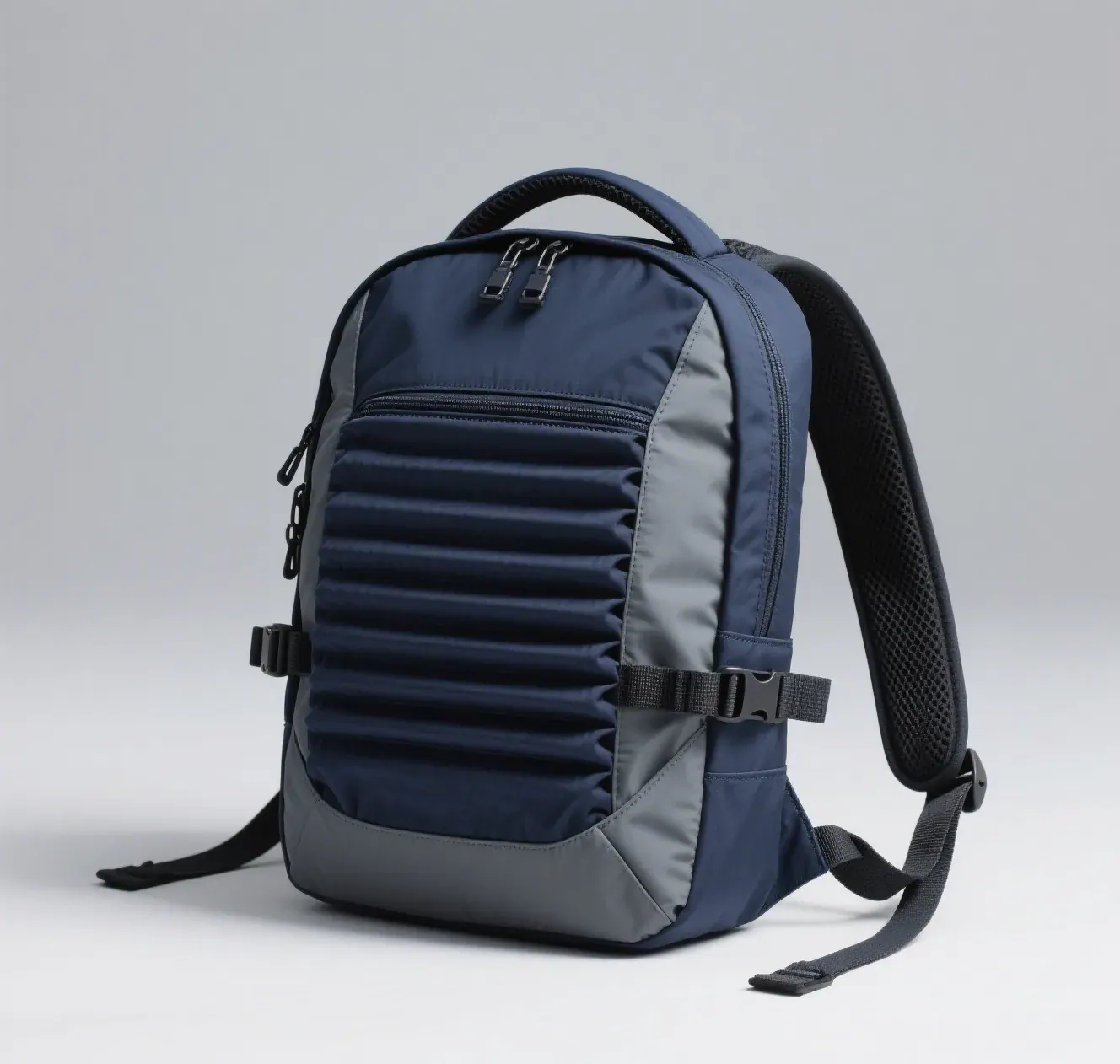
One clarification prevents most specification arguments. Both forms use the same shell materials and the same RF welding at 27.12 MHz, so there is no material quality gap between them at a given price point. What differs is the number of openings, the amount of hardware, and whether the body has to hold a shape when empty. The full construction baseline shared by both is described in our waterproof backpack specification guide.
Access and Organisation: What the Tube Cannot Do
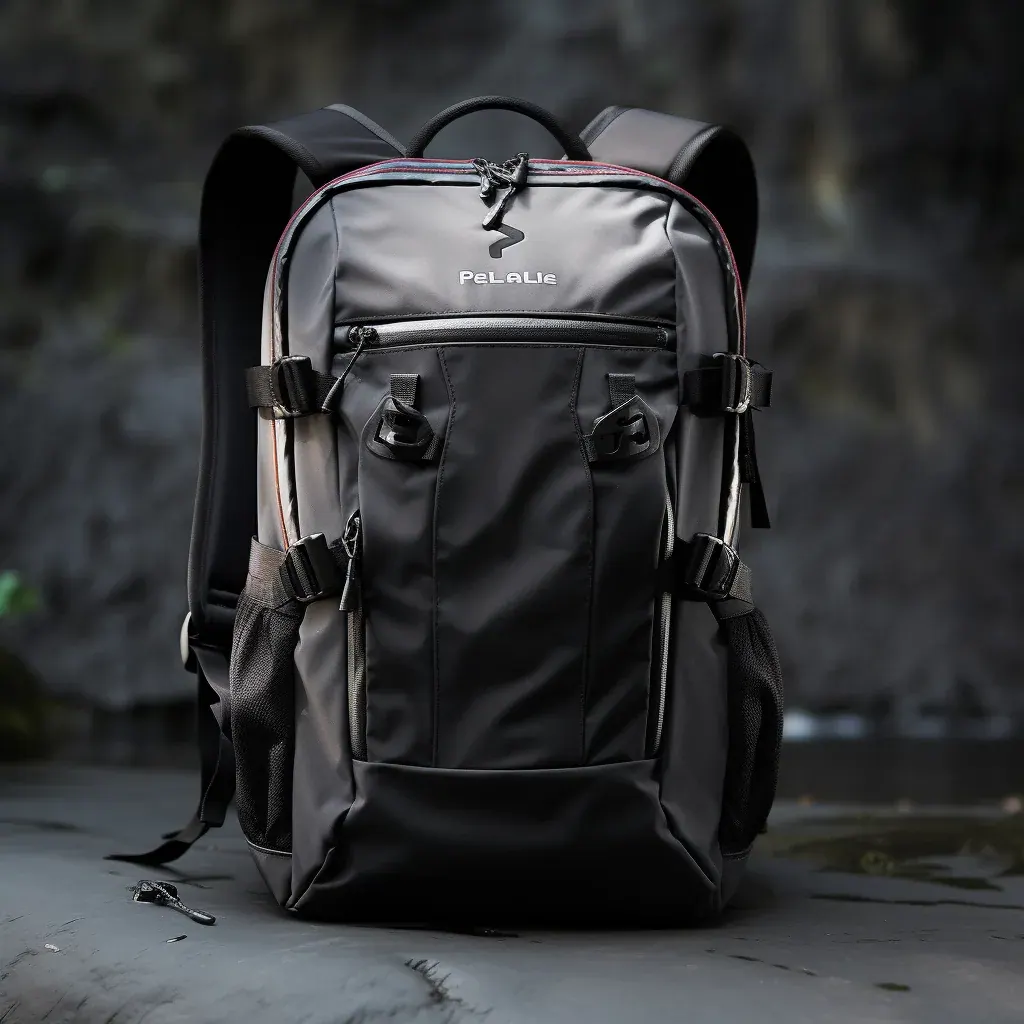
A tube has one cavity, and everything in it is behind everything else. Reaching a phone at the bottom of a 30 L dry bag means unrolling the mouth, pulling out the top two thirds of the load, and re-rolling, which takes 20 to 40 seconds in rain and gets worse as the bag fills. A backpack form with a coated front zip reaches the same phone in 1 to 2 seconds, and with an internal organiser panel the user knows where the phone is before looking.
The consequence for electronics is decisive. A 15.6 in laptop needs a flat bay of roughly 380 by 265 mm with 20 mm of clearance under the sleeve; a tube cannot provide a flat bay at all, because its cross-section is round by definition. Anyone carrying a device, a camera body or a tackle tray should default to the backpack form, and anyone carrying clothing, a sleeping bag or food should default to the tube. A third option exists for mixed loads: a 10 to 20 L welded liner inside a backpack body, which puts rigid cargo in a sealed tube and keeps everything else organised.
- Opening frequency above about ten times a day favours the backpack form regardless of exposure.
- Any device larger than a tablet needs a flat bay, which means a structured back panel rather than a tube.
- A welded liner inside a backpack body gives tube-level protection for one item without losing organisation.
- Tubes pack clothing and soft goods more efficiently, because they compress into the corners a framed body wastes.
Carry Comfort: Where the Load Line Sits
Weight alone does not decide comfort; distance does. A single-strap dry bag at 8 kg is tolerable for the 1.5 to 2 km walk from a car park to a put-in, and uncomfortable beyond it, because all the load sits on one trapezius and the bag swings with every step. A harnessed pack puts 70 to 80 percent of a 12 kg load on the hips through a padded belt and keeps the mass stable against the back, which is why the same 8 kg feels fine for 10 to 15 km in a pack and tiring after 3 km in a tube.
| Load | Dry bag, single strap | Backpack, padded harness | Practical limit |
|---|---|---|---|
| 4 kg | Comfortable to 3 km | Comfortable to 20 km | Either form |
| 8 kg | Tolerable to 1.5-2 km | Comfortable to 15 km | Backpack beyond 2 km |
| 12 kg | Uncomfortable past 800 m | Comfortable to 12 km with hip belt | Backpack only |
| 16 kg | Not usable | Usable to 8 km, 70-80 percent on hips | Backpack with frame sheet |
| 22 kg | Not usable | Expedition harness to 6 km | Backpack with load lifters |
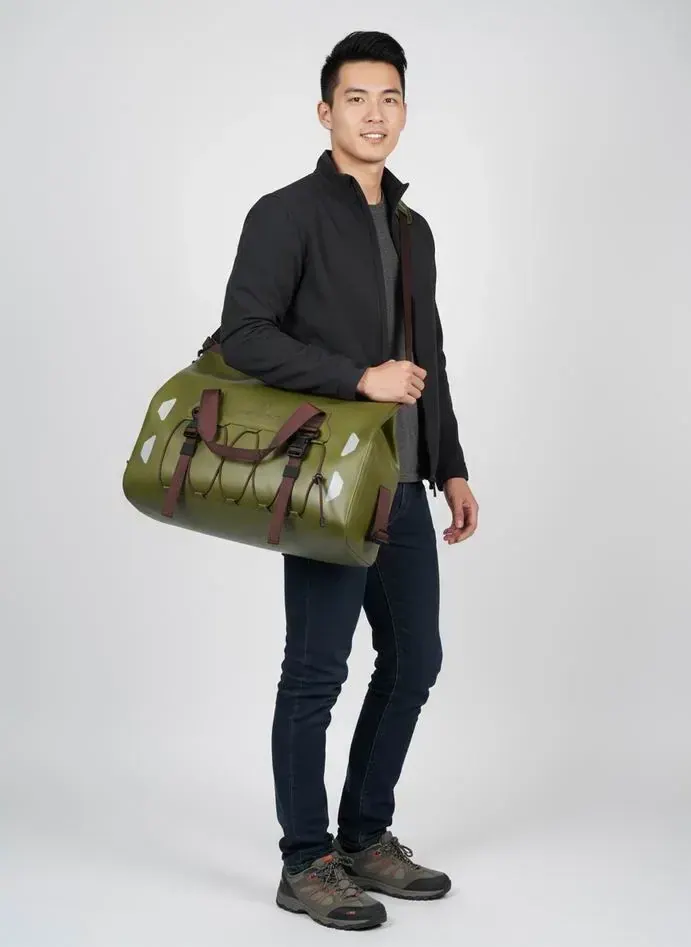
Harness geometry is the specification that most often gets skipped in a dry bag brief, and it is the reason hybrid forms exist. A waterproof dry backpack with a welded body, a removable harness and a 38 mm webbing hip belt covers the gap: it seals like a tube at IPX7 and carries like a pack to about 12 kg. Buyers who need both should specify the hybrid rather than stocking two SKUs, since the cost index lands near 1.8 against 3.0 for a fully featured travel pack and 1.0 for a plain tube.
Sealing, Ratings and What Each Form Can Realistically Reach
Ratings follow openings. A tube with one rolled mouth and nothing else is the easiest object in the catalogue to seal, which is why IPX7 is standard rather than exceptional for it. A backpack body with a front zip, two side pockets and a lid has four to six candidate leak paths, so it reaches IPX5 or IPX6 comfortably and IPX7 only when every secondary opening is removed or upgraded to airtight hardware. The exposure each level represents is defined by IEC 60529, and buyers should name the level and the test in the tech pack.
| Build | Realistic rating | Test condition | Where it fails |
|---|---|---|---|
| Tube, rolled 3 turns | IPX6 | 100 L/min jet, 3 min | User rolls once instead of three times |
| Tube with purge valve | IPX7 | 30 min at 1 m | Valve clogged with grit or left open |
| Backpack, roll body | IPX5-IPX6 | 12.5 or 100 L/min jet | Front pocket zip under sustained spray |
| Backpack with coated zip | IPX4-IPX5 | Splash or 12.5 L/min jet | Laminate wear on the tape after 1,500 cycles |
| Backpack, airtight zip | IPX7-IPX8 | Immersion beyond 1 m | Grit on the teeth, skipped lubrication |
| Backpack, welded no zip | IPX7 | 30 min at 1 m | Corner weld if tooling drifts |
The realistic-rating column is the one to quote to a retail buyer, not the laboratory ceiling. A backpack body can be built to IPX8, but doing so requires airtight hardware at roughly 2.4 times the cost of a roll mouth and a lubrication routine the end user will not follow. If the brief says immersion, the honest recommendation is usually a welded tube or a welded no-zip body rather than a zip pack pushed to its ceiling.
Overboard Behaviour: Buoyancy, Trapped Air and PFD Rules
This is the row where the tube wins outright and where the distinction is a safety matter rather than a convenience one. A rolled tube traps air by design: a 20 L bag rolled shut with roughly half its volume as air displaces about 10 kg of water and will float a 6 to 8 kg load on the surface. A framed backpack body holds less trapped air and sits lower, so a 12 kg pack sinks within 60 to 90 seconds once the air escapes through the mouth or a pocket.
Neither form is a life jacket. A pack that floats is a recovery aid, not flotation equipment, and anyone on the water should be wearing an approved personal flotation device rather than relying on gear. The baseline for recreational boating is published by the US Coast Guard recreational boating safety programme, and water temperature and sea-state context for a given trip is available from NOAA National Ocean Service. Cold water changes the arithmetic: immersion in water below 10 degrees Celsius narrows the useful window for self-recovery to a few minutes.
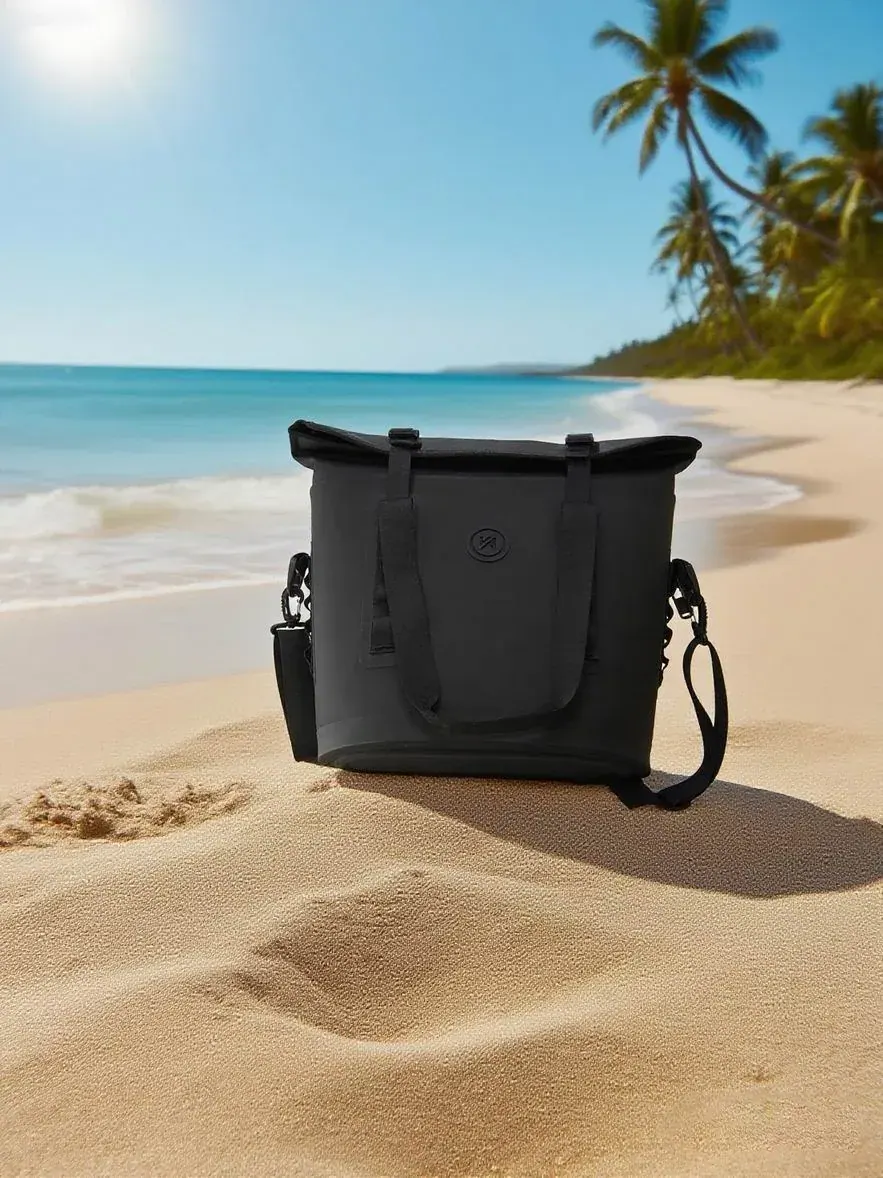
Three specification choices improve overboard behaviour on the backpack form. Closed-cell foam panels in the lid add 2 to 4 kg of positive lift; a rolled mouth with no external zip keeps trapped air from escaping; and chest plus waist straps stop the pack rotating off the shoulders if the user goes in. Programmes genuinely sold on water should also consider a bright lid colour, because a grey pack on grey water is hard to spot from 50 m. Purpose-built flotation designs are covered in our floating waterproof backpack guide.
Volume Accuracy, Packing Shape and Usable Space
Litre figures are measured by bead filling, and the two forms convert that number into usable space very differently. A tube wastes the least space for soft goods because clothing compresses into every corner of the round cross-section, but it wastes the most for rigid goods, since a rectangular box leaves four dead corners. A framed backpack body is the reverse: excellent for boxes, trays and camera cubes, and slightly less efficient for a down sleeping bag.
| Cargo type | Packing efficiency, tube | Packing efficiency, backpack | Recommendation |
|---|---|---|---|
| Clothing and soft goods | 90-95 percent | 80-85 percent | Tube |
| Down sleeping bag | 85-90 percent | 70-75 percent | Tube inside a compression sack |
| Camera cubes, tackle trays | 55-65 percent | 85-90 percent | Backpack |
| Food and cook kit | 75-80 percent | 85-90 percent | Backpack |
| Wet gear separated | 60 percent, no divider | 85 percent with wet compartment | Backpack |
| Electronics | Not suitable | 90 percent with padded sleeve | Backpack |
Usable load in kilograms belongs in the tech pack alongside litres for exactly this reason. A 30 L tube of clothing weighs 6 to 8 kg and carries 30 L of it; a 30 L tube of camera bodies weighs the same but uses perhaps 20 L of the space, because the rest is dead corners. Buyers who specify both figures stop having the argument about whether a pack is big enough before sampling starts.
Durability, Puncture and Field Repair
Both forms fail the same way: abrasion at contact points, puncture, or a lifting weld. They differ in how easily the failure can be fixed in the field. A tube can be patched anywhere on its surface with a peel-and-stick TPU patch in 60 to 90 seconds, because the whole body is one accessible membrane. A backpack body hides its weakest seams behind a harness and a back panel, so a puncture there means unstitching a panel or working blind around a frame sheet.
- Carry a 70 by 120 mm TPU patch and a 30 ml tube of adhesive per pack on marine programmes; a tube repair takes under two minutes.
- Abrasion concentrates at the base corners: specify a reinforced base panel of 840D or 1000D regardless of form.
- Weld peel strength should be at least 90 percent of base fabric tensile; below that, corners lift after one season.
- PVC shells stiffen below minus 10 to minus 15 degrees Celsius and crease-crack if folded frozen; use TPU laminate for winter.
- Store both forms dry and open. A sealed body left rolled shut while damp grows microbial film in two to three days.
Decision Matrix: Choosing by Activity
The practical way to settle the argument is to start from the activity and the two numbers that describe it: how often the pack is opened, and how far it is carried. The matrix below is the shortlist used with buyers before a sampling round, and it resolves almost every case without a further discussion of materials.
| Activity | Openings per day | Carry distance | Recommended form | Rating |
|---|---|---|---|---|
| Urban commute | 20-40 | 1-3 km | Backpack, front zip | IPX5 |
| Day hiking | 8-15 | 8-18 km | Backpack, harness | IPX5 |
| Multi-day trek | 10-20 | 15-25 km | Backpack plus tube liner | IPX5 plus IPX7 liner |
| Kayak day trip | 3-6 | 0.5-2 km | Dry bag in hatch | IPX7 |
| Rafting and paddle camping | 4-8 | 1-3 km portage | Dry bag 40-70 L | IPX7 |
| Fishing from shore | 15-30 | 2-6 km | Backpack with tray bay | IPX5-IPX6 |
| Sail and deck work | 5-10 | under 0.5 km | Dry bag, buoyancy matters | IPX7 |
| Motorcycle touring | 6-12 | 0.2-1 km | Backpack, stable harness | IPX6 |
Two rows are worth flagging because they are the ones buyers get wrong. Multi-day trekking looks like a backpack case and is actually a hybrid case: the pack carries the load, but a 10 to 15 L tube inside it keeps the sleeping bag and spare layers dry even when the main body is opened in the rain twenty times. Deck work looks like a backpack case and is not, because anything that can go overboard should float, and a framed pack does not. The wider family comparison, including duffel and compression forms, is covered in waterproof backpack versus dry duffel and waterproof backpack versus compression sack.
Cost, Programmes and What to Stock
Shelf economics usually decide the question before engineering does. A 20 L tube costs about a third of a 25 L harnessed pack in the same fabric, and it packs flat into a quarter of the carton volume, which is why a retailer can hold six tube sizes in the space two packs occupy. Against that, the pack carries a far higher ticket and a lower return rate on comfort complaints.
| Programme | Unit cost index | Carton volume index | MOQ per colourway | Typical retail use |
|---|---|---|---|---|
| Dry bag, 5-20 L | 1.00 | 1.00 | 500 pcs | Impulse, paddle and beach |
| Dry bag, 30-70 L | 1.45 | 2.20 | 500 pcs | Rafting, expedition rental |
| Hybrid dry backpack | 1.80 | 2.60 | 500 pcs | Kayak fishing, paddle camping |
| Waterproof backpack, roll body | 2.20 | 3.10 | 500 pcs | Hiking, commute, travel |
| Waterproof backpack, zip body | 2.60 | 3.30 | 500 pcs | Travel, laptop carry |
| Waterproof backpack, airtight zip | 3.00 | 3.50 | 500 pcs | Camera, dive support |
- The opening quantity is 500 pcs for each design and colourway; mixed colours can be consolidated from 3,000 pcs.
- Samples take 6 to 10 working days and bulk runs 35 to 50 days, shipped FOB Xiamen or DDP into more than 100 countries.
- Every bulk order is inspected at AQL 2.5 before release, and the signed report travels with the packing list.
- REACH and California Prop 65 screening is included in every quotation, and PFAS-free finishes are available.
- A four-line brief starts a quotation: form, volume in litres, rating target and target quantity.
The stocking recommendation that follows from the table is to carry both forms in the 20 to 30 L band, where customer intent is genuinely split, and to concentrate on one form outside it. Below 15 L the tube wins on price and packing; above 45 L for land use the harnessed pack wins on comfort with no realistic alternative. Buyers assembling a first range can see how both forms are built across the wider catalogue, or send form, litre band and target quantity to service@junyuanbags.com.
Testing Both Forms Before Release
The test schedule differs in one respect: the tube is tested as a pressure vessel and the pack is tested as an assembly. Both should be tested twice, once closed by a trained technician and once after 200 closures by somebody who has never seen the product, because that difference is what separates a design that seals from one that only seals when handled carefully.
| Check | Dry bag method | Backpack method | Pass criterion |
|---|---|---|---|
| Enclosure integrity | Inflate to 3 kPa, hold 3 min | Same, plus spray each opening | Under 10 percent loss, dry indicator paper |
| Buoyancy | Float 6 kg for 30 min | Float test only if specified | Remains on surface, no mouth submersion |
| Seam peel strength | Tensile pull on welded coupon | Same, plus base panel coupon | At least 90 percent of fabric strength |
| Abrasion resistance | Martindale, ISO 12947-2 | Same, plus base and shoulder contact | 25,000 cycles to first yarn break |
| Hardware retention | Buckle pull to 25 kg | Hip belt and shoulder pull to 30 kg | No slip above 5 mm, no stitch failure |
| Cold fold | Roll and unroll at -20 degrees C | Roll mouth and flex zip at -20 degrees C | No film cracking or zip stiffness |
Finish with a retained sample per form and colourway. When a claim arrives eight months into a season, having a control piece to measure seam peel or fold geometry against settles the question in minutes, and it keeps the conversation about the product instead of about who is responsible.
People Also Ask
Is a dry bag better than a waterproof backpack?
Only for water exposure. A dry bag seals to IPX7 as standard, floats when rolled with trapped air and costs about a third as much, but it has one cavity and is uncomfortable past 2 km at 8 kg. A backpack wins whenever the pack is opened more than ten times a day or carried more than 2 km.
Can a waterproof backpack be submerged like a dry bag?
Yes, if it has no external zip or uses airtight hardware. A roll-body pack with a welded shell and no secondary opening reaches IPX7, meaning 30 minutes at 1 m. A pack with a coated front zip is a rainproof pack at IPX5 and will wet out if it goes under.
Will a dry bag float if it falls in the water?
Usually yes. A 20 L tube rolled with roughly half its volume as air displaces about 10 kg of water and floats a 6 to 8 kg load. It is a recovery aid, not a life jacket, and everyone on board should still wear an approved personal flotation device.
Why are dry bags so much cheaper than waterproof backpacks?
Because of hardware and assembly hours. A tube is one welded membrane with a buckle, while a harnessed pack adds a frame sheet, a back panel, shoulder straps, a hip belt and often a zip, taking the cost index from 1.00 to 2.2-3.0 in the same fabric.
Can I carry a laptop in a dry bag?
Not safely. A tube has a round cross-section and cannot provide the flat bay of roughly 380 by 265 mm a 15.6 in device needs, and there is no padding to isolate it from impact. Use a backpack with a suspended sleeve, or a padded sleeve inside a welded liner.
How far can you carry a dry bag comfortably?
About 1.5 to 2 km at 8 kg on a single strap, and 3 km at 4 kg. Beyond that the load on one shoulder and the swing of the bag become the limiting factors, which is why hybrid dry backpacks with a removable harness exist at a cost index of about 1.8.
Frequently Asked Questions
Q1. What is the main difference between a waterproof backpack and a dry bag?
Geometry. A dry bag is a welded tube with one rolled mouth and at most a single strap, sealing to IPX6 or IPX7 with no hardware to maintain. A waterproof backpack is a structured body with a harness, a back panel and usually a secondary opening, which gives fast access and organised storage at IPX4 to IPX8 depending on build.
Q2. Which is better for kayaking?
A dry bag, because it seals to IPX7 as standard, fits a round hatch and floats if it goes overboard. A 20 L tube rolled with trapped air will keep a 6 to 8 kg load on the surface, which a framed pack cannot do once the air escapes through a pocket.
Q3. Which is better for hiking?
A waterproof backpack with a padded harness. At 8 kg and above, a hip belt moves 70 to 80 percent of the load off the shoulders, which makes the difference between a comfortable 15 km and a tiring 3 km. An IPX5 rating covers rain; submersion is not a hiking requirement.
Q4. Can a dry bag be worn as a backpack?
Only briefly. A single-strap tube at 4 kg is fine for 3 km, and uncomfortable past 1.5 km at 8 kg. Hybrid dry backpacks with a removable harness and a 38 mm hip belt solve this and carry about 12 kg, at a cost index of roughly 1.8 against 1.0 for a plain tube.
Q5. Do waterproof backpacks float?
Most do not. A sealed pack floats for 10 to 20 minutes depending on load, and a 12 kg framed pack sinks within 60 to 90 seconds as trapped air escapes. Only packs specified with closed-cell foam lid panels, giving 2 to 4 kg of positive lift, should be relied on to stay on the surface.
Q6. What IPX rating do I need for a boat deck?
IPX7. Deck work means spray at 100 L per minute and a real chance of going overboard, so a welded tube or a no-zip welded body is the right choice. IPX5 covers heavy rain on land but not sustained deck wash or immersion.
Q7. Are dry bags more durable than waterproof backpacks?
They are more repairable rather than more durable. Both use the same shell fabrics and the same RF welding, but a tube can be patched anywhere on its surface in 60 to 90 seconds, while a puncture behind a pack harness or frame sheet needs panel access to fix.
Q8. How much weight can each form carry?
A single-strap dry bag is practical to about 8 kg over 1.5 to 2 km. A harnessed pack carries 12 kg over 12 to 15 km and 22 kg with a frame sheet and load lifters. State the load in kilograms as well as litres in the tech pack, because comfort is a load problem, not a volume problem.
Q9. What is the MOQ for either form?
MOQ is 500 pcs per design and colourway for both forms, set by material minimums for film, webbing and hardware. Consolidating three colours into one run from 3,000 pcs is usually cheaper per piece than three separate 500 pc drops.
Q10. How long do samples and bulk production take?
Samples take 6 to 10 working days for both forms, with harnessed packs at the longer end because the back panel and belt tooling has to be cut. Bulk runs 35 to 50 days depending on order band and colourway count, shipped FOB Xiamen or DDP into more than 100 countries.
Q11. Can one product cover both uses?
A hybrid dry backpack comes close: a welded rolled body with a removable harness and a hip belt seals to IPX7 and carries about 12 kg, at a cost index near 1.8. For most ranges the better answer is two SKUs in the 20 to 30 L band and one form outside it.
Q12. Which form should a retailer stock first?
Start with a 20 to 30 L tube and a 25 to 30 L roll-body pack, because customer intent splits almost evenly in that band and both pack into a small carton footprint. Below 15 L the tube wins on price; above 45 L for land use the harnessed pack wins with no realistic alternative.