Choose a waterproof backpack when the load has to move more than 800 metres on foot or weighs more than 7 kilograms; choose a dry duffel when the same gear travels under 200 metres, then sits in a vehicle, a boat hatch or an aircraft hold and is unpacked in one place. A 25 to 35 litre backpack carries 8 to 12 kilograms with 70 to 80 percent of the weight transferred to the hips and leaves both hands free for two to six hours, while a 40 to 90 litre dry duffel hauls 15 to 25 kilograms but limits a shoulder carry to roughly 10 to 15 minutes before grip fatigue sets in. Both formats reach IPX6 to IPX7 when built with RF welded seams, and the duffel normally reaches that rating at 15 to 25 percent lower unit cost because a straight 600 to 900 millimetre closure seals more easily than a curved backpack opening. Programme entry at QUANZHOU JUNYUAN BAGS is 500 pcs per design and colour, samples in 6 to 10 working days, bulk in 35 to 50 days.
The Real Distinction Is Carry Mode, Not Capacity
Most buyers frame this choice as a volume question, but volume is the second-order variable. The first-order variable is how the weight is supported. A backpack puts the load on the skeleton through two shoulder straps and, above 7 kilograms, a hip belt that takes 70 to 80 percent of the total. A duffel puts the load on the hand, the forearm, or one shoulder, and every one of those three options has a hard endurance limit measured in minutes rather than hours.
Grip strength data puts the limit clearly. An average adult can hold 10 to 12 kilograms in one hand for about 60 to 90 seconds before grip fatigue becomes noticeable, and the practical working figure for repeated lifting across a car park is nearer 8 kilograms. Shifting the duffel to one shoulder raises the tolerable load to 15 to 20 kilograms but introduces asymmetric spinal loading, which most people find uncomfortable after 10 to 15 minutes and genuinely painful after 30.
The backpack has no such ceiling in normal use. A 25 to 35 litre body loaded with 8 to 12 kilograms is comfortable for two to six hours of continuous walking, and with a properly fitted hip belt the same pack at 15 kilograms remains viable for a full day. The trade is that a backpack is slower to open, slower to pack, and harder to hand to another person, which matters enormously on a boat and not at all on a trail.
| Decision factor | Waterproof backpack 25 to 35 L | Dry duffel 40 to 90 L |
|---|---|---|
| Hands free while carrying | Yes, both hands | No, one hand or one shoulder occupied |
| Comfortable load | 8 to 12 kg, up to 15 kg with hip belt | 8 to 12 kg by hand, 15 to 20 kg on shoulder |
| Endurance at rated load | 2 to 6 hours continuous | 10 to 15 minutes shoulder, 60 to 90 seconds hand |
| Comfortable carry distance | 800 m to 25 km | Under 200 m, ideally under 50 m |
| Load transfer path | 70 to 80 percent to hips above 7 kg | 100 percent through hand, arm or one shoulder |
| Pack and unpack speed | Slower, top or panel access | Faster, full width opening |
Volume Bands and What Actually Fits
Volume determines whether a trip is possible at all, and the two formats occupy different bands for good mechanical reasons. A backpack above 45 litres starts to sit high and wide, which raises the centre of mass and reduces stability on uneven ground, so backpacks cluster at 20 to 40 litres with expedition models reaching 55 to 75. A duffel has no such limit because it never has to be stabilised against a moving torso, so it runs freely from 30 litres to 120 litres.
In practice the crossover sits at about 40 litres and 12 kilograms. Below that, the backpack wins on almost every measure. Above it, the duffel wins because no one wants to walk far with 20 kilograms anyway, and the wide opening becomes the dominant advantage when packing a wet tent, a sleeping bag, and three days of food into one cavity.
Buyers ordering for a mixed programme should treat the two formats as complementary rather than competing. A typical outdoor retail assortment carries a 25 litre welded backpack and a 60 litre dry duffel side by side, and the customer who owns both uses the duffel to move the kit to a base and the backpack to carry a subset away from it. Attachment rate for the second item in that pairing runs 30 to 45 percent in assortments where both are offered at the same quality tier.
| Trip profile | Volume needed | Typical load | Better format |
|---|---|---|---|
| Urban commute, rain | 18 to 25 L | 4 to 7 kg | Backpack |
| Day hike, 6 to 10 hours | 22 to 32 L | 5 to 9 kg | Backpack |
| Kayak day trip, one car | 30 to 40 L | 6 to 10 kg | Backpack |
| Boat weekend, four people | 60 to 90 L | 14 to 22 kg | Duffel |
| Fly-in fishing lodge | 80 to 120 L | 18 to 26 kg | Duffel |
| Expedition basecamp plus day trips | 65 L plus 25 L | 15 kg plus 7 kg | Both |
Closure Geometry Decides the Waterproof Rating
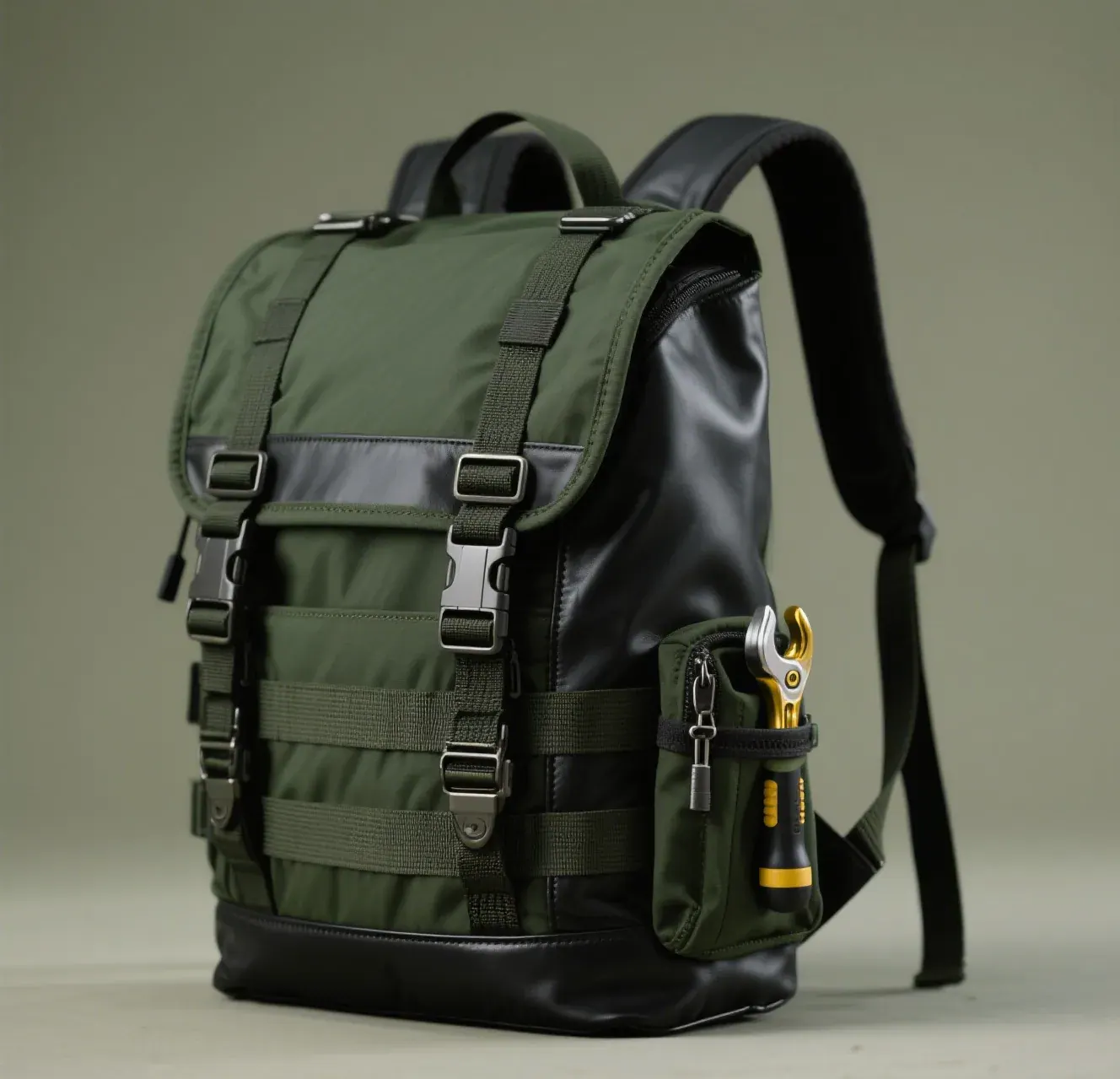
Waterproofness is a function of the longest path water must cross, and that path differs sharply between the two formats. A roll top backpack presents 400 to 700 millimetres of fold, sealed by three or four turns and a buckle that applies 3 to 6 kilograms of compression. A duffel presents 600 to 900 millimetres, either as a straight zipper or as the same roll top principle scaled up. Both are manageable; the difference is what happens at the corners.
A backpack roll top has two corners where the fabric turns from vertical to horizontal, and those corners are where field leaks start, usually after 1,500 to 3,000 fold cycles when the coating begins to craze. A duffel roll top has the same two corners but a gentler radius because the body is wider, which typically extends fold life by 20 to 40 percent. A duffel with a straight waterproof zipper removes the fold entirely and instead depends on zipper quality, with a credible TIZIP style closure rated to 0.2 to 0.5 bar and cycled 5,000 to 10,000 times in laboratory testing.
The rating language itself should be pinned to a published definition so a specification means the same thing to both parties. The ingress code numbers used across the category come from IEC 60529, where IPX6 describes a powerful jet and IPX7 describes 30 minutes at one metre of immersion. A pack sold as IPX7 must therefore survive half an hour under a metre of water, which is a far stronger claim than a showerproof shell and a very different cost structure.
| Closure type | Sealing path | Realistic rating | Field life |
|---|---|---|---|
| Backpack roll top | 400 to 700 mm | IPX6 to IPX7 | 1,500 to 3,000 fold cycles |
| Duffel roll top | 600 to 900 mm | IPX6 to IPX7 | 2,000 to 4,200 fold cycles |
| Straight waterproof zipper | 600 to 900 mm | IPX6 to IPX7 at 0.2 to 0.5 bar | 5,000 to 10,000 cycles |
| Backpack curved zipper | 700 to 1,200 mm with corners | IPX4 to IPX5 | 3,000 to 6,000 cycles |
| Duffel flap with buckles | 900 to 1,400 mm | IPX3 to IPX4 | Seasonal, cover recommended |
Access Pattern: How Fast Can You Get One Item Out
Access is the duffel home ground and the reason it dominates marine and lodge markets. A 60 litre duffel with a full width opening exposes roughly 90 percent of the interior at once, so retrieving a specific item takes 5 to 15 seconds. A top loading backpack exposes the top 30 to 40 percent, so the same retrieval takes 20 to 60 seconds and usually involves removing two or three other items first.
The gap narrows with design. A panel loading backpack with a horseshoe opening gets retrieval down to 10 to 25 seconds, but that panel is 700 to 1,200 millimetres of zipper with corners, which is exactly the geometry that struggles to hold IPX6. Buyers who specify a panel loader should expect IPX4 to IPX5 and add an internal dry liner for anything critical, whereas a roll top buyer can hold IPX7 and accept slower access.
Frequency matters more than duration. If the bag is opened four times a day, the 40 second penalty of a top loader is irrelevant. If it is opened 30 times a day, as a camera bag or a fishing bag is, that penalty becomes 15 minutes of lost time and the panel loader or duffel is worth the rating compromise. This is the single most useful question to ask an end user before specifying a format.
- Under five openings per day: roll top backpack, hold IPX6 to IPX7, accept slower access.
- Five to fifteen openings per day: panel loading backpack with an internal dry pouch for electronics.
- Above fifteen openings per day: dry duffel with a wide mouth, or a backpack plus a waist pouch for the fast items.
- Gloved or cold-weather use: prefer buckles and roll tops over zippers, because a zipper slider needs 2 to 3 kilograms of pull force with wet hands.
- Shared crew use: prefer the duffel, because one wide cavity is easier to divide among four people than one tall column.
Transport Reality: Trails, Decks, Vehicles and Aircraft
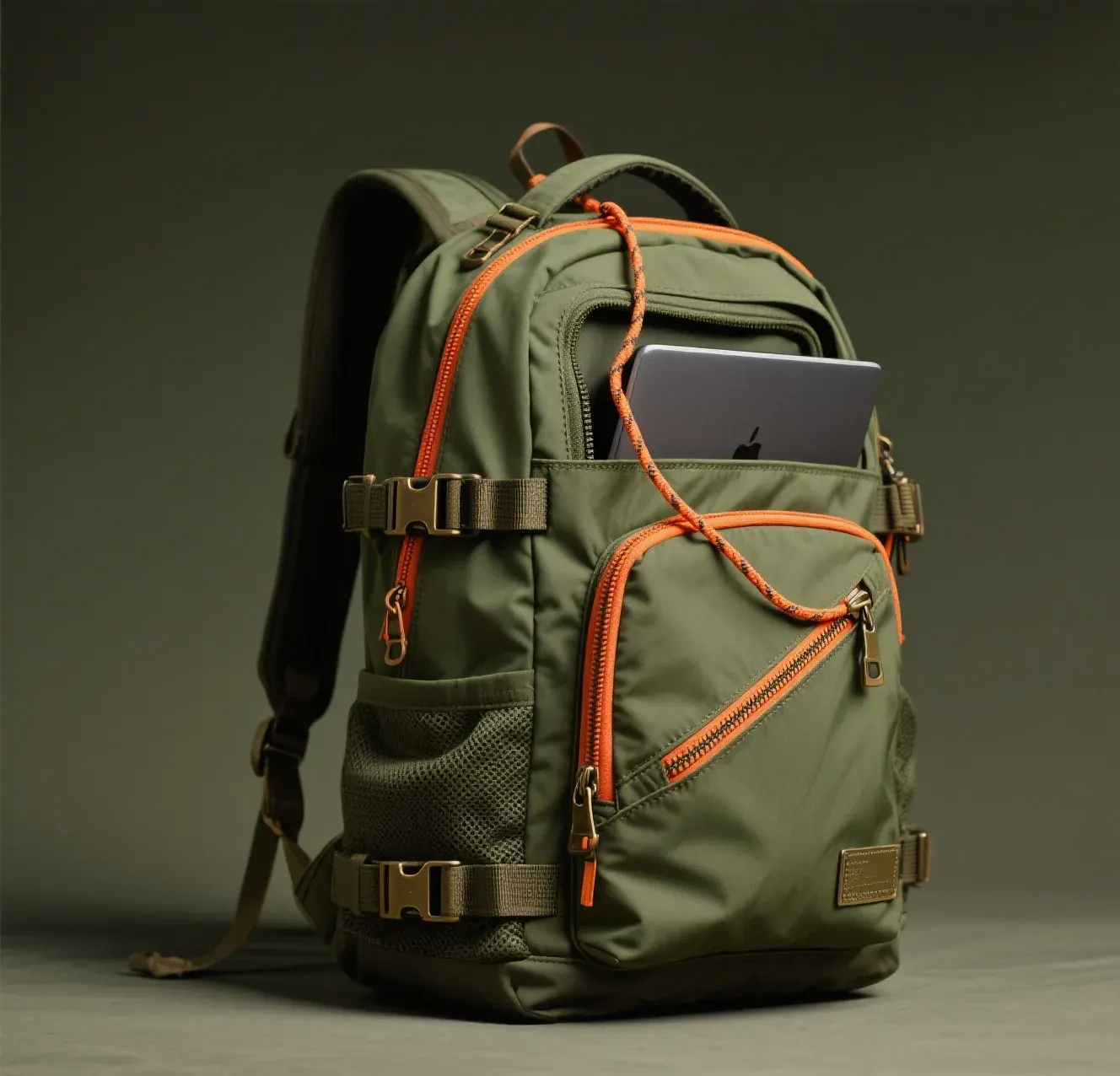
Each transport mode favours one format so consistently that the choice is almost automatic once the mode is named. On a trail, the backpack wins without exception beyond 800 metres. On a boat deck, the duffel wins because the carry is short, the surface is wet and unstable, and a wide low bag is far less likely to be knocked overboard than a tall pack set down on a rocking surface.
Marine use adds a second requirement: flotation. A sealed duffel packed with clothing traps 20 to 40 litres of air and floats for 30 to 120 minutes if it goes over the side, while a partially filled backpack with a dense load may sink in 60 to 180 seconds. Operators working from small craft routinely check sea state before committing to a plan, and published marine forecasts from NOAA give the wave height and wind figures that decide whether a deck carry is safe at all.
Vehicles and aircraft are neutral to positive for the duffel. A 90 litre duffel at roughly 700 by 380 by 380 millimetres slides into a hatch or a hold more easily than a 65 litre backpack with a harness protruding 120 to 180 millimetres, and it has no buckles to catch on conveyor systems. The backpack advantage returns at the far end: once the aircraft lands and the walk begins, the duffel has to be carried, and that is where the 10 to 15 minute shoulder limit reasserts itself.
| Transport mode | Better format | Specification note |
|---|---|---|
| Trail or portage over 800 m | Backpack | Hip belt 80 to 120 mm above 7 kg |
| Boat deck or kayak hatch | Duffel | Wide mouth, low profile, flotation tested |
| Vehicle load area | Duffel | Abrasion resistant base above 800D |
| Checked aircraft baggage | Duffel | No protruding harness, weight under 23 kg |
| Cabin baggage | Backpack | Keep under 45 by 30 by 20 cm, 25 to 35 L |
| Mixed: flight then trek | Both | Duffel for transit, packable 20 L backpack inside |
Failure Points and What to Test Before Signing Off
The two formats fail in different places, and a specification that tests only one of them will miss the complaint that actually arrives in year two. Backpacks fail at strap roots, where the webbing is stitched or welded to the body and sees 8 to 15 kilograms of repeated pull, and at the roll top fold line. Duffels fail at the handle bar tacks, which carry 15 to 25 kilograms in a single lift, and at the base corners, which are dragged rather than carried and see abrasion the backpack never meets.
Handle strength deserves particular attention on a duffel because the failure is sudden and total. A pair of end handles on a 60 litre duffel should be tested to 50 kilograms static for 60 seconds, and the bar tack or weld attaching each handle should hold at least 30 kilograms. Backpack grab handles are tested to a similar 30 kilograms, but they rarely see it in service because the load normally goes through the straps.
Abrasion and tear claims should be tied to a published method rather than a marketing adjective. Test procedures maintained by ASTM International cover abrasion resistance and tearing strength for coated fabrics, and asking a development partner for the cycle count and the method number turns a vague claim into a comparable figure. For a duffel base, 6,000 rubs and 800D to 1000D textile is a reasonable floor; for a backpack base, 3,000 to 5,000 rubs at 500D to 800D is usually enough.
| Wear point | Backpack target | Duffel target | Test |
|---|---|---|---|
| Handle or strap root | 20 kg static for 60 s | 50 kg static for 60 s | Static pull on lot sample |
| Base textile | 500D to 800D | 800D to 1000D | Denier certificate |
| Base abrasion | 3,000 to 5,000 rubs | 6,000 rubs or more | Abrasion cycle count |
| Closure cycles | 1,500 to 3,000 folds | 5,000 to 10,000 zipper cycles | Cycled prototype |
| Seam peel | Above 70 N per 25 mm | Above 70 N per 25 mm | Lot sample pull |
| Coating mass | Above 180 g per square metre | Above 220 g per square metre | Weighed swatch |
Cost Structure, Price Bands and Programme Numbers
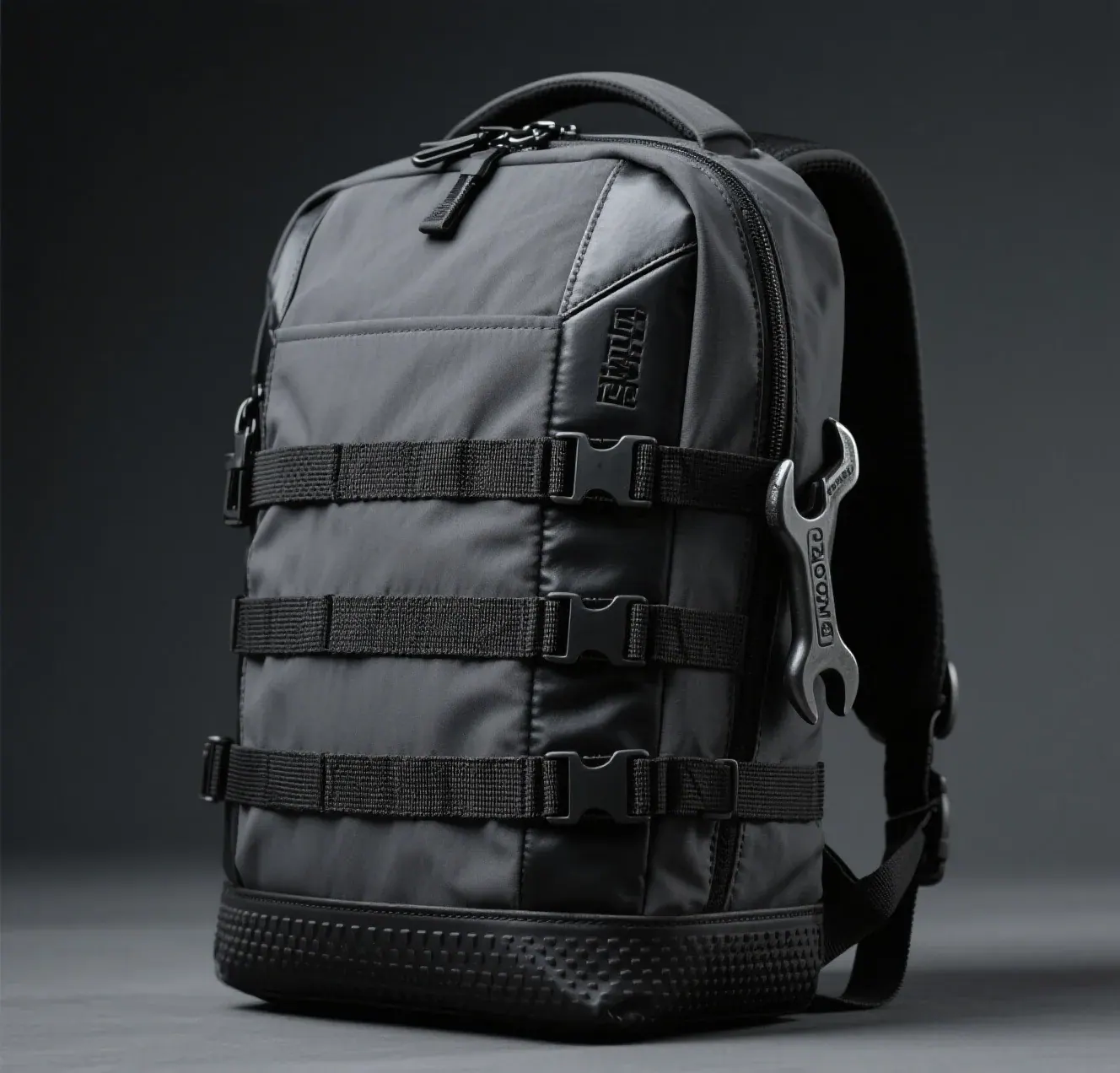
At equal material specification the duffel is cheaper to build. A 60 litre duffel uses 2.2 to 3.0 square metres of coated textile and one closure, while a 30 litre backpack uses 1.8 to 2.4 square metres plus a harness, a back panel, a sternum strap, and four to eight adjustment points. The harness is the expensive part, typically 25 to 40 percent of the total bill of materials, and it is precisely the part a duffel does not need.
The gap shows up in retail price bands. A welded 30 litre backpack in 500D TPU laminate typically lands at 45 to 90 USD retail, while a welded 60 litre duffel of the same material lands at 40 to 75 USD despite carrying twice the volume. Buyers should price the pair rather than the item, because the combination sells at a higher margin than either piece alone and the second sale is cheap to win once the first has proved the material quality.
Programme mechanics are identical for both formats at QUANZHOU JUNYUAN BAGS: 500 pcs per design and colour, prototype samples in 6 to 10 working days, bulk in 35 to 50 days after sign-off, FOB Xiamen or DDP into more than 100 countries. Materials may be screened against REACH and California Prop 65, release inspection can run at AQL 2.5, and the quality system is maintained to ISO 9001. Closure selection, seam construction and handle reinforcement for both formats are covered. Briefs may be sent to service@junyuanbags.com.
| Cost element | Backpack 30 L | Duffel 60 L | Effect |
|---|---|---|---|
| Coated textile used | 1.8 to 2.4 square metres | 2.2 to 3.0 square metres | Duffel uses more fabric |
| Harness and back panel | 25 to 40 percent of material cost | None or a simple sling strap | Backpack pays for carry comfort |
| Closure count | One main plus one to three pockets | One main | Duffel is simpler |
| Typical retail band | 45 to 90 USD | 40 to 75 USD | Duffel is cheaper at double volume |
| MOQ per design and colour | 500 pcs | 500 pcs | Same entry point |
| Sample and bulk timing | 6 to 10 days, 35 to 50 days | 6 to 10 days, 35 to 50 days | Same calendar |
Verdict: Three Rules That Settle Almost Every Case
Rule one is distance. If the load must be carried more than 800 metres or for more than 15 minutes, take the backpack, because no duffel can match a hip belt once the load passes 7 kilograms. Rule two is access. If the bag will be opened more than fifteen times a day, or shared among a crew, take the duffel, because a full width opening saves 15 to 40 seconds per retrieval and that compounds fast.
Rule three is mixed itineraries. If the trip contains both a long transit and a long carry, buy both, with the duffel sized for the transit volume and a packable 20 to 25 litre backpack folded inside it for the walking portion. A welded 20 litre pack compresses to roughly 1.5 to 3 litres and weighs 0.5 to 0.9 kilograms, so the penalty for carrying it is small and the benefit on the first long walk is immediate.
Two product families cover the walking half of that decision: the waterproof backpack range for everyday and day-trip loads, and the waterproof travel backpack range when the trip also involves flights and cabin limits. For the marine half, the waterproof backpack for boating range addresses the flotation and deck-stability requirements described above. Packing method for a roll top, which decides whether a rated bag actually achieves its rating in the field, is set out in the roll top packing walkthrough, and volume selection across both formats is covered in the size and capacity guide.
Stated plainly, the two formats are not rivals. One is a carrying system for a moving person and the other is a container for a stationary load, and the moment a buyer names the distance, the access frequency and the load in kilograms, the correct answer is already visible.
People Also Ask
Is a dry duffel better than a waterproof backpack?
Only for short carries and frequent access. A duffel moves 15 to 25 kilograms across a deck or a car park and opens in 5 to 15 seconds, but a shoulder carry becomes uncomfortable after 10 to 15 minutes. A backpack carries 8 to 12 kilograms for two to six hours with 70 to 80 percent of the load on the hips.
How far can you comfortably carry a 60 litre duffel?
About 200 metres and 10 to 15 minutes on one shoulder at 15 to 20 kilograms. Hand carry at 10 to 12 kilograms is limited to 60 to 90 seconds at a time. Beyond those figures the load should move to a backpack with a padded hip belt.
Which format reaches IPX7 more easily?
The dry duffel, because a straight 600 to 900 millimetre closure with a gentler corner radius seals more cheaply than a curved backpack opening. A duffel with a quality waterproof zipper reaches IPX6 to IPX7 at 0.2 to 0.5 bar with 5,000 to 10,000 cycles of field life.
Can I take a dry duffel as cabin baggage?
Usually not above 40 litres. Cabin allowances sit near 45 by 30 by 20 centimetres, so a 60 to 90 litre duffel must be checked. Checked handling adds abrasion and a 23 kilogram weight limit that most large duffels approach quickly.
Do waterproof duffels float if they go overboard?
A sealed duffel packed with clothing traps 20 to 40 litres of air and floats for 30 to 120 minutes. A partially filled backpack with a dense load can sink in 60 to 180 seconds, which is why marine buyers should specify flotation testing on the packed configuration.
Why are duffels cheaper than backpacks at twice the volume?
The harness is 25 to 40 percent of a backpack material cost, and a duffel does not need one. A welded 30 litre backpack retails at 45 to 90 USD while a welded 60 litre duffel of the same fabric retails at 40 to 75 USD.
Frequently Asked Questions
Q1. What is the main difference between a waterproof backpack and a dry duffel?
Carry mode. A backpack transfers 70 to 80 percent of an 8 to 12 kilogram load to the hips and leaves both hands free for two to six hours. A dry duffel hauls more volume but supports the load through one hand or one shoulder, which limits a shoulder carry to about 10 to 15 minutes at 15 to 20 kilograms.
Q2. At what load should I switch from a duffel to a backpack?
At 7 kilograms or 800 metres, whichever arrives first. Below 7 kilograms a shoulder carry is tolerable for short distances; above it a padded hip belt of 80 to 120 millimetres is needed, and only a backpack provides one.
Q3. Are dry duffels as waterproof as backpacks?
Yes at equal construction, and often more so. Both reach IPX6 to IPX7 with RF welded seams and a roll top or a waterproof zipper. The duffel has an easier sealing path at 600 to 900 millimetres with a gentler corner radius, which is why it frequently achieves the higher rating at lower cost.
Q4. What size dry duffel do I need for a boat weekend with four people?
60 to 90 litres, holding 14 to 22 kilograms. That covers four sets of foul weather clothing, four dry bags for electronics, food for two days, and shared safety gear, with a wide mouth so the load can be divided on deck without unpacking everything.
Q5. How long can I carry a heavy duffel by hand?
60 to 90 seconds at 10 to 12 kilograms before grip fatigue sets in. Practical working loads across a car park are nearer 8 kilograms. For anything longer, shift to a shoulder carry of no more than 15 minutes, or move to a backpack.
Q6. Do I need a hip belt on a waterproof backpack?
Above 7 kilograms, yes. A padded hip belt of 80 to 120 millimetres takes 70 to 80 percent of the load off the shoulders. Below 5 to 6 kilograms a simple 25 to 40 millimetre webbing belt is enough and padding adds unnecessary weight.
Q7. Which format is faster to pack and unpack?
The dry duffel. A full width opening exposes about 90 percent of the interior and a specific item is out in 5 to 15 seconds. A top loading backpack exposes the top 30 to 40 percent and the same retrieval takes 20 to 60 seconds.
Q8. Can one bag cover both trail and boat use?
Rarely well. A 30 to 40 litre backpack works for a kayak day trip, and a 60 litre duffel works from a larger boat, but a bag optimised for one is mediocre at the other. Mixed itineraries are better served by a duffel for transit plus a packable 20 litre backpack inside.
Q9. What handle strength should I specify on a dry duffel?
50 kilograms static for 60 seconds on a pair of end handles, with each attachment holding at least 30 kilograms. Handle failure is sudden and total, unlike a strap root failure which usually gives warning through stitch creep before it lets go.
Q10. What are MOQ, sample and bulk lead times for either format?
Identical: 500 pcs per design and colour, prototype samples in 6 to 10 working days, bulk in 35 to 50 days after sign-off. Book rating and abrasion testing at prototype stage so results land before the production window opens.