A waterproof travel backpack has to clear two gates: the airline sizer and the weather. Working dimensions are 55 x 40 x 20 cm for most international carry-on allowances, 40 x 20 x 25 cm for low-cost European personal-item sizers, and a usable 35-45 L of packing volume at 1.2-1.7 kg empty. Liquids stay subject to the 100 ml per container and 1 L bag rule regardless of how well the pack seals, laptop bays need 380 x 265 mm of internal clearance for a 16 in device, and IPX4-IPX5 covers city and airport exposure while IPX6 is the right call for monsoon and rainforest itineraries.
Airline Sizers: The Dimension That Decides Everything
Travel packs fail commercially by being 3 cm too tall, not by leaking. Most full-service carriers accept a carry-on near 55 x 40 x 20 cm including wheels and handles, while low-cost European carriers enforce a smaller sizer around 40 x 20 x 25 cm for a free personal item and charge for anything larger. Weight limits are the second trap: several Asian and Gulf carriers cap carry-on at 7 kg, and a 45 L waterproof shell at 1.6 kg leaves only 5.4 kg of cargo before check-in fees begin.
| Market or carrier type | Carry-on limit | Weight cap | Practical pack volume | Notes |
|---|---|---|---|---|
| US full-service | 56 x 36 x 23 cm | No fixed cap | 40-45 L | Overhead bin depth is the real limit |
| EU full-service | 55 x 40 x 20 cm | 8-12 kg | 38-42 L | Sizer at gate on budget fares |
| EU low-cost | 40 x 20 x 25 cm | 10 kg | 25-30 L | Underseat item, paid upgrade above |
| Asia regional | 56 x 36 x 23 cm | 7 kg | 35-40 L | Weighed at check-in frequently |
| Australia and NZ domestic | 56 x 36 x 23 cm | 7 kg | 35-40 L | Strict weight enforcement |
| Latin America regional | 55 x 40 x 20 cm | 8-10 kg | 38-42 L | Soft packs generally tolerated |
The design consequence is that a travel pack should be rectangular and slightly under the sizer rather than domed and generous. A compressible roll-top helps: three litres of headroom can be rolled away at the gate and unrolled on arrival, which is why roll-top travel builds outsell fixed-volume ones on routes with strict sizers. Volume selection guidance for mixed itineraries is set out in waterproof backpack size and capacity.
Security, Liquids and Electronics: What Screening Actually Requires
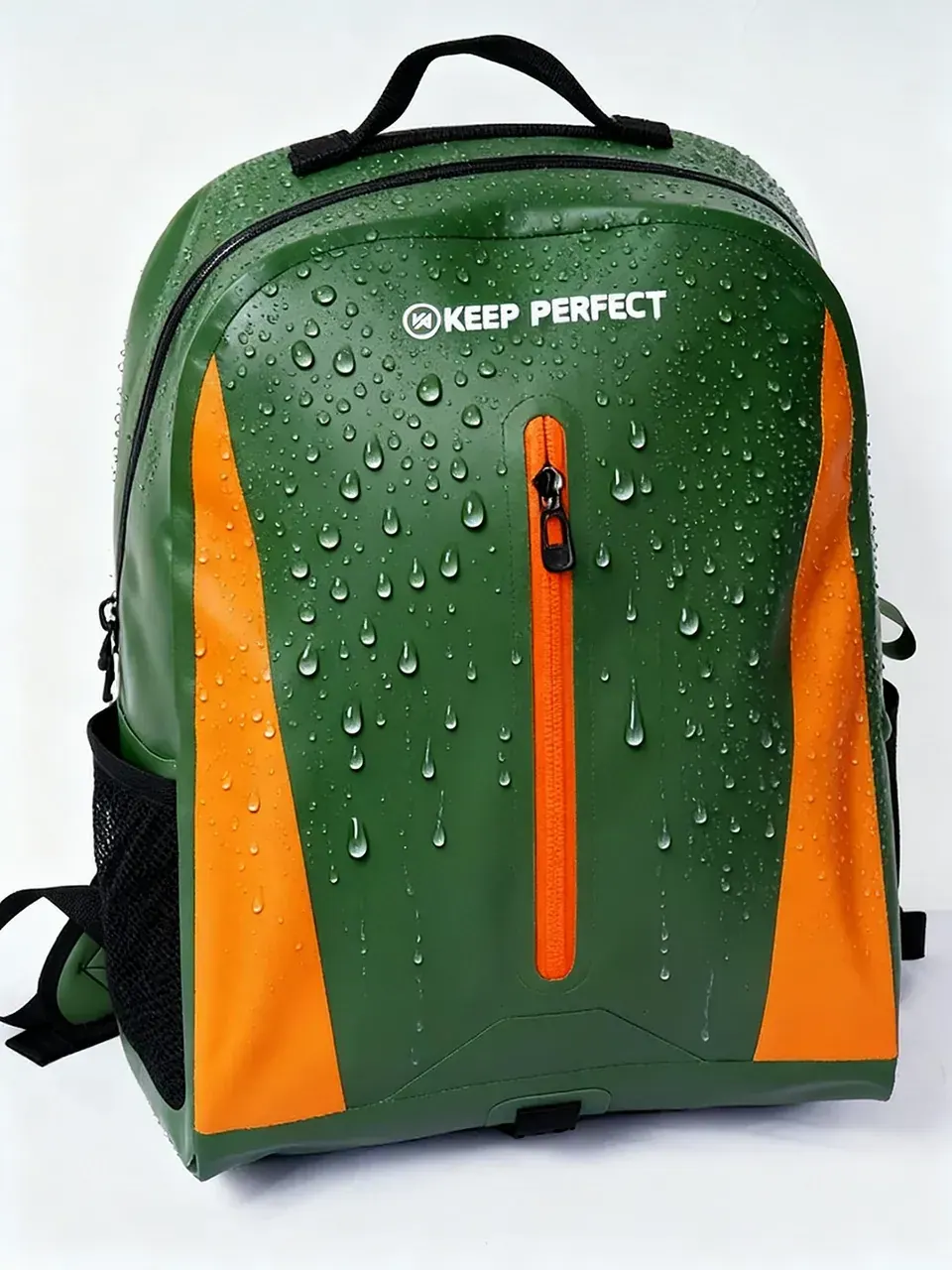
Sealed construction changes nothing at the checkpoint. Toiletries remain governed by the 3-1-1 rule of 100 ml or 3.4 oz per container inside a single 1 L transparent bag, a rule enforced by the TSA liquids screening policy and mirrored by most other civil aviation authorities. What a welded liner does deliver is containment: a bottle that bursts at altitude or a leaky sunscreen tube stays inside the pack instead of soaking clothing and electronics.
| Screening requirement | Rule | Pack design response |
|---|---|---|
| Liquids | 100 ml per container, 1 L bag | External quick-access wet pocket |
| Laptops | Removed at classic lanes, in-bag at CT lanes | Clamshell bay opening 180 degrees |
| Power banks | Cabin only, never checked | Labelled internal sleeve with capacity marking |
| Sharp objects | Checked baggage only | No concealed metal in the harness plate |
| Documents | Accessible without unpacking | Rear passport pocket, 200 x 140 mm minimum |
Laptop access deserves its own line in the specification. A clamshell or lay-flat bay that opens 180 degrees lets a 15.6 in or 16 in device stay in the pack through CT-equipped lanes, while older lanes require the device out in under 10 seconds. Electronics specs are covered further in waterproof laptop backpack, and airline-specific detail in waterproof carry-on backpack airline rules.
Laptop Bay Sizing for Travel Builds
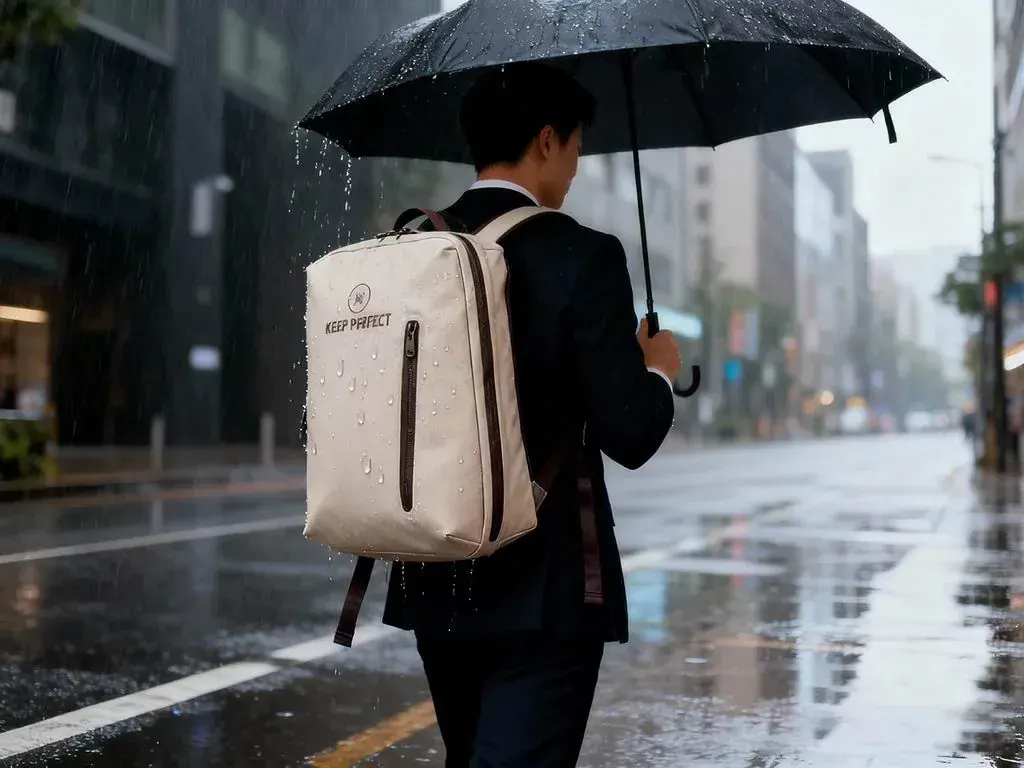
Laptop bays are specified by device class, not by marketing size. A 14 in ultrabook needs about 330 x 235 mm of internal clearance, a 15.6 in machine needs 370 x 255 mm, a 16 in machine needs 380 x 265 mm, and a 17 in workstation needs 415 x 285 mm. The bay must also float: 15 mm of closed-cell foam under the device and a raised floor of at least 20 mm keep the corner off the base seam when the pack is dropped in a terminal.
| Device class | Device footprint | Bay internal clearance | Foam thickness | Minimum pack volume |
|---|---|---|---|---|
| 13 in ultrabook | 305 x 215 mm | 320 x 230 mm | 10 mm | 20-25 L |
| 14 in laptop | 320 x 225 mm | 335 x 240 mm | 12 mm | 25-30 L |
| 15.6 in laptop | 360 x 245 mm | 375 x 260 mm | 12-15 mm | 30-40 L |
| 16 in laptop | 370 x 255 mm | 385 x 270 mm | 15 mm | 35-45 L |
| 17 in workstation | 400 x 270 mm | 420 x 290 mm | 18 mm | 40-50 L |
Two accessories are worth specifying alongside the bay. A document sleeve separated from the device by a fabric wall prevents zip scratches on an aluminium lid, and a cable pocket with a 25 mm gusset holds a 65 W or 100 W charger plus two cables without pressing against the laptop. Buyers building a large-device programme should also read waterproof 17 in laptop backpack.
Weather Strategy: Matching Rating to Destination
Travel exposure is different from hiking because the pack is outdoors in bursts rather than for hours, but the bursts are violent. A tropical downpour delivers 40-60 mm in 30 minutes, monsoon cities sustain 20-30 mm per hour for days, and a ferry transfer or open-air tuk-tuk ride adds spray and wheel wash. IPX4 holds for city itineraries with taxis and covered walkways; IPX5 is the safe default; IPX6 is justified for rainforest, motorbike-taxi and open-boat travel.
| Itinerary type | Typical exposure | Recommended rating | Shell build | Closure |
|---|---|---|---|---|
| City break | Showers, 10-20 min | IPX4 | Coated 420D with taped seams | Storm flap over coated zip |
| Multi-city rail trip | Repeated showers, platform spray | IPX5 | 500D TPU laminate, welded seams | Roll-top or coated zip |
| Monsoon season travel | 20-30 mm/h sustained | IPX5-IPX6 | 500D-840D TPU laminate | Roll-top with storm skirt |
| Rainforest and jungle lodge | Downpours 40-60 mm per event | IPX6 | 840D TPU laminate | Roll-top, welded body |
| Island ferry and boat transfers | Wheel wash, deck spray | IPX6-IPX7 | Welded body, no external pockets | Roll-top plus purge valve |
Humidity is the quieter enemy. A fully sealed pack in 80-90 percent relative humidity keeps the contents dry from outside and wet from inside, because damp clothing and a wet rain shell generate 100-200 ml of condensation over a travel day. The answer is separation rather than ventilation: a welded wet compartment of 6-10 L isolates the rain shell and swim kit, a pattern described in wet and dry separation waterproof backpack.
Organisation: The Features Travellers Actually Use
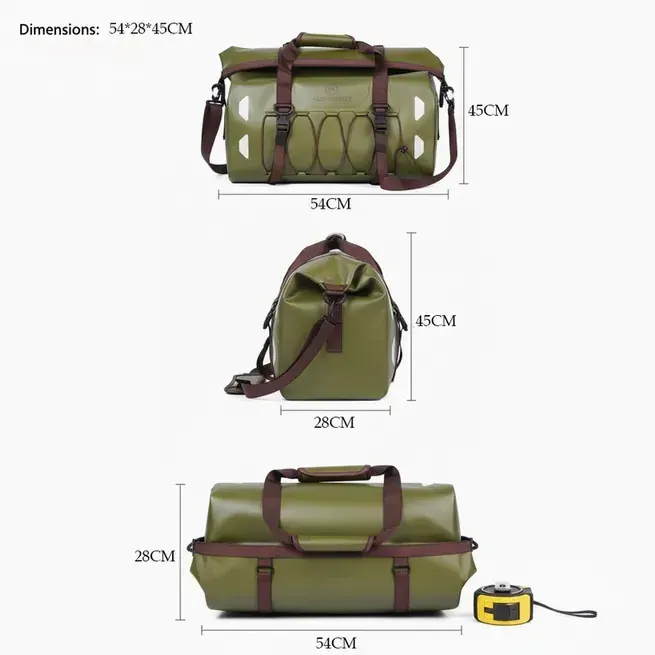
Travel packs are judged on access speed in hostels, airports and trains, so pocket layout matters more than fabric denier. The features that survive contact with real users are few and consistent: a rear security pocket for passport and cards, side compression straps that halve the depth when the pack is half empty, and a harness that can be tucked away for check-in at a counter that demands it.
- Rear passport pocket with 200 x 140 mm clearance and a radio-frequency shielding liner option.
- Four compression straps, two per side, rated to 15 kg of pull so a half-packed 45 L pack carries as a 30 L.
- Stowable harness: shoulder straps zip behind a 240 mm panel in under 20 seconds before check-in or a bus hold.
- Lockable main zip pulls sized for a 4 mm shackle padlock, plus a discreet rear pocket that sits against the back.
- Luggage pass-through sleeve of 200 mm width for stacking on a cabin trolley handle.
Two loading patterns divide the market and should be decided before sampling. Front-loading clamshell packs behave like a suitcase and win in hostels and hotels; top-loading packs are lighter, cheaper and leak less because they have one opening instead of a 600 mm perimeter zip. The trade-off is laid out in front loader versus top loader waterproof backpack, and city-specific picks are collected in best waterproof travel backpacks.
Care on the Road: Drying in Hostels and Hotels
Travellers do not have a garage or a boot to dry gear in, so the product has to be forgiving. A welded interior wipes dry with a microfibre cloth in about 3 minutes, whereas a lined fabric interior needs 12-24 hours of moving air and is the main reason travel packs develop odour mid-trip. Instructions should tell the user to unroll the closure in the room and hang the pack by its haul loop, not to stow it rolled.
| Situation | Immediate action | Time required | Consequence if ignored |
|---|---|---|---|
| Tropical downpour | Wipe shell, empty external pockets | 5 min | 400-600 g of trapped water |
| Wet swim kit inside | Move to welded wet compartment | 1 min | Damp clothing and documents |
| Salt spray on ferry | Fresh-water rinse at the hotel | 10 min | Salt crystals abrade zip tape |
| Mud or red dust | Dry fully, then brush | 12-24 h dry | Ground-in staining on light colours |
| Condensation after flight | Open pack in the room overnight | 8-12 h | Odour in foam within 48 h |
Cleaning chemistry should be stated on the care label: pH-neutral soap under 40 degrees Celsius, no machine wash, no solvents, no tumble drying. Salt is the specific travel hazard because dried crystals work into zip tape and weld edges, so a fresh-water rinse after any ferry or beach transfer extends zip life by roughly a year of regular use.
Durability: What Survives a Month on the Road
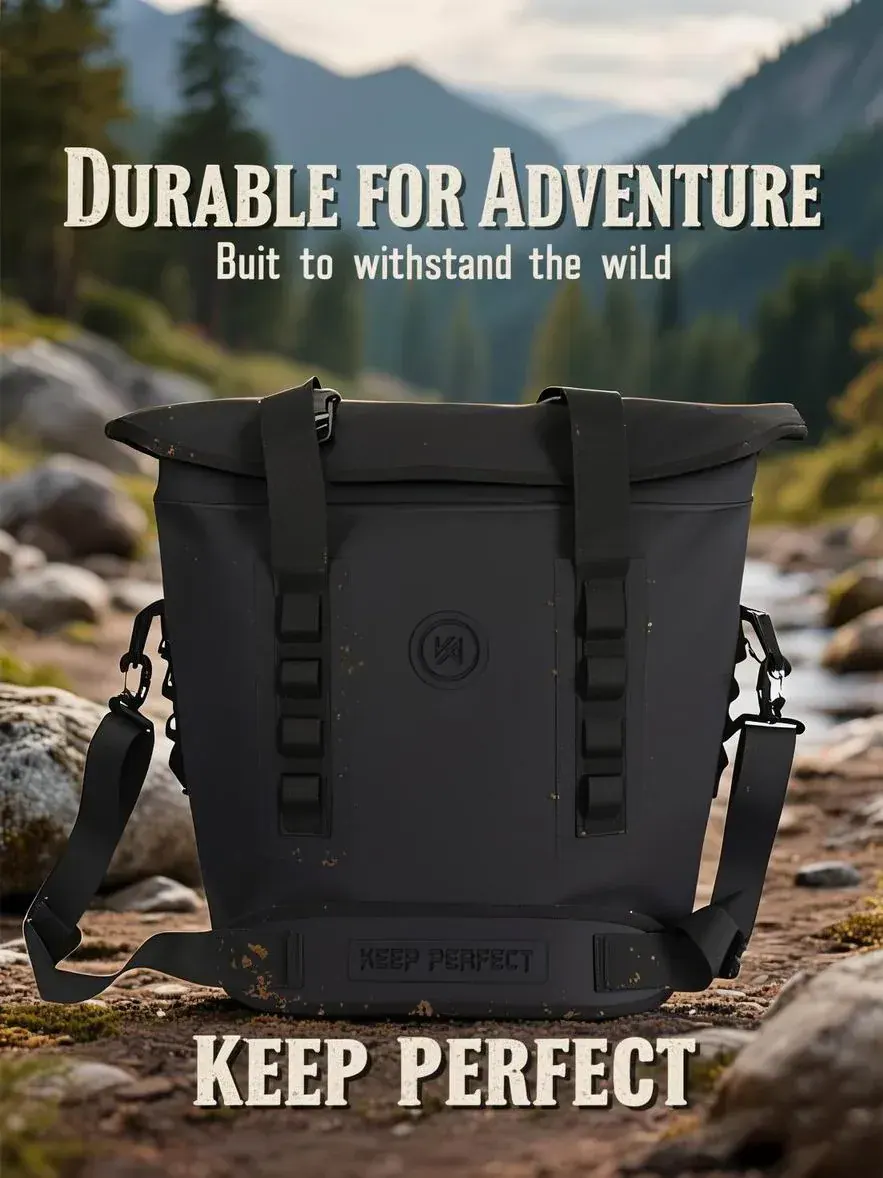
A travel pack lives a harder life than a hiking pack in one respect: it is handled by people who do not own it. It goes into bus holds, overhead bins, hostel lockers and conveyor belts, which means abrasion, point loading and strap abuse dominate the failure statistics. The specification answer is to test the assembled pack, not just the fabric, and to set pass criteria for the components that actually get pulled.
| Durability check | Method | Pass criterion | Why it fails in travel |
|---|---|---|---|
| Main zip cycling | 1,000 open and close cycles | No tooth separation, coating intact | Daily hostel access, 3-5 cycles a day |
| Shell abrasion | Martindale, ISO 12947-2 | 20,000 cycles to visible wear | Conveyor belts and bus hold floors |
| Shoulder strap anchor | Tensile pull on 25 mm webbing | 800 N with bar-tack intact | Packs lifted by one strap |
| Loaded drop | 80 cm, 8 kg, three orientations | No seam opening, device intact | Overhead bin drops and counter handling |
| Colour fastness to rubbing | AATCC 8 crockmeter | Grade 4 wet and dry | Light-coloured packs against dark clothing |
| Harness stow panel | 200 zip cycles on stow zipper | Track aligned, no snagging | Daily check-in at counters |
Three specification choices cut returns measurably. Bar-tacked strap anchors with eight to ten stitches per attachment survive single-strap lifting where a single pass stitch tears at 400-500 N; a base panel in 1000D reinforcement or a double layer survives conveyor abrasion that wears through 420D shell in a month of continuous travel; and a #10 main zip with a storm gutter outlasts a #8 zip by roughly double the cycle count on gritty zips. Each adds 30-90 g and a small unit cost, all three together add about 1.5-2.5 USD to FOB price.
- Specify bar-tacked strap anchors rated at 800 N rather than single-pass stitching.
- Reinforce the base panel with 1000D fabric or a second shell layer on any pack above 35 L.
- Use a #10 main zip with a storm gutter when the pack will be opened several times a day.
- Ask for the AQL 2.5 report on the bulk run, not only on the approval sample.
Repairability closes the loop for retailers handling warranty claims. A pack that allows strap replacement with a standard 25 mm webbing and a screw-free buckle can be repaired in 15 minutes at a service desk, whereas a fully welded harness panel turns every strap claim into a full replacement. Specifying replaceable hardware typically cuts warranty cost per unit by 30-40 percent over a two-year retail window.
Sourcing a Travel Line: Specifications, Cost and Timing
Travel packs carry the highest feature count in the range, so unit cost is driven by pocket count and zip length as much as by fabric. A 40 L roll-top travel pack with a lay-flat laptop bay, four compression straps and a stowable harness lands at FOB Xiamen USD 15.5-26.0 depending on band, and the laptop bay plus clamshell zip alone account for about 20-25 percent of the material bill. Programme timing is 6-10 working days for samples and 35-50 days for bulk.
| Travel style | Volume | FOB Xiamen band | MOQ | Sample time | Bulk time |
|---|---|---|---|---|---|
| Carry-on roll-top | 35-40 L | USD 15.5-22.0 | 500 pcs | 6-8 working days | 35-42 days |
| Clamshell with laptop bay | 38-45 L | USD 19.0-26.0 | 500 pcs | 7-9 working days | 38-46 days |
| Underseat personal item | 25-30 L | USD 12.5-18.0 | 500 pcs | 6-8 working days | 35-40 days |
| Rainforest welded build | 40-50 L | USD 22.0-31.0 | 500 pcs | 8-10 working days | 40-50 days |
Documentation travels with the order: REACH and California Prop 65 screening on each material lot, plus a PFAS-free durable water repellent option for EU-bound goods, whose regulatory background is covered in the EPA PFAS pages. Ratings referenced in the tech pack follow IEC 60529 ingress protection, and the full category context sits in the waterproof backpack guide. Ranked travel options are in best waterproof travel backpacks and the full range overview.
- First orders start at 500 pcs per design and colourway, with 6-10 working days for sampling and a 35-50 day production window.
- Release depends on an AQL 2.5 inspection passing, and that report ships with the packing list.
- Each unit is bagged singly and boxed 10-20 per shipment carton, roughly 60 x 40 x 35 cm, each held under 15 kg.
People Also Ask
Is a 40 L backpack allowed as carry-on?
Usually yes, because airlines measure dimensions rather than litres: a 40 L pack built to 55 x 40 x 20 cm passes most full-service sizers. The failure risk is depth, since a fully packed 40 L pack often bulges past 25 cm and a gate agent will test it in a metal frame.
Do I have to take my laptop out of a waterproof travel backpack at security?
At classic X-ray lanes yes, at CT-equipped lanes increasingly no. Specify a lay-flat bay that opens 180 degrees so the device can be lifted out in under 10 seconds when required, and keep the bay free of cables and chargers that trigger a re-scan.
Can a sealed backpack stop a leaking shampoo bottle?
Yes, a welded liner contains liquids that a standard pack would let soak through to clothing and electronics. It does not change screening rules: containers must still be 100 ml or smaller and fit in a single 1 L transparent bag.
What is the lightest way to travel with a waterproof pack?
Choose a 30-35 L roll-top with a webbing hip belt at 950 g-1.2 kg rather than a 45 L framed pack at 1.6 kg, and carry a 10 L dry bag for wet kit instead of a second waterproof compartment. The saving is 400-600 g before packing.
Should a travel backpack be IPX7?
Rarely. City and airport exposure is covered by IPX4-IPX5, and IPX7 adds 200-350 g and a 60-100 percent cost premium for immersion capability most travellers never use. Choose IPX7 only for island itineraries with open-boat transfers and swimming approaches to shore.
How do I dry a travel pack in a hotel room?
Wipe the welded interior with a microfibre cloth, unroll the closure fully, hang the pack by its haul loop and run the room fan or air conditioner for 8-12 hours. Avoid radiators and direct sun, both of which age the film and can distort welded seams.
Frequently Asked Questions
Q1. What size waterproof travel backpack is carry-on legal?
Build to 55 x 40 x 20 cm for full-service international carriers and 40 x 20 x 25 cm for European low-cost personal-item sizers. Both figures include handles and wheels, so a soft pack should be specified 1-2 cm under the limit to allow for a fully packed bulge.
Q2. How many litres should a waterproof travel backpack be?
35-40 L covers a one to two week trip for most travellers and still clears the carry-on sizer, while 25-30 L suits a long weekend or an underseat personal item. Above 45 L the pack rarely fits overhead bins on regional aircraft and starts drawing weight-limit fees.
Q3. Will a waterproof travel backpack protect my laptop?
Yes, provided there is a suspended bay with 12-18 mm of foam and 20 mm of empty space beneath the device so it never touches the base seam. A 16 in machine needs about 385 x 270 mm of internal clearance, and the bay should open flat for screening.
Q4. Do liquids still have to come out of a waterproof backpack at security?
Yes. The 3-1-1 rule of 100 ml per container inside one 1 L transparent bag applies regardless of how well the pack seals. The advantage of a sealed liner is containment after screening: a burst bottle cannot reach clothing or electronics.
Q5. What IPX rating is enough for travel?
IPX4 for city breaks where the pack is outdoors in short bursts, IPX5 as the default for rail and multi-city itineraries, and IPX6 for monsoon, rainforest and open-boat routes. Only island itineraries with swimming approaches justify IPX7.
Q6. Does a travel backpack need a rain cover as well?
Not on a genuinely waterproof shell. Covers weigh 180-260 g, need to be unpacked and fitted, and flutter once wind passes 40 km/h, while a welded or roll-top body already seals the load. Covers make sense only on packs rated below IPX4 with stitched seams.
Q7. Can I check a waterproof travel backpack into the hold?
Yes, but stow the harness first. Shoulder straps and hip belt should zip behind a 240 mm panel so they cannot catch on conveyor equipment, and any airtight zip should be closed and lightly lubricated before the flight.
Q8. Are lockable zips allowed on cabin baggage?
Yes, provided the pack can still be opened by security; use a zip pull sized for a 4 mm shackle padlock and never lock a compartment that screening officers may need to inspect. Keep power banks and laptops in quick-access bays.
Q9. Why does my travel backpack smell after a humid trip?
Condensation and damp clothing put 100-200 ml of water inside a sealed pack per travel day, and foam grows mould within 48-72 hours if the pack stays shut. Open it overnight, use a welded wet compartment for damp kit, and dry with the mouth unrolled.
Q10. What MOQ applies to a waterproof travel backpack?
The opening quantity is 500 pcs per design and colourway, sampling runs 6-10 working days and the production window is 35-50 days from Xiamen. Folding three shades into one 3,000 pc drop generally trims about 14 percent off each unit.
Q11. How much does a 40 L waterproof travel pack weigh?
1.2-1.7 kg empty depending on feature count. A roll-top with a webbing belt and no frame sheet sits near 1.2 kg; a clamshell with a moulded hip belt, laptop bay and stowable harness runs 1.5-1.7 kg, which matters on carriers with a 7 kg cap.
Q12. Can travel packs be made with recycled fabric?
Yes. Recycled PET at 210D-420D works well as a liner and light shell, and recycled 500D polyester with TPU film is available for the outer body at a small cost premium. Specify the percentage and request the transaction certificate with the shipment.
Q13. How should I pack a roll-top travel backpack for a flight?
Roll heavy items low and close to the back panel, keep liquids in an external quick-access pocket for screening, and leave two rolls of headroom so the pack can be compressed at the gate. Packing detail is in how to pack a roll-top waterproof backpack.