Choose a front-loader waterproof backpack when you need 4 to 8 second access to organized travel or laptop gear; choose a top-loader with a 3-turn roll when IPX6 to IPX7 protection, simple field closure, and 2 to 5 litres of expandable volume matter more. A clamshell opening normally uses 900 to 1,500 mm of zipper around 3 sides, while a top opening uses no main zipper and reserves 75 to 100 mm of height for the roll. At 30 litres, the front loader usually provides 27 to 29 litres of practical organized space and the rolled top provides 26 to 28 sealed litres plus an expandable 3 to 6 litres when dry. Programme baselines are 500 pcs per design and colour, 6 to 10 working days for samples, and 35 to 50 days for bulk.
The Core Trade-Off: Access Path Versus Seal Path
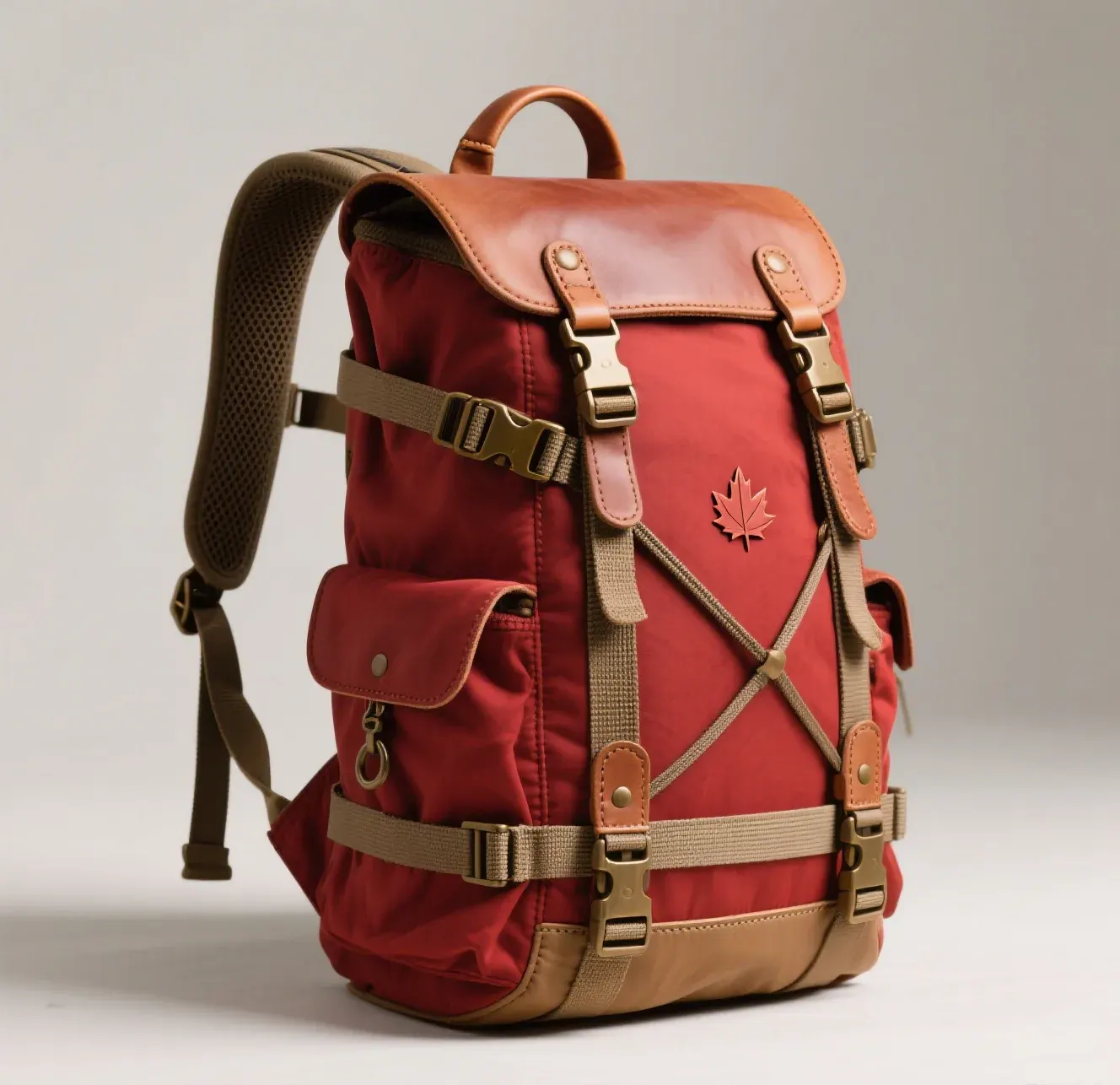
A front loader opens across most of the front panel, usually in an L shape or around 3 sides like a clamshell. That wide opening exposes every packing zone at once and turns the body into a shallow tray. The price is a long closure path: 900 to 1,500 mm on a 25 to 35 litre body, multiple radius changes, and 2 terminal points where water can collect. Every extra 100 mm adds more track to clean, inspect, and keep aligned.
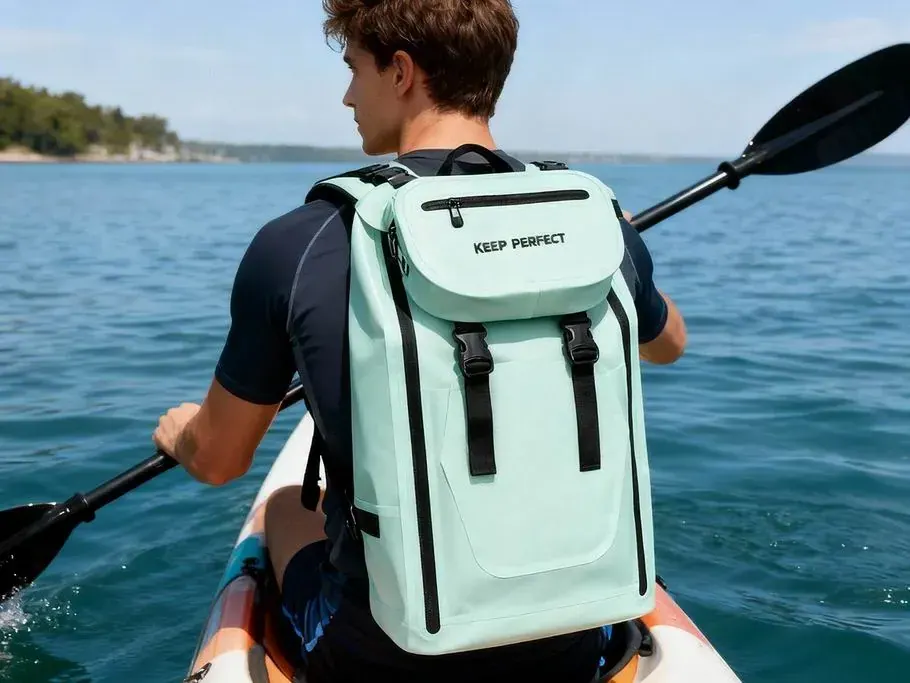
A top loader concentrates access in a 450 to 700 mm straight mouth. A roll-top version removes main zipper teeth altogether and seals by pressing two faces together for 3 turns. The shorter path is easier to protect from water and easier to inspect, but contents form a vertical stack 450 to 650 mm deep. An item at the bottom may require removing 30 to 70 percent of the load. The design choice is therefore not old versus modern; it is whether the user wants spatial visibility or a short, simple seal.
| Decision factor | Front loader | Top loader or roll top | Practical winner |
|---|---|---|---|
| Main opening length | 900 to 1,500 mm | 450 to 700 mm | Top loader for simpler seal |
| Typical access time | 4 to 8 seconds | 8 to 18 seconds | Front loader |
| View of contents | 80 to 100 percent | Top 20 to 40 percent | Front loader |
| Immersion potential | Depends on sealed zipper | IPX7 potential with 3 turns | Roll top |
| Expandable capacity | Usually 0 to 2 L | Usually 3 to 6 L | Top loader |
The useful first question is not which shape looks better, but how many times the user opens the main chamber. Ten airport or office openings per day favour a clamshell. Two camp openings and 6 hours of rain favour a rolled top. Travellers can compare body dimensions and harness options in the waterproof travel backpack range.
Access Speed and Search Time
Opening speed is only half of access. Search time starts after the closure moves. In a front loader, a 300 by 450 mm packing face lets a user identify a charger, shirt, or tool visually in 1 to 3 seconds. In a top loader, the same item may sit below 2 jackets and a pouch, requiring 20 to 60 seconds of unpacking. Over a travel day with 12 retrievals, that difference can exceed 6 minutes and can expose more contents to rain while the mouth remains open.
Access can be designed around frequency. Place items used every hour within the top 150 mm or in an independent pocket, items used once daily in the middle 200 mm, and emergency or sleep gear at the base. A front loader achieves this with panel zones. A top loader needs colour-coded pouches, vertical packing, or a side access hatch. Adding the hatch restores convenience but creates a second closure path of 300 to 500 mm and partially removes the simplicity advantage.
| Task | Front-loader time | Top-loader time | Open exposure | Design response |
|---|---|---|---|---|
| Retrieve laptop | 5 to 9 sec | 15 to 45 sec | High consequence in rain | Use independent back-panel sleeve |
| Find one clothing layer | 6 to 12 sec | 20 to 60 sec | Moderate | Pack layer in top 150 mm |
| Airport security unload | 20 to 40 sec | 45 to 120 sec | Indoor | Clamshell wins |
| Open camp load twice | 10 to 20 sec total | 20 to 40 sec total | Low frequency | Roll top penalty is small |
| Reach first-aid kit | 4 to 8 sec | 8 to 25 sec | Time critical | Use dedicated external pocket |
Timed trials should use a realistic 70 to 80 percent fill, not an empty sample. Ask 5 users to retrieve 6 named objects while wearing gloves and repeat after the pack is sprayed. Record median and slowest time. A closure that performs well in a showroom may become difficult when cold, gritty, or under panel tension. This human task test can be more revealing than another pocket count.
Water Protection: Why the Roll Top Has an Advantage
Water follows openings, and a roll top presents the shortest practical opening with no moving teeth. With 75 to 100 mm of clean freeboard and 3 firm turns, the contact faces form multiple downward changes of direction. The buckle holds compression and prevents the mouth from unrolling. A welded body can then reach IPX6 or IPX7 potential at modest closure cost. User error remains possible: 1 loose turn, clothing trapped in the fold, or filling above the reference line defeats the geometry.
A clamshell can also reach strong protection, but it needs a technical zipper whose seal remains continuous around two lower curves and two end stops. The closure may add 12 to 30 USD and 100 to 250 grams, and it must operate without side tension. Coated coil zips are easier and cheaper but generally fit rain and jet use rather than immersion. The differences among those systems are detailed in the sealed zipper versus roll-top comparison.
Ingress codes published under IEC 60529 keep the language precise. IPX5 exposes the closed article to a 12.5 litre per minute jet, IPX6 to 100 litres per minute, and IPX7 to temporary immersion for 30 minutes. The test applies to the whole configured pack. A zipper component report or a 10,000 mm fabric result cannot be substituted for the assembled article.
| Opening system | Likely level | Critical setup | Main failure mode | Typical closure cost |
|---|---|---|---|---|
| Exposed coil clamshell | Brief rain to IPX4 | Zip fully seated | Water through coil and end stops | 2 to 5 USD |
| Flapped coated clamshell | IPX4 to IPX5 | Flap 25 to 40 mm wide | Curves lift under load | 5 to 12 USD |
| Sealed technical clamshell | IPX6 to IPX7 potential | No side tension, clean seal | Contamination or incomplete seating | 12 to 30 USD |
| Buckled 3-turn roll top | IPX6 to IPX7 potential | 75 to 100 mm freeboard | Too few turns or trapped fabric | 4 to 10 USD |
| Drawcord top | Splash only | Cord fully cinched | Central hole and gathered folds | 1 to 3 USD |
Usable Capacity Is Not the Printed Litre Number
A nominal volume is often calculated from open internal dimensions. A 300 by 200 by 500 mm rectangular body equals 30 litres before corners, padding, dividers, or closure reserve. In a clamshell, rounded corners and a structured divider may reduce practical space to 27 to 29 litres. In a roll top, 75 to 100 mm reserved for closure removes 4.5 to 6 litres from that simple rectangular calculation, although some capacity returns through a taller unrolled extension.
The top loader therefore has two capacities: sealed working volume and dry-weather overflow. A 30 litre claim may mean 27 litres with 3 turns and 33 litres with 1 nonprotective fold. State both. The front loader has a more stable capacity but packing cubes and laptop frames consume depth. A 40 mm thick internal organizer across a 300 by 450 mm panel uses 5.4 litres of geometric space before compression.
| Nominal body | Front-loader usable | Roll-top sealed usable | Roll-top overflow | Key deduction |
|---|---|---|---|---|
| 20 L | 18 to 19 L | 17 to 18 L | 21 to 23 L | 2 to 3 L closure reserve |
| 25 L | 23 to 24 L | 21 to 23 L | 27 to 30 L | 3 to 4 L closure reserve |
| 30 L | 27 to 29 L | 26 to 28 L | 33 to 36 L | 4 to 6 L closure reserve |
| 40 L | 36 to 38 L | 34 to 37 L | 44 to 48 L | 5 to 7 L closure reserve |
| 50 L | 45 to 47 L | 42 to 46 L | 55 to 60 L | 6 to 8 L closure reserve |
Test usable volume with the required closure completed, the back panel installed, and pockets in their intended state. A fair comparison uses 1 litre blocks or measured fill bags, not loose water that forces flexible walls into an unrealistic shape. Record the mass and dimensions of the test load because a dense 12 kg load can distort a clamshell zipper even when its volume is modest.
Packing Stability and Load Control
A front loader needs internal compression because gravity pulls the load toward the open panel when the body is laid flat. Two crossing straps 20 to 25 mm wide can hold clothing, while a zipped mesh panel retains small items. Without restraint, closing the pack requires pushing contents away from 900 to 1,500 mm of zipper, which loads the slider and can trap fabric. A well-designed clamshell keeps at least 15 mm of clear perimeter around the closure.
A top loader gains stability from vertical compression. Soft gear fills around dense items, and 2 side straps can reduce body depth by 30 to 60 mm. The danger is poor weight placement: users drop heavy tools to the bottom, moving the centre of mass away from the shoulder blades. Pack dense items within 50 mm of the back and between shoulder and hip level. Use long narrow pouches rather than flat cubes so items can be lifted without emptying the chamber.
- Keep a 15 mm clear zone around a clamshell zipper to prevent fabric capture and side loading.
- Use 2 internal retention straps or one full panel to stop a front-loaded stack falling into the opening.
- Pack dense items within 50 mm of the back panel and between the upper 40 and 70 percent of body height.
- Limit each top-loader pouch to 3 to 6 litres so one missing item does not require removing the entire load.
Laptop and Electronics Access
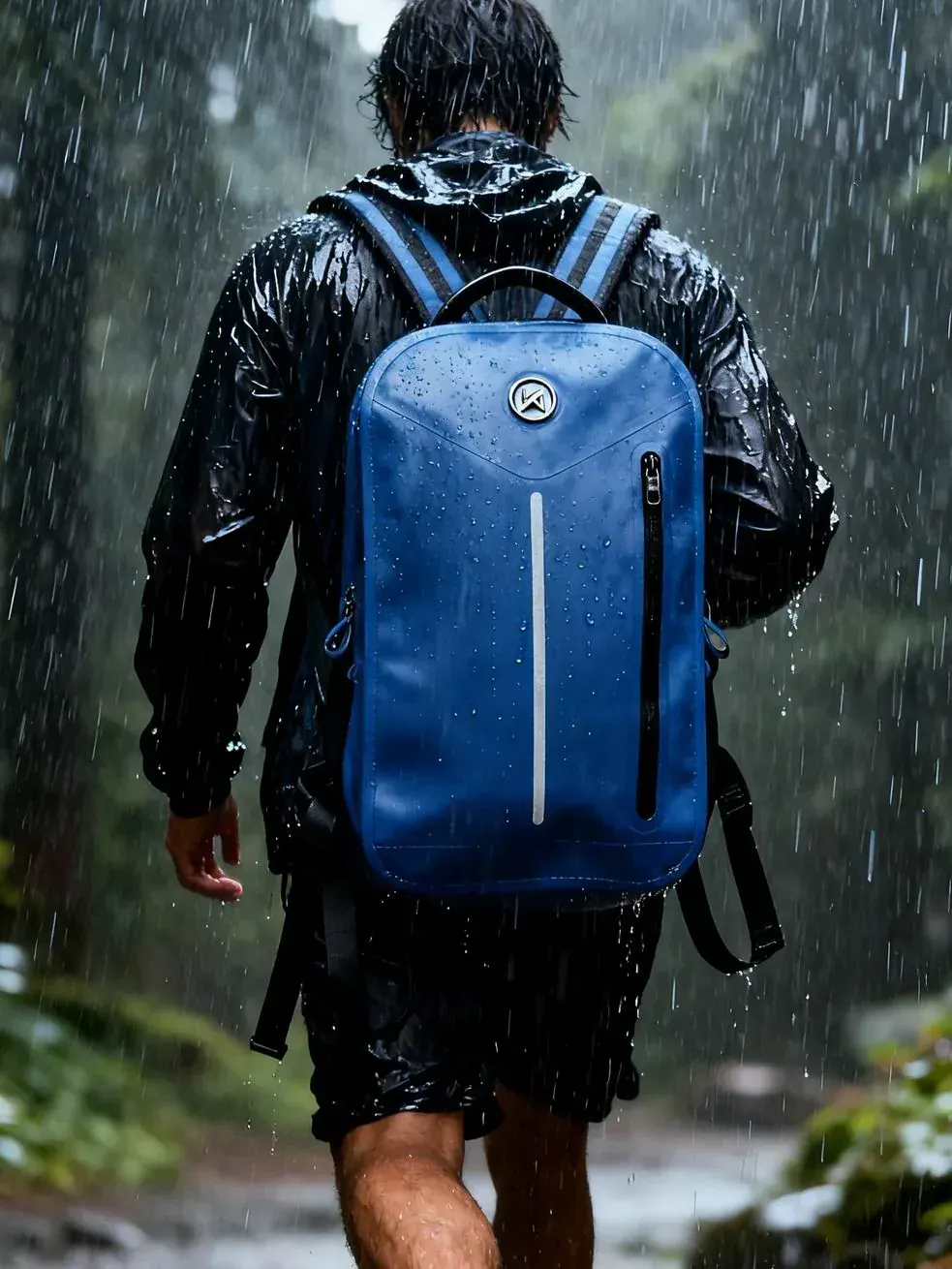
A laptop changes the decision because it is flat, rigid, high value, and frequently accessed. In a clamshell, the best sleeve opens independently along the back edge so airport removal takes 5 to 9 seconds without exposing clothing. The sleeve should sit 20 to 30 mm above the base and provide 8 to 12 mm of closed-cell padding on impact faces. Its zipper remains a possible water path, so it either needs a protected opening outside the main barrier or a separate sealed sleeve inside it.
A pure roll-top chamber protects a laptop well once closed but may require removing 2 to 4 upper items. An independent rear sleeve solves access but punctures or complicates the sealed body. Designers can use a sleeve suspended inside the main chamber, accepting 15 to 45 second access, or create a fully isolated back compartment with its own protected closure. The right choice depends on whether the device comes out twice per day or 20 times.
| Laptop arrangement | Retrieval time | Water path | Impact protection | Best user |
|---|---|---|---|---|
| Clamshell internal sleeve | 6 to 12 sec | Main zip only | 8 to 12 mm foam | Travel with full opening |
| Independent rear sleeve | 5 to 9 sec | Second closure | Suspended 20 to 30 mm | Frequent airport access |
| Roll-top internal sleeve | 15 to 45 sec | Main roll only | Strong if suspended | Outdoor use, low access |
| Isolated sealed rear chamber | 7 to 12 sec | Technical second seal | Strong | High-value field work |
| Loose padded case | 20 to 60 sec | No fixed penetration | Variable | Flexible occasional carry |
Compare sleeve dimensions rather than screen labels. A 15.6 inch device around 359 by 245 by 18 mm needs approximately 372 by 258 by 23 mm internally, while a large 17 inch machine can require 424 by 292 by 30 mm. The waterproof laptop backpack collection provides dedicated layouts for these dimensions.
Travel, Hiking, Boating, and Work Verdicts
Travel favours the front loader when the pack opens indoors, fits 2 to 4 packing cubes, and passes through security repeatedly. A body around 45 by 30 by 20 cm aligns with common cabin planning, although every airline controls its own limits. Use a protected clamshell zipper and keep rain-sensitive devices in secondary sleeves during exposed transfers. A roll top is better for open ferry decks or motorcycle links but less convenient in a small hotel room where a full vertical unpack is needed.
Hiking usually favours the top loader because the body can be narrower, compression is straightforward, and a storm collar or roll handles changing volume. A 30 litre body carrying 6 to 9 kg needs only 2 main openings per day if food, shell, and navigation tools have dedicated access. Boating strengthens the roll-top case further: spray comes from every direction, grit is common, and a toothless 3-turn closure is easier to rinse than 1.2 metres of zipper.
Work use splits by task. Technicians carrying 12 organized tools and opening the bag 30 times per shift benefit from a clamshell or front panel, even if it uses IPX5 rather than IPX7. Survey crews crossing streams with one instrument case benefit from a roll top. Medical or emergency use needs fast access to a dedicated panel, but critical supplies can sit in separately sealed modules so the outer closure is not the only defence.
| Use case | Openings per day | Exposure | Recommended format | Reason |
|---|---|---|---|---|
| Cabin travel | 8 to 20 | Brief rain | Front-loader | Fast inspection and packing-cube access |
| Multi-day hiking | 2 to 6 | Hours of rain | Top-loader | Compression and simple weather seal |
| Kayak touring | 1 to 4 | Spray and immersion chance | 3-turn roll top | IPX7 potential and easy rinse |
| Field technician | 20 to 40 | Dust and showers | Front-loader IPX5 | Tool visibility saves minutes |
| Motorcycle travel | 4 to 10 | Driven rain | Roll top or sealed front | Closure must resist high-angle water |
Durability, Cleaning, and Repair
The long clamshell zipper is the service-intensive component. Brush grit from curves every 5 to 10 wet uses, rinse salt after each coastal trip, and never pull against a loaded perimeter. A 1,200 mm zipper operated 20 times per day travels 24 metres daily and more than 6 km over 250 workdays. End stops and lower corners receive the highest load. When one section fails, replacement can require opening 900 mm or more of surrounding construction.
The roll top has fewer moving parts. Its wear appears as whitening or microcracking along repeated fold lines, buckle damage, or abrasion where the rolled mouth contacts itself. Vary the first fold by 5 to 10 mm, store the mouth unrolled, and keep the buckle free of sand. A field buckle can be replaced quickly if mounted on a serviceable loop, while a puncture in compatible coated textile can often accept a bonded patch extending 20 to 30 mm beyond the damage.
Abrasion and flex comparisons should use controlled methods rather than hand rubbing. Test-method libraries from ASTM International provide established approaches for textile strength and wear, while water repellency methods available through AATCC address surface behaviour. For a finished pack, add 20,000 closure cycles on the development sample and repeat the complete-body water test afterward.
| Service item | Front loader | Top loader | Trigger | Action |
|---|---|---|---|---|
| Closure cleaning | Full track every 5 to 10 wet uses | Mouth after grit exposure | Visible particles or rough travel | Rinse and soft-brush |
| Cycle inspection | Every 2,000 zip cycles | Every 5,000 roll cycles | Resistance or fold whitening | Test and repair |
| Storage | Zip relaxed, no side tension | Mouth unrolled | More than 30 days | Clean, dry, store loose |
| Small puncture | Patch if away from zip | Bonded patch 20 to 30 mm beyond | Hole under 10 mm | Retest with tissue |
| Major closure fault | Specialist zipper replacement | Buckle or strip replacement | Seal discontinuity | Remove from wet duty until fixed |
How to Test Both Layouts Fairly
A fair comparison uses equal usable closed volume, equal test load, and equal retrieval tasks. Fill both packs to 80 percent of verified closed capacity with a 6 kg load. Ask 5 users to retrieve a laptop, rain shell, charger, first-aid pouch, and bottom clothing item. Time each task dry and after spray. Then expose the closed articles to the intended water condition, place weighed absorbent paper at 5 likely entry points, and measure any gain to 0.1 gram.
Add carry and recovery measurements. Walk 5 km with each harness set to the same torso length, record shoulder pressure comments at 1 km intervals, and count closure errors at rest stops. After water exposure, time cleaning and drying. A clamshell may save 90 seconds in retrieval but need 6 extra minutes to brush and dry its long track; a roll top may stay simpler but induce more packing disruption. The result should match the intended day, not a single laboratory score.
- Verify closed usable capacity with 1 litre blocks, preserving all required roll turns and zipper clearance.
- Load each body to 6 kg and 80 percent of verified volume with the same item positions.
- Run 5 retrieval tasks with 5 users, first dry and then wearing wet gloves.
- Apply the target IPX exposure and measure internal paper gain at 5 separate zones.
- Repeat access, inspect closure alignment, and record cleaning plus drying time after the test.
Programme Specification and Final Choice
For a front-loader brief, state usable closed volume, zipper path length, curve radius, seal type, perimeter clearance, internal restraint, and opening-cycle target. A practical development target is 20,000 cycles with no tooth separation and no more than 25 percent rise in pull force. For a roll top, state 75 to 100 mm freeboard, 3 turns, buckle load, fold-cycle target, and the reference line used for litres. Both need a complete-body ingress test in their normal loaded configuration.
QUANZHOU JUNYUAN BAGS supports projects beginning at 500 pcs per design and colour, with development samples in 6 to 10 working days and bulk in 35 to 50 days. Materials can be screened for REACH and California Prop 65, finished goods can be inspected at AQL 2.5, and shipping can be FOB Xiamen or DDP to more than 100 countries. Layout development and verification steps appear. Briefs can be sent to service@junyuanbags.com.
The final choice is operational. Select a front loader for 8 or more main-chamber openings per day, organized travel, laptop access, and tool visibility, then pay for a closure matching the rain exposure. Select a top loader for fewer openings, changing loads, simple compression, easy cleaning, and the lowest-cost route to IPX7 potential. If needs conflict, keep the roll-top main chamber simple and add one small independent pocket for the 2 or 3 items used hourly.
People Also Ask
Which backpack opening is faster in daily use?
A front loader is faster when the target item sits in an organized zone: opening and identification usually take 4 to 8 seconds. A top loader takes 8 to 18 seconds for a top item and 20 to 60 seconds for one buried below other gear. Frequent access strongly favours the front layout.
Why are roll-top backpacks easier to waterproof?
They use a short 450 to 700 mm mouth with no zipper teeth. Three firm turns over 75 to 100 mm of freeboard create several changes of water direction, and a buckle holds compression. With welded seams, that architecture can reach IPX6 or IPX7 potential at modest cost.
How much capacity does a roll top lose when closed?
Closure reserve typically removes 2 to 3 litres from a 20 litre body, 4 to 6 litres from a 30 litre body, and 6 to 8 litres from a 50 litre body. State sealed working volume separately from dry-weather overflow to avoid an inflated capacity claim.
Can a clamshell backpack be IPX7?
Yes, when it uses a sealed technical zipper, compatible welded body, and a pack-level immersion result. The zipper path may be 900 to 1,500 mm and must remain free from side tension and contamination. Ordinary exposed coil zips generally do not support immersion.
Which layout packs heavy gear more comfortably?
Either can work if dense items stay within 50 mm of the back and between the upper 40 and 70 percent of body height. Top loaders compress irregular soft loads well. Front loaders need internal straps or a panel so heavy contents do not fall into the opening.
What hybrid layout solves both access and water protection?
Use a simple 3-turn roll-top main chamber plus one small independent protected pocket for hourly items. Keep the pocket outside the critical dry chamber or isolate it fully. This retains a short main seal while avoiding repeated unpacking for a phone, map, or first-aid kit.
Frequently Asked Questions
Q1. Is a front loader or top loader backpack better?
A front loader is better for organized visibility and 4 to 8 second access. A top loader is better for simple compression, expandable volume, and a short weather seal. Choose by daily opening count and exposure: 8 or more openings favour front access, while prolonged rain favours the top roll.
Q2. What is a clamshell waterproof backpack?
It is a front-opening body whose zipper runs around 3 sides so the panel opens flat like a shallow case. A 25 to 35 litre version typically uses 900 to 1,500 mm of zipper. Strong water protection requires a sealed closure and compatible seam architecture.
Q3. How many times should a roll top be folded?
Use at least 3 firm turns unless the tested instructions say otherwise. Preserve 75 to 100 mm of clean material above the load, align both faces, and keep clothing out of the fold. One loose turn is not equivalent to the tested closure geometry.
Q4. Which style is better for airline travel?
A front loader usually wins because it opens in 4 to 8 seconds, displays packing cubes, and supports independent laptop access. A top loader is better when travel includes open ferries, motorcycles, or heavy rain. Always compare external dimensions with current carrier limits.
Q5. Which style is better for hiking?
A top loader usually suits hiking because it compresses changing soft loads, keeps a narrow profile, and needs only 2 to 6 main openings per day. Use 3 to 6 litre vertical pouches for organization and keep navigation, rainwear, and first aid in faster independent access.
Q6. Which style is better for a laptop?
A front loader with an independent suspended sleeve gives the fastest 5 to 9 second access. The sleeve should sit 20 to 30 mm above the base with 8 to 12 mm closed-cell padding. A roll-top internal sleeve gives a simpler main barrier but can take 15 to 45 seconds to reach.
Q7. Does a front-opening zipper reduce waterproof performance?
It creates a longer potential entry path and two lower curves where water can collect. A sealed technical zipper can still support IPX6 or IPX7, but it costs more and requires clean alignment. A coated coil with a flap is more appropriate for IPX4 to IPX5 rain use.
Q8. How should usable backpack litres be measured?
Measure with the closure in its required state, all back padding and organizers installed, and the body loaded with 1 litre blocks or measured fill bags. Do not use an open rectangular calculation. Report roll-top sealed volume and overflow as separate figures.
Q9. Are top loaders harder to organize?
They can be, because only the upper 20 to 40 percent of contents is visible. Divide gear into long 3 to 6 litre pouches, place hourly items in the top 150 mm, and keep dense gear near the back. This reduces bottom-item retrieval from about 60 seconds toward 20 seconds.
Q10. Which closure is easier to repair?
A roll-top buckle or small body puncture is usually easier to service than a 900 to 1,500 mm sealed clamshell zipper. A field-replaceable buckle can take minutes; zipper replacement may require opening much of the perimeter and then repeating the water test.
Q11. What are the MOQ and lead time for either backpack layout?
A practical programme baseline is 500 pcs per design and colour. Samples normally take 6 to 10 working days, and bulk takes 35 to 50 days after approval. Finished goods may be inspected at AQL 2.5 and shipped FOB Xiamen or DDP to more than 100 countries.