Choose a waterproof backpack when one sealed container must also carry 5–12 kg comfortably; choose a compression sack when soft gear such as a sleeping bag needs 20–45 percent less volume inside another pack. A compression sack organises and shrinks contents but normally does not replace a harness, impact protection, or a tested waterproof outer shell. For most overnight trips, the practical system is a 30–40 L waterproof backpack plus one 8–15 L compression sack for insulation, with total compressed time kept under roughly 24 hours.
The Short Verdict: They Solve Different Problems
A waterproof backpack is a transport system: shell, closure, harness, load control, and water boundary work together. A compression sack is a volume-management tool: straps or a valve push air from soft contents so they occupy less room. Comparing them as substitutes is like comparing a suitcase with a packing cube. One can carry the whole journey; the other improves the inside of a larger system.
The confusion comes from products called compression dry bags. Some combine a water-resistant or waterproof body with volume reduction, but their seams, valve, and compression strap anchors still need evidence. Even a sealed sack has no shoulder harness and is unpleasant beyond 1–2 kg over more than a few hundred metres. A 35 L backpack can move 8 kg for 10 km; a 12 L sack is better treated as one organised module within it.
| Decision factor | Waterproof backpack | Compression sack | Best combined use |
|---|---|---|---|
| Primary job | Carry and protect full load | Reduce soft-item volume | Backpack transports packed modules |
| Typical size | 20–45 L | 5–20 L | 30–40 L plus 8–15 L sack |
| Comfortable mass | 5–12 kg with suitable harness | 1–2 kg by hand | Dense items in pack, soft items compressed |
| Volume change | Compression straps manage shape | Often 20–45% reduction | Compress only bulky insulation |
| Water role | Defined whole-item exposure possible | Varies by seam and closure | Outer pack remains primary boundary |
If only one item can be purchased, start with the backpack because it handles movement, weather, and access. Add a sack when a sleeping bag, quilt, or spare layer consumes more than one third of usable volume. The waterproof travel backpack range shows transport-first layouts; the sack should make those layouts cleaner, not create a second awkward bag to carry.
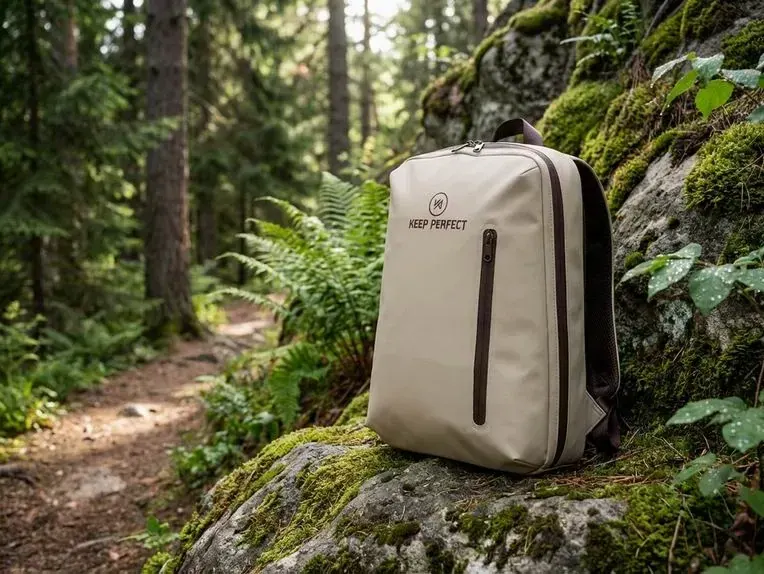
Volume Mathematics: Litres Saved Versus Shape Created
Compression claims should be measured, not guessed. Fill the sack with a known soft item, close it normally, then measure its occupied volume before and after. A 12 L sleeping bag may compress to 7–9 L, saving 25–40 percent. A fleece stack may save only 15–25 percent because trapped air was already low. Hard cookware saves 0 percent and can puncture a sack when compression straps concentrate force at one edge.
Shape matters as much as litres. A short wide cylinder may leave unusable corners in a rectangular 32 L pack, while a longer 8 L sack can lie vertically beside a tent. Measure diameter and compressed height. An apparent 4 L saving is not useful if the resulting 230 mm cylinder blocks a 200 mm opening or creates a hard lump against the wearer's lumbar region.
| Content | Loose volume | Compressed range | Reduction range |
|---|---|---|---|
| Synthetic sleeping bag | 12–16 L | 8–11 L | 25–35% |
| Down quilt | 10–14 L | 5.5–8 L | 35–45% |
| Fleece and spare layer | 7–10 L | 5.5–8 L | 15–25% |
| Towels | 8–12 L | 6–9 L | 20–30% |
| Cookware or electronics | Fixed | No safe reduction | 0% |
For a trip, make a 2-column load plan: fixed-shape items and compressible items. Place fixed pieces first on a grid, then choose the sack diameter that fills the remaining vertical lane. This reverses the common mistake of buying a large round sack first and forcing everything else around it. The roll-top packing walkthrough explains how to preserve 75–100 mm of clear closure space after the modules are loaded.
Waterproofing: One Primary Boundary Is Easier to Control
A system is easier to trust when it has one clearly defined wet boundary. A welded roll-top backpack tested at the intended load can provide that boundary for all contents. Inner sacks then organise insulation and add redundancy, but they need not each carry the strongest claim. If several inner bags are called waterproof without defined tests, users may leave the main closure incomplete and increase overall risk.
The IPX terminology for splash, jets, and immersion is explained by the IEC IP rating framework. A compression valve, stitched strap anchor, or drawcord mouth may limit a sack even when its coated body resists water. Ask for the finished item's depth, duration, closure, loading, and pass line. Waterproof fabric is only one component.
- Use the backpack as the primary rain boundary and close a roll-top through at least 3 complete turns.
- Treat drawcord compression sacks as organisers unless a separate water result is documented.
- Place a down bag in a secondary sealed liner when loss of insulation would create cold risk.
- Keep valve faces away from cookware edges and verify closure after every compression cycle.
- Test the complete loaded system, because a hard inner cylinder can distort the outer closure.
Redundancy is sensible when consequence is high. A dry quilt can matter more than a dry shirt on a cold overnight. Place the quilt in a light sealed inner bag, then load it inside the waterproof pack. This is not an excuse to neglect the outer closure; it is a second independent layer. In ordinary warm travel, one sound outer boundary and a simple organiser may be enough.
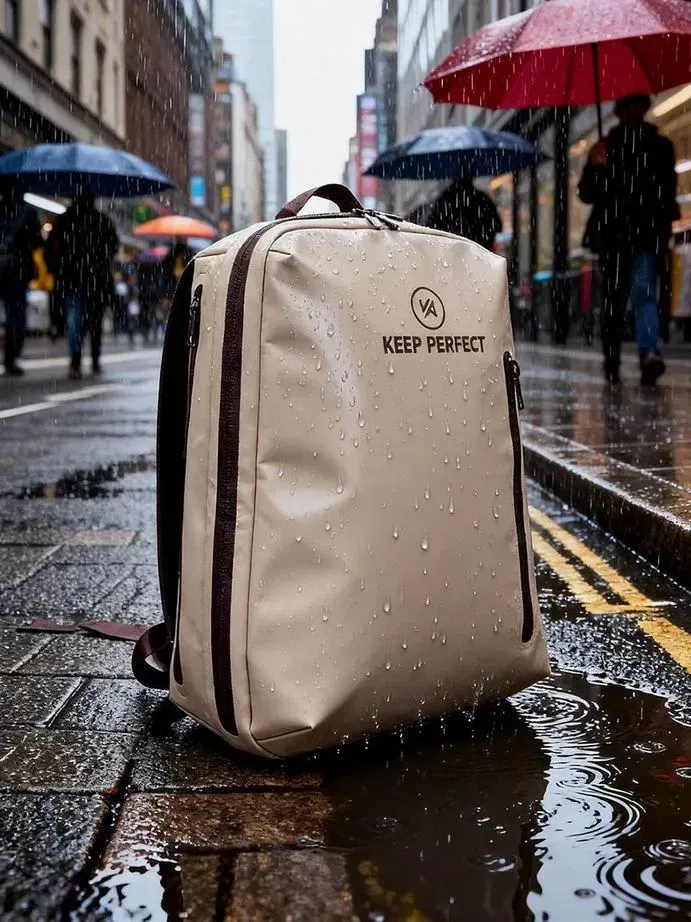
Compression Can Protect Space and Harm Insulation
Insulation works by trapping air, so repeated or prolonged compression can reduce loft if storage becomes the norm. Compress a sleeping bag for travel, not for the months between trips. Keep transit compression under about 24 hours where possible, unpack at camp, shake the item, and allow 20–30 minutes for loft recovery before judging warmth. At home, store insulation loose and dry in a breathable container.
Down usually compresses more than synthetic fill but is more consequential when wet. Synthetic fill may need a larger sack yet retains more performance under damp conditions. Follow the care instructions for the specific item and avoid using maximum strap force merely because more reduction is possible. Stop when the sack becomes firm and stable; continuing until webbing, seams, or valve distort adds little usable space.
| Compression control | Practical limit | Check after release | Failure sign |
|---|---|---|---|
| Transit time | Preferably under 24 h | Loft returns within 20–30 min | Persistent flat zones |
| Strap sequence | Alternate opposite sides | Cylinder remains even | One hard bulge |
| Valve closing | Close after air is expelled | No slow re-inflation | Valve seat contamination |
| Moisture | Pack only fully dry insulation | No odour or cool damp patch | Condensation inside |
| Long storage | Store loose at 15–25°C | Fill remains distributed | Clumps or permanent creases |
Cold and wet conditions increase consequence. Guidance from the CDC on hypothermia prevention underscores the importance of staying dry and carrying adequate insulation. A 2 L volume saving is not worth a sleep system that cannot regain loft or has been packed damp. Protect warmth first, optimise space second.
Packing Order and Load Balance
Place the compressed sleeping system low only when it is light and needed last. Dense food, water, batteries, or camera gear should sit close to the back and between hip and shoulder-blade height. A low soft cylinder creates a stable base; a high dense cylinder creates leverage. In a 9 kg overnight load, aim to keep the densest 4–5 kg within about 50 mm of the back panel.
A common mistake is to tighten the outer compression straps until they deform every inner item. Outer straps should control pack depth and stop movement, not perform the job already done by the sack. Load the inner module, close the waterproof top with 3 turns, then tension side straps until movement is below about 25 mm. If the roll-top creases sharply around the sack, change its orientation or size.
Use the waterproof hiking backpack guide to match harness to total mass. A structured belt begins to earn its place above roughly 7 kg, and 55–70 mm shoulder straps suit many loads from 5–10 kg. The compression sack changes volume but does not reduce weight; a 2 kg sleeping system remains 2 kg no matter how small it becomes.
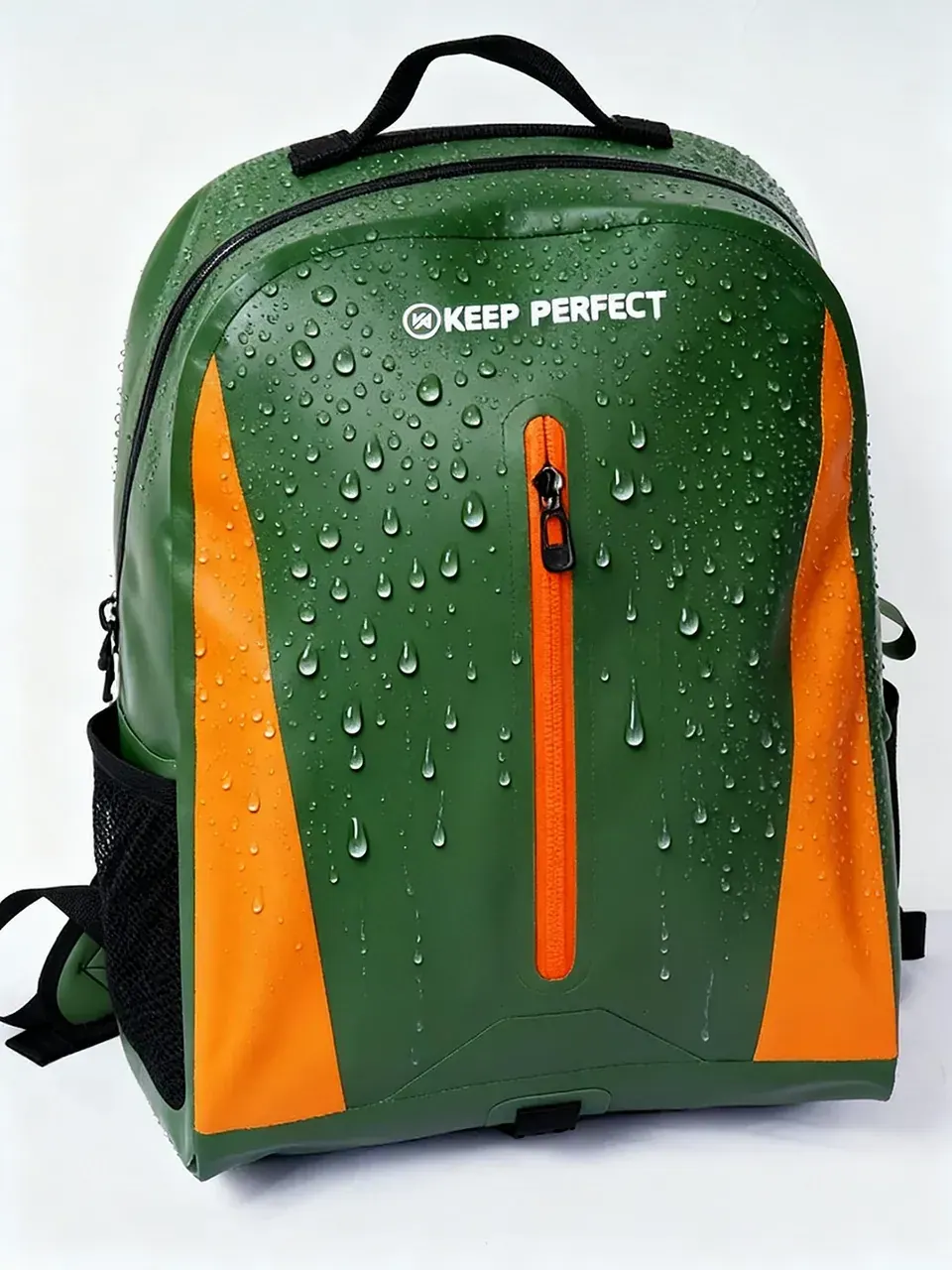
Access, Failure Modes, and Field Recovery
Compression improves packing density but slows access. Reaching one layer may require opening the backpack, releasing 4 straps, and rebuilding the cylinder. Items needed during the day should therefore remain uncompressed: rain shell, warm stop layer, first-aid kit, food, and navigation. Compress only equipment that stays packed until camp or destination. A 4-minute repack in rain can defeat the outer boundary more easily than a slightly larger load.
Inspect 5 likely failure points: sack strap-to-panel junctions, drawcord or roll mouth, valve, outer pack closure corners, and the place where the cylinder contacts the back panel. Sand in a valve can allow gradual re-inflation; a cookware edge can create a pinhole; uneven straps can pull a seam diagonally. Carry one repair patch suitable for the known coating and a lightweight liner for contingency.
If an inner sack leaks, move insulation into the contingency liner and use the damaged sack for dry clothing. If the outer pack leaks, keep high-consequence items inside independent pouches and shorten exposure. Do not assume that putting one wet container inside another will isolate moisture; wipe its outer face and keep the wet item away from insulation until both layers can be dried for 8–24 hours.
Cost and Sustainability of the Two-Bag System
A good compression sack can postpone the need for a larger backpack, but only when excess volume comes from soft contents. If a 30 L pack is short by 4 L and the sleep system can safely shrink by 5 L, the sack is an efficient answer. If the shortfall comes from food boxes, electronics, or a helmet, compression adds straps without solving the geometry. Measure before adding another product.
Repairability differs. A simple sack with replaceable cord and external straps has few parts, while a valve introduces another seal. A backpack carries more components but can often remain useful after an organiser or buckle is changed. The most resource-efficient choice is the smallest system that reliably handles the route for several seasons, not the lowest initial material mass.
Physical durability comparisons can use relevant textile and seam methods listed by ASTM International. Record abrasion at the cylinder contact point, strap pull, seam peel, and 5,000 compression cycles where repeated use is expected. A claim of reusable has limited value without a cycle count and retirement criteria.
Worked Packing Examples for Three Trips
For a summer overnight walk, start with a 32 L backpack and a synthetic sleeping bag occupying 13 L loose. Compress the bag to 9 L and place it horizontally at the base. A 4 L tent body, 3 L food module, 2 L cook set, 2 L rain-and-warm layer, 2 L water allowance, and 3 L of smaller items bring occupied volume near 25 L. The remaining 7 L preserves access, closure space, and a realistic reserve.
For a cold 2-night route, a 40 L backpack may contain a down sleep system of 12 L loose and 7 L compressed, 8 L of insulated clothing, 6 L shelter, 5 L food, 3 L cooking and safety equipment, and 3 L flexible space. Compression saves about 5 L, but the dry insulation module remains independently sealed because its consequence is high. Total mass, not the attractive 7 L cylinder, decides the 55–70 mm straps and load-transfer belt.
For train travel, use a 28 L backpack and compress only spare clothing from 9 L to about 6.5 L. Keep a jacket, charger, passport, medication, and one clean shirt outside the sack because they may be needed during a 6-hour journey. This layout saves roughly 2.5 L while preserving quick access. Compressing every textile might save another litre, but it would turn one station delay into a complete repack.
| Trip | Outer pack | Inner sack | Useful saving |
|---|---|---|---|
| Summer overnight | 32 L / 7–9 kg | 13 L to 9 L sleep bag | About 4 L |
| Cold two-night | 40 L / 9–12 kg | 12 L to 7 L down system | About 5 L |
| Train weekend | 28 L / 5–7 kg | 9 L to 6.5 L clothing | About 2.5 L |
| Photo day | 25 L / 6–8 kg | No compression near optics | 0 L; use dividers |
| Paddle camp | 35 L / 7–10 kg | 10 L to 7 L insulation | About 3 L plus redundancy |
These examples show why percentage alone misleads. A 45 percent reduction sounds impressive, but saving 2 L in a 40 L pack may not change the outer size. Draw the full volume budget, identify the one largest soft module, and test that module in the actual opening. Stop when the system closes easily with reserve; further compression merely increases force and packing time.
A Procurement Brief for a Modular Packing System
Write the outer and inner requirements on separate lines. For the backpack: 35 L, maximum 10 kg, IPX6-level rain target, 3-turn roll-top, torso range, and 4 compression straps. For the sack: 12 L loose, 7–9 L compressed, no hard contents, 4 alternating straps, under-24-hour compression, and a valve or closure cycle test. Then test both together for opening clearance and load stability.
QUANZHOU JUNYUAN BAGS supports waterproof programmes with MOQ 500 pcs per design and colour, samples in 6–10 working days, and bulk timing of 35–50 days. AQL 2.5 inspection can record volumes, dimensions, strap attachment, closure, accessory count, and agreed water checks. Work follows BSCI and ISO 9001 systems, includes REACH and California Prop 65 screening, and ships FOB Xiamen or DDP to more than 100 countries.
A paired volume grid can be reviewed. Email the loose gear dimensions, compressed target, total mass, route length, and exposure to service@junyuanbags.com. The best first sample proves that the compressed cylinder passes through the opening, leaves 3 roll turns, and does not create a pressure ridge against the wearer.
Before release, repeat the combined pack test after the sack has remained compressed for 24 hours. Open it, allow 30 minutes of recovery, inspect its seams and valve, then rebuild the same load from the written sequence. Compressed dimensions should remain within 5 percent and the backpack should still close with 3 turns. This catches gradual re-inflation, strap slip, and packing methods that only one experienced tester can reproduce.
The final choice is not either-or for most overnight users. Let the waterproof backpack manage exposure, harness, access, and total load; let one carefully sized compression sack reduce the soft item that consumes the most space. Use separate measurements and tests, and the pair will be more dependable than either item forced into the wrong job.
People Also Ask
How much space does a compression sack save?
Soft items commonly shrink by 20–45 percent: a synthetic sleeping bag may drop from 12–16 L to 8–11 L, while a down quilt may move from 10–14 L to 5.5–8 L. Hard contents save no volume.
Can I carry a compression sack like a backpack?
Not comfortably for meaningful distance. A sack usually lacks shoulder harness, torso fit, load transfer, and back protection; treat 1–2 kg over a few hundred metres as a practical upper boundary unless it has a dedicated carry system.
Does compressing a sleeping bag make it less warm?
Short travel compression is normal, but repeated or long storage can reduce loft. Keep packed time under about 24 hours where possible, unpack on arrival, and allow 20–30 minutes for recovery before use.
Should a compression sack go at the bottom of a backpack?
A light sleeping-system sack can form a stable bottom layer because it is needed last. Dense food, water, and electronics should remain higher and close to the back instead of riding in a low cylinder.
Can hard gear go in a compression sack?
It should not. Cookware edges, tools, and electronics do not shrink and can puncture the shell when straps concentrate pressure. Compression is for soft insulation, towels, and clothing that can tolerate controlled pressure.
How do I measure compressed volume?
Measure the closed cylinder diameter and height after a repeatable strap sequence, then calculate or compare occupied volume. Also test whether that shape passes through the pack opening and leaves 75–100 mm for the roll-top.
Frequently Asked Questions
Q1. Is a compression sack waterproof?
Only if its complete seam, closure, valve, and body have a stated result. Many drawcord sacks are organisers rather than water barriers. Use the waterproof backpack as the primary boundary unless separate evidence says otherwise.
Q2. What size compression sack fits a 35 L backpack?
An 8–15 L sack often works, depending on the sleep system and opening. A 12 L loose sack compressed to 7–9 L is a practical starting point, provided its diameter fits the body.
Q3. Is a compression dry bag the same as a dry backpack?
No. A compression dry bag may reduce volume and resist water, but it usually lacks a fitted harness and load control. A dry backpack integrates carry comfort, access, anchors, and a complete wet boundary.
Q4. Should I compress all my clothing?
No. Compress only items not needed until destination, such as spare clothing or insulation. Keep a rain shell, warm stop layer, first aid, food, and navigation accessible so opening in rain stays brief.
Q5. Can compression make a roll-top leak?
Indirectly, yes. An over-wide or hard cylinder can distort closure corners and consume the 75–100 mm needed for 3 turns. Change sack size or orientation instead of forcing the top around it.
Q6. How tight should compression straps be?
Tighten opposite sides gradually until the item is firm and stable, then stop. A hard bulge, diagonal seam, distorted valve, or strap attachment whitening means force is no longer producing useful volume reduction.
Q7. Do compression sacks reduce carried weight?
No. They reduce volume only. A 2 kg sleep system still adds 2 kg after compression, so harness choice and load balance must use the actual total mass.
Q8. How long can down stay compressed?
Keep travel compression as short as practical and preferably under about 24 hours. Store down loose and fully dry between trips, and allow 20–30 minutes for loft to return at camp.
Q9. What is the best shape for a compression sack?
The shape that fills the remaining lane inside the backpack without blocking the opening or creating a pressure point. Measure compressed diameter and height; litres alone cannot show fit.
Q10. What are the MOQ and lead time for a paired system?
The baseline is 500 pcs per design and colour, samples in 6–10 working days, and bulk in 35–50 days. Approve the backpack and sack together with the real load and closure-clearance check.