A waterproof hunting backpack has to survive three exposures ordinary rain gear does not: four to six hours of steady rain in an open layout blind, freezing drizzle from a tree stand 4 to 6 m up, and full immersion when wading into flooded timber before dawn. The specification that answers all three is a welded or roll-top body rated IPX5 to IPX7 under IEC 60529, a brushed low-noise shell of 500D polyester laminated with 0.35 mm TPU film, hydrostatic head 5,000 to 10,000 mm, and hardware that can be worked with gloved hands at minus 5 degrees Celsius. Volume runs 25 to 35 L for a morning sit, 40 to 50 L for an all-day blind with decoys, and 60 to 75 L when the pack has to haul a quartered deer out of the timber at 25 to 35 kg. Programmes open at 500 pcs per design and colourway, samples take 6 to 10 working days, and bulk ships in 35 to 50 days from FOB Xiamen.
Why a Water Blind Wrecks an Ordinary Rain Pack
A coated nylon pack that shrugs off a shower will wet out in a blind, and the reason is geometry rather than fabric. When a hunter lies in a layout blind for five hours, water pools under the floor pan to 20 to 40 mm and the pack sits in it continuously, so the base seam is under hydrostatic load the whole sit instead of shedding a passing squall. A stitched base seam on a 1,500 mm coated shell starts weeping at the needle holes in 90 to 120 minutes, and by hour three the sleeping layer inside is damp enough to matter.
The fix is a specification, not a fabric upgrade. A welded base panel of 500D polyester with a 0.35 mm TPU film and a hydrostatic head of 5,000 mm or better removes the needle holes entirely, and a roll-top mouth rolled three full turns raises the assembled pack to IPX5 or IPX6. The rating scale and the test conditions behind each level are set out in the IEC 60529 ingress protection ratings, which is the reference buyers should name in a tech pack instead of a marketing adjective. The baseline construction common to every category is described in our waterproof backpack specification guide.
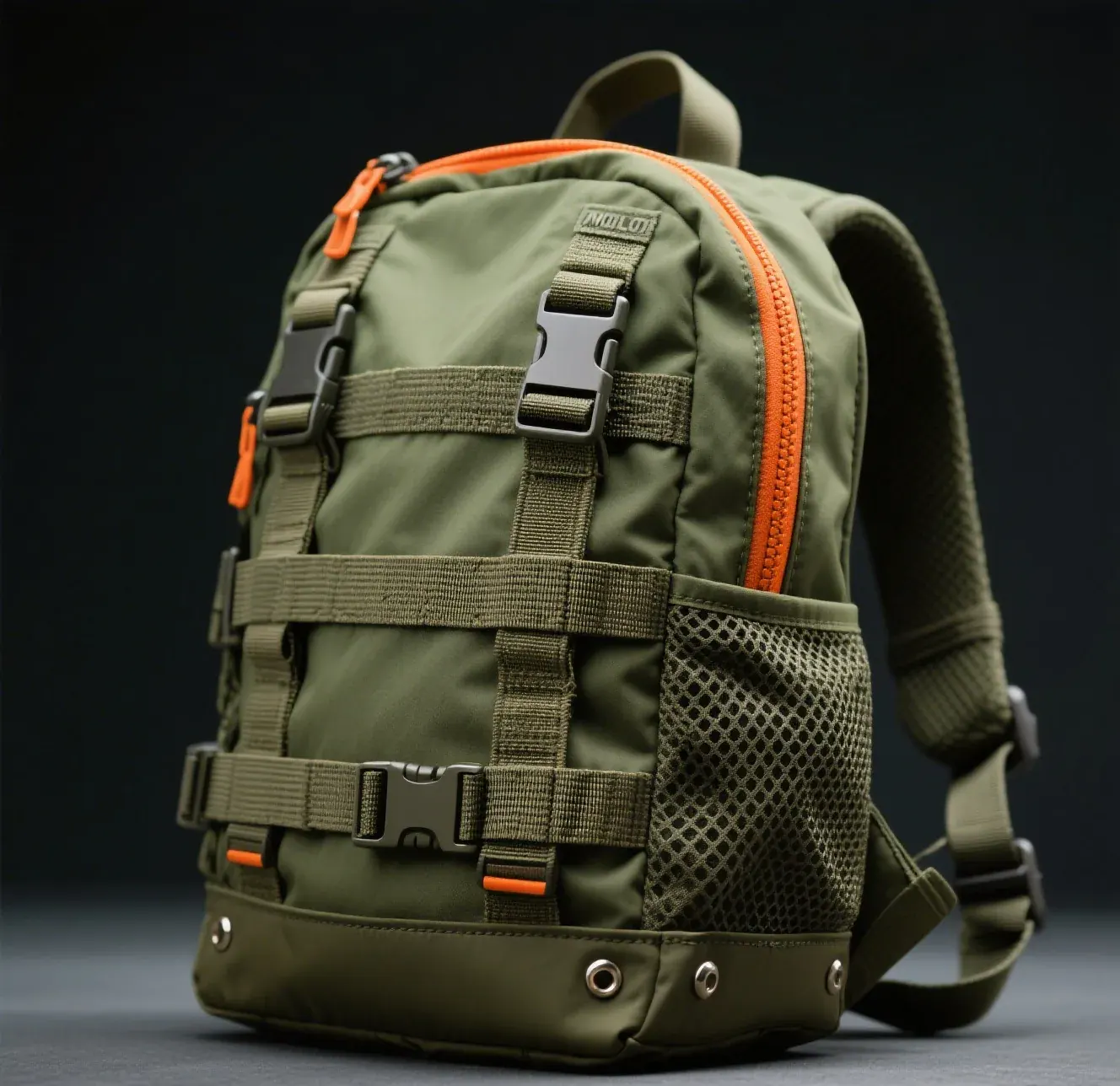
Six Hunting Scenarios and the Spec Each One Demands
Hunting is not one use case, and a single specification rarely covers a waterfowl morning and a backcountry elk hunt in the same shell. The matrix below maps the six scenarios that account for most programme briefs to the exposure they create, the failure mode buyers report, and the minimum construction that prevents it. Where two rows disagree on closure type, the higher-volume row wins, because a pack sold for both uses will be used harder than either brief suggests.
| Scenario | Exposure | Typical failure reported | Minimum specification |
|---|---|---|---|
| Layout blind, flooded timber | Standing water 20-40 mm, 4-6 h | Base seam weeps after 2 h | Welded base, IPX6, roll-top, 5,000 mm |
| Ground blind, all-day rain | Continuous rain, condensation inside | Damp spare layers and snacks | IPX5, taped seams, storm flap over zip |
| Tree stand, freezing drizzle | Rime at -3 to -8 degrees C | Stiff zip, frozen hydration hose | TPU shell, glove pulls, insulated hose sleeve |
| Upland walk in wet grass | Brush abrasion, 6-10 km | Face fabric pilling, seam scuff | 500D shell, 25,000 cycle abrasion, bar-tacked straps |
| Wading to a marsh blind | Chest-deep water, immersion risk | Pack floats away or soaks through | Buoyant panel, roll-top, chest and waist straps |
| Meat haul out | 25-35 kg load, 3-8 km | Strap pull-out, seam peel at base | Load shelf, 25 mm compression, 90 percent seam peel |
Waterfowl is the hardest brief of the six because it combines immersion with weight. A standard spread of 20 to 24 full-body decoys runs 12 to 18 kg in a decoy bag, and the hunter still needs a shotgun, shells, waders and a stool inside the same trip, which is why a 45 to 55 L blind pack with external lash points beats a 70 L expedition frame for that job. The dedicated scenario notes for blind work are collected in our guide to waterproof backpacks for hunting blinds.
Ground Blinds and Layout Blinds: Sitting Still in Standing Water
Still hunting inverts the usual design priority. A hiker wants ventilation and a pack that moves with the shoulders; a blind hunter wants a pack that stays silent when leaned against, opens without a metallic rasp, and keeps its contents dry while the hunter burns four hours at a metabolic rate far below walking pace. Comfort comes from external insulation, not from the pack, so the pack specification should put its budget into a quiet face fabric, a glare-free finish and a mouth that can be opened one-handed with a gloved thumb.
- Roll the mouth three full turns before the buckles engage; one turn drops the effective rating by about two IPX levels.
- Ask for a brushed tricot or peached face fabric on the shell so brush contact is inaudible at 15 to 20 m.
- Specify zip garages and cord pulls rather than metal sliders, which click against teeth when the pack shifts.
- Keep the back panel flat and seam-free so it can double as a backrest against a blind frame.
- Put the hydration hose inside an insulated sleeve; a 2 L bladder freezes at the bite valve below minus 3 degrees C in under two hours.
- Choose a matte finish: glossy TPU film flashes in low sun and is visible from 200 m or more.
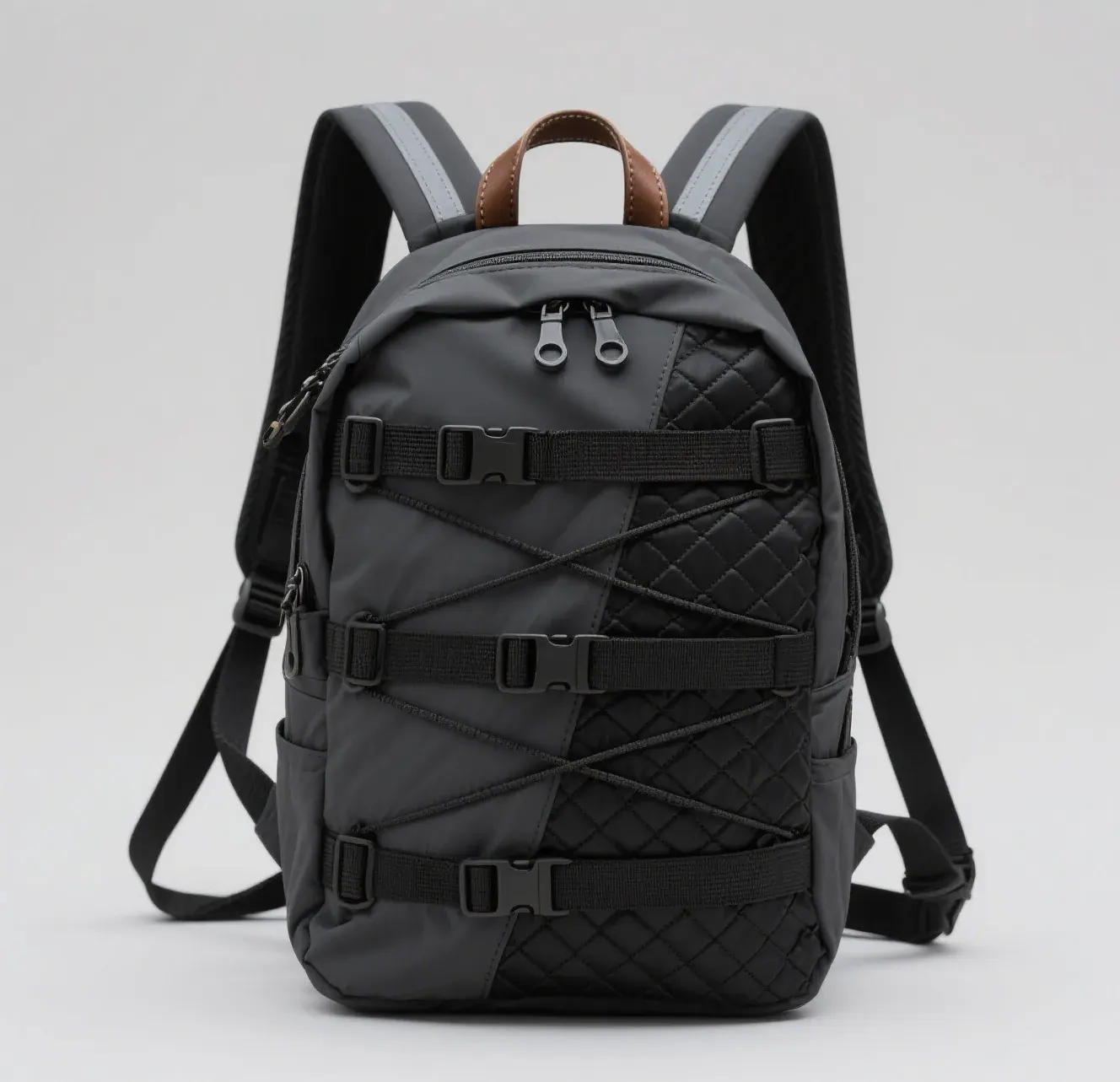
Condensation is the failure hunters blame on rain. A sealed shell keeps liquid water out and traps the vapour from a damp jacket, so by mid-morning the inside can be wetter than the outside. Cheap fixes: a 6 to 10 L welded liner for spare layers, and opening the mouth during any lull so interior air exchanges.
Tree Stand Duty: Drop Height, Noise Discipline and Access in the Dark
From a ladder stand or hang-on at 4 to 6 m, the pack spends the morning hanging from a hook and the evening being hauled up on a rope, which produces a failure profile that has nothing to do with rain. Impact is the first risk: a loaded 12 kg pack dropped from 6 m arrives at roughly 11 m per second, so the haul line is not optional and the pack needs a rated haul loop bar-tacked to a structural seam rather than to a webbing tab. Access is the second: most stand hunters set up and tear down in the dark, so the pack must open and close by feel.
| Feature | Blind hunting priority | Tree stand priority | Specification note |
|---|---|---|---|
| Mouth closure | Roll-top, 3 turns | Roll-top or coated zip | Coated zip is faster but needs 500-cycle maintenance |
| Hardware finish | Matte, cord pulls | Matte, one-hand release | Avoid metal-on-metal contact points |
| Back panel | Flat, seam-free | Padded, stands off back | 10 mm foam with a 15 mm air channel |
| Haul and hang loop | Secondary | Primary, load-rated | Bar-tack rated to 25 kg minimum |
| External lash points | Decoy bag, wader straps | Climbing sticks, bow holder | 4 to 6 daisy chains of 20 mm webbing |
| Hydration | Insulated hose sleeve | Bladder hang hook | 2 to 3 L bladder, bite valve insulated |
| Harness port | Not required | Pass-through for safety harness | Slot 120 mm wide, reinforced edge |
Two tests catch most stand-related returns before they ship. The first is a loaded drop test from 1.5 m onto a concrete edge with 12 kg inside, repeated on three axes, which is a realistic stand-in for the haul line slipping at height. The second is a cold-handling check: a technician wearing 6 mm neoprene gloves must open the main mouth, release both buckles and re-seal within 30 seconds at minus 5 degrees Celsius. Packs that pass both ship into northern US and Canadian retail without a winter complaint cycle.
Camo Patterns, Printing Methods and Blaze Orange Rules
Camouflage is a print problem before it is a design problem. The three print routes used on waterproof shells behave very differently once a TPU film is laminated on the reverse and the panel is RF welded, and the choice drives both the achievable pattern scale and the unit cost index. Sublimation gives the finest detail and the softest hand but needs a polyester face and fades fastest under UV; pigment print works on any base and is cheapest; digitally printed film sits under a clear TPU layer and survives welding best.
| Print method | Pattern fidelity | Weld compatibility | UV life | Cost index |
|---|---|---|---|---|
| Dye sublimation on polyester | Very high, photographic | Fair, film lifts at weld | 300-400 h xenon to grade 4 | 1.25 |
| Rotary pigment print | Medium, 2-3 colour layers | Good with primer | 300-500 h xenon to grade 4 | 1.00 |
| Digital print under clear TPU film | High, protected by film | Excellent | 500-700 h xenon to grade 4 | 1.45 |
| Woven-in disruption pattern | Low, large shapes only | Excellent | 600+ h xenon | 1.60 |
| Solid body plus printed panel | Panel only | Excellent | Matches base fabric | 0.92 |
Blaze orange is a compliance item, not a styling option. Several US states require around 400 square inches of hunter orange above the waist during firearm seasons plus a head covering, and the practical way to keep one pack sellable in both archery and firearm seasons is a reversible or zip-off orange panel of roughly 0.25 square metres that stows in its own pocket. Finish chemistry deserves the same attention as colour: long-chain fluorinated DWR is being phased out of outdoor retail, and the regulatory background is summarised in the EPA PFAS programme pages. Ranked shortlists by category live in our best waterproof backpacks guide.
Quiet Construction: Where Noise Comes From and How It Is Removed
Noise kills more hunts than rain does, and nearly all of it comes from five sources that are cheap to design out. A stiff PVC tarpaulin shell crackles at roughly twice the audible level of a brushed TPU laminate in the 2 to 6 kHz band where game hears best; a metal slider tapping teeth carries further than a footstep on wet leaves; hook-and-loop closures are the loudest fastener in the catalogue and should be replaced with magnetic or silent-snap alternatives inside 2 m of the shoulder straps.
- Shell: brushed tricot face or peached finish over a 0.30 to 0.35 mm TPU film, never a glossy knife-coated PVC on a stalking pack.
- Zips: moulded teeth with a rubberised pull, plus a fabric garage so the slider cannot rattle against the tape.
- Buckles: acetal with a matte finish and a 12 mm webbing wrap at the contact point; avoid steel side-release hardware.
- Closures: silent snap or magnet on pockets within reach of the hands while seated, hook-and-loop only on internal dividers.
- Straps: keep webbing tails under 80 mm or fit a keeper, because loose webbing slaps the shell at every step.
- Internal: line pockets with tricot so a calls box or rangefinder does not knock against the shell panel.
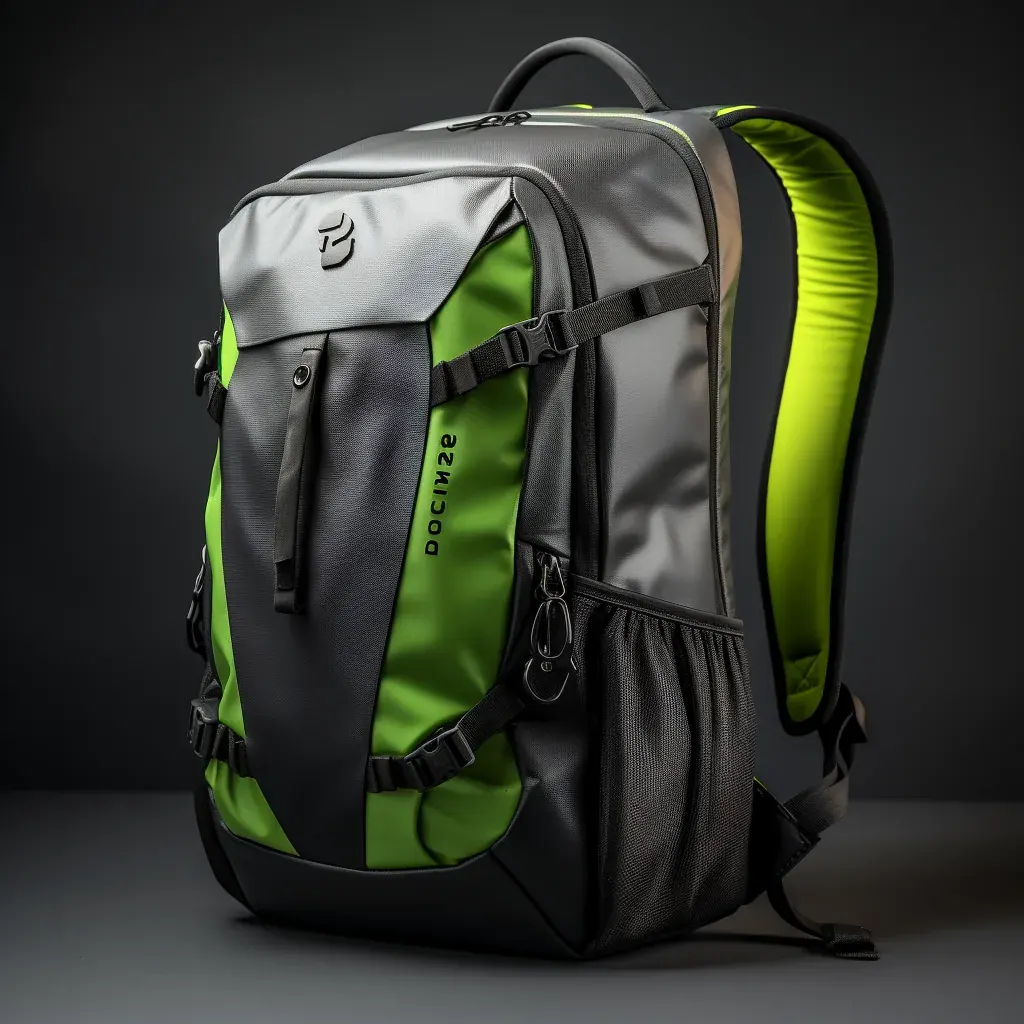
Volume Planning: From a Morning Sit to a Quartered Deer
Published litre figures come from bead-filling the main body, so a 40 L hunting pack swallows far less than 40 L of rigid cargo such as a calls box, a rangefinder case or a box of 12 gauge shells. Buyers should state both figures in the tech pack: nominal volume in litres and usable load in kilograms. The bands below are the ones that actually sell at retail, and the empty-weight column is what determines whether a pack feels like a day pack or a haul pack on the walk in.
| Trip type | Volume | Usable load | Typical cargo | Empty weight |
|---|---|---|---|---|
| Morning sit, tree stand | 25-35 L | 6-9 kg | Layers, calls, water, rope | 950 g-1.3 kg |
| All-day ground blind | 35-45 L | 9-13 kg | Decoy bag, stool, thermos | 1.2-1.6 kg |
| Waterfowl with spread | 45-55 L | 13-18 kg | 20-24 decoys, waders | 1.4-1.9 kg |
| Upland walk, 8-12 km | 28-34 L | 7-10 kg | Game bag, water, shells | 900 g-1.2 kg |
| Backcountry, 2-4 days | 50-65 L | 16-22 kg | Camp, food, spotting scope | 1.8-2.4 kg |
| Meat haul out | 60-75 L | 25-35 kg | Quartered deer 20-30 kg | 2.0-2.8 kg |
Above about 15 kg the harness matters more than the volume. A padded hip belt should carry 70 to 80 percent of the load, the belt shell needs 10 to 12 mm of closed-cell foam over a 38 mm webbing core, and load lifters set near 45 degrees keep the top of the pack from pulling backward on a steep descent. For meat-haul variants, ask for a load shelf between the main body and the frame sheet: carrying a 25 kg quarter outside the body, sandwiched by two compression straps, keeps blood off the interior and off the hunter. General hiking geometry is covered in our waterproof hiking backpack guide.
Cold Water, Wading and Immersion Risk
Wading to a marsh blind in water at 4 to 8 degrees Celsius is the exposure that turns a gear problem into a safety problem. Immersion in water that cold reduces useful grip strength within minutes and can produce cold shock and hyperventilation on entry, so the pack should never be treated as flotation and the hunter should never be in the water without a properly worn life jacket on a boat-access hunt. The relevant safety baseline is published by the US Coast Guard recreational boating safety programme, and it applies to the pre-dawn run to a blind as much as to an afternoon on open water.
On the pack side, three specification choices reduce the risk. A closed-cell foam panel in the lid gives genuine positive buoyancy of 2 to 4 kg of lift, enough to keep a half-loaded pack on the surface for the 60 to 90 seconds needed to grab it. Chest and waist straps stop the pack from rotating around the torso when the hunter slips, which is what usually separates a hunter from the pack in the first place. And a welded liner for the phone and keys means that if the pack does go under for a minute, the items that matter are inside a second barrier rather than in the main body.
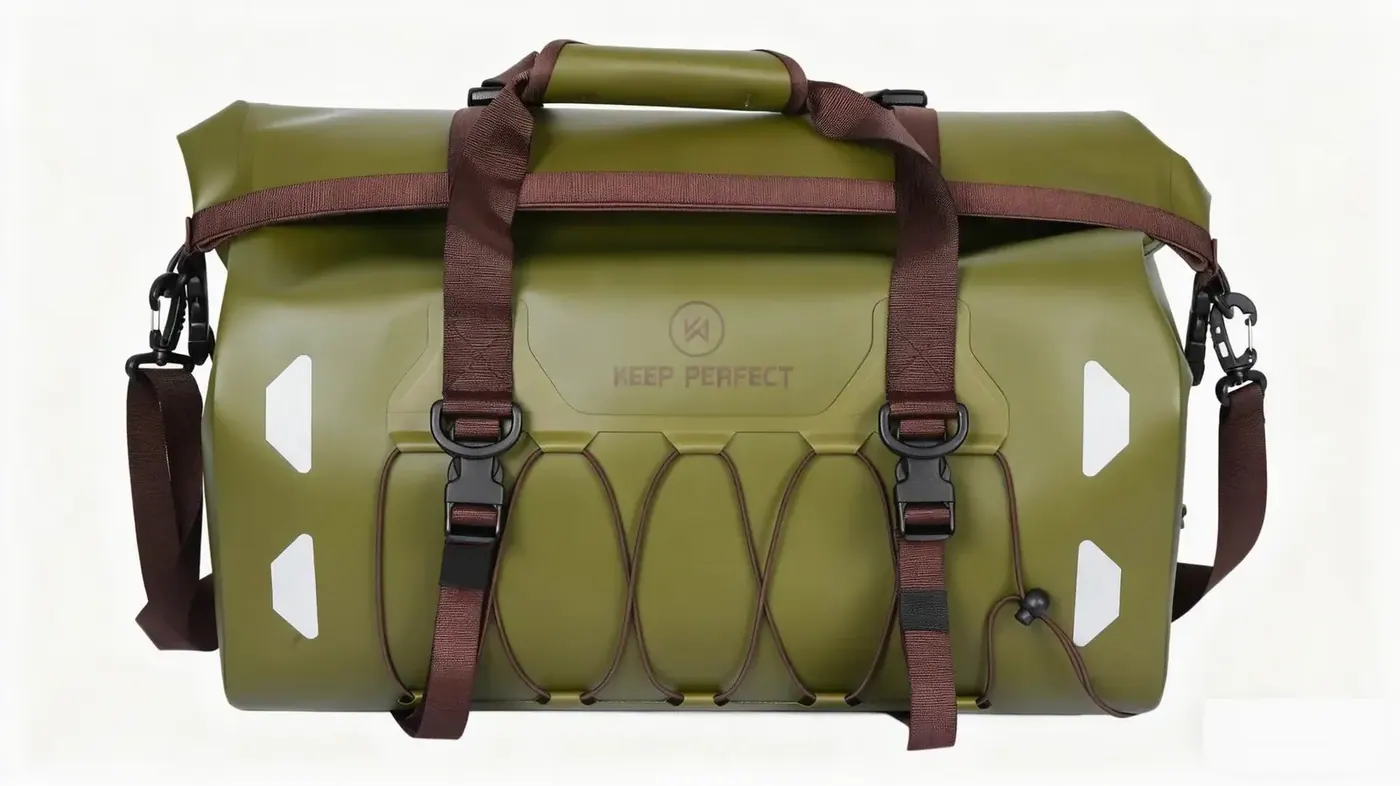
From Brief to Bulk: Ordering a Hunting Programme
Hunting programmes are colourway-heavy, and colourway count moves unit price more than total volume does, because every pattern resets the material minimum for fabric, webbing and printed film. Consolidating to two colourways across a season is usually cheaper per piece than three separate small drops, and it keeps lead time inside the bands below. Early-year timing matters as well: hunting retail is a Q3 delivery business, so a programme confirmed in January ships comfortably, while one confirmed in May is fighting for material slots.
| Order band | Unit price index | Sample lead time | Bulk lead time | Notes |
|---|---|---|---|---|
| 500-999 pcs | 1.00 | 6-10 working days | 35-40 days | One colourway, stock camo film |
| 1,000-2,999 pcs | 0.94 | 6-10 working days | 38-45 days | Up to two colourways |
| 3,000-9,999 pcs | 0.87 | 7-10 working days | 40-50 days | Pantone-matched webbing and pulls |
| 10,000+ pcs | 0.80 | 8-10 working days | 45-50 days | Dedicated print run, branded liner |
- The opening quantity is 500 pcs for each design and colourway; mixed patterns can be consolidated from 3,000 pcs.
- Samples take 6 to 10 working days, bulk runs 35 to 50 days, and shipment is FOB Xiamen or DDP into more than 100 countries.
- Every bulk order is inspected at AQL 2.5 before release, and the signed report travels with the packing list.
- Material screening against REACH and California Prop 65 is included in every quotation, which matters for blaze orange pigments in particular.
- A one-line brief is enough to start: target quantity, volume in litres, closure type and whether the pack must float.
Buyers who want to see how the wider range is put together, including fishing and EVA programmes alongside hunting, can read the production programme. For a first hunting brief, send target quantity, litre band, camo pattern and closure preference to service@junyuanbags.com.
Pre-Season Acceptance Checks That Catch Leaks Before Retail
A leak found in a sampling round costs a re-weld; the same leak found in a retail return queue costs a season of shelf space. The schedule below takes about four working days per style and is the same one applied to bulk release, with sampling levels set by AQL 2.5 so a 500 pc order draws a statistically meaningful sample instead of a token two pieces. Insist that the enclosure test runs on a production-tooled sample, not a hand-welded prototype, because weld power and dwell drift when a style moves from development to the floor.
| Check | Method | Pass criterion | Frequency |
|---|---|---|---|
| Enclosure integrity | Low-pressure air decay on sealed body | Under 10 percent loss over 3 min | Every colourway, first article |
| Zip cycling | 500 cycles then spray at 12 L/min | No moisture on indicator paper | Per zip lot |
| Seam peel strength | Tensile pull on welded coupon | At least 90 percent of fabric strength | Per production week |
| Abrasion resistance | Martindale, ISO 12947-2 | 25,000 cycles to first yarn break | Per fabric lot |
| Colour fastness to light | Xenon arc, AATCC 16 | Grade 4 or better at 20 h | Per pattern |
| Cold flex | Fold at -20 degrees C after 4 h | No cracking or delamination | Per shell lot |
| Haul loop strength | Static pull to 25 kg, 60 s | No stitch or weld failure | Per style |
| Chemical screening | REACH SVHC and Prop 65 list check | Non-detect on declared substances | Per material lot |
Keep one retained sample per colourway under ambient conditions for the life of the programme. When a field claim arrives nine months later, a control piece to measure against turns root-cause analysis into a five-minute comparison instead of an argument.
People Also Ask
What size waterproof hunting backpack do I need?
For a morning sit in a stand, 25 to 35 L at 6 to 9 kg is enough. An all-day blind with decoys and a stool needs 40 to 50 L, and a pack that has to carry a quartered deer out requires 60 to 75 L with a load shelf rated to 25 kg or more.
Can a waterproof hunting backpack be submerged?
Yes, if it is built for it. A welded body with a roll-top mouth and no external zip reaches IPX7, meaning 30 minutes at 1 m depth under IEC 60529. A coated shell with a stitched-and-taped front zip stops at IPX4 to IPX5 and will wet out if it goes in the water.
Do waterproof hunting backpacks float?
Most do not. A sealed pack with trapped air floats for 10 to 20 minutes depending on load, but a 12 kg pack sinks once the air escapes. Only packs specified with a closed-cell foam lid panel, giving 2 to 4 kg of positive buoyancy, should be relied on to stay on the surface.
What camo pattern works best on a waterproof pack?
Large-format disruption patterns read correctly at 40 to 60 m and hide the pack silhouette better than fine photographic prints, which blur into a solid block at distance. For waterproof shells the print route matters as much as the artwork: digital print under a clear TPU film survives RF welding and lasts 500 to 700 hours in xenon testing.
How quiet should a hunting backpack be?
Quiet enough that brush contact and hardware are inaudible at 15 to 20 m. That means a brushed or peached face fabric over a 0.30 to 0.35 mm TPU film, zips with rubberised cord pulls in fabric garages, no hook-and-loop within reach of the hands, and webbing tails kept under 80 mm with keepers.
Is blaze orange required on a hunting backpack?
Several US states require roughly 400 square inches of hunter orange above the waist plus a head covering during firearm seasons; the rule varies by state. A reversible or zip-off orange panel of about 0.25 square metres that stows in its own pocket keeps one pack sellable in both archery and firearm seasons.
Frequently Asked Questions
Q1. What IPX rating should a waterproof hunting backpack have?
IPX5 covers a full day of rain and is sufficient for upland and most tree stand use. Specify IPX6 for layout blinds and marsh work where the pack lies in standing water under load, and IPX7 only for packs genuinely meant to be dunked, since the welded body and sealed hardware push unit cost up by roughly 40 percent.
Q2. How much water can a hunting backpack sit in before it leaks?
A welded 500D polyester shell rated at 5,000 mm hydrostatic head resists the pressure of a 5 m water column, which is far more than the 20 to 40 mm of standing water found under a blind floor. What leaks in practice is never the panel: it is the base seam if stitched, or the mouth if the roll is short.
Q3. Can the pack be opened quietly while wearing gloves?
Yes, with the right hardware. Moulded-tooth zips with rubberised cord pulls, one-hand acetal buckles with a 12 mm webbing wrap, and silent snaps instead of hook-and-loop can all be worked in 6 mm neoprene gloves. We test it: 30 seconds to open, unclip and re-seal at minus 5 degrees Celsius.
Q4. What capacity is right for a waterfowl hunt with decoys?
Plan on 45 to 55 L. A spread of 20 to 24 full-body decoys weighs 12 to 18 kg in its own bag and is best carried on external lash points, leaving 25 to 35 L inside for waders, shells, thermos and layers. Carrying decoys inside the body stains the liner and puts hard edges against the welded seams.
Q5. Do camo prints fade on TPU-laminated fabric?
They fade at different rates depending on the print route. Dye sublimation reaches grade 4 colour fastness after roughly 300 to 400 hours of xenon exposure, pigment print 300 to 500 hours, and digital print protected under a clear TPU film 500 to 700 hours per AATCC 16. For packs displayed in sunny shop windows, choose the protected route.
Q6. Will a waterproof hunting pack stiffen in freezing weather?
TPU-laminated shells stay flexible to about minus 30 degrees Celsius and are safe for late-season stands. PVC tarpaulin stiffens below minus 10 to minus 15 degrees Celsius and can crease-crack if folded when frozen, so it should not be specified for northern US, Canadian or alpine programmes.
Q7. How much weight can a hunting pack carry out of the field?
A day pack in the 25 to 35 L band carries 6 to 9 kg comfortably, and a dedicated meat-haul pack in the 60 to 75 L band carries 25 to 35 kg. The limiter is usually the harness: above 15 kg the hip belt must transfer 70 to 80 percent of the load and the haul loop must be rated to 25 kg.
Q8. What is the MOQ for a waterproof hunting backpack programme?
MOQ is 500 pcs per design and colourway, set by material minimums for fabric, webbing and printed film rather than by assembly capacity. Three patterns consolidated into one run from 3,000 pcs is usually cheaper per piece than three separate 500 pc drops.
Q9. How long does sampling and production take for hunting packs?
Samples take 6 to 10 working days from confirmed artwork, with welded-body styles at the longer end because the weld jig has to be cut first. Bulk then runs 35 to 50 days depending on order band and colourway count. For Q3 retail delivery the programme should be confirmed by January.
Q10. Can the blaze orange panel be removed for archery season?
Yes. The common build is a reversible panel of roughly 0.25 square metres on a zip track, or a stow-away panel in a dedicated pocket with a 120 mm opening. Both keep the pack compliant in firearm seasons and low-profile in archery seasons without a second SKU.
Q11. Are the materials compliant with EU and US chemical rules?
Every quotation includes screening against REACH SVHC and California Prop 65, which covers the pigments used in blaze orange, the TPU film and any DWR finish. PFAS-free durable water repellent is available and is now the default for programmes shipping into EU retail.
Q12. How should a hunting pack be cleaned after a bloody haul?
Rinse the load shelf and exterior with cold water first, because warm water sets protein stains, then wash with pH-neutral soap under 40 degrees Celsius and a soft brush. Never machine wash, never use solvent, and dry with the mouth propped open for 12 to 24 hours before storage.