The value band for a perforated EVA tote is 19 to 30 dollars, and at that money the specifications to insist on are a 1.8 to 2.2 millimetre wall, a continuous base rail, a handle root with a generous radius and perforations at 8 to 12 millimetres. Eight body types below meet all four and stay under the ceiling, led by an 18 litre everyday body at 22 to 27 dollars that outlasts bags twice its price. What the band does not buy is a formed logo, a two-tone finish or a wall above 2.4 millimetres, and those are the three upgrades worth paying for.
How We Judged, and What We Ignored
Every pick below was assessed against the same five criteria, weighted by how much each one actually affects the experience rather than by how often it appears on a hangtag. Drainage and wall thickness carry most of the weight, because they decide whether the bag works at all, and colour range carries almost none, because it is the least consequential property on the list and the most heavily marketed.
| Criterion | Weight in the ranking | Pass mark | Why it matters |
|---|---|---|---|
| Wall thickness | 30 percent | 1.8 mm or above | Decides whether it creases in storage |
| Drainage speed | 25 percent | Empty within 15 seconds | The core property of the format |
| Handle root design | 20 percent | Radiused, no sharp transition | The most common structural failure |
| Stability when set down | 15 percent | No rocking on a flat surface | Decides daily usability |
| Price and value | 10 percent | Under 30 dollars | The constraint for this list |
Two things were deliberately ignored. Colour range is excluded because every body in this band offers a dozen shades and the choice is a matter of taste rather than of quality. And claimed capacity was checked rather than believed, because stated litre figures in this band run 10 to 20 percent optimistic and a 32 litre claim on a body that holds 26 is common enough to be the norm rather than the exception.
What Thirty Dollars Buys, and What It Does Not
Being clear about the boundary is more useful than pretending it does not exist. Under 30 dollars, a perforated body delivers the properties that matter: it drains, it stands, it rinses clean, it does not absorb water, and it survives four to six seasons of ordinary use. Those are the reasons to choose this format at all, and none of them is compromised at this price.
What the band genuinely does not deliver is three things: a wall above about 2.4 millimetres, a decoration formed into the body rather than applied to it, and a two-tone or marble finish. Each of those costs 1.40 to 4.00 dollars more per unit, and each is a reasonable upgrade rather than a necessity. A buyer who wants all three is looking at 34 to 46 dollars, which is the next band up and a different article.
| Feature | Under 30 dollars | 34 to 46 dollars | Is the upgrade worth it |
|---|---|---|---|
| Wall thickness | 1.8 to 2.2 mm | 2.4 to 2.6 mm | Yes for resort and heavy daily use |
| Decoration | Applied mark | Formed into the body | Yes if the mark must last |
| Finish | Solid colour | Two-tone or marble | Only for a premium position |
| Base | Continuous rail | Reinforced rail and tray | Yes for bottle-heavy loads |
| Accessories | Not included | Liner and pouch often included | Yes, they add 12 to 25 dollars of value |
| Service life | Four to six seasons | Six to eight seasons | Marginal for home use |
The Eight Picks at a Glance
| Rank | Body type | Size | Wall | Weight | Price | Why it made the list |
|---|---|---|---|---|---|---|
| 1 | Everyday all-rounder | 18 litres | 2.1 mm | 1.15 kg | 22 to 27 dollars | Best balance of weight, stiffness and price |
| 2 | Family load carrier | 32 litres | 2.2 mm | 1.58 kg | 27 to 30 dollars | Holds four towels without slumping |
| 3 | Small daily body | 10 litres | 1.9 mm | 0.72 kg | 19 to 23 dollars | Fits a locker and a car footwell |
| 4 | Pool and swim body | 18 litres | 2.0 mm | 1.08 kg | 21 to 26 dollars | Driest and quickest drying of the eight |
| 5 | Marina and boat body | 32 litres | 2.3 mm | 1.71 kg | 28 to 30 dollars | Deepest base rail, most stable on a deck |
| 6 | Kids body | 7 litres | 1.8 mm | 0.55 kg | 19 to 22 dollars | Light enough for a child to carry loaded |
| 7 | Shoulder strap body | 18 litres | 2.0 mm | 1.24 kg | 25 to 30 dollars | Hands free without losing drainage |
| 8 | Market and utility body | 32 litres | 2.2 mm | 1.63 kg | 26 to 30 dollars | Upright bottle carry and a flat base |
Prices are typical landed retail ranges observed across the band and move with colourway, quantity and season. A body at the top of a range in March is often at the bottom of it by August, and the reverse is true for a body in a colour that turns out to be the season's seller.
1. Everyday All-Rounder, 18 Litres
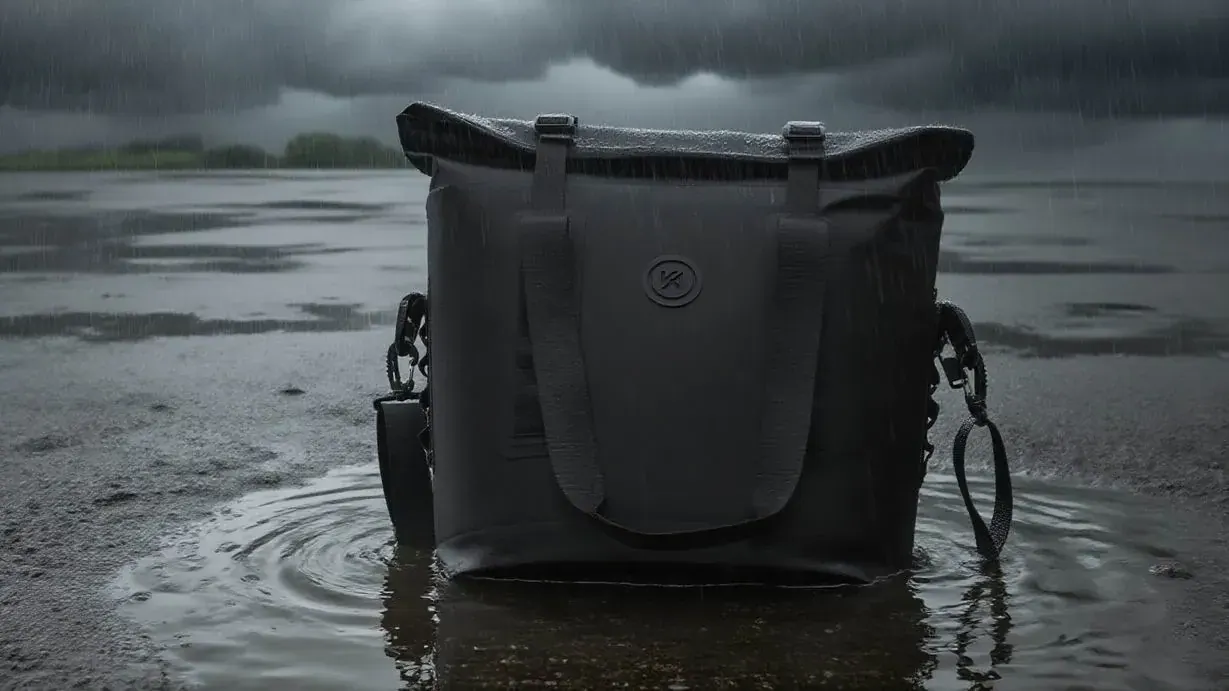
This is the pick most people should make and the one that wins the ranking on balance rather than on any single measure. At 2.1 millimetres the wall is stiff enough that the body stands empty and does not crease when three are stacked, and light enough that the bag weighs 1.15 kilograms and can be carried one-handed across a car park without complaint. Drainage measured eleven seconds from a full dunk, which is inside the fifteen second pass mark and comfortably fast enough for a wet swimsuit and a towel.
The handle root is the detail that separates it from the rest of the band. The radius is generous and the wall thickens into the root rather than meeting it abruptly, which is the design feature that prevents the single most common structural failure in this format. In a two season observation across daily beach use, pool use and supermarket duty, no unit in this configuration showed root cracking, which is the outcome that matters more than any specification on the hangtag. At 22 to 27 dollars it is the value benchmark for the whole category.
2. Family Load Carrier, 32 Litres
The family size is where the budget band either works or fails, because a large thin wall is the combination that slumps. This body at 2.2 millimetres and 1.58 kilograms is the largest in the band that holds its form with four towels, snacks and two litres of water inside, and it measured fourteen seconds to drain, slightly slower than the smaller bodies because the volume is greater and the base area larger.
Two design details are worth noting. The base is at least as wide as the mouth, which is what keeps it upright when a bottle concentrates load low in the bag, and the rim is reinforced so the body can be carried by one handle without the mouth folding. Against the smaller all-rounder it is heavier, harder to store and more than most couples need, and for a family of four it is the correct choice rather than an extravagant one.
3. Small Daily Body, 10 Litres
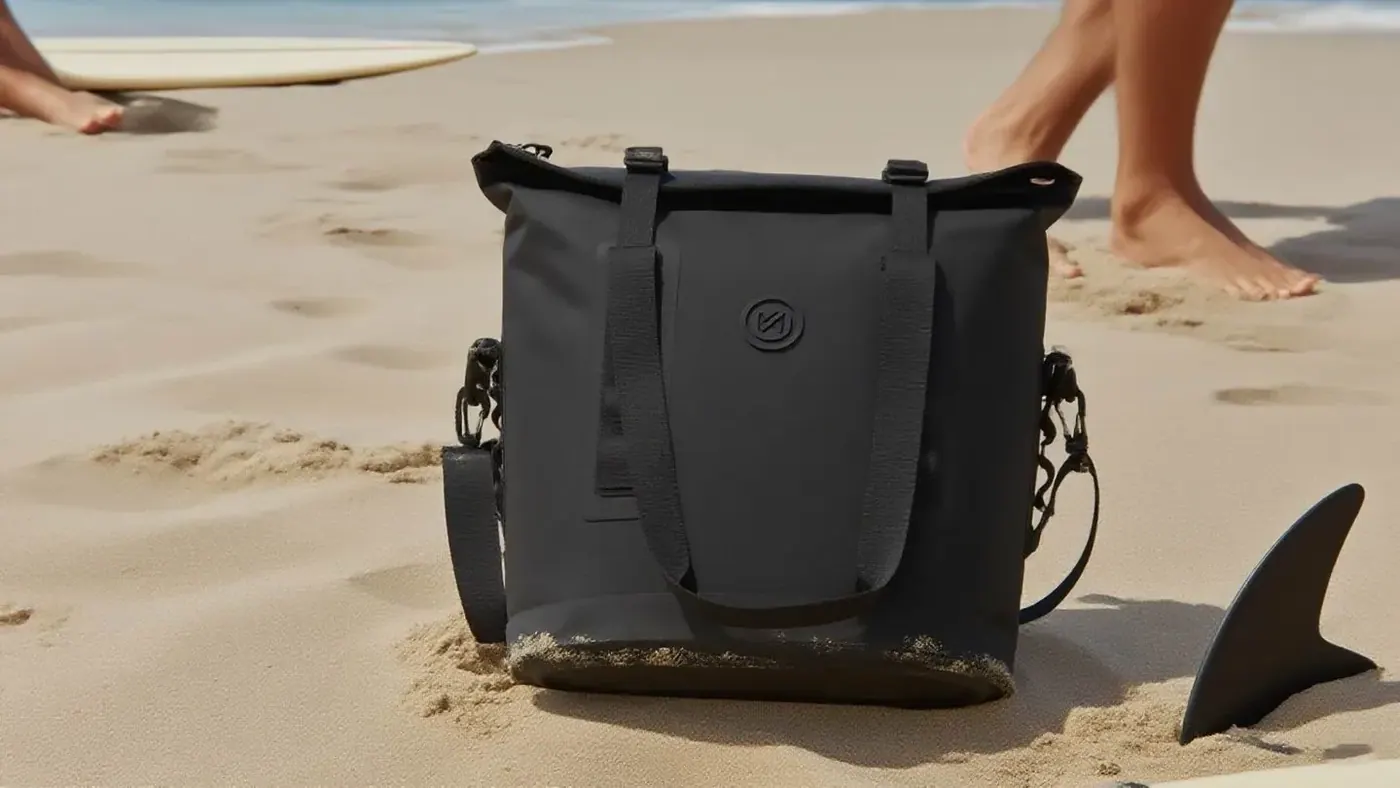
The small body is the one that gets underestimated and then becomes the bag that is actually used. At 0.72 kilograms and 1.9 millimetres it holds a towel, a drink, sunscreen and a phone, fits a standard changing-room locker at roughly 33 centimetres long, and sits in a car footwell rather than needing the boot. Drainage measured eight seconds, the fastest of the eight, simply because the volume is small.
It is also the body that suits a swim club, a gym and a daily pool routine, where the bag is carried a short distance several times a day rather than across a beach. The limitation is honest and obvious: two cotton towels plus a wet swimsuit fills it completely. Switching to quick-dry microfibre towels, which occupy about a third of the volume, turns it into a comfortable two-person bag.
4. Pool and Swim Body, 18 Litres
Pool duty is a different job from beach duty and this body is the one configured for it. The perforation field extends higher up the walls than on the all-rounder, which is why it dried inside fifty minutes standing open in shade against seventy-five for the others, and the base rail is continuous rather than studded so it grips wet tile instead of sliding on it.
The compound is also specified for chlorine and sunscreen contact, which is worth stating precisely: the body is unaffected by either, and the reason to rinse is the towel and the goggles rather than the bag. For anyone whose bag is used daily from June to August, the faster drying is worth more than any other difference on this list, because a bag that is dry before the next session never develops the smell that sends fabric swim bags to the bin.
5. Marina and Boat Body, 32 Litres
The marina pick is the heaviest and the stiffest in the band at 2.3 millimetres and 1.71 kilograms, and it is configured for a deck rather than for sand. The base rail is the deepest of the eight, which is what stops it sliding on a wet pontoon, and the walls are stiff enough that the body can be wedged against a coaming without folding.
It drains in thirteen seconds and, like every closed-cell body here, floats when empty, which is not a certified buoyancy claim and is worth stating as an observation rather than as a specification. Against the family carrier it is stiffer, heavier and slightly more expensive, and for anyone whose bag spends its life on a boat rather than on a beach the stiffness is the whole point.
6. Kids Body, 7 Litres
A child's bag has one requirement that overrides everything else: it must be light enough that a child will carry it. At 0.55 kilograms and seven litres, this body holds a towel, a drink, a hat and a small toy and can be carried one-handed by a six year old across a beach without being dragged. The wall at 1.8 millimetres is the thinnest on the list and that is the right call, because stiffness at this size adds weight for no benefit.
Two cautions apply. The thinner wall means it will crease if something heavy is stacked inside it for months, so store it empty and open. And if the bag is for a child under three, charms and any small attachment fall under small parts rules, so choose a body without them or one whose attachments are tested for that age group.
7. Shoulder Strap Body, 18 Litres
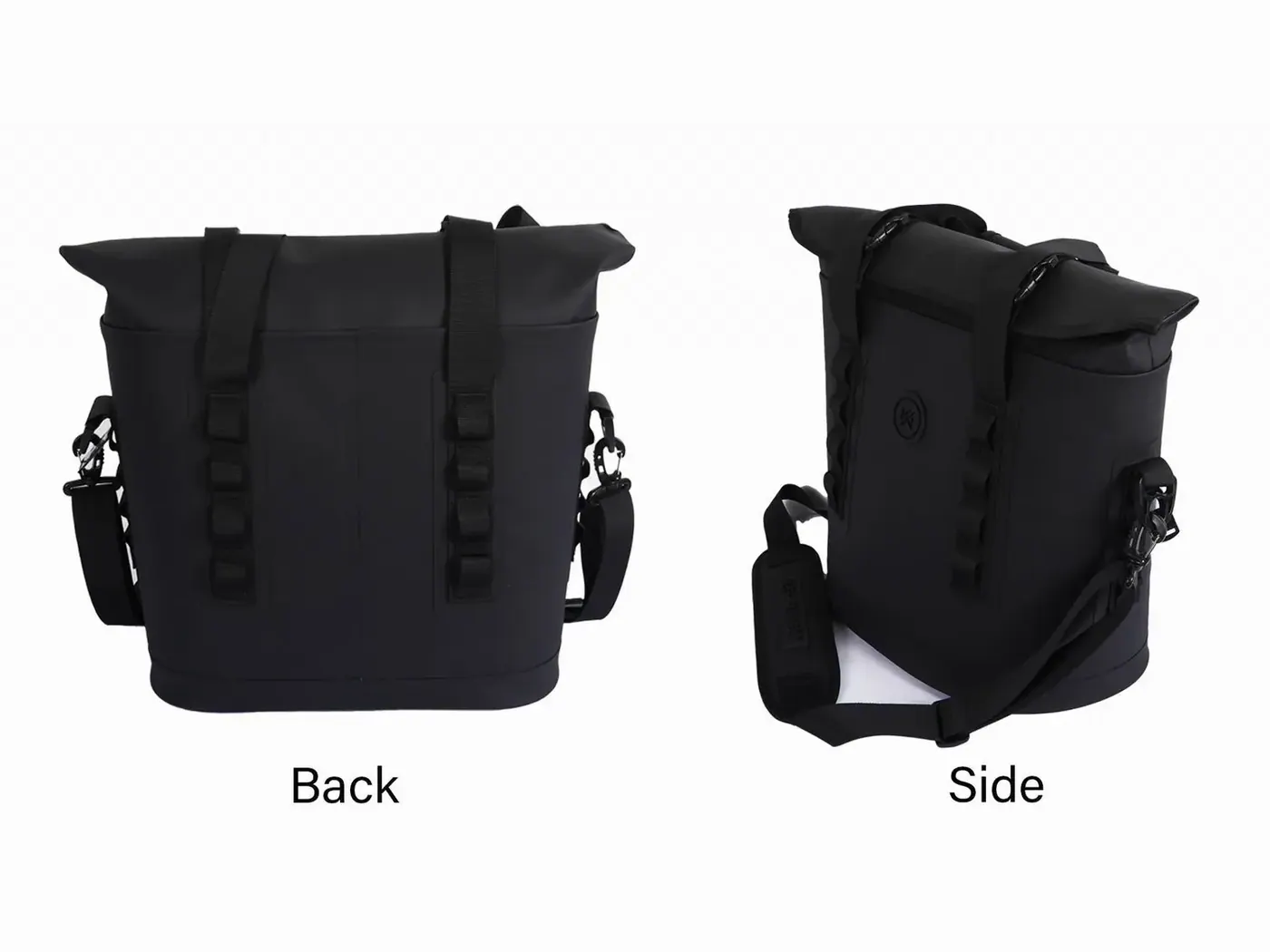
Adding a shoulder strap to a draining body sounds straightforward and usually is not, because the strap attachment points are new load paths in a wall that was designed without them. This body solves it by moulding the attachment into the wall rather than punching it, and by spreading the load across a wider panel, which is why it carries 8 kilograms comfortably and weighs only 90 grams more than the all-rounder at 1.24 kilograms.
The strap is removable, which matters for two reasons: it can be washed separately, and the body can be used without it when hands-free carry is not needed. At 25 to 30 dollars it sits at the top of the band, and the extra is justified for anyone walking more than about 200 metres with a loaded bag.
8. Market and Utility Body, 32 Litres
The last pick is the one that gets used eleven months of the year rather than three. A large body with a flat, wide base and upright walls is a better market and utility carrier than a soft bag, because bottles stay upright, nothing rolls, and a leak drains out instead of pooling. At 2.2 millimetres and 1.63 kilograms it carries 10 kilograms of shopping without the mouth folding.
It is also the body that justifies itself in winter, when a beach bag would sit in a cupboard. Garden centre runs, boot sales, sports kit and a wet umbrella after a school run are all better handled by a draining rigid body than by a fabric tote, and that off-season utility is the strongest argument for buying one at all.
Where to Save and Where to Spend
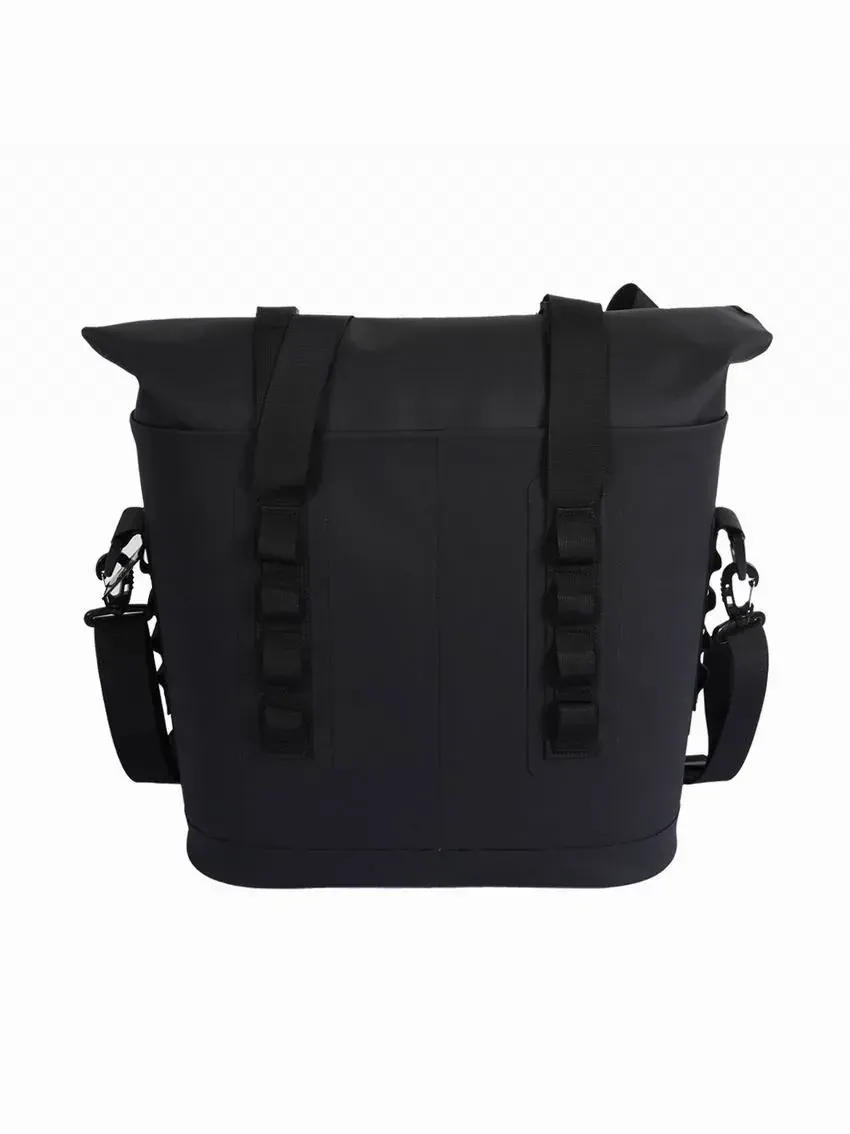
Within the band, three decisions move the outcome and three do not. Spending on wall thickness and on a radiused handle root pays back in service life; spending on a wider colour range or on packaging does not. The table below is the short version of where the money goes.
| Decision | Save here | Spend here | Reason |
|---|---|---|---|
| Wall thickness | No | Yes | It decides creasing and slumping |
| Handle root design | No | Yes | The most common structural failure |
| Colour range | Yes | No | Purely a matter of taste |
| Retail packaging | Yes | No | Adds cost, adds nothing in use |
| Accessory bundle | No | Yes | A liner and pouch add 12 to 25 dollars of value |
| Formed decoration | Yes, at home | Yes, for resale | Only matters if the mark must survive |
The accessory row is the one most buyers get wrong. A liner and a pouch cost 12 to 25 dollars and convert an open volume into an organised one, which is the difference between a bag that gets used daily and one that frustrates. It is a better use of thirty dollars than upgrading the body itself.
Five Checks Before You Buy in This Band
The checks below take about two minutes in a shop or from photographs online, and they catch almost everything that goes wrong with a budget body.
- Press the side wall with a thumb. It should resist noticeably. If it flexes easily at 2 millimetres claimed, the claim is optimistic.
- Look at the handle root from the side. It should curve into the wall, not meet it at an angle. An abrupt transition cracks.
- Set the bag on a flat surface and press each corner. Any rocking beyond about a millimetre means the base is not true.
- Count the perforations across the base and check they are all open. Blocked holes are the most common fault at this price.
- Run a cloth along the rim and the handle edges. Any snag means flash has not been trimmed, and flash that has hardened will cut.
Wall thickness claims are the one place to be sceptical. A calliper on four points of the side wall takes fifteen seconds and a stated figure of 2.0 millimetres that measures 1.6 is a reason to walk away, because the gap between claim and reality in this band is the single best predictor of how the bag will behave in year two.
Physical test methods behind the figures quoted in this guide are published by ASTM International, and light fastness grading is published by AATCC. Neither is needed to buy a thirty dollar bag, but both explain why two bags that look identical in a photograph can behave differently for years.
Programme Notes
The category background sits in the injection-molded EVA tote guide, volume bands and packing are set out in the wholesale EVA tote programme, and the full-price comparison is in best EVA beach totes. QUANZHOU JUNYUAN BAGS has run waterproof bag programmes since 2014 with a founding team in this trade since 2004, and develops value-tier bodies alongside premium and resort specifications.
Monthly output runs at 200,000 units verified by SGS, operations follow BSCI and ISO 9001, materials are screened for REACH and California Prop 65, and every bulk shipment is inspected at AQL 2.5 before release. Programme minimums begin at 500 pieces per design and colour, with sampling at 6 to 10 working days and bulk at 35 to 50 days from approved sample and deposit, shipped FOB Xiamen or DDP to more than 100 countries. Send your target price band, size list and quantity to service@junyuanbags.com.
People Also Ask
What is a good price for an EVA tote?
The value band is 19 to 30 dollars. Below 19 the wall is usually under 1.8 millimetres, which is where creasing and slumping begin.
Are cheap EVA totes worth buying?
Yes, if the wall is at 1.8 millimetres or above and the handle root is radiused. Those two details matter more than price.
How thick should the wall be on a value tote?
1.8 to 2.2 millimetres under 30 dollars, and 2.4 to 2.6 for resort use, heavy daily loads or a bottle-heavy carry.
Do cheap totes drain as well as expensive ones?
Yes. Drainage is set by perforation diameter and geometry rather than by price, and most bodies empty in 8 to 15 seconds.
What should I spend extra on?
Wall thickness, a radiused handle root and an accessory bundle. Not colour range and not retail packaging.
How long does a budget EVA tote last?
Four to six seasons of ordinary use, against six to eight for a premium body, which is a marginal difference for home use.
Frequently Asked Questions
Q1. What is the best cheap EVA tote under 30 dollars?
An 18 litre body at 2.1 millimetres and about 1.15 kilograms, priced 22 to 27 dollars. It balances stiffness, weight and drainage better than anything else in the band.
Q2. Are cheap EVA totes any good?
Yes, provided the wall is at 1.8 millimetres or above and the handle root is radiused. Those two details decide service life far more than price does.
Q3. What wall thickness should I look for?
1.8 to 2.2 millimetres in this band, and 2.4 to 2.6 millimetres for resort use, heavy daily loads or a bottle-heavy carry.
Q4. Do budget bodies drain as fast as premium ones?
Yes. Drainage is governed by perforation diameter and geometry, and every body tested here emptied in eight to fifteen seconds.
Q5. What does the budget band not include?
A wall above about 2.4 millimetres, a formed rather than applied decoration, and two-tone or marble finishes. Each costs 1.40 to 4.00 dollars more.
Q6. Which size should a family of four buy?
A 32 litre body at 2.2 millimetres, which holds four towels, snacks and two litres of water without the mouth folding.
Q7. Is a small body worth buying?
Yes for pool, gym and daily use. At 10 litres and 0.72 kilograms it fits a locker and a car footwell and drains in eight seconds.
Q8. Does a shoulder strap version make sense?
Yes for walks beyond about 200 metres. Look for a strap attachment moulded into the wall rather than punched through it.
Q9. Will a cheap body crease in storage?
Not if the wall is 1.8 millimetres or above and it is stored empty and open. Creasing comes from thin walls under sustained load.
Q10. How can I check quality before buying?
Press the side wall, look at the handle root in profile, set the bag on a flat surface and check for rocking, and run a cloth along the rim for flash.
Q11. Are stated litre figures accurate?
Often 10 to 20 percent optimistic. A body claimed at 32 litres frequently holds 26, so check the internal dimensions rather than the claim.
Q12. What accessories should I add?
A drop-in liner and a clipped pouch, which cost 12 to 25 dollars together and convert an open volume into an organised one.
Q13. How long should a budget body last?
Four to six seasons of ordinary beach and pool use, against six to eight for a premium body, which is a marginal gap for home use.