The best EVA beach tote for most buyers in 2026 is a 48 by 31 by 24 centimetre body holding about 32 litres, with 6 to 8 millimetre tapered walls, perforations at 10 to 12 millimetres and an empty weight of 1.6 to 1.9 kilograms. That profile carries six towels plus a picnic kit, drains in roughly seven seconds, and lasts five to seven seasons in salt and sun. Ten profiles below are ranked by specification rather than by brand name, with prices spanning USD 25 to 90, because in a category where the construction is identical the specification is the only honest way to compare.
How These Picks Were Judged
Every product in this category shares one construction: molten ethylene-vinyl acetate injected into a closed tool so the body, handles and base emerge as a single piece with no seam. That makes brand comparison less useful than it is in most categories, and specification comparison more useful. Each profile below is therefore defined by six numbers rather than by a name, and any product matching those numbers will behave the way the profile describes.
Six criteria were weighted. Drainage and sand behaviour first, because that is the job. Wall thickness and rim section second, because they decide service life. Empty weight against carried load third, because a bag too heavy for its user does not get used. Base stability fourth. Price per season fifth, on the basis that a bag lasting six seasons at USD 65 beats one lasting two at USD 35. And documentation last, because a product sold into family channels should have current substance screening on file.
| Criterion | Weight in ranking | Pass condition | Why it matters |
|---|---|---|---|
| Drainage and sand | 25 percent | Drains in under 10 seconds | The defining job of the category |
| Wall thickness and rim | 20 percent | 6 to 8 millimetres tapered, 15 millimetre band | Decides service life under load |
| Weight against load | 15 percent | Under 10 percent of user body weight | A bag too heavy does not get used |
| Base stability | 15 percent | Base as wide as or wider than the mouth | Prevents tipping with bottles loaded |
| Price per season | 15 percent | Under USD 15 per year of service | Cheap bags that fail are not cheap |
| Documentation | 10 percent | Screening dated within 12 months | Needed for family and resort channels |
Ranking Table: Ten Profiles Compared
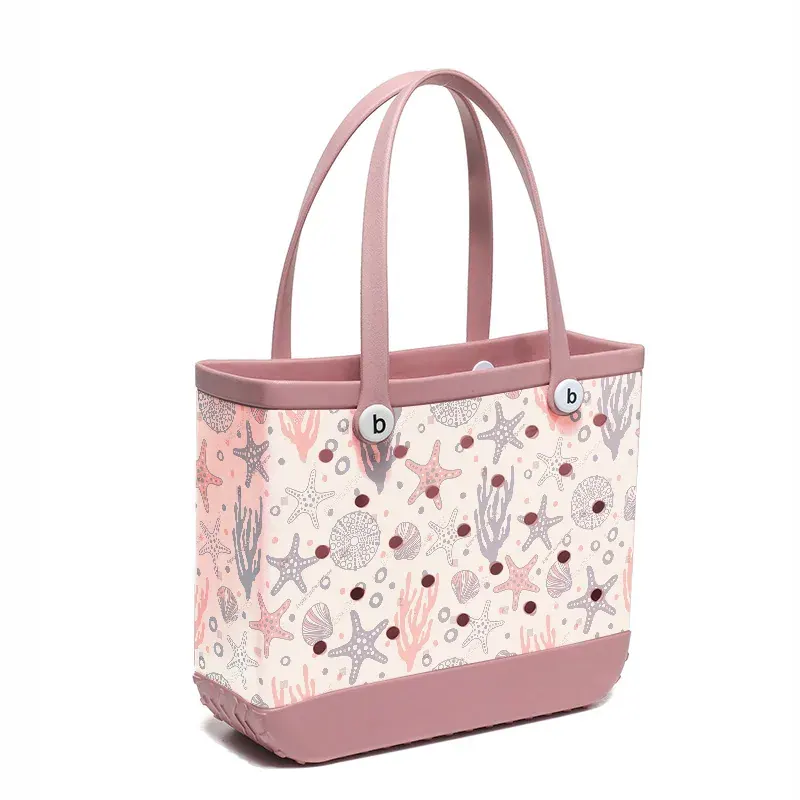
Read the table as a shortlist rather than a league: the profiles are ordered by how broadly each one suits real use, not by score, and the right pick depends more on the load than on the rank. Prices are typical retail bands observed across the category; programme pricing at 500 pieces per design and colour sits well below the lowest retail band shown here.
| Rank | Profile | Dimensions | Volume | Empty weight | Retail band | Best for |
|---|---|---|---|---|---|---|
| 1 | Family all-rounder | 48 by 31 by 24 centimetres | 32 litres | 1.6 to 1.9 kilograms | USD 55 to 75 | Families, most buyers |
| 2 | Deep large carry | 50 by 32 by 27 centimetres | 38 litres | 2.0 to 2.4 kilograms | USD 65 to 90 | Full days, bulky kit |
| 3 | Everyday small | 36 by 25 by 16 centimetres | 14 litres | 0.85 to 1.05 kilograms | USD 35 to 50 | One adult, pool, gym |
| 4 | Kids size | 28 by 19 by 13 centimetres | 7 litres | 0.4 to 0.6 kilograms | USD 25 to 40 | Children aged 5 to 8 |
| 5 | Strapped carry | 41 by 27 by 19 centimetres | 18 litres | 1.3 to 1.6 kilograms | USD 50 to 70 | Walks over 300 metres |
| 6 | Semi-perforated brand panel | 41 by 27 by 19 centimetres | 18 litres | 1.2 to 1.5 kilograms | USD 45 to 65 | Resort and logo programmes |
| 7 | Value family size | 48 by 31 by 22 centimetres | 29 litres | 1.4 to 1.6 kilograms | USD 40 to 55 | Budget-conscious families |
| 8 | Lightweight travel | 33 by 23 by 14 centimetres | 10 litres | 0.7 to 0.9 kilograms | USD 30 to 45 | Trips where space is tight |
| 9 | Pool daily use | 33 by 23 by 14 centimetres | 10 litres | 0.7 to 0.9 kilograms | USD 35 to 50 | Daily swim sessions |
| 10 | Compact beach | 36 by 25 by 16 centimetres | 14 litres | 0.85 to 1.05 kilograms | USD 35 to 50 | Couples, half days |
1. Best Overall: The 32 Litre Family All-Rounder
This is the profile most families should buy and the one most buyers end up with after an exchange. At 48 by 31 by 24 centimetres it holds six folded towels, a picnic kit, drinks and wet gear, and the mouth is wide enough that nothing has to be unpacked to reach the bottom. Empty weight of 1.6 to 1.9 kilograms is heavy enough to stay upright when loaded and light enough for one adult to carry 200 metres without stopping.
Specify 6 to 8 millimetre tapered walls, perforations at 10 to 12 millimetres and at least 15 millimetres of solid material above the top row of holes. Expect a drain time near seven seconds, a service life of five to seven seasons and a retail band of USD 55 to 75. The one thing to check before buying is internal height: at 24 centimetres a 1.5 litre bottle stands upright, and at 22 it has to lie down.
2. Best Large: The 38 Litre Deep Body
The deep large profile adds three litres of height rather than width, which suits loads that are tall rather than broad: chairs, balls, umbrellas and sports kit alongside the usual towels and food. At 50 by 32 by 27 centimetres and 2.0 to 2.4 kilograms empty it is a two-hand carry when full, and the total carried weight with a family load lands between 15 and 20 kilograms.
This profile is the one to skip if the user is carrying it alone over any distance, and the one to choose if the load regularly includes bulky rigid items. Wall thickness should stay at 6 to 8 millimetres because the taller wall has a longer span, and the base rails should be continuous rather than corner studs, since a deep body with a full load concentrates more force at the perimeter.
3. Best Everyday: The 14 Litre Small
For one adult, the 14 litre body at 36 by 25 by 16 centimetres is the size that gets used most often. It takes two towels, sunscreen, a bottle and a book, it fits a car footwell and a gym locker, and at 0.85 to 1.05 kilograms it can be carried all day without noticing it. Wall thickness of 4 to 5 millimetres is sufficient at this scale and keeps the weight down where it matters.
The reason this ranks above the larger everyday sizes is frequency of use. Bags that fit a locker and a cupboard shelf get taken out; bags that live in a garage get used twice a summer. Anyone whose honest answer to how many people use it at once is one should start here and only move up if a specific load fails to fit.
4. Best Kids Size: The 7 Litre Body
Kids sizes are governed by one number: empty weight. At 28 by 19 by 13 centimetres and 0.4 to 0.6 kilograms, a seven litre body leaves a 20 kilogram child about 1.4 to 1.6 kilograms of budget for contents, which is a small towel, goggles and a drink. Raise the empty weight to 0.9 kilograms, as adult small sizes do, and the same child has almost nothing left to carry.
Perforations should be at 6 to 9 millimetres at this scale: enough to pass sand and water, not enough to admit small fingers. Charms sold with the bag are small parts and need testing against the small-parts requirement for the destination market. Retail band USD 25 to 40, and service life is typically three to five seasons because children are harder on equipment than adults.
5. Best Strapped: The 18 Litre Shoulder Carry
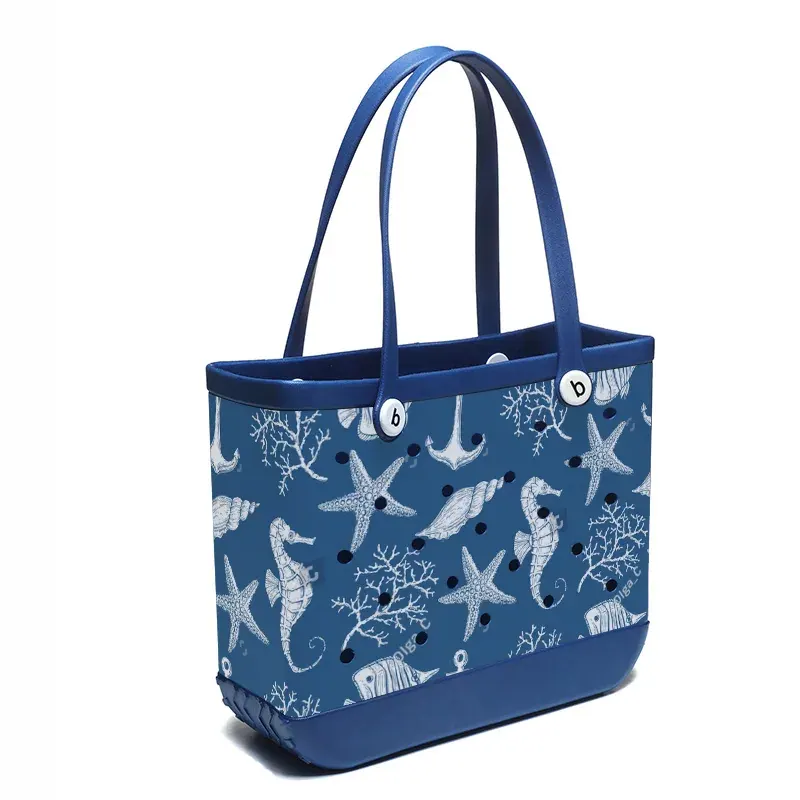
Adding a shoulder strap changes the arithmetic of distance. A detachable strap with a 40 to 60 centimetre drop and a width of 38 to 50 millimetres raises the comfortable carry distance from about 150 metres to roughly 600, which is the difference between a bag for a car park fifty metres from the sand and a bag for a twenty minute walk to a quieter beach.
The two things to inspect are the anchor and the hardware. The strap pulls on the rim at an angle the handles never do, so the moulded anchor needs a generous fillet radius, and the hardware needs to be rated to at least twice the intended load and corrosion resistant if the bag sees salt water. The strap should also be removable, because left attached it gets in the way when the bag is used as an open carry-all.
6. Best for Branding: The Semi-Perforated 18 Litre
Semi-perforated bodies keep holes low on the walls and across the base while leaving the upper wall solid, which creates a clean print area and recovers usable interior surface. Drain time rises to 10 to 18 seconds, which is the price, and for resort, hotel and event programmes the trade is usually worth it because artwork across perforations produces broken edges and reads as cheap.
Specify the solid panels explicitly, because it is the one detail programme partners most often interpret differently. Ask which faces are unperforated, what print method is proposed and what the artwork tolerance is, since a five millimetre placement error is far more visible on a 41 centimetre face than on a small one. Colour matching should be approved under a standard light source rather than on screen.
7. Best Value: The 29 Litre Shallow Family
Shaving two centimetres of height off the family profile removes material, weight and cost while keeping the footprint that matters. At 48 by 31 by 22 centimetres and 1.4 to 1.6 kilograms, this profile holds the same towels and food as the full-depth version and loses only the ability to stand a tall bottle upright. For a family whose drinks come in cans or a soft cooler, that is a trade worth making at USD 40 to 55.
Value in this category is best judged per season rather than per unit. A build with 4 to 6 millimetre tapered walls and a standard colourway typically lasts four to five seasons, which puts the cost at roughly USD 10 per year of service. That beats a USD 35 body with 3 millimetre walls replaced after two seasons, and it is why the cheapest option on a shelf is rarely the cheapest over the period of ownership.
8. Best Lightweight Travel: The 10 Litre Compact
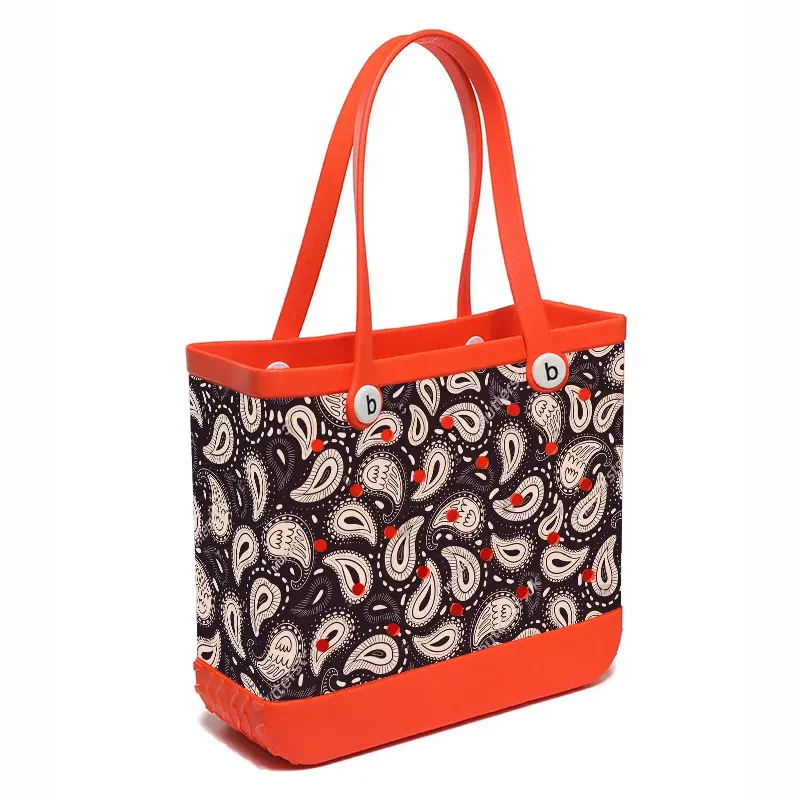
The 10 litre body at 33 by 23 by 14 centimetres and 0.7 to 0.9 kilograms is the largest size that still behaves like luggage. It fits inside a suitcase, under an aircraft seat on most carriers and in a car footwell, and it is the profile to choose when the bag has to travel to the destination rather than live there.
Two honest limits apply. A 10 litre body holds about two folded towels and nothing bulky, so it is a personal bag rather than a family one. And a rigid body cannot be compressed, so it occupies its full volume in transit even when empty, which is why travellers who fly frequently often hire at the destination rather than carry one.
9. Best for Pool: The 10 Litre Daily Use Body
Pool use is the one application where the small size is unambiguously correct. The load is predictable, the distance is short, everything comes home damp, and the bag has to dry before the next session. A 10 litre perforated body drains on the walk to the car, does not soak a changing-room bench, rinses in under a minute and is dry within the hour.
Choose a light colourway for this use, because a dark body left on a deck in summer sun passes sixty degrees at the surface within an hour and can creep. Add a small wet pouch for swimsuits, since the holes drain water but do not isolate wet fabric from dry items. Guidance on drying and storing swim items between sessions is published by the United States Centers for Disease Control and Prevention.
10. Best Compact Beach: The 14 Litre Couples Size
For two people on a half day, the 14 litre body is the size that gets used and the 32 litre one is the size that gets left in the car. Two towels, sunscreen, a bottle and a book fill it, and at 0.85 to 1.05 kilograms it is comfortable to carry one-handed while holding something else. It is also the profile most often bought as a second bag after a family size, which is a reasonable signal.
The compact beach body shares its dimensions with the everyday small profile, so the two differ only in colourway and accessories rather than in specification. Buyers choosing between them should decide on colour and charm compatibility rather than on size, and should confirm hole diameter before ordering charms, since a charm cut for twelve millimetre holes will not seat in a nine or ten millimetre body.
What All Ten Profiles Share
Three properties are common to every profile in this ranking and are worth stating because they are the reason the category exists. The material absorbs effectively no water, so none of these bags can rot or mildew. The body is one piece, so there is no seam to split and no lining to delaminate. And none of them is a sealed container, so anything that must stay dry needs a pouch inside regardless of which profile is chosen.
| Shared property | Value or behaviour | Test or reference | Note for buyers |
|---|---|---|---|
| Water absorption | Effectively zero | Closed-cell structure, no capillary path | Cannot rot, mildew or stain |
| Drain time | 4 to 18 seconds depending on perforation | Dunk and count, empty body | Faster on full perforation |
| Service temperature | About minus 20 to plus 60 degrees | Physical test methods from ASTM International | Above 60 degrees the shape can creep |
| Load rating | 6 to 30 kilograms by size | Stated rating with a named method | Above 30 kilograms, be sceptical |
| Substance screening | REACH and Prop 65 documentation | Reports dated within 12 months | Required for family channels |
| Quality system | ISO 9001 and BSCI audited operations | Certificate validity period | Ask for current certificates |
Physical test methods for load and dimensional checks are published by ASTM International, and quality-management expectations for how those checks are documented come from the International Organization for Standardization. Asking which method a claim was tested under is the fastest way to separate a real figure from a marketing one.
Buying Checklist Before You Choose
Six checks resolve most purchases in under two minutes, and the order matters: stop at the first failure, because nothing below it will rescue a bag that failed above it.
- Decide how many people and for how long. Three or more for a full day means the 32 litre profile, no exceptions.
- Measure the longest rigid item you intend to carry and confirm internal height exceeds 24 centimetres if it is a bottle.
- Check perforation diameter is between 9 and 12 millimetres for general beach use, and 6 to 9 for kids sizes.
- Press the rim and compare it with the mid-wall to confirm tapered rather than uniform wall thickness.
- Compare base footprint width with rim width; a narrower base tips when bottles are loaded low.
- Ask for screening documentation dated within twelve months if the bag is for family, resort or resale channels.
Two further questions are worth asking of any seller. What is the stated load rating, and was it tested to a named method? Above 30 kilograms on any size, the answer should be treated with scepticism. And what is the packed carton specification, because rigid bodies do not compress and freight per unit can differ by a factor of two between two profiles of the same apparent size.
Programme Notes
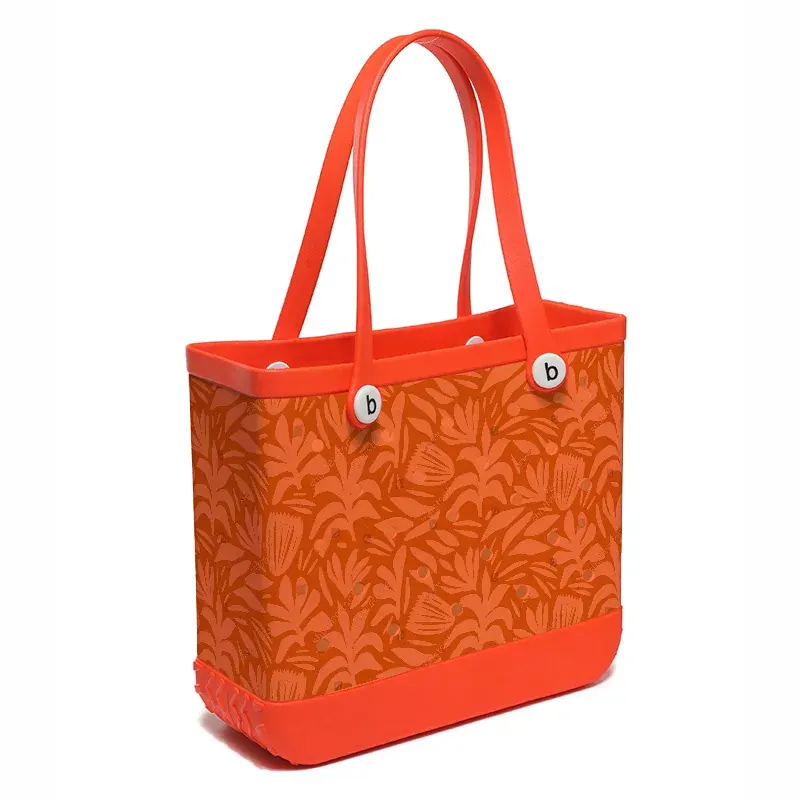
Full category background sits in the injection-molded EVA tote guide, the moulded rubber alternative is covered in the rubber beach tote range, and a step-by-step specification route is set out in the EVA tote buying guide. QUANZHOU JUNYUAN BAGS has run waterproof bag programmes since 2014 with a founding team in this trade since 2004, covering every profile above alongside sewn and welded ranges.
Monthly output runs at 200,000 units verified by SGS, operations follow BSCI and ISO 9001, materials are screened for REACH and California Prop 65, and every bulk shipment is inspected at AQL 2.5 before release. Programme minimums begin at 500 pieces per design and colour, with sampling at 6 to 10 working days and bulk at 35 to 50 days from approved sample and deposit. Send your target profile, dimensions, colourway count, quantity and destination to service@junyuanbags.com.
People Also Ask
What is the best EVA beach tote overall?
A 48 by 31 by 24 centimetre body holding about 32 litres with 6 to 8 millimetre tapered walls, perforations at 10 to 12 millimetres and an empty weight of 1.6 to 1.9 kilograms.
How much should I spend on an EVA beach tote?
Between USD 55 and 75 for a family size that lasts five to seven seasons. Below USD 40 usually means thinner walls and a shorter service life.
What size EVA tote suits a family of four?
The 32 litre family profile at 48 by 31 by 24 centimetres, which carries six towels, a picnic kit, drinks and wet gear.
Are expensive EVA totes worth it?
Usually yes for heavy use. A USD 65 body lasting six seasons costs about USD 11 per year, against roughly USD 17 per year for a USD 35 body replaced twice.
Which EVA tote is best for a child?
A 28 by 19 by 13 centimetre body of about 7 litres weighing 0.4 to 0.6 kilograms, with perforations at 6 to 9 millimetres.
Do all EVA beach totes drain the same way?
No. Fully perforated bodies drain in 4 to 7 seconds, semi-perforated ones in 10 to 18, and solid-wall bodies do not drain at all.
Frequently Asked Questions
Q1. What is the best size EVA beach tote for a family?
About 32 litres at 48 by 31 by 24 centimetres, which carries six folded towels, a picnic kit, drinks and wet gear without unpacking.
Q2. How much does a good EVA beach tote cost?
USD 55 to 75 for a family size built to last, USD 35 to 50 for a small or kids size, and USD 25 to 40 for an entry-level mini.
Q3. What wall thickness should I look for?
Six to eight millimetres tapered on large sizes and four to five on small. Below three millimetres the body visibly flexes when lifted empty.
Q4. Which perforation size is best?
Ten to twelve millimetres for general beach use. Below eight, damp sand bridges the hole; above fourteen, small items escape.
Q5. How heavy should a family-size tote be?
Between 1.6 and 1.9 kilograms empty. Lighter bodies at that size usually indicate thin walls and visible flex under load.
Q6. Are EVA beach totes waterproof?
The material is. The body is not sealed, so water passes through the perforations in both directions and sensitive items need a pouch.
Q7. How long should an EVA tote last?
Five to seven seasons for a well-specified body used near salt and sun, and four to five for a lighter value build.
Q8. Can I put an EVA tote in the washing machine?
No. Flexing the body against itself can crease it permanently. Hose it at tap pressure and air dry it open in shade.
Q9. What size is right for one adult?
The 14 litre everyday body at 36 by 25 by 16 centimetres, which fits a locker and a car footwell and weighs under 1.05 kilograms.
Q10. Is a strapped EVA tote worth the extra cost?
Yes if the walk exceeds about 300 metres. A 38 to 50 millimetre strap raises the comfortable carry distance from about 150 to 600 metres.
Q11. Which profile is best for a resort or hotel programme?
The semi-perforated 18 litre body, which leaves a clean upper panel for artwork and drains in 10 to 18 seconds.
Q12. Do I need documentation to resell these?
Yes in most channels. Ask for REACH and California Prop 65 screening dated within twelve months, plus phthalate results for charms.
Q13. What is the best kids size?
About 7 litres at 28 by 19 by 13 centimetres, weighing 0.4 to 0.6 kilograms so a child retains a useful load budget.
Q14. How many totes fit in a shipping container?
A 40-foot high cube holds roughly 900 to 1,400 family-size bodies and 2,600 to 3,400 compact ones, depending on nesting.
Q15. What should I check before buying online?
Internal height for upright bottles, perforation diameter, rim taper, base width relative to the mouth, and current screening documentation.