A waterproof rubber beach tote is the right choice wherever the bag itself will get wet, sandy or chemical-laden: beaches, pool decks, splash areas and boat days. The one-piece ethylene-vinyl acetate body absorbs no water, tolerates chlorine at normal pool concentrations and releases sand instead of holding it, so a family-size model around 48 by 31 by 24 centimetres takes six towels, drinks and wet swimwear and can be hosed clean in ninety seconds. Three limits should be understood before buying: it is ventilated rather than sealed, it deforms above about sixty degrees, and it does not fold flat for travel.
What Makes This Shape Right for Water Settings
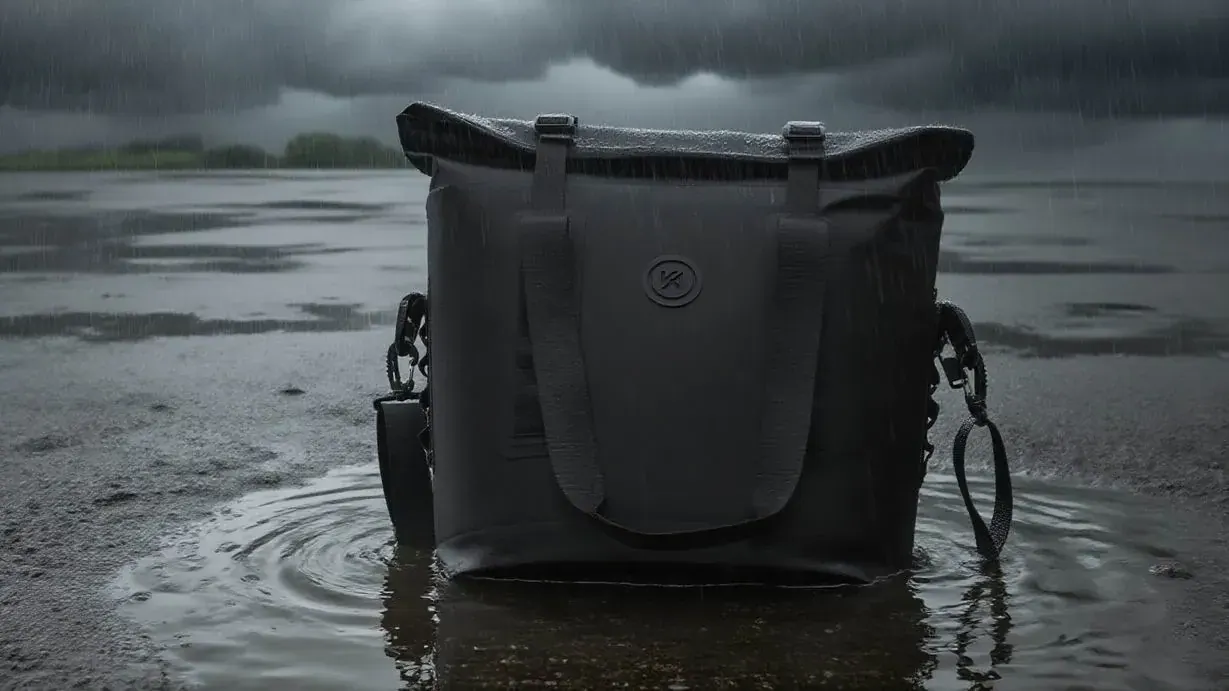
Water settings punish fabric bags in three specific ways, and this body type answers each directly. Sand enters fabric weave and stays there through repeated shaking. Water is absorbed by fibres, so the bag stays damp long after its contents are dry. And chemical residues from chlorine, sunscreen and salt accumulate in linings, producing odour that no amount of airing removes.
A closed-cell body with drainage openings cannot absorb anything and sheds almost everything with a tap. Sand falls through rather than embedding in weave, water leaves the body rather than sitting in fibres, and any residue sits on the surface where ninety seconds with a hose removes it entirely. Those three differences account for why owners rarely go back to fabric at the beach.
| Failure mode | Fabric beach bag | One-piece EVA rubber body | Practical consequence |
|---|---|---|---|
| Sand retention | Grains lodge in weave | Falls through perforations | Nothing gritty reaches the car or home |
| Damp after use | Several hours to dry | Twenty to thirty minutes outdoors | No musty smell between trips |
| Odour build-up | Common within a season | Unusual with basic rinsing | Bag stays out of the bin |
| Chlorine exposure | Degrades printed linings | Surface unaffected at pool levels | Suitable for daily pool use |
| Structural wear | Seams split under wet load | No seams to fail | Longer usable life near water |
Sand: What Actually Stays Behind
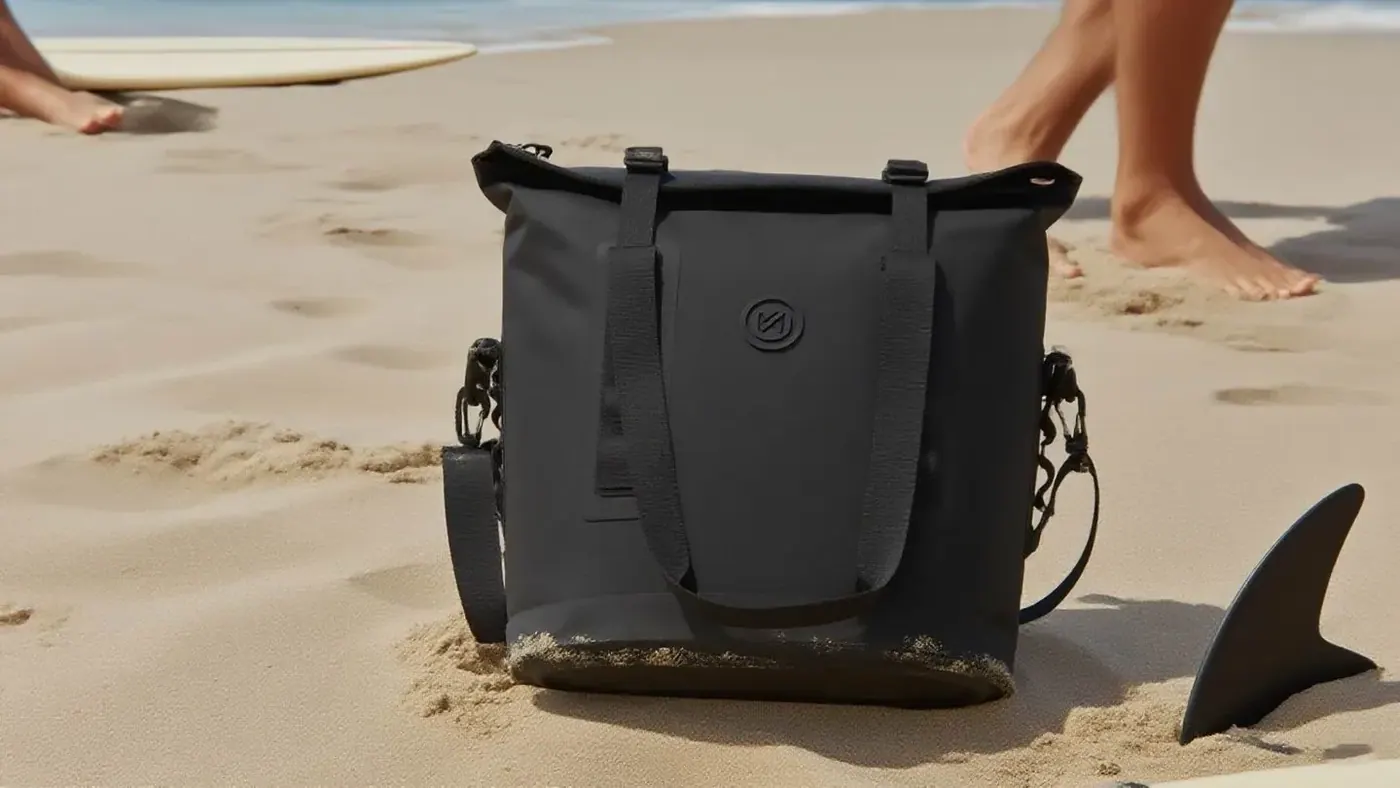
Sand behaviour is a question of grain size and moisture rather than of quantity. Dry dune sand passes any opening above six millimetres; damp tide-line sand has measurable cohesion and can bridge smaller holes; wet packed sand will only leave once it is broken up or rinsed. Practical testing shows a well-designed body retains under twenty grams after carrying two kilograms of damp sand twenty metres, whereas mis-sized holes can retain several hundred grams.
The fix for the awkward case is procedural rather than structural. Let the bag dry before shaking it out, because dry sand stops bridging and falls freely. A thirty-minute wait between a wet morning session and packing the car is usually enough to eliminate the problem completely, and this is why holes between nine and twelve millimetres perform well even though damp sand resists at first.
Chlorine, Saltwater and Sunscreen
Pool and sea environments are chemically active and worth understanding, since the effect on the bag determines whether it survives several seasons. Chlorine in a maintained pool typically sits between one and three parts per million, which is far below the level likely to affect EVA. Saltwater pools run considerably higher in dissolved salt, usually a few thousand parts per million, and seawater higher still, yet neither penetrates a closed-cell material. What matters instead is surface residue.
| Exposure | Typical concentration | Effect on the body | Recommended response |
|---|---|---|---|
| Chlorinated pool water | 1 to 3 parts per million | None at the material level | Rinse after the day to remove residue |
| Saltwater swimming pool | Around 3,000 parts per million salt | None; leaves white bloom when dry | Rinse with fresh water within an hour |
| Sea water and surf | Around 35,000 parts per million salt | None; bloom is cosmetic | Thirty-second rinse per trip prevents marks |
| Sunscreen and oils | Surface film | Can leave a greasy patch | Warm water with mild detergent |
| Algae from lakes and lagoons | Variable | Surface staining only | Rinse, then air dry in shade |
Note that none of these requires anything stronger than clean water and mild detergent. That is an underrated commercial point: cleaning products represent ongoing cost and chemical exposure, and a product that needs none is cheaper to own and easier to live with. Guidance on choosing safer cleaning products where something stronger is genuinely required is available from the United States Environmental Protection Agency, and public health advice for shared water environments is published by the Centers for Disease Control and Prevention.
Load-Outs by Trip Type
Sizing becomes easy once the trip is described rather than the bag. Four patterns cover nearly every plan, and each has a clear best-fit answer.
| Trip type | Typical contents | Best size | Notes |
|---|---|---|---|
| Two adults, half day at the pool | Two towels, two bottles, book, sunscreen | 33 by 23 by 14 centimetres | Compact is genuinely sufficient |
| Family with young children, full beach day | Four to six towels, snacks, toys, wet suits, drinks | 48 by 31 by 24 centimetres | The default family answer |
| Surf or paddle session | Wetsuit, wax, water bottle, towel, fins | 41 by 27 by 19 centimetres | Drainage matters more than volume |
| Resort or all-day pool cabana | Robes, several outfits, drinks, reading material | 48 by 31 by 24 centimetres | Wide base resists tipping on deck chairs |
The recurring pattern worth repeating is that family groups consistently under-buy. The difference between a comfortable day and a frustrating one is usually one size band, and the cost difference is small against a trip that may have cost several hundred euros to arrange.
Boardwalk, Sand and Uneven Ground
Stability on a beach is not the same problem as stability on a floor. Sand gives way under point loads, which is why continuous base rails outperform corner studs: rails spread load across the whole footprint, whereas studs dig in until the base rests flat anyway. On boardwalks and pool decking the reverse applies, since hard flat surfaces reward a flat continuous base and penalise bags whose base has any curvature from uneven cooling.
Two practical tests settle it in seconds. Set the loaded bag on soft sand and press down on one rim; if one corner sinks markedly more than the others, the rails are too narrow. Then set it on a hard floor with contents loaded to one side; if it rocks rather than settling, the base is not flat enough for poolside use, which is where tipping complaints about full drink bottles originate.
| Surface | Best base design | Typical failure | Simple check |
|---|---|---|---|
| Dry soft sand | Wide continuous rails | Corner studs digging in | Press one corner and watch |
| Damp packed sand | Flat rails with drainage gaps | Suction holding the base down | Lift it; suction indicates too much contact |
| Pool decking | Flat continuous base | Rocking from curved base | Set it loaded and off-centre |
| Boat deck in motion | Wide footprint plus low load height | Toppling when heeled | Check base width against rim width |
| Grass and park ground | Either design works | None significant | Not a discriminating surface |
Choosing Size Without Buying Twice
Volume figures published for this category vary widely, so measuring contents beats reading headlines. Lay the longest single item, usually a rolled towel or a fin, on the floor and add thirty millimetres each way for access. Then check whether drinks need to stand upright, because upright containers roughly double the vertical requirement against the same items packed flat.
Two further checks catch most sizing errors. Count drinking containers for the group, since bottles dominate both footprint and centre of gravity, and note whether anything needs to remain accessible rather than buried, since an open-top design rewards planning before loading rather than digging afterwards.
Heat, Sun and Storage Between Trips
Heat is the one environmental limit that genuinely matters. Service range runs roughly to sixty degrees, and dark colourways on sand or decking in strong sun can approach that surface temperature, at which point the body can creep and permanently deform. Three habits prevent the problem entirely: keep the bag out of direct sun when not in use, never leave it in a closed vehicle through a summer afternoon, and prefer light or mid tones over very dark colours in hot markets. Resorts in high-insolation regions often specify light colourways for exactly this reason, having learned that dark units returned deformed within one season.
- Midday surface temperatures on sand frequently exceed fifty degrees even at pleasant air temperatures; shade costs nothing.
- A car interior can exceed sixty degrees within an hour in summer, which is above the safe service range for this material.
- Light colourways typically measure eight to twelve degrees cooler to the touch than dark equivalents in the same conditions.
- Store open and airy between trips, since stacking two units rim to rim traps moisture the perforations were designed to release.
- If deformation does occur, warm water around fifty degrees and gentle pressure sometimes recovers the shape before it sets.
Family Safety and What to Check
Beach totes are used around children constantly, so three assurances are worth requesting rather than assuming. Materials should be documented for restricted substance screening in the destination market, particularly where the product is marketed towards families. Any added charms or detachable parts should have been assessed for small parts hazards in relevant markets. And printed elements should be evaluated for migration rather than only for appearance.
Within a household, the practical risks are mundane and manageable. Bottles standing upright are heavier than they look and should sit low and central. Sunscreen belongs in a contained spot rather than loose, since spills coat everything below them. And the bag should never be used as a flotation aid, because a loaded tote sinks and nothing about its buoyancy rating makes it appropriate for that role.
Care Routine That Keeps It Looking New
Care takes minutes a week and nothing more. Rinse with fresh water at tap pressure after saltwater exposure, wipe inside and out with a cloth dampened in warm water and mild detergent after sunscreen spills, then stand open in shade until dry. A monthly deeper clean with a soft brush removes accumulated residue around the perforation edges, which is where anything persistent first appears.
Four things damage the body and all are avoidable. Machine washing flexes it against itself and can crease it permanently. Strong solvents dull the surface and make later cleaning harder. Abrasive pads scratch, and scratches collect dirt faster. Prolonged direct sun beyond normal use accelerates fading and, on dark colours, risks heat deformation.
Contents also interact with wet ground in ways worth planning. Anything absorbent, particularly books and clothing, belongs above the mid-line rather than at the bottom, since drainage stops at the lowest contents and anything sitting in the base stays wet longest. Valuables belong in a pouch regardless, both for water and because sand finds its way into anything left open near a busy beach entrance.
Travel: Where It Wins and Where It Does Not
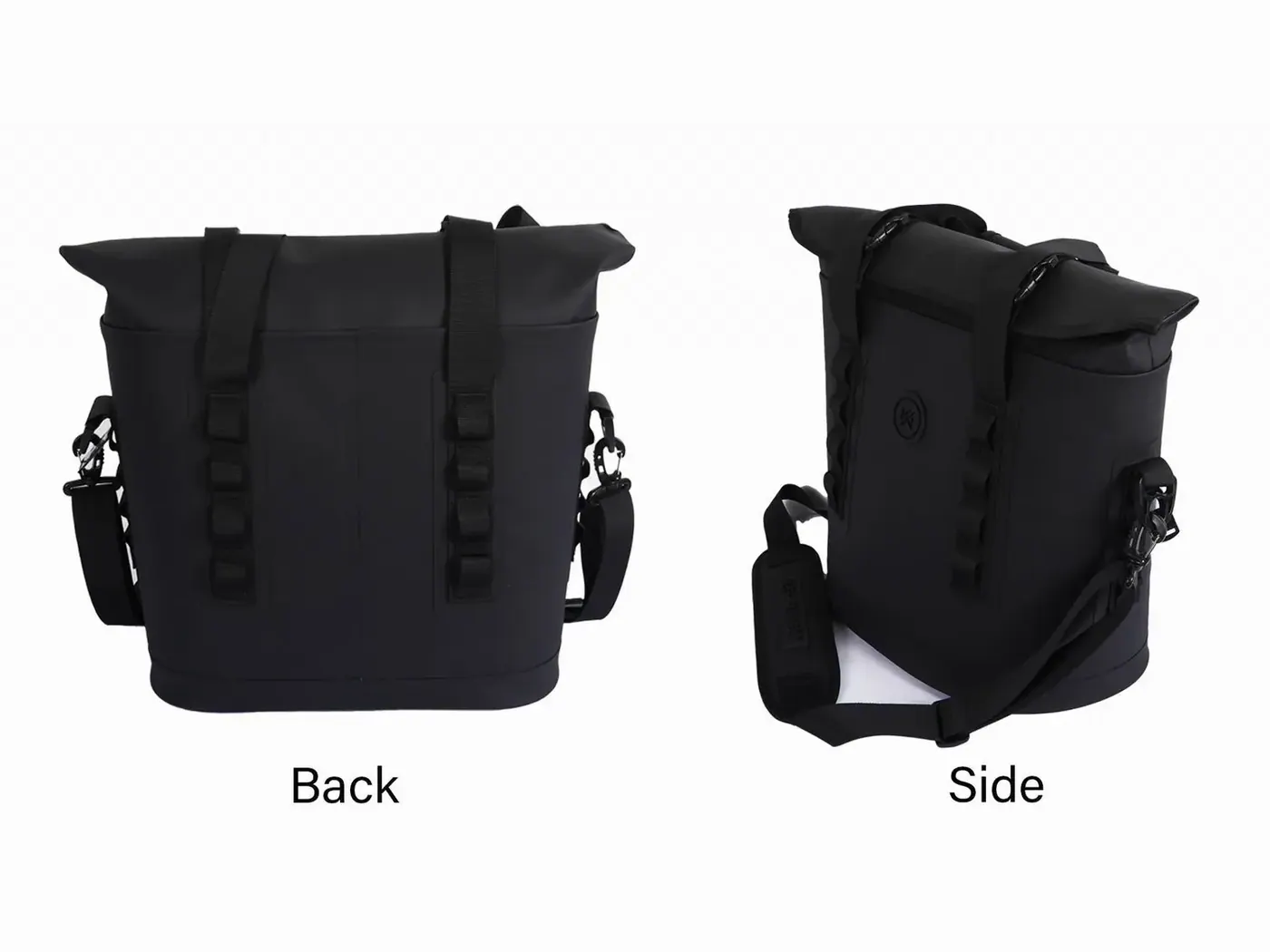
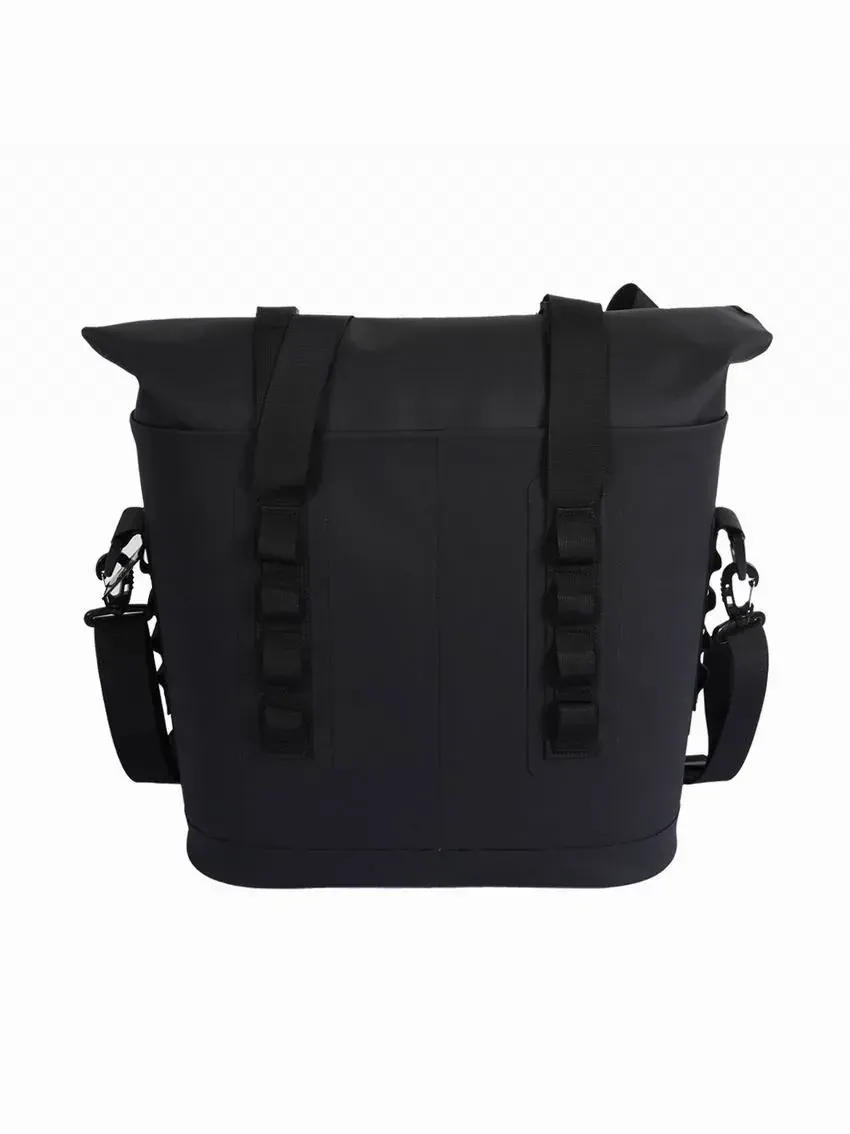
These totes divide opinion entirely by how they travel. Flown with, they are poor: a rigid body occupies its own volume and will not compress into a suitcase, whereas a fabric beach bag folds flat. Driven with, they are excellent, because nothing needs folding and the bag is ready the moment it arrives. The honest advice is to match the product to the journey, or to pack a compact model and buy a second size for local use.
Practical compromises exist for people who fly regularly. Some owners carry a compact model in checked luggage and accept that local supermarket bags handle the shopping until they get there, which is less elegant than either alternative but works well. Deeper packing and transport notes are collected in the travel guide for EVA totes, including what to expect from airline handling.
Season length is another honest consideration. A family visiting the beach four times a year can justify a compact model that lives in a cupboard; one at the pool three times a week should buy the larger size without hesitation, because the convenience difference compounds across dozens of trips while the money difference stays fixed.
Recommending the pair together is better advice than recommending one large bag, even though the second unit adds cost. The pattern that follows is predictable: the compact unit ends up used far more often than expected, because it suits quick pool visits for which the family size is simply too much bag.
Resort, Hotel and Club Programmes
Hospitality buyers evaluate these bags against criteria retail buyers rarely consider, and four dominate. Housekeeping time: a body that rinses in ninety seconds turns room over faster than one needing laundering. Lifecycle cost: replacing a damaged fabric bag every season costs several times more per year than one rigid body lasting four to seven years. Brand presentation: printed charms and colour-matched bodies carry identity visibly in photographs guests post. And storage: rigid bodies cannot be stacked compactly, so back-of-house space has to be planned rather than assumed.
Volume planning for these programmes is usually seasonal rather than continuous, which argues for a single strong colourway order at depth rather than several shallow ones. A resort ordering for two seasons typically does better with 1,500 pieces of one colour than with 500 each of three, both on unit cost and on the consistency guests notice when units are replaced during the season.
Buying Checklist for Water Settings
A short list resolves most purchases without debate, Each list item is checkable in under thirty seconds, whether the purchase is one bag for a family or several thousand pieces for a resort group.
- Perforation diameter between nine and twelve millimetres, so damp sand still passes cleanly.
- Reinforced rim with at least fifteen millimetres of solid material above the top row of holes.
- Base footprint slightly wider than the rim, which prevents tipping when loaded with bottles.
- Wall thickness between four and eight millimetres, ideally thicker towards the base.
- Documented material screening for REACH and California Prop 65 for the destination market.
- A light or mid colourway if the bag will live in strong sun for long periods.
Buyers comparing several models quickly notice that the differences are all structural rather than cosmetic. Two bags of identical external size can behave entirely differently under load, and the deciding details, rim section, base footprint and wall taper, are all visible once you know to look for them, and none is visible once the bag is loaded and in use.
Warranty handling is worth agreeing before the first order rather than after the first season. Rigid bodies rarely fail abruptly, so disputes tend to concern cosmetic issues such as fading, bloom or scuffing rather than structural failure. Agreeing what counts as acceptable variation, and who decides, removes most of these conversations before they consume valuable time, and it is usually settled in a single clause referencing a retained reference piece.
Programme Notes for Retail and Resort Buyers
QUANZHOU JUNYUAN BAGS has handled waterproof bag programmes since 2014 with a founding team in this trade since 2004, including rubber-effect beach bodies for resort, pool and surf programmes. Monthly output runs at 200,000 units verified by SGS, operations follow BSCI and ISO 9001, materials are screened for REACH and California Prop 65, and every bulk shipment is inspected at AQL 2.5 before release, with durability and physical test methods referenced from ASTM International.
Resort programmes should also ask about nesting, since rigid bodies do not compress and freight often decides margin more than unit price does. Opening quantities begin at 500 pieces per design and colour, and colourway choice deserves careful thought here because dark tones sell well in cool northern markets while light tones dominate anywhere with strong summer sun, so most ranges carry both rather than betting on one. Samples take six to ten working days and bulk takes thirty-five to fifty days from approved sample and deposit, shipped FOB Xiamen or DDP to upwards of one hundred nations. Range planning starts in the main EVA tote category guide, comparisons in the best beach tote round-up, and the packing notes in the travel guide, which together answer most pre-order questions within a single reading. Enquiries go service@junyuanbags.com.
People Also Ask
Are rubber beach totes actually waterproof?
The body absorbs no water, but the perforations mean it is ventilated rather than sealed. Nothing inside stays dry if the bag goes in the water.
What size beach tote for a family of four?
Around 48 by 31 by 24 centimetres, roughly thirty litres, which carries six towels, drinks, snacks and wet swimwear comfortably.
Does chlorine damage these totes?
No. Pool chlorine at one to three parts per million has no material effect, though a weekly rinse removes surface residue that can bloom.
Can a rubber beach tote be left in a hot car?
Better not. Interior temperatures above sixty degrees exceed the safe service range, and the shape can creep permanently.
How much sand does a perforated tote retain?
A well-designed body retains under twenty grams after carrying two kilograms of damp sand twenty metres; poorly sized holes retain several hundred grams.
Do these bags fold flat for travel?
No. The rigid body keeps its volume, which suits car-based trips and makes them a poor choice to pack in a suitcase.
Frequently Asked Questions
Q1. What is a waterproof rubber beach tote made of?
Typically ethylene-vinyl acetate formed in one piece, sometimes described as rubber because of its feel. It is closed cell, so it absorbs no water.
Q2. Is it safe to carry wet swimsuits inside it?
Yes, and it is one of the main uses. Water drains away and the interior dries in twenty to thirty minutes rather than staying damp for hours.
Q3. Will sand ruin the bag over time?
No. Sand passes through rather than embedding, unlike fabric weave, and any residue rinses away cleanly with fresh water.
Q4. How do I remove white salt marks?
Rinse with fresh water and wipe dry. The bloom is surface crystals, not material damage, and it disappears completely with water.
Q5. Can the tote go near chlorine without fading?
Yes at normal pool levels. Pigmented body colours resist chlorine well; avoid bleaches and solvents, which cause cosmetic damage.
Q6. Are dark colours a bad idea for hot climates?
Often yes. Dark bodies run eight to twelve degrees hotter to the touch at midday, which shortens safe margin before deformation.
Q7. Can it be used as a flotation device?
No. An empty body may float, but a loaded one sinks, and nothing about the design qualifies it for that purpose.
Q8. What should families check before buying?
Documented material screening, assessment of any detachable charms for small-parts hazards, and a base wide enough to stay upright when loaded with bottles.
Q9. How often does it need cleaning?
A rinse after saltwater exposure, a wipe when sunscreen spills, and a monthly soft-brush clean around perforation edges is usually sufficient.
Q10. Does it tip over easily?
Not if the base footprint is wider than the rim. Load bottles low and centrally and tipping complaints disappear.
Q11. Can I put it in the washing machine?
No. Machine washing flexes the body against itself, which can crease it permanently. Hose it instead, using around ten litres of water.
Q12. What size should a couple buy for pool visits?
Around 33 by 23 by 14 centimetres for two people on a half day, going one size up if upright drink bottles must be carried.