An EVA tote works well for travel if it is treated as a destination bag rather than a transit bag. A small body at 33 by 23 by 14 centimetres and 0.7 to 0.9 kilograms fits under most aircraft seats and takes 10 litres of pool or beach kit; a medium at 41 by 27 by 19 centimetres carries 18 litres and still fits an overhead bin on most carriers. The material cannot be folded or compressed, so it occupies its full volume whether empty or packed, and that rigidity is the single biggest argument against checking it in. At the destination it earns its place: sand falls through, wet gear drains and it rinses in a hotel shower in two minutes.
Is an EVA Tote Airline Friendly?
Yes, at the small and medium sizes, and no at the large ones. Under-seat space on most carriers is roughly 40 by 30 by 20 centimetres, which a small body fits comfortably and a medium fits if it is not overpacked. Overhead bins are typically 55 by 40 by 20 centimetres at the narrowest, which accepts a medium body and rejects an extra large one. Cabin bag allowances vary by carrier and fare class, so the checking should be done against the specific airline rather than against a general rule.
Weight matters as much as dimensions because many carriers impose a cabin weight limit, commonly between 7 and 10 kilograms on regional and low-cost fares. A small body at 0.7 to 0.9 kilograms leaves most of that allowance for contents; a medium at 1.0 to 1.4 kilograms leaves slightly less; and a large at 1.6 to 2.1 kilograms consumes a fifth of a 10 kilogram allowance before a single item is packed. For air travel the small size is the honest recommendation, with the medium as the upper limit.
| Size | Dimensions | Under seat | Overhead bin | Empty weight | Verdict for flying |
|---|---|---|---|---|---|
| Small | 33 by 23 by 14 centimetres | Yes, with room to spare | Yes | 0.7 to 0.9 kilograms | Best cabin choice |
| Medium | 41 by 27 by 19 centimetres | Only if underpacked | Yes on most carriers | 1.0 to 1.4 kilograms | Workable, check the allowance |
| Large | 48 by 31 by 24 centimetres | No | Sometimes, at an angle | 1.6 to 2.1 kilograms | Check in or ship ahead |
| Extra large | 54 by 34 by 28 centimetres | No | No | 2.3 to 2.6 kilograms | Not a travel size |
| Kids | 28 by 19 by 13 centimetres | Yes | Yes | 0.4 to 0.6 kilograms | Good as a child personal item |
Two practical points follow from the table. A body carried as a personal item should be packed soft, because a rigid body packed with hard objects cannot be squeezed into a space that is a few centimetres short, whereas a fabric bag can. And a rigid body should never be checked in loose: it cannot be compressed to absorb an impact and the rim is the part that takes the load in a baggage system. If it has to go in the hold, pack soft items around it inside a larger soft bag.
The Rigidity Problem, Stated Honestly
The property that makes this material good at the destination is exactly what makes it awkward in transit. A molded body cannot be folded, rolled, compressed or vacuum packed, so it occupies its full volume even when empty. A 10 litre body takes about 10 litres of suitcase space whether it contains a towel or nothing at all, which is a real cost on a trip with limited baggage.
Three strategies make that workable. Carry it empty on the aircraft, which costs nothing in a cabin allowance if it is the personal item and leaves the suitcase free for clothes. Ship it ahead or hire at the destination for stays longer than a week, which is what many repeat travellers to the same resort eventually do. Or accept it as the destination bag only and use a foldable fabric bag for the journey, which is the commonest compromise and the one that wastes the least space.
The counterweight is that rigidity is also useful in transit. A body that stands upright cannot be crushed in a coach footwell or a train luggage rack, it protects fragile contents such as sunglasses and cameras far better than a soft bag, and it does not collapse and spill when set down on a station platform. Travellers who pack fragile items report fewer breakages with a molded body than with any soft alternative.
A Travel Load That Actually Fits
Packing for a pool or beach day at a destination is different from packing at home, because everything has to be carried further and nothing can be replenished from a cupboard. Twelve items cover most days, and the list below is sized for a 10 litre small body with the additions noted for an 18 litre medium.
| Item | Volume | Small, 10 litres | Medium, 18 litres | Note |
|---|---|---|---|---|
| Two microfibre or quick-dry towels | About 4 litres | Yes | Yes | Quick-dry towels matter when travelling |
| Sunscreen and lip balm | 0.5 litres | Yes | Yes | Keep in the top layer |
| Sunglasses in a hard case | 0.5 litres | Yes | Yes | Rigid body protects them |
| One 1.5 litre water bottle | 1.5 litres | Lying down | Upright | Medium has the internal height |
| Dry pouch for phone and passport | 0.5 litres | Yes | Yes | Essential: the body is not sealed |
| Swimsuit and a light cover-up | 1.5 litres | Yes | Yes | Use the pouch for the wet suit |
| Snacks or fruit | 1 litre | Yes | Yes | Keep out of direct sun |
| Book or e-reader | 0.5 litres | Yes | Yes | Top layer only |
The dry pouch is the item most often forgotten and the one that matters most. A perforated body drains rather than seals, so a passport, a phone or a room key left loose in the bag will get wet in a downpour or a wave. A pouch costing a few dollars protects the only items that cannot be replaced at the destination, and it should be packed before anything else.
At the Destination: Pool, Beach and Boat
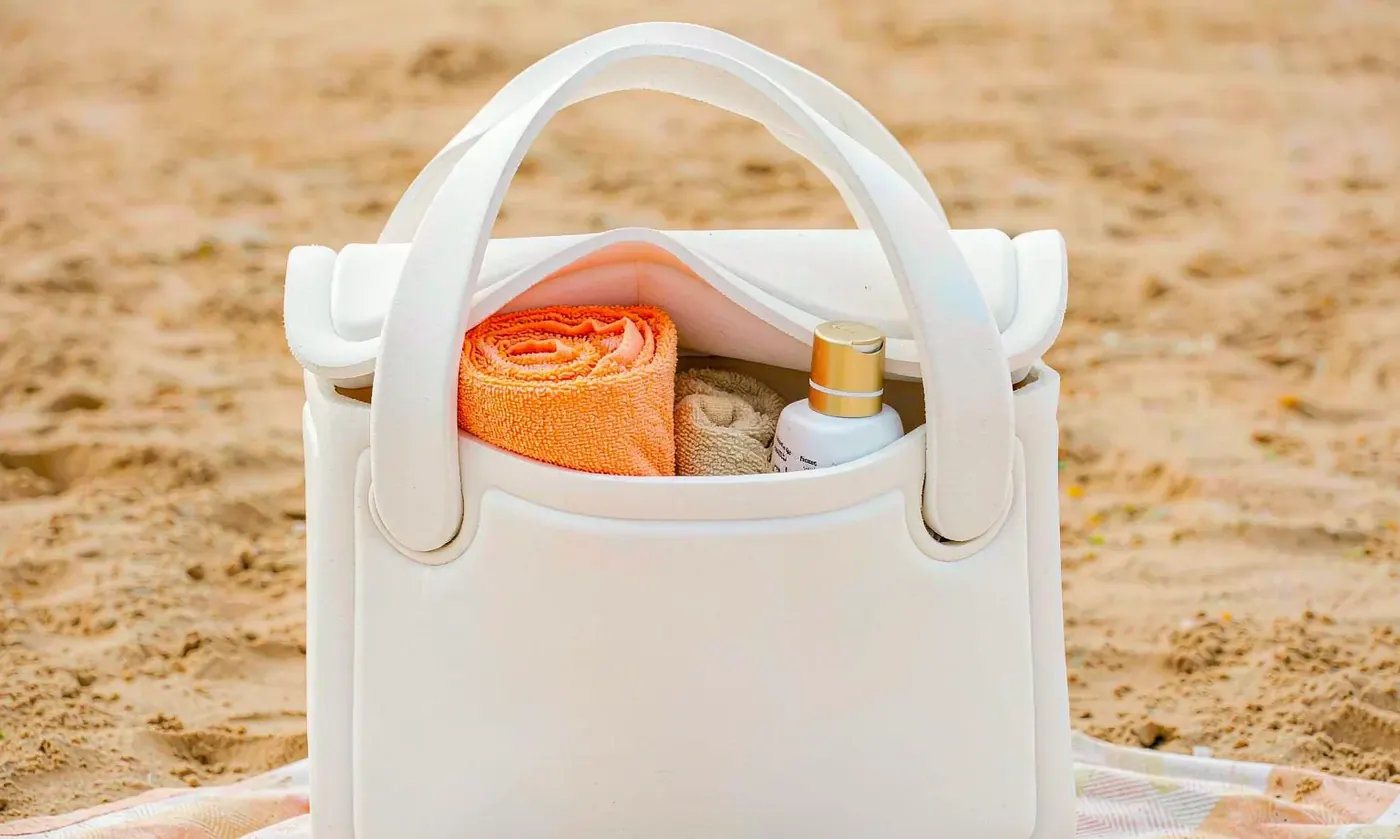
This is where the bag justifies its place in the luggage. At a pool it carries a towel and goggles, sits on a wet tile without soaking, and rinses in a shower between sessions. On a beach it sheds sand through the perforations rather than carrying it back to a hotel room, which is the single most appreciated property for anyone who has emptied sand out of a suitcase. On a boat it carries gear from shore to deck and rinses of salt in fresh water in a minute.
Three destination behaviours are worth planning for. Chlorine and salt should be rinsed off daily rather than at the end of a trip, because residue left for a week is harder to remove and can stiffen any trim. A dark colourway left on a balcony in tropical sun will pass sixty degrees at the surface within an hour, so light colours and shade are the safer combination. And nothing about the design makes the bag a flotation device, so a phone or a camera in a dry pouch is still the right precaution near water.
One destination detail catches people out on the first morning. A body rinsed the previous evening and left upright will hold a shallow pool of water in the base, because the base rails sit slightly proud of the floor and the interior is not perfectly flat. Standing it upside down overnight, or propping it at an angle, removes that entirely, and it is worth doing as a habit rather than discovering it by tipping water onto a hotel floor.
Road Trips, Hotels and Day Trips
Road travel suits this material better than air travel does, because volume is less constrained and the bag is used most days rather than once. A medium or large body in a boot carries the day kit for a whole family, stands upright on a hotel floor without soaking the carpet, and doubles as a laundry carrier for wet or sandy items that should not go into a suitcase.
- Use it as the wet-and-dirty compartment of the car: sandy shoes, wet swimsuits and muddy kit go in the tote rather than on the upholstery.
- Stand it on a hotel bathroom floor as a laundry hamper. The base cannot leak and the walls cannot absorb water.
- Rinse it in a shower or with a bottle of water at a service station; two minutes is enough for sand, salt and chlorine.
- Keep it out of a closed hot car. Surface temperature passes sixty degrees quickly in summer, which is enough to creep the shape.
- Hang it by both handles on a towel rail or a hook where possible, so it drains and dries rather than pooling water in the base.
Day trips are the strongest case of all. A bag that holds a picnic, drains spilled drinks, cannot be damaged by being set on wet grass and rinses clean in a car park tap is a genuinely better tool for a day out than any fabric equivalent. The ultraviolet and heat forecasts published by the National Oceanic and Atmospheric Administration are worth checking before a full day in an exposed spot, because a high index combined with a dark body is what deforms these bags.
Three Accessories Worth Buying Before a Trip
Three small additions make a travel tote substantially more useful, and all three cost less than the bag. Each solves a specific problem that comes up on the first day and is usually bought on day two at resort prices.
- A dry pouch for phone, passport and room key. The body drains rather than seals, so this is the only thing protecting anything that cannot be replaced locally.
- A drop-in insert or divider, which separates wet swimsuits from dry items and turns one open volume into two usable compartments.
- Two or three pressed charms in a distinctive colour, which make the bag identifiable on a crowded deck and stop it being picked up by mistake.
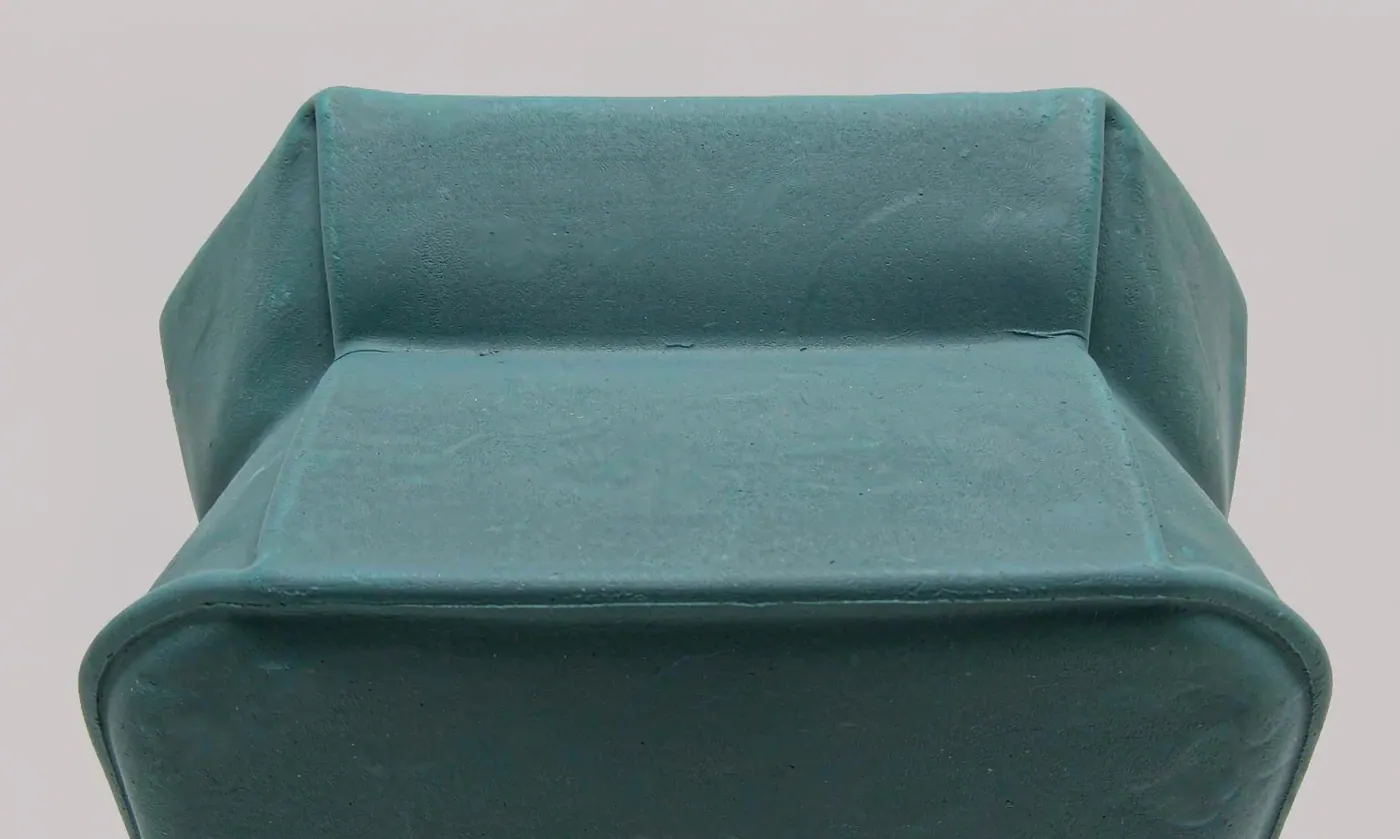
Charms and inserts are size-specific, so both should be matched to the exact body rather than to the product name: a charm cut for twelve millimetre holes will not seat in a ten millimetre body, and an insert sized for a 33 centimetre body will float in a 36 centimetre one. Buying them with the bag rather than at the destination is the difference between a few dollars and resort pricing.
Drying Times in Real Travel Conditions
Drying is the step that decides whether travelling with one of these bags is pleasant or faintly annoying, and it depends almost entirely on airflow rather than on the material. A perforated body standing open in a breezy shaded spot dries quickly; the same body closed, stacked or left in a humid bathroom does not. Planning for the dry rather than for the rinse is what separates a bag that is ready every morning from one that is still damp at noon.
| Travel setting | Small body | Medium body | What to do |
|---|---|---|---|
| Balcony, shaded, breezy | 20 to 30 minutes | 40 to 60 minutes | Stand open, mouth down if possible |
| Hotel bathroom, no window | 60 to 90 minutes | 2 to 3 hours | Use a fan or an air-conditioning vent |
| Humid tropical room | 2 to 3 hours | 4 hours or more | Dry it outside in shade, never in sun |
| Closed in a suitcase | Does not dry | Does not dry | Never pack damp; delay packing instead |
| Car boot, hot day | Not recommended | Not recommended | Heat and trapped moisture damage trims |
The rule that prevents every problem in that table is simple: never pack a damp body into luggage. A closed suitcase has no airflow, and a bag put away wet will still be wet twelve hours later and will smell by then. If departure is early and the bag is damp, carry it open by hand or in a fabric bag rather than sealing it away, and finish drying it at the next stop.
Cleaning on the Road
The routine does not change when travelling, and it is shorter than most people expect. Rinse at the pool or beach rather than at the hotel, tip the bag upside down so the perforations drain, and stand it open in the shade. Sunscreen comes off with a mild detergent and a soft cloth, and a hotel shower is enough for a small body while a medium needs an outdoor tap.
- Rinse where the sand is. Carrying sand back to a room and then finding it in a suitcase three days later is the commonest travel complaint.
- Use the shower rather than the hand basin for anything above the small size, and expect 30 to 60 minutes of drying for a small body.
- Never machine wash it, even if the accommodation has a laundry. One cycle can crease the body permanently.
- Do not use hotel bathroom amenities as cleaners. Many are solvent-based or heavily fragranced and will dull the surface.
- Dry it fully before packing it into a suitcase, because a damp body closed inside luggage for twelve hours will smell.
Colourway and Visibility When Travelling
Colour choice matters more on a trip than at home, for two reasons. Practical first: a bright or distinctive colourway is far easier to spot on a crowded pool deck or a busy beach, and it makes the bag easier to describe if it is misplaced. Thermal second: dark colourways absorb more energy and reach higher surface temperatures, which matters in the tropics where the difference between a light and a dark body in direct sun can be the difference between a bag that holds its shape and one that creeps.
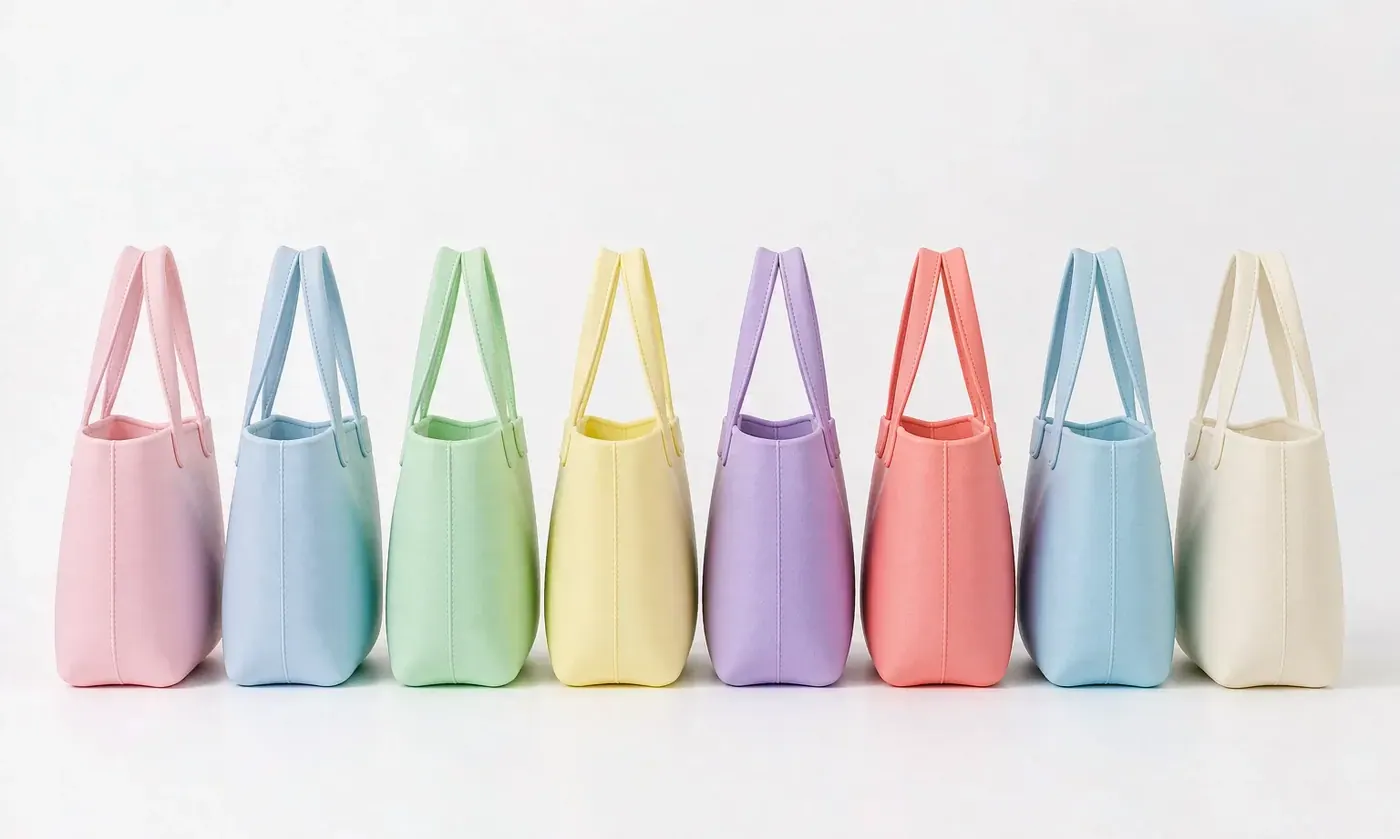
For travel specifically, a mid-tone or light colourway with a distinctive charm or tag is the best combination, and it is why resort ranges tend to lead with bright colours rather than with black or navy. Solid-colour bodies also hold their appearance better than printed artwork over a season of sun and chlorine, so a pigment-matched body is the safer choice for anyone who travels regularly with the same bag.
When Not to Take One
Three travel patterns argue against the material, and stating them plainly is more useful than claiming it suits everything. Multi-destination trips with frequent packing and unpacking favour fabric, because a rigid body is awkward to repack every two days. Trips where every litre of luggage space is committed favour fabric, because the tote cannot be compressed into a gap. And trips built around long walks with a full load favour a soft backpack with a proper harness, because no tote of any size is comfortable over several kilometres.
For everyone else, the honest recommendation is a small body carried as a personal item plus a foldable fabric bag in the suitcase for shopping and overflow. That combination covers pool days, beach days, day trips and laundry without either bag being asked to do a job it is bad at, and it is the setup most experienced travellers end up with.
Programme Notes
Full category background sits in the injection-molded EVA tote guide, the moulded rubber alternative is covered in the rubber beach tote range, and size and price comparisons across the range are collected in the EVA beach tote round-up. Physical test methods for dimensional and load checks are published by ASTM International, and quality-management expectations for documenting them come from the International Organization for Standardization.
QUANZHOU JUNYUAN BAGS has run waterproof bag programmes since 2014 with a founding team in this trade since 2004, covering travel-friendly EVA sizes alongside sewn and welded ranges. Monthly output runs at 200,000 units verified by SGS, operations follow BSCI and ISO 9001, materials are screened for REACH and California Prop 65, and every bulk shipment is inspected at AQL 2.5 before release. Programme minimums begin at 500 pieces per design and colour, with sampling at 6 to 10 working days and bulk at 35 to 50 days from approved sample and deposit. Send your target size, colourway count, quantity and destination market to service@junyuanbags.com.
People Also Ask
Can you take an EVA tote as cabin luggage?
Yes at the small and medium sizes. A 33 by 23 by 14 centimetre body fits under most seats, and a 41 by 27 by 19 fits most overhead bins.
Does an EVA tote fold flat for travel?
No. A molded body cannot be folded or compressed, so it occupies its full volume whether empty or packed.
What size EVA tote is best for flying?
The small size at about 10 litres and 0.7 to 0.9 kilograms, which leaves most of a 7 to 10 kilogram cabin allowance for contents.
Can I check an EVA tote into the hold?
Only packed soft inside a larger soft bag. A rigid body cannot absorb impact and the rim is the part that takes the load.
How do I clean an EVA tote in a hotel room?
Rinse it in the shower at tap pressure, tip it to drain, and stand it open in shade for 30 to 60 minutes for a small size.
Is an EVA tote good for a road trip?
Yes. It stands upright, cannot leak, carries wet and sandy kit and rinses at a service station tap in about two minutes.
Frequently Asked Questions
Q1. Can I take an EVA tote on a plane?
Yes, at the small and medium sizes. Under-seat space is roughly 40 by 30 by 20 centimetres and overhead bins about 55 by 40 by 20, so check against your carrier.
Q2. What size EVA tote is best for air travel?
The small body at 33 by 23 by 14 centimetres and 10 litres, weighing 0.7 to 0.9 kilograms, which fits under a seat and leaves cabin weight for contents.
Q3. Can an EVA tote be folded flat?
No. Injection-molded bodies hold their shape by design and cannot be compressed, rolled or vacuum packed.
Q4. Is it safe to check an EVA tote in the hold?
Only if packed soft inside a larger bag. On its own, a rigid body cannot absorb an impact and the rim takes the load in a baggage system.
Q5. How much does an EVA tote weigh for cabin allowance?
Between 0.4 and 2.6 kilograms depending on size, with the travel-friendly small size at 0.7 to 0.9 kilograms.
Q6. How do I clean it while travelling?
Rinse at the pool or beach, tip it to drain, and dry it open in shade. Sunscreen needs warm water, mild detergent and a soft cloth.
Q7. Will it protect sunglasses and cameras?
Better than a soft bag, because a rigid body resists crushing. Anything electronic should still go in a dry pouch, since the body is not sealed.
Q8. What colour should I choose for travel?
A light or bright colourway. It stays cooler in direct sun, since dark bodies pass sixty degrees at the surface within an hour, and it is easier to spot.
Q9. Is it good for a road trip?
Yes. It stands upright in a boot, cannot leak on a hotel floor, doubles as a laundry carrier and rinses clean in about two minutes.
Q10. Can I use it as a beach bag at the destination?
That is its best use. Sand falls through the perforations instead of being carried back to a hotel room, and wet gear drains rather than soaking.
Q11. When should I leave it at home?
On multi-destination trips with daily repacking, on trips where every litre of luggage is committed, and on trips built around long walks with a full load.