On a boat deck an open-top fishing tote beats a backpack, because trays can be seen and reached from above without unzipping anything. The specification that decides whether a tote works is the base: a wide, low, non-slipping footprint with a height no greater than 0.8 times the base width, plus drainage and 316 stainless hardware. Eight builds were assessed for 2026 across 20-50 usable litres and 15-44 dollar FOB Xiamen bands at MOQ 500 pcs per design and colour. Samples take 6-10 working days and bulk runs 35-50 days. The best all-round choice is the 40 L four-box deck tote at 1.45 kg.
Why an Open Tote Beats a Backpack on a Boat
The advantage is line of sight. A backpack racks trays vertically and one at a time, so finding a specific lure means opening a chamber and pulling boxes. An open tote lays the same trays out where the angler can see all of them from standing height, and the item wanted is picked up directly. On a moving boat, where the angler is also holding a rod or a rail, that difference is worth more than any feature on a spec sheet.
The second advantage is that the bag does not have to be taken off. A tote sits on the deck, is picked up and moved in one motion, and never touches the angler back, which matters in hot weather and in a spray jacket. The format has obvious limits, covered later, but for boat, pier, and jetty fishing it is the correct default and it is under-stocked by most ranges.
| Situation | Best format | Reason | Volume |
|---|---|---|---|
| Boat deck, trays in use | Open tote | All trays visible from above | 30-45 L |
| Pier or jetty | Open tote | Set down and reach, no removal | 25-40 L |
| Kayak tank well | Low-profile tote or crate | Fits the well, stays low | 20-30 L |
| Walking a bank 2 km | Backpack | Hands free over distance | 28-38 L |
| Travel and airline | Duffel or rolling bag | Totes have no carry comfort | 40-80 L |
The Eight Builds at a Glance
Volume figures below are usable litres with trays fitted, which for a tote is the only meaningful measure because the whole point is what fits standing up. Footprint ratio is the base width against the bag height, and it is the number that predicts whether the tote will tip. Every build here is rated IPX5 or better, because a deck tote is hosed down rather than immersed.
| Build | Volume | Box slots | Footprint ratio | Weight | FOB band |
|---|---|---|---|---|---|
| Deck 30 Open-Top | 30 L | Two 3700 flat | 1.35 | 1.10 kg | 18-24 USD |
| Tray Deck 40 Four-Box | 40 L | Four 3700 flat | 1.42 | 1.45 kg | 26-33 USD |
| Cooler Deck 35 | 35 L | Two 3700 flat | 1.28 | 1.50 kg | 27-34 USD |
| Fold-Flat 28 | 28 L | Two 3700 flat | 1.20 | 0.95 kg | 15-20 USD |
| Soft Bucket 20 | 20 L | One 3700 plus bait | 1.10 | 0.80 kg | 14-18 USD |
| Guide Deck 50 | 50 L | Six 3700 flat | 1.50 | 1.85 kg | 35-44 USD |
| Kayak Deck 22 | 22 L | Two 3600 flat | 1.55 | 0.85 kg | 19-25 USD |
| Rack 45 Rod-Dock | 45 L | Four 3700 flat | 1.38 | 1.70 kg | 30-38 USD |
Stability: The Base Is the Whole Product
A tote that tips on a wet deck is unusable, and tipping is a geometry problem that can be predicted before a sample is made. The rule is that the base width should be at least 1.25 times the bag height when loaded, and the load should sit low. A tall narrow tote holding four boxes is unstable the moment the boat rolls, and no amount of base weight fixes it as well as widening the footprint does.
The second half of stability is friction. A coated fabric base on a wet fibreglass deck slides, and the answer is a moulded EVA or rubberised base panel with a textured underside. That panel also gives the second benefit of keeping the bag contents out of standing deck water, which is usually 5-20 mm deep after a wash. Drain grommets at the sides, set above the base line, let water out without letting it in.
| Stability factor | Target | Failure sign | Correction |
|---|---|---|---|
| Footprint ratio | Base width at least 1.25 x height | Tote tips when the boat rolls | Widen the base, lower the height |
| Base friction | Textured moulded EVA or rubber | Slides on a wet deck | Add a textured base panel |
| Load position | Trays low, tools high | Top-heavy feel when carried | Move dense items to the base |
| Drain height | Grommets 15-25 mm above the base | Deck water enters and stays | Raise the grommets |
| Wall stiffness | Holds shape empty and loaded | Collapses when half full | Add a stiffener or moulded wall |
1. Deck 30 Open-Top: Best All-Round Size
Thirty litres holding two 3700 boxes laid flat, at 1.10 kg and a footprint ratio of 1.35, is the size most boat anglers actually want. It fits against a console, it lifts with two grab handles, and it does not dominate a small deck. The walls carry a 2 mm stiffener so the tote holds its shape when half empty, which is when most totes collapse and become difficult to load.
Reference FOB band is 18-24 USD at 500 pieces. Hardware is 316 stainless, the drain grommets sit 20 mm above the base line, and the rim carries a 12 mm folded edge that gives the hand something to grip when the deck is wet. Rating is IPX5, which covers a hose-down and spray, and the build is the safest single choice for a first tote in a range.
2. Tray Deck 40 Four-Box: Best Overall
Forty litres, four 3700 boxes flat, 1.45 kg, and a footprint ratio of 1.42 is the configuration that balances capacity against stability better than any other in the group. The chamber is 480 mm wide internally and divided into two bays of two boxes, so the lid of every box is visible without stacking. That sounds obvious and it is the detail most totes miss.
The base is a moulded EVA panel with a textured underside and a 25 mm upstand around the perimeter, which keeps the contents clear of deck water up to about 20 mm deep. Reference FOB band is 26-33 USD, and it is the build to lead a boat range with. Rated IPX5 with drain grommets on three sides, and it takes a shoulder strap as an option for carrying from vehicle to boat.
3. Cooler Deck 35: Best With Insulation
An insulated tote is the most useful single item on a small boat because it replaces two products. Thirty-five litres total, with about 9 L of welded-liner insulated space at one end and two 3700 slots at the other, separated by a solid panel. Insulation is 8 mm closed-cell with a welded liner and a drain plug at the base rather than a grommet, because meltwater has to be released deliberately.
The trade is weight, at 1.50 kg, and a lower footprint ratio of 1.28 because the insulated bay adds height. That is still stable, but it is worth knowing that a cooler tote tips more readily than a plain one, and the recommendation is to keep the trays loaded low. Reference FOB band is 27-34 USD and it is the highest-margin item in the group.
4. Fold-Flat 28: Best for Small Boats and Storage
Storage on a small boat is the constraint that decides most purchases, and a tote that folds to 70 mm when empty solves it. Twenty-eight litres, two 3700 boxes flat, 0.95 kg, with a removable stiffener panel and walls that fold inward. The compromise is a lower footprint ratio of 1.20 and a softer wall, so it is stable when loaded and floppy when empty.
The stiffener is the part to check on a sample: it should slide into a sleeve at the base without tools and should not rattle. A loose stiffener is the most common complaint with fold-flat designs. Reference FOB band is 15-20 USD, and it is the correct answer for a buyer whose customer keeps the boat on a trailer or stores gear at home.
5. Soft Bucket 20: Best for Bait and Small Kit
Twenty litres with a single 3700 slot and an open bait area is a bucket replacement rather than a tackle bag, and it is a big seller for that reason. The shape is round rather than rectangular, the rim is stiff enough to carry by, and the base is a moulded panel with a textured underside. At 0.80 kg it is lifted with one hand while the other holds a rod.
Bait handling is the design driver: the interior is a single welded compartment with no seams at the base, so bait juice cannot seep into a stitch line, and it rinses clean with a hose in about 30 seconds. Reference FOB band is 14-18 USD, and the recommendation is to sell it alongside a tray tote rather than as the only tote in a range.
6. Guide Deck 50: Best for Charter Work
Charter use is an abuse case, and the Guide Deck answers with a 1000D face, six 3700 slots, a moulded base with a replaceable wear strip, and 316 stainless throughout. Fifty litres and 1.85 kg with a footprint ratio of 1.50, which is the widest and most stable base in the group, and two rope handles rated for a 25 kg lift.
Service life on charter duty is two to three seasons for this build against one for a mid-tier tote, which makes the cost per season lower despite the 35-44 USD band. The handles are the part to specify carefully: rope core with a moulded grip, stitched through the body panel rather than tacked to it, because a handle pulled off a loaded tote is the single worst failure in the format.
7. Kayak Deck 22: Best for Kayak Tank Wells
A kayak tank well has a specific shape and a tote either fits it or does not. This build is 420 x 300 mm in plan with a height of 190 mm, giving the highest footprint ratio in the group at 1.55, and it is deliberately shallow so the contents stay below the gunwale line. Twenty-two litres, two 3600 boxes flat, 0.85 kg.
The two features that matter on a kayak are tie-down points and drainage. Four webbing loops at the corners take a bungee to the well rigging, and the base has four grommets because a kayak well is always wet. Reference FOB band is 19-25 USD, and the build is usually sold with a crate system rather than instead of one.
8. Rack 45 Rod-Dock: Best for Rod Storage
The Rack 45 adds vertical rod storage to a tote, which turns it into a deck station rather than just a carrier. Four 3700 slots flat plus three vertical rod tubes at one end, holding rods up to 2.1 m, with a closed bottom cup so the butt cannot drop through. Forty-five litres, 1.70 kg, and a footprint ratio of 1.38.
Rod storage makes the tote taller and more top-heavy, and the honest recommendation is to secure it rather than to leave it loose on deck. Two webbing loops take a strap to a rail or a console. Reference FOB band is 30-38 USD, and the build suits pontoon and centre-console boats far better than small aluminium boats.
Closure Choices on an Open Tote
A tote is open by definition, but most buyers still want some way to close it for transport and for rain. Three options exist and they suit different uses. A full cover with a zip keeps spray out and turns the tote into a travel bag, at the cost of access speed and about 2-4 USD. A roll-down collar gives weather protection with no teeth to clog, at about the same cost and with slower access.
| Closure option | Access speed | Weather protection | Cost impact | Best for |
|---|---|---|---|---|
| Open, no closure | Instant | None | None | Fine-weather deck use |
| Mesh or fabric cover, clipped | 2-3 seconds | Keeps spray and sun off | 1-2 USD | Trailering and storage |
| Covered zip lid | 5-8 seconds | IPX5 when closed | 2-4 USD | Travel and mixed use |
| Roll-down collar | 8-12 seconds | IPX5 when rolled | 2-4 USD | Open boat, no teeth to clog |
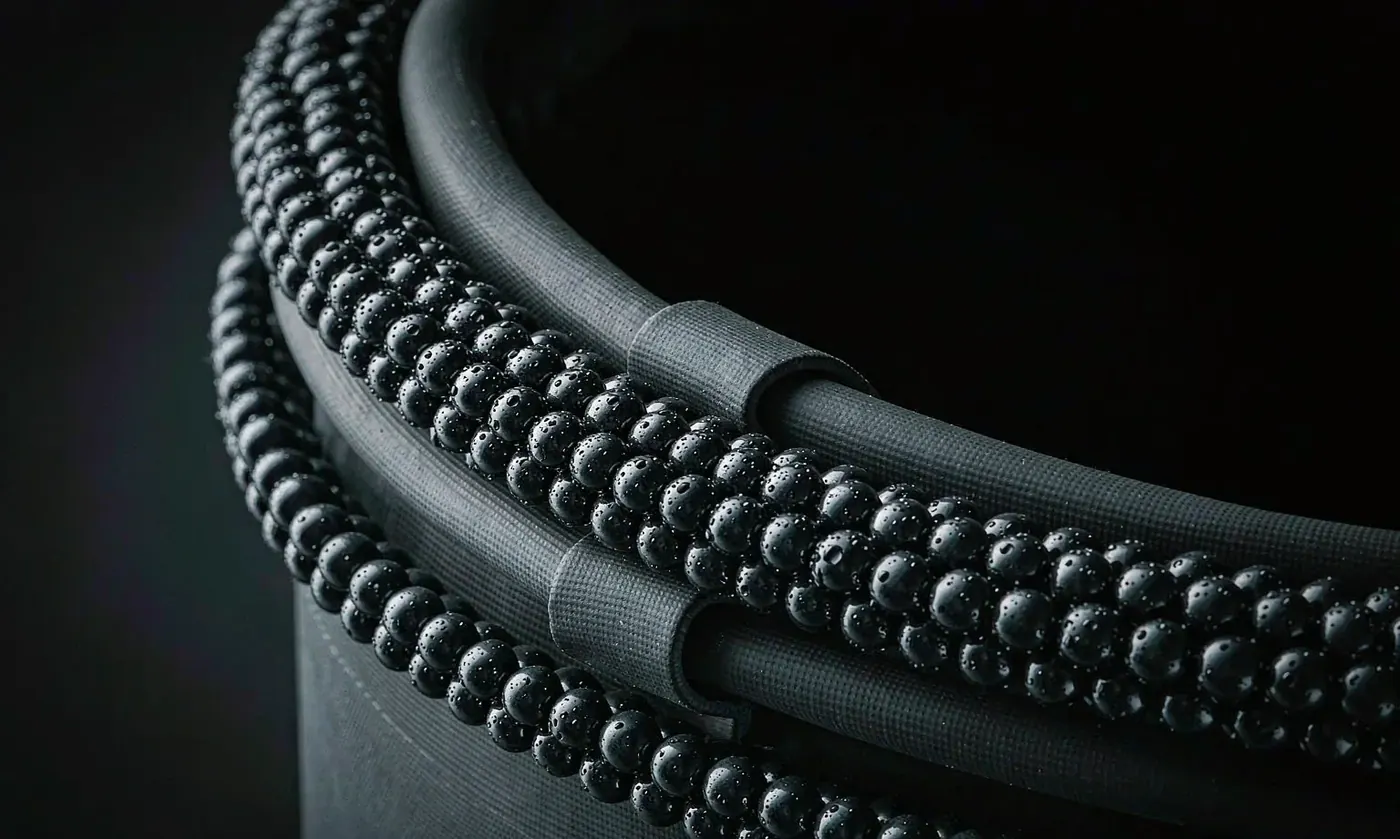
Whichever option is chosen, the closure is the part that fails in a salt environment, so it should be specified with the same care as the base. A covered zip with a fabric garage over the teeth keeps salt off the slider and roughly doubles closure life compared with an exposed zip, and it costs about 0.50 USD. Cleaning the closure with fresh water after every session doubles it again.
Rod and Tool Docking on Deck
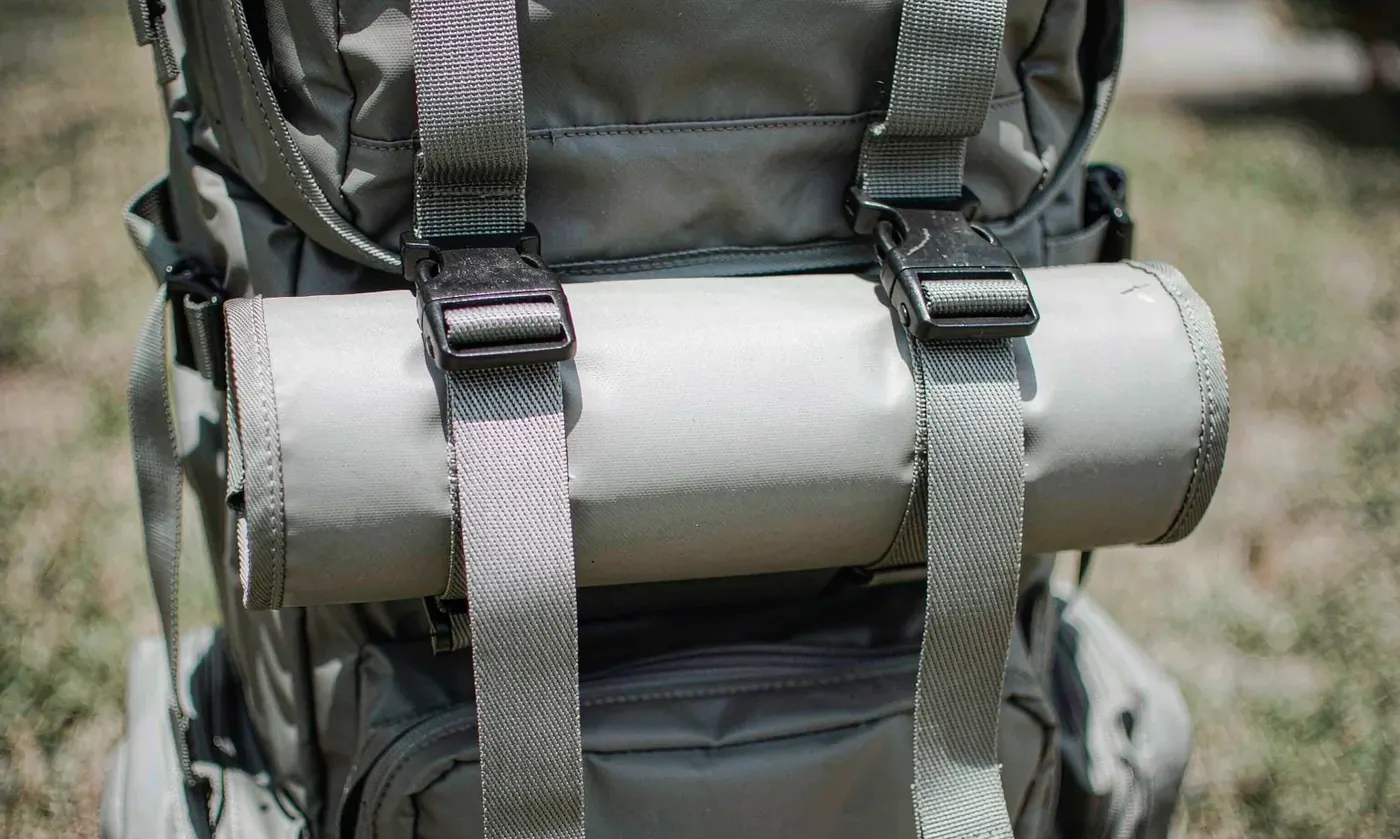
A deck tote that docks tools and rods stops being a bag and becomes a workstation, and it is the difference between a 26 USD product and a 38 USD one. The docking points that matter are a pliers sheath at the rim, a vertical rod tube or strap pair at one end, a knife or hook-file slot, and a drink sleeve that drains. Anything dangling over the side will be lost overboard within a season.
| Docked item | Position | Requirement | Failure if wrong |
|---|---|---|---|
| Pliers | Rim sheath, one-hand draw | Drained sheath | Rust and lost tools |
| Rod, assembled | Vertical tube or two straps | Closed bottom cup | Rod slides through and snaps |
| Knife or hook file | External sleeve at the rim | Blade covered | Cut hands and lost items |
| Drink | Drained side sleeve | Open bottom mesh | Condensation inside the tray bay |
| Bait knife board | Fold-out at the rim | Wipe-clean surface | Bait residue in the main chamber |
Attachment method is covered in more detail in the rod holder attachment guide, and the wider category sits in the fishing tackle tote overview. For a boat range, the honest recommendation is to stock one plain tote and one docked tote rather than three similar ones, because buyers in this category decide on function rather than on brand.
Materials, Salt, and Cleaning
Deck exposure is ultraviolet, salt, and physical wear in roughly equal measure, and the material specification has to answer all three. A coated 600D polyester is the sensible default, 1000D for charter duty, and any coloured panel should be solution-dyed rather than piece-dyed because deck ultraviolet exposure fades a piece-dyed fabric within one season. Hardware is 316 stainless as standard, with acetal buckles.
Abrasion and ultraviolet resistance can be required to stated values using published methods from ASTM International, and any water-resistance claim should carry its condition, with ingress codes defined by the IEC ingress protection framework. Cleaning is straightforward and it is the single biggest driver of service life: hose with fresh water after every trip, drain, and dry open for 8-16 hours.
| Care task | Frequency | Method | Pass condition |
|---|---|---|---|
| Fresh water hose-down | Every trip | Low pressure over hardware and closure | No salt residue visible |
| Drain and invert | Every trip | Open grommets, invert fully | No standing water in the base |
| Dry open | Every trip | 8-16 hours, lid off | Interior completely dry |
| Closure clean | Every trip | Fresh water over the teeth, brush | Slider runs freely |
| Ultraviolet check | Twice a season | Look for chalking and fade | No cracking at fold lines |
Programme, Pricing, and Compliance
Tote programmes are the simplest in the fishing category to develop, because there is no harness, no back panel, and usually no moulding beyond the base. That makes the sampling phase fast and the tooling cost low, which is why a buyer testing a new market should often start here rather than with a backpack. The two decisions that take time are the base panel and any rod docking, and both should be settled before sampling starts.
| Programme item | Baseline | Note |
|---|---|---|
| MOQ | 500 pcs per design and colour | Colour split negotiable above the baseline |
| Sampling | 6-10 working days | Add 3-5 days for a moulded base panel |
| Bulk | 35-50 days | From approved sample and deposit |
| Inspection | AQL 2.5 | Include box fit, base friction, drain rate, handle pull |
| Compliance | REACH and California Prop 65 | Screen coatings, films, inks, hardware |
QUANZHOU JUNYUAN BAGS has developed waterproof bag programmes since 2014, with the founding team active in the industry since 2004. Monthly output of 200,000 units is verified by SGS, and BSCI and ISO 9001 systems structure the workflow. Materials are screened for REACH and California Prop 65, and every bulk order is inspected at AQL 2.5 before shipment.
A tote brief can be emailed to service@junyuanbags.com; include litres, box count and orientation, base type, docking requirements, market, and quantity. FOB Xiamen or DDP service to more than 100 countries follows an approved sample and a complete test record. Soft-carry alternatives are compared in the fishing duffel round-up, and the wider category is summarised in the waterproof fishing tackle bag overview.
People Also Ask
Why is an open tote better than a backpack on a boat?
Because every tray is visible and reachable from standing height without unzipping anything. The bag also never has to be taken off, which matters when holding a rod or a rail.
What stops a fishing tote tipping over?
Geometry: the base width should be at least 1.25 times the bag height when loaded, with dense items low. A textured moulded base adds friction on a wet deck.
How do I pick a tote for a small boat?
Choose 28-35 L with two 3700 boxes laid flat. Above 40 L the tote starts to dominate a small deck, and a fold-flat build solves the storage problem.
Why do deck totes need drain grommets?
Grommets set 15-25 mm above the base line let water out without letting deck water in. A kayak tote needs four of them because the tank well is always wet.
What hardware grade suits a boat tote?
316 stainless throughout with acetal buckles. Deck exposure is continuous salt spray, and 304 will show bloom within a season on a boat.
Can a tote carry rods?
Yes with vertical tubes or two straps and a closed bottom cup. Rod storage makes the tote top-heavy, so it should be strapped to a rail or console rather than left loose.
Frequently Asked Questions
Q1. What is the best fishing tackle tote for a boat?
A 40 L four-box deck tote at about 1.45 kg with a footprint ratio of 1.42 and a textured moulded base. It balances capacity against stability better than any other size.
Q2. Why use a tote instead of a backpack on a boat?
All trays stay visible and reachable from above, and the bag never has to be taken off. That matters when one hand is holding a rod or a rail.
Q3. How do I stop a tote tipping on a boat?
Keep the base width at least 1.25 times the bag height when loaded, load dense items low, and use a textured moulded base panel for friction on a wet deck.
Q4. What size tote suits a small boat?
Twenty-eight to 35 L with two 3700 boxes flat. Choose a fold-flat build if storage space is tight, since it collapses to about 70 mm when empty.
Q5. Do fishing totes need drainage?
Yes. Grommets 15-25 mm above the base line drain water without letting it in. A kayak tote needs four because the tank well is always wet.
Q6. What hardware grade should a boat tote use?
316 stainless throughout with acetal buckles. Continuous salt spray will produce rust bloom on 304 within one season on a boat.
Q7. Is an insulated tote worth the extra cost?
Yes for full-day trips, because it replaces two products. It adds about 400 g and raises the height, so keep the trays loaded low for stability.
Q8. Can a tote carry assembled rods?
Yes with vertical tubes or two straps and a closed bottom cup. Secure the tote to a rail, because rod storage makes it top-heavy.
Q9. Should a tote have a closure?
For transport and trailering, yes. A covered zip or a roll-down collar gives IPX5 protection when closed at a cost of 2-4 USD and slower access.
Q10. How do I clean a fishing tote?
Hose with fresh water after every trip, open the drains and invert it, brush the closure, then dry open for 8-16 hours. That routine is the biggest single driver of service life.
Q11. What fabric suits a deck tote?
A coated 600D polyester as the default and 1000D for charter duty. Coloured panels should be solution-dyed, because deck ultraviolet exposure fades piece-dyed fabric in a season.
Q12. What is the MOQ and lead time for a tote programme?
MOQ is 500 pcs per design and colour, samples take 6-10 working days, and bulk runs 35-50 days from approved sample and deposit.