The airstrip valve on a dry backpack is a one-way port with a cap, and it does three jobs: it lets the body be compressed by 20 to 35 percent before the closure is rolled, it lets the body be inflated to about 20 kilopascals so a leak can be found in minutes rather than discovered in the field, and it releases the pressure a sealed body builds as altitude or temperature changes. On a 30 litre pack those numbers are large enough to matter: a fully inflated body displaces 30 kilograms of water and makes the pack a powerful float, while a purged body sinks. That float is not a life jacket and must never be sold as one, because a personal flotation device is a certified item and a dry pack is not. The valve is also the most likely leak point on a used body, since sand in the cap thread breaks the seat in about 40 percent of valve complaints. Programmes start at 500 pcs per design and colourway, with samples in 6 to 10 working days and bulk in 35 to 50 days.
Three Jobs, One Hole
A valve exists on a dry body because a sealed body is a pressure vessel with air inside it, and air is the only thing in the system that changes volume easily. The shell barely stretches, the closure either seals or it does not, and the contents take up the space they take up. Air is compressible, so it decides how big the pack is when closed, how much the body bulges when the sun warms it, and whether the pack floats.
The first job is compression. With the cap off, rolling the top down pushes air out through the port instead of trapping it, and a 30 litre body packed with soft gear closes down to roughly 20 litres. That is a real difference in a kayak hatch or in an aeroplane overhead bin, and it is the reason a dry body packs smaller than a conventional pack of the same nominal volume. The second job is verification. Pump the body up to about 20 kilopascals, listen and feel, and a leak that would have ruined a trip is found in three minutes on the garage floor. The third job is pressure release, which sounds trivial until a pack sealed at sea level is carried into an aircraft hold.
| Job | What the user does | Number that matters | Result | What happens without a valve |
|---|---|---|---|---|
| Compression | Open the cap, roll the top down | Packed volume falls 20 to 35 percent | A 30 L body closes to about 20 L | Trapped air, a bulky roll, a weak closure |
| Verification | Pump to about 20 kPa, hold | Accept under 2 kPa loss in 10 minutes | Leak found before the trip | Discovery in the field, wet contents |
| Purge before diving | Squeeze the air out, close the cap | Removes 30 L of buoyant air | The body stops acting as a float | The pack tows the diver upward |
| Pressure release | Crack the cap on ascent or in a hold | Ambient falls about 25 percent at 2,400 m | Body does not balloon or burst | Seam stress, possible weld failure |
| Drainage and drying | Leave the cap off during storage | Full air exchange | No trapped humidity, no odour | Mildew inside a closed body |
The purge row is the one that surprises people, and it is worth a sentence because it is a genuine safety matter rather than a convenience. A 30 litre body full of air displaces 30 kilograms of water against a pack that weighs perhaps 1.4 kilograms, so the net upward force is around 280 newtons, which is roughly four times the buoyancy a certified buoyancy aid is required to provide. A diver or a swimmer who enters the water with an inflated dry pack on their back is carrying a lift bag strapped to them, and that is a hazard rather than an advantage. Purging through the valve before entering the water is the fix, and it takes about ten seconds.
The Physics: Air Volume, Buoyancy and Pressure
Three physical relationships explain everything a valve does, and all three are simple enough to be useful at the point of decision. Displacement is the first: a body filled with air displaces its own internal volume of water, and each litre displaces one kilogram. Buoyancy is therefore the internal air volume in litres minus the mass of the pack and contents in kilograms, and a 30 litre pack with 20 litres of trapped air and a 6 kilogram load is floating on 14 kilograms of net lift. Temperature is the second: gas volume changes about 0.34 percent per degree Celsius at constant pressure, so a body closed at 5 degrees and warmed to 35 degrees gains about 10 percent in volume and stiffens noticeably. Altitude is the third and the most dramatic.
| Condition | Ambient pressure | Effect on a sealed 30 L body | Risk | Mitigation |
|---|---|---|---|---|
| Sea level, 20 degrees | 101 kilopascals | Baseline | None | None |
| Aircraft hold at 2,400 metres | About 75 kilopascals | Internal air expands about 35 percent | Seam stress, weld failure | Vent the body before the flight |
| Mountain pass at 3,500 metres | About 65 kilopascals | Expands about 55 percent | Closure forced open | Crack the cap on ascent |
| Car boot at 55 degrees | 101 kilopascals, volume up 12 percent | Body stiffens and bulges | Closure peel under load | Part-fill and vent before closing |
| Cold water immersion at 5 degrees | 101 kilopascals, volume down 5 percent | Body slackens | None, buoyancy unchanged | None |
The altitude row is the one that produces warranty claims. A body closed at sea level holds air at 101 kilopascals, and in an aircraft hold pressurised to a 2,400 metre equivalent the surroundings sit near 75 kilopascals, so the differential is about 26 kilopascals outward. That is a small fraction of what a welded seam withstands, but it acts across the whole surface rather than at one point, and it acts on the closure, the weakest line on the pack. A body arriving with its closure forced partly open is the common result.
- Vent the body before any flight, since a 2,400 metre cabin equivalent creates about 26 kilopascals of outward differential.
- Purge before entering the water, because 30 litres of trapped air gives around 280 newtons of lift on a 1.4 kilogram pack.
- Part-fill the body on a hot day and vent before closing, since volume rises about 0.34 percent per degree Celsius.
- Leave the cap off during storage so the interior can exchange air and dry completely.
Valve Designs Compared
Four valve designs cover the market, and they differ on two axes that matter: how quickly the body can be filled or emptied, and how well the seat survives grit. Flow area decides the first, and a wide bore vents a 30 litre body in under ten seconds while a narrow one takes a minute of squeezing. Seat design decides the second, and the trade is consistent: the designs that seal best use a compressible ring squeezed against a face, and those are the designs that leak when a grain of sand sits on that face. There is no design that is immune, which is why the maintenance routine rather than the design is what determines field reliability.
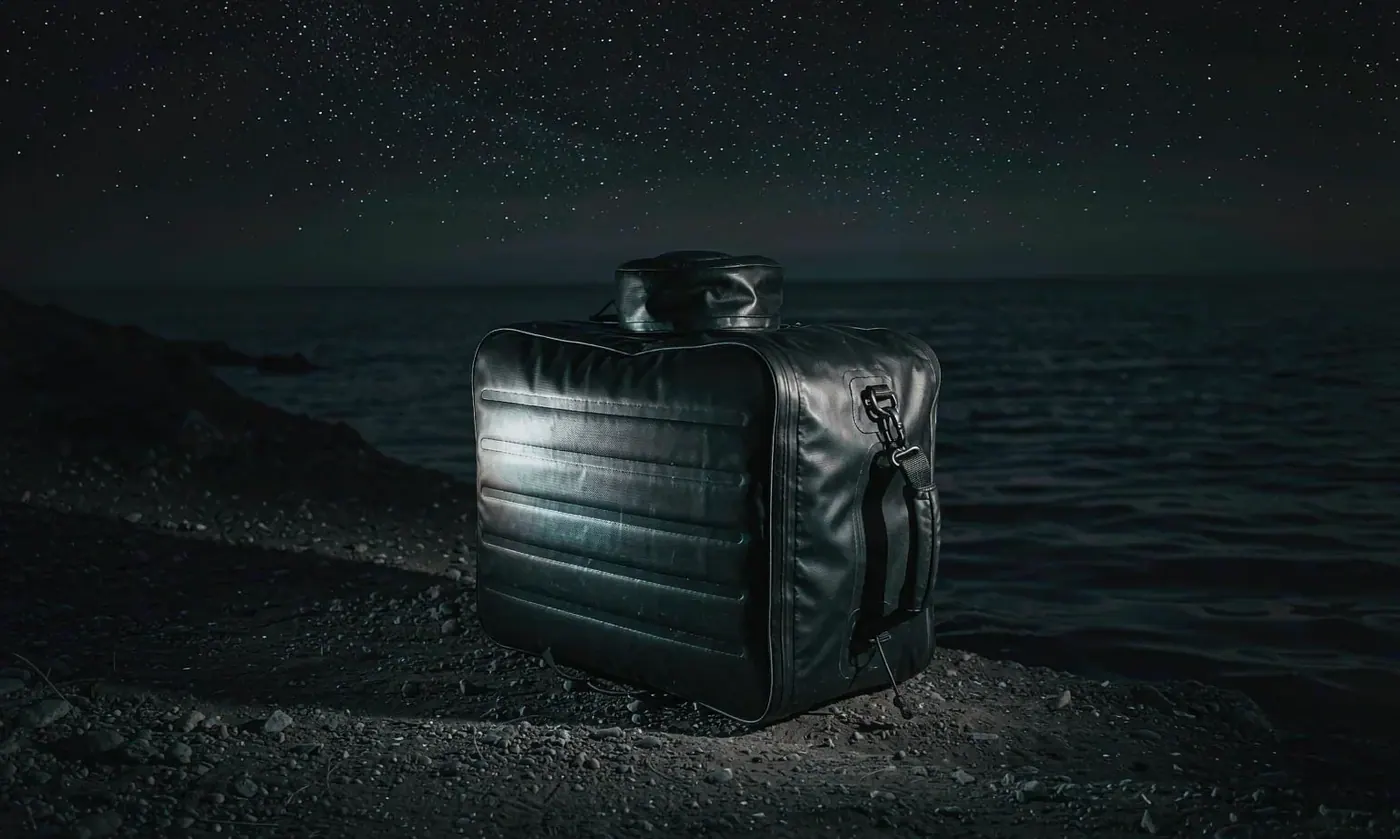
| Design | Bore | Vent time on a 30 L body | Seat type | Grit tolerance | Best use |
|---|---|---|---|---|---|
| Screw cap with flat gasket | 8 to 12 millimetres | 6 to 10 seconds | Flat silicone ring on a face | Moderate, wipe clean | General dry bodies |
| Screw cap with O-ring | 6 to 9 millimetres | 10 to 20 seconds | O-ring in a groove | Good, groove shields the ring | Saltwater and sandy use |
| Push-button one-way | 4 to 6 millimetres | 30 to 60 seconds | Mushroom valve on a stem | Poor, any grit holds it open | Inflatable pillows, light use |
| Twist-lock bayonet | 10 to 14 millimetres | 4 to 8 seconds | Compression ring, quarter turn | Good, quarter turn sheds grit | Frequent access |
| Welded inflation port, no cap | 3 to 5 millimetres | 60 seconds plus | Pinch or plug | Excellent, nothing to lose | Test ports on sealed bodies |
The push-button row is where buyers make a mistake worth flagging, because it looks like the most convenient option and it is the least reliable in the field. A mushroom valve seals by a flexible disc resting on a stem, and a single grain of sand under that disc holds it open by a fraction of a millimetre, which is enough to let a pressurised body down over an hour. It is a good design for an inflatable pillow and a poor one for a dry body that is expected to hold air for a whole day. Where a push-button is wanted for convenience, the answer is a screw cap as the primary seal with the button inside it, so the button never has to hold pressure on its own.
Housing material is decided by what the body is made of rather than by preference. A thermoplastic polyurethane body wants a thermoplastic polyurethane housing, because the two weld together and the joint becomes part of the shell. A mismatched housing has to be bonded with an adhesive instead, and an adhesive joint is the weakest option in peel and in ageing. Matching the housing to the shell costs nothing and removes the most common origin of a valve separating from the body.
Using the Valve: A Routine That Works
Four steps cover packing, testing and end-of-day care in under two minutes. Each prevents a specific failure, and skipping the test step is what turns a three-minute garage check into a wet sleeping bag at the end of a long day.
| Step | Action | Time | Failure it prevents | Sign it was done right |
|---|---|---|---|---|
| 1. Open before packing | Unscrew the cap fully and set it aside | 5 seconds | Trapped air, a bulky roll | The body compresses under one hand |
| 2. Roll and close | Roll down three folds, clip the closure | 20 seconds | A weak roll that unrolls in water | Three folds, no crease in the top |
| 3. Inflate and check | Pump to about 20 kPa, hold 10 minutes | 12 minutes | A leak discovered in the field | Loss under 2 kPa in 10 minutes |
| 4. Purge or leave inflated | Squeeze the air out for diving, leave it in for flotation | 15 seconds | Being towed upward, or sinking | The body matches the intended use |
| 5. Rinse and dry open | Rinse the cap thread, dry with the cap off | 2 minutes | Grit in the seat, mildew inside | Cap thread clean, interior bone dry |
The third step is the one people skip and the one that matters most, because it is the only check that happens before the pack is loaded. A body pumped to 20 kilopascals and left for ten minutes shows a slow leak as a drop of more than 2 kilopascals or as a visible slackening of the panels, and both are easier to see on an empty pack. Pressurising is also gentle: 20 kilopascals is about 2 percent of the 1 bar a welded body holds, so a sound pack cannot be damaged by testing it. The home version of the routine is written out in how to test a waterproof backpack at home.
Seat, Seal and Housing: Where Valves Fail
Five failure modes account for essentially every valve complaint, and three of them are user-preventable. Grit on the seating face is the largest, because a dry body is used in exactly the environments that produce grit: beaches, river banks and boat decks. A lost cap is second and is a design problem as well as a user one, since a cap that is not tethered will be lost within a season. Compression set in the seal ring is third, and it is a slow, predictable ageing effect rather than a defect. The weld around the seat is fourth and is the one that indicates a build problem.
| Failure mode | Share of valve complaints | First sign | Detection | Prevention |
|---|---|---|---|---|
| Grit on the seating face | About 40 percent | Slow loss with no visible damage | Pressure drop over 10 minutes | Rinse the thread, close the cap on a clean face |
| Cap lost or left off | About 20 percent | Total loss of pressure | Visual, before packing | Tether the cap to the body |
| Seal ring compression set | About 18 percent | Loss after two to three seasons | Pressure drop, ring looks flat | Replace the ring every two years |
| Weld or bond around the seat | About 12 percent | Bubbles at the housing edge | Bubble test at 3 kPa | Match housing to shell, test each unit |
| Cracked housing from impact | About 10 percent | Sudden total loss | Visual after a drop | Recess the valve, or spec a tougher housing |
The grit row is the one to design against rather than to warn about, and there are two cheap measures. The first is a groove rather than a flat face, because an O-ring sitting in a groove is shielded from grit on three sides while a flat gasket sits exposed. The second is a tethered cap, which prevents the lost-cap row entirely and costs a few cents. Together they address 60 percent of valve complaints for a negligible cost, which is why they belong in a specification rather than in a leaflet. The closure side of the same problem, grit on a sealing lip, is treated in airtight versus water-resistant closures.
Buoyancy, and the Line That Must Not Be Crossed
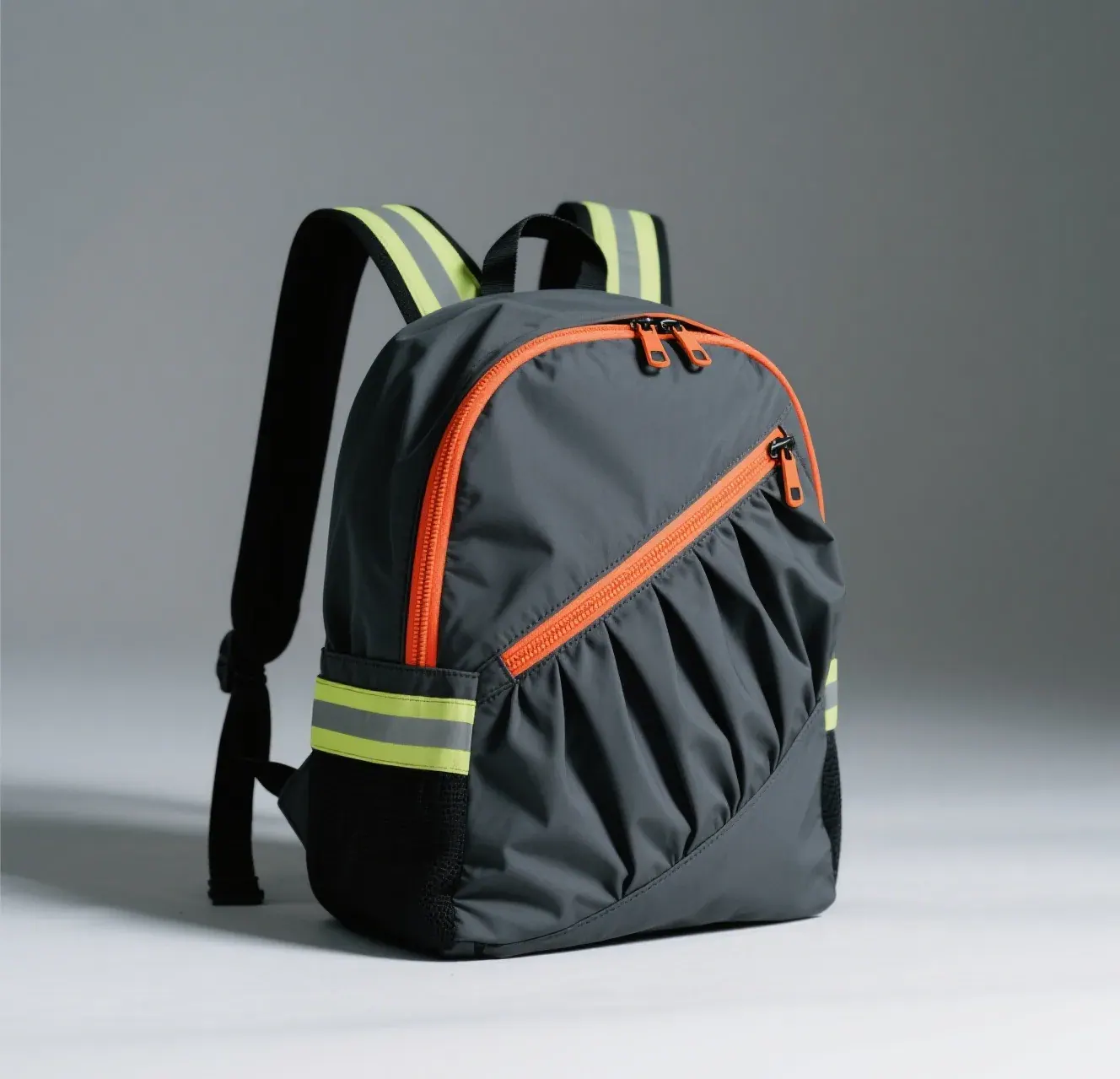
A sealed dry body floats, and buyers need to understand why that is useful and why it must never be sold as safety equipment. The useful part is genuine: a 30 litre body with 20 litres of trapped air provides about 20 kilograms of displacement against a pack and contents weighing 6 kilograms, so it keeps 14 kilograms of gear afloat. The other part is equally clear. A personal flotation device must meet a buoyancy figure, stay buoyant when punctured and support an unconscious wearer face up, and a dry bag meets none of those.
| Item | Buoyancy | Certification | Behaviour when punctured | May be sold as safety equipment |
|---|---|---|---|---|
| Dry backpack, 30 L, fully inflated | About 280 newtons net | None | Loses all buoyancy immediately | No |
| Dry backpack, 30 L, half inflated | About 130 newtons net | None | Loses all buoyancy immediately | No |
| Buoyancy aid, ISO 12402-5 | 50 newtons minimum | Certified to the standard | Retains buoyancy, closed-cell foam | No, aid only |
| Life jacket, ISO 12402-3 | 150 newtons minimum | Certified to the standard | Retains buoyancy, turns the wearer | Yes |
| USCG wearable device | 70 newtons minimum for the common class | Approved by the authority | Retains buoyancy | Yes |
The wording on a product page is where this gets decided, and the consequences are legal as well as physical. Phrases such as will keep you afloat or can be used as a life jacket should not appear on a dry bag listing, and the accurate phrase is that the pack floats with its contents. USCG boating safety guidance is the reference for United States waters, and water temperature and immersion physiology are covered by NOAA. Bodies intended for floating use are described in the floating waterproof backpack range.
Testing, Maintenance and Service Life
A valve needs about five minutes of attention per season and lasts as long as the body if it gets it. The maintenance is mechanical rather than chemical: rinse the thread, check the ring, and confirm the seat holds. The test is the same pressure check used on the body, and it is worth doing it with the cap in both positions, because that is the only way to separate a valve fault from a body fault. If the body holds pressure with the cap closed and loses it with the cap open, the fault is in the seat; if it loses pressure either way, the fault is in the body.
| Task | Interval | Method | Acceptance | Action if it fails |
|---|---|---|---|---|
| Rinse the cap and thread | After every saltwater or sandy trip | Fresh water, wipe the face | No visible grit anywhere | Rinse again, inspect the ring |
| Check the seal ring | Every season | Look for flat spots and cracks | Ring is round and springy | Replace, about 1 to 3 USD |
| Pressure check, cap closed | Before each long trip | Pump to 20 kPa, wait 10 minutes | Loss under 2 kPa | Move to the next test |
| Pressure check, cap open | If the closed test fails | Pump to 20 kPa with the cap off, wait | Should fall slowly, not hold | If it holds, the seat is leaking |
| Tether check | Every season | Pull the tether firmly | Cap stays attached | Re-knot or replace the tether |
| Housing bond check | Annually | Bubble test at 3 kPa around the housing | No bubbles at the edge | Re-weld or bond the housing |
Service life is worth stating in numbers because buyers ask. The welded housing lasts as long as the body, eight to twelve years of regular use before the film ages out. The seal ring is the consumable, at two to three years before compression set is measurable and one to three dollars to replace. Caps are lost rather than worn. Annual maintenance on a dry body is a few dollars and fifteen minutes.
Specifying a Valve on a Programme
Adding a valve to a programme is cheap in unit cost and not cheap in tooling, and that split explains why the decision belongs early. The component itself is one to three dollars, and fitting it is a single weld or bond operation. The tooling is the cost: a valve needs a shaped electrode or a bonding jig, and if the housing is to be recessed into the panel the pattern has to change as well. Deciding after sampling means a new electrode, a new sample round and two to four weeks, whereas deciding at quotation stage costs nothing.
| Order item | Body without a valve | Body with a valve | Delta | Note |
|---|---|---|---|---|
| Valve component | None | 1.00 to 3.00 USD | 1 to 3 USD per unit | Screw cap with an O-ring sits mid-range |
| Fitting operation | None | One weld or bond cycle | 20 to 40 seconds | Plus a seat test per unit |
| Tooling | None | Electrode or bonding jig | 300 to 900 USD | One-off, per housing design |
| Per-unit verification | Sample rate | 100 percent at 20 kPa | Plus 8 minutes per unit | Two to four days on the schedule |
| Recessed housing option | Not applicable | Pattern change plus tooling | 300 to 600 USD | Protects the cap from impact |
| Cap tether | Not applicable | Under 0.20 USD | Negligible | Removes 20 percent of complaints |
| MOQ and timing | 500 pcs, 35 to 50 days | 500 pcs, 37 to 54 days | 2 to 4 days | FOB Xiamen or DDP to 100+ countries |
- Valve housings are matched to the shell material so the joint is welded rather than bonded, and every unit is seat-tested.
- Materials are screened against REACH and California Prop 65, and monthly output of 200,000 units is verified by SGS.
- Programmes run under BSCI and ISO 9001 systems, with AQL 2.5 inspection before release.
- A five-line brief starts a quotation: body volume, valve design, cap tether, housing recess and quantity.
Specify a valve on any body sold as a dry backpack, because the cost is trivial and the three jobs it does are not achievable any other way. Choose a screw cap with a grooved O-ring, tether the cap, match the housing to the shell, and recess it if the pack will be thrown about on a deck. Then write the buoyancy caveat into the product copy in plain language: the pack floats with its contents, and it is not a life jacket. Valves, housings, closures and the rigs used to seat-test them are shown. Enquiries go to service@junyuanbags.com.
People Also Ask
What is the valve on a dry backpack for?
Three things: compressing the body by 20 to 35 percent before the closure is rolled, inflating it to about 20 kilopascals so a leak can be found before a trip, and releasing the pressure a sealed body builds as altitude or temperature changes.
Should a dry backpack be inflated or purged?
It depends on the use. Inflate for flotation and for leak testing, and purge before diving or swimming, because 30 litres of trapped air gives around 280 newtons of lift and will tow the wearer upward.
Will a dry backpack float?
Yes, while it contains air. A 30 litre body displaces 30 kilograms of water against a pack weight of about 1.4 kilograms, giving roughly 280 newtons of net buoyancy, but it loses all of that the moment it is punctured and it is not a certified flotation device.
Why does my dry bag lose air overnight?
Usually grit on the seating face, which accounts for about 40 percent of valve complaints and holds the seal open by a fraction of a millimetre. Rinse the cap thread after every trip and close the cap on a clean face.
Can you fly with a sealed dry backpack?
Yes, but vent it first. An aircraft hold at a 2,400 metre equivalent sits near 75 kilopascals against 101 at sea level, so a body sealed at sea level gains about 26 kilopascals of outward differential and can force the closure open.
Which valve design is most reliable in sand?
A screw cap with an O-ring in a groove, because the groove shields the ring on three sides while a flat gasket sits fully exposed. A push-button mushroom valve has the lowest grit tolerance and should never be the primary seal on a body expected to hold air all day.
Frequently Asked Questions
Q1. What does the airstrip valve on a dry backpack do?
It is a capped port that lets air in and out of a sealed body. It is used to compress the pack by 20 to 35 percent before closing, to inflate the body to about 20 kilopascals for leak testing, and to purge air before entering the water so the pack stops acting as a float.
Q2. How much buoyancy does an inflated dry backpack give?
About 30 kilograms of displacement for a full 30 litre body, which is roughly 280 newtons net once the 1.4 kilogram pack weight is subtracted. That is several times the 50 newtons a certified buoyancy aid must provide, and unlike a buoyancy aid it is lost instantly if the body is punctured.
Q3. Is a dry backpack a life jacket?
No. A personal flotation device has to meet a buoyancy figure, stay buoyant when punctured and support an unconscious wearer face up, and a dry bag meets none of those. The accurate claim is that the pack floats with its contents, and the maritime authority for your waters publishes what actually counts as life-saving equipment.
Q4. Should the valve be open or closed when packing?
Open while rolling the top down, so air escapes instead of being trapped, and closed once the body is sealed. Packing with the cap open is what produces the 20 to 35 percent reduction in packed volume that makes a dry body fit a kayak hatch or an overhead bin.
Q5. How do you test a dry backpack with the valve?
Pump the body to about 20 kilopascals, wait ten minutes and accept a loss of no more than 2 kilopascals. To separate a valve fault from a body fault, repeat with the cap off: if the body holds pressure either way, the leak is in the shell rather than the seat.
Q6. Why does my valve leak even though the cap is tight?
Because grit on the seating face holds the seal open by a fraction of a millimetre, and that accounts for about 40 percent of valve complaints. Rinse the cap thread and the face with fresh water after every saltwater or sandy trip and close the cap on a clean surface.
Q7. What valve design should a dry backpack use?
A screw cap with an O-ring seated in a groove. The groove shields the ring on three sides, the bore vents a 30 litre body in 10 to 20 seconds, and the cap can be tethered. Push-button designs vent slowly and have the lowest grit tolerance of any option.
Q8. How much pressure builds inside a sealed pack in an aircraft hold?
About 26 kilopascals of outward differential. A hold pressurised to a 2,400 metre equivalent sits near 75 kilopascals against 101 at sea level, so the internal air expands by roughly 35 percent and can force a closure open or stress a seam.
Q9. How long does a valve last and what wears out?
The welded housing lasts as long as the body, eight to twelve years, and the consumable is the seal ring, which shows compression set after two to three seasons and costs one to three dollars to replace. Caps are lost rather than worn, which is why a tether matters.
Q10. What is the MOQ and lead time for a dry backpack with a valve?
500 pcs per design and colourway, with bulk in 37 to 54 days including two to four days for per-unit seat testing. Samples take 6 to 10 working days, and shipments are FOB Xiamen or DDP to more than 100 countries.