For family carry, one large EVA tote at about 32 litres plus one kids size at 7 litres covers almost every situation, and the combination works because the material cannot be ruined by what children put in it. A large body carries six towels, a picnic, drinks and wet gear at 1.6 to 2.1 kilograms empty, while a kids body at 0.4 to 0.6 kilograms lets a child carry about 2 kilograms unaided. Sand falls through the perforations, spills hose out in under two minutes, and nothing about the material absorbs water, stains or mildews. The two things to plan for are wet and dry separation and charm safety.
Why This Material Suits Family Carry
Family loads are wet, sandy, sticky and unpredictable, and that is precisely the profile this material was made for. Closed-cell ethylene-vinyl acetate absorbs effectively no water, so a wet swimsuit left in the base overnight does not turn the bag into a damp environment. There is no lining to delaminate, no seam to split and no fabric to stain, which means the three things that end a fabric family bag are simply not available as failure modes.
The second reason is the cleaning economics of a family week. A bag used for beach, pool, daycare and a picnic in the same week needs rinsing four or five times, and each rinse takes about three minutes at a tap. A fabric equivalent needs a wash cycle and several hours of drying each time, which is the reason family fabric bags tend to be cleaned once a month and then retired. A molded body is cleaned because it is easy, and easy cleaning is what keeps it in service.
| Family situation | Fabric family bag | Molded EVA body | Difference over a season |
|---|---|---|---|
| Wet swimsuit left inside overnight | Soaks the bag, smells by morning | Drains, bag is dry | No odour, no wash cycle |
| Sand brought home from the beach | Trapped in weave and seams | Falls through the perforations | No vacuuming, no grit in the car |
| Sunscreen and snack spills | Stains, needs a wash | Rinses off with mild detergent | About two minutes instead of a cycle |
| Child stands on it or drops it | Seams stress, fabric tears | Flexes and recovers | No repair, no retirement |
| Rinsed four times a week | Not practical | Routine, three minutes each | The bag stays presentable all summer |
The honest counterweight is weight, and it should be stated before anything else. A large family body at 1.6 to 2.1 kilograms empty is roughly triple a canvas equivalent, and it cannot be folded flat in a pushchair basket. For a parent already carrying a child, a pushchair and a change bag, that matters, and it is the reason many families settle on a medium body at 18 litres rather than a large one.
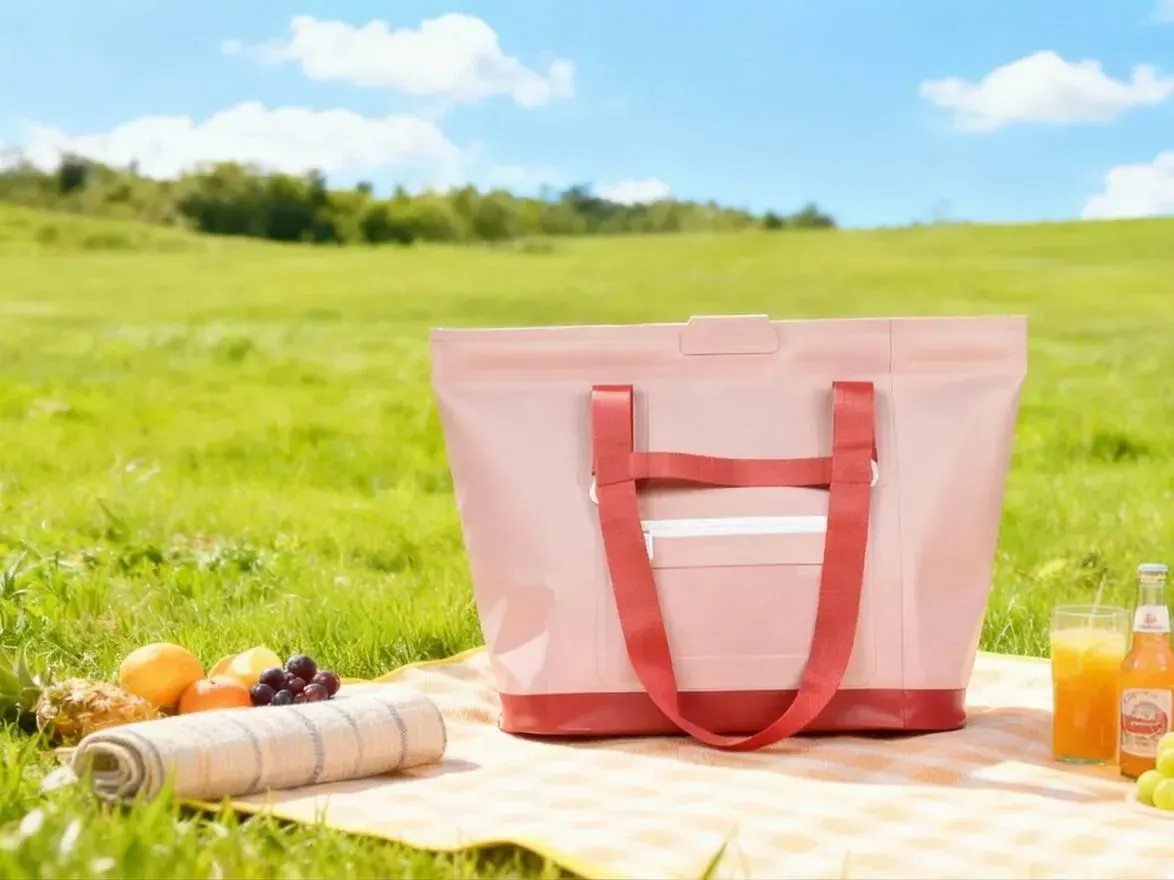
One Bag or Two? Sizing for a Family
The question is not which size but whether one bag is enough, and the answer depends on whether the children can carry anything themselves. A family where both children are under five needs one large body, because everything travels with the parent. A family with children aged five and above does better with a large body plus one kids size per child, because a child who carries their own towel and drink removes several kilograms from the parent load.
| Family composition | Recommended setup | Parent carries | Child carries | Total volume |
|---|---|---|---|---|
| One adult, one child under 5 | One medium, 18 litres | All of it, 8 to 11 kilograms | Nothing | 18 litres |
| One adult, two children under 5 | One large, 32 litres | All of it, 11 to 16 kilograms | Nothing | 32 litres |
| One adult, two children, one over 5 | One large plus one kids | 9 to 13 kilograms | Up to 2 kilograms | 39 litres |
| Two adults, two children over 5 | One large plus two kids | 7 to 11 kilograms | Up to 4 kilograms | 46 litres |
| Two adults, three children mixed ages | Two mediums or one extra large | Split between adults | Up to 2 kilograms | 36 to 42 litres |
Two patterns are worth noting. The parent load rarely falls below about seven kilograms even with children carrying their own kit, because drinks, food and the shared towel do not divide cleanly. And a second bag is almost always better than a bigger first one: two bodies can be carried by two people, packed by category and rinsed separately, whereas one enormous body becomes a single point of failure that one person has to lift.
One further consideration decides the setup more often than capacity does: whether the bag has to be carried up or down stairs, along a boardwalk or across soft sand. A 32 litre body is manageable on flat ground and genuinely awkward on a long flight of steps, and families with a pushchair should assume the tote will often be carried in the same hand as something else. In those situations two medium bodies outperform one large one, because they can be split between two adults or hung from a pushchair in two loads.
Wet and Dry Separation
The most common complaint from family users is not capacity but mixing: a wet swimsuit against a dry snack, a sandy toy against a clean towel. An open molded body has one volume, so separation has to be added rather than designed in, and three options exist with very different costs.
| Option | Cost | Effectiveness | Drawback | Best for |
|---|---|---|---|---|
| Dry pouches per child | Low, a few dollars each | Good for small items | Does not handle wet towels | Phones, snacks, dry clothes |
| Drop-in insert or divider | Moderate | Best overall for towels | Size-specific to the body | Separating wet from dry in one bag |
| Second small body as the wet bag | Higher | Excellent, fully separate | Two things to carry | Beach days with a full wet kit |
| Wet items in a plastic bag | Free | Poor, water pools and leaks | Condensation, tears, slips | Emergency only |
The insert is the best value for most families, because it costs a fraction of a second bag and turns one volume into two usable compartments. It must be matched to the exact body: an insert sized for a 48 centimetre body floats in a 54 centimetre one and jams in a 41 centimetre one. Pouches handle everything small and are the item to buy before the first trip rather than after the first wet phone.
Daycare, Nursery and Labelling
A molded body works well as a daycare or nursery bag, and for a reason that is not obvious: it stands open on a shelf or a cubby without collapsing, so a child or a carer can see and reach the contents rather than digging through a soft bag that has folded over. It also cannot be damaged by a spilled drink cup, which is the commonest daycare incident by a wide margin.
- Label the body with a permanent marker on the base rather than a sticker on the wall, since stickers peel in a rinse.
- Use pressed charms as a colour code: one colour per child makes bags identifiable at a glance in a shared cubby.
- Send a labelled dry pouch inside for spare clothes, because wet and dry separation is the whole job in a nursery bag.
- Choose the kids size at 0.4 to 0.6 kilograms so a child can carry it, rather than a small adult size at 0.9 kilograms.
- Rinse it at the end of each week. A body carrying snacks and drinks needs one rinse even if nothing looks wrong.
Charms deserve one caution in this context. They are small parts, and any charm sold with or for a children size should be tested against the small-parts requirement for the destination market. The consumer safety methods published by ASTM International are the reference most buyers name, and the test is cheap when run on the charm alone rather than on a finished bag.
Kids Sizes and the Weight Budget
The single number that governs children sizes is empty weight, and it is the one adults get wrong. A child can comfortably carry about ten percent of body weight, so a 20 kilogram child should be carrying no more than about 2 kilograms in total. A kids body at 0.4 to 0.6 kilograms leaves a useful 1.4 to 1.6 kilograms for contents; a small adult body at 0.9 kilograms leaves almost nothing, which is why handing a child the smaller adult bag does not work in practice.
| Age | Body weight | Carry budget | Suggested size | What fits inside |
|---|---|---|---|---|
| 2 to 4 years | 12 to 16 kilograms | Up to 1.5 kilograms | Mini, 5 litres | Snacks, a small towel, one toy |
| 5 to 7 years | 18 to 22 kilograms | Up to 2 kilograms | Kids, 7 litres | Towel, goggles, drink, spare top |
| 8 to 10 years | 25 to 32 kilograms | Up to 3 kilograms | Kids or small, 7 to 10 litres | Full swim kit plus a book |
| 11 years and above | 35 kilograms and above | Up to 4 kilograms | Small, 10 litres | Full kit plus shoes |
| Teen | 45 kilograms and above | Up to 6 kilograms | Small to medium, 10 to 18 litres | Adult-equivalent load |
Perforation diameter should drop to six to nine millimetres on kids sizes, which still passes sand and water but does not admit small fingers. That is a genuine design difference rather than a cosmetic one, and it is worth confirming when buying a children body rather than assuming the specification matches the adult range.
Beach and Picnic Days With Children
A family beach day has a predictable shape and a predictable failure point: the load is fine on the way out and roughly twice as bulky on the way back, because everything is wet or sandy by then. Sizing for the return load rather than the outward one is the single most useful piece of advice for this scenario, and it is why families who buy a medium for a beach day almost always exchange it for a large.
- Pack the wet bag and a spare towel first, because these are the items that grow during the day.
- Put snacks and drinks in a dry pouch or an insert compartment, since sand and water reach everything else.
- Give each child a charm colour and their own pouch, which halves the number of times the parent bag is searched.
- Rinse toys before they go in rather than after, since a sandy toy contaminates everything it touches in the bag.
- Carry a small rubbish pouch. A molded body rinses clean, but a bag carrying food wrappers all day does not.
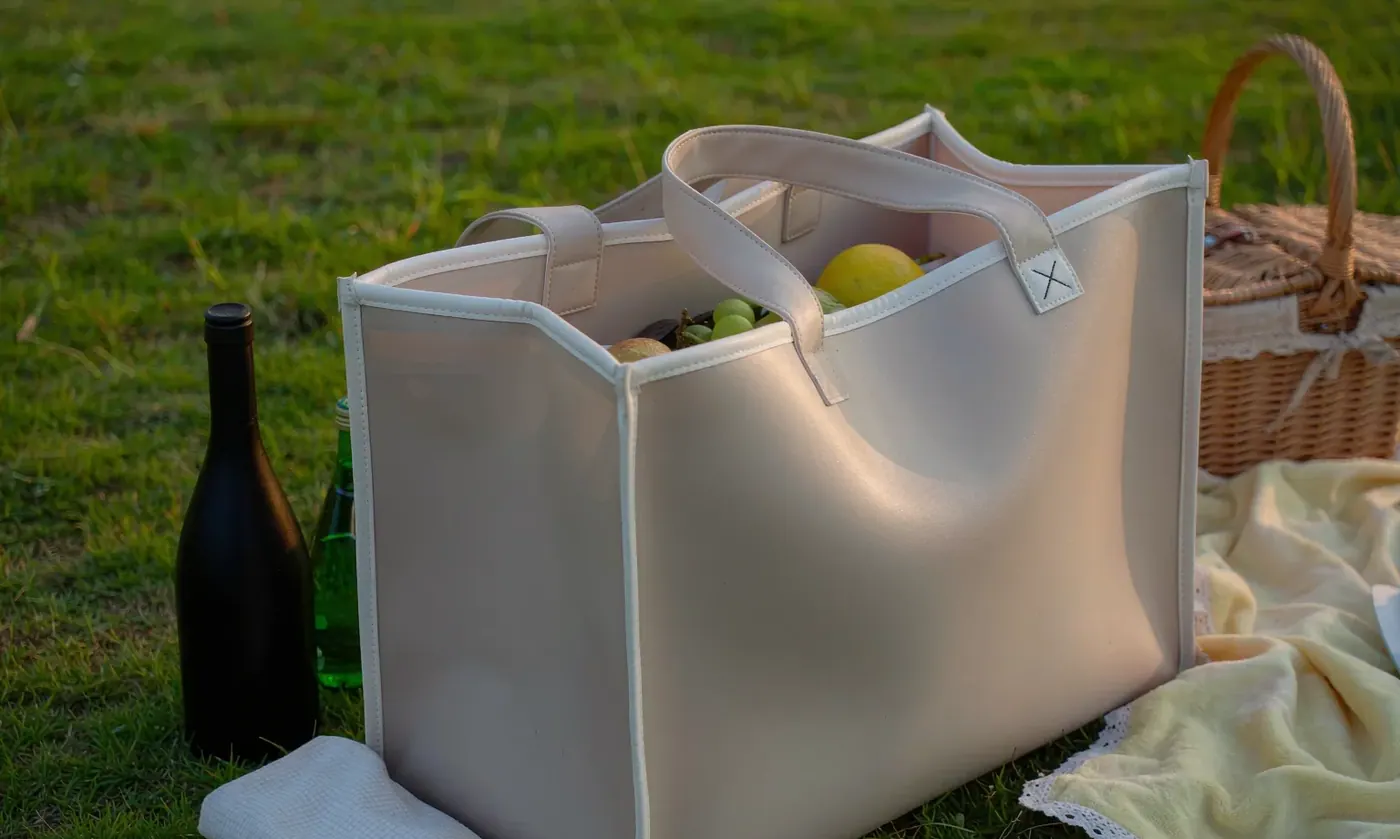
Pool, Marina and Wet Days
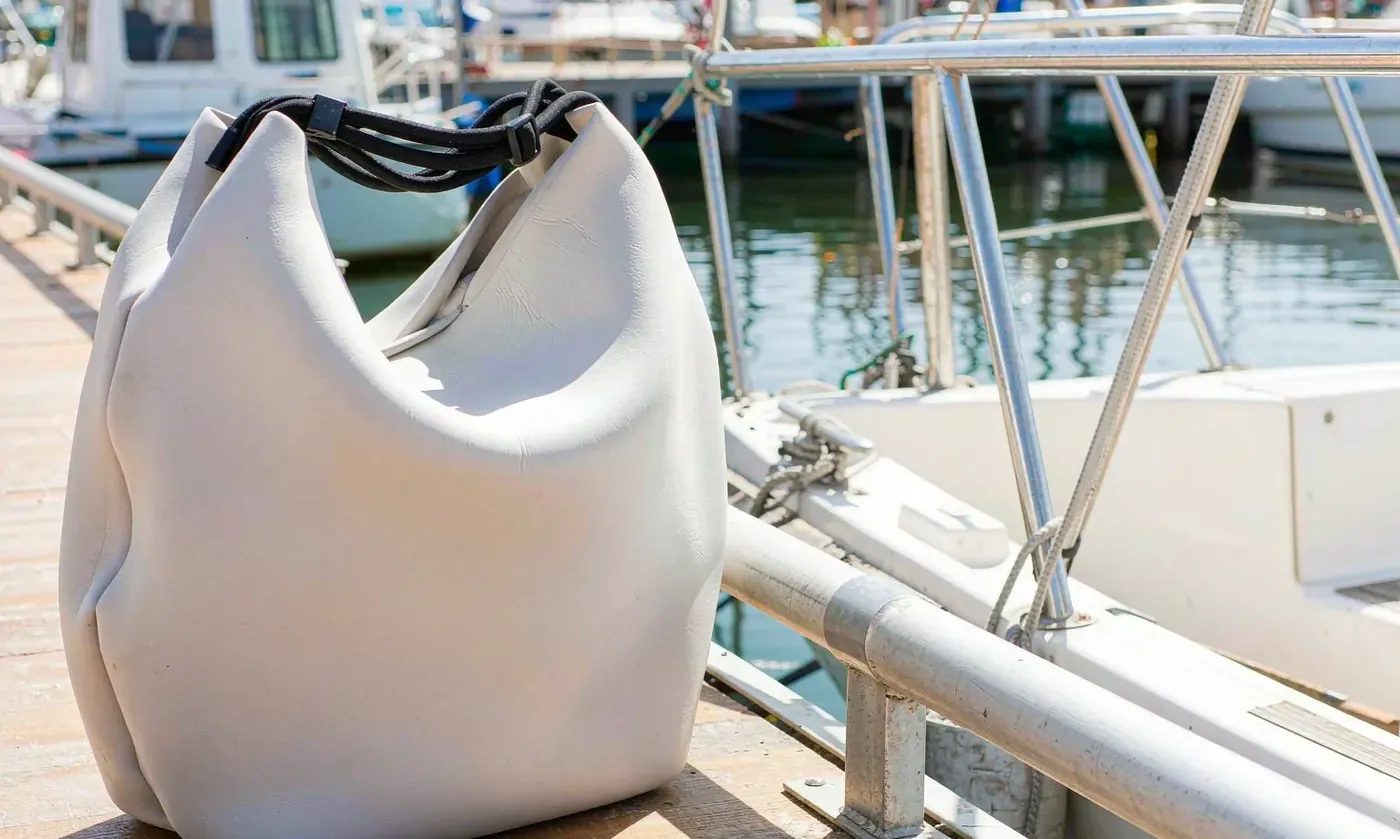
Pool and marina days are the easiest use case for this material and the one where it beats fabric most decisively. Everything comes home wet, the bag sits on wet tile or a wet deck, and it has to be dry before the next session the following morning. A perforated body drains on the walk to the car, does not soak a changing-room bench, and is dry within the hour standing open in shade.
Hygiene is the reason to take drying seriously rather than the tidiness. Damp swim kit stored in a closed bag carries bacteria and chlorine by-products between sessions, and the guidance on healthy swimming published by the United States Centers for Disease Control and Prevention is explicit about drying and storing swim items rather than leaving them wet. A body that drains and air-dries in an hour removes that problem from a family routine instead of adding a chore to it.
Cleaning After a Family Day
The routine is the same one described throughout this guide, and it takes about three minutes. What changes with children is frequency and the types of residue involved, so the practical advice is about sequence rather than method.
- Shake it dry first. Dry sand falls through holes of nine to twelve millimetres, damp sand does not.
- Rinse from the base upward so grit is pushed out through the perforations rather than into the corners.
- Treat sunscreen and food residue with warm water, mild detergent and a soft cloth, then rinse thoroughly.
- Pay attention to the handle roots and the base rails, where sand and sticky residue collect out of sight.
- Stand it open and upside down in shade, and leave it there until it is completely dry before storing.
Two things should never happen to a family bag. Machine washing, which flexes the body against itself and can crease it permanently. And solvent cleaners, including most bathroom sprays, which dull the surface and leave patches that then collect dirt faster than the surrounding area. Mild detergent is the only cleaning agent these bags need, and choosing one is easier when the label declares the ingredients rather than relying on a fragrance description.
Heat, Sun and Shade Around Children
Two thermal facts matter more when children are involved, and both are easy to plan around. Surface temperature on a dark body left in direct summer sun passes sixty degrees within an hour, which is hot enough to be unpleasant to touch as well as enough to deform the shape. And ultraviolet exposure dulls colour over seasons, so a bag left permanently on a sunny deck looks considerably older than one stored in shade, even though both are functionally identical.
- Choose a light or mid-tone colourway for a family bag. It stays cooler to touch and holds its appearance longer.
- Keep the bag in shade rather than on a deck or in a closed car, and never leave a child bag in a parked car in summer.
- Rinse with cool water rather than hot. Water above sixty degrees risks deforming the body, and a child bag is thinner than an adult one.
- Store it hung by both handles in a garage or utility room, which takes wall space instead of floor space and keeps it out of the sun.
- Check the rim before each season. Heat creep shows there first, and a rim that no longer stands open makes the bag awkward for everyone.
A Family Packing Order That Works
Family packing works best in a fixed order, because the alternative is repacking at the destination while children are waiting. Heavy and leakable items go in first and low, soft bulky items next, and everything needed within the first ten minutes goes on top or in a pouch.
- Drinks and food first, upright and centred over the base, since this is the only layer that must not shift.
- Spare clothes and towels next, in a dry pouch, because they are the items most likely to be needed unexpectedly.
- Wet bag and wet gear after that, low and to one side, so anything that drains does so away from the dry pouch.
- Sunscreen, wipes and snacks last, in the top layer or an outer pouch, since these are reached for constantly.
- Toys and books on the very top, because they are the items children will ask for first and the ones that cause the whole bag to be unpacked.
The order sounds fussy and takes about ninety seconds to follow, and it is the difference between a bag that works and one that is emptied on the sand every time someone wants a drink. Parents who pack this way consistently report the same outcome: the bag gets unpacked once at the destination rather than four times during the day.
Programme Notes
Full category background sits in the injection-molded EVA tote guide, kids and small sizes are covered in the small EVA tote guide, and charm compatibility and identification are set out in the EVA tote charms guide. Quality-management expectations for documenting dimensional and load checks come from the International Organization for Standardization.
QUANZHOU JUNYUAN BAGS has run waterproof bag programmes since 2014 with a founding team in this trade since 2004, covering family and children sizes alongside sewn and welded ranges. Monthly output runs at 200,000 units verified by SGS, operations follow BSCI and ISO 9001, materials are screened for REACH and California Prop 65, and every bulk shipment is inspected at AQL 2.5 before release. Programme minimums begin at 500 pieces per design and colour, with sampling at 6 to 10 working days and bulk at 35 to 50 days from approved sample and deposit. Send your target size, colourway count, quantity and destination market to service@junyuanbags.com.
People Also Ask
Is an EVA tote good for a family beach day?
Yes, in the large size at about 32 litres. It carries six towels plus a picnic, sheds sand and rinses in three minutes.
What size EVA tote can a child carry?
A kids size at 28 by 19 by 13 centimetres and 0.4 to 0.6 kilograms, which leaves about 2 kilograms of budget for contents.
How do I keep wet and dry items apart?
Use a drop-in insert or divider matched to the body, plus a dry pouch per child for phones, snacks and spare clothes.
Are EVA tote charms safe for children?
They are small parts and should be tested against the small-parts requirement for the destination market before being sold with kids sizes.
Can an EVA tote be used as a daycare bag?
Yes. It stands open in a cubby, cannot be damaged by a spilled cup and rinses clean at the end of the week.
How do I clean an EVA tote after a family day?
Shake it dry, rinse from the base upward, treat sunscreen with mild detergent, then stand it open and upside down in shade.
Frequently Asked Questions
Q1. What size EVA tote does a family need?
One large body at about 32 litres for families with children under five, plus a kids size per child once any child is old enough to carry about 2 kilograms.
Q2. How much can a child carry in an EVA tote?
About ten percent of body weight, so a 20 kilogram child can carry roughly 2 kilograms including the bag, which means a body of 0.4 to 0.6 kilograms.
Q3. Can a wet swimsuit stay in the bag overnight?
It will not damage the bag, because the material absorbs nothing, but it should still be emptied and the body dried open to avoid odour in anything else inside.
Q4. How do I stop sand getting everywhere?
Shake the bag dry before anything else, then rinse. Dry sand passes holes of nine to twelve millimetres, damp sand does not.
Q5. Are the perforations safe for small children?
Kids sizes generally use six to nine millimetre holes, which pass sand and water without admitting small fingers. Confirm this when buying.
Q6. What should I look for in a kids size?
Empty weight of 0.4 to 0.6 kilograms, holes at six to nine millimetres, and small-parts testing for any charm sold with the bag.
Q7. Can I use it as a daycare or nursery bag?
Yes. It stands open rather than collapsing, cannot be damaged by spilled drinks, and rinses clean at the end of each week.
Q8. How do I label it for nursery?
Mark the base with a permanent marker rather than a sticker on the wall, and use charm colours as a code if several children share a cubby.
Q9. What is the best way to separate wet from dry?
A drop-in insert matched to the exact body size, plus one dry pouch per child for small items. A second small body is the most effective but heaviest option.
Q10. How often should a family bag be rinsed?
After every wet or sandy use. The routine takes about three minutes, and it is the reason these bags stay presentable across a season.
Q11. Can I machine wash it after a messy day?
No. A full cycle flexes the body against itself and can crease it permanently. Hose it and air dry it open in shade instead.