A molded EVA tote stays upright because of four things working together: a base footprint at least 45 percent of the body height, a moulded tread that spreads contact across wet ground, wall thickness of 3.5 to 4.5 millimetres with a rim bead that stops the mouth folding, and a low centre of gravity helped by a base that is thicker than the wall. Change any one of them and the body starts to tip. A properly designed 32 litre body stands on a 10 degree slope when empty and resists a 12 kilogram load without buckling. QUANZHOU JUNYUAN BAGS tests both figures on every sample.
Four Things Keep a Tote Upright
Standing up looks like a single property and it is actually four. The footprint sets how far the body can be tilted before its centre of gravity passes outside its base. The tread sets how much of that footprint actually touches an uneven surface. The wall and rim set whether the body keeps its shape long enough for the footprint to do its work. And the mass distribution sets where the centre of gravity sits in the first place. A bag that fails any one of these will tip, and buyers who diagnose which one has failed fix the problem in a single tooling change rather than a redesign.
| Factor | What it does | Figure that indicates a good design | Failure if wrong |
|---|---|---|---|
| Footprint ratio | Sets the tilt angle at which the body goes over | Base width at least 45 percent of body height | Tips on level ground |
| Tread pattern | Spreads contact and grips on a wet surface | Continuous tread across the whole base | Slides on a wet deck |
| Wall and rim rigidity | Keeps the mouth from folding inward | 3.5 to 4.5 millimetres with a rim bead | Folds over when empty |
| Mass distribution | Keeps the centre of gravity low | Base thicker than the wall | Tips under a partial load |
One more factor sits behind all four and it is worth stating because it explains why this category stands up better than soft bags of the same shape. A moulded body holds its geometry: the base stays flat, the walls stay where they were moulded, and the footprint does not change between an empty bag and a loaded one. A soft bag slumps, its footprint narrows as it collapses, and its centre of gravity rises as the contents settle to the bottom. The stability of a moulded tote is therefore not a feature that was added but a consequence of the body keeping the shape it was made in.
The useful way to read that table is as a diagnostic sequence. A body that tips on level ground has a footprint problem. One that stands on level ground and tips on a slope has a tread or a mass problem. One that stands when loaded and folds when empty has a wall problem. Each symptom points at one line of the table, and the remedy follows from the diagnosis rather than from guessing at a thicker wall.
Footprint Ratio: The Number That Matters Most
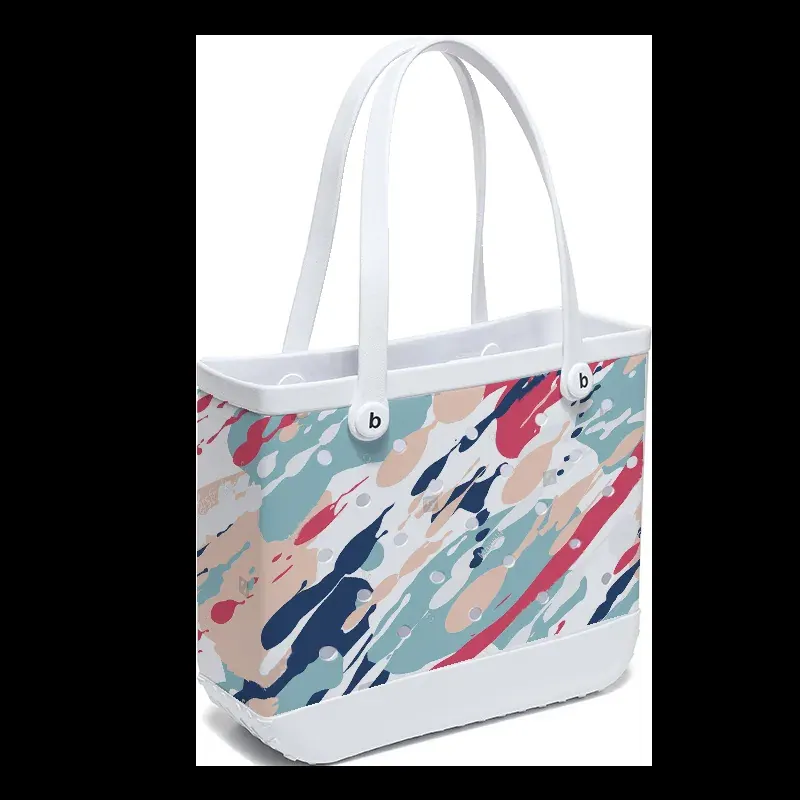
If one number predicts standing behaviour it is the ratio of base width to body height, and the threshold is about 45 percent. A 32 litre body standing 26 centimetres high needs a base footprint of roughly 30 by 22 centimetres or wider; below that, the tilt angle at which the centre of gravity passes the edge of the base drops below about 20 degrees and the bag goes over on ground that is not remotely steep. This is a geometric fact rather than a material one, and no amount of wall thickness compensates for it.
The practical consequence for a buyer is that a tall narrow body is a design decision with a cost. Several programmes ask for a taller, narrower shape because it looks better on a shelf and packs more pieces per carton, and both are real advantages. The trade is that the body needs a wider base or a heavier base section than a squatter shape of the same volume, and a buyer who wants the tall shape should budget for the base rather than discovering the tipping behaviour in the first season of returns.
| Body shape | Height | Base footprint | Ratio | Standing behaviour |
|---|---|---|---|---|
| Squat utility, 32 litres | 24 centimetres | 34 by 24 centimetres | About 1.4 | Very stable, the safest choice |
| Standard beach, 32 litres | 26 centimetres | 30 by 22 centimetres | About 1.15 | Stable on sand and decks |
| Tall narrow, 32 litres | 32 centimetres | 26 by 20 centimetres | About 0.8 | Tips on uneven ground when empty |
| Extra large utility, 42 litres | 30 centimetres | 40 by 28 centimetres | About 1.3 | Stable, wider base carries it |
| Mini, 8 litres | 16 centimetres | 24 by 16 centimetres | About 1.5 | Very stable, low height helps |
The Tread: What the Base Pattern Does
The moulded pattern on the underside of the base is not decoration. It does three jobs at once: it breaks up the contact so the body does not hydroplane on a wet surface, it gives the base something to grip into on sand and grass, and it stiffens the base panel the way corrugation stiffens a sheet. A base with no tread at all is measurably less stable on a wet deck than the same base with a moulded pattern, and the difference shows most on a boat, where the surface is both wet and moving.
| Tread feature | Depth and spacing | What it achieves | Where it matters |
|---|---|---|---|
| Continuous outer rail | 3 to 5 millimetres deep | Defines the contact ring and keeps grit out | Every surface |
| Raised pads | 2 to 4 millimetres, 20 to 40 millimetres apart | Breaks suction on a wet surface | Wet decks and poolside |
| Radial channels | 3 to 4 millimetres deep | Channels water out from under the base | Wet sand and rain |
| Drainage holes through the base | 8 to 12 millimetres | Lets water leave rather than pool | Every wet use |
| Reinforcing ribs | 2 to 3 millimetres proud | Stiffens the base without added thickness | Heavy loads |
Two details separate a tread that works from one that only looks purposeful. Depth has to be at least 2 millimetres, because anything shallower closes up under load and stops doing anything; and the pattern has to run continuously to the edge of the base, because a plain border around a patterned centre leaves a smooth ring that is exactly what slides on a wet surface. Both are visible in a photograph of the underside, which makes this one of the easiest things for a buyer to check without a sample in hand.
Wall Rigidity and the Rim Bead

The wall matters for standing in a way that is easy to miss. A body does not tip because its wall folds; it folds first and tips as a consequence. When an empty thin-walled body is set down, the rim rolls inward, the effective footprint narrows, and the tilt angle that would have been safe is no longer safe. This is why wall thickness and standing behaviour are linked, and why the rim bead — the thickened roll at the top of the wall, typically 5 to 8 millimetres — is doing structural work rather than cosmetic work.
Bending stiffness rises with the cube of thickness, so the rim is the most efficient place to spend material on this problem. Adding 1 millimetre to the rim costs a fraction of adding 1 millimetre to the whole wall and buys most of the stiffness that matters, because the rim is the point furthest from the base and therefore the point that moves most. A buyer who wants a stable body at a competitive weight should ask for the rim bead specification before asking for a thicker wall, and should expect the answer to be cheaper.
Centre of Gravity and How a Load Changes It
An empty body and a loaded one are different stability problems. Empty, the centre of gravity sits roughly at mid-height and the body is limited by its own geometry. Loaded with 10 kilograms of towels and bottles, the centre of gravity drops because the mass is low in the body, and a bag that felt marginal when empty can feel solid once loaded. The counter-case is the one that causes complaints: a single heavy item placed high in an open body raises the centre of gravity and produces a bag that tips under a load that ought to be safe.
| Load condition | Centre of gravity | Behaviour | Note |
|---|---|---|---|
| Empty | Near mid-height | Limited by footprint and rim rigidity | The condition that exposes a weak design |
| Low dense load, 10 kilograms | Well below mid-height | Most stable condition | Bottles and cans at the bottom help |
| Bulky light load, 6 kilograms | Near mid-height | Similar to empty | Towels do not lower anything |
| One heavy item high in the body | Above mid-height | Least stable, tips easily | The cause of most tipping complaints |
| Partially loaded, weight to one side | Offset laterally | Tips towards the heavy side | Open bodies allow the load to shift |
The practical advice that follows is worth putting on a hangtag. Heavy items go in first and low; bulky light items go on top. It sounds obvious and it prevents most of the tipping complaints a retailer ever hears, because the two conditions that actually produce a falling bag are a heavy item placed high and a load that has shifted to one side during a carry. Neither is a design defect, and both are fixed by a sentence on the tag rather than a change to the tool.
Sand, Decks and Grass
Ground conditions change the answer, and the three surfaces that matter behave differently enough to be worth separating. Dry sand is the most forgiving: the base sinks slightly, which lowers the effective centre of gravity and increases the contact area, so a body that is marginal on a hard floor stands well on a beach. Wet compacted sand near the waterline is closer to a hard wet surface and is where suction matters, which is why radial channels in the tread earn their keep there.
A boat deck is the hardest case and the one where a treaded base earns its cost. The surface is hard, wet, often cambered towards the scuppers and constantly moving, and a bag that stands perfectly on a beach will slide across a deck under way. The mitigation is a base with raised pads and a continuous outer rail rather than a smooth one, and stowage against a bulkhead or in a locker rather than free on the deck. Owners securing gear aboard a small craft will find the general guidance published by the United States Coast Guard Boating Safety Division worth reading alongside the bag specification, because stowage matters more than the base once the boat is moving.
Grass is the easiest of the three and the one relevant to sideline sports, because the tread sinks into it slightly and grips. The failure mode on grass is different and it is worth naming: a body on wet grass does not slide, it settles, and if the ground is uneven the bag leans rather than tips. A leaning bag is not a complaint, and the design implication is that a sideline body needs less base than a boat body and more wall, because it is set down empty and left for hours rather than watched.
Testing Whether a Body Really Stands
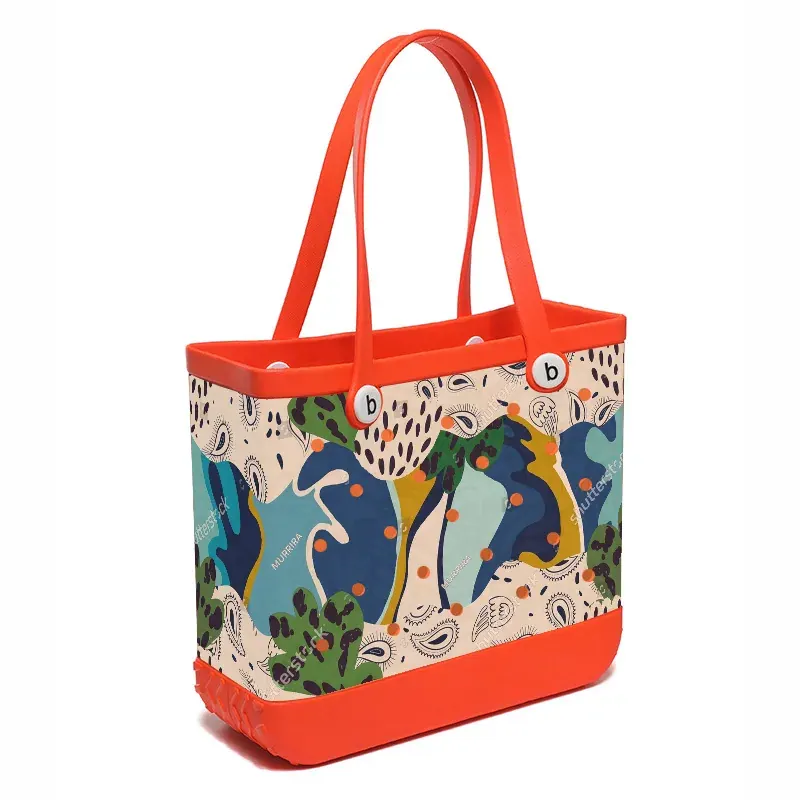
Two tests settle the question and both take a minute. Neither needs equipment beyond a board and a protractor, and both should be recorded on the sample approval because they are what a bulk delivery can be checked against.
- Level test: set the empty body on a flat surface and look for rocking. Any movement means a warped base, which is a cooling fault rather than a design one.
- Slope test: stand the empty body on a board inclined to 10 degrees. A well-designed body stays upright; one that goes over has a footprint or rim problem.
- Tilt to failure: raise the slope until the body goes over and record the angle. Above 20 degrees for an empty body indicates a sound design.
- Loaded test: place 12 kilograms low in the body and repeat the slope test. It should perform at least as well as empty.
- Wet surface test: repeat the slope test with the board wet. The drop in the failure angle shows how much the tread is doing.
- Shifted load test: place the same 12 kilograms to one side and observe. This is the condition that produces real complaints.
Recording the angles rather than a pass or fail is what makes the tests useful, because a buyer can then specify a minimum. A written requirement that the empty body stands on a 10 degree slope and resists 12 kilograms without buckling is enforceable at inspection; a description that says stable is not. Physical test methods for dimensional and load checks of this kind are published by ASTM International, and documented inspection practice aligns with the International Organization for Standardization.
When a Tote Still Tips
A body can meet every specification and still tip, and the table below covers the cases that produce a complaint on a product that was designed correctly. All four are conditions rather than defects, and three of them are preventable by the owner.
| Condition | Why it happens | Prevention |
|---|---|---|
| Wind on an open beach | A wide open body catches wind like a sail | Do not leave an empty body standing in strong wind |
| A heavy bottle placed on top | Raises the centre of gravity above mid-height | Load heavy items first and low |
| A load shifted during a carry | Moves the centre of gravity sideways | Repack before setting the bag down |
| Cambered deck or deck edge | The surface is sloped more than the test angle | Stow against a bulkhead rather than free |
| Soft ground under one corner | One side of the base sinks | Level the ground or place the base on a flat item |
The one that deserves emphasis is wind, because it is the case where a correctly designed body fails and the owner blames the bag. An open body of 40 centimetres across presents a large sail area and weighs under 2.5 kilograms empty, so a gust above about 30 kilometres per hour will move it. The honest guidance is not to redesign the bag but to lay it down or weight it when leaving it unattended, and a retailer who puts that on a hangtag removes a category of complaint for the cost of a sentence.
Designing a Base for a Programme
A buyer specifying a base for a new programme has five decisions to make, and each one has a measurable consequence. Making them in this order produces a body that stands without over-specifying anything.
- Set the footprint first: base width at least 45 percent of body height, and wider for a tall shape.
- Specify the tread: raised pads at least 2 millimetres deep, running continuously to the edge of the base.
- Set the base thickness at 4 to 6 millimetres, thicker than the wall, which lowers the centre of gravity.
- Add a rim bead of 5 to 8 millimetres, which buys most of the rigidity that matters for the least material.
- Confirm the drainage holes run through the base, at 8 to 12 millimetres, so water cannot pool under the load.
- Write the test into the specification: stands on a 10 degree slope empty and carries 12 kilograms without buckling.
Those six lines cost nothing to add to a specification and they are what separates a programme that never hears about tipping from one that does. The last one is the most valuable, because a written test converts a description into a number and a number can be checked against a container.
Programme Notes
The rubberised end of the category sits on the waterproof rubber beach tote page, base perforation layouts on the perforated EVA tote page, and the thickness side of stability in the EVA tote wall thickness guide. Buyers comparing body options should start from the injection-molded EVA tote guide. QUANZHOU JUNYUAN BAGS has run waterproof bag programmes since 2014 with a founding team in this trade since 2004, at monthly output of 200,000 units verified by SGS, under BSCI and ISO 9001, with materials screened for REACH and California Prop 65 and every bulk shipment inspected at AQL 2.5 before release.
Send the body height, the base footprint, the tread requirement, the wall thickness and the intended load to service@junyuanbags.com, and ask for the tilt test result on the sample rather than a description of the base, because the angle is the figure that can be checked against a bulk delivery. Sampling runs 6 to 10 working days and bulk 35 to 50 days.
People Also Ask
Why do EVA totes stand up on their own?
Four factors: a base footprint at least 45 percent of body height, a moulded tread, wall thickness of 3.5 to 4.5 millimetres with a rim bead, and a base thicker than the wall.
What base width keeps a tote from tipping?
At least 45 percent of the body height. A 26 centimetre tall body needs a footprint of roughly 30 by 22 centimetres or wider.
Does the tread on the base matter?
Yes. Raised pads at least 2 millimetres deep, running continuously to the edge, stop the base sliding on a wet deck.
Why does my tote tip when it is loaded?
Usually a heavy item placed high in the body, which raises the centre of gravity, or a load that shifted to one side during a carry.
How do you test whether a tote stands up?
Stand the empty body on a 10 degree slope and tilt it to failure, recording the angle. Above 20 degrees indicates a sound design.
Will a tote stand up in wind on a beach?
Not reliably. An open 40 centimetre body weighs under 2.5 kilograms empty and a gust above about 30 kilometres per hour will move it.
Frequently Asked Questions
Q1. What stops an EVA tote tipping over?
Four things together: footprint ratio, moulded tread, wall and rim rigidity, and a base thicker than the wall to keep the centre of gravity low.
Q2. How wide should the base be?
At least 45 percent of the body height. A 32 litre body standing 26 centimetres high needs roughly 30 by 22 centimetres or wider.
Q3. How deep should the tread be?
At least 2 millimetres. Anything shallower closes up under load and stops doing anything on a wet surface.
Q4. Why does the rim bead matter?
It stops the rim rolling inward. When the rim folds, the effective footprint narrows and the body tips at an angle it would otherwise survive.
Q5. Is a loaded bag more stable than an empty one?
Usually, because a low dense load drops the centre of gravity. The exception is a heavy item placed high, which is the least stable condition.
Q6. Why does my bag slide on a boat deck?
A boat deck is hard, wet, cambered and moving. Specify raised pads and a continuous outer rail, and stow the bag against a bulkhead.
Q7. Does sand make a bag more stable?
Dry sand does, because the base sinks slightly and gains contact area. Wet compacted sand near the water is closer to a hard wet surface.
Q8. What load should a stable body carry?
A well-designed 32 litre body carries 12 kilograms without buckling and stands on a 10 degree slope when empty.
Q9. Can wind tip a well-designed tote?
Yes. An open 40 centimetre body weighs under 2.5 kilograms empty and a gust above about 30 kilometres per hour will move it. Lay it down or weight it.
Q10. What should be written into the specification?
The test: the empty body stands on a 10 degree slope and carries 12 kilograms without buckling. A written angle is enforceable at inspection.