A fishing bag order runs from first brief to goods on the water in 52 to 70 days, of which only about 22 are actually spent building the bag. The rest is specification, sampling, approval, material procurement, inspection and transit, and roughly 9 of those days are controlled by the buyer rather than by the build. Sampling takes six to ten working days, bulk takes thirty-five to fifty days from approved sample and deposit, and sea transit adds twenty-five to thirty-five days depending on destination. Knowing which days are whose is the whole subject: the schedule is rarely lost in the build, and almost always lost at the two approval gates.
The Whole Timeline in One Table
The numbers below are a working median for a soft waterproof fishing bag at the opening order size, meaning 500 pieces per design and colour, with no bespoke tooling. Programmes with moulded components, branded trim or independent testing sit at the longer end, and repeat runs of an existing pattern sit at the shorter end because sampling is confirmation rather than development.
| Phase | Duration | Cumulative | Controlled by |
|---|---|---|---|
| Brief and specification | 3 to 5 days | 5 | Buyer |
| Sampling | 6 to 10 working days | 15 | Shared |
| Sample review and approval | 3 to 7 days | 22 | Buyer |
| Deposit and order release | 1 to 3 days | 25 | Buyer |
| Material procurement and check | 5 to 8 days | 33 | Build |
| Production build | 18 to 22 days | 55 | Build |
| Inspection at AQL 2.5 and packing | 3 to 5 days | 60 | Shared |
| Port transfer and loading | 2 to 4 days | 64 | Shared |
| Sea transit to northern Europe | 28 to 35 days | 99 | Carrier |
Two observations follow immediately. Days 15 to 25, the approval and deposit window, are entirely buyer-controlled and typically consume nine days against a plan of three. And transit is the single longest line in the whole schedule, which is why a programme that finishes building on time can still miss a launch date.
Phase One: The Brief, Days One to Five
The brief is where schedules are won, and it is the phase most often compressed in a hurry. A usable brief states capacity, tray standard and count, closure type, target waterproof rating, hardware grade, base construction, colourway and quantity, in that order. A brief that says waterproof, four trays and medium size generates four to six clarifying questions, and each one costs a day.
- State the tray standard by name, 3600 or 3700, because the two differ by 77 millimetres in length and change the pattern.
- State the rating as a code, IPX5 or IPX6 or IPX7, rather than as an adjective.
- State the hardware grade where salt exposure is expected, since it is the most common cause of second-season failure.
- State whether independent testing is required and budget under 1 percent of order value for it.
- State the quantity per design and colour, because 500 pieces per colourway means 1,500 for three colours.
The deliverable at the end of phase one is a signed specification sheet with dimensions, materials and tolerances on it. Without that document, everything downstream is open to interpretation, and interpretation is what produces a second sample round. One addition pays for itself repeatedly: a one-page risk list naming the three things most likely to go wrong on this particular bag, agreed by both sides before sampling starts. On a tray bag it is cavity width; on a saltwater bag it is hardware grade; on a branded bag it is colour approval. Naming it early turns a discovery into a checkpoint.
Phase Two: Sampling, Six to Ten Working Days
Sampling is quoted in working days rather than calendar days and runs six to ten for this category. The range is wide because of two variables the buyer controls: how complete the brief was, and whether branded or bespoke trim is involved. A plain sample of an existing pattern with a new colour typically takes six; a first development sample with branded trim takes ten.
| Working day | Activity | Output |
|---|---|---|
| Day 1 | Pattern issued and materials allocated | Cutting file |
| Days 2 to 3 | Cutting and panel preparation | Cut panels |
| Days 4 to 6 | Welding, assembly, hardware fit | First unit |
| Day 7 | Dimensional check and function test | Measurement record |
| Day 8 | Photography and data pack | Sample dispatched |
| Days 9 to 10 | Used only if trim or branding is involved | Branded sample |
The data pack is what separates a fast approval from a slow one. Eleven dimension photographs, a hydrostatic head reading, a weld peel value, an immersion result and a weight figure answer the questions before they are asked. A sample dispatched with no measurements attached generates a round of questions, and each exchange is two days.
Phase Three: The Approval Gate
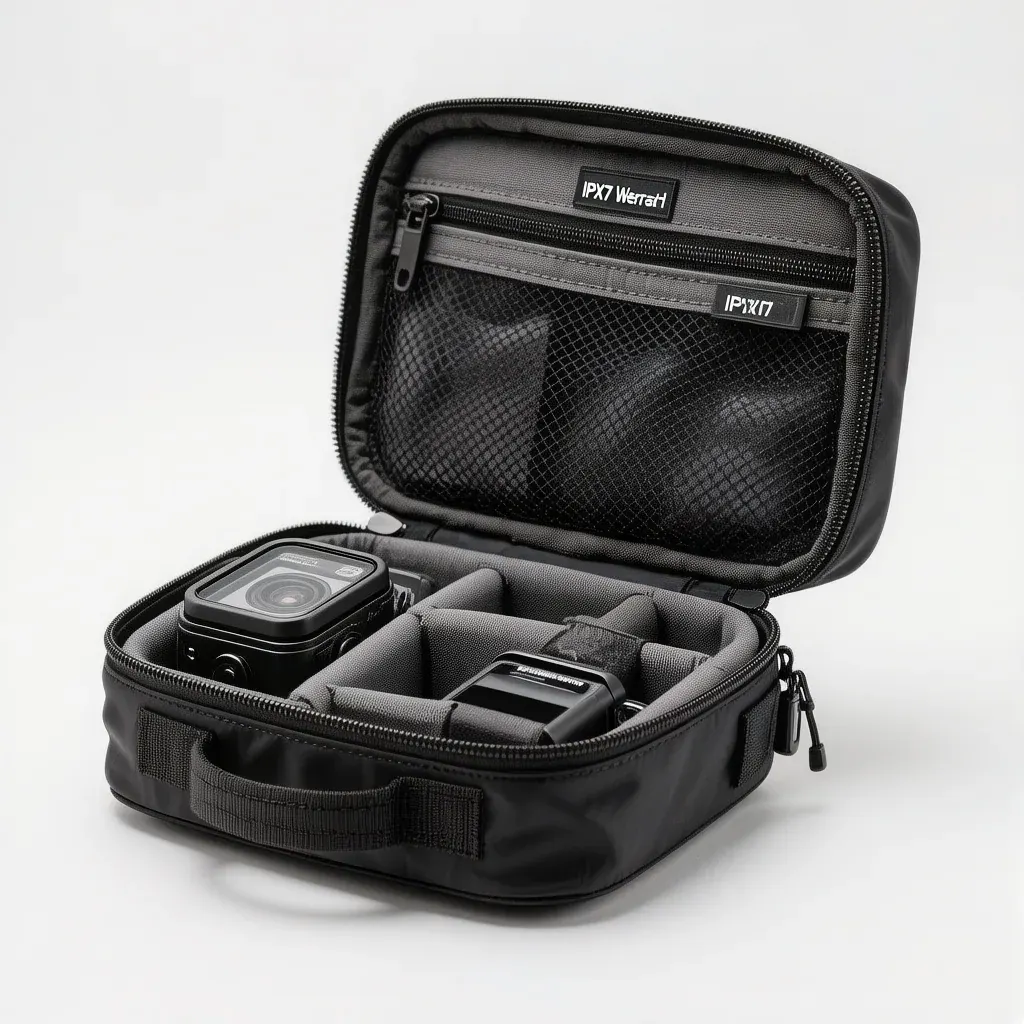
More schedules are lost here than anywhere else, and the cause is rarely disagreement. It is usually that the sample went to one person who was travelling, or that three departments needed to see it sequentially rather than in parallel. The fixes are simple and worth stating explicitly in the plan.
- Order two samples, not one, so the buying team and the technical team can review at the same time.
- Agree the approval deadline before the sample ships, and name the person who can sign it off.
- Measure the sample against the actual tray or item it must hold, not against the drawing.
- Approve in writing with any conditions listed, because a verbal approval with conditions becomes a second round.
- Have the deposit ready to move on the day of approval, since deposit timing is the next gate.
Where a second sample round is genuinely needed, budget four to six working days and expect the total programme to move out by that amount plus the review time. Second rounds are normal and are not a failure; unplanned second rounds are what damage a launch date.
Phase Four: Materials and Pre-Production
Once deposit is received, materials are procured and checked before cutting begins. This phase takes five to eight days and is mostly invisible, which is why buyers sometimes assume nothing is happening. In fact it is where two of the more serious risks are contained: shade variation between dye lots, and coating thickness falling outside tolerance.
| Check | Method | Tolerance | Risk if skipped |
|---|---|---|---|
| Shade matching | Comparison against approved lab dip | Delta E under 3 | Visible variation across the lot |
| Coating thickness | Measured on three points per roll | Within 0.05 mm | Weak welds, failed immersion |
| Fabric weight | Grammage check per roll | Within 5 percent | Weight and strength drift |
| Hardware count and grade | Verified against the specification | Exact | Corrosion complaints in season two |
| Weld parameter trial | Test coupon before production | Peel above 90 percent | Systemic seam weakness |
Material and weld strength claims should reference published test methods from ASTM International, and quality system claims to standards published by the International Organization for Standardization. Referencing a method rather than an opinion is what makes a pre-production check auditable. It also removes the most common source of dispute at inspection, which is not whether a unit is defective but whether the measurement used to judge it was ever agreed.
Phase Five: The Build, Eighteen to Twenty-Two Days
The build itself is the most predictable part of the schedule and the hardest to compress. Cutting takes three to four days, welding and assembly twelve to fourteen, and trimming, cleaning and hardware fit another three to four. Attempting to shorten it usually produces either overtime-built units with more defects or a later inspection failure, and both cost more time than they save.
| Stage | Days | Can it be compressed | By how much |
|---|---|---|---|
| Cutting and preparation | 3 to 4 | Slightly | 1 day with pre-staged materials |
| Welding and assembly | 12 to 14 | No | Zero without quality loss |
| Trimming and cleaning | 2 to 3 | Slightly | Up to 1 day |
| Hardware and final fit | 1 to 2 | No | Zero |
| In-line checks | Continuous | No | Removing them is not an option |
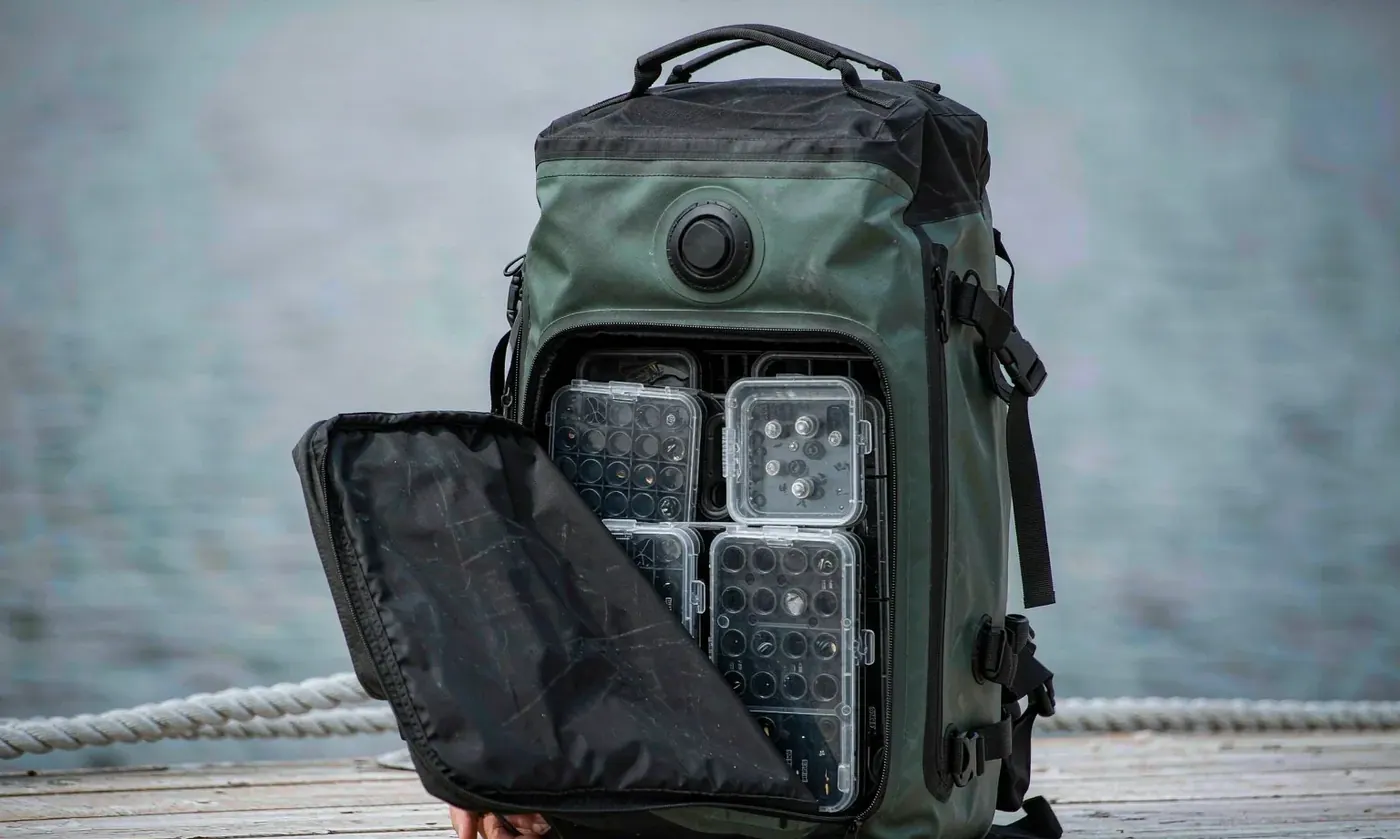
One scheduling note is worth making because it surprises people: units are not built sequentially, one after another. Cutting, welding and trimming overlap across the batch, so the first finished unit appears around day 9 of an 18 day build and the last around day 18. That means a mid-build visit or inspection can see completed units well before the lot is finished, which is useful for anyone who wants evidence early.
Phase Six: Inspection and Packing
Inspection at AQL 2.5 under general inspection level two takes two to three days for a 500 piece lot, and packing another one to two. The sample size for 500 pieces is 50 units, with acceptance at 3 and rejection at 4 minor defects, and tighter numbers for major and critical classes. Results are recorded by class, and the buyer should ask for the defect list rather than just the pass result.
| Defect class | Accept at 500 pieces | Reject at | Typical examples |
|---|---|---|---|
| Critical | 0 | 1 | Missing safety marking, structural failure |
| Major | 2 | 3 | Failed immersion, torn anchor, wrong hardware |
| Minor | 3 | 4 | Trim misalignment, shade variation, cosmetic mark |
Where a lot is rejected, the options are rework and re-inspect, or accept with a concession, and both add days. Rework of a 500 piece lot typically adds five to eight days. This is the reason inspection should never be treated as a formality: a fail at inspection is the single most expensive event in the schedule after a missed booking.
Phase Seven: Transit and the Longest Line
Sea transit from Xiamen to northern Europe runs 28 to 35 days, to the United States west coast 18 to 25, and to the east coast 30 to 38. Air freight cuts that to five to eight days at three to five times the cost, which is rarely justified for a 500 piece bag order except when a launch date has already been missed. The decision, if it comes to that, is usually made on margin rather than on freight cost.
Documentation adds two to four days before the vessel sails and is the part most often underestimated. Booking, customs documentation and any market-specific certification have to be correct before loading, and a documentation error at this stage costs a sailing, which is seven to fourteen days rather than two.
The Five Delays That Actually Happen
Across programmes of this type, five delays account for most of the slippage, and four of the five are buyer-side. Naming them is the point of a timeline article, because every one of them is avoidable with a decision made a week earlier.
| Delay | Typical cost | Who controls it | Avoid by |
|---|---|---|---|
| Incomplete brief, tray standard or rating unstated | 4 to 6 days | Buyer | Use the eight-line brief |
| Sample review sequential rather than parallel | 5 to 9 days | Buyer | Order two samples |
| Deposit released late | 2 to 5 days | Buyer | Have funds ready at approval |
| Second sample round | 4 to 6 working days | Shared | Approve against measurements |
| Documentation error at booking | 7 to 14 days | Shared | Check documents five days early |

What Can and Cannot Be Compressed
Every buyer asks how to make it faster, and the honest answer is that most of the schedule is fixed and a small part is not. Compressing the wrong line is how programmes end up with defects or with a missed sailing, so the distinction is worth setting out plainly.
| Line item | Compressible | Realistic saving | Risk |
|---|---|---|---|
| Brief and specification | Yes, by preparing early | 2 to 3 days | None if done properly |
| Sampling | Slightly | 1 to 2 days | Lower confidence in the sample |
| Approval and deposit | Yes | 5 to 9 days | None, this is pure process |
| Material procurement | No | Zero | Skipping incoming checks is unsafe |
| Build | No | Zero | Defects or overtime quality loss |
| Transit | Only by air | 20 to 28 days | Three to five times the freight cost |
Add the realistic savings and the honest answer is that a well-managed programme can take about 52 days and a poorly managed one about 70, a difference of 18 days, almost all of it at the approval gate and in the brief. The build is not where the time is.
Seasonality: When to Place the Order
The calendar matters as much as the sequence, because this category has a hard seasonal peak and production capacity follows it. For a northern hemisphere spring launch, sampling should finish by early December and bulk should start by mid January, which puts the brief in November. Programmes that start in February are competing for the same capacity as everyone else and typically see the bulk window extend toward the top of the range.
| Order start | Sampling completes | Bulk completes | Arrives | Launch risk |
|---|---|---|---|---|
| November | Early December | Late January | Early March | Low |
| December | Late December | Mid February | Late March | Low |
| January | Late January | Early March | Mid April | Moderate |
| February | Late February | Early April | Mid May | High, peak-season capacity |
| March | Late March | May | Late June | High, misses the season |
The second-order effect of starting late is on sampling quality rather than on delivery. A sample rushed through peak season is less likely to be measured and photographed properly, which raises the chance of a second round, which costs more time than was saved. Starting early is the cheapest form of schedule insurance available.
Repeat Runs: What Changes Second Time Round
A second run of an existing pattern is genuinely faster and it is worth knowing where the saving comes from. Sampling drops to four to six working days because it is confirmation rather than development, material procurement shortens by two to three days where the same shades are used, and pre-production weld trials can be skipped where parameters are on file.
- Sampling at four to six working days instead of six to ten, because the pattern exists and is proven.
- Material procurement two to three days shorter where shades and coatings are already approved.
- Pre-production trials reduced to a single check coupon rather than a full parameter search.
- Bulk unchanged at thirty-five to fifty days, because the build itself does not get faster.
- Inspection faster by a day, since the defect profile of the pattern is known and checks can be targeted.
The total saving is typically eight to twelve days against a first run, which is significant on a fixed launch date and is a good argument for committing to a second season in the same pattern. Changing the pattern for the sake of change gives that saving up.
The Milestone Checklist
A timeline is only useful if someone is watching it, and the practical form of that is six dated milestones agreed before the brief is signed. Each one has a named owner and a document attached, and a milestone without a document is not a milestone. This is the version used on programmes of this type, and it fits on a single page.
- Day 5: signed specification sheet issued, owner the buyer, with dimensions, materials and tolerances attached.
- Day 15: sample dispatched with a data pack, owner the build team, with measurements and photographs attached.
- Day 22: written approval or a listed set of conditions, owner the buyer, with the approver named in advance.
- Day 25: deposit released, owner the buyer, with funds prepared before the sample is dispatched rather than after.
- Day 55: inspection report issued, owner shared, with the defect list by class rather than a pass result alone.
- Day 64: shipment loaded, owner shared, with documentation checked five days before the booking rather than one.
Three of the six milestones are the buyer's, which is the same conclusion the timeline table reached from the other direction. Programmes do not slip because building a bag takes too long; they slip because nobody owned day 22.
Programme Notes
QUANZHOU JUNYUAN BAGS has worked on waterproof bag programmes since 2014, with a founding team in this industry since 2004. Monthly output reaches 200,000 units, verified by SGS, under BSCI and ISO 9001 governance, with materials screened for REACH and California Prop 65 and every bulk order inspected at AQL 2.5. Five hundred pieces per design and colour is the opening order size. Sampling runs six to ten working days, bulk thirty-five to fifty days from approved sample and deposit, and shipping is FOB Xiamen or DDP to upwards of one hundred nations.
Two references are worth reading alongside this timeline: the lead time walkthrough covers what happens inside the thirty-five to fifty day window, and the MOQ guide explains how quantity interacts with the schedule. A worked example of the whole sequence with results is in the five hundred piece waterproof backpack case. Send briefs to service@junyuanbags.com.
People Also Ask
How long does a fishing bag order take from brief to delivery?
Fifty-two to seventy days including transit, of which six to ten working days is sampling and thirty-five to fifty days is bulk from approved sample and deposit.
What takes the longest in a bag order?
Sea transit, at twenty-eight to thirty-five days to northern Europe, followed by the build at eighteen to twenty-two days.
Can sampling be done faster than six working days?
Only slightly. A plain sample of an existing pattern with a new colour can reach six days; development samples with branded trim take ten.
What causes the most delays?
The approval gate. Sequential rather than parallel sample review and late deposit release typically cost nine days that are entirely buyer-controlled.
Can bulk production be compressed?
No. Welding and assembly are twelve to fourteen days and cannot be shortened without quality loss. The compressible days are in the brief and the approvals.
Is air freight worth it for a 500 piece order?
Rarely, at three to five times the sea cost. It is justified only when a launch date has already been missed and the margin loss exceeds the freight difference.
Frequently Asked Questions
Q1. How long is a typical fishing bag order timeline?
Fifty-two to seventy days from brief to goods received, including six to ten working days of sampling, thirty-five to fifty days of bulk, and transit.
Q2. How much of that time is the buyer responsible for?
About nine days at the approval and deposit gate, plus three to five days for the brief. The build itself is not buyer-controlled.
Q3. What should a brief contain?
Capacity, tray standard and count, closure type, target rating as a code, hardware grade, base construction, colourway and quantity per design and colour.
Q4. Why does the tray standard matter to the schedule?
Because 3600 and 3700 trays differ by 77 millimetres of length, and getting it wrong forces a pattern change and a second sample round.
Q5. How many days does sampling take?
Six to ten working days. Six for an existing pattern in a new colour, ten for a first development sample with branded trim.
Q6. How many days does the build take?
Eighteen to twenty-two, of which twelve to fourteen are welding and assembly. Those days cannot be compressed.
Q7. What happens if inspection fails at AQL 2.5?
Rework and re-inspect, typically five to eight days, or acceptance with a documented concession. A fail at inspection is the most expensive event after a missed booking.
Q8. How long is sea transit?
Twenty-eight to thirty-five days to northern Europe, eighteen to twenty-five to the United States west coast, and thirty to thirty-eight to the east coast.
Q9. Is air freight worth it?
Seldom, at three to five times the sea cost. It is justified only when a launch date has already been missed.
Q10. What is the biggest avoidable delay?
Sequential sample review. Ordering two samples so buying and technical teams review in parallel typically saves five to nine days.
Q11. What is the MOQ and the standard lead time?
Five hundred pieces per design and colour, with six to ten working days for sampling and thirty-five to fifty days for bulk from approved sample and deposit.