A tackle backpack is packed correctly by assigning zones rather than by filling space. Heaviest trays go low and central to keep the centre of gravity below about 120 mm, the tray reached most often goes uppermost within roughly 300 mm of the opening, and everything wanted one-handed sits in a pocket within easy reach of the shoulder. Packed this way, a full day load lands between 9 and 13 kg rather than the 15-18 kg most anglers carry by default. Repacking into that arrangement takes twenty-five to forty minutes the first time and five to eight minutes before each trip thereafter.
Step One: Weigh Everything Before Packing It
Every good packing routine starts by weighing what is about to go inside, because almost everyone carries substantially more than they need and nobody notices without a figure in front of them. A luggage scale and fifteen minutes resolves it permanently.
| Item group | Typical weight carried | Realistic target |
|---|---|---|
| Trays with lures | 4.5-8.5 kg | 3.0-5.5 kg |
| Terminal tackle and leaders | 0.8-2.0 kg | 0.5-1.2 kg |
| Tools and forceps | 0.3-0.8 kg | 0.3-0.5 kg |
| Water bottle, 500-750 ml | 0.5-0.8 kg | 0.5 kg |
| Rain layer and food | 0.6-1.8 kg | 0.4-1.0 kg |
| Duplicates rarely used | 0.8-2.2 kg | Removed entirely |
The difference between the second and third columns is usually 1.5-3.5 kg, and that is the most valuable thing this article offers. Removing a kilo from the shoulders is easier than removing it anywhere else, because no equipment has to be improved, bought, or compromised; it simply stays in the vehicle where it was probably going to sit unused in any case.
A trick worth adopting is packing alongside a small kitchen scale for the first few trips and noting the total afterwards. Within perhaps three sessions most anglers reach a stable figure and can stop weighing, having learned what a reasonable load feels like. That learned judgement is what actually keeps the load sensible over following seasons rather than any ongoing weighing discipline.
It also helps to know where the weight went rather than only the total, because the two columns above usually diverge for one specific reason. Duplicated tools, half-used leader spools, and three partly empty bottles together account for most of it, and each disappears in thirty seconds once identified. Weighing once with everything laid out on the floor and sorted into keep and leave piles is the fastest way to see the pattern.
Step Two: Choose Which Trays Come Before Filling Them
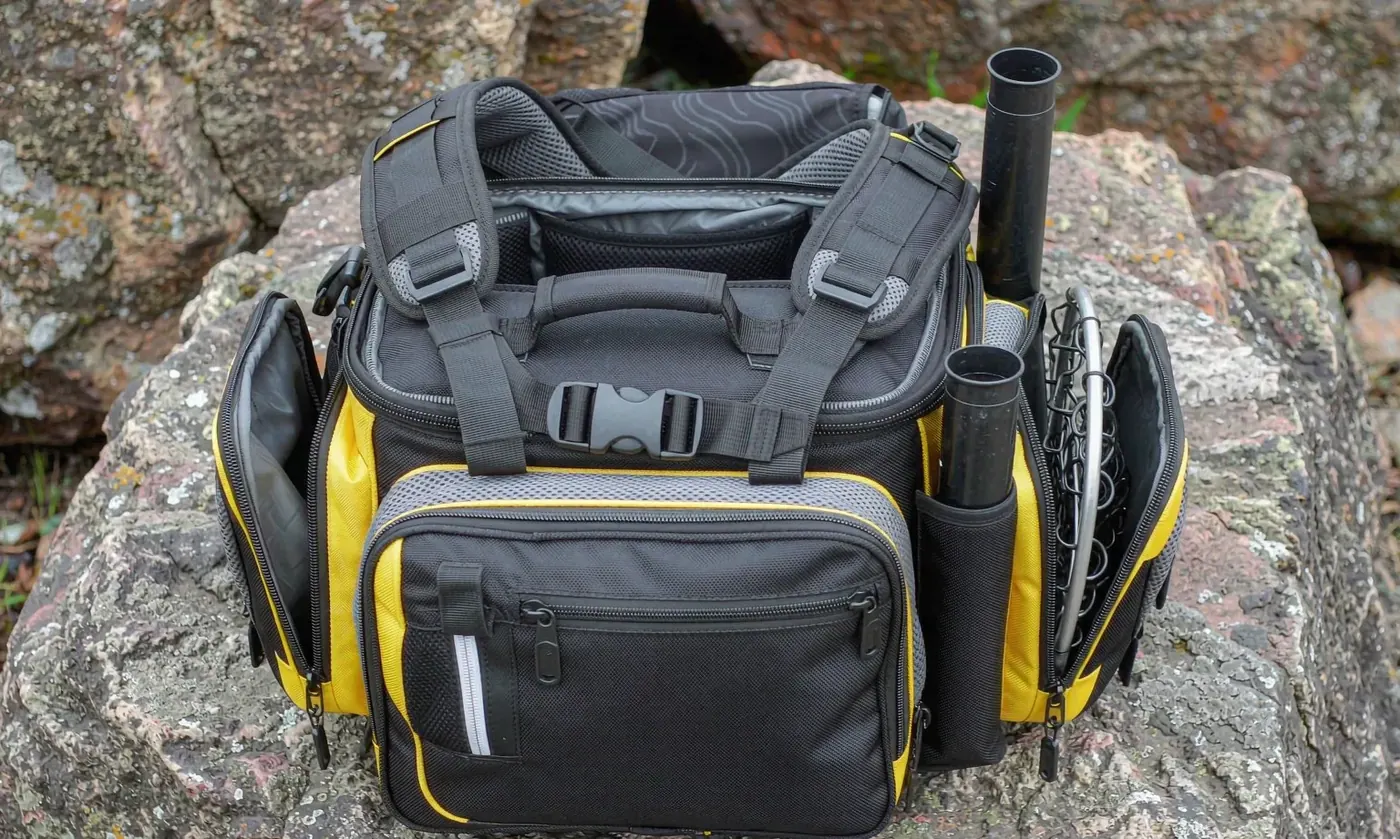
Trays rather than individual lures should be the unit of decision, because choosing tray by tray forces restraint in a way that choosing item by item never does.
- Decide two or three trays at most for an ordinary session and commit to that number before filling anything.
- Give each tray one clear role such as shallow-running lures, soft plastics, or terminal items, rather than mixing purposes.
- Put the tray opened most often in the top rail, since reaching past others several times a day adds up to real time.
- Keep the heaviest tray lowest and most central, where it contributes least to moment around the spine.
- Leave 10-15 percent of each tray empty so items can be lifted out rather than dug out.
The final point deserves a specific note because full trays are the single most common packing fault. A tray packed to capacity requires two hands and a fair amount of patience to open anything, and the workaround everyone adopts is tipping part of the contents onto the ground, which is exactly how lures are lost. Leaving a finger-width of space at one end of each tray costs nothing and speeds every subsequent access.
Step Three: Assign Zones Inside the Bag
Rather than treating the body as one volume, dividing it into four zones makes packing decisions almost automatic and makes repacking fast enough to do properly before every trip.
| Zone | Contents | Reason |
|---|---|---|
| Base zone, lowest panel | Heaviest tray and the tools used rarely | Keeps mass low and central |
| Core zone, centre of the body | The two trays used most | Access without unpacking everything |
| Top zone, nearest the opening | Food, first items, light layer | Wanted first, weighs least |
| External pockets | Tools, water, leader spools | Reached without opening the main body |
| Liner or dry pouch | Phone, documents, spare clothing | Everything that must stay dry |
Notice that nothing in that table depends on bag design. Any body can be divided this way, which is why the method transfers when equipment changes and why it is worth teaching rather than merely doing once.
Two adjustments suit specific situations. In a top-loading body, invert the principle slightly by keeping the least-used items genuinely at the very bottom, since nothing below the first zone is reachable mid-session at all. On a front-loading design, treat the panel as its own external zone and reserve it entirely for items wanted while standing still, because opening the panel while walking is rarely practical.
Keeping a written layout for the first month helps establish the habit, and most people find they stop needing it after about six trips. Repacking then takes five to eight minutes with no decisions involved, which is the point at which the system starts paying for itself every single session.
Step Four: The Pocket Map
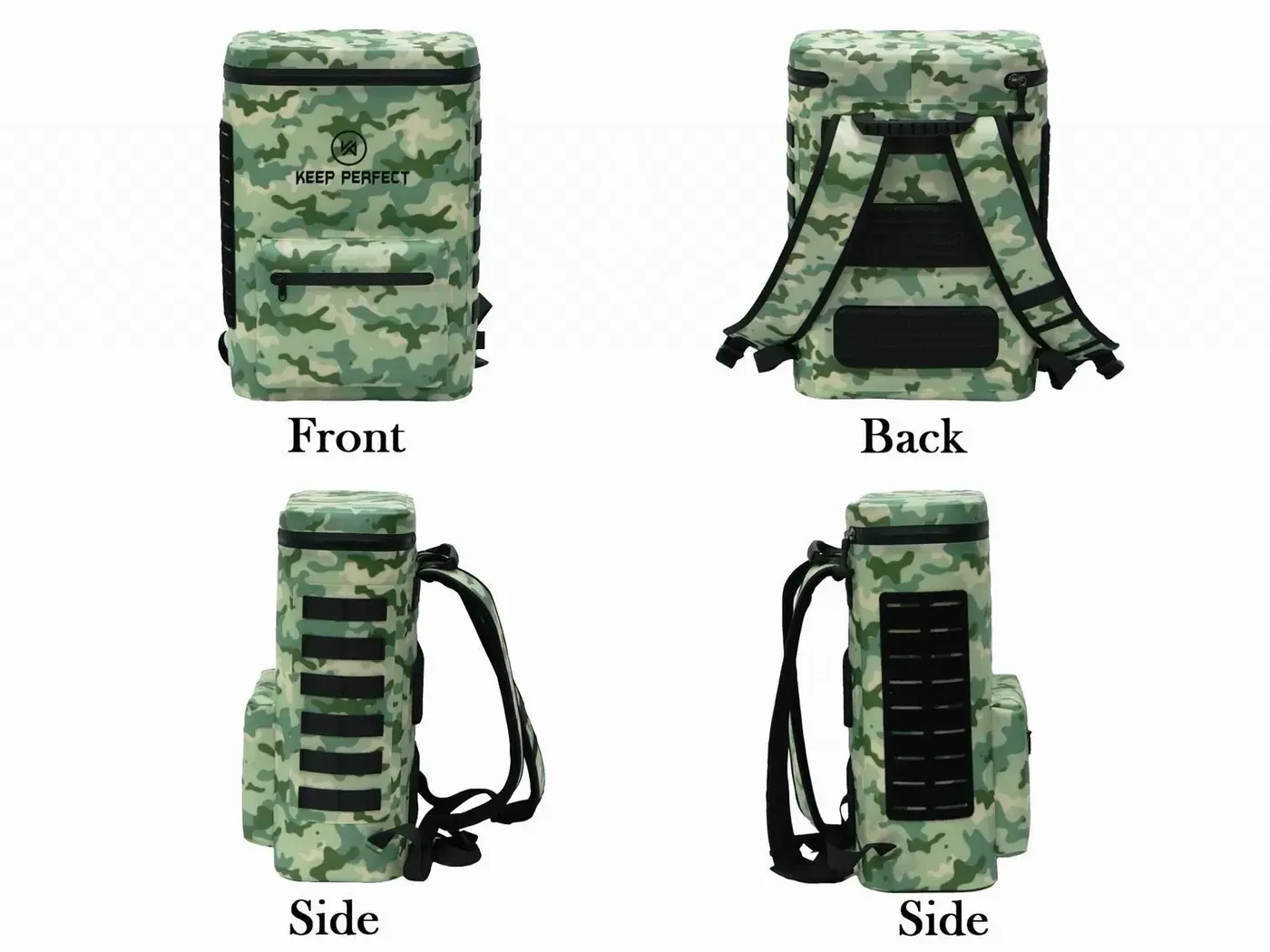
External pockets are what make a bag usable rather than merely capacious, and mapping them deliberately is what separates a well-packed bag from one that merely contains things.
| Contents | Access frequency | |
|---|---|---|
| Front external pocket | Forceps, line cutters, leader spool | Ten to twenty times per session |
| Side bottle sleeve | Water, 500-750 ml | Regularly throughout |
| Side tool loops | Pliers and a hook file | Several times per session |
| Top lid pocket | Phone in its dry pouch, keys | Occasionally, needs dryness |
| Lower rear pocket | Rain layer or spare fleece | Once or twice in poor weather |
| Internal slip pocket | Documents, licence, spare line | Rarely, but must stay dry |
The access frequency column is what should drive the arrangement. Anything needed more than perhaps ten times a session belongs outside the main body entirely, because opening that body requires putting things down, rotating pack closures, and generally interrupting whatever the angler is doing. Tools used a handful of times can reasonably live inside.
Step Five: Balance and Centre of Gravity
Where weight sits matters more than how much there is once loads pass about 8 kg, and this is the aspect of packing most often ignored because nothing about it is visible.
| Placement | Effect at 10 kg load | Recommendation |
|---|---|---|
| Heavy trays low and central | Centre below about 120 mm | Correct, feels planted |
| Heavy items high near the top | Centre above 200 mm | Avoid, roughly doubles roll moment |
| Weight offset to one side | Constant correction while walking | Distribute evenly across the width |
| Weight far from the back panel | Pulls the shoulders rearward | Pack the flat faces against the panel |
| Loose items free to shift | Changing feel step to step | Fill voids with soft items |
Filling voids with soft items is the practical trick that usually resolves a bag which feels unbalanced despite careful placement. A rain layer or a towel costs nothing, weighs little, and stops trays moving during the walk, and removing it once fishing begins changes nothing because everything is then static in any case.
For anyone experiencing shoulder or neck discomfort after long carries, repositioning trays usually achieves more than buying a different bag. Moving 2 kg from the upper zone to the base zone changes the moment around the spine substantially without changing total weight at all, and costs nothing to try before any purchase is considered. It is also worth checking how the bag sits on the back itself: raising it by perhaps 40-60 mm so the load rests against the upper back rather than the lumbar region frequently resolves discomfort that owners attribute to the bag rather than to its adjustment.
Step Six: Keeping Things Dry
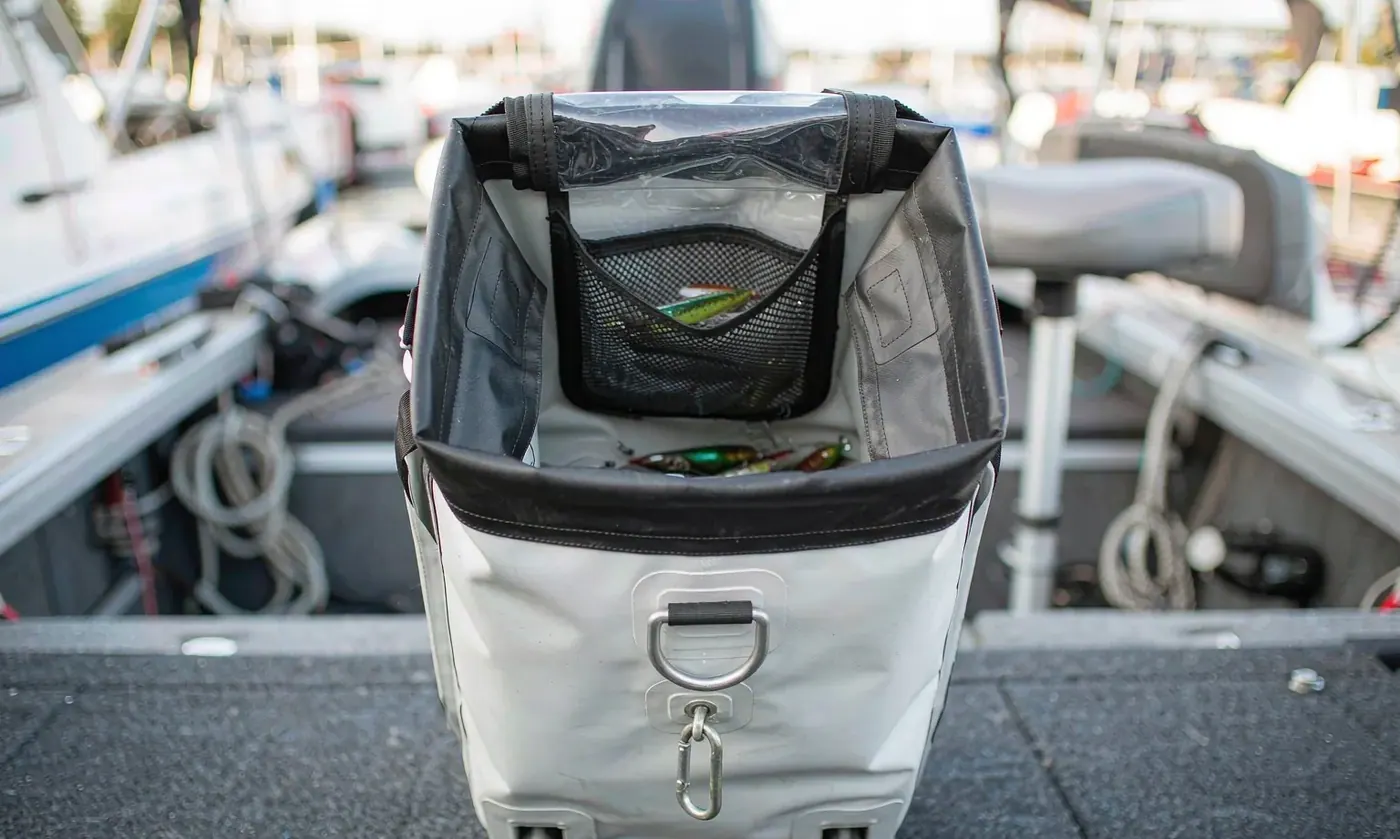
Everything that fails when wet should be inside a sealed liner rather than relying on the outer body, however good its claimed rating. This principle removes nearly all anxiety about immersion and simplifies everything else about packing.
- Phone, documents, and spare clothing go inside a welded liner rather than any outer pocket, regardless of the shell rating quoted.
- Close a roll top with three full folds, each 60-80 mm, before clipping, since two folds admit water through flexing during the walk.
- Anything removable from the main body should be clipped rather than dropped in, since nothing travels where it was placed.
- Wet items such as a used glove or a wet landing mitt belong outside the liner, ideally in a dedicated mesh pocket that drains.
- Check the liner area before packing rather than after returning, since repairs always cost more time mid-trip than when dry at home.
Zip behaviour is worth testing during packing rather than discovering on the water. A loaded bag puts real lateral force on its main closure, so running the zip several times while the body is full reveals any tendency to split that is invisible when empty. Zip durability is measured by published cycle methods maintained by ASTM International, and cycle counts referenced to those methods give buyers something verifiable rather than a promise.
Step Seven: Food, Catch, and Contamination
Fishing bags routinely carry food alongside bait and, sooner or later, fish, which is a combination that deserves deliberate handling rather than hopefulness. Separating these categories is simple and prevents problems that no amount of cleaning afterwards fully reverses.
| Item | Where it belongs | Reason |
|---|---|---|
| Food for the angler | Top zone, inside a sealed pouch | Never shares space with bait |
| Bait, live or preserved | Base zone in a sealed container | Leaks happen, and downward is safer |
| Landing net or mitt | External loop, drains freely | Always wet after use |
| Sanitiser and wipes | Front pocket | Used repeatedly through a session |
| Any catch kept | Separate cooler or liner entirely | Never shares the tackle body |
Keeping bait low and food high inverts most people's instinct, which is to put whatever is lightest wherever there is room. The reason is straightforward: bait containers leak eventually, and leakage moves downward, so isolating it at the base protects everything else. Silica sachets of 5-10 g placed alongside anything that must stay dry are a cheap additional safeguard, since they absorb incidental moisture for months and cost very little to replace. General hygiene guidance after handling fish and bait is set out by CDC, and washing hands before eating anything from a bag is advice worth following rather than merely acknowledging.
Step Eight: The Departure Repack
Packing is not finished once and forgotten, because bags drift back toward disorganisation with each trip. A short routine before departure keeps the system intact for very little effort.
- Weigh the packed bag once a week for the first month, then whenever anything substantial changes.
- Return every tool to its assigned pocket rather than to whichever pocket is closest at the end of a session.
- Remove and dry anything wet before the bag goes back into storage, which takes about two minutes.
- Check the base tray and lower pockets weekly, since leaked split shot and sand collect there unnoticed.
- Restock leader spools and consumables immediately on returning rather than before the next departure.
The last item saves more time than any other. Restocking immediately after returning takes perhaps ninety seconds while everything is fresh in mind, whereas doing it before a departure at six in the morning reliably involves discovering at the water that something essential is missing. Keeping a small spare-parts pouch of leader material, split shot, hooks, and spare line inside the body costs little and has rescued more sessions than any single piece of equipment.
Packing by Session Type
Not every session wants the same load, and rebuilding for each type takes only a couple of minutes once the system is established. Three patterns cover nearly everything.
| Session | What comes along | Target weight |
|---|---|---|
| Short evening session | One tray, tools, leader spool | 5-7 kg |
| Half day moving between spots | Two trays, water, light layer | 7-10 kg |
| Full day on foot | Three trays, food, rain layer | 9-13 kg |
| Boat or pier day | Three or four trays, camera kit | 11-15 kg |
| Competition or guiding | Full kit plus spare everything | 12-16 kg |
The useful observation in that table is how little separates the first three rows. Going from three hours to a full day adds around 4 kg, which is less than most people assume and reinforces how much of a typical bag is carried in case rather than on purpose. Building a short-session load deliberately, rather than simply carrying the full bag by default, is usually the largest single improvement available.
Keeping a written list for each pattern speeds things further. Laminating three short checklists and keeping them in a front pocket means repacking involves reading rather than deciding, which is exactly what reduces those five to eight minute routines to about two minutes each.
Packing Mistakes Worth Naming
Five errors account for most packing problems, and none requires any equipment to fix. Recognising them is usually enough.
| Mistake | Consequence | Fix |
|---|---|---|
| Trays packed to full capacity | Nothing can be lifted out without tipping | Leave 10-15 percent free |
| Heaviest tray placed uppermost | Whole load feels top-heavy | Move heaviest to the base rail |
| Frequently used tools stored inside | Constant opening of the main body | Move them to external pockets |
| Nothing secured against movement | Everything shifts while walking | Fill voids with soft items |
| Wet gear returned to the bag | Rust, odour, and coating damage | Dry everything before storage |
QUANZHOU JUNYUAN BAGS has developed waterproof bag programmes since 2014, with the founding team working in the trade since 2004. Monthly output of 200,000 units is verified by SGS, and BSCI and ISO 9001 systems structure the workflow. Materials are screened for REACH and California Prop 65, every bulk order is inspected at AQL 2.5 before shipment, and internal layout drawings can be supplied alongside samples.
Seasonal Reorganisation
Packing twice yearly rather than letting a layout drift saves several minutes every session and prevents the slow accumulation that eventually defeats any system.
| Season | Change to make | Reason |
|---|---|---|
| Start of season | Full strip-out, weigh, rebuild the zones | Removes accumulated duplicates |
| Mid-season of first year | Move anything unused forwards or out | Confirms what actually gets used |
| Shoulder season | Add a layer and adjust the load upward | Weather becomes unpredictable |
| End of season | Remove everything, clean, dry, store open | Prevents storage damage entirely |
| Before a trip abroad | Rebuild from the empty bag upward | Kit requirements differ markedly |
A packing brief or a layout suggestion for a specific body can be emailed to service@junyuanbags.com with target tray count, typical session length, and yearly quantity. FOB Xiamen or DDP service to more than 100 countries follows an approved sample. Related guides include the tackle tray organisation guide, the fishing backpack litres guide, and the fishing tackle backpack range.
People Also Ask
How do I pack a tackle backpack properly?
Assign zones: heaviest trays low and central, the tray used most often uppermost within about 300 mm of the opening, and frequently needed tools in external pockets within easy shoulder reach.
How much should a packed tackle backpack weigh?
Between 9 and 13 kg for a full day. Loads above 15 kg stop being comfortable, and most anglers carry 1.5-3.5 kg more than they realistically use.
Which tray should go on top?
Whichever is opened most often, since reaching past another tray several times a session adds up. The heaviest tray belongs on the lowest rail regardless of how often it is used.
Should I pack trays completely full?
No. Leave 10-15 percent free so individual items can be lifted rather than tipped out, which is how lures are lost in tall grass and gravel.
Where should food go in a fishing bag?
Top zone inside a sealed pouch, with bait low and sealed separately. Leaks run downward, so isolating bait at the base protects everything else.
How often should I reorganise my tackle backpack?
Fully twice a year, at the start and end of the season, with a five to eight minute repack before every trip. Anything unused for a full season should go.
Frequently Asked Questions
Q1. How do I pack a tackle backpack?
Assign four zones: heaviest trays low and central below about 120 mm, the tray used most often uppermost nearest the opening, frequently required tools in external pockets, and everything that must stay dry inside a sealed liner.
Q2. How heavy should my packed tackle backpack be?
Between 9 and 13 kg for a full day on foot. Anything above 15 kg should be reduced by removing unused items rather than carried regardless.
Q3. Where do I put the heaviest tray?
In the lowest rail and as close to the back panel as possible. Keeping mass below around 120 mm prevents the top-heavy feel produced at heights above 200 mm.
Q4. Should the most used tray be on top?
Yes. Position it within about 300 mm of the opening so nothing has to be lifted past it, since that happens ten to thirty times in a normal session.
Q5. How full should each tray be?
Around 85-90 percent, leaving enough space to lift items out cleanly. Full trays force tipping contents onto the ground, which is how lures disappear.
Q6. What belongs in external pockets?
Anything needed more than about ten times a session: forceps, line cutters, leader spools, pliers, and water. Tools used a few times can reasonably live inside.
Q7. How do I keep my phone dry while fishing?
Put it in a welded liner or a dry pouch rather than trusting an outer pocket. Close roll tops with three full folds of 60-80 mm rather than the two many people manage.
Q8. Where should bait and food go?
Food in the top zone in a sealed pouch and bait low in a sealed container. Leakage travels downward, so keeping bait at the base protects everything above it.
Q9. Why does my bag feel unbalanced even when packed well?
Usually loose items shifting during the walk. Filling void space with a soft item such as a rain layer stops movement without adding meaningful weight.
Q10. How often should I clean out and reorganise?
Twice yearly, at the start and end of the season, plus a five to eight minute repack before each trip and a two minute dry-out afterwards.
Q11. What should never go back into a wet bag?
Hooks, knives, and anything steel. One damp hook rusts, stains fabric permanently, and dulls neighbouring points within days, so dry tools before returning them.
Q12. What are the MOQ and lead time for a new body?
MOQ is 500 pcs per design and colour. Samples take 6-10 working days and bulk production runs 35-50 days from approved sample and deposit.