Fishing tackle bags divide into nine recognisable families, and the useful way to choose between them is by capacity band and carry position rather than by product name. A micro bag under 15 litres and an expedition bag of 40-60 litres are the same object scaled up only if the angler carries them the same way, and they usually do not. This guide maps every family against usable volume, tray format from 3600 to 3700, shell construction from sewn 210D to RF-welded, and FOB Xiamen bands spanning 8-120 USD at MOQ 500 pcs per design and colour, with samples in 6-10 working days and bulk in 35-50 days.
The Nine Families at a Glance
Family names overlap badly across the trade, so the classification below is built on how the bag is carried and what it is built to hold. Hard boxes are rigid shell cases with moulded trays. Soft totes are open or zip-top rectangular carriers with hand straps. Everything else is defined by body position: backpack, sling, waist, or chest.
| Family | Usable volume | Carry position | Typical tray count | FOB band |
|---|---|---|---|---|
| Hard tackle box | 20-40 L equivalent | Hand grip or cart | 3-5 x 3700, fixed | 18-55 USD |
| Soft tackle tote | 15-35 L | Hand or shoulder | 2-4 x 3700, loose | 8-24 USD |
| Tackle backpack | 20-45 L | Two shoulders | 3-4 x 3700, sleeved | 22-48 USD |
| Sling pack | 8-18 L | One shoulder, swung front | 1-2 x 3600 | 12-30 USD |
| Waist and hip pack | 4-12 L | Around the waist | 1-2 x 3600 | 9-22 USD |
| Chest pack | 3-9 L | Chest, hands free | 1 x 3600 plus dropper | 10-26 USD |
| Duffel | 30-70 L | Shoulder or handheld | Loose, no trays | 14-38 USD |
| Rolling bag | 60-100 L | Wheeled, towed | 6-12 x 3700 | 60-120 USD |
| Insulated cooler bag | 10-35 L | Hand or shoulder | 1-2 trays plus ice | 12-42 USD |
Two patterns appear immediately and both help a buyer place a range. The first is that price per litre falls sharply as soon as trays are removed from the specification, which is why a duffel is dramatically cheaper than a backpack of equal volume. The second is that every family except the rolling bag costs less than 55 USD, and the premium cases cluster where structure and hardware dominate the bill of materials.
Capacity Bands Are Better Than Product Names
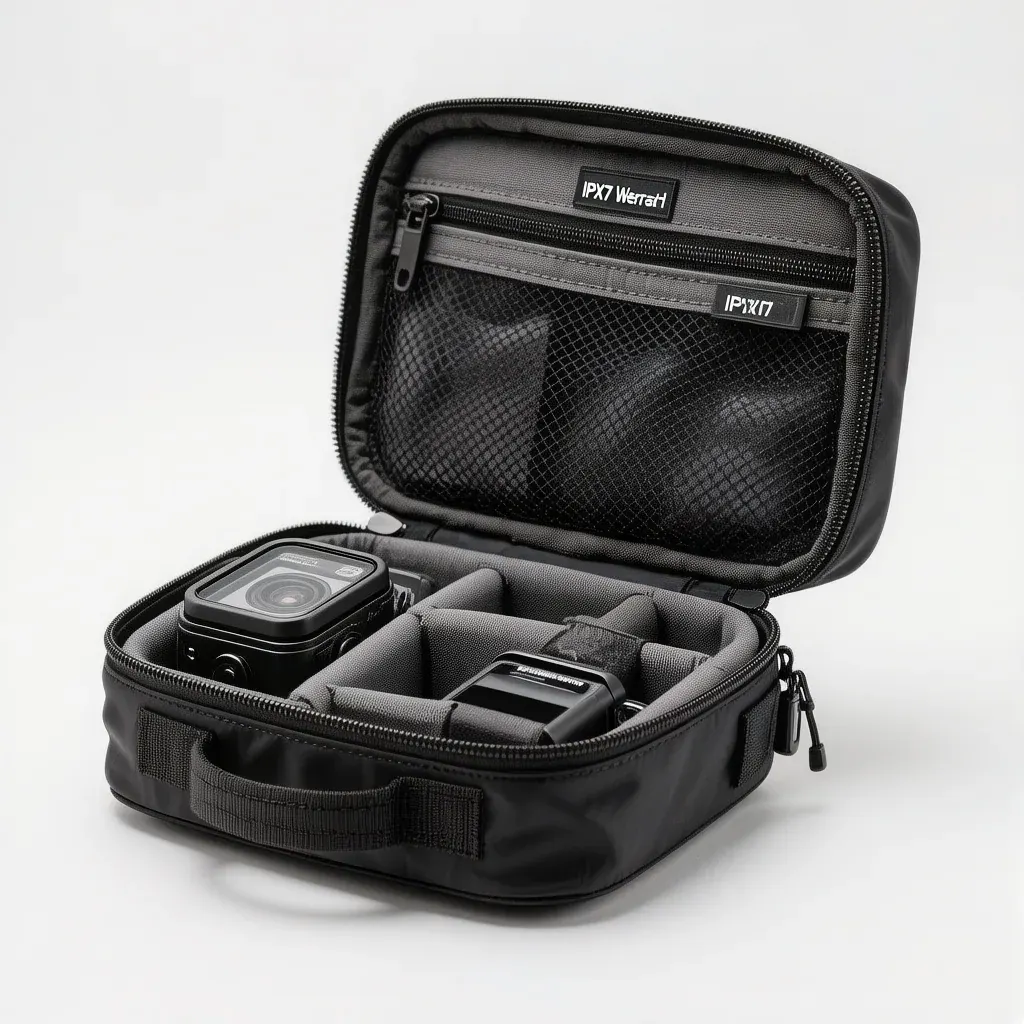
Capacity bands cut across families and they are the honest way to brief a range, because an angler shops by how much kit must come along rather than by a category name. The bands below describe usable internal volume with trays fitted, which is typically 15-20 percent below the theoretical litre figure quoted on packaging.
| Band | Usable volume | Session length | Format that suits it | Realistic FOB |
|---|---|---|---|---|
| Micro | Up to 15 L | 1-3 h | Sling, waist, chest | 9-26 USD |
| Compact | 15-25 L | Half day | Small backpack, large tote | 14-30 USD |
| Standard | 25-40 L | Full day | Tackle backpack, crate liner | 22-44 USD |
| Expedition | 40-60 L | Multi-day bank or boat | Large backpack, duffel | 30-55 USD |
| Cart class | 60-100 L | Trip or charter base | Rolling bag | 60-120 USD |
The gap between stated and usable volume deserves attention during sourcing. Gear lists quote the geometric volume of the closed shell, whereas an angler fills around trays, leaving dead space at corners and above inserts. Requesting the fitted-tray volume rather than the shell volume prevents a range being positioned a whole band higher than it performs.
Hard Tackle Boxes
A hard box is a rigid shell case with moulded trays sliding into fixed rails, typically 20-40 litres equivalent and priced 18-55 USD. It protects crushable items better than anything soft, it stacks in a boat or a vehicle, and it is heavy before a single lure goes in: an empty 3700-class case weighs 2.4-3.6 kg.
The argument against hard boxes is transport rather than protection. A cased load of five trays reaches 9-12 kg with a single hand grip and no realistic carry over 200 m, which confines the format to anglers who fish from a vehicle or a boat with storage. Impact performance should be specified by published drop-test methods maintained by ASTM International, because unqualified claims of ruggedness mean very little when a case falls off a tailgate in cold weather.
Soft Tackle Totes
A soft tote is an open or zip-top rectangular carrier holding two to four 3700 trays loose, priced 8-24 USD and weighing 700 g to 1.4 kg empty. It is the cheapest family per litre and the one most beginners encounter first, and it remains the correct answer for short walks from a vehicle to a fixed swim.
Trays sitting loose is the whole weakness and also the reason the format is cheap. At 15-35 litres with no internal sleeve, trays rotate and stack at an angle, which jams lids and spills contents into the bottom of the bag once the angler moves any distance. Adding a sleeve costs about 2.80 USD and it is the single upgrade that turns a tote into something shop-worthy for anything beyond a static session.
Tackle Backpacks
The tackle backpack carries two to four deep trays in a moulded sleeve on two shoulders, at 20-45 litres and 22-48 USD, and it is the default recommendation for any angler who walks. Weight distributes across both hips and the sternum, which keeps 10-12 kg comfortable for several kilometres where the same load in one hand is unbearable past 200 m.
This is also the family where water protection and organisation legitimately combine, because a sleeve for trays and a welded lower shell can coexist without compromise. Buyers building a full range should begin here, and should note that the tackle backpack range covers most standard geographies of the family. The competing question of worn versus hull-mounted storage is handled separately for kayak buyers.
Sling Packs
A sling pack rides on one strap and swings to the front for access without being set down, typically 8-18 litres, one or two shallow 3600 trays, at 12-30 USD. It serves the angler moving along a bank who wants the current few patterns available at every stop rather than unpacked once at a swim.
The constraint is physiological rather than economic. A single strap loads one shoulder asymmetrically, and beyond roughly 5 kg or two hours it causes noticeable neck and shoulder fatigue. Sling bodies under about 18 litres stay inside that limit naturally, which is why the family tops out where it does and why a larger pack from the sling pack range should still be specified with a padded strap of at least 65 mm.
Waist, Hip, and Lumbar Packs
Around the waist rather than the shoulders, waist packs run 4-12 litres and 9-22 USD, and they are the preferred body position when the angler is wading deep or casting constantly. Load sits on the hips where the skeleton takes it rather than the shoulders, and a wading angler can reach everything without raising hands out of the water.
Two details separate a comfortable waist pack from an annoying one: strap padding width of at least 50 mm and a stabiliser strap that stops the pack rotating forward with every cast. Below about 4 litres the pack adds nothing over pockets, and above about 12 litres it interferes with a casting stroke, which sets the boundaries of the family. Options sit across the waist pack range.
Chest Packs
A chest pack hangs from the neck with a waist stabiliser, holding 3-9 litres and generally one tray plus a dropper bottle and tippet spools, at 10-26 USD. It is the family built for hands-free work: everything is visible at eye level with both hands free to tie a knot, which no shoulder-mounted format can offer.
Chest packs sell narrow and they should be stocked narrow. The buyer is a fly angler or a lure angler who changes terminal tackle constantly, and a general retailer will find the family underperforming against a sling of the same price because most anglers want more storage than 9 litres allows.
Duffels and Rolling Bags
Duffels of 30-70 litres at 14-38 USD handle bulky, non-tray loads: waders, wet weather shells, spare clothing, and food. Rolling bags of 60-100 litres at 60-120 USD move six to twelve 3700 trays from a vehicle to a boat and nothing else, and they exist for the charter and competition angler.
The comparison worth making is tray-based against volume-based storage. A duffel carries more bulk per dollar than almost anything else in this list, because it has no sleeve, no structure, and no hardware beyond a zip and two handles. A rolling bag carries more trays than a backpack can physically balance, and pays for it with wheel assemblies that fail in sand: specify 80 mm wheels with sealed bearings rather than the 50 mm option that saves 1.20 USD.
Insulated and Cooler Bags
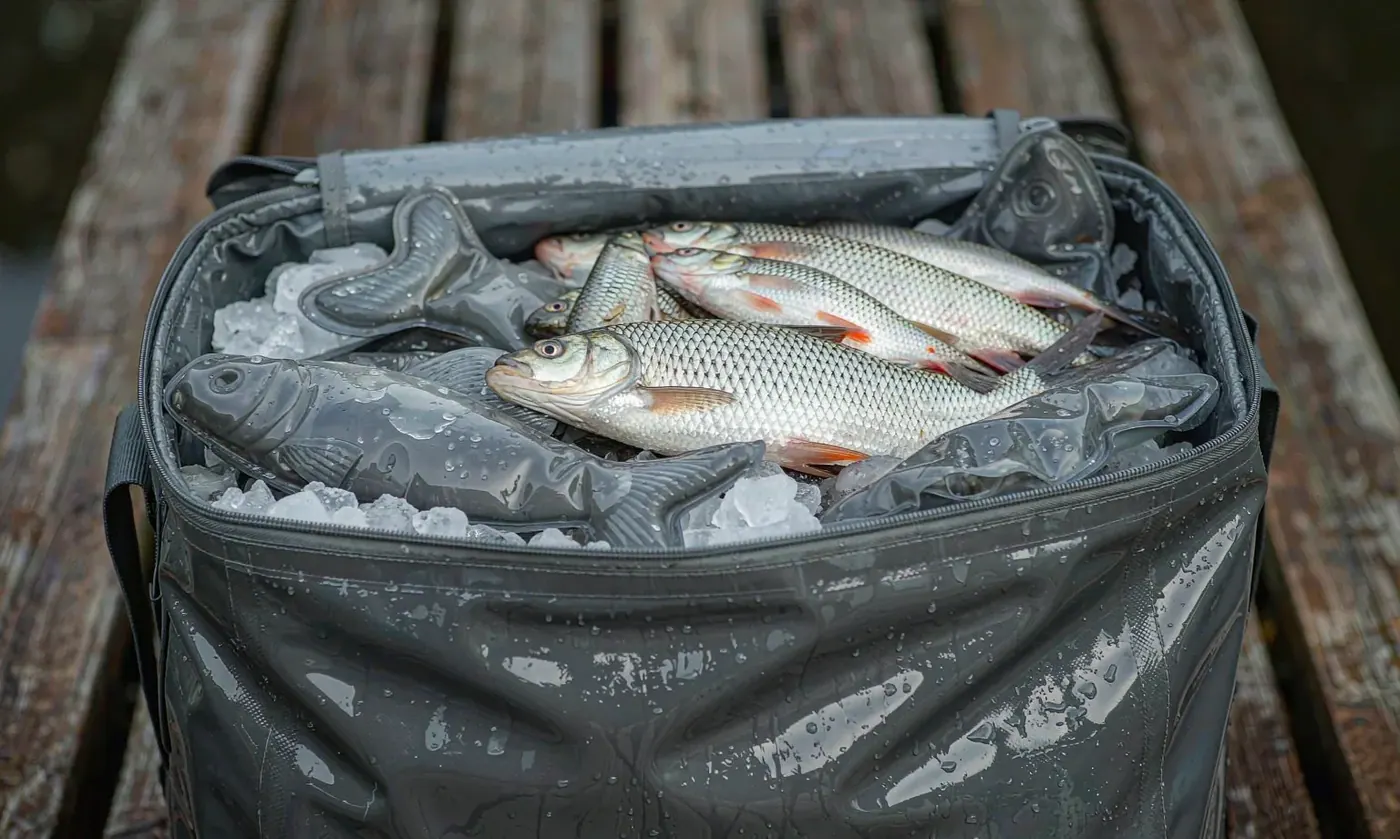
An insulated bag holds 10-35 litres with a foam liner of 4-8 mm and a welded or heat-sealed inner shell, priced 12-42 USD. Its job is temperature control for bait, food, and harvested fish, and it earns its place when the session runs long enough for that to matter.
Keeping harvested fish and perishable food cold is a food-safety matter rather than a comfort one, and handling guidance published by the Centers for Disease Control and Prevention sets out acceptable chilling practice. Practically, a bag should be specified with a drain plug at the base, a liner seam that is heat-welded rather than stitched, and an ice retention figure measured in hours rather than adjectives.
Materials and Construction Across Families
Construction choices track family rather than being universal. A hard box needs impact-modified polypropylene and nothing else; a soft pack needs a coated shell, a sleeve, and usable hardware; an insulated bag needs a welded liner and a drain. Reading these three bills of materials side by side makes the price bands above much easier to defend to a retail buyer.
| Element | Soft sewn build | RF-welded build | Insulated build | Why it matters |
|---|---|---|---|---|
| Shell | 210D or 420D with PU coat | 500D or 1000D PVC or TPU | 420D plus foam liner | Sets the base cost and the tear life |
| Insulation | None | None | Closed-cell foam, 4-8 mm | Determines ice retention in hours |
| Seam | Stitched, then taped | RF welded, no thread | Heat welded inner shell | Stitched seams wick without tape |
| Base | Fabric, sometimes EVA panel | Moulded EVA or welded | Welded tray with drain | First point to fail on wet ground |
| Hardware | Acetal or zinc depending on price | Acetal or 316 stainless | Acetal, drain plug | zinc seizes in salt within one season |
Choosing between a coated nylon shell and welded PVC or TPU film is the decision with the longest consequences, and it should be made against the family rather than in general terms. A chest pack holding 6 litres rarely needs a welded shell because it spends its life dry on the chest of an angler who is not swimming, whereas a bag set into a kayak tankwell sits in bilge water for hours and does. The trade-offs are set out in detail in the PVC against TPU comparison.
Tray Format Decides Internal Dimensions
Internal dimensions follow from tray choice rather than the reverse, because trays are the single object that must fit without force. Standard 3600 trays measure roughly 10.88 x 7.5 x 1.75 inches and 3700 trays measure roughly 14 x 9 x 2.63 inches, so a bag designed around four deep 3700 trays needs an internal sleeve near 290 x 210 x 330 mm before any tolerance is added.
| Tray format | Dimensions in inches | Typical use | Suits |
|---|---|---|---|
| 3500 | 9 x 5 x 1.25 | Small terminal items | Chest packs, waist packs |
| 3600 | 10.88 x 7.5 x 1.75 | General lure selection | Slings, small backpacks |
| 3700 | 14 x 9 x 2.63 | Full day selection | Tackle backpacks, totes |
| 3700 deep | 14 x 9 x 3.5 | Bulk storage at base | Crate liners, rolling bags |
Tolerance is where most sourcing mistakes happen. Designing a sleeve to the nominal tray dimension leaves no allowance for moulded-in draft angle on the tray itself, which commonly adds 1.5-2 mm per side, and the tray then jams on insertion. Allowing 4 mm per dimension is enough to make insertion smooth without letting trays rattle in transit.
Matching Family to Angler Profile
Nine families are more than most retailers need, and the practical approach is to map profiles against one or two formats rather than stocking every combination. Three profiles account for the large majority of first purchases, and a fourth is worth a small allocation.
| Angler profile | Recommended family | Volume | Second purchase | Reason |
|---|---|---|---|---|
| Bank angler walking several km | Tackle backpack | 25-40 L | Sling pack | Two shoulders take the load, sling holds current patterns |
| Boat angler with vehicle access | Hard box or tote | 20-40 L | Insulated bag | Protection and stacking matter, walking does not |
| Kayak angler seated | Compact backpack or liner | 25-35 L | Waist pack | Nothing may enter the paddle arc |
| Fly angler wading deep | Chest or waist pack | 4-12 L | Sling pack | Hands free and above the waterline |
Buyers should resist the temptation to present the more exotic families as starting points. A rolling bag at 60-120 USD is a considered second or third purchase made by an angler who already owns two bags, and positioning it as a beginner solution produces returns rather than revenue. Starting ranges are better built from the nylon waterproof fishing bag range, where the four highest-volume profiles overlap.
Standards, Testing, and Claims That Survive Scrutiny
Every claim printed on packaging eventually has to survive a retailer or a regulator asking for evidence, and each family has one claim that most often overreaches. Waterproof is the acute example: degree of protection is defined against a code published by the International Electrotechnical Commission, and against that code most soft tackle bags are honestly water-repellent rather than waterproof.
| Family | Claim most often overstated | Evidence to hold | Acceptance number |
|---|---|---|---|
| Soft sewn with PU coat | Waterproof | Hydrostatic head test report | 1,500-3,000 mm after three washes |
| RF-welded IPX6 | Submersible | IPX test to the cited code | 30 min at depth, no ingress |
| Insulated | Keeps ice 24 hours | Ice retention test at stated ambient | Measured hours at 20 C and 32 C |
| Hard box | Unbreakable | Drop test to a cited method | 1 m drop at -10 C with no crack |
| Saltwater marked | Corrosion proof | Salt mist cycles with rinse | No seizure after ten cycles |
Holding this evidence at sample stage instead of requesting it after shipment changes the dynamic completely. A test record obtained before approval is a specification; the same record requested from a finished container is a negotiation, and it is one the buyer usually loses.
Programme, Pricing, and Compliance
A multi-family tackle programme typically opens at MOQ 500 pcs per design and colour, and buyers building across several families can usually negotiate colour splits once total volume passes 2,000 units. Sampling runs 6-10 working days from confirmed artwork, and hard boxes are the exception because a new injection or rotational tool adds 15-25 days before the first shot.
| Programme item | Baseline | Note |
|---|---|---|
| MOQ | 500 pcs per design and colour | Colour split negotiable above 2,000 pcs |
| Soft bag sampling | 6-10 working days | From confirmed artwork and material selection |
| Hard box sampling | Add 15-25 days | New tooling before the first shot |
| Bulk | 35-50 days | From approved sample and deposit |
| Inspection | AQL 2.5 | Include head test, tray fit, salt cycle, drain function |
| Compliance | REACH and California Prop 65 | Screen shell, coating, foam, inks, hardware |
QUANZHOU JUNYUAN BAGS has developed waterproof bag programmes since 2014, with the founding team working in the trade since 2004. Monthly output of 200,000 units is verified by SGS, and BSCI and ISO 9001 systems structure the workflow. Materials are screened for REACH and California Prop 65, and every bulk order is inspected at AQL 2.5 before shipment.
A multi-family brief can be emailed to service@junyuanbags.com with target family, volume band, tray format, hardware level, and quantity. FOB Xiamen or DDP service to more than 100 countries follows an approved sample and a complete test record.
People Also Ask
How many types of fishing tackle bag are there?
Nine working families: hard box, soft tote, backpack, sling, waist, chest, duffel, rolling bag, and insulated cooler bag, distinguished by carry position and what they hold.
What size tackle bag do I need?
Match the session rather than the category: up to 15 L for 1-3 hours, 15-25 L for half a day, and 25-40 L for a full day with three or four trays.
What is the difference between a tackle bag and a tackle backpack?
A tote carries loose trays in hand or over one shoulder and lacks a sleeve, while a backpack sleeved trays upright and distributes load across both hips. The sleeve is the real difference.
Do I need a hard tackle box or a soft bag?
Hard boxes protect crushable items and stack, but weigh 2.4-3.6 kg empty and are impractical past about 200 m. Soft bags win whenever the kit has to walk.
What does 3600 or 3700 mean on a tackle tray?
A nominal size class. A 3600 tray measures roughly 10.88 x 7.5 x 1.75 inches and a 3700 about 14 x 9 x 2.63 inches, so internal bag dimensions follow the tray choice.
Are tackle bags waterproof or water resistant?
Most sewn bags with a PU coating are water-repellent at 1,500-3,000 mm of hydrostatic head. Only RF-welded builds tested to the IEC ingress code should be described as waterproof.
Frequently Asked Questions
Q1. What are the main types of fishing tackle bags?
Nine families: hard tackle box, soft tote, tackle backpack, sling pack, waist pack, chest pack, duffel, rolling bag, and insulated cooler bag.
Q2. Which tackle bag type is best for bank fishing?
A tackle backpack of 25-40 L. Walking several kilometres requires two-shoulder carry, and a sling of 8-18 L is the usual second purchase for patterns in active use.
Q3. What is the difference between a soft tote and a tackle backpack?
A tote holds two to four trays loose with no sleeve at 8-24 USD, while a backpack sleeved three or four trays upright at 22-48 USD and carries twice the weight comfortably.
Q4. How many litres is a standard tackle bag?
A full-day tackle backpack sits at 25-40 L usable with trays fitted. Stated shell capacity is typically 15-20 percent higher than usable volume.
Q5. What size is a 3600 tackle tray?
Roughly 10.88 x 7.5 x 1.75 inches. It is the general lure selection size used in slings and smaller backpacks.
Q6. What size is a 3700 tackle tray?
Roughly 14 x 9 x 2.63 inches, with a deep variant near 3.5 inches tall used for bulk storage in crate liners and rolling bags.
Q7. Are hard tackle boxes worth the extra cost?
Only when the kit does not have to walk. At 2.4-3.6 kg empty and a single hand grip, a cased load is impractical beyond about 200 m.
Q8. What is a rolling tackle bag for?
Charter and competition anglers moving six to twelve trays from a vehicle to a boat. Specify 80 mm sealed-bearing wheels, because 50 mm wheels fail in sand.
Q9. How much does an insulated fishing bag cost?
12-42 USD FOB across 10-35 L. The specification to require is a 4-8 mm foam liner, a heat-welded inner seam, a drain plug, and ice retention measured in hours.
Q10. What material should a tackle bag be made from?
210D to 420D PU-coated nylon for soft sewn builds, and 500D to 1000D PVC or TPU film when seams are RF-welded. Choice follows how wet the bag will get rather than price alone.
Q11. How many trays fit in a tackle backpack?
Three to four deep 3700 trays in a 25-40 L build. Design the sleeve with 4 mm of tolerance per dimension so moulded draft angle does not jam the tray.
Q12. Is a chest pack better than a sling for fly fishing?
A chest pack keeps everything at eye level and both hands free for knots, which suits constant terminal changes. A sling carries more at 8-18 L and suits fewer changes.
Q13. Are tackle bags really waterproof?
Most are water-repellent at 1,500-3,000 mm of hydrostatic head. Only RF-welded builds tested to the IEC ingress code against a defined depth and duration can carry a waterproof claim.
Q14. What is the MOQ and lead time across these families?
MOQ is 500 pcs per design and colour, soft bag samples take 6-10 working days, hard boxes add 15-25 days for tooling, and bulk runs 35-50 days from approved sample and deposit.