Saltwater kills bag hardware long before it kills fabric. Specify 304 stainless as the baseline and 316 stainless wherever rinsing is irregular or the bag fishes from a boat, because 316 carries 2-3 percent molybdenum and resists chloride pitting far better than 304. Avoid plain steel and uncoated zinc, which show rust bloom within one coastal season. Require a salt spray exposure of at least 96 hours on all metal components, pair that with a fresh water rinse after every session, and expect hardware rather than seams to set the service life. Programme baseline is MOQ 500 pcs per design and colour, samples in 6-10 working days, and bulk in 35-50 days.
Why Saltwater Attacks Hardware Before Fabric
Chloride ions break down the passive oxide layer that protects stainless and alloy surfaces, and once that layer is locally breached the damage becomes pitting rather than a uniform surface rust. A pit is worse than a stain because it concentrates stress at a spring, a slider, or a hook bend, which is exactly where a bag cannot afford to fail. That is why a saltwater bag usually ends its life with a broken clasp rather than with a split seam.
The exposure pattern is also uneven. Hardware at the base, at drain points, and around a zipper garage sees the most concentrated salt because rinse water and spray pool and evaporate there repeatedly, raising local chloride concentration well above that of open seawater. Specifying the same grade everywhere is simpler than trying to zone it, and the cost difference is modest.
| Material | Chloride resistance | Typical life in daily salt use | Verdict |
|---|---|---|---|
| 316 stainless | High, 2-3 percent molybdenum | 5-8 seasons | Best for boat and offshore |
| 304 stainless | Good | 3-5 seasons with rinsing | Baseline for all saltwater bags |
| Coated zinc alloy | Moderate, coating dependent | 1-3 seasons | Acceptable on non-load parts |
| Plain carbon steel | Poor | Under one season | Never specify for salt use |
| Engineering plastic | Unaffected by chloride | UV limited | Good for buckles and drains |
Engineering plastic deserves more use than it gets. Acetal and glass-filled nylon do not corrode at all, weigh less than metal, and are entirely adequate for ladderlocks, drain grommets, and strap adjusters. Their limit is ultraviolet exposure rather than salt, so specify a UV-stabilised grade and check it in an exposure test alongside the metal parts. Where a programme wants a metal look without the metal risk, a polymer component with a stable colour through the section hides the scratches that a plated part would show.
Cost is the usual objection to upgrading hardware, and it is smaller than it appears. Moving from coated alloy to 304 stainless across all load points typically adds 3-6 percent to unit cost, and moving from 304 to 316 adds a further 2-4 percent. Against a corrosion claim that costs a replacement bag plus freight plus administrative time, the upgrade pays for itself if it prevents even one claim in twenty.
Tray and Storage Choices for Salt Sessions
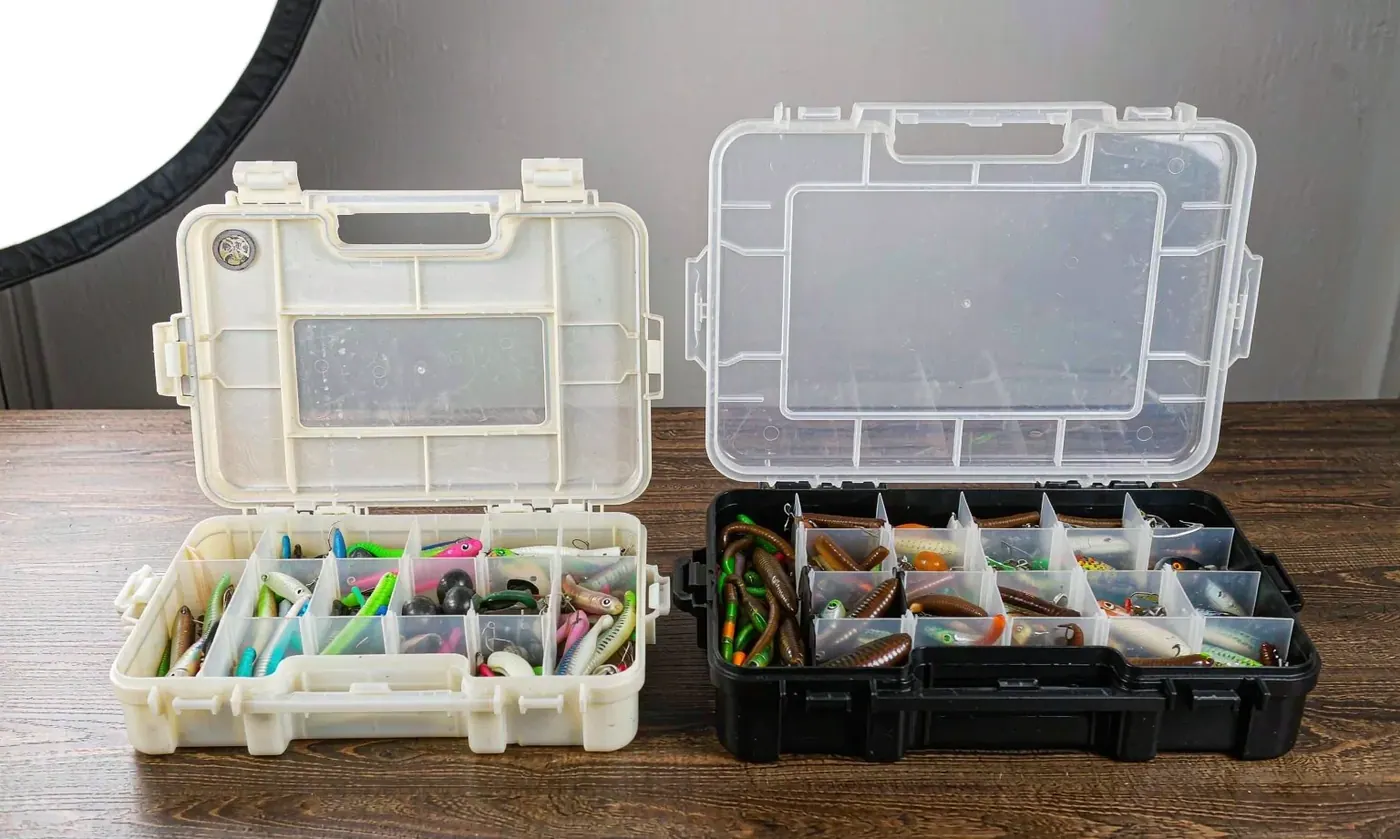
Tray rails and drain channels are the parts of a saltwater bag that salt reaches and rinses least well. A rail with a narrow crevice holds brine after a rinse, evaporates, and then grinds against every tray that slides over it. Choose open rail geometry with a radius rather than a slot, and specify a smooth welded interior at the base so a rinse actually clears it.
| Storage detail | Good design | Poor design | Why it matters |
|---|---|---|---|
| Tray rails | Open rails with a radius | Narrow slot with a dead end | Slots trap brine and grind trays |
| Drain channels | Smooth, sloped to a grommet | Flat base with no fall | Standing brine concentrates chloride |
| Pocket interiors | Welded, few crevices | Stitched corner boxes | Stitch holes hold salt and grit |
| Tool docks | Open, rinseable | Closed sleeve | Closed sleeves never dry |
Tool docks are a specific trap. A closed plier sleeve on a saltwater bag stays damp for days and rusts both the tool and the sleeve hardware. Use an open dock with a drain, or a sheath made from a material that dries in an hour. The same applies to a retractor dock: the spring inside is the most corrosion-sensitive part on the bag and the hardest to rinse.
Galvanic Corrosion and Mixed Metals
Joining two dissimilar metals in an electrolyte creates a galvanic cell, and seawater is an excellent electrolyte. The less noble metal corrodes faster than it would alone, which is why an aluminium rivet in a stainless plate fails quickly and why a brass eyelet against a steel spring is a poor combination. The further apart two metals sit in the galvanic series, the faster the damage.
Practical control is straightforward. Keep metal combinations close together in the series, isolate dissimilar contacts with a plastic washer or a coating, and make the sacrificial part the one that is cheap and easy to replace. Where a stainless screw must pass through an aluminium fitting, a nylon isolating washer costs a fraction of a cent and removes most of the risk.
- Avoid mixing stainless with aluminium or plain steel in a wet joint.
- Isolate dissimilar metal contacts with nylon washers or a barrier coating.
- Make any sacrificial component cheap and replaceable.
- Specify the plating and the substrate, not just a generic metal finish claim.
- Check rivets and eyelets, which are the most commonly mixed-metal locations.
Plating is where specifications most often go wrong. A part described as chrome or nickel finished may be a thin decorative layer over a vulnerable substrate, and once that layer is scratched the underlying metal corrodes faster than an unprotected part would. Require the substrate and the plating thickness in writing, and prefer solid stainless or a UV-stable polymer for any component that will be scratched in service.
Salt Spray Testing and What the Hours Mean
Salt spray exposure is the standard accelerated screen for coated and metallic components, and the widely used neutral salt spray method is published by ASTM International. Results are quoted in hours to a defined appearance change, and the number is only meaningful when the definition of failure is stated: first red rust, a given pit density, or a coating creep distance from a scribe.
| Exposure | Typical requirement | Suits | Failure definition |
|---|---|---|---|
| 24 hours | Minimum screening | Freshwater only | No red rust |
| 48 hours | Light coastal use | Inshore, rinsed every session | No red rust, no creep over 1 mm |
| 96 hours | Standard saltwater | Daily inshore and boat use | No red rust, no pitting |
| 240 hours and above | Offshore specification | Charter and offshore programmes | No red rust, minimal pitting |
Treat the hours as a comparative screen, not as a calendar prediction. Accelerated exposure does not reproduce wet and dry cycling, ultraviolet exposure, or mechanical wear, so a part that passes 240 hours in a cabinet can still fail in a season if it is never rinsed. Use the test to compare two candidate components, and use the rinse routine to protect whichever one is chosen. Retain one sample from every hardware lot for at least twelve months, because a corrosion complaint raised after a season can only be resolved by comparing the returned part with the lot it came from.
The corrosion proof hardware guide for saltwater sets out the grading and the test definitions in more detail. Requiring the failure definition alongside the hour count is the single change that makes a corrosion clause enforceable.
Waterproof Level for a Saltwater Bag
Saltwater adds two demands to the waterproof specification. First, spray from a bow or a following sea arrives far harder than rain, so IPX6 rather than IPX5 is the sensible floor. Second, a bag that goes overboard takes salt rather than fresh water, and salt dries into crystals that abrade closures, so the closure must be rinsable without disassembly.
Ingress codes are defined by the IEC ingress protection framework. IPX6 covers powerful jets and suits inshore and boat use; IPX7 with a stated depth and duration suits kayak and surf work. Screen the finished bag with trays and load fitted, then rinse and re-screen, because a salt-contaminated closure behaves differently from a clean one.
Fabric, Coatings, and Ultraviolet Exposure
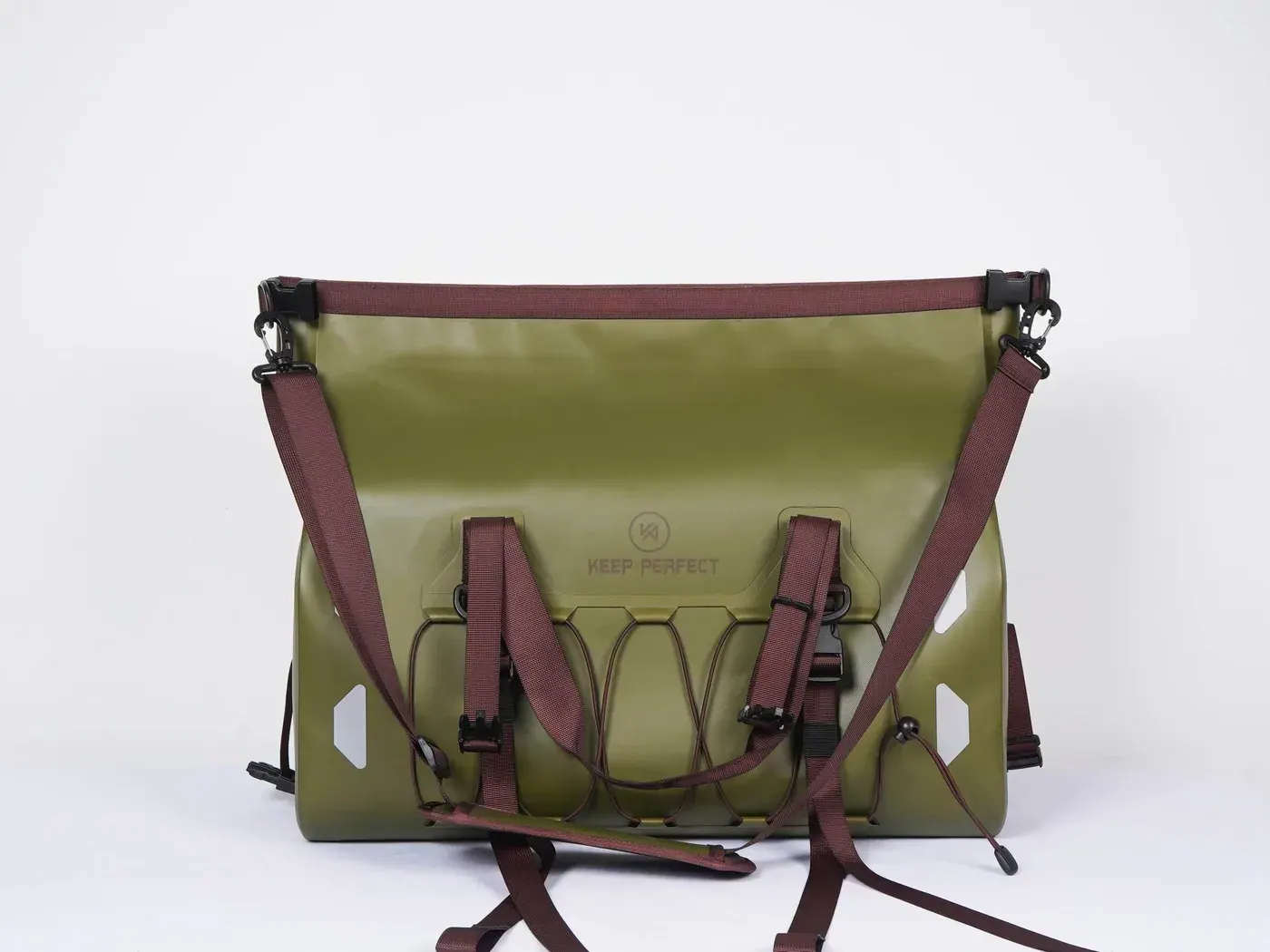
Coastal fabric selection is an ultraviolet problem more than a salt problem. Salt rinses off; ultraviolet does not. A PVC-coated polyester holds up well to salt but stiffens with age and heat, while a TPU laminate resists hydrolysis and stays flexible in cold water at the cost of a higher material price. Both need a UV-stabilised face and a colour fastness check, because coastal sun fades a bag faster than any other environment.
| Component | Coastal risk | Specification response | Check interval |
|---|---|---|---|
| Face fabric | Ultraviolet fading and chalking | UV-stabilised finish, fastness report | Every 6 months |
| Coating or film | Hydrolysis in heat and humidity | TPU laminate for hot climates | Annually |
| Seam tape | Edge lift with salt cycling | 20-25 mm tape, welded where possible | Monthly |
| Webbing | Stiffening and strength loss | Solution-dyed polyester | Every 6 months |
| Thread | Degradation at exposed stitches | Bonded polyester or nylon | Monthly |
Thread is a quiet failure point. Exposed decorative stitching on a coastal bag is the first thing to degrade because it is thin, unprotected, and constantly wetted. Minimise exposed stitching on any bag specified above IPX5, and where it is unavoidable, use bonded polyester or nylon thread rather than a cotton blend, which absorbs water and holds salt against the seam. Colour choice plays a part as well: dark faces absorb more heat and fade faster, so a mid-tone colour in a coastal programme usually looks better after two seasons than a black one.
Cooler and Catch Compartments in Salt Use
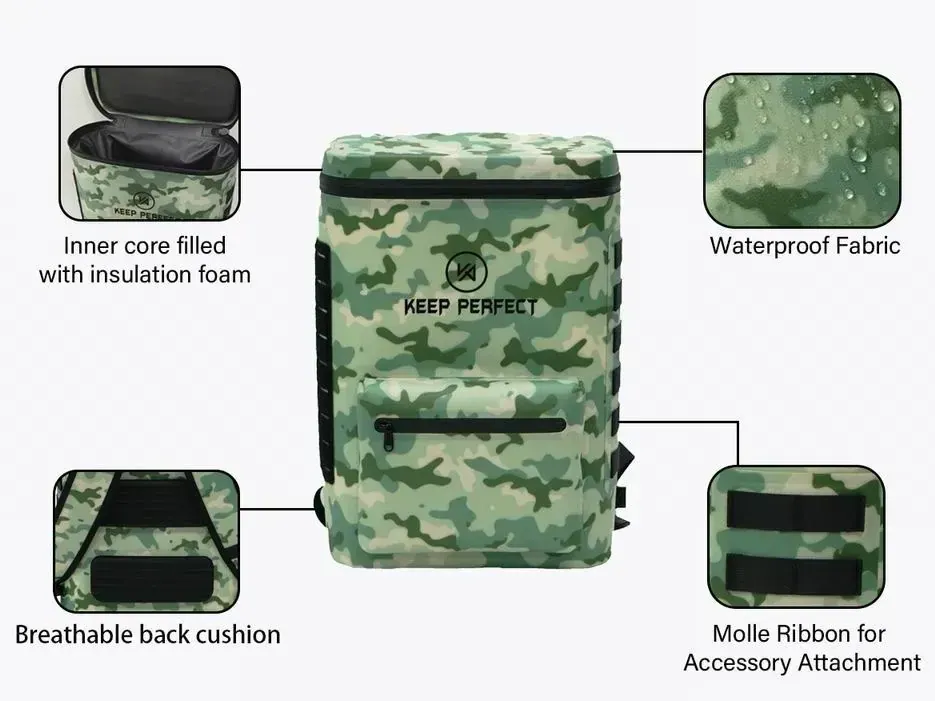
A cooler compartment in a saltwater bag faces condensation, melted ice, and fish slime at the same time. Insulation of 6-10 mm with a welded liner is the baseline, and the drain must be positioned so it clears a deck surface when the bag is set down. A compartment that holds 100-200 ml after a rinse will smell within a day and will rust every hook stored nearby.
Separation is the non-negotiable rule. The cooler liner must be physically isolated from tray storage, because condensation migrates through fabric and rusts hooks and swivels faster than almost any splash. Where a bag also carries a catch or a wet-rag pocket, that pocket should be external and drained rather than internal, and it should be the only zone expected to hold water. Ice type matters too: a block lasts longer and produces less free water than cubed ice in a small compartment, which reduces both the condensation load and the drain volume on a full-day trip.
Rinse, Dry, and Maintenance Cadence
The rinse routine does more for service life than any material upgrade. Fresh water over the shell, the closure, and every metal component after each session removes chloride before it can concentrate by evaporation. Skipping it is the most common cause of a corrosion failure on a bag that was correctly specified, and it typically shortens hardware life by more than half.
| Task | Frequency | Method | Pass condition |
|---|---|---|---|
| Fresh water rinse | After every session | Low pressure, including zipper garage | No visible salt residue |
| Open drying | After every session | 8-24 hours, closures open | Interior fully dry |
| Hardware inspection | Monthly | Look for rust bloom and pitting | No bloom, no pitting |
| Closure lubrication | Every 2 months | Product specified by the maker | Slide moves freely |
| Water re-screen | Every 3 months | 60 min spray, loaded | All indicator tissue dry |
Drying deserves equal weight. A bag dried closed holds humidity against hardware overnight, which is precisely the condition that drives pitting. Open every closure, remove trays, invert external pockets, and allow 8-24 hours in moving air before storage. In humid climates a 10-20 g desiccant sachet in the tray chamber is cheap insurance and should be replaced every two to three months. Where a bag lives aboard a vessel rather than at home, dedicate a hanging position in moving air, because a bag stored in a closed locker between trips is the single most common source of off-season corrosion.
Inshore Versus Offshore Specification
Inshore and offshore are different products. An inshore bag fishes a few hours, comes home, and gets rinsed. An offshore bag stays wet for a full day or a multi-day trip, is rinsed irregularly, and sees far higher spray loads. Specifying an inshore build for an offshore programme produces failures that look like defects and are really a mismatch between product and use.
| Item | Inshore | Offshore |
|---|---|---|
| Hardware | 304 stainless | 316 stainless or marine-grade polymer |
| Salt spray exposure | 48-96 hours | 240 hours and above |
| Base fabric | 840D | 1000D plus welded patch |
| Waterproof level | IPX6 | IPX6 with a rinsable closure |
| Rinse expectation | Every session | Every session, documented |
Weather and sea conditions should be reviewed before every trip, and NOAA marine weather resources support that review in the United States. Equipment preparation is not a substitute for judgement, training, or appropriate safety equipment on the water. The waterproof fishing tackle bag overview places the saltwater specification alongside the freshwater and kayak variants.
Programme Brief and Acceptance Criteria
Write one document covering hardware grade by component, galvanic isolation rules, plating specification with substrate, salt spray hours with a stated failure definition, fabric and thread selection, waterproof level with the test condition, and the rinse and inspection cadence to be published with the product. Add acceptance criteria for dimensions, seam appearance, coating thickness, colour fastness, and hardware finish.
| Programme item | Baseline | Note |
|---|---|---|
| MOQ | 500 pcs per design and colour | Colour split negotiable above baseline |
| Sampling | 6-10 working days | Add 3-5 days for a hardware change |
| Bulk | 35-50 days | From approved sample and deposit |
| Inspection | AQL 2.5 | Include hardware grade verification and water screen |
| Corrosion screen | 96 hours minimum | 240 hours for offshore programmes |
QUANZHOU JUNYUAN BAGS has developed waterproof bag programmes since 2014, with the founding team active in the industry since 2004. Monthly output of 200,000 units is verified by SGS, and BSCI and ISO 9001 systems structure the workflow. Materials are screened for REACH and California Prop 65, and every bulk order is inspected at AQL 2.5 before shipment.
A saltwater brief can be emailed to service@junyuanbags.com; include inshore or offshore use, target hardware grade, spray exposure requirement, and quantity. FOB Xiamen or DDP service to more than 100 countries follows an approved sample and a complete test record. The best saltwater fishing backpack comparison shows how these choices look across finished designs.
People Also Ask
Is 316 stainless worth the extra cost on a fishing bag?
Yes for boat and offshore use, because 316 carries 2-3 percent molybdenum and resists chloride pitting far better than 304. For inshore bags rinsed after every session, 304 is usually sufficient.
How long does hardware last in saltwater?
With 304 stainless and a proper rinse routine, three to five seasons. With 316 and the same routine, five to eight seasons. Uncoated steel fails inside one coastal season.
What salt spray test hours should I require?
Forty-eight hours for light inshore use, 96 hours as the standard saltwater requirement, and 240 hours or more for offshore programmes. Always state the failure definition beside the hours.
Can I mix stainless and aluminium fittings on a bag?
Avoid it. Dissimilar metals in seawater form a galvanic cell and the less noble metal corrodes faster. Where mixing is unavoidable, isolate the contact with a nylon washer or a barrier coating.
Why does my bag rust even though I rinse it?
Usually because rinse water never reaches the zip garage, drain channels, or rivet backs, where salt concentrates by evaporation. Rinse those areas deliberately and dry the bag open for 8-24 hours.
Are plastic buckles better than metal for saltwater?
For non-load parts, yes. UV-stabilised acetal or glass-filled nylon does not corrode at all and weighs less. Their limit is ultraviolet exposure, so specify a stabilised grade and test it.
Frequently Asked Questions
Q1. What hardware grade should a saltwater fishing bag use?
Use 304 stainless as the baseline and 316 stainless for boat and offshore use. Avoid plain carbon steel and uncoated zinc, and consider UV-stabilised engineering plastic for buckles and drains.
Q2. Why is 316 stainless better than 304 in saltwater?
It contains 2-3 percent molybdenum, which improves resistance to chloride pitting. That matters most where the bag is rinsed irregularly or fishes offshore.
Q3. What is galvanic corrosion and does it affect bags?
It is accelerated corrosion when two dissimilar metals contact in an electrolyte such as seawater. It affects rivets, eyelets, and mixed-metal brackets, and it is controlled by isolation or by keeping metals close in the galvanic series.
Q4. How many hours of salt spray testing should I require?
Ninety-six hours is the standard saltwater requirement, 48 hours suits light inshore use, and 240 hours or more suits offshore programmes. Always state what counts as failure.
Q5. Do plastic components avoid the corrosion problem entirely?
They avoid chloride corrosion, yes, but they are limited by ultraviolet exposure. Specify a UV-stabilised acetal or glass-filled nylon grade and include it in the exposure test.
Q6. What waterproof rating suits a saltwater bag?
IPX6 is the sensible floor because sea spray is far harder than rain. Add IPX7 with a stated depth and duration for kayak and surf work, and always re-screen after rinsing.
Q7. How often should a saltwater bag be rinsed?
After every session, with fresh water over the shell, closure, zip garage, and every metal part. Skipping the rinse typically cuts hardware life by more than half.
Q8. Why did my bag rust when I do rinse it?
Rinse water often misses the zip garage, drain channels, and rivet backs where salt concentrates by evaporation. Rinse those areas deliberately and dry the bag open for 8-24 hours.
Q9. Does saltwater damage the fabric as well as the hardware?
Less than ultraviolet does. Salt rinses off, while UV fades and chalks the face fabric and degrades exposed thread. Specify a UV-stabilised finish and minimise exposed stitching.
Q10. Should a cooler compartment be separate in a salt bag?
Yes. The liner must be welded, drained, and physically isolated from trays, because condensation migrates and rusts hooks faster than most splashes.
Q11. What maintenance cadence should be published with the product?
Rinse after every session, dry open for 8-24 hours, inspect hardware monthly, lubricate closures every two months, and re-screen in water every three months.
Q12. Is an inshore bag suitable for offshore trips?
Usually not. Offshore needs 316 hardware, a heavier base fabric, and a higher salt spray requirement. Using an inshore build offshore produces failures that look like defects but are a specification mismatch.
Q13. What is the difference between inshore and offshore specifications?
Inshore uses 304 stainless, 48-96 hour exposure, and 840D base fabric. Offshore uses 316 or marine-grade polymer, 240 hours or more, and a 1000D base with a welded patch.
Q14. What is the MOQ and lead time for a saltwater bag programme?
MOQ is 500 pcs per design and colour, samples take 6-10 working days, and bulk runs 35-50 days from approved sample and deposit.