A standard 3600-size tray measures 10.88 by 7.5 by 1.75 inches, which is 27.6 by 19.1 by 4.4 centimetres, giving roughly 2.3 litres of external volume and a loaded weight between 700 grams and 1.3 kilograms. Any bag intended to take one therefore needs at least 285 millimetres of clear internal width, about 200 millimetres of internal depth, and around 48 millimetres of stacking pitch per tray. Those four numbers decide fit far more reliably than any litre figure printed on a hang tag, and checking them takes a tape measure and about two minutes.
Reference Dimensions and Their Variants
The 3600 label began as one company's part number and became a de facto size class, which means there are several slightly different products carrying the same name. Standard, shallow and deep versions exist, and their footprints are close enough that most bags accommodate all three while their stacking heights differ substantially. Measure the actual tray rather than trusting the class name.
| Variant | Inches | Centimetres | External volume | Typical use |
|---|---|---|---|---|
| Standard | 10.88 x 7.5 x 1.75 | 27.6 x 19.1 x 4.4 | About 2.3 litres | General lure and terminal storage |
| Shallow | 10.88 x 7.5 x 1.25 | 27.6 x 19.1 x 3.2 | About 1.7 litres | Flies, small spoons, leaders |
| Deep | 10.88 x 7.5 x 2.25 | 27.6 x 19.1 x 5.7 | About 3.0 litres | Bulky plugs and swimbaits |
| Double-sided folder | 10.88 x 7.5 x 1.5 approx | 27.6 x 19.1 x 3.8 | About 2.0 litres | Two-way compartment access |
Internal dimensions are smaller than the external figures in every case. Wall thickness typically runs 1.5 to 2 millimetres, and the lid structure removes another 4 to 6 millimetres of usable depth, so a nominal 1.75 inch depth gives perhaps 1.5 inches inside. Anything that must stand upright inside a compartment has to be checked against that reduced figure rather than the printed one.
Three Dimensions Nobody Prints
Trays fail to fit bags for reasons that have nothing to do with their advertised size, and three of those reasons recur constantly. Moulding tolerance leaves plus or minus 2 to 3 millimetres on any dimension, so two trays carrying the same label can differ by half a centimetre. Hinges, handles and latches protrude beyond the nominal outline, sometimes by 5 millimetres at a corner. And taper means the widest point may be at the top rather than the middle, so something that enters a slot can still jam halfway through.
- Add 5 to 8 millimetres to the length before comparing against any internal width measurement.
- Check whether the latch sits on the long or short side, since that changes which bay dimension binds first.
- Expect the top of the tray to be up to 2 millimetres wider than the base on injection-moulded parts.
- Measure a loaded tray, since heavy contents bow thin walls outward by a millimetre or two.
- Treat any quoted dimension without a tolerance as nominal only, and allow accordingly.
The practical consequence is simple and worth stating plainly: a bag described as holding 3600 trays without giving its internal dimensions is a guess, and buyers should expect to verify it themselves at the first opportunity.
Bag Clearance Rules
Fit is a tolerance problem rather than a matching problem. Whichever dimension of the tray is longest, the bag's clear internal opening must exceed it by enough margin to overcome taper, deflection and the simple awkwardness of loading something in a hurry on a windy bank. These are the margins that hold up across a season.
| Rule | Minimum clear dimension | Reason |
|---|---|---|
| Internal width against tray length | 285 millimetres | 27.6 centimetres plus clearance for taper and hands |
| Internal depth against tray width | 200 millimetres | 19.1 centimetres plus room for seams and lining |
| Stacking pitch per tray | 48 millimetres | 44 millimetres plus the lid and a little air |
| Finger clearance above the stack | 25 to 30 millimetres | Trays must be lifted, not prised out |
| Total deflection under load | Under 3 millimetres | More than that and the top tray binds on the rail |
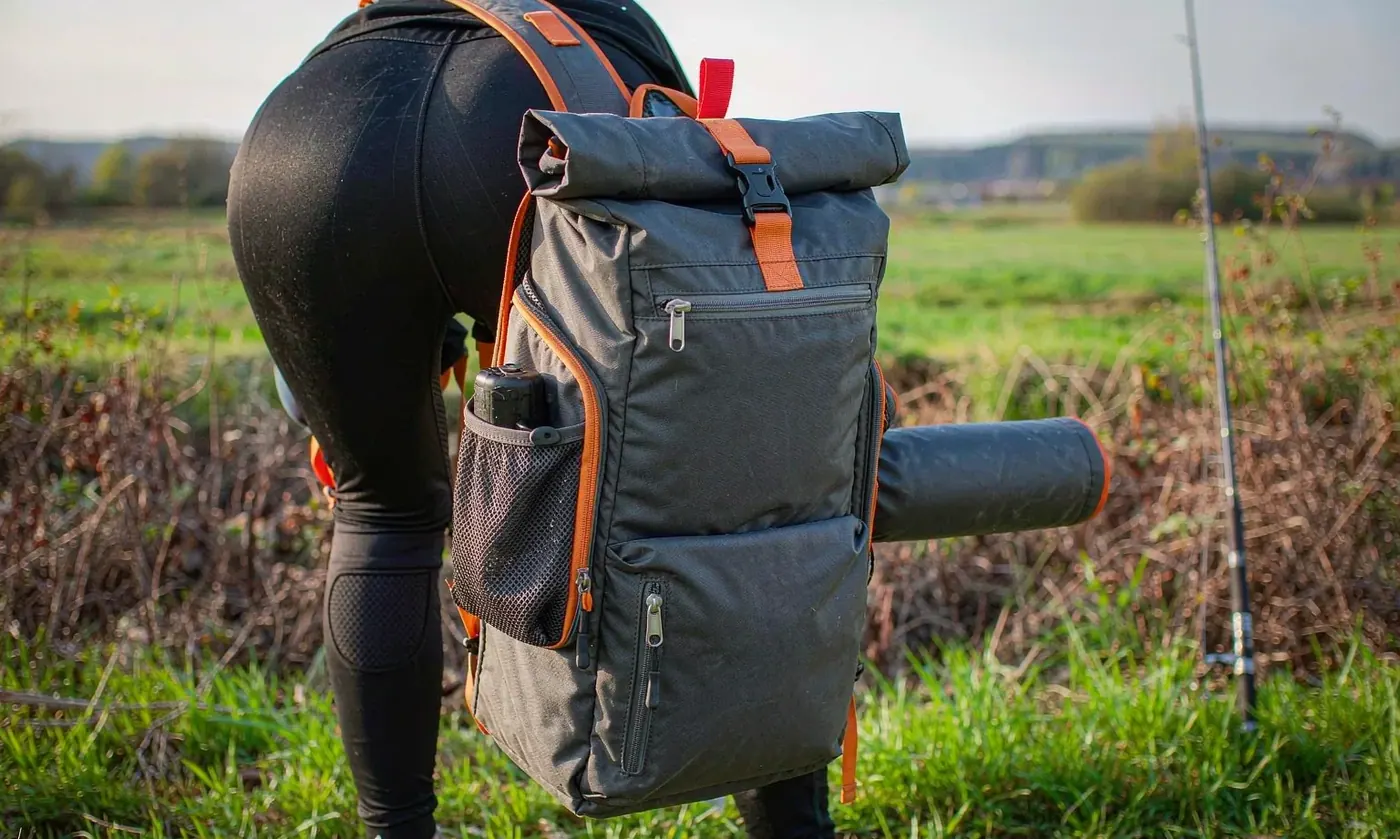
Where a measurement falls short by only three or four millimetres, resist the temptation to force it. That shortfall tends to grow as fabric relaxes and then reverses as it stiffens in cold weather, producing trays that fit comfortably one month and jam the next.
What Fits Where
Tray capacity across bag types varies enormously, mostly because width is expensive in a compact design. The table below reflects typical figures rather than optimistic claims, and assumes the standard 1.75 inch tray rather than shallow variants.
| Bag type | Typical tray count | Layout | Notes |
|---|---|---|---|
| Sling pack | One to two | Single stack, often shallow only | Check width first; many are under 270 millimetres |
| Small backpack, 15 to 20 litres | Two to four | Side or top loading stack | Depends whether an insert is fitted |
| Mid backpack, 25 to 30 litres | Four to six | Full-width insert | The most common format |
| Large backpack, 35 to 40 litres | Six to ten | Dual bays or tall stack | Needs rails to stop the stack bowing |
| Crate bag | Four to eight | Side loading, open top | Usually accepts the deep variant too |
| Waist pack | Rarely one | Flat single slot | Only a few accept even a shallow tray |
A useful check before purchase is simply counting bays rather than reading claims. One bay holds one stack; two bays allow two separate columns, and anything more elaborate usually means pockets rather than tray space.
Horizontal Stacks Versus Vertical Filing
Two layouts dominate. Horizontal stacking lays trays flat on top of each other and loads from the top or front, needing height and a single wide opening. Vertical filing stands them on edge like books in a shelf, needing depth rather than height and allowing any single tray to be withdrawn without disturbing others. Each suits a different fishing style.
| Layout | Space required | Access to the bottom tray | Best for |
|---|---|---|---|
| Horizontal stack | Tray length plus width, layered | Requires removing trays above it | Anglers changing method rarely |
| Vertical filing | Depth of at least 200 millimetres | Direct, one-handed | Anyone selecting lures often |
| Mixed double bay | Widest overall option | Good if split by category | Multi-method days |
| External sleeve | No internal space used | Instant, but exposed to weather | One or two frequently used trays |
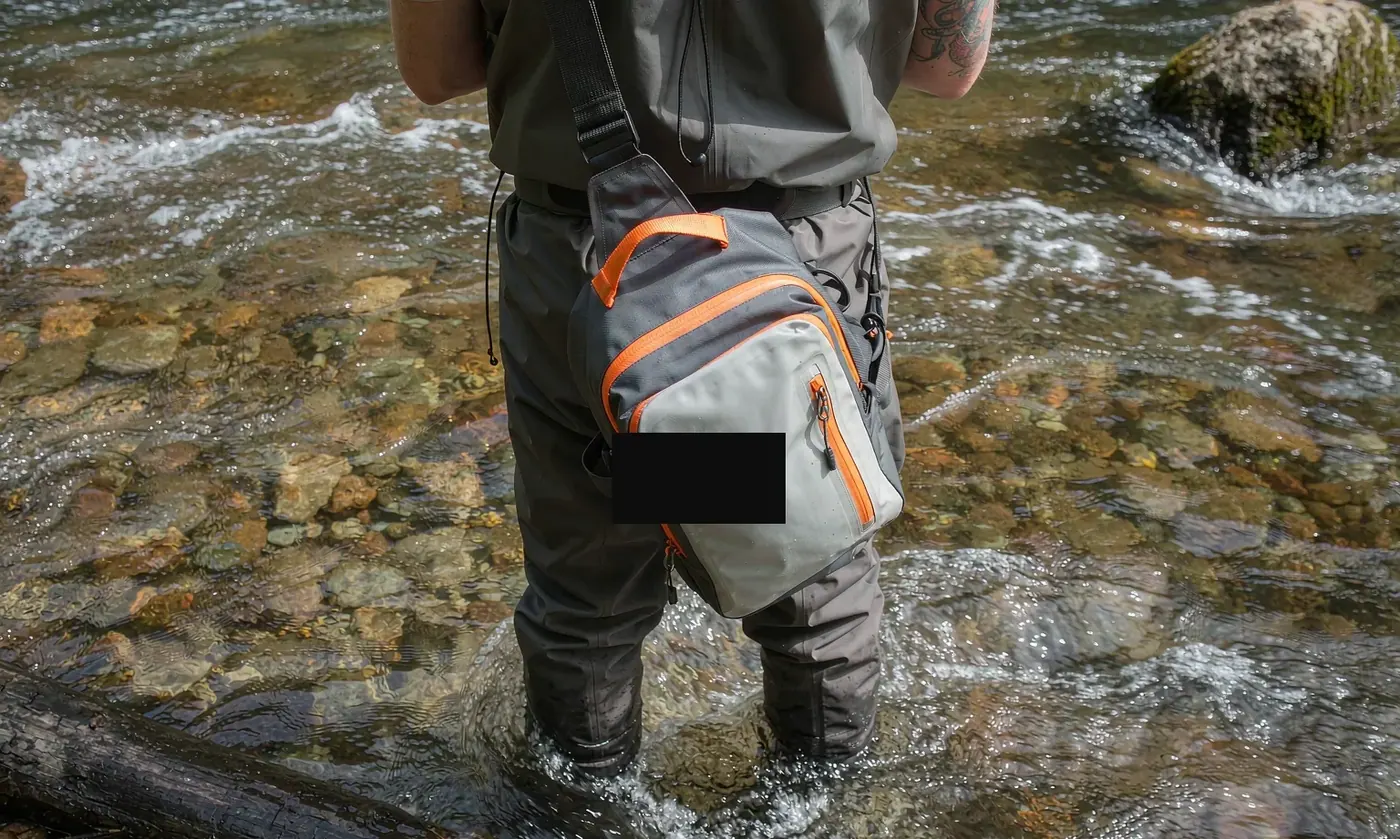
Vertical filing asks more of the bag internally, because the stack wants restraint so the trays cannot tip; rails or elastic retainers add perhaps 30 to 60 grams and are worth requesting. Without them, the column leans every time the bag is set down.
How Many Fit Per Litre
Converting volume into tray count is the most useful arithmetic in this category. Each standard tray consumes roughly 2.3 litres of nominal volume and about 2.8 litres once handling clearance is included, so dividing usable litres by 2.8 gives a realistic figure rather than a theoretical one.
| Usable litres | Theoretical trays | Realistic trays with other gear | Comment |
|---|---|---|---|
| 10 litres | Four | Two to three | Typical sling or small pack |
| 15 litres | Five | Three to four | Small backpack with insert |
| 20 litres | Seven | Four to five | Mid pack, half loaded with gear |
| 25 litres | Nine | Five to six | The practical everyday answer |
| 32 litres | Eleven | Seven to nine | Large pack, minimal extras |
Two cautions apply to every row. Trays themselves have become heavier since the format expanded into deep variants, so four deep trays occupy nearly six standard slots of height. And anything that will not compress, such as a water bottle or a packed lunch, steals tray space directly rather than sharing it.
Weight Arithmetic
Volume usually gets discussed and weight gets discovered later. An empty 3600 tray weighs roughly 180 to 260 grams depending on wall thickness and format, while a loaded one typically lands between 700 grams and 1.3 kilograms, and a tray full of metal can exceed 1.6. Multiply before deciding how many to carry.
| Trays carried | Tray mass alone | Bag plus other gear | Total load |
|---|---|---|---|
| Two | 1.4 to 2.6 kilograms | 1.5 to 2.5 kilograms | 3 to 5 kilograms |
| Four | 2.8 to 5.2 kilograms | 2 to 3 kilograms | 5 to 8 kilograms |
| Six | 4.2 to 7.8 kilograms | 2.5 to 3.5 kilograms | 7 to 11 kilograms |
| Eight | 5.6 to 10.4 kilograms | 3 to 4 kilograms | 9 to 14 kilograms |
Above roughly eight kilograms, deciding how many trays to carry becomes a question about the harness rather than about the trays. Moving one heavy tray from the bag to the vehicle often improves the whole day more convincingly than any equipment purchase.
Mixing Formats in One Bag
Mixing 3600 and 3700 trays within one bag is a common hope and rarely works well, because the two classes differ by about 80 millimetres of length. A bag built around the smaller format generally cannot accept the larger at all, whereas a bag designed for the larger one wastes noticeable width carrying smaller trays unless the insert has some spacing adjustment.
- Check whether the insert has adjustable dividers before planning a mixed load; fixed slots suit one format only.
- Where both are essential, plan separate bags or a bag with one bay dedicated to each.
- Allow additional height for the deeper format, roughly 70 millimetres per tray rather than 48.
- Remember that mixing formats also mixes lid types, and some deeper trays will not close under stack pressure.
- Confirm whether any external sleeve accepts the deeper format, since those often have more give.
Fit Problems and Fixes
Almost every fit complaint has a mechanical explanation, and most are fixable without returning anything. The important step is identifying whether the problem is width, height, or simply the order things are loaded.
| Symptom | Likely cause | Practical fix |
|---|---|---|
| Tray enters then jams halfway | Taper, or the internal seam sits across the path | Turn the tray around; the taper usually favours one direction |
| Last tray will not seat | Insufficient finger clearance above the stack | Remove one tray or switch to shallow variants |
| Lid will not close when loaded | Contents above the tray rim | Repack heavier items below the rim line |
| Tray rattles in the bay | Slot too generous | Add a shim or use a thinner tray variant |
| Stack leans sideways | No side restraint in the bay | Fit rails or tension the existing retainer strap |
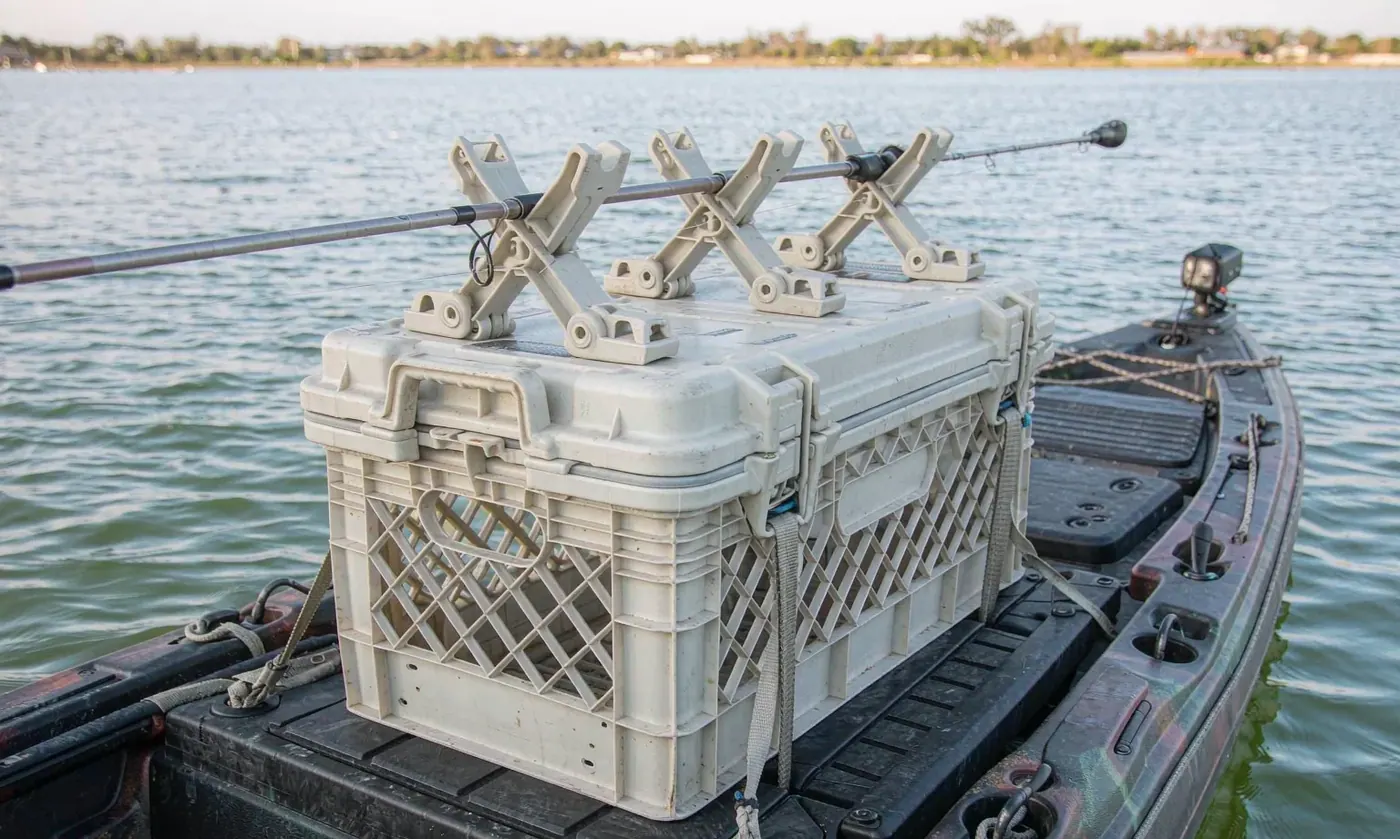
Where none of those applies, the honest answer may be that the bag was never dimensioned for trays and simply has a pouch that happens to be the right sort of size. Nothing about such a bag is defective; it was designed for different contents.
Specifying a Tray Bay
For anyone developing a bag rather than buying one, the tray bay is the part that must be dimensioned first, since everything else follows from it. State clear internal width, depth and pitch with tolerances, decide how the stack is restrained, and require a loaded fit test with actual trays rather than a drawing check.
| Specification item | Recommended figure | Why it matters |
|---|---|---|
| Clear internal width | 285 millimetres minimum | Accommodates tray length plus taper and hands |
| Clear internal depth | 200 millimetres minimum | Fits tray width without folding the corners |
| Stacking pitch | 48 millimetres per tray | Lid clearance plus working tolerance |
| Restraint method | Rails or elastic retainers | Stops the stack tipping when set down |
| Fit verification | Loaded test with real trays | Drawings cannot reveal taper or deflection |
| Dimensional tolerance | Plus or minus 2 millimetres | Keeps volume claims honest across runs |
Published methods make both the dimensions and the tray itself checkable. Dimensional tolerancing conventions are set out by ISO, and the impact resistance of the moulded tray that sits inside the bay can be referenced through ASTM International, which is useful because a cracked tray quickly ruins any well-dimensioned bag.
Measuring Your Own Tray Properly
Published figures describe the class; your tray describes reality. Taking three measurements takes about a minute and removes every argument about whether a bag should have fitted. Use a rigid rule rather than a tape wherever possible, since tape tends to round the corners and add a couple of millimetres that do not exist.
- Measure length across the longest face, placing the rule against the tray rather than along it.
- Measure both ends separately; injection-moulded parts are commonly a millimetre or two wider at one end.
- Measure the lid line rather than the base, since that is usually the widest part of the shell.
- Add anything protruding: latches, handles, hinge barrels, which can total five millimetres.
- Write the figure down with the tolerance in mind, generally plus or minus two millimetres.
| Measurement taken | Where it binds in a bag | Action if too large |
|---|---|---|
| Overall length plus protrusions | Determines minimum bay width | Rotate the tray, or choose a wider bag |
| Width of the tray face | Determines minimum bay depth | File vertically instead of flat |
| Height including the lid | Determines stacking pitch | Reduce the tray count by one |
| Loaded bulge at mid-face | Causes jamming under weight | Redistribute heavy items away from the walls |
Keeping those four numbers in a phone note makes every future purchase faster, since most listings give external bag dimensions rather than internal ones and decisions can be made without returning anything.
Why Fit Changes With the Weather
The same tray and the same bag will behave differently in August and in January, and understanding why avoids chasing faults that do not exist. Polymers expand measurably with temperature; a tray left in a hot vehicle can grow one to two millimetres and refuses slots it entered easily that morning. Cold does the reverse to the bag rather than the tray: coatings stiffen, seamed panels lose compliance, and the effective opening shrinks slightly.
| Condition | Effect on the tray | Effect on the bag | Practical response |
|---|---|---|---|
| Direct summer sun | Grows one to two millimetres | Fabric softens slightly | Shade the bag; do not force warm trays |
| Freezing morning | Shrinks marginally | Coatings stiffen and grip | Expect firmer insertion; warm the bag briefly |
| Very humid storage | No dimensional change | Lining swells slightly | Dry thoroughly between sessions |
| After long immersion | No change to the shell | Padding thickens with water | Allow full drying before forcing a fit |
None of this amounts to a defect. It is simply why a margin of five to eight millimetres was recommended earlier, and why a fit that is exact to the millimetre will disappoint sooner or later.
Insert Types Compared
How trays are held inside the bay matters as much as the bay itself. Four mechanisms are in common use, and each trades space against convenience differently. Fabric sleeves keep everything aligned but add material to every slot. Moulded rails add little width and guide trays in, though they occupy height. Removable caddies let the whole stack come out at once, which is excellent at the vehicle and awkward mid-river. Elastic retainers cost nothing and adjust to different tray heights, but they restrain less firmly than anything else.
| Insert type | Width consumed | Best feature | Limitation |
|---|---|---|---|
| Fabric sleeve dividers | Six to ten millimetres total | Trays stay aligned when carried | Least tolerant of oversized trays |
| Moulded rail guides | Two to four millimetres | Positive alignment and easy loading | Adds pitch, so fewer trays per stack |
| Removable caddy or rack | Around ten millimetres | Whole stack lifts out at once | Awkward to reload in the field |
| Elastic or webbing retainers | Almost none | Accepts any tray height | Restraint loosens as elastic ages |
For most anglers a hybrid is ideal: rails to guide and align whatever is used constantly, plus webbing retainers over the top so a shallow tray count does not rattle through an empty stack.
Ordering and Programme Notes
QUANZHOU JUNYUAN BAGS has handled waterproof bag work since 2014, supported by a founding group in this trade since 2004. Output runs at 200,000 units monthly, SGS verified, under BSCI and ISO 9001 governance, with materials screened against REACH and California Prop 65 and inspection at AQL 2.5 before shipment. Tray bays are dimensioned from measured trays rather than nominal class sizes, which is why fit issues tend to surface during sampling rather than after delivery.
Send the tray part numbers or measured dimensions, the required count per bag, layout preference between stacking and filing, shell material, colours, and quantity. Development opens at 500 pieces per design and colour; allow six to ten working days for samples and thirty-five to fifty days for bulk from approval and deposit, shipped FOB Xiamen or DDP to upward of one hundred destinations. Drawings go to service@junyuanbags.com. The two formats are compared in 3600 versus 3700, larger trays are dimensioned in the 3700 chart, and organisation advice sits in how to organise trays.
People Also Ask
What size is a 3600 tackle tray?
Ten point eight eight by seven point five by one point seven five inches, which is about 27.6 by 19.1 by 4.4 centimetres, with a deep variant at roughly 5.7 centimetres.
How much internal width does a bag need?
At least 285 millimetres clear. The tray is 276 millimetres long, and the remainder covers taper, seams and room to get fingers past the corners.
How many 3600 trays fit in a 25 litre backpack?
Typically five or six with normal clothing and water aboard, against a theoretical nine if the whole volume went to trays alone.
Will a 3600 tray fit a waist pack?
Rarely. Most waist and hip packs have internal widths under 270 millimetres, so only a few purpose-built ones accept even a shallow tray.
Why does my tray jam halfway into the slot?
Moulding taper. Most trays are up to two millimetres wider at the top, so entering one way jams while entering the other slides in cleanly.
How heavy is a loaded 3600 tray?
Usually 700 grams to 1.3 kilograms, and above 1.6 kilograms when filled with metal. Multiply by the count before deciding what to carry.
Frequently Asked Questions
Q1. What are the exact dimensions of a 3600 tackle box?
Ten point eight eight by seven point five by one point seven five inches for the standard variant, equivalent to 27.6 by 19.1 by 4.4 centimetres.
Q2. How do I convert those figures to centimetres?
Multiply inches by 25.4. That gives 27.6 centimetres by 19.1 centimetres by 4.4 centimetres for the standard tray, and about 5.7 centimetres tall for the deep variant.
Q3. What internal size must a bag have to hold one?
At least 285 millimetres of clear width and 200 millimetres of clear depth, plus roughly 48 millimetres of vertical pitch per tray stacked.
Q4. Which is bigger, the 3600 or the 3700?
The 3700, which measures about 14 by 9 inches. It is roughly 80 millimetres longer, so bags built for one rarely accept the other.
Q5. Do all trays labelled 3600 measure the same?
No. Moulding tolerance typically leaves two to three millimetres either side of nominal, and shallow, standard and deep variants share the same footprint but not the same height.
Q6. How many trays does a sling pack hold?
Usually one or two, often only shallow ones, because most sling bodies measure under 270 millimetres internally.
Q7. Can I carry 3600 trays in a waist pack?
Only a few purpose-built waist packs have enough width. Check the internal measurement rather than the product description before buying.
Q8. How much room should I leave above a tray stack?
Around 25 to 30 millimetres. Without it the last tray cannot be lifted out, and inserting it becomes a two-handed struggle on a windy bank.
Q9. Is it better to stack trays flat or file them upright?
Filing upright gives direct access to each tray and suits anglers who change lures often; stacking flat uses space efficiently but buries the bottom tray.
Q10. How much weight do four loaded trays add?
Between 2.8 and 5.2 kilograms in trays alone, or roughly 5 to 8 kilograms once the bag and other gear are included.
Q11. What should I check before buying a bag for trays?
Internal width and depth against your actual measured tray, stacking pitch, whether restraint rails exist, and how many trays remain realistic once water and weather gear are packed.